How Many Calories Are in Zahedi Dates? The Quick Answer
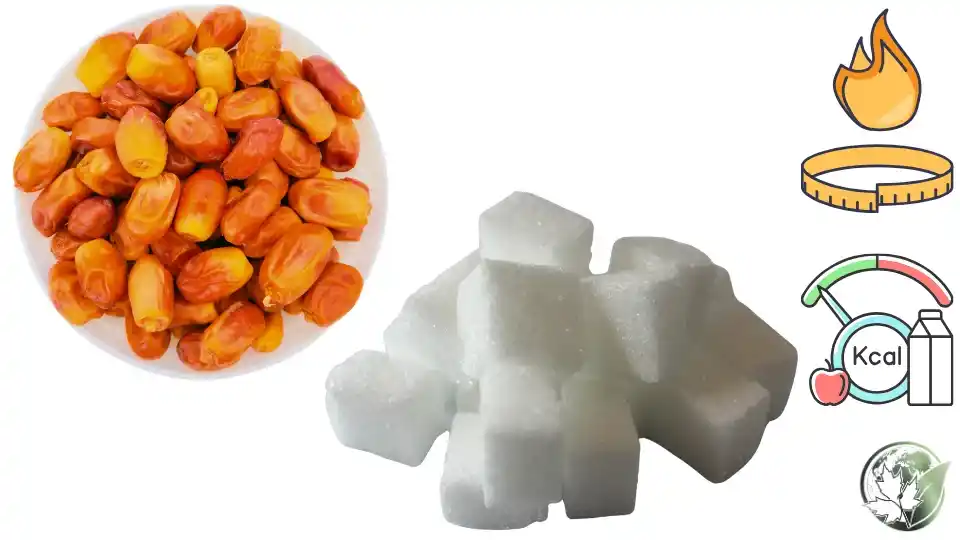
A Zahedi date has about 26 calories. These golden to light brown, semi-dry dates weigh about 9 grams of edible flesh each, and a typical 100 gram portion has about 285 calories. A sugar cube (4 grams) has 16 calories, so one Zahedi date has about 1.6 times the calories of one sugar cube, and three Zahedi dates, at 78 calories, equal about five sugar cubes. Per 100 grams, Zahedi dates have about 285 calories and sugar has 387, so the dates are about 26 percent lower in calories by weight than pure sugar, because they contain 15 to 20 percent water, fiber and minerals as well as sugar.
Zahedi dates are one of the most widely grown Iranian varieties, especially in the southern provinces, and are valued as an economical, firm, sweet date that keeps well without refrigeration. Unlike the soft, dark, moist Mazafati, they are semi-dry, with a firmer, chewier flesh and a lighter, caramel-like sweetness. Because of the lower moisture, they have slightly more calories per gram than very moist dates, and they store much better, so they are common in gift boxes, dessert making and everyday snacking.
This guide gives the calories in Zahedi dates by piece, handful, cup and 100 grams, compares them with sugar cubes, explains the sugar and fiber, discusses blood sugar and weight management, and covers uses such as stuffed dates, date paste and sweetening drinks. Our other date guides cover soft varieties such as Mazafati, Rabbi and Piarom, so this one concentrates on the semi-dry Zahedi type. There are three comparison tables and an FAQ.
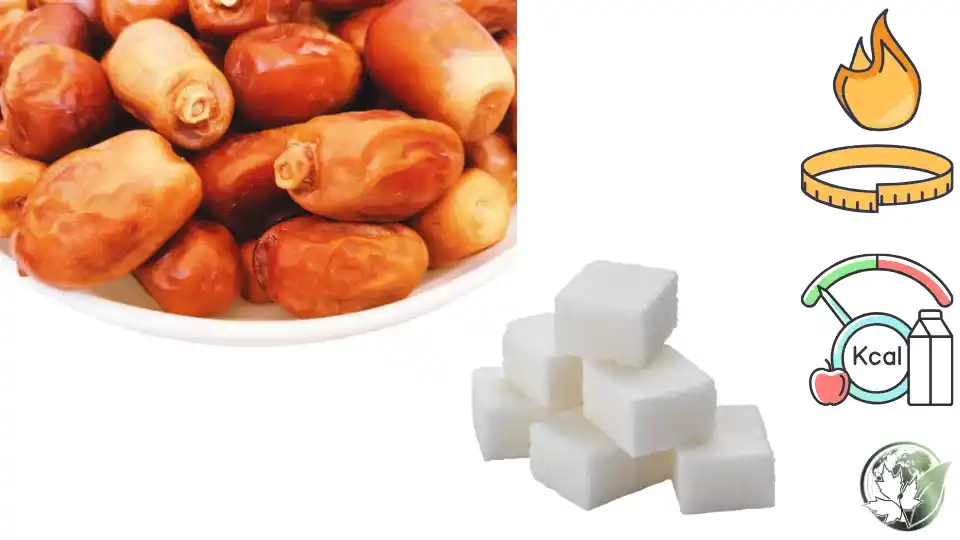
A single Zahedi date has about 26 calories
How Many Calories Are in Zahedi Dates by Piece, Handful and Cup?
| Portion | Weight | Calories | Carbs | Sugar | Fiber |
|---|---|---|---|---|---|
| 1 date | 9 g | 26 kcal | 6.8 g | 5.9 g | 0.6 g |
| 2 dates | 18 g | 51 kcal | 13.5 g | 11.7 g | 1.3 g |
| 3 dates | 27 g | 77 kcal | 20.3 g | 17.6 g | 1.9 g |
| 4 dates | 36 g | 103 kcal | 27.0 g | 23.4 g | 2.5 g |
| 5 dates | 45 g | 128 kcal | 33.8 g | 29.3 g | 3.2 g |
| 6 dates (small handful) | 54 g | 154 kcal | 40.5 g | 35.1 g | 3.8 g |
| 10 dates | 90 g | 257 kcal | 67.5 g | 58.5 g | 6.3 g |
| 1 ounce | 28 g | 80 kcal | 21.0 g | 18.2 g | 2.0 g |
| 1/4 cup, pitted, chopped | 37 g | 105 kcal | 27.8 g | 24.1 g | 2.6 g |
| 1/2 cup, pitted, chopped | 74 g | 211 kcal | 55.5 g | 48.1 g | 5.2 g |
| 1 cup, pitted, chopped | 147 g | 419 kcal | 110 g | 95.6 g | 10.3 g |
| 100 g | 100 g | 285 kcal | 75.0 g | 65.0 g | 7.0 g |
| 500 g box | 500 g | 1,425 kcal | 375 g | 325 g | 35 g |
The weight of dates varies with size and with whether they are weighed with the pit. A date with its pit weighs about 11 to 12 grams, and the pit makes up around 10 percent. If you weigh them whole, subtract the pits or multiply the weight by 0.9.
Zahedi Dates vs a Sugar Cube: Calories Compared
| Food | Portion | Weight | Calories | Sugar |
|---|---|---|---|---|
| Sugar cube | 1 cube | 4 g | 16 kcal | 4.0 g |
| Sugar cube | 2 cubes | 8 g | 32 kcal | 8.0 g |
| Sugar cube | 5 cubes | 20 g | 80 kcal | 20.0 g |
| Sugar cube | 10 cubes | 40 g | 160 kcal | 40.0 g |
| Zahedi date | 1 date | 9 g | 26 kcal | 5.9 g |
| Zahedi date | 3 dates | 27 g | 77 kcal | 17.6 g |
| Zahedi date | 6 dates | 54 g | 154 kcal | 35.1 g |
| Zahedi date | 10 dates | 90 g | 257 kcal | 58.5 g |
| 1 teaspoon sugar | 1 tsp | 4.2 g | 16 kcal | 4.2 g |
| 1 tablespoon date paste | 1 tbsp | 20 g | 57 kcal | 12.5 g |
One Zahedi date equals about 1.6 sugar cubes in calories, and 3 dates equal about 4.8 cubes. In terms of sugar, a date has about 5.9 grams of sugar, about 1.5 cubes. The dates, though, come with fiber, potassium, magnesium and polyphenols, which sugar cubes lack.
Zahedi Dates vs a Sugar Cube: Nutrition Compared
| Per 100 g | Zahedi dates | Sugar cubes |
|---|---|---|
| Calories | 285 kcal | 387 kcal |
| Carbohydrate | 75 g | 100 g |
| Sugar | 65 g | 100 g |
| Fiber | 7.0 g | 0 g |
| Protein | 2.5 g | 0 g |
| Fat | 0.3 g | 0 g |
| Potassium | 650 mg | 2 mg |
| Magnesium | 50 mg | 0 mg |
| Calcium | 60 mg | 1 mg |
| Iron | 1.0 mg | 0.1 mg |
| Copper | 0.3 mg | 0 mg |
| Antioxidants (polyphenols) | present | none |
| Water | 17 g | 0 g |
| Per 100 calories | Zahedi dates | Sugar cubes |
|---|---|---|
| Weight | 35 g | 26 g |
| Sugar | 22.8 g | 26 g |
| Fiber | 2.5 g | 0 g |
| Potassium | 228 mg | 0.5 mg |
| Magnesium | 17.5 mg | 0 mg |
For the same calories, dates give almost as much sugar as sugar cubes, but add fiber, potassium and magnesium, which makes them a better choice nutritionally when you need to sweeten something. However, they are not a low sugar food, and the calories are significant when eaten in handfuls.
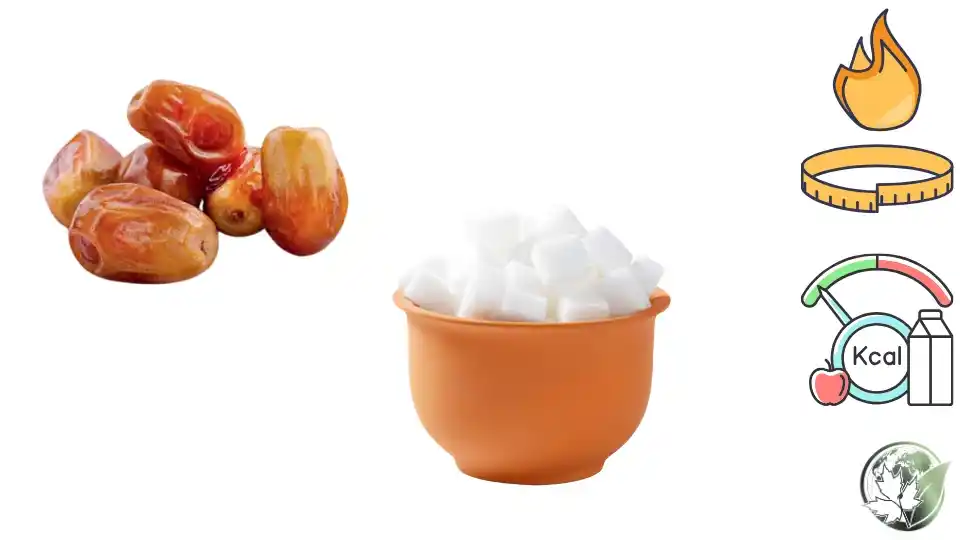
One Zahedi date has about as many calories as 1.6 sugar cubes
What Makes Zahedi Dates Different From Other Dates?
Dates are classified as soft, semi-dry or dry, depending on their moisture content and sugar composition. Mazafati dates, with 30 to 35 percent moisture, are soft and need refrigeration. Zahedi dates are semi-dry, with about 15 to 20 percent moisture, so the flesh is chewy and firmer, with a golden to amber color. Semi-dry dates tend to have more sucrose and less invert sugar than soft dates, which gives a milder, less sticky sweetness. Because the moisture is lower, calories per gram are somewhat higher than in a moist date, but the individual dates are smaller and lighter, so a single piece is often about the same.
| Date variety (per date) | Texture | Weight | Calories |
|---|---|---|---|
| Zahedi | Semi-dry, firm | 9 g | 26 kcal |
| Mazafati | Soft, moist | 10 g | 27 kcal |
| Kabkab | Soft to semi-dry | 12 g | 33 kcal |
| Piarom | Soft, long | 9 g | 25 kcal |
| Rabbi | Semi-dry | 11 g | 30 kcal |
| Medjool | Soft, very large | 24 g | 66 kcal |
| Deglet Noor | Semi-dry | 7 g | 20 kcal |
The per date calories are close for most Iranian varieties, between 25 and 33. What differs more is the size and sweetness. Medjool dates are large, with 66 calories each, so a single Medjool equals about 2.5 Zahedi dates.
Are Zahedi Dates High in Sugar?
Yes. Dates are one of the sweetest natural foods, with about 65 grams of sugar per 100 grams, mostly glucose, fructose and sucrose. A single Zahedi date has about 5.9 grams of sugar, about one and a half sugar cubes, and a handful of six dates has about 35 grams, or nearly nine cubes, which is above the 25 grams of added sugar per day recommended by the World Health Organization for good health. The WHO guideline concerns free sugars, which exclude sugars naturally within whole fruit, so dates are not counted that way, but the quantity of sugar still matters for blood glucose and calories.
The sugar in dates arrives with 7 grams of fiber per 100 grams, which slows absorption somewhat, and with minerals and antioxidants. This makes dates a better sweet than candy or sugar, but a handful at a time is a considerable dose of sugar and calories. A sensible portion is two to three dates, about 50 to 80 calories.
Do Zahedi Dates Raise Blood Sugar?
Dates have a low to medium glycemic index, usually reported between 40 and 55 depending on the variety and ripeness, lower than table sugar at about 65 and white bread at about 75. The fiber and polyphenols seem to blunt the response. Studies in people with and without diabetes found that eating several dates did not produce large spikes, but the glycemic load, which reflects portion size, rises quickly with the amount: three dates, with about 20 grams of carbohydrate, have a glycemic load of about 9, which is moderate, while ten dates have a load near 30.
People with diabetes can include small portions, such as one to three dates, along with protein or healthy fat, like nuts or yogurt, and should monitor their own response. Dates are not recommended in large quantities, particularly on their own.
Are Zahedi Dates Good for Weight Loss?
Dates can support weight management if portions are controlled, since they are filling, sweet and rich in fiber, and satisfy sugar cravings in a way that candy does not. Replacing a chocolate bar of 230 calories with three dates at 77 calories saves about 150 calories. Dates are calorie dense, though: ten dates have 257 calories, the same as a small meal, and because they are easy to eat by the handful, it is easy to go over. Tips include counting them out, pairing two dates with a few almonds, or chopping one into oatmeal or yogurt for sweetness instead of adding sugar.
Two to three dates with a few almonds make a satisfying snack of about 150 calories
What Are the Health Benefits of Zahedi Dates?
Dates are a good source of potassium, magnesium, copper and manganese, with about 650 milligrams of potassium per 100 grams. They contain polyphenols such as flavonoids, carotenoids and phenolic acids, which have antioxidant properties, and their fiber helps support digestion and regularity. Traditional use in Iran includes breaking the fast at Ramadan with dates, because they offer quick energy, hydration with water and minerals, and gentle digestion. A few observational and small clinical studies suggest benefits for bowel function, cholesterol and blood pressure, but they are modest and not a substitute for medical treatment. Dates also contain small amounts of tannins, so a few people can experience bloating or digestive discomfort with large quantities.
How Do You Use Zahedi Dates in Place of Sugar?
Zahedi dates are firm and chewy, which suits baking and cooking, because they hold their shape and chop well. To sweeten oatmeal, chop two dates, 52 calories, in place of two sugar cubes' worth of sweetener, at 32 calories, but with fiber and minerals. To make date paste, soak 150 grams of pitted dates in hot water for 15 minutes, blend into a smooth paste, and store in the refrigerator for up to two weeks, with about 57 calories per tablespoon. Use the paste in muffins, energy balls and smoothies in place of sugar at a ratio of about 2:3, though date paste has more calories per spoon than sugar, because a tablespoon of paste weighs more than a spoonful of sugar. For tea, many Iranians eat a date with black tea instead of sugar cubes, a satisfying pairing with one date at 26 calories instead of two cubes at 32.
| Sweetener | Amount | Calories | Notes |
|---|---|---|---|
| White sugar | 1 tsp | 16 kcal | Pure sucrose |
| Sugar cube | 1 cube | 16 kcal | 4 g |
| Zahedi date, chopped | 1 date | 26 kcal | Fiber, minerals |
| Date paste | 1 tbsp | 57 kcal | Homemade |
| Honey | 1 tsp | 21 kcal | Liquid |
| Maple syrup | 1 tsp | 17 kcal | Liquid |
| Date syrup | 1 tsp | 20 kcal | Liquid |
How Many Calories Are in Zahedi Date Dishes and Snacks?
| Dish or snack | Serving | Calories | Notes |
|---|---|---|---|
| Zahedi date with tea | 1 date | 26 kcal | Instead of sugar cubes |
| Date stuffed with walnut | 1 piece | 50 kcal | Half walnut |
| Date stuffed with almond | 1 piece | 36 kcal | 1 almond |
| Date stuffed with pistachio | 1 piece | 34 kcal | 3 pistachios |
| Date and almond energy ball | 1 ball | 90 kcal | Oats, honey |
| Persian date halva (ranginak) | 1 piece | 180 kcal | Walnuts, flour, butter |
| Date milkshake | 1 cup | 250 kcal | Milk, 3 dates |
| Date and oat bar | 1 bar | 180 kcal | Store-bought |
| Date cake slice | 1 slice | 320 kcal | Butter, sugar |
| Date and nut bowl | 1/4 cup | 210 kcal | Mixed |
How to Choose and Store Zahedi Dates
Pick dates that are plump, glossy, golden to amber, and slightly flexible when pressed, without crystallized white spots, mold or a sour smell. Sugar crystals on the surface are not harmful but suggest older dates. Because Zahedi dates are semi-dry, they store well in an airtight container in a cool, dry place for two to three months, in the refrigerator for six months and in the freezer for a year or more. To soften slightly dried dates, soak them briefly in warm water or steam them. Keep them away from moisture and insects. Bulk boxes and bags are generally inexpensive, which makes Zahedi dates one of the most economical dates.
Zahedi dates keep for months in an airtight container in a cool dry place
How to Count Zahedi Date Calories Accurately
Count each pitted date as about 26 calories if it weighs around 9 grams, or weigh them and use 285 calories per 100 grams of pitted flesh. If you weigh with the pits, multiply by 0.9 first. For stuffed dates, add the filling calories. For recipes that use date paste or syrup, use 57 calories per tablespoon of paste and 20 per teaspoon of syrup. Large, very soft dates differ from Zahedi, so use the right variety for the weight.
How Do You Eat Zahedi Dates During Ramadan and Fasting?
Breaking the fast with dates is a tradition across the Muslim world, and Zahedi dates, being widely available and inexpensive, are a common choice. Eating one to three dates with water provides fast energy, about 26 to 77 calories, along with fluid and potassium, and prepares the stomach for the meal that follows. Dates are rich in simple sugars, which the body absorbs rapidly after a long fast, and the fiber helps to avoid an excessive spike. For the pre-dawn meal, dates paired with protein and complex carbohydrates, such as yogurt, oats and nuts, keep energy up through the day. If you are managing blood sugar, keep the number to three dates, eat them slowly and follow with a balanced meal rather than sweets.
| Fasting use | Dates | Calories | Pair with |
|---|---|---|---|
| Breaking the fast | 1 to 3 | 26 to 77 kcal | Water, milk |
| Pre-dawn meal | 2 | 51 kcal | Yogurt, oats |
| Mid-evening snack | 2 with walnuts | 100 kcal | Tea |
| Dessert | 1 stuffed | 36 to 50 kcal | Herbal tea |
Can Children and Athletes Eat Zahedi Dates?
Dates are a popular snack for children, as they are sweet, soft enough to chew and rich in minerals. For young children, always remove the pit and cut dates into small pieces to prevent choking, and limit portions to one or two a day, since they are sticky and can stay on teeth, so rinse with water afterward. For athletes, dates are an easy, portable carbohydrate before and during exercise: two to three dates provide 50 to 77 calories and 13 to 20 grams of carbohydrate, with potassium to help replace losses. Studies on endurance athletes show that dates perform comparably with commercial sports gels as a source of carbohydrates for moderate exercise, while being a whole food. For those with sensitive stomachs, the fiber and fructose can cause bloating, so try dates in training before a race.
What Is the Best Way to Pit and Stuff Zahedi Dates?
Because Zahedi dates are semi-dry, they hold their shape and are easy to split. Slice lengthwise with a small knife, remove the pit with your fingers or the tip of the knife, and press in the filling. Walnuts, almonds, pistachios and a thin piece of cheese or almond butter are traditional. For a lighter filling, use a half teaspoon of peanut butter, at about 15 calories, or a few cardamom-scented yogurt cheese pieces. Dates stuffed with walnut halves have about 50 calories each, and with an almond about 36. If dates are too dry, steam them for a minute, or soak them briefly in warm water, drain and pat dry before stuffing.
How Do Zahedi Dates Fit Into a Healthy Daily Sweet Budget?
If you aim to limit added sugar, a sensible approach is to decide on a daily sweet allowance of about 100 to 150 calories, and spend it on foods that provide something extra. Three Zahedi dates, 77 calories, with a few almonds, 80, give about 157 calories with fiber, protein and healthy fat, which is more satisfying than the same calories in cookies or candy. Compare this with 10 sugar cubes in drinks at 160 calories with no nutrients. Using a date with tea reduces cubes, while date paste in baking can replace part of the sugar, though total calories remain similar. The aim is not to eliminate sweetness, but to choose sweet foods that bring fiber and minerals, and to keep an eye on the total.
What Are Common Mistakes When Counting Date Calories?
Several mistakes cause big errors. Counting by weight with pits overstates the calories by about 10 percent. Assuming all dates are the same size is another: a Medjool is 66 calories, and a Zahedi is 26, so a handful of Medjools can have twice the calories of a handful of Zahedi. Ignoring stuffings, such as walnuts and chocolate, can add 20 to 100 calories per date. Forgetting that dried fruit sweeteners in recipes, such as date paste or syrup, are still calorie dense is another. The last is relying on the assumption that "natural sugar" means "free" calories. The body treats the sugar in dates similarly to other sugars, and the benefit lies in the extra nutrients and fiber, not in a lower energy value.
Key Takeaways: Zahedi Dates Calories vs a Sugar Cube
A Zahedi date has about 26 calories and 285 per 100 grams, so one date equals about 1.6 sugar cubes at 16 calories each. They deliver sugar, but also fiber, potassium and magnesium, with a low to moderate glycemic index. Keep to two or three dates a day, pair them with nuts, and count them when using them to replace sugar.
Frequently Asked Questions
6 questions answered
How many calories are in one Zahedi date?
About 26.
Do Zahedi dates have more calories than a sugar cube?
One date has about 1.6 times the calories of one cube.
How many Zahedi dates should I eat a day?
Two to three is a sensible portion for most people.
Are Zahedi dates good for diabetics?
In small portions with protein or fat, since the glycemic index is low to moderate.
How long do Zahedi dates keep?
Two to three months in a cool dry place, longer when chilled.
Are dates better than sugar?
Yes for fiber and minerals, but not much lower in calories.