Akbari Pistachio Calories in One Minute
Akbari pistachio calories come down to a simple rule of thumb: one shelled Akbari kernel has about 5 calories, ten kernels have about 50, and 100 grams have about 562 kcal. Akbari is a large, plump Iranian pistachio with a full kernel, so each piece weighs a little more than the average nut. A typical shelled kernel weighs 0.8 to 1 gram, which means 4.5 to 5.6 calories per piece depending on the grade you buy.
Walnuts sit above pistachios on the calorie ladder at roughly 654 kcal per 100 grams, and each walnut half carries about 13 calories. Put differently, one walnut half equals about 2.5 Akbari pistachios. If you eat ten Akbari kernels you consume about 50 calories, while ten walnut halves deliver 130. The distance is clear on a piece-by-piece basis and narrower on a gram-by-gram basis.
This guide explains the numbers for one, five, ten and twenty pistachios, then compares them with walnuts using three tables: calories per piece, nutrients per 100 grams and a protein-to-calorie ratio. You will also find practical advice on portion size, shell weight, roasting and storage, followed by an FAQ.
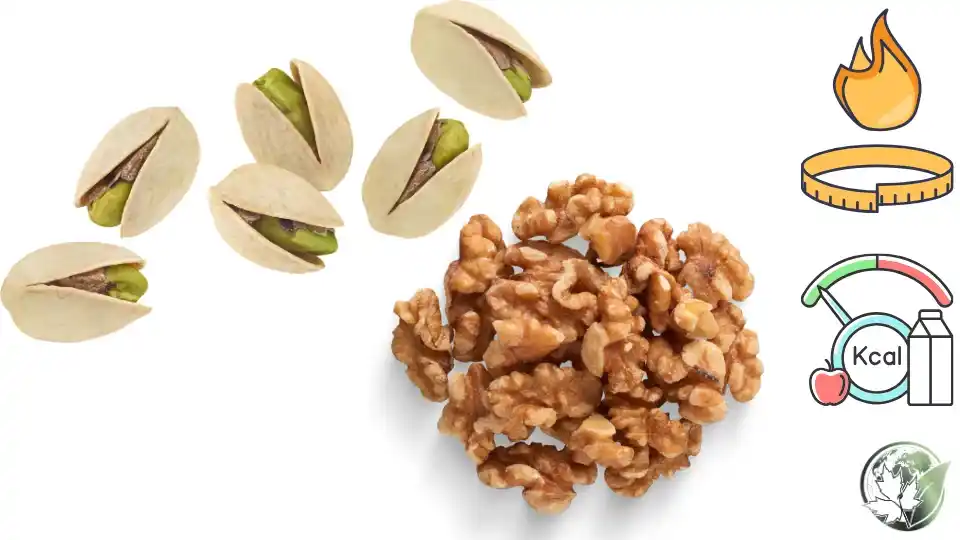
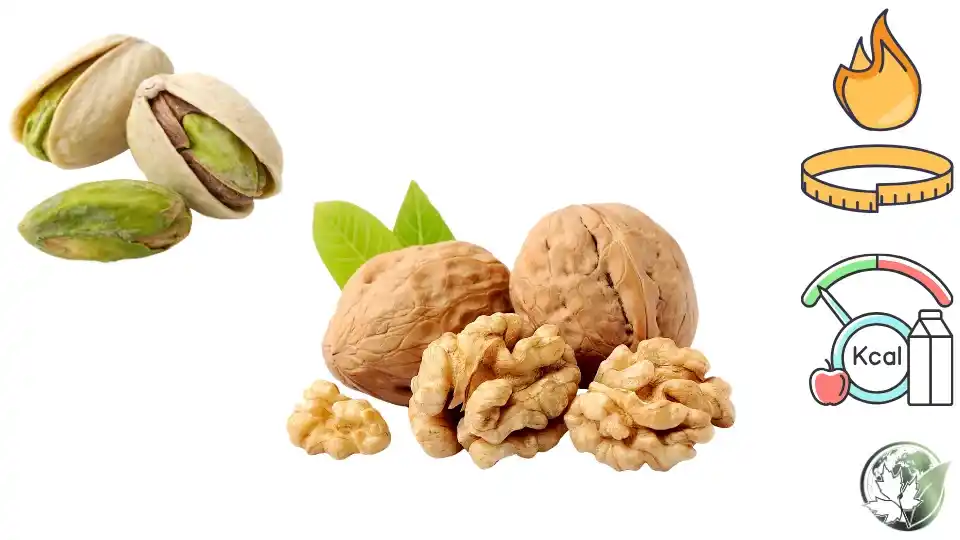
Akbari pistachios are known for their large size and full, green kernels
How Many Calories Are in 1 Akbari Pistachio?
A single shelled Akbari pistachio contains roughly 5 calories. The math is straightforward. Raw pistachios provide about 5.62 calories per gram. Akbari kernels, which are bigger than the average nut, often weigh around 0.9 grams. Multiply 0.9 by 5.62 and you get 5.06 calories.
Of course, kernels vary. Premium jumbo grades can reach 1.1 grams, or about 6 calories, while smaller or partially filled kernels may be only 0.6 grams, or roughly 3.4 calories. For everyday tracking, rounding to 5 calories per Akbari kernel is accurate enough. If you want a more precise figure, weigh ten kernels on a kitchen scale, divide by ten and multiply by 5.62.
It is also worth remembering that the in-shell nut is heavier than the kernel. A whole in-shell Akbari pistachio might weigh 1.7 to 2 grams, but about half of that is shell. When you count calories per nut, you always count the kernel only.
How Many Calories Are in 5, 10 and 20 Akbari Pistachios?
Scaling up from one kernel is easy once you accept a working value of 5 calories per piece. The table below shows the usual snack counts along with estimated weights.
| Number of Akbari kernels | Approximate weight | Approximate calories | Protein |
|---|---|---|---|
| 1 | 0.9 g | 5 kcal | 0.2 g |
| 5 | 4.5 g | 25 kcal | 0.9 g |
| 10 | 9 g | 51 kcal | 1.8 g |
| 20 | 18 g | 101 kcal | 3.6 g |
| 30 | 27 g | 152 kcal | 5.5 g |
| 50 | 45 g | 253 kcal | 9.1 g |
A standard one ounce portion contains about 30 to 35 Akbari kernels because they are slightly larger than average. That is why Akbari buyers sometimes eat fewer pieces than they expected when they aim for the common 157 calorie serving. If you are used to counting 49 pistachios per ounce on a nutrition label, remember that larger nuts mean a smaller count per ounce.
Akbari Pistachio vs Walnut Calories per Piece
Comparing a pistachio with a walnut by piece is a fun exercise because the answer depends on whether you count half or whole walnuts. A walnut half weighs about 2 grams and offers around 13 calories. A whole walnut, meaning two halves, weighs about 4 grams and delivers approximately 26 calories.
| Item | Weight | Calories | Pistachios needed to match |
|---|---|---|---|
| 1 Akbari pistachio | 0.9 g | 5 kcal | 1 |
| 1 walnut half | 2 g | 13 kcal | 2.6 |
| 1 whole walnut | 4 g | 26 kcal | 5.2 |
| 10 Akbari pistachios | 9 g | 51 kcal | 10 |
| 10 walnut halves | 20 g | 131 kcal | 26 |
The practical meaning is that one whole walnut costs the same calories as five Akbari pistachios. A tray of ten pistachios feels like a snack, while ten walnut halves feel like a small meal. The ratio explains why many dieters choose pistachios for grazing and walnuts for deliberate, measured servings.
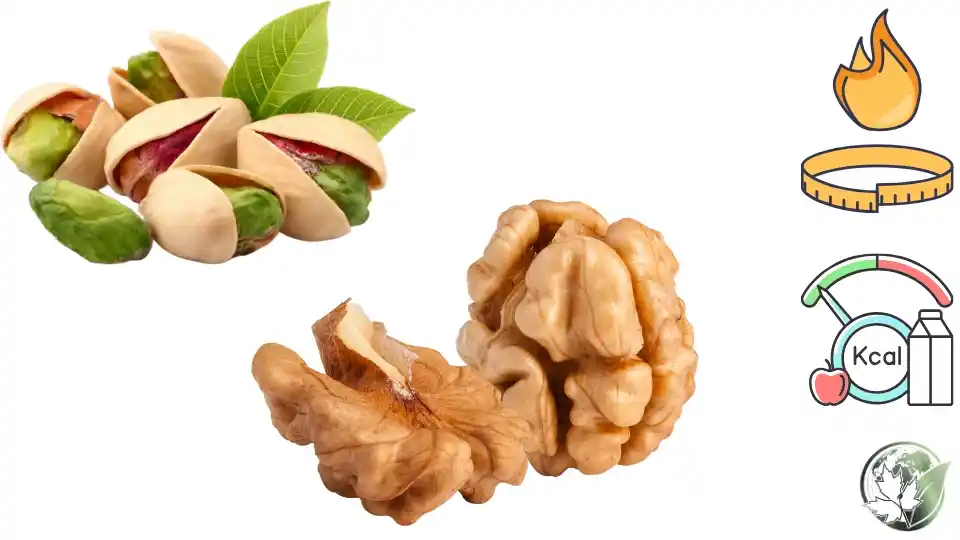
Ten Akbari pistachios contain about 51 calories, while ten walnut halves contain about 131
Akbari Pistachio vs Walnuts per 100 Grams
When you compare equal weights, the calorie gap narrows. Pistachios deliver 562 kcal per 100 grams and walnuts deliver 654, a difference of 92 calories, or about 14 percent. But the nutrient makeup differs widely.
| Per 100 g raw | Pistachio | Walnut | Difference |
|---|---|---|---|
| Calories | 562 kcal | 654 kcal | Walnut +92 |
| Protein | 20.2 g | 15.2 g | Pistachio +5.0 |
| Fat | 45.3 g | 65.2 g | Walnut +19.9 |
| Carbohydrate | 27.2 g | 13.7 g | Pistachio +13.5 |
| Fiber | 10.6 g | 6.7 g | Pistachio +3.9 |
| Sugar | 7.7 g | 2.6 g | Pistachio +5.1 |
| Potassium | 1025 mg | 441 mg | Pistachio +584 |
| Magnesium | 121 mg | 158 mg | Walnut +37 |
Pistachios win on protein, fiber and potassium, while walnuts offer more magnesium and a large dose of polyunsaturated fat. Neither is a bad choice, and both supply healthy unsaturated fats.
How to Compare Protein per Calorie in Pistachios and Walnuts
A useful way to judge a snack is to ask how much protein you get for each calorie. Pistachios provide about 3.6 grams of protein per 100 calories. Walnuts provide about 2.3 grams per 100 calories. Almonds sit at about 3.7 grams. That means pistachios are among the better nut choices for people who want protein without a very high energy cost.
For a 50 calorie snack of ten Akbari pistachios, you receive roughly 1.8 grams of protein. A 50 calorie snack of walnuts, about four halves, gives you 1.2 grams of protein. The difference looks small but adds up if you eat nuts daily. Over a month of 100 calorie snacks, pistachios provide about 36 grams more protein than the same calories of walnuts.
Protein is not the only metric, of course. Walnuts bring omega-3 fats that pistachios lack. A balanced diet can use both, but the protein-per-calorie view helps you pick the right nut at the right moment.
How Much Do Akbari Pistachio Shells Weigh?
Most shoppers buy pistachios in the shell, so it helps to understand the shell fraction. In-shell Akbari pistachios are about 50 to 55 percent kernel by weight. A 100 gram pile of in-shell nuts therefore holds only 50 to 55 grams of edible kernel, which equals roughly 280 to 310 calories.
You can estimate calories from the in-shell weight with a quick formula: in-shell grams times 0.5 times 5.62. For a 200 gram bag, that is about 562 calories. Some roasters sell nuts with a split of 48 percent kernel because of thicker shells, so the exact number varies by crop year and grade.
A visible shell pile is a feature, not a flaw. Behavioral studies show that participants who ate in-shell pistachios consumed about 40 percent fewer calories than those who ate shelled ones, since the discarded shells acted as a visual cue. If you tend to overeat, buying in-shell Akbari is a simple habit that helps without any extra effort.
How to Choose a Healthy Akbari Pistachio Portion
A smart portion balances calories with satisfaction. The most common recommendation is 28 grams per day. For Akbari, that is roughly 30 kernels and 157 calories. If you are very active, you can double the portion. If you are tightly controlling energy intake, 15 grams, about 17 kernels and 84 calories, still delivers a decent amount of protein and fiber.
Consider these portion tiers:
Light snack: 10 kernels, about 51 calories
Standard serving: 30 kernels, about 152 calories
Generous serving: 50 kernels, about 253 calories
Meal topping: 5 to 10 grams crushed, 28 to 56 calories
Pair pistachios with fruit or yogurt to stretch the snack. A small apple plus 20 pistachios gives you around 200 calories, a good balance of fiber, protein and healthy fat. Skipping the pairing and reaching into a bag leads to bigger portions than expected.
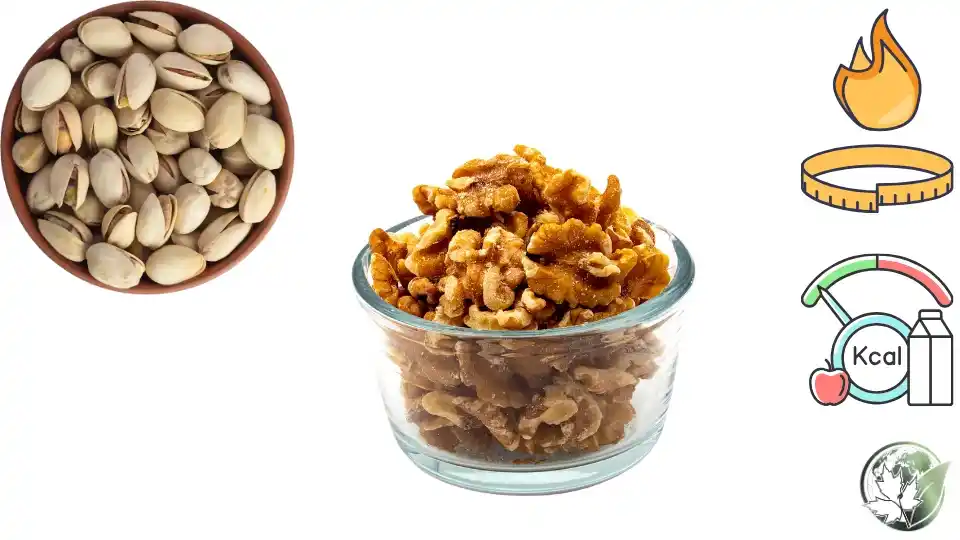
Pairing a measured pistachio portion with fruit makes a balanced snack
How Do Roasting and Salt Change Akbari Pistachio Calories?
Roasting changes taste, texture and water content more than it changes calories. Dry roasted pistachios usually fall between 570 and 600 kcal per 100 grams because they lose a little water. Oil roasted nuts may reach 620 kcal or more per 100 grams. Salted versions have the same calories as unsalted ones if the salt is applied without oil, but sodium can climb to 120 to 300 milligrams per ounce.
If you track sodium, choose raw or lightly roasted Akbari pistachios and season them yourself. Lemon salt or a pinch of chili powder gives flavor without a major sodium load. Persian-style roasted pistachios with lemon and salt are common in the region and usually contain about 570 calories per 100 grams.
For recipe use, raw kernels are best for baking and for making pistachio paste, because they stay greener. Roasted kernels taste better as a snack and in toppings.
How Does Akbari Compare with Other Iranian Pistachio Types?
Iran exports several named varieties, including Ahmad Aghaei, Kalleh Ghouchi, Fandoghi and Akbari. Akbari is known for its large, slightly elongated shape and thick, full kernel. It also tends to have a good split rate, which shoppers appreciate for easy opening.
Nutritionally, all of them are close, with calorie values within about 3 percent of each other. The differences are mainly in size, price and appearance. A larger kernel gives more calories per piece but not per gram. If you buy by weight, the choice has almost no effect on your daily energy intake. If you eat by the piece, bigger kernels add up faster.
For importers, size grading matters because it affects the packed count and the cost per unit. Akbari jumbo grades are often priced above medium grades since they are visually impressive for gift boxes and premium retail packs.
How to Use Akbari Pistachios and Walnuts in Cooking Without Overdoing Calories
Both nuts are common in Persian cuisine, from rice dishes to desserts. Understanding how much you add helps keep calories predictable. A tablespoon of chopped pistachios weighs around 8 grams and offers 45 calories. A tablespoon of chopped walnuts weighs about 7 grams and offers 46 calories. In a recipe for four, three tablespoons of nuts add about 34 calories per person.
Ideas that keep the totals moderate include sprinkling crushed pistachios over saffron rice, adding a few walnuts to a herb omelet, mixing both in a yogurt bowl, or using ground nuts as a thickener instead of cream in a sauce. Baked goods are where calories jump. A cup of chopped nuts in a cake adds over 700 calories, which becomes 60 calories per slice in a twelve slice cake, in addition to the sugar and butter.
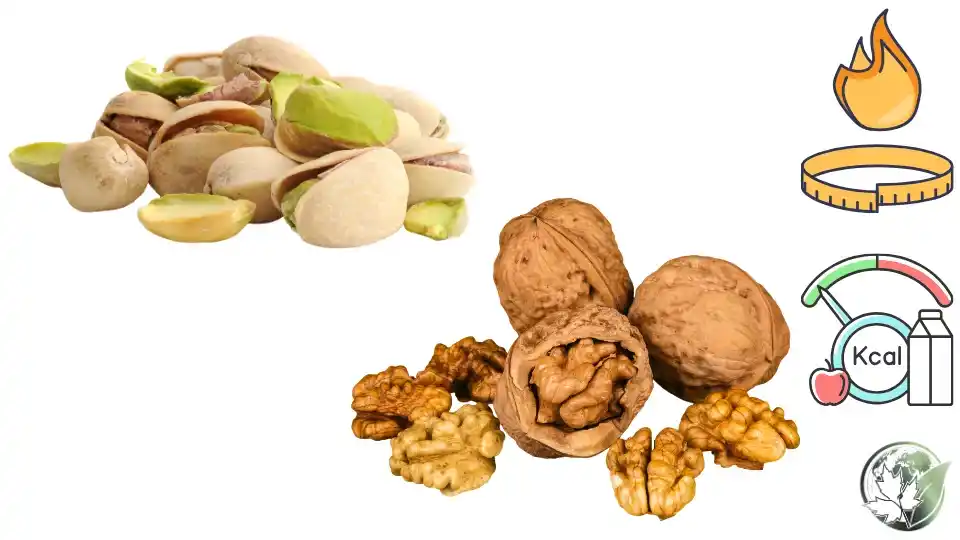
Small amounts of chopped nuts add flavor and crunch with modest calories
How Many Calories Are in a Tablespoon, Quarter Cup and Cup of Akbari Pistachios?
Recipes rarely list nuts by piece, so volume conversions are handy. Shelled whole Akbari kernels weigh about 8 grams per tablespoon, which means a tablespoon holds roughly 45 calories and about 9 kernels. A quarter cup weighs close to 30 grams and provides around 170 calories, or roughly 33 kernels. A full cup of whole shelled kernels weighs about 125 grams and reaches about 700 calories.
Chopped or ground pistachios pack more tightly, so the same spoon holds more nut. A level tablespoon of finely ground pistachio can weigh 10 to 12 grams, adding 56 to 67 calories. This is why a recipe that calls for a "tablespoon of ground nuts" can quietly contribute more calories than a tablespoon of whole kernels.
For walnuts, a tablespoon of chopped nuts weighs about 7 grams and contains roughly 46 calories, while a quarter cup of halves weighs about 30 grams and contains around 196 calories. If you measure by cup, pistachios are slightly lighter in calories than walnuts, but the difference is small enough that the choice should depend on flavor and nutrients rather than a tight calorie count.
Why Akbari Pistachio Calories Can Vary from One Harvest to Another
Calorie reference values come from averages, and real products move around them. Rainfall, irrigation, soil and harvest timing change the moisture and oil content of the crop. A kernel with higher moisture weighs more but carries slightly fewer calories per gram, while a well-dried kernel of the same size is more energy dense. Differences of two to four percent between crop years are normal and are not a sign of poor quality.
Grading and sorting also shape the numbers. Hollow or shriveled nuts weigh less and can lower the average kernel weight in a mixed bag. Premium sorted Akbari lots contain fewer of these, so the average calories per piece are a little higher than in a mixed commercial grade. When a label lists a count per ounce, use it to refine your estimate. Dividing 157 calories by that count gives a realistic per-piece figure for that exact product.
How to Store Akbari Pistachios and Walnuts
Nut fats oxidize over time, so proper storage protects both flavor and nutrition. Keep Akbari pistachios in an airtight jar in a cool, dark place for up to three months. For longer storage, move them to the refrigerator or freezer, where they stay fresh for six to twelve months.
Walnuts go rancid faster than pistachios because of their high polyunsaturated fat content. Shelled walnuts should be refrigerated and eaten within three to four months. In-shell walnuts last longer, up to a year in a cool pantry.
Signs of spoilage include a bitter, paint-like smell, a dull or darkened kernel and a soft texture. Rancid nuts are not dangerous in small amounts, but they taste unpleasant and contain fewer beneficial antioxidants.
How to Avoid Common Mistakes When Counting Akbari Pistachio Calories
The first common mistake is mixing in-shell and shelled weights, which can double or halve your result. The second is assuming a handful equals a serving. A casual handful of shelled Akbari pistachios can weigh 40 to 50 grams, which is 225 to 280 calories. The third is ignoring added oil or sugar in flavored products. Honey-roasted or candied pistachios can reach 500 to 600 calories per 100 grams, plus extra sugar.
Another mistake is relying on calorie apps with generic entries such as "pistachios, 1 piece." These entries often use average weights from smaller varieties. For Akbari, adjust them upward by 10 to 20 percent. The most reliable approach is to weigh a typical portion once and save it as a custom food in your tracker.
Who Should Choose Akbari Pistachios Over Walnuts, and Who Should Not?
Choose Akbari pistachios if you want a snack that feels abundant for the calories, if you value protein and potassium, or if you enjoy a slow, shell-by-shell eating pace. They suit people who graze in the evening and want a built-in speed limit.
Choose walnuts if your priority is plant omega-3 intake, if you cook with nuts regularly or if you prefer a mild, creamy flavor. Walnuts also work well in salads and oatmeal where texture matters more than quantity.
Anyone with tree nut allergy must avoid both. People who are advised to limit potassium, such as some with kidney conditions, should ask a clinician before making pistachios a daily habit. Those with a history of diverticular concerns should follow their doctor's guidance, although current evidence does not show that nuts harm most people.
How to Build a 150 Calorie Akbari Pistachio Snack
Knowing the per-piece numbers lets you design a snack to a calorie target. Here are three simple builds that each land close to 150 calories.
| Snack idea | Portion | Calories |
|---|---|---|
| Akbari pistachios only | 30 kernels | about 152 kcal |
| Pistachios plus dried apricots | 15 kernels plus 3 dried apricots | about 148 kcal |
| Pistachios plus walnut halves | 15 kernels plus 5 walnut halves | about 140 kcal |
| Pistachios plus plain yogurt | 12 kernels plus 100 g Greek yogurt | about 155 kcal |
The yogurt version is the most filling for the calories, giving about 11 grams of protein. The apricot version is the sweetest and brings extra fiber and vitamin A. The walnut mix adds omega-3 fat while still keeping the total under 150 calories because the pistachio count is halved.
Whichever option you choose, set the portion on a plate instead of eating from the bag. People who serve nuts into a small bowl eat about 20 to 30 percent less than those who eat straight from a container, and the calories you save equal a full extra snack at the end of the week.
Final Takeaways: Akbari Pistachios vs Walnuts
One Akbari pistachio holds about 5 calories, and ten hold about 51. One walnut half holds about 13 calories, and a whole walnut holds about 26. Per 100 grams, Akbari pistachios provide 562 kcal compared with 654 for walnuts, plus more protein, fiber and potassium. Walnuts counter with more omega-3 fat.
The best strategy is to weigh your portion, decide what you want from the snack and rotate both nuts through your week. That way you enjoy the taste, keep calories predictable and get a wider range of nutrients.
Frequently Asked Questions
8 questions answered
How many calories are in one Akbari pistachio?
One shelled Akbari pistachio has about 5 calories, based on a kernel weight of around 0.9 grams and 562 kcal per 100 grams.
How many calories are in 10 Akbari pistachios?
Ten shelled Akbari pistachios contain about 50 calories and nearly 2 grams of protein.
Are pistachios lower in calories than walnuts?
Yes. Pistachios have about 562 kcal per 100 grams compared with 654 kcal for walnuts. A walnut half has about 13 calories, while an Akbari pistachio has about 5.
How many Akbari pistachios are in 100 calories?
About 20 shelled kernels equal 100 calories, though the exact number depends on kernel size.
Does the shell add calories?
No. Shells are inedible and add no calories, but they make up about half the weight of in-shell nuts, so you must count the kernel weight only.
Is Akbari pistachio healthier than other varieties?
Nutritionally the difference is small. Akbari is valued for its large size and appearance rather than a unique nutrient advantage.
How many pistachios should I eat per day?
A common guideline is about 28 to 42 grams daily, or roughly 30 to 45 Akbari kernels, which fits most calorie plans.
Can pistachios help with weight management?
They can fit into a weight plan when portions are measured. Their protein, fiber and shell-slowing effect may help control appetite, but they are still calorie dense.