Apricot Calories at a Glance
Apricot calories are among the lowest of any sweet fruit. A single fresh apricot weighs about 35 grams and contains roughly 17 calories. Five apricots weigh about 175 grams and contain around 84 calories, and 100 grams of raw apricot flesh holds about 48 calories. Because the fruit is small, light and mostly water, it is easy to eat several at once without a large calorie bill.
For comparison, one medium apple has about 95 calories and one medium banana has about 105. That means a single apple equals about five and a half apricots in energy, while a banana equals about six. Per 100 grams, the picture is closer: apple provides 52 calories, banana 89 and apricot 48, so apricots are slightly lighter than apples and almost half as dense as bananas.
This guide covers calories per apricot, per handful, per cup and per 100 grams. It compares apricots with apple, banana and several other fruits, explains the nutrients that make apricots a smart snack and shows how ripeness, size and variety shift the numbers. You will find three tables, ideas for using apricots in cooking and an FAQ.
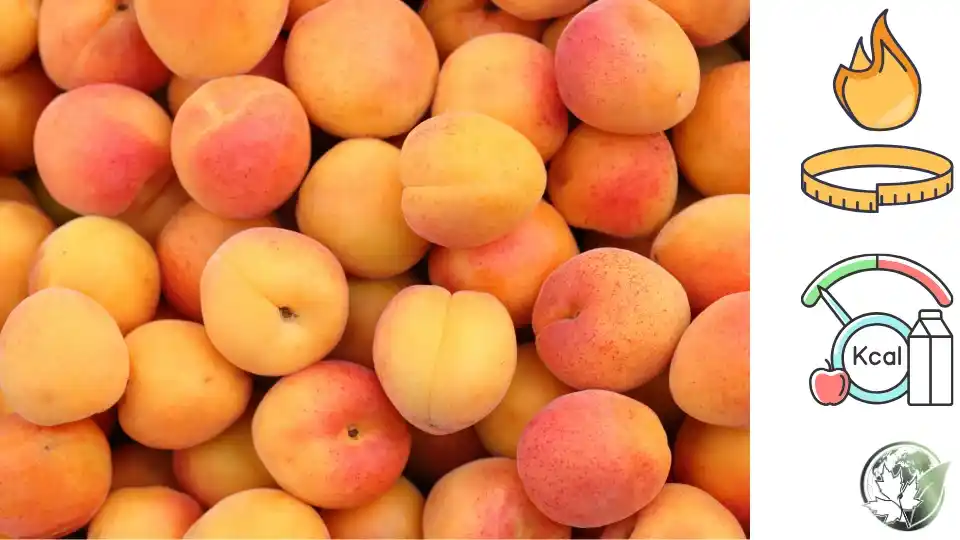
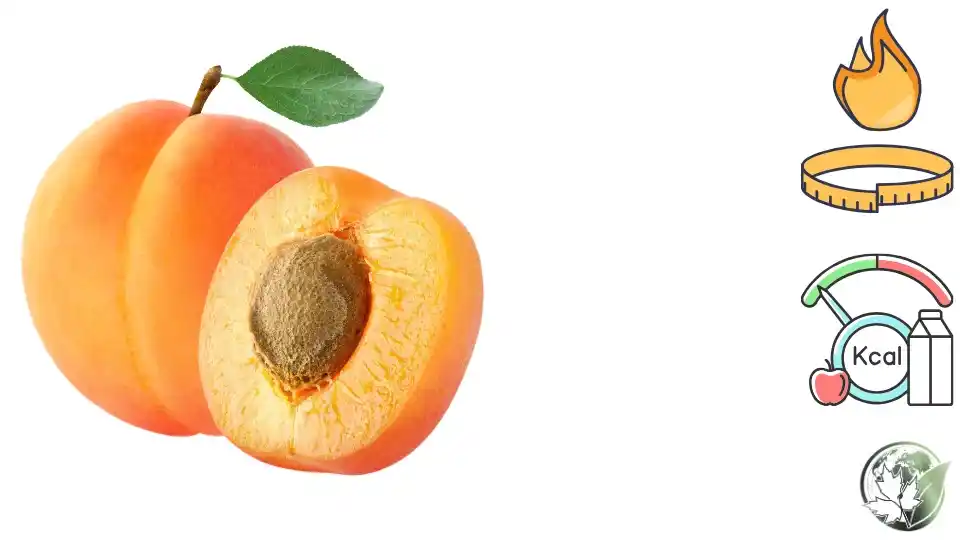
A single fresh apricot has about 17 calories, so a handful stays light
How Many Calories Are in 1 Fresh Apricot?
One medium fresh apricot, about 35 grams including the flesh and skin but not the stone, contains approximately 17 calories. The math is simple: raw apricots contain about 48 calories per 100 grams, so 35 grams provides about 16.8 calories. A small apricot of 25 grams has around 12 calories, while a large apricot of 50 grams reaches 24.
Apricots vary a lot by variety. Early season fruit tends to be smaller and more tart, while late season varieties can be larger and sweeter. Persian and Central Asian apricots, grown in dry, sunny climates, often have a high sugar content and a rich flavor, but their calories per 100 grams remain near the standard value because their water content is still around 86 percent.
When you track calories, always weigh the fruit without the stone. The stone makes up about 8 to 10 percent of the whole fruit weight. If you weigh a whole apricot of 40 grams with its stone, the edible portion is about 36 grams and about 17 calories.
How Many Calories Are in 3, 5 and 10 Apricots?
Because apricots are small, people usually eat several. Here are the common counts with approximate weights and calories, using 35 grams per apricot.
| Number of apricots | Weight | Calories | Sugar | Fiber |
|---|---|---|---|---|
| 1 | 35 g | 17 kcal | 3.3 g | 0.7 g |
| 3 | 105 g | 50 kcal | 10 g | 2.1 g |
| 5 | 175 g | 84 kcal | 16 g | 3.5 g |
| 8 | 280 g | 134 kcal | 26 g | 5.6 g |
| 10 | 350 g | 168 kcal | 33 g | 7.0 g |
A serving of three apricots is about 50 calories, which is what many nutrition labels use as a standard fruit serving. Eating five apricots delivers around 3.5 grams of fiber and a large dose of vitamin A in the form of beta-carotene, all for about the same calories as a small slice of bread.
Apricot vs Apple vs Banana: Calories per Piece
Piece-by-piece comparisons are helpful because fruits come in different sizes. A medium apple weighs 182 grams, a medium banana weighs 118 grams without the peel, and a medium apricot weighs only 35 grams.
| Fruit | Typical weight | Calories per piece | Apricots needed to match |
|---|---|---|---|
| 1 apricot | 35 g | 17 kcal | 1 |
| 1 medium apple | 182 g | 95 kcal | 5.6 |
| 1 medium banana | 118 g | 105 kcal | 6.2 |
| 1 medium peach | 150 g | 59 kcal | 3.5 |
| 1 medium plum | 66 g | 30 kcal | 1.8 |
| 1 cup of grapes | 151 g | 104 kcal | 6.1 |
If you eat one apple, you could instead eat five apricots and still stay under the calories. That volume advantage is one reason apricots are popular in weight-conscious diets. The banana, on the other hand, is a more compact source of energy and potassium, which is why athletes often choose it before or after training.
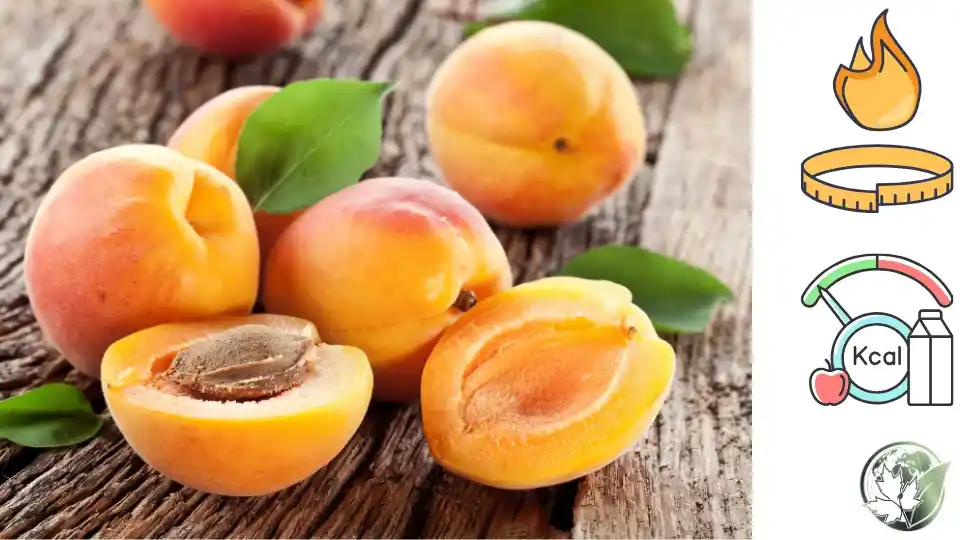
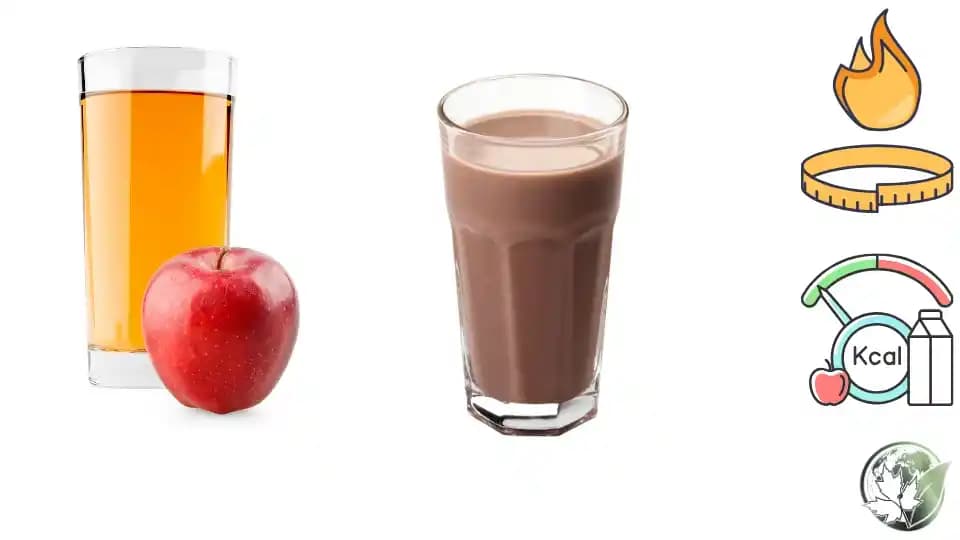
One apple or one banana has as many calories as five to six apricots
Apricot vs Apple vs Banana: Calories per 100 g
When you compare equal weights, the calorie numbers move closer, and the nutrient differences become clearer.
| Per 100 g raw | Apricot | Apple (with skin) | Banana |
|---|---|---|---|
| Calories | 48 kcal | 52 kcal | 89 kcal |
| Carbohydrate | 11.1 g | 13.8 g | 22.8 g |
| Sugar | 9.2 g | 10.4 g | 12.2 g |
| Fiber | 2.0 g | 2.4 g | 2.6 g |
| Protein | 1.4 g | 0.3 g | 1.1 g |
| Potassium | 259 mg | 107 mg | 358 mg |
| Vitamin C | 10 mg | 4.6 mg | 8.7 mg |
| Vitamin A | 96 mcg | 3 mcg | 3 mcg |
Apricots lead in vitamin A, with 96 micrograms per 100 grams compared with just 3 micrograms in apples and bananas. They also give more protein than apples, though the amount is small. Bananas provide the most carbohydrate and potassium, while apples offer a bit more fiber per weight.
How to Count Apricot Calories Correctly
Counting calories in whole fruit is easy if you follow a few rules. First, weigh the fruit with the stone removed. Second, use the weight of the raw flesh, not the weight of a cooked or canned product. Third, remember that serving sizes in apps vary, and "1 medium apricot" may refer to 35 grams, while "1 cup, halves" refers to about 155 grams and 74 calories.
You can also use the quick formula of half the grams. A fruit with 48 calories per 100 grams has just under half a calorie per gram. Weigh the apricot in grams, divide by two and you get a close estimate. A 200 gram portion is about 100 calories, and a 300 gram portion is about 150.
If you buy apricots by the kilogram, remember that a kilo of whole fruit with stones holds about 900 grams of flesh and 430 calories. That is roughly 26 medium apricots.
How Do Ripeness and Variety Change Apricot Calories?
Ripeness affects sweetness more than calories. As an apricot ripens, starch converts to sugar and the fruit softens, but the total carbohydrate remains close. A very ripe apricot may taste sweeter without having noticeably more calories than a firm one, because the change is a conversion, not an addition.
Variety matters more. Small, tart apricots may have 8 grams of sugar per 100 grams, and extra-sweet varieties may reach 11 grams. That can change the calories by 5 to 8 per 100 grams, a small effect. Water content is the main driver: fruit grown with heavy irrigation can be juicier and lighter, while fruit from dry orchards may be denser and sweeter.
For tracking purposes, using 48 calories per 100 grams is accurate to within about 10 percent for nearly every fresh apricot you will find, so you do not need to worry about the exact variety.
What Nutrients Make Apricots Healthy?
Beyond calories, apricots offer a notable nutrient package. Five apricots provide about 25 percent of the daily vitamin A requirement for adults, mostly as beta-carotene, which the body converts to retinol as needed. They also supply about 18 milligrams of vitamin C, 450 milligrams of potassium and 3.5 grams of fiber.
Apricots also contain plant compounds such as chlorogenic acid, catechins and lycopene, which have antioxidant properties. The orange color is a clue that carotenoids are present, and the skin carries many of them, so eating unpeeled fruit is better when you can.
Because apricots are light and hydrating, with about 86 percent water, they make a good summer snack. They also pair well with protein and fat, such as yogurt or a few almonds, which slows sugar absorption and makes the snack more filling.
Apricots pair well with yogurt for a light, filling snack under 150 calories
How Many Calories Are in Apricot Halves, Slices and Cups?
Recipes and tracking apps use volume measures, so here are the common conversions for raw, pitted apricots.
1 half apricot: about 8 kcal, 17 g
1 cup of halves: about 74 kcal, 155 g
1 cup of slices: about 79 kcal, 165 g
1 cup of puree: about 105 kcal, 220 g
100 g: about 48 kcal
1 pound (454 g) of whole fruit with stones: about 195 kcal of flesh
A cup of chopped apricots, about 155 grams, contains roughly 74 calories, comparable to half a banana. Add it to oatmeal or yogurt, and you get sweetness and a bright flavor for very few calories.
How Do Fresh Apricots Compare with Other Stone Fruits?
Apricots belong to the stone fruit family, along with peaches, plums, cherries and nectarines. All of them are relatively low in calories, though cherries and mangoes are a bit higher.
| Fruit | Calories per 100 g | Calories in 1 cup sliced |
|---|---|---|
| Apricot | 48 kcal | 79 kcal |
| Peach | 39 kcal | 60 kcal |
| Nectarine | 44 kcal | 63 kcal |
| Plum | 46 kcal | 76 kcal |
| Sweet cherries | 63 kcal | 97 kcal |
| Mango | 60 kcal | 99 kcal |
All of these fit comfortably in a calorie-controlled diet. Choose based on taste and season. Apricots are particularly rich in vitamin A compared with peaches and plums, while cherries offer more polyphenols and mangoes more vitamin C.
How to Use Fresh Apricots in Recipes Without Adding Many Calories
Apricots are versatile. Slice them into salads with arugula and goat cheese, grill halves for a dessert with a drizzle of honey or bake them into a light crumble. A single grilled apricot half with a teaspoon of honey has about 25 calories, a small treat.
For breakfast, mix chopped apricots into plain yogurt with a few pistachios. A 150 gram serving of yogurt, one chopped apricot and 10 grams of pistachios has about 190 calories and 11 grams of protein. For a drink, blend three apricots with water and ice for about 60 calories per glass without added sugar.
When making jam or compote, remember that added sugar changes the totals. A typical apricot jam has about 250 calories per 100 grams, over five times the calories of fresh fruit. Making a quick stewed apricot with a splash of water and a little cinnamon keeps the calories near 50 per 100 grams.
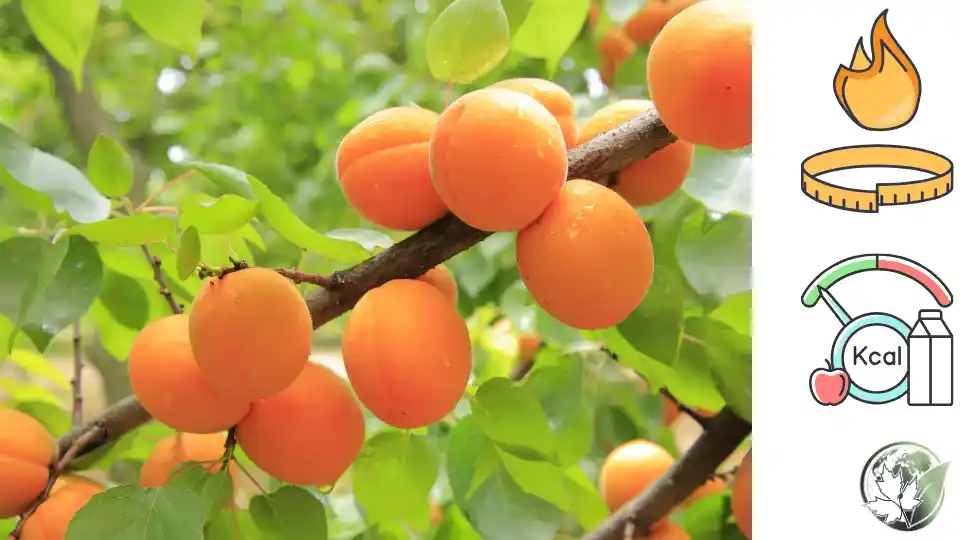
Grilled or baked apricot halves make a light dessert with about 25 calories each
How to Choose, Ripen and Store Fresh Apricots
Choose apricots that are plump, evenly colored and slightly soft to the touch. A deep orange color with a pink blush usually signals flavor. Avoid fruit that is green, hard or has wrinkled skin. A sweet aroma is a good sign.
If apricots are firm, leave them at room temperature in a paper bag for one to three days. Ripe apricots keep in the refrigerator for three to five days. They bruise easily, so store them in a single layer, not in a heap.
To freeze apricots, halve and pit them, lay them on a tray, freeze until solid, then bag them. They keep for up to ten months and work well in smoothies, sauces and baking. A frozen half apricot has the same 8 calories as a fresh one.
How to Compare Apricots with Dried Apricots
Drying removes water, concentrating sugar and calories. Dried apricots contain about 241 calories per 100 grams, five times the calories of fresh ones by weight. A single dried apricot half weighs about 8 grams and has about 19 calories, which is as much as a whole fresh apricot.
| Form | Weight for 50 calories | Approximate pieces |
|---|---|---|
| Fresh apricots | 104 g | 3 whole fruits |
| Dried apricots | 21 g | 2.5 halves |
| Canned apricots in light syrup | 76 g | 2 halves with syrup |
| Apricot jam | 20 g | 1 tablespoon |
If you want volume, fresh fruit gives you far more food for the same calories. If you want a portable, shelf-stable snack, dried apricots work, but measure the portion: a handful of 10 halves can reach 190 calories. Look for unsulphured, unsweetened dried apricots when possible.
How Many Apricots Should You Eat in a Day?
Public health guidelines suggest about two cups of fruit per day for adults eating 2000 calories. That could be three apricots, one apple and one banana, or any other mix. Apricots count as fruit servings at about three medium fruits per serving.
There is no strict maximum, but eating more than ten apricots at once can cause stomach discomfort because of their fiber and sorbitol content, a natural sugar alcohol with a mild laxative effect. People with sensitive digestion may prefer to start with two or three.
Never eat the kernels inside apricot stones in large quantities. Raw bitter kernels contain amygdalin, which the body converts into cyanide. Sweet kernels in some varieties are safer, but eating more than a few is not recommended.
How Does an Apricot Snack Compare with Common 100 Calorie Snacks?
A useful way to judge apricots is to see how much food 100 calories buys. Fresh apricots give you a huge plate, while processed snacks give you a few bites. This matters if you often feel hungry between meals.
| Food | Amount for about 100 calories | Visual portion |
|---|---|---|
| Fresh apricots | 210 g | 6 medium fruits |
| Apple | 190 g | 1 large apple |
| Banana | 112 g | 1 small banana |
| Almonds | 17 g | 14 nuts |
| Plain biscuits | 22 g | 2 small biscuits |
| Milk chocolate | 19 g | 2 squares |
| Potato chips | 19 g | 10 chips |
Six apricots take longer to eat, add water and fiber to your stomach and offer vitamin A, while two squares of chocolate or ten chips disappear quickly. You do not need to avoid treats, but when the goal is feeling full for few calories, fresh apricots are an easy winner during their short season.
How to Pair Apricots with Protein for a Balanced Snack
Fruit alone is quickly digested, so pairing apricots with protein or healthy fat makes the snack last longer. A few combinations work especially well and keep the total near 150 calories.
Three apricots with 100 grams of plain Greek yogurt: about 150 kcal and 11 g protein
Two apricots with 15 grams of almonds: about 125 kcal and 4 g protein
Four apricots with a slice of cheese, 28 grams: about 180 kcal and 7 g protein
Two apricots with a boiled egg: about 105 kcal and 7 g protein
Three apricots blended with 150 ml of milk: about 125 kcal and 5 g protein
If you are active, add a slice of whole grain toast or a spoonful of oats. The extra carbohydrate fuels exercise, while the protein supports muscle repair. The fruit supplies potassium, which helps replace what you lose in sweat.
How to Make a Low Calorie Apricot Smoothie and Dessert
Smoothies and desserts are where calories can creep up, so measure the ingredients. A simple apricot smoothie uses four pitted apricots, 150 milliliters of milk and a few ice cubes, giving about 130 calories. Adding a tablespoon of honey raises it to about 195, and adding a banana raises it by another 105.
For dessert, bake apricot halves with a pinch of cinnamon and one teaspoon of chopped pistachios per portion. Each serving of three halves has about 40 calories, plus about 15 for the nuts. Serve with a spoonful of yogurt for creaminess. Compared with an apricot tart, which can reach 300 calories per slice, the baked version saves around 240 calories and keeps the fruit as the star.
How to Dry, Can or Freeze Apricots at Home Without Losing Track of Calories
Apricots are seasonal, so many households preserve them. Each method changes the calorie math. Drying removes about 80 percent of the water, so 1 kilogram of fresh apricots, about 430 calories of flesh, shrinks to roughly 200 grams of dried fruit with the same total energy, now packed into a much smaller portion. Eating 50 grams of your homemade dried apricots therefore delivers about 120 calories.
Canning in water or light syrup adds liquid and sometimes sugar. Apricots packed in light syrup contain about 66 calories per 100 grams, and those in heavy syrup about 83. If you can at home, using unsweetened juice or plain water keeps the figure close to 48 calories per 100 grams. Freezing changes nothing, which makes it the simplest way to store apricots when you want to keep the numbers predictable.
Whichever method you use, label the jars or bags with the weight of fruit and the date. That small habit makes your tracking accurate months later, when you reach for a bag of frozen halves and need to know what a cup holds.
Key Takeaways: Apricot Calories vs Apple and Banana
One fresh apricot has about 17 calories, five apricots have about 84 and 100 grams have about 48. An apple has about 95 calories and a banana about 105 per medium fruit, so you can eat five or six apricots for the energy of one of them. Apricots stand out for vitamin A and are light, hydrating and easy to portion.
Weigh the fruit without the stone, use 48 calories per 100 grams as a working rule and choose fresh fruit over dried when you want volume. Enjoy them with yogurt, nuts or in salads for a satisfying, low-calorie snack.
Frequently Asked Questions
8 questions answered
How many calories are in one apricot?
One medium fresh apricot of about 35 grams has about 17 calories.
How many calories are in 5 apricots?
Five fresh apricots, about 175 grams, contain roughly 84 calories, 16 grams of sugar and 3.5 grams of fiber.
Are apricots lower in calories than apples?
Per 100 grams, yes, slightly: apricots have about 48 calories and apples about 52. Per piece, apricots are much lower because they are far smaller.
Are apricots lower in calories than bananas?
Yes. Apricots have about 48 calories per 100 grams compared with 89 for bananas. One banana has as many calories as about six apricots.
How many apricots equal 100 calories?
About six medium fresh apricots, around 210 grams, equal 100 calories.
Are apricots good for weight loss?
They can be, because they are low in calories, high in water and contain fiber, so they fill you up for few calories.
Do dried apricots have more calories than fresh ones?
Yes. Dried apricots have about 241 calories per 100 grams, around five times more than fresh apricots by weight.
Can I eat apricot skin?
Yes. The skin is edible and contains fiber and antioxidants, so wash the fruit and eat it unpeeled when possible.