
How Many Calories Are in Watermelon? The Quick Answer
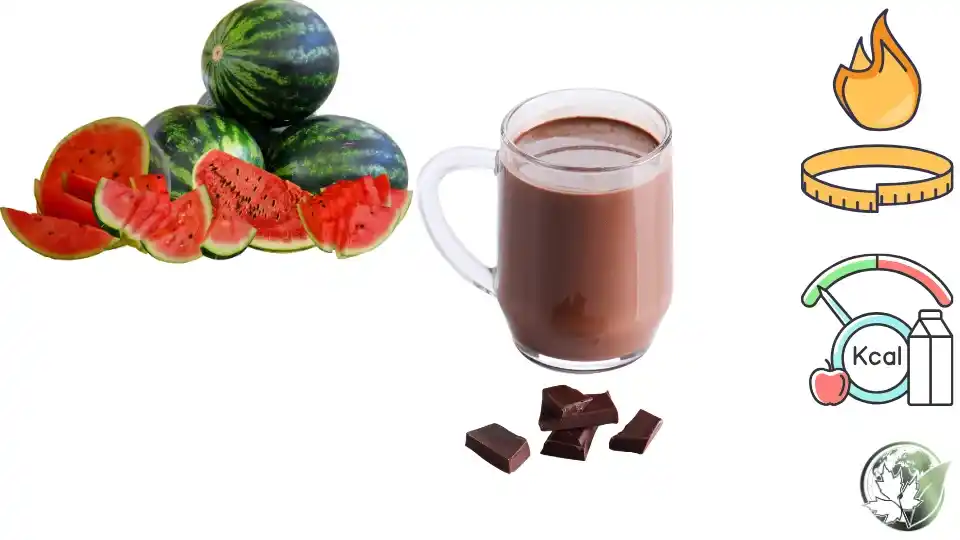
Watermelon has about 30 calories per 100 grams. A cup of diced watermelon (152 grams) has about 46 calories, a typical wedge (one sixteenth of a medium melon, about 286 grams) has about 86 calories, a thin slice (100 grams) has 30, and a cup of watermelon balls (154 grams) has about 46. Milk chocolate has about 535 calories per 100 grams, a standard 10 gram square has 54 calories, and a 43 gram bar has about 230. So per gram, watermelon has about 18 times fewer calories than milk chocolate, and a large wedge of watermelon at 86 calories has fewer calories than two squares of chocolate plus half of another.
Put differently, 100 calories of watermelon is about 333 grams, a bit more than two cups of diced fruit, while 100 calories of milk chocolate is about 19 grams, about two squares. To match the 230 calories in one 43 gram bar of milk chocolate, you would need about 770 grams of watermelon, around five cups or nearly three wedges.
Watermelon is about 91.4 percent water, with 7.6 grams of carbohydrate per 100 grams, of which 6.2 grams is sugar, and 0.4 grams of fiber. It has almost no fat, 0.2 grams, and 0.6 grams of protein. Milk chocolate, by contrast, contains about 30 grams of fat, 57 grams of carbohydrate and 51 grams of sugar per 100 grams. Watermelon is one of the most hydrating, lowest calorie fruits, and it supplies vitamin C, vitamin A, lycopene and the amino acid citrulline. This guide gives watermelon calories by slice, cup, wedge and whole melon, compares them with milk chocolate and other fruits, covers juice, rind and seeds, and answers questions on sugar, blood sugar, weight loss, hydration and storage. There are three comparison tables and an FAQ.
A cup of diced watermelon has about 46 calories
How Many Calories Are in Watermelon by Slice, Cup and Whole Melon?
| Portion | Weight | Calories | Carbs | Sugar | Fiber |
|---|---|---|---|---|---|
| 1 bite-size cube | 10 g | 3 kcal | 0.8 g | 0.6 g | 0.0 g |
| 1 thin slice (1/2 inch) | 100 g | 30 kcal | 7.6 g | 6.2 g | 0.4 g |
| 1 cup diced | 152 g | 46 kcal | 11.5 g | 9.4 g | 0.6 g |
| 1 cup balls | 154 g | 46 kcal | 11.6 g | 9.5 g | 0.6 g |
| 1 wedge (1/16 melon) | 286 g | 86 kcal | 21.6 g | 17.7 g | 1.1 g |
| 2 cups diced | 304 g | 91 kcal | 23.0 g | 18.8 g | 1.2 g |
| 1/4 small melon | 600 g | 180 kcal | 45.6 g | 37.2 g | 2.4 g |
| 1 medium melon (4.5 kg) | 4,518 g | 1,355 kcal | 343 g | 280 g | 18 g |
| 100 g | 100 g | 30 kcal | 7.6 g | 6.2 g | 0.4 g |
| 500 g | 500 g | 150 kcal | 38 g | 31 g | 2.0 g |
These figures are for the edible flesh. A whole watermelon weighs more because of the rind, which can make up 30 to 40 percent of its weight. If you weigh a wedge with the rind, the edible part may be only 60 to 70 percent, so estimate calories accordingly, or weigh the flesh after cutting.
How Many Calories Are in Watermelon Juice, Rind and Seeds?
| Item | Serving | Calories | Notes |
|---|---|---|---|
| Watermelon juice, fresh | 1 cup (240 ml) | 74 kcal | No added sugar |
| Watermelon juice, fresh | 100 ml | 31 kcal | Strained |
| Watermelon smoothie with yogurt | 1 cup | 140 kcal | Plain yogurt |
| Watermelon agua fresca with sugar | 1 cup | 110 kcal | 1 tbsp sugar |
| Watermelon and feta salad | 1 cup | 120 kcal | 1 oz feta |
| Frozen watermelon cubes | 1 cup | 46 kcal | Same as fresh |
| Watermelon sorbet, homemade | 1/2 cup | 90 kcal | Sugar added |
| Watermelon rind, raw | 100 g | 18 kcal | White part |
| Pickled watermelon rind | 1/4 cup | 60 kcal | Sugar syrup |
| Watermelon seeds, dried | 1 oz (28 g) | 158 kcal | Kernels |
| Watermelon seeds, roasted | 1 oz | 160 kcal | Shelled |
| Watermelon candy | 1 oz | 100 kcal | Sugar based |
The flesh, juice and rind are very low in calories. Watermelon seeds, once dried and roasted, are rich in fat and protein, so they count as a nut-like snack at about 158 calories an ounce, though the dark seeds in fresh watermelon are eaten in tiny amounts and add almost no calories.
Watermelon vs Milk Chocolate: Calories Compared
| Food | Portion | Weight | Calories | Sugar | Fat |
|---|---|---|---|---|---|
| Watermelon | 100 g | 100 g | 30 kcal | 6.2 g | 0.2 g |
| Watermelon | 1 cup diced | 152 g | 46 kcal | 9.4 g | 0.3 g |
| Watermelon | 1 wedge | 286 g | 86 kcal | 17.7 g | 0.6 g |
| Watermelon | 1 medium melon | 4,518 g | 1,355 kcal | 280 g | 9 g |
| Milk chocolate | 1 square | 10 g | 54 kcal | 5.1 g | 3.0 g |
| Milk chocolate | 1 small bar | 43 g | 230 kcal | 22 g | 13 g |
| Milk chocolate | 1 large bar | 100 g | 535 kcal | 51 g | 30 g |
| Milk chocolate | 3 squares | 30 g | 161 kcal | 15.3 g | 9 g |
| Watermelon | Equal to 1 square | 180 g | 54 kcal | 11.2 g | 0.4 g |
| Watermelon | Equal to 1 bar | 770 g | 230 kcal | 47.7 g | 1.5 g |
One square of milk chocolate has the same calories as about 180 grams of watermelon, a bit more than a cup of diced fruit. A whole medium watermelon, which few people eat at once, has about 1,355 calories, about the same as 253 grams of milk chocolate, or about 5.9 small bars.
Watermelon vs Milk Chocolate: Nutrition Compared
| Per 100 g | Watermelon | Milk chocolate |
|---|---|---|
| Calories | 30 kcal | 535 kcal |
| Carbohydrate | 7.6 g | 59.4 g |
| Sugar | 6.2 g | 51.5 g |
| Fiber | 0.4 g | 3.4 g |
| Protein | 0.6 g | 7.7 g |
| Fat | 0.2 g | 29.7 g |
| Saturated fat | 0.0 g | 18.5 g |
| Vitamin C | 8.1 mg | 0.0 mg |
| Vitamin A | 28 mcg | 30 mcg |
| Potassium | 112 mg | 372 mg |
| Magnesium | 10 mg | 63 mg |
| Lycopene | 4,532 mcg | 0 mcg |
| Citrulline | about 250 mg | 0 mg |
| Water | 91.4 g | 1.3 g |
| Per 100 calories | Watermelon | Milk chocolate |
|---|---|---|
| Weight | 333 g | 19 g |
| Sugar | 20.7 g | 9.6 g |
| Fat | 0.7 g | 5.6 g |
| Vitamin C | 27 mg | 0 mg |
| Water | 304 g | 0.2 g |
Interestingly, per 100 calories watermelon contains more sugar than milk chocolate, because most of its calories are from sugar, and there is almost no fat. But 100 calories of watermelon is 333 grams, a large and filling portion with over 300 grams of water, while 100 calories of chocolate is two squares. Watermelon is a hydrating, voluminous food, while chocolate is a dense treat with fat and cocoa compounds.
One square of milk chocolate has about as many calories as 180 grams of watermelon
Is Watermelon High in Sugar?
Watermelon has about 6.2 grams of sugar per 100 grams, a modest level compared with grapes at 16 grams, bananas at 12 grams, or mangoes at 14 grams. A cup of diced watermelon has about 9.4 grams of sugar, similar to a bit more than two sugar cubes, and a large wedge of 286 grams has about 17.7 grams, close to four and a half cubes. The sugar is natural, mostly fructose and glucose, delivered with water, vitamins and lycopene, and no fat. Per serving, though, it is not a high sugar food: a 43 gram milk chocolate bar has about 22 grams of sugar, more than a whole wedge of watermelon at 17.7 grams, with 230 calories against 86.
Does Watermelon Raise Blood Sugar?
Watermelon has a high glycemic index, reported at about 72 to 80, which sometimes alarms people. But the glycemic load, which accounts for the actual carbohydrate in a serving, is low, at about 4 to 5 for a cup, since watermelon contains so little carbohydrate per 100 grams. In practice, a normal serving has a modest effect on blood sugar. People with diabetes can include watermelon in controlled portions, such as a cup, preferably with protein or fat, like cheese or nuts, which slows absorption. Large amounts at once, a quarter of a melon for instance, deliver 45 grams of carbohydrate and will raise blood sugar significantly. Milk chocolate has a lower glycemic index of about 43, but a far higher energy load because of its fat.
Is Watermelon Good for Weight Loss?
Watermelon fits well in a weight loss diet. Its high water content and volume make it filling for few calories, and it satisfies a sweet craving. Replacing a chocolate bar of 230 calories with two cups of watermelon at 92 calories saves about 140 calories, and replacing a daily bar with fruit could account for a pound of fat loss a month. Studies on foods with high water content, such as soups and fruit, suggest that eating them at the start of a meal can reduce total calorie intake. The drawbacks are minor: watermelon is low in protein and fiber, so it may not keep you full for long, and it is easy to eat large amounts. Pair it with a handful of nuts, some yogurt or cheese to improve staying power.
Two cups of watermelon at 92 calories can replace a 230 calorie chocolate bar
What Are the Health Benefits of Watermelon?
Watermelon is a leading source of lycopene among fruits, with about 4.5 milligrams per 100 grams, more than fresh tomatoes. Lycopene is an antioxidant associated with heart and prostate health in observational studies. Watermelon also contains citrulline, an amino acid that the body converts to arginine, then to nitric oxide, which relaxes blood vessels. Small trials suggest that citrulline from watermelon juice may lower blood pressure modestly and reduce muscle soreness after exercise, although more research is needed. It provides vitamin C, vitamin A, potassium and magnesium. And with 91 percent water, it contributes to hydration in hot weather, with some electrolytes. A diet rich in fruit and vegetables is linked with lower risk of heart disease, and watermelon is an easy way to eat more.
How Does Watermelon Compare With Other Fruits in Calories?
| Fruit (100 g) | Calories | Sugar | Water |
|---|---|---|---|
| Watermelon | 30 kcal | 6.2 g | 91.4 g |
| Strawberries | 32 kcal | 4.9 g | 90.9 g |
| Cantaloupe | 34 kcal | 7.9 g | 90.2 g |
| Honeydew melon | 36 kcal | 8.1 g | 89.8 g |
| Peach | 39 kcal | 8.4 g | 88.9 g |
| Orange | 47 kcal | 9.4 g | 86.8 g |
| Apple | 52 kcal | 10.4 g | 85.6 g |
| Grapes | 69 kcal | 15.5 g | 80.5 g |
| Banana | 89 kcal | 12.2 g | 74.9 g |
| Mango | 60 kcal | 13.7 g | 83.5 g |
Watermelon is one of the lowest calorie fruits. Only a few, such as strawberries and some melons, come close. This makes it an ideal summer snack for people managing weight.
How Many Calories Are in Watermelon Dishes and Chocolate Treats?
| Dish | Serving | Calories | Notes |
|---|---|---|---|
| Watermelon cubes, plain | 1 cup | 46 kcal | Fresh |
| Watermelon with salt and lime | 1 cup | 48 kcal | Mexican style |
| Watermelon and mint salad | 1 cup | 55 kcal | Lime |
| Watermelon and feta salad | 1 cup | 120 kcal | Feta, olive oil |
| Watermelon and cheese plate | 1 plate | 200 kcal | White cheese, walnuts |
| Watermelon smoothie | 1 cup | 100 kcal | Ice, lime |
| Watermelon popsicle, homemade | 1 pop | 35 kcal | Fruit only |
| Chocolate-dipped watermelon cube | 1 cube | 20 kcal | Thin coating |
| Milk chocolate bar | 1 small (43 g) | 230 kcal | |
| Chocolate ice cream | 1/2 cup | 140 kcal | |
| Chocolate cake slice | 1 slice | 350 kcal |
How to Choose, Cut and Store Watermelon
Pick a melon that feels heavy for its size, with a creamy yellow spot where it rested on the ground, a dull rather than shiny skin and a hollow sound when tapped. Store a whole uncut melon at room temperature for up to a week, or in the refrigerator for two. Once cut, cover and refrigerate, and eat within three to five days. Cut melon left at room temperature for more than two hours should be discarded, since the high moisture supports bacterial growth. Wash the rind before cutting, so that the knife does not carry bacteria into the flesh. Frozen cubes are a refreshing snack and make a sorbet-like treat with a blender.
Wash the rind before cutting and refrigerate cut watermelon within two hours
How to Count Watermelon Calories Accurately
Weigh the edible flesh after removing rind and use 30 calories per 100 grams. For cups, use 46 per cup of diced. If you only know the weight of a wedge with rind, estimate that 65 percent is flesh. For juice, count 74 calories per cup, and remember that blending may add ice and other ingredients. For chocolate, count each 10 gram square as 54 calories.
Does Watermelon Really Keep You Hydrated?
With about 91 percent water by weight, a cup of diced watermelon provides about 140 milliliters of water, and a large wedge about 260 milliliters, comparable to a small glass. Watermelon also contains potassium, about 112 milligrams per 100 grams, and a little magnesium, and some sodium if you add salt as many people do, so it supplies electrolytes lost in sweat. Studies of foods rated by how well they hydrate show that water-rich fruits and vegetables, including watermelon, cucumber and strawberries, contribute to hydration similarly to a drink. During hot weather, eating watermelon alongside regular water can help you meet fluid needs, with fiber and vitamins that a glass of water does not provide. Unlike chocolate, which has only about 1 percent water and needs fluids to accompany it, watermelon is itself a drink and a snack.
| Food (100 g) | Water | Calories | Water per 100 calories |
|---|---|---|---|
| Watermelon | 91.4 g | 30 kcal | 305 g |
| Cucumber | 95.2 g | 15 kcal | 635 g |
| Strawberries | 90.9 g | 32 kcal | 284 g |
| Orange | 86.8 g | 47 kcal | 185 g |
| Apple | 85.6 g | 52 kcal | 165 g |
| Milk chocolate | 1.3 g | 535 kcal | 0.2 g |
How Do You Use Watermelon to Replace Chocolate Cravings?
Cravings for chocolate usually combine a desire for sweetness, creaminess and a small reward. Watermelon cannot imitate the fat and cocoa, but it can satisfy the sweet and cool part, especially in warm weather. Try chilled cubes with a squeeze of lime and a pinch of chili for a sweet-salty-sour snack at 46 calories a cup. For something chocolate-like, dip a few cubes in melted dark chocolate for about 20 calories each, so that a plate of five has about 100 calories, a fraction of a candy bar. Another idea is to blend frozen watermelon with a spoon of cocoa powder and a little yogurt for a chocolate-flavored slush with about 90 calories. If you still want real chocolate, eat one or two squares slowly and follow with a bowl of fruit.
What Are the Differences Between Seedless and Seeded Watermelon?
Seedless watermelon is a hybrid that produces fruit without mature black seeds, though it contains small, soft white seed coats. Calories are the same as for seeded varieties, at about 30 per 100 grams. Some studies indicate that seedless melons may have slightly less lycopene or similar levels, depending on the variety. Seeded watermelons often taste sweeter to many people, and the seeds can be dried and roasted, offering protein and minerals at about 158 calories an ounce. Yellow and orange flesh varieties contain beta carotene rather than lycopene, again with about 30 calories per 100 grams. For calorie counting, there is no need to distinguish between types.
Is Watermelon Safe for Everyone to Eat in Large Amounts?
For most people, watermelon is safe and healthy. Eating very large amounts, such as half a melon in one sitting, can cause digestive upset, because watermelon contains fructose and sorbitol, which can cause gas, bloating or loose stools in people sensitive to FODMAPs. A normal serving of about a cup is usually well tolerated, but those with irritable bowel syndrome may need to limit portions to a small amount. People with diabetes should keep to controlled servings and pair with protein. Those on potassium restricted diets for kidney disease should moderate portions, since a large wedge has about 320 milligrams of potassium. Allergy to watermelon is rare but can occur in people with pollen allergies, causing itching in the mouth. Chocolate has its own cautions: caffeine and theobromine, high saturated fat and sugar, and it is toxic to dogs, whereas watermelon flesh, without seeds and rind, is a safe treat for them in small amounts.
How Can You Build a Light Summer Dessert Around Watermelon?
Cool, simple desserts keep calories low. Skewer cubes of watermelon with mint and strawberries, and serve with a yogurt dip of two tablespoons of Greek yogurt with honey, for about 80 calories. Make granita by freezing pureed watermelon with lime juice, scraping with a fork every 30 minutes, for about 40 calories per cup without sugar. Serve a watermelon and berry salad, with a spoon of chia seeds and lime, at about 90 calories. A watermelon pizza of one thick round slice topped with a spoon of yogurt, berries and a few chocolate shavings gives about 130 calories, with the chocolate adding just 20. These desserts keep the satisfaction of something sweet and cold while skipping the 300 to 500 calories of cake or ice cream.
What Is the Best Time of Day to Eat Watermelon?
There is no strict rule, but some timings make practical sense. Eaten mid-morning or mid-afternoon, watermelon bridges the gap between meals with few calories and keeps you hydrated. Before a meal, a cup of watermelon can take the edge off appetite. After exercise, its water, potassium and natural sugars help replenish fluids and glycogen, and some athletes drink watermelon juice for the citrulline. Late at night, large portions may cause trips to the bathroom because of the water content, and the fructose may bother sensitive stomachs, so keep the portion to a cup. Whatever time you choose, treat watermelon as a snack or dessert rather than an unlimited food, particularly if you track sugar.
Key Takeaways: Watermelon Calories vs Milk Chocolate
Watermelon has about 30 calories per 100 grams, 46 per cup and 86 per wedge, against 535 per 100 grams and 54 per square for milk chocolate. You need about 770 grams of watermelon to match a 43 gram chocolate bar. It is hydrating, rich in lycopene and citrulline, and an easy swap for sweets, but stay mindful of portions for blood sugar.
Frequently Asked Questions
6 questions answered
How many calories are in a cup of watermelon?
About 46.
How many calories are in a slice of watermelon?
About 30 for a 100 gram slice and 86 for a large wedge.
Does watermelon have fewer calories than milk chocolate?
Yes, about 18 times fewer per gram.
Is watermelon fattening?
No, it is very low in calories, but large portions add sugar.
Can diabetics eat watermelon?
Yes, in controlled portions such as a cup.
How much watermelon equals one chocolate bar?
About 770 grams for a 43 gram bar.




