How Many Calories Are in Verjuice? The Quick Answer
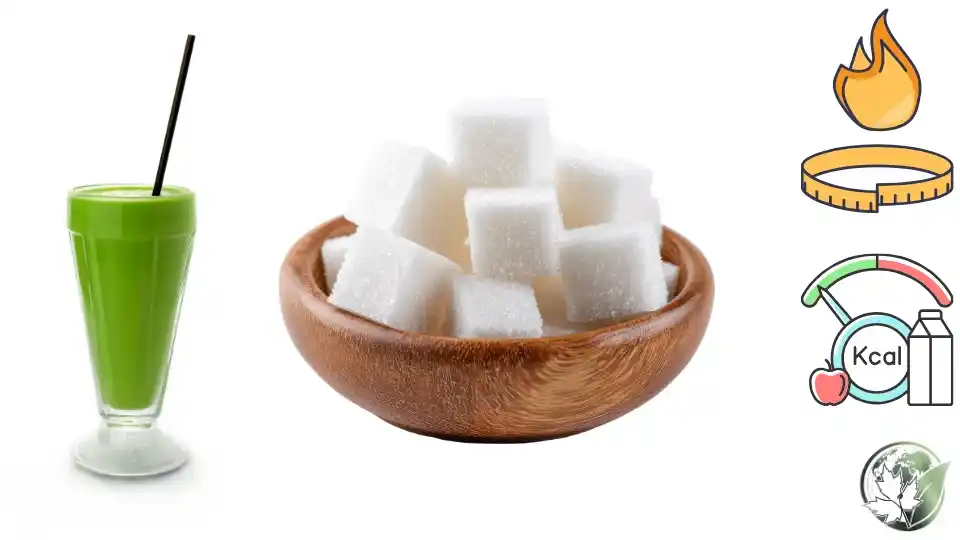
Verjuice, the tart juice pressed from unripe grapes, has about 22 calories per 100 milliliters, which works out to about 3 calories per tablespoon (15 ml), 1 calorie per teaspoon, about 6 calories per ounce (30 ml), and about 53 calories in a full cup (240 ml). A sugar cube (4 grams) has about 16 calories, so one sugar cube has the calories of about five tablespoons of verjuice, and a cup of verjuice has the calories of just over three sugar cubes. In practical cooking terms, where a recipe calls for a tablespoon or two, verjuice adds 3 to 6 calories to the whole dish.
Exact calories depend on the brand, because verjuice is not standardized. Unripe grapes have much less sugar than ripe ones, typically 2 to 6 grams per 100 milliliters, compared with 15 to 20 grams in ripe grape juice, and they are rich in malic and tartaric acids, which give verjuice its sharp, clean sourness. Commercial verjuice ranges from about 15 to 35 calories per 100 milliliters. Homemade verjuice, called ab ghooreh in Persian, is usually at the lower end if made from truly unripe grapes and at the higher end if the grapes had begun to sweeten.
Verjuice is an important ingredient in Persian, Middle Eastern, French and Australian cooking, used in place of lemon juice or vinegar to add sourness without harshness. It features in Persian stews, soups, salads and kebab marinades, in French sauces and mustard, and in modern Mediterranean cooking. This guide gives the calories in verjuice by spoon, cup and bottle, compares it with sugar, lemon juice, vinegar, wine and ripe grape juice, covers what it is, how it is made, how to use it, and answers questions on sugar, blood sugar, diet and storage. There are three tables and an FAQ.
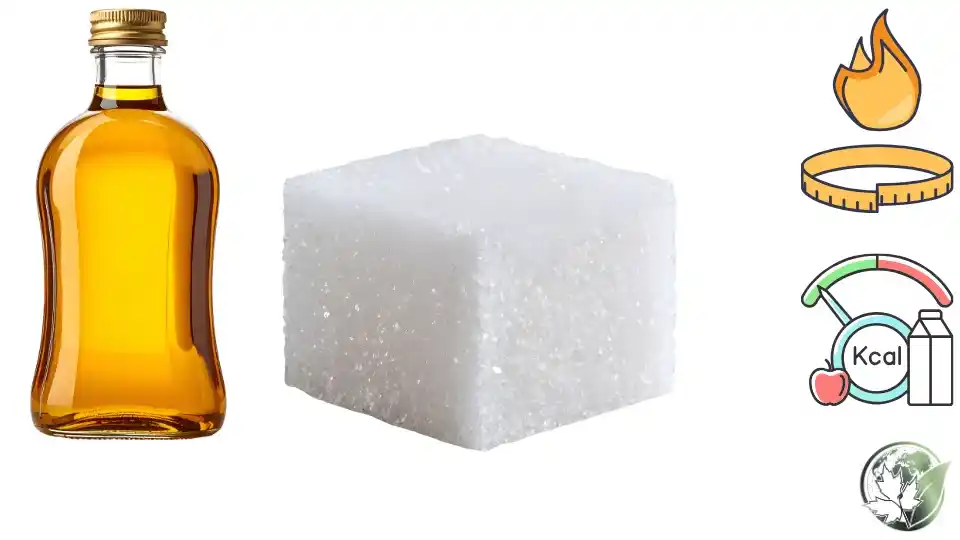
A tablespoon of verjuice has about 3 calories
How Many Calories Are in Verjuice by Spoon, Cup and Bottle?
| Portion | Volume | Calories | Carbs | Sugar | Acid (approx.) |
|---|---|---|---|---|---|
| 1 teaspoon | 5 ml | 1 kcal | 0.3 g | 0.2 g | 0.1 g |
| 1 tablespoon | 15 ml | 3 kcal | 0.8 g | 0.5 g | 0.3 g |
| 2 tablespoons | 30 ml | 7 kcal | 1.6 g | 1.0 g | 0.6 g |
| 1/4 cup | 60 ml | 13 kcal | 3.2 g | 2.0 g | 1.2 g |
| 1/2 cup | 120 ml | 26 kcal | 6.4 g | 4.0 g | 2.4 g |
| 1 cup | 240 ml | 53 kcal | 12.8 g | 8.0 g | 4.8 g |
| Small bottle | 250 ml | 55 kcal | 13.3 g | 8.3 g | 5.0 g |
| Bottle | 500 ml | 110 kcal | 26.6 g | 16.6 g | 10.0 g |
| Large bottle | 1 liter | 220 kcal | 53 g | 33 g | 20 g |
| 100 ml | 100 ml | 22 kcal | 5.3 g | 3.3 g | 2.0 g |
Because a typical use is a spoonful or two, verjuice adds almost nothing to the calories of a dish. Even a half cup, used in a big pot of stew for six people, adds only 26 calories in total, or about 4 per person.
Verjuice vs a Sugar Cube: Calories Compared
| Food | Portion | Calories | Sugar |
|---|---|---|---|
| Sugar cube | 1 cube (4 g) | 16 kcal | 4 g |
| Sugar cube | 2 cubes (8 g) | 32 kcal | 8 g |
| Sugar cube | 3 cubes (12 g) | 48 kcal | 12 g |
| Verjuice | 1 tablespoon | 3 kcal | 0.5 g |
| Verjuice | 5 tablespoons (75 ml) | 17 kcal | 2.5 g |
| Verjuice | 1/4 cup | 13 kcal | 2.0 g |
| Verjuice | 1/2 cup | 26 kcal | 4.0 g |
| Verjuice | 1 cup | 53 kcal | 8.0 g |
| Ripe grape juice | 1/4 cup (60 ml) | 38 kcal | 9.1 g |
| Ripe grape juice | 1 cup (240 ml) | 152 kcal | 36.4 g |
A sugar cube at 16 calories equals about 73 milliliters of verjuice, about 5 tablespoons. A cup of verjuice has about as many calories as 3.3 sugar cubes, but only about 8 grams of sugar, which is the sugar of two cubes. A cup of ripe grape juice, by contrast, has about 36 grams of sugar, the equivalent of 9 cubes.
Verjuice vs a Sugar Cube: Nutrition Compared
| Per 100 ml (approx.) | Verjuice | Sugar cube equivalent (25 cubes = 100 g) |
|---|---|---|
| Calories | 22 kcal | 387 kcal per 100 g |
| Carbohydrate | 5.3 g | 100 g |
| Sugar | 3.3 g | 100 g |
| Acid (tartaric and malic) | 2.0 g | 0 g |
| Potassium | 90 mg | 0 mg |
| Vitamin C | 2 mg | 0 mg |
| Polyphenols | present | none |
| Water | 94 g | 0 g |
| Fat and protein | 0 g | 0 g |
The sugar cube is pure sucrose, with no nutrients, while verjuice is mostly water with acids, a little sugar, potassium and polyphenols such as the tannins and flavonoids found in grape skins. Per 100 grams, a sugar cube has roughly 18 times as many calories as verjuice. In daily use, however, sugar is used by the cube and verjuice by the spoon, which is why a spoonful of verjuice amounts to a fraction of a cube.
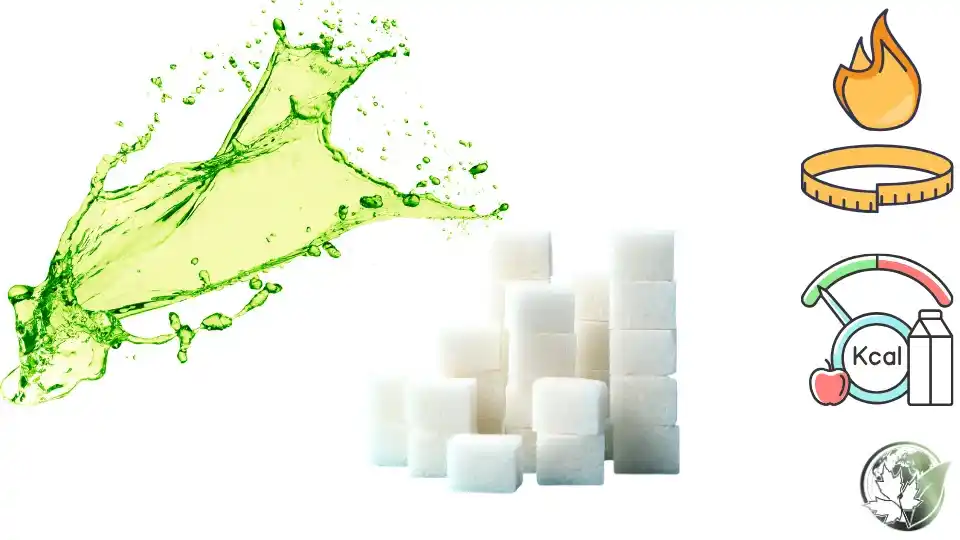
One sugar cube has the calories of about five tablespoons of verjuice
What Is Verjuice and How Is It Made?
The word comes from the French "vert jus", meaning green juice. It is made by pressing grapes that are harvested while still unripe, often when vines are thinned in early summer to improve the quality of the remaining bunches. The juice is filtered and sometimes lightly pasteurized, and is then bottled. It is sour, but without the sharp bite of vinegar, and slightly fruity, which is why it is often described as the middle ground between lemon juice and white wine vinegar. In Iran, ab ghooreh is made at home in late spring and early summer from unripe sour grapes, called ghooreh, and is often frozen or sterilized for use through the year. In France, verjus has been used since the Middle Ages, and in Australia it became popular in modern cooking from the 1980s.
Traditional methods vary. Some households press the grapes and strain, others crush them with a little salt, and some sun-dry the grapes as dried ghooreh. Commercial verjuice is usually made from varieties such as Sultana, Riesling or Chardonnay, picked unripe. Unlike wine, it is not fermented, so it has no alcohol, and unlike lemon juice, its acidity is mostly tartaric and malic rather than citric.
How Does Verjuice Compare With Lemon Juice, Vinegar and Wine?
| Product (100 ml) | Calories | Sugar | Acidity | Per tablespoon |
|---|---|---|---|---|
| Verjuice | 22 kcal | 3.3 g | Medium, soft | 3 kcal |
| Lemon juice | 22 kcal | 2.5 g | High, sharp | 3 kcal |
| Lime juice | 25 kcal | 1.7 g | High | 4 kcal |
| White wine vinegar | 19 kcal | 0 g | High, 6 percent | 3 kcal |
| Apple cider vinegar | 22 kcal | 0.4 g | High, 5 percent | 3 kcal |
| Balsamic vinegar | 88 kcal | 15 g | Medium, sweet | 13 kcal |
| Dry white wine | 82 kcal | 1 g | Medium | 12 kcal |
| Ripe white grape juice | 60 kcal | 14 g | Low | 9 kcal |
| Pomegranate molasses | 270 kcal | 55 g | High, sweet | 40 kcal |
| Sumac (ground, dry) | 280 kcal | 4 g | High | 6 kcal per tsp |
Verjuice and lemon juice have almost the same calories, but the taste differs: verjuice is rounder and less acidic than lemon, with a subtle grape flavor that does not overpower delicate foods. Balsamic vinegar and pomegranate molasses are far higher in calories because they are concentrated and sweet.
Is Verjuice High in Sugar?
Verjuice has a low sugar content for a fruit juice: roughly 3 grams per 100 milliliters, about 0.5 gram per tablespoon, and about 8 grams per cup. A cup of ripe grape juice has 36 grams, and a cup of orange juice about 21 grams. The sugar in verjuice is natural, mainly glucose and fructose from the grapes, and some verjuice brands also have small amounts of added sugar or sweetener, so it is worth checking the label. Pure verjuice should list only unripe grape juice, perhaps with a preservative such as sulfite.
Since typical servings are very small, verjuice has little effect on blood sugar. A tablespoon adds half a gram of sugar. The acid in verjuice, like vinegar, can also slightly slow the absorption of carbohydrates when taken with a meal, though the effect in cooking amounts is small.
Is Verjuice Good for You?
Verjuice offers a few modest benefits. It is low in calories, contains polyphenols from grape skins, potassium and a trace of vitamin C, and provides acidity that lets you cook with less salt and fat, since sourness boosts the perception of flavor. Traditional medicine in Iran and elsewhere values sour grape juice for cooling the body, supporting digestion and appetite, and for use in summer drinks. Scientific evidence for specific health claims is limited, and verjuice should be seen as a seasoning rather than a health food.
There are a few cautions. The acid can irritate people with acid reflux or gastritis, particularly on an empty stomach. Frequent contact with acidic liquids can erode tooth enamel, so avoid sipping it neat, and rinse with water after drinking. Commercial products may contain sulfites, which can affect some people with asthma. Those on a medication that interacts with grape products should ask their doctor.
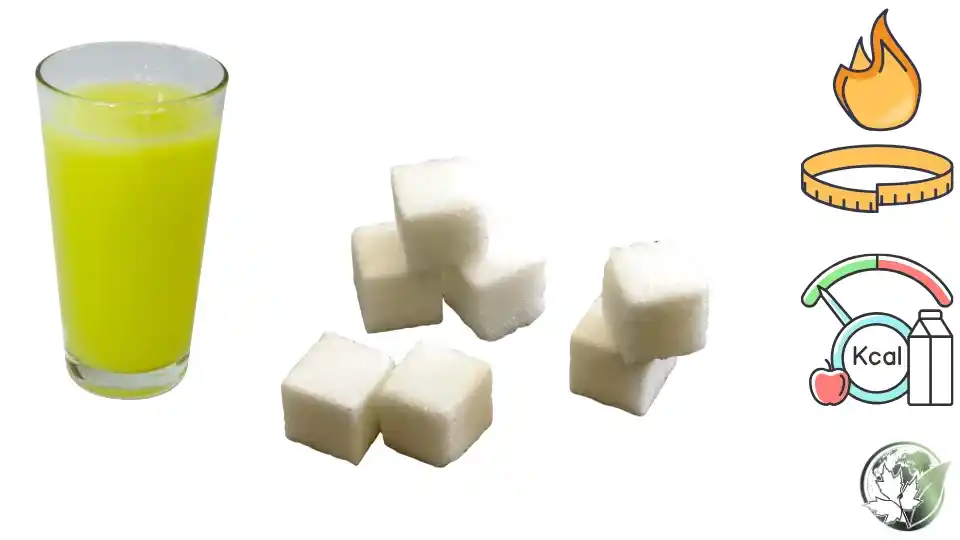
Verjuice replaces lemon juice or vinegar in dressings for about 3 calories per tablespoon
How Do You Use Verjuice in Cooking?
Verjuice is a versatile souring agent. In Persian cooking, ab ghooreh gives sour notes to stews such as ghormeh sabzi, khoresht-e-ghooreh, to soups such as ash, to kebabs, grilled chicken and fish marinades, and to salad dressings such as Shirazi salad. In French cuisine, it deglazes pans after cooking poultry or liver, enriches sauces and mustard, and brightens vinaigrettes. In modern cooking, it appears in dressings, poaching liquids for fruit, cocktails and mocktails, and in sauces for fish and chicken. It is a good way to add acidity to sweet dishes, such as fruit salads or desserts, without the sharpness of lemon.
| Use | Amount | Calories added | Notes |
|---|---|---|---|
| Salad dressing for 2 | 1 tbsp | 3 kcal | With oil separately |
| Marinade for 500 g chicken | 1/4 cup | 13 kcal | With oil, spices |
| Stew for 4 | 1/4 cup | 13 kcal | Added near the end |
| Deglaze a pan | 1/2 cup | 26 kcal | Reduces to a glaze |
| Verjuice spritzer | 1/4 cup with soda | 13 kcal | Mocktail |
| Poached pears for 4 | 1 cup | 53 kcal | With spices |
| Mustard, homemade | 2 tbsp | 7 kcal | Mix with seeds |
How Many Calories Are in Dishes and Drinks Made With Verjuice?
| Dish or drink | Serving | Calories | Notes |
|---|---|---|---|
| Shirazi salad with verjuice | 1 cup | 50 kcal | Cucumber, tomato, onion, olive oil |
| Verjuice and olive oil dressing | 2 tbsp | 130 kcal | 1 tbsp oil |
| Persian ghooreh khoresh | 1 portion | 320 kcal | Meat, grapes, no rice |
| Grilled chicken with verjuice | 1 breast | 230 kcal | Light marinade |
| Verjuice spritzer | 1 glass | 20 kcal | Soda, mint |
| Verjuice sherbet with sugar | 1 glass | 120 kcal | 2 tbsp sugar |
| Sour grape sauce | 2 tbsp | 40 kcal | Reduced with onion |
| Glazed carrots with verjuice | 1 cup | 80 kcal | Butter |
The calories in a verjuice dish come mostly from the oil, meat and sugar, not the verjuice itself. If you make a sweetened drink with sugar or syrup, the added sugar is the main source: two tablespoons of sugar add 96 calories.
How to Buy and Store Verjuice
Look for verjuice listing only grape juice on the label, with no added sugar. Store unopened bottles in a cool, dark cupboard, and refrigerate after opening, where they keep for several weeks to months, depending on the brand. Homemade verjuice should be heated gently or frozen to extend its shelf life, since raw juice ferments easily. In Iran, many families freeze the juice in ice trays and use the cubes through the year, at about 3 calories per tablespoon cube. Cloudiness or fizzing signals fermentation, and the juice should be discarded.
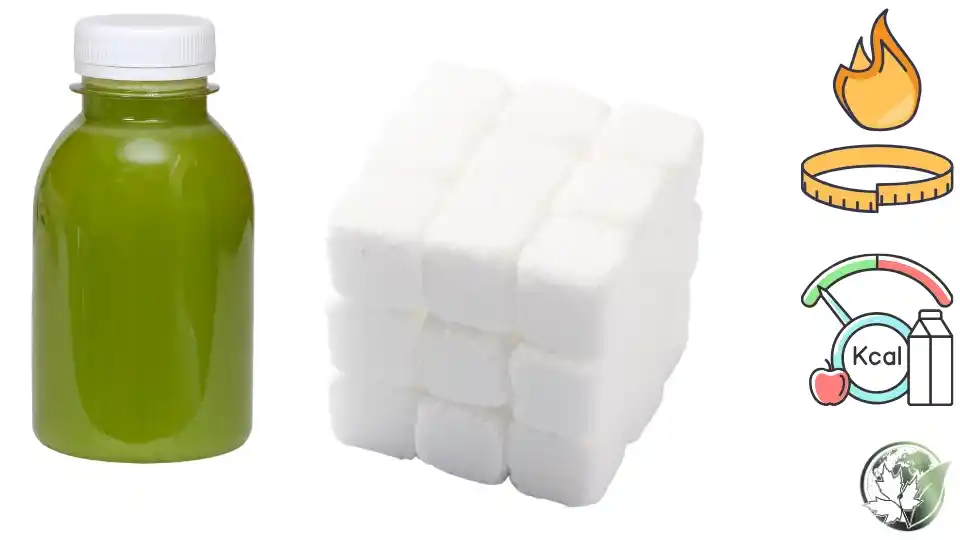
Freeze verjuice in tablespoon cubes of about 3 calories each for use all year
How to Count Verjuice Calories Accurately
Use the label if it gives calories per 100 milliliters, or estimate 22 per 100 milliliters, and measure with a spoon. For a recipe, add the calories of the verjuice to the total and divide by servings. When replacing lemon juice with verjuice, the calories are about the same, so no change is needed. When using sweetened verjuice drinks, count the sugar or syrup separately.
How Do You Make Verjuice at Home and How Many Calories Does It Have?
Homemade verjuice is simple. Wash 1 kilogram of unripe green grapes, remove the stems, and blend or crush them until broken but not pureed. Strain the pulp through a fine sieve or cheesecloth, pressing gently. You will get about 500 to 600 milliliters of juice, depending on the grapes. Pour into clean jars or ice cube trays and freeze, or heat to 80 degrees Celsius for a few minutes and bottle. Some households add a pinch of salt to help preserve it. Unripe grapes contain about 3 to 6 grams of sugar per 100 grams, which is why the calories land between 15 and 30 per 100 milliliters, rather than the 60 of ripe grape juice.
| Homemade batch | Yield | Calories per 100 ml | Calories per tablespoon |
|---|---|---|---|
| Very unripe grapes (hard, small) | 500 ml | 15 kcal | 2 kcal |
| Slightly sweet grapes | 550 ml | 22 kcal | 3 kcal |
| Beginning to ripen | 600 ml | 35 kcal | 5 kcal |
| Ripe grape juice for comparison | 650 ml | 60 kcal | 9 kcal |
A rule of thumb is to taste it: the sourer the juice, the fewer the calories. If it tastes sweet and mild, it has more sugar and is closer to grape juice.
What Is Dried Ghooreh and Sour Grape Powder, and How Many Calories Do They Have?
Besides the juice, unripe grapes are used in other forms in the kitchen. Sun-dried ghooreh and sour grape powder, called pudr-e-ghooreh, are used in Persian cooking as a dry souring agent. They are concentrated, so the calories per gram are higher, but the amounts used are tiny. Sour grape powder has about 300 calories per 100 grams, or about 6 calories per teaspoon (2 grams). Whole sour grapes in cooking, as in khoresh-e-ghooreh, add a few calories each: 10 grapes (about 30 grams) have around 15 calories. Pickled unripe grapes, a common side, have about 20 calories per 100 grams, though they can be salty.
| Sour grape product | Serving | Calories | Notes |
|---|---|---|---|
| Verjuice, liquid | 1 tbsp | 3 kcal | Juice |
| Sour grape powder | 1 tsp (2 g) | 6 kcal | Dried |
| Fresh unripe grapes | 100 g | 40 kcal | Whole |
| Pickled unripe grapes | 1/4 cup | 10 kcal | Brine |
| Sumac | 1 tsp (2 g) | 6 kcal | Alternative sour |
Can You Use Verjuice for Weight Loss?
Verjuice is not a weight loss product in itself, but it is a useful tool. Because it is very low in calories and strongly flavored, it lets you replace heavier dressings and sauces. A dressing made with 2 tablespoons of verjuice, 1 teaspoon of olive oil and mustard has about 50 calories, compared with about 140 for a typical creamy dressing and 110 for a store-bought vinaigrette. Using a splash of verjuice to finish soups and stews brightens the flavor so that less salt and fat are needed. Drinking diluted verjuice with ice and mint offers a refreshing, low calorie drink that satisfies a craving for something sharp, at about 15 calories a glass, a contrast with soft drinks at 140 calories a can. These swaps can save hundreds of calories a week.
What Should You Know About Verjuice, Teeth and Digestion?
Because verjuice is acidic, with a pH of about 2.5 to 3, it can wear down tooth enamel if you drink it often and slowly. Use a straw, drink with food, rinse with water afterward and wait 30 minutes before brushing, which are the same precautions advised for lemon juice and vinegar. For digestion, small amounts can stimulate appetite and saliva, but people with reflux, ulcers or gastritis may find it irritating. If you are sensitive, dilute it with water or use it in cooked dishes, where the acid is softened by other ingredients. For most people, ordinary culinary amounts are tolerated well.
What Are Good Substitutes for Verjuice and How Do Their Calories Compare?
If you cannot find verjuice, several ingredients stand in well. Lemon juice is the closest, used at about three quarters of the amount, since it is more acidic, and adds the same 3 calories per tablespoon. White wine vinegar diluted with water, one part vinegar to two parts water, matches the acidity, at about 1 calorie per tablespoon of mixture. A mixture of lemon juice and a little white grape juice captures the fruitiness, with about 6 calories per tablespoon. Dry white wine adds acidity and body but contains alcohol and about 12 calories per tablespoon. Sumac steeped in warm water gives a sour, slightly tannic liquid in Persian dishes. Lime juice works in Middle Eastern recipes. None of the substitutes changes the calories of a dish meaningfully, so choose based on flavor.
How Do You Serve Verjuice as a Cool Summer Drink?
In Iran, sour grape juice is a popular summer drink, often served with sugar, mint and ice. A traditional glass uses about 1/4 cup of verjuice, 1 to 2 tablespoons of sugar and 3/4 cup of cold water, which comes to about 110 to 130 calories, nearly all from the sugar. A lighter version keeps the verjuice, mint and soda water with a sugar substitute or just a teaspoon of honey, at about 35 calories. For the most refreshing low calorie version, serve over ice with cucumber slices and fresh mint and skip the sweetener, so the drink has only about 13 to 15 calories. Each spoon of sugar you leave out saves 48 calories, which is three sugar cubes.
Key Takeaways: Verjuice Calories vs a Sugar Cube
Verjuice has about 22 calories per 100 milliliters and 3 per tablespoon, so a sugar cube at 16 calories equals about five tablespoons. It is low in sugar, sour and soft in flavor, and a good swap for lemon or vinegar. Use it to season, check the label for added sugar, and count the sugar in any sweetened verjuice drinks.
Frequently Asked Questions
6 questions answered
How many calories are in a tablespoon of verjuice?
About 3.
Does verjuice have more calories than a sugar cube?
No, a cube has 16 and a tablespoon of verjuice 3.
Is verjuice high in sugar?
No, about 3 grams per 100 milliliters, much less than ripe grape juice.
Is verjuice the same as vinegar?
No, it is unfermented unripe grape juice, milder than vinegar.
Can I substitute lemon juice for verjuice?
Yes, use slightly less lemon, as it is sharper.
Does verjuice contain alcohol?
No, it is not fermented.