How Many Calories Are in a Turnip? The Quick Answer
A raw turnip has about 28 calories per 100 grams. A medium turnip (122 grams, about 2.5 inches across) has about 34 calories, a small turnip (70 grams) about 20, a large turnip (200 grams) about 56, and a cup of raw cubes (130 grams) about 36 calories. Boiled turnip has about 22 calories per 100 grams, since it absorbs a little water, and a cup of cooked cubes (156 grams) has about 34. A raw potato has about 77 calories per 100 grams and a medium potato (173 grams) about 133, so a turnip has about 64 percent fewer calories per 100 grams, and a medium turnip has about 75 percent fewer than a medium potato.
The difference lies in the starch. A turnip contains 6.4 grams of carbohydrate per 100 grams, with 3.8 grams of that sugar and 1.8 grams fiber, and very little starch, while a potato contains 17.5 grams of carbohydrate per 100 grams, mostly starch. Turnips are about 92 percent water, against 79 percent for potatoes. Turnip is a root vegetable of the brassica family, related to cabbage, broccoli, radish and mustard, which explains its slightly peppery, sweet flavor, and it supplies vitamin C, folate, potassium and sulfur compounds called glucosinolates.
This guide gives the calories in turnips by size, cup and weight, raw and cooked, compares them with potatoes and other roots, shows how roasting, mashing and pickling change the numbers, covers turnip greens, and answers questions about carbs, blood sugar, weight loss and diet. There are three tables and an FAQ.
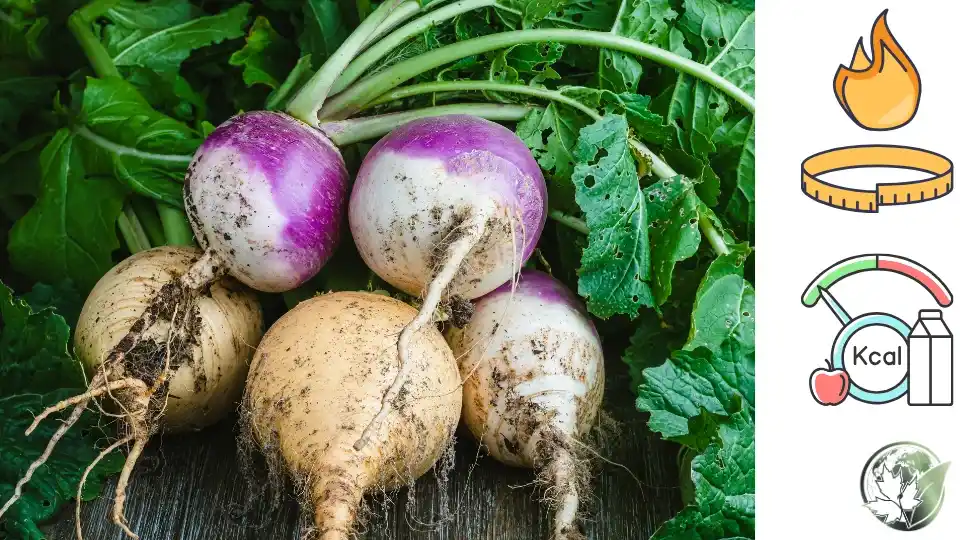
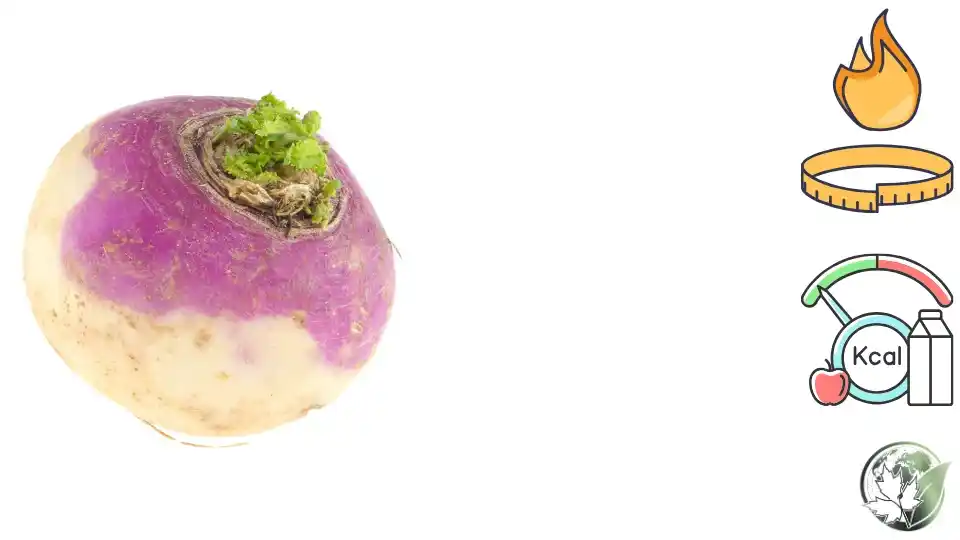
A medium turnip has about 34 calories
How Many Calories Are in a Turnip by Size, Cup and Weight?
| Portion | Weight | Calories | Carbs | Sugar | Fiber |
|---|---|---|---|---|---|
| 1 small turnip | 70 g | 20 kcal | 4.5 g | 2.7 g | 1.3 g |
| 1 medium turnip | 122 g | 34 kcal | 7.8 g | 4.6 g | 2.2 g |
| 1 large turnip | 200 g | 56 kcal | 12.8 g | 7.6 g | 3.6 g |
| 1 cup raw, cubed | 130 g | 36 kcal | 8.3 g | 4.9 g | 2.3 g |
| 1 cup raw, sliced | 100 g | 28 kcal | 6.4 g | 3.8 g | 1.8 g |
| 1 cup cooked, cubed | 156 g | 34 kcal | 7.8 g | 4.6 g | 3.1 g |
| 1 cup cooked, mashed | 230 g | 51 kcal | 11.7 g | 6.9 g | 4.6 g |
| 100 g raw | 100 g | 28 kcal | 6.4 g | 3.8 g | 1.8 g |
| 100 g boiled | 100 g | 22 kcal | 4.9 g | 3.0 g | 2.0 g |
| 500 g raw | 500 g | 140 kcal | 32 g | 19 g | 9 g |
| 1 kg raw | 1,000 g | 280 kcal | 64 g | 38 g | 18 g |
A kilogram of turnips has about 280 calories, which is about the same as 360 grams of potato. A normal side portion of a cup of cooked turnips, at 34 calories, is less than a quarter of a cup of mashed potato.
How Many Calories Are in Turnips Cooked in Different Ways?
| Turnip preparation | Serving | Calories | Fat | Carbs |
|---|---|---|---|---|
| Raw | 100 g | 28 kcal | 0.1 g | 6.4 g |
| Boiled | 1 cup (156 g) | 34 kcal | 0.1 g | 7.8 g |
| Steamed | 1 cup (156 g) | 34 kcal | 0.1 g | 7.8 g |
| Mashed, plain | 1 cup (230 g) | 51 kcal | 0.2 g | 11.7 g |
| Mashed with butter and milk | 1 cup | 130 kcal | 7 g | 14 g |
| Roasted with 1 tsp oil | 1 cup (130 g) | 76 kcal | 4.6 g | 8.3 g |
| Roasted with 1 tbsp oil | 1 cup (130 g) | 156 kcal | 13.6 g | 8.3 g |
| Fried, pan with oil | 1 cup | 130 kcal | 9 g | 9 g |
| Turnip fries, baked | 1 cup | 90 kcal | 4 g | 12 g |
| Turnip in stew | 1 cup | 60 kcal | 1 g | 12 g |
| Pickled turnip (torshi) | 1/4 cup | 10 kcal | 0 g | 2 g |
| Turnip gratin with cream | 1 cup | 210 kcal | 14 g | 15 g |
Plain turnip is one of the lowest calorie root vegetables. The calories rise when you add butter, cream, cheese or oil. A tablespoon of oil, at 120 calories, adds about four times the calories of a cup of turnip.
Turnip vs Potato: Calories Compared
| Food | Portion | Weight | Calories | Carbs | Fiber |
|---|---|---|---|---|---|
| Turnip, raw | 100 g | 100 g | 28 kcal | 6.4 g | 1.8 g |
| Turnip, raw | 1 medium | 122 g | 34 kcal | 7.8 g | 2.2 g |
| Turnip, boiled | 1 cup | 156 g | 34 kcal | 7.8 g | 3.1 g |
| Turnip, mashed | 1 cup | 230 g | 51 kcal | 11.7 g | 4.6 g |
| Potato, raw | 100 g | 100 g | 77 kcal | 17.5 g | 2.1 g |
| Potato, raw | 1 medium | 173 g | 133 kcal | 30.3 g | 3.6 g |
| Potato, boiled | 1 cup (156 g) | 156 g | 135 kcal | 31.3 g | 2.9 g |
| Potato, mashed with milk | 1 cup | 210 g | 237 kcal | 35.0 g | 4.0 g |
| Potato, baked | 1 medium | 173 g | 161 kcal | 36.6 g | 3.8 g |
| 4 medium turnips | 488 g | 488 g | 137 kcal | 31.2 g | 8.8 g |
You could eat about four medium turnips, nearly half a kilogram, for the calories of one medium baked potato. A cup of boiled turnip has about one quarter the calories of a cup of boiled potato, and a cup of mashed turnip has about a fifth of the calories of a cup of mashed potato.
Turnip vs Potato: Nutrition Compared
| Per 100 g, raw | Turnip | Potato |
|---|---|---|
| Calories | 28 kcal | 77 kcal |
| Carbohydrate | 6.4 g | 17.5 g |
| Starch | 0.1 g | 15.4 g |
| Sugar | 3.8 g | 0.8 g |
| Fiber | 1.8 g | 2.1 g |
| Protein | 0.9 g | 2.0 g |
| Fat | 0.1 g | 0.1 g |
| Vitamin C | 21 mg | 19.7 mg |
| Folate | 15 mcg | 16 mcg |
| Vitamin K | 0.1 mcg | 2.0 mcg |
| Potassium | 191 mg | 421 mg |
| Calcium | 30 mg | 12 mg |
| Magnesium | 11 mg | 23 mg |
| Water | 91.9 g | 79.3 g |
| Per 100 calories | Turnip | Potato |
|---|---|---|
| Weight | 357 g | 130 g |
| Vitamin C | 75 mg | 26 mg |
| Calcium | 107 mg | 16 mg |
| Fiber | 6.4 g | 2.7 g |
| Potassium | 682 mg | 547 mg |
Turnip has more vitamin C and calcium per 100 grams than potato, and more fiber, potassium and vitamin C per calorie. Potato has more protein, vitamin K, potassium and magnesium per 100 grams, since it is a denser food. For anyone who wants a similar texture with far fewer carbohydrates, the turnip is a useful swap.
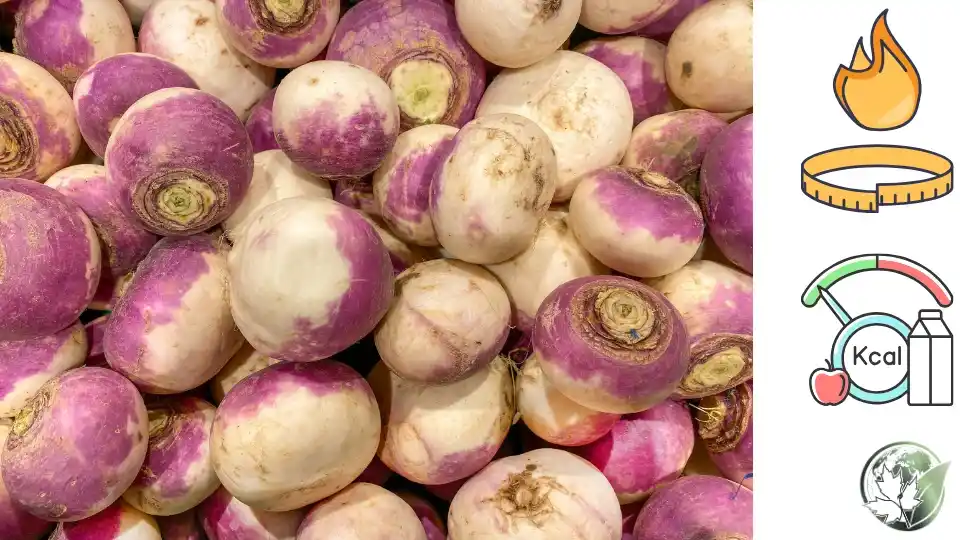
Four medium turnips have about as many calories as one baked potato
Is Turnip Low in Carbs?
Turnip is a low carbohydrate root vegetable, with 6.4 grams of total carbohydrate and 4.6 grams of net carbohydrate per 100 grams. A cup of cooked turnip has about 7.8 grams of total and about 4.7 grams of net carbohydrate. This is much lower than potato, which has 17.5 grams per 100 grams, parsnip with 18 grams, carrot with 9.6 grams and sweet potato with 20. For low carb and ketogenic diets, a small portion of turnip fits into daily limits of 20 to 50 grams of net carbohydrate better than potato does, and many recipes use mashed or roasted turnip as a replacement for potatoes and fries.
| Root vegetable (100 g raw) | Calories | Net carbs | Fiber |
|---|---|---|---|
| Turnip | 28 kcal | 4.6 g | 1.8 g |
| Radish | 16 kcal | 1.8 g | 1.6 g |
| Celeriac | 42 kcal | 7.4 g | 1.8 g |
| Rutabaga (swede) | 38 kcal | 7.0 g | 2.3 g |
| Carrot | 41 kcal | 6.8 g | 2.8 g |
| Beetroot | 43 kcal | 8.8 g | 2.8 g |
| Potato | 77 kcal | 15.4 g | 2.1 g |
| Parsnip | 75 kcal | 12.5 g | 4.9 g |
| Sweet potato | 86 kcal | 17.1 g | 3.0 g |
Does Turnip Raise Blood Sugar?
The glycemic index of boiled turnip has been reported at about 62, which is moderate, but since turnips contain so little carbohydrate, the glycemic load of a typical serving is only about 3, which is very low. A cup of cooked turnip has about 8 grams of carbohydrate. In comparison, a boiled potato has a glycemic index near 78 and a glycemic load of about 20 for a medium potato. In practice, turnip has a small effect on blood glucose, and it is considered a suitable vegetable for people with diabetes, especially instead of potatoes. As always, the cooking method, additions and the rest of the meal matter more than the vegetable alone.
Are Turnips Good for Weight Loss?
Yes. Turnips combine very few calories with volume and fiber, so they contribute to fullness for little energy. A plate of roasted turnip cubes or a bowl of turnip soup makes a filling side for under 100 calories. Replacing potatoes with turnips in stews, gratins and mash can reduce the calories of a dish by 50 to 70 percent. To benefit, prepare them with little fat: roast on parchment with a teaspoon of oil, steam, or add to soups. Avoid frying, creamy gratins and heavy butter mashes, which can bring the calories close to those of potatoes.
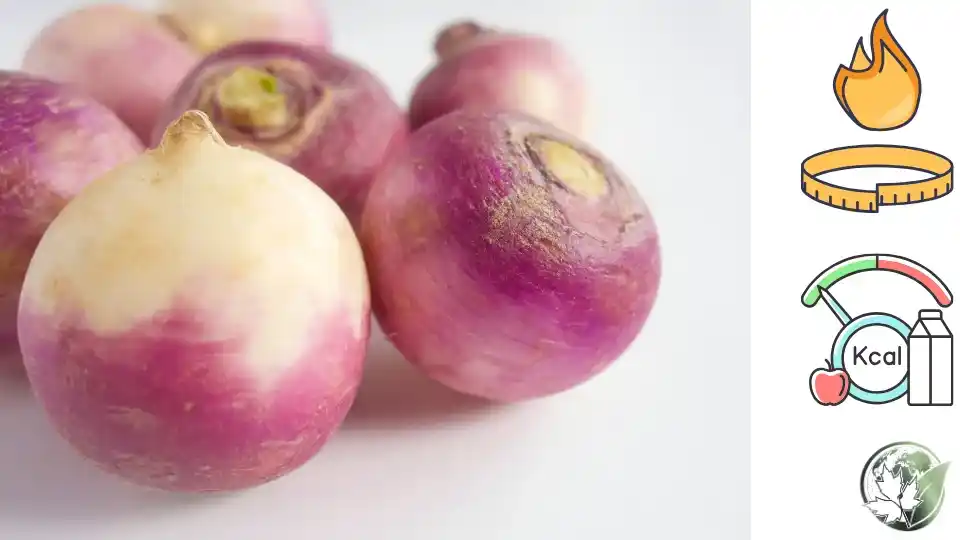
Roasted turnip cubes with a teaspoon of oil have about 76 calories per cup
What Are the Health Benefits of Turnips?
Turnips are a good source of vitamin C, with about 21 milligrams per 100 grams, which supports immunity and collagen. They provide fiber, potassium and calcium, and as brassica vegetables they contain glucosinolates, which the body converts into isothiocyanates, compounds studied for their potential protective effects against some cancers and for anti-inflammatory activity. The greens are particularly nutritious, supplying vitamin K, vitamin A, folate, calcium and lutein. Turnip may be gentle on the stomach when cooked, although in large amounts, as with other cruciferous vegetables, it can cause gas and bloating in some people. Those with thyroid problems are sometimes advised to limit large amounts of raw cruciferous vegetables, though normal cooked servings are generally fine.
How Many Calories Are in Turnip Greens and Pickled Turnips?
| Item | Serving | Calories | Notes |
|---|---|---|---|
| Turnip greens, raw | 1 cup (55 g) | 18 kcal | Leafy |
| Turnip greens, cooked | 1 cup (144 g) | 29 kcal | Vitamin K rich |
| Turnip greens with bacon | 1 cup | 110 kcal | Southern style |
| Pickled turnip (torshi), Persian | 1/4 cup (40 g) | 10 kcal | Vinegar, salt |
| Pickled turnip and beet (Lebanese) | 3 pieces (30 g) | 8 kcal | Pink |
| Turnip kimchi | 1/2 cup | 18 kcal | Fermented |
| Turnip soup | 1 cup | 80 kcal | With broth |
| Turnip and carrot stew | 1 cup | 90 kcal | With oil |
| Rutabaga, boiled | 1 cup | 66 kcal | For comparison |
Pickled turnips are very low in calories but can be high in sodium, with 1/4 cup containing 400 to 800 milligrams, so people who limit salt should watch the portion.
How to Choose, Store and Prepare Turnips
Choose small to medium turnips, about the size of a tennis ball, which are sweeter and less woody than large ones. They should feel heavy for their size, with smooth skin and fresh green tops if attached. Remove the greens before storing, since they draw moisture from the root. Keep turnips in the refrigerator crisper for one to two weeks. Peel larger turnips, since the skin can be tough and bitter, while young ones need only washing. To reduce bitterness, blanch in boiling water for a few minutes, or add a small potato to the pot. Roast at 220 degrees Celsius for 25 to 30 minutes for caramelized edges.
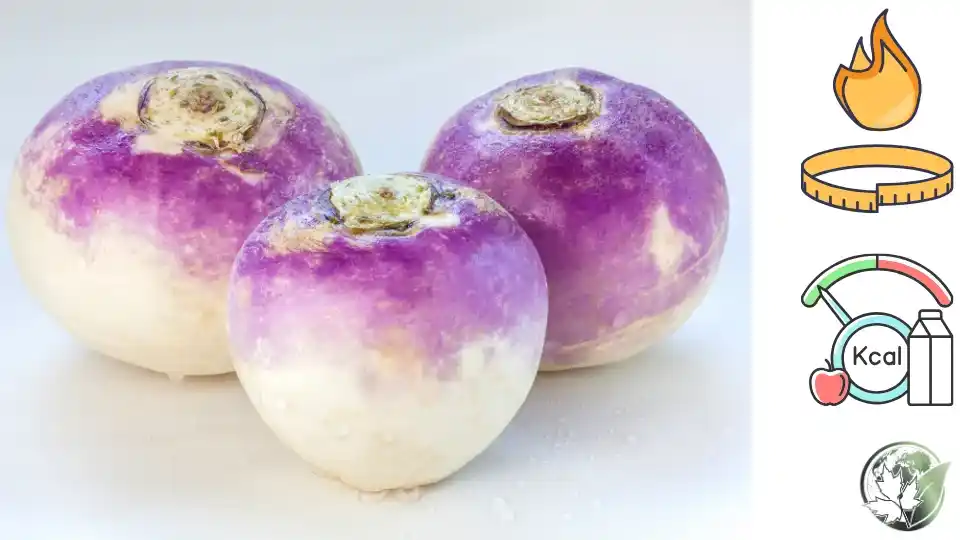
Choose small to medium turnips, which are sweeter and less woody
How to Count Turnip Calories Accurately
Weigh turnips raw and peeled and use 28 calories per 100 grams, or weigh cooked and use 22. Do not mix raw and cooked values. For roasted turnips, add the calories of the oil, which is 40 for a teaspoon and 120 for a tablespoon. For mash, add butter, milk or cream separately. When a recipe calls for a "medium" turnip, estimate 120 grams, or 34 calories.
How Do You Make Turnip Mash and Fries With Fewer Calories?
Turnip mash is one of the easiest swaps for mashed potato. Peel and cube 500 grams of turnip, about 140 calories, boil for 15 to 20 minutes until tender, drain very well, since turnip holds more water than potato, then mash with a splash of warm milk, a teaspoon of butter, salt and pepper. The result has about 190 calories for four small servings, or about 48 each. The same weight of potato mash with butter and milk would have close to 450 calories. For a richer flavor, blend half turnip and half potato, which cuts the calories and carbohydrates by about a third and keeps the familiar texture.
To make turnip fries, cut peeled turnips into sticks, toss in a teaspoon of oil and spices such as paprika and garlic powder, and bake at 220 degrees Celsius for 25 to 30 minutes, turning once. A serving of 200 grams has about 100 calories, against 300 to 600 for deep fried potato fries. They will be softer than potato fries, so spread them in a single layer on a hot tray to brown.
| Recipe (per serving) | Calories | Carbs | Notes |
|---|---|---|---|
| Turnip mash, 1 cup, light butter | 90 kcal | 13 g | Mild |
| Half turnip, half potato mash | 150 kcal | 24 g | Familiar texture |
| Potato mash, 1 cup | 237 kcal | 35 g | Milk and butter |
| Baked turnip fries, 200 g | 100 kcal | 20 g | 1 tsp oil |
| Baked potato fries, 200 g | 240 kcal | 40 g | 1 tsp oil |
| Deep fried potato fries, 200 g | 620 kcal | 82 g | Fast food |
What Is the Difference Between Turnip, Rutabaga and Radish?
The three are often confused. A turnip is a small, round, white root with a purple top, with white flesh, and a mild peppery flavor. A rutabaga, also called swede, is a cross between a turnip and cabbage, larger, yellow-fleshed, sweeter and denser, at about 38 calories per 100 grams. A radish is smaller and sharper, at 16 calories per 100 grams, usually eaten raw. In some countries, "turnip" refers to what others call rutabaga, and in Iran and the Middle East pickled turnip, called shalgham or lifteh, is a staple of the table. Calories differ a little among the three, but all are far lower than potatoes.
Can Children and Older Adults Eat Turnips?
Yes. Boiled or mashed turnips are soft and easy to eat, and they provide vitamin C, fiber and minerals with few calories. For small children, serve well cooked, mashed or in soup, in small amounts at first, since the fiber and sulfur compounds can cause gas. Older adults who need nutrient dense, easy to chew foods may enjoy turnip in stews. People on blood thinners should note that turnip greens are very high in vitamin K and keep the intake consistent. The roots themselves are low in vitamin K.
What Is the History and Use of Turnips in Traditional Cooking?
Turnips are among the oldest cultivated vegetables, grown for more than 4,000 years in Europe and Asia. Before the potato arrived from the Americas, turnips were a staple food and animal feed across northern Europe, valued because they grow in cool climates and store well through winter. In Persian cuisine, turnip, called shalgham, appears in stews, soups, and as a famous pickle, often colored pink with beetroot. In Japan, kabu are served pickled, simmered or raw, and in Korea turnips are used in kimchi and soups. In the British Isles, turnips and swedes were mashed as "neeps" and served with haggis. In the American South, the greens are cooked slowly with pork and served with cornbread to soak up the nutritious liquid known as pot likker.
How Should You Cook Turnips to Reduce Bitterness and Keep Nutrients?
Bitterness comes from glucosinolates, which are higher in older, larger turnips and in the skin. Choosing young turnips and peeling older ones helps. Cooking for a short time, such as steaming for 10 to 15 minutes, keeps more vitamin C than long boiling, which leaches nutrients into the water. If you boil, use the cooking water in soups. Roasting caramelizes natural sugars and softens the sharpness. A pinch of sugar or a splash of apple cider vinegar can balance flavor without adding many calories, and pairing turnips with sweet vegetables such as carrots or onions mellows the taste. The calories are about the same however you cook, except for added fats.
Are There Any Downsides or Interactions With Turnips?
Turnips are safe for most people. The main points to remember are digestive. As a cruciferous vegetable, turnip contains raffinose, a sugar that is fermented in the gut, which can lead to gas, especially if you are not used to eating much fiber. Start with small portions and increase gradually. People with a sensitivity to the cabbage family may react to turnips. Those with an underactive thyroid are sometimes advised to cook cruciferous vegetables rather than eating large quantities raw, since heat reduces the compounds that can interfere with iodine uptake, but normal servings are not a concern for most. Turnips contain oxalate in small amounts, with the greens higher, so people prone to calcium oxalate kidney stones may want to moderate large quantities of greens. Finally, pickled turnips contain a lot of salt, which matters for blood pressure.
How Can You Use Turnips in Everyday Meals Beyond Mash?
Grate raw turnip into salads and slaws for a crunchy, peppery taste at 28 calories per 100 grams. Slice thinly and bake into chips with a spritz of oil for about 60 calories per cup. Cube and add to soups, lentil dishes and stews in place of half the potato. Spiralize into noodles and sauté briefly with garlic and herbs. Dice small and mix into meatballs or burgers to add moisture and bulk. Roast whole with herbs and serve with grilled chicken or fish. Each of these uses adds vegetables to your day with minimal calories, and they can be prepared in advance and kept in the refrigerator for four days.
Key Takeaways: Turnip Calories vs Potato
A turnip has about 28 calories per 100 grams and 34 per medium root, against 77 per 100 grams and 133 per medium potato. It has far fewer carbohydrates, a lower glycemic load and more vitamin C and calcium per calorie. Use turnip in place of potato in stews, mashes and roasts, keep fats modest, and watch the salt in pickled versions.
Frequently Asked Questions
6 questions answered
How many calories are in a medium turnip?
About 34.
Does a turnip have fewer calories than a potato?
Yes, about 28 per 100 grams against 77.
Is turnip good for diabetes?
Yes, it has a low glycemic load, in sensible portions.
How many carbs are in a turnip?
About 6.4 grams per 100 grams, or 8 grams per medium turnip.
Are turnip greens healthy?
Yes, they are rich in vitamin K, vitamin A and calcium.
Can I use turnip instead of potato?
Yes, in mash, roasts and stews, with a milder, peppery flavor.