
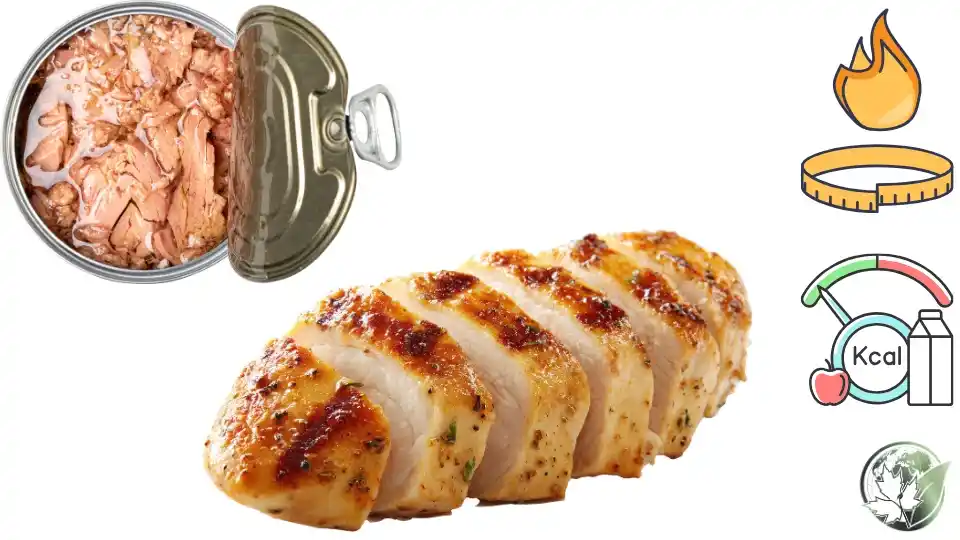
Tuna Sunflower Oil vs Chicken Breast Calories: The Quick Answer
Per 100 grams, drained tuna packed in sunflower oil has about 190 calories, and cooked, skinless chicken breast has about 165. Chicken breast therefore has about 13 percent fewer calories by weight. Per calorie, the gap in protein is larger: 100 calories of chicken breast delivers about 18.8 grams of protein, while 100 calories of drained sunflower oil tuna delivers about 14.2 grams, so chicken breast gives about a third more protein for the same energy. Counting the oil in the can, the tuna rises to about 280 calories per 100 grams with only about 21 grams of protein, which widens the gap further.
Other things are in tuna's favor. A drained can needs no cooking, has about 5 micrograms of vitamin D that chicken lacks, supplies selenium and omega-3, costs little and lasts for years in a cupboard. Chicken breast offers more protein per gram, has about a fifth of the sodium, and is the standard base for high protein meal plans. The right choice depends on the goal: cutting calories, building muscle, convenience, cost or variety.
This guide sets the two foods head to head in a scoreboard. It compares calories at equal weights, at equal calories and at equal protein, and then looks at fitness goals, cost per gram of protein, nutrients, cooking and storage. It is written as a decision tool, and while some figures echo those in our guide to tuna in sunflower oil by can and serving, this page focuses on the direct comparison. There are three tables, practical rules and an FAQ.
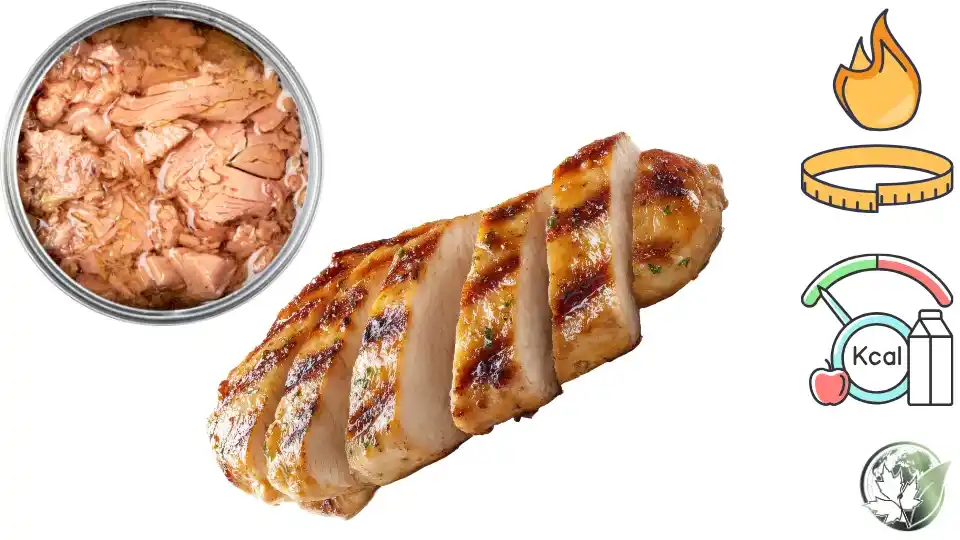
Chicken breast has about 13 percent fewer calories than drained tuna in sunflower oil per 100 grams
How Do Tuna in Sunflower Oil and Chicken Breast Compare at Equal Weights?
| Weight | Tuna in sunflower oil (drained) | Chicken breast (cooked) | Difference |
|---|---|---|---|
| 28 g (1 oz) | 53 kcal, 7.6 g protein | 46 kcal, 8.7 g protein | Chicken 7 kcal less |
| 56 g (2 oz) | 106 kcal, 15.1 g protein | 92 kcal, 17.4 g protein | Chicken 14 kcal less |
| 85 g (3 oz) | 162 kcal, 23.0 g protein | 140 kcal, 26.4 g protein | Chicken 22 kcal less |
| 100 g | 190 kcal, 27.0 g protein | 165 kcal, 31.0 g protein | Chicken 25 kcal less |
| 112 g (one can drained) | 213 kcal, 30.2 g protein | 185 kcal, 34.7 g protein | Chicken 28 kcal less |
| 150 g | 285 kcal, 40.5 g protein | 248 kcal, 46.5 g protein | Chicken 37 kcal less |
| 200 g | 380 kcal, 54.0 g protein | 330 kcal, 62.0 g protein | Chicken 50 kcal less |
At every weight, chicken breast has fewer calories and more protein. The difference is modest in absolute terms: for a normal serving of 85 to 112 grams, it is 22 to 28 calories.
How Do They Compare at Equal Calories?
| Calories | Tuna in sunflower oil (drained) | Chicken breast (cooked) |
|---|---|---|
| 100 kcal | 53 g, 14.2 g protein | 61 g, 18.8 g protein |
| 150 kcal | 79 g, 21.3 g protein | 91 g, 28.2 g protein |
| 200 kcal | 105 g, 28.4 g protein | 121 g, 37.6 g protein |
| 300 kcal | 158 g, 42.6 g protein | 182 g, 56.4 g protein |
| 400 kcal | 211 g, 56.8 g protein | 242 g, 75.2 g protein |
| 500 kcal | 263 g, 71.1 g protein | 303 g, 94.0 g protein |
For a 300 calorie portion, you get 182 grams of chicken with 56 grams of protein, or 158 grams of tuna with 43 grams of protein, a difference of about 14 grams of protein, roughly the protein in two large eggs.
How Do They Compare at Equal Protein?
| Protein target | Tuna in sunflower oil, drained | Calories | Chicken breast, cooked | Calories |
|---|---|---|---|---|
| 20 g | 74 g | 141 kcal | 65 g | 107 kcal |
| 25 g | 93 g | 176 kcal | 81 g | 133 kcal |
| 30 g | 111 g | 211 kcal | 97 g | 160 kcal |
| 40 g | 148 g | 281 kcal | 129 g | 213 kcal |
| 50 g | 185 g | 352 kcal | 161 g | 266 kcal |
To get 30 grams of protein, tuna in sunflower oil costs about 211 calories and chicken breast about 160, a difference of about 50 calories per meal. Over three meals a day, that could be 150 calories, which is meaningful for people in a cutting phase, but small for someone maintaining weight.
Sunflower Oil Tuna vs Chicken Breast: Full Nutrition Scoreboard
| Per 100 g | Tuna in sunflower oil (drained) | Chicken breast (roasted) | Winner |
|---|---|---|---|
| Calories | 190 kcal | 165 kcal | Chicken (fewer) |
| Protein | 27.0 g | 31.0 g | Chicken |
| Fat | 7.9 g | 3.6 g | Chicken (leaner) |
| Saturated fat | 1.3 g | 1.0 g | Chicken, slightly |
| Omega-3 (EPA and DHA) | 0.3 g | 0.03 g | Tuna |
| Cholesterol | 18 mg | 85 mg | Tuna |
| Sodium | 350 mg | 74 mg | Chicken |
| Vitamin D | 5.7 mcg | 0.1 mcg | Tuna |
| Vitamin B12 | 2.2 mcg | 0.3 mcg | Tuna |
| Selenium | 76 mcg | 27 mcg | Tuna |
| Niacin | 14.0 mg | 14.8 mg | Draw |
| Vitamin B6 | 0.3 mg | 0.6 mg | Chicken |
| Iron | 1.0 mg | 1.0 mg | Draw |
| Mercury | Low to moderate | None | Chicken |
| Convenience | No cooking | Needs cooking | Tuna |
| Shelf life | Years | 2 to 3 days fresh | Tuna |
Chicken breast wins on calories, protein, fat, sodium and mercury, while tuna wins on omega-3, vitamin D, B12, selenium, cholesterol and convenience. In a nutrient sense, it is a close contest, which is why many diets use both.
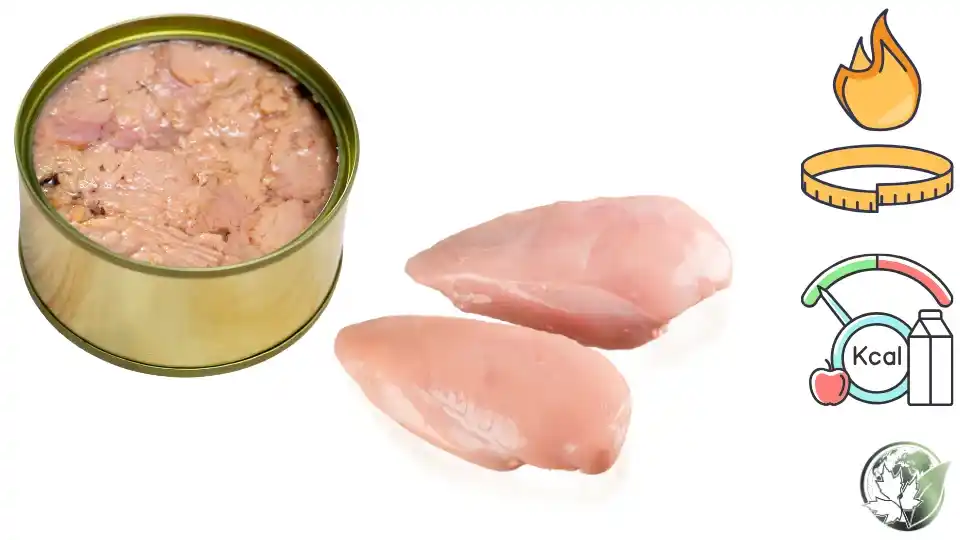
At 30 grams of protein, tuna costs about 211 calories and chicken breast about 160
Which Is Better for Cutting, Bulking and Maintenance?
For cutting, when calories are restricted and protein must stay high, chicken breast is generally the better base, because it gives the highest protein for the fewest calories. Water-packed tuna is similar to chicken in this respect, at about 22 grams of protein per 100 calories, so if you like tuna and are cutting, switch from sunflower oil to water. For bulking, when you want more calories, the extra fat in sunflower oil tuna is not a drawback, and the convenience of a can, plus the mixture of fats, helps you reach your target. For maintenance, either works, and alternating gives variety and a broader range of micronutrients.
| Goal | Better choice | Why |
|---|---|---|
| Cutting | Chicken breast or tuna in water | Most protein per calorie |
| Bulking | Tuna in sunflower oil, chicken thigh | Extra calories and convenience |
| Maintenance | Both, alternating | Variety, micronutrients |
| Heart health | Tuna, with fish variety | Omega-3, low cholesterol |
| Low sodium | Chicken breast | 74 mg vs 350 mg |
| Travel, office | Tuna | No refrigeration or cooking |
| Budget | Either, depending on market | Both inexpensive |
How Do They Compare in Cost per Gram of Protein?
Prices vary by country and season, but the pattern is consistent. A can of tuna in sunflower oil costs little and provides about 30 grams of protein from a 112 gram drained portion. Chicken breast, sold fresh, may cost more per kilogram, but it provides 31 grams of protein per 100 grams cooked, and 22.5 per 100 grams raw. The cooked yield of chicken is about 75 percent of raw weight, which matters: 1 kilogram of raw breast gives about 750 grams of cooked chicken and 232 grams of protein. To compare, divide the price by the grams of protein you actually eat, using drained weight for tuna and cooked weight for chicken. In many markets, tuna in oil and chicken breast fall within 20 percent of each other, with whole chicken pieces and frozen breast often cheaper.
What About Mercury and Sodium?
Mercury is a consideration only for the tuna. Light tuna carries the lowest levels and can be eaten two to three times a week by most adults. Sodium is a larger practical issue for people who eat tuna often: a drained can has 350 to 450 milligrams, while a plain chicken breast has about 85 milligrams per 112 grams. If you have high blood pressure, choose no salt added tuna or limit cans to a few a week. Fresh chicken is also salted by brining or marinating, which can raise sodium in prepared products, so read labels on pre-marinated or deli chicken, which can contain 400 to 700 milligrams per serving.
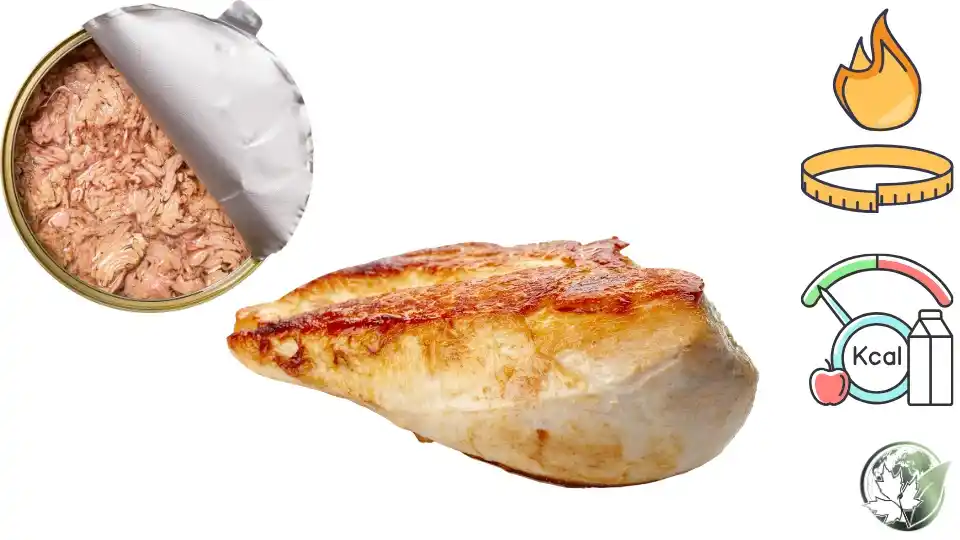
Both tuna and chicken breast suit meal prep, with different strengths
How Many Calories Are in Common Meals Using Each?
| Meal | Calories | Protein | Notes |
|---|---|---|---|
| Tuna sunflower oil sandwich, no mayo | 330 kcal | 28 g | Whole grain bread, tomato |
| Tuna sunflower oil sandwich with mayo | 420 kcal | 29 g | 1 tbsp mayo |
| Chicken breast sandwich | 380 kcal | 32 g | Lettuce, light mayo |
| Tuna and bean salad | 390 kcal | 33 g | Olive oil dressing |
| Chicken and quinoa bowl | 450 kcal | 40 g | Vegetables |
| Tuna rice bowl | 440 kcal | 33 g | Rice, cucumber |
| Chicken stir-fry with rice | 480 kcal | 38 g | Oil, vegetables |
| Tuna omelet | 310 kcal | 31 g | 2 eggs |
| Chicken Caesar wrap | 470 kcal | 36 g | Dressing, cheese |
Dressings and bread change the numbers more than the choice of protein. A mayonnaise based sandwich adds 90 calories to a tuna meal, which is more than the difference between tuna and chicken.
Practical Rules for Choosing Between Them
First, decide your calorie and protein target for the meal, and pick the food that meets it with the least waste. Second, drain tuna in oil and weigh it, and add oil only if you intend to eat it. Third, cook chicken with little fat, and weigh it cooked. Fourth, vary your protein across the week, so that you get both omega-3 and low sodium, and so you are not exposed to any one contaminant. Fifth, combine either protein with vegetables and fiber rich carbohydrates to make a filling meal. Sixth, keep cans of tuna for days when you cannot cook, and keep cooked chicken portions in the freezer for days when you want a leaner option.
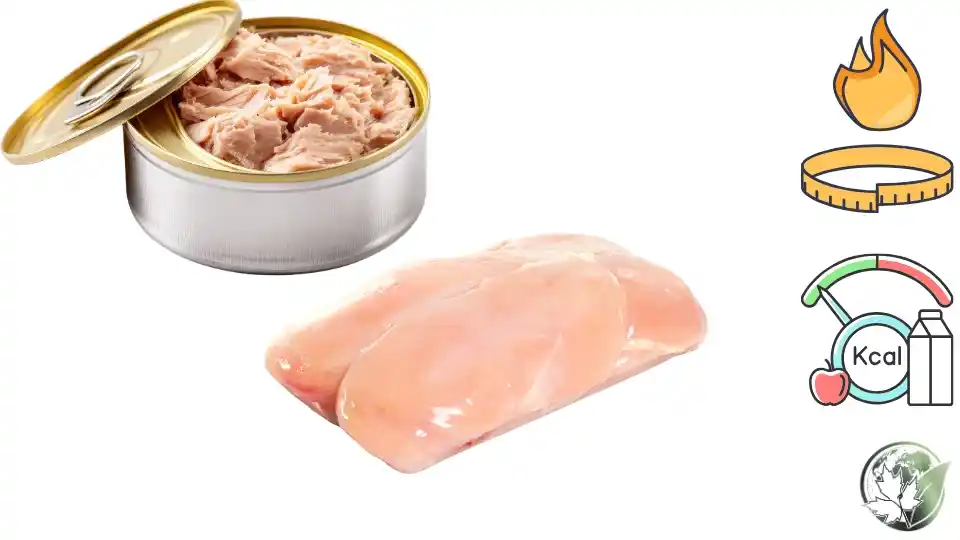
Keep both on hand for flexible high protein meals
How to Count Calories for Each Accurately
For tuna in sunflower oil, weigh the drained fish and log 190 calories per 100 grams, or use the label value for the drained weight. Add 120 calories for each tablespoon of oil you eat. For chicken breast, weigh it after cooking and log 165 per 100 grams, or weigh before and log 120. Add oil used in cooking, and remember that marinades and sauces carry sugar and oil.
What Does 500 Calories of Each Look Like on a Plate?
Looking at a full meal helps put the numbers in context. A 500 calorie plate built around sunflower oil tuna might include a drained 5 ounce can at 213 calories, a cup of cooked brown rice at 216, and a cup of cucumber and tomato salad with lemon at 40, for a total of about 470 calories and 40 grams of protein. A 500 calorie plate built around chicken breast might include 150 grams of cooked breast at 248, a cup of brown rice at 216 and a cup of steamed broccoli with a teaspoon of oil at 80, for about 545 calories and 58 grams of protein. To land at 500, you would trim the rice a little. The chicken plate delivers about 18 grams more protein for a similar energy, which is the practical meaning of the difference per 100 calories.
| Plate | Calories | Protein | Fiber | Sodium |
|---|---|---|---|---|
| Tuna plate (can, rice, salad) | 470 kcal | 40 g | 5 g | 600 mg |
| Chicken plate (150 g, rice, broccoli) | 545 kcal | 58 g | 7 g | 200 mg |
| Half tuna, half chicken plate | 510 kcal | 49 g | 6 g | 400 mg |
How Do Sunflower Oil Tuna and Chicken Breast Work in a High Protein Breakfast, Lunch and Dinner?
Chicken breast is more often a lunch or dinner food, while tuna can appear at any meal. A tuna omelet with two eggs, a drained small can and herbs gives about 310 calories and 31 grams of protein at breakfast. For lunch, a chicken breast wrap with salad provides about 380 calories and 32 grams of protein. For dinner, a baked chicken breast with roast vegetables gives about 330 calories and 45 grams. Using tuna in one meal and chicken in the other gives you around 100 grams of protein in three meals, with about 1,000 calories, leaving room for snacks, fruit, dairy and healthy fats. This pattern fits most weight loss and maintenance plans.
Is Sunflower Oil Tuna Suitable for Athletes and Gym Goers?
Athletes often eat both. Tuna is practical in a gym bag, since it needs no refrigeration, can be eaten from the can with a fork and delivers 30 grams of protein in minutes. The vitamin D and omega-3 add support for bone and recovery, while selenium is an antioxidant that protects muscle cells. Chicken breast offers a cleaner macro profile, with minimal fat, which suits athletes who are managing weight. In the days before a competition, athletes who need to make weight often choose chicken breast and water-packed tuna to keep sodium and fat low. In a bulking phase, sunflower oil tuna with rice and olive oil is a simple way to raise calories without bulk.
Do Tuna and Chicken Taste Different in Recipes, and Does It Affect Calories?
Flavor affects how much seasoning, sauce and fat you add, which affects calories. Plain chicken breast is mild and dry, so it often needs sauce, marinade or oil, which add calories. Tuna in oil already brings moisture and flavor, so it can be eaten with just lemon and pepper. If you find plain chicken breast boring, you tend to add sauces: a tablespoon of barbecue sauce adds about 30 calories, of mayonnaise 94 and of olive oil 119. A well seasoned breast, with herbs, spices, lemon and garlic, is lean and flavorful, without extra fat. Tuna can be kept light by using mustard, capers, lemon and herbs. The tastier you make each food with low calorie flavorings, the easier it is to stay on plan.
Common Myths About Tuna and Chicken Breast
One myth is that canned tuna is "just fat and salt". Drained tuna in sunflower oil is mostly protein, with 27 grams per 100 grams and about 8 grams of fat, so it is a high protein food, though higher in sodium than fresh fish. Another myth is that chicken breast is always the leanest protein. Water-packed tuna and egg whites are at least as lean per calorie. A third myth is that the oil in a can disappears when you drain it. In fact, about 7 to 9 grams of fat per 100 grams remains in the fish. A fourth myth is that eating chicken every day is risk free. A varied diet with fish, legumes, eggs and dairy provides more nutrients, and a single food rarely gives every benefit. A final myth is that more protein is always better: most people get enough with 1.2 to 1.6 grams per kilogram, and more than 2 grams offers little additional benefit.
How Can You Store and Reheat Each Safely?
Cooked chicken breast should be cooled within two hours, refrigerated at 4 degrees Celsius or lower and eaten within three to four days, or frozen for up to four months. Reheat until steaming hot, to 74 degrees Celsius, and do not reheat more than once. Unopened cans of tuna are shelf stable, and opened tuna should be refrigerated in a covered glass container and eaten within two to three days. Tuna is eaten cold, so there is no reheating risk, though warm dishes with tuna should be cooked to steaming hot. For lunch boxes, keep both in an insulated bag with an ice pack if they will sit for more than two hours.
Which Should You Choose Today?
If you want the leanest, highest protein option and have time to cook, choose chicken breast. If you want a fast, shelf stable meal with omega-3 and vitamin D, choose tuna and drain it well. If you are watching sodium, choose chicken. If you are watching cholesterol, tuna has the edge. If you want the best of both, plan a week with three tuna meals, three chicken meals and one or two meals based on eggs, legumes or dairy. The calorie difference between them is small enough that adherence, taste and convenience matter more than the number, as long as you weigh portions and count added fat.
What Do Dietitian Guidelines Say About Eating Fish and Poultry?
Most national dietary guidelines recommend eating fish twice a week, with at least one portion of oily fish, and limiting processed meat, while poultry is considered a healthier alternative to red meat. Canned light tuna counts as a fish serving, but not as an oily fish, since it has relatively little omega-3 compared with salmon or sardines. Poultry without skin is low in saturated fat and is encouraged as a main protein source in heart healthy diets. In practice, the guidelines support the use of both foods, with a focus on variety, minimal processing and cooking methods such as baking, grilling and steaming rather than frying. If you have a medical condition, such as kidney disease or gout, ask your doctor about protein amounts, since tuna is moderately high in purines.
How Can You Make Either Option Lighter Without Losing Flavor?
Small habits can save 50 to 100 calories a meal without making the food bland. Drain and press canned tuna, then flavor it with lemon, parsley, red onion and a little Dijon mustard. Bake chicken breast at 200 degrees Celsius on parchment paper with spices rather than frying, and slice it thinly across the grain for tenderness. Serve either one on a bed of leafy greens, add a few olives or capers for saltiness in place of oil, and finish with a squeeze of citrus. Use yogurt based dressings, and measure oil with a spoon.
Key Takeaways: Tuna Sunflower Oil vs Chicken Breast Calories
Drained sunflower oil tuna has about 190 calories per 100 grams, compared with 165 for cooked chicken breast, and gives about 14 grams of protein per 100 calories, against about 19. Chicken is better for cutting and low sodium, tuna for omega-3, vitamin D and convenience. Weigh both, drain the oil, and alternate to get the benefits of each.
Frequently Asked Questions
6 questions answered
Which has more calories, tuna in sunflower oil or chicken breast?
Tuna, with about 190 per 100 grams drained against 165.
Which has more protein per calorie?
Chicken breast, about 19 grams per 100 calories against 14.
Is chicken breast better than tuna for weight loss?
Slightly, though water-packed tuna is just as lean.
Is tuna healthier than chicken?
Each has strengths: tuna for omega-3 and vitamin D, chicken for low sodium.
Can I eat both on the same day?
Yes, alternating adds variety.
How many calories does the oil in a can add?
About 90, if you eat all of it.




