How Many Calories Are in Tuna in Vegetable Oil? The Quick Answer
Canned tuna in vegetable oil has about 190 calories per 100 grams when drained and about 285 calories per 100 grams if the oil is included. A standard 5 ounce (142 gram) can contains about 112 grams of drained tuna with about 213 calories, and about 305 calories if you eat all the oil. A 3 ounce (85 gram) drained serving has about 162 calories. Cooked skinless roasted chicken breast has about 165 calories per 100 grams, and cooked chicken thigh without skin about 209. So tuna in vegetable oil is a little higher in calories than chicken breast, but lower than chicken thigh, and drained tuna has about 27 grams of protein per 100 grams compared with 31 for the breast.
This is the third of the oil-packed tuna types, alongside olive oil and sunflower oil. The label "vegetable oil" usually means a refined blend, most often soybean, canola (rapeseed), sunflower or corn oil, which is chosen mainly for its low cost and neutral taste. Calories are the same as other oils, at about 120 per tablespoon. What differs is the fat profile and the quality of the blend, which the label may not fully state. This guide explains what vegetable oil in tuna means, how many calories the drained and undrained can has, how it compares with chicken breast and thigh, and how to fit tuna in vegetable oil into a balanced diet. There are three comparison tables, buying tips and an FAQ.

A drained 100 g of tuna in vegetable oil has about 190 calories
What Does "Vegetable Oil" Mean on a Tuna Can?
In most countries, "vegetable oil" on a label means oil from plants other than a named single source. It can be a mix of soybean, canola, sunflower, corn or palm oil, depending on price and availability when the cans are packed. In the European Union, the specific oils should be listed, and some labels say "vegetable oil (sunflower)". In the United States and Canada, a label of "soybean oil" or "vegetable oil" is common for lower priced brands. The calories do not change with the mix, but the proportions of omega-6, omega-3 and saturated fat can.
| Oil in the blend (1 tbsp) | Calories | Saturated | Mono | Poly |
|---|---|---|---|---|
| Soybean oil | 120 kcal | 2.1 g | 3.1 g | 7.9 g |
| Canola oil | 124 kcal | 1.0 g | 8.9 g | 4.1 g |
| Sunflower oil | 120 kcal | 1.4 g | 2.7 g | 8.9 g |
| Corn oil | 122 kcal | 1.8 g | 3.8 g | 7.4 g |
| Palm oil | 120 kcal | 6.7 g | 5.0 g | 1.3 g |
| Olive oil | 119 kcal | 1.9 g | 9.9 g | 1.4 g |
If you care about the fat profile, look for a label that names the oil, ideally canola or high oleic sunflower oil, or choose tuna in olive oil or water. If you simply want to know calories, the answer is the same for all of them.
How Many Calories Are in Tuna in Vegetable Oil by Can and Serving?
| Portion | Weight | Calories | Protein | Fat |
|---|---|---|---|---|
| 1 oz drained | 28 g | 53 kcal | 7.6 g | 2.2 g |
| 2 oz drained | 56 g | 106 kcal | 15.1 g | 4.4 g |
| 3 oz drained | 85 g | 162 kcal | 23.0 g | 6.7 g |
| 100 g drained | 100 g | 190 kcal | 27.0 g | 7.9 g |
| 1 small can (80 g), drained | about 60 g | 114 kcal | 16.2 g | 4.7 g |
| 1 can (5 oz), drained | about 112 g | 213 kcal | 30.2 g | 8.8 g |
| 1 can (5 oz), with oil | 142 g | 305 kcal | 30.2 g | 20.5 g |
| 1 can (5 oz), drained and pressed | about 105 g | 196 kcal | 28.4 g | 8.0 g |
| 1 large can (7 oz), drained | about 155 g | 295 kcal | 41.9 g | 12.2 g |
| 100 g with oil | 100 g | 285 kcal | 21 g | 21 g |
On the label, calories are often listed per 56 gram or 85 gram serving "as packaged", which can include some oil. Compare labels carefully because manufacturers choose different serving sizes, and some list drained weight while others do not.
How Many Calories Are in Chicken Breast and Thigh?
| Chicken cut and method | Serving | Calories | Protein | Fat |
|---|---|---|---|---|
| Breast, raw, skinless | 100 g | 120 kcal | 22.5 g | 2.6 g |
| Breast, roasted, skinless | 100 g | 165 kcal | 31.0 g | 3.6 g |
| Breast, roasted, skinless | 3 oz (85 g) | 140 kcal | 26.4 g | 3.1 g |
| Breast, roasted, with skin | 100 g | 197 kcal | 29.8 g | 7.8 g |
| Thigh, roasted, skinless | 100 g | 209 kcal | 26.0 g | 10.9 g |
| Thigh, roasted, with skin | 100 g | 229 kcal | 24.8 g | 15.5 g |
| Drumstick, roasted, skinless | 100 g | 172 kcal | 28.3 g | 5.7 g |
| Wing, roasted, with skin | 100 g | 290 kcal | 27.0 g | 19.5 g |
| Breast, breaded and fried | 100 g | 260 kcal | 23 g | 12 g |
The breast is the leanest cut. Dark meat is juicier, with more fat and iron, and many people prefer it for flavor, but it adds about 45 calories per 100 grams compared with the breast.
Tuna in Vegetable Oil vs Chicken Breast: Calories Compared
| Food | Portion | Weight | Calories | Protein | Fat |
|---|---|---|---|---|---|
| Tuna in vegetable oil, drained | 100 g | 100 g | 190 kcal | 27.0 g | 7.9 g |
| Tuna in vegetable oil, drained | 1 can | 112 g | 213 kcal | 30.2 g | 8.8 g |
| Tuna in vegetable oil, with oil | 1 can | 142 g | 305 kcal | 30.2 g | 20.5 g |
| Chicken breast, cooked | 100 g | 100 g | 165 kcal | 31.0 g | 3.6 g |
| Chicken breast, cooked | 112 g | 112 g | 185 kcal | 34.7 g | 4.0 g |
| Chicken breast, cooked | 1 breast | 172 g | 284 kcal | 53.4 g | 6.2 g |
| Chicken thigh, cooked | 100 g | 100 g | 209 kcal | 26.0 g | 10.9 g |
| Tuna in water, drained | 1 can | 112 g | 130 kcal | 28.5 g | 1.2 g |
Per 100 grams, chicken breast has about 13 percent fewer calories than drained tuna in vegetable oil and 15 percent more protein. Chicken thigh, however, has about 10 percent more calories than the tuna, with a bit less protein. A can of tuna in oil with its oil, at 305 calories, equals about 185 grams of chicken breast, more than a whole average breast.
Tuna in Vegetable Oil vs Chicken Breast: Nutrition Compared
| Per 100 g | Tuna in vegetable oil (drained) | Chicken breast (roasted) | Chicken thigh (roasted) |
|---|---|---|---|
| Calories | 190 kcal | 165 kcal | 209 kcal |
| Protein | 27.0 g | 31.0 g | 26.0 g |
| Fat | 7.9 g | 3.6 g | 10.9 g |
| Saturated fat | 1.3 g | 1.0 g | 3.0 g |
| Omega-6 | 3.5 g | 0.7 g | 2.3 g |
| Omega-3 | 0.3 g | 0.03 g | 0.1 g |
| Cholesterol | 18 mg | 85 mg | 93 mg |
| Sodium | 350 mg | 74 mg | 95 mg |
| Selenium | 76 mcg | 27 mcg | 24 mcg |
| Vitamin D | 5.7 mcg | 0.1 mcg | 0.1 mcg |
| Vitamin B12 | 2.2 mcg | 0.3 mcg | 0.4 mcg |
| Iron | 1.0 mg | 1.0 mg | 1.3 mg |
| Zinc | 0.9 mg | 1.0 mg | 2.4 mg |
Tuna stands out for vitamin D, B12, selenium and omega-3. Chicken breast stands out for protein density and low sodium. Chicken thigh gives more iron and zinc.
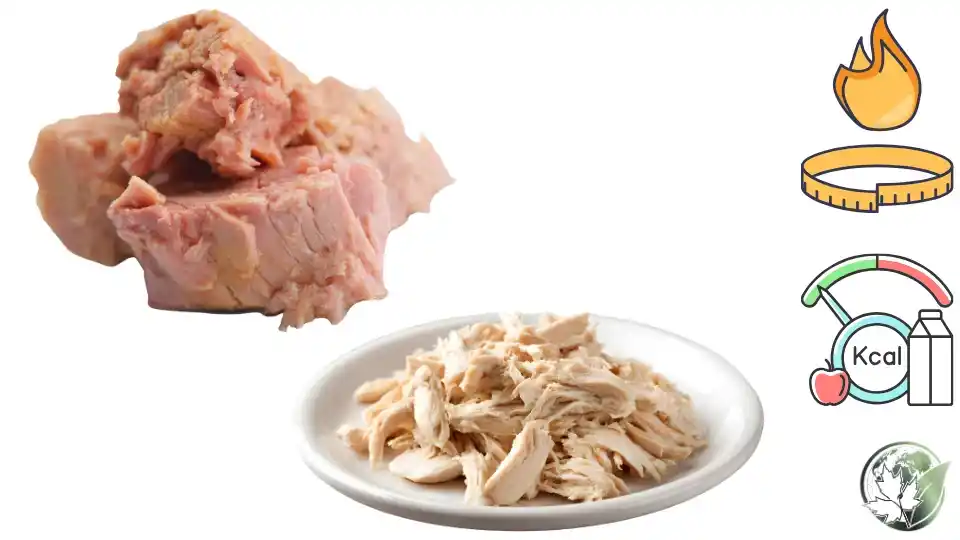
A drained can of tuna in vegetable oil has about 213 calories and 30 grams of protein
How Does Tuna Absorb the Packing Oil?
Tuna is lean, with only about 1 gram of fat per 100 grams when canned in water, so it readily takes up oil during canning. In the factory, tuna loins are cooked, cleaned, packed into cans and covered with oil or water. During sterilization at about 115 degrees Celsius, the flesh absorbs some oil, and the amount depends on how long it sits and how the pieces are cut. The result is about 7 to 9 grams of fat per 100 grams in the flesh after draining, compared with 1 gram for tuna in water. That is where the extra 70 calories per 100 grams comes from. Chunk and flake tuna absorb more than solid fillets, because there is more surface area.
Since the oil is made up of triglycerides, 9 calories a gram, the extra fat accounts for most of the difference. Rinsing the drained tuna under hot water or pressing it in a sieve can remove about 10 to 20 calories more, but also washes away some flavor.
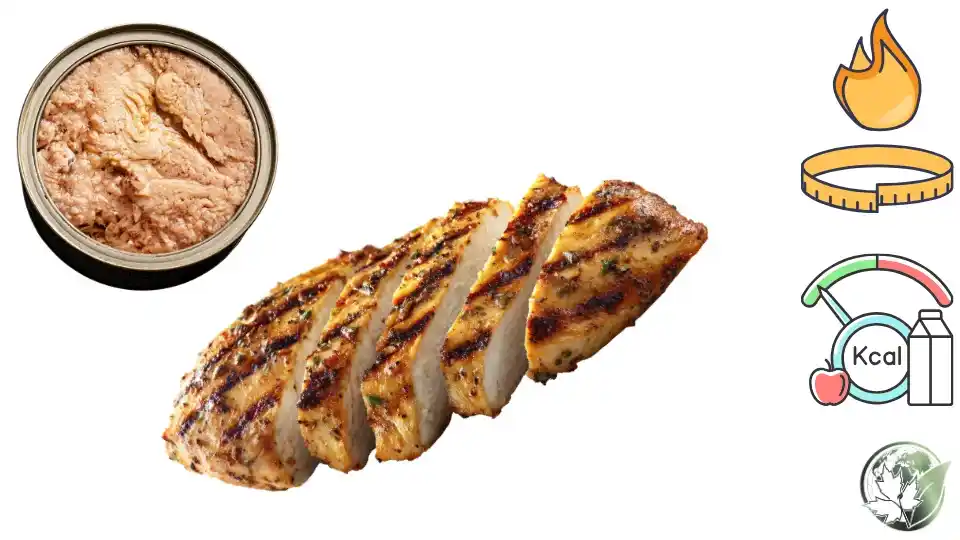
Draining a can of tuna in vegetable oil saves about 90 calories
Is Tuna in Vegetable Oil Healthy?
Tuna is a nutrient dense fish, so the base is healthy. The vegetable oil adds calories and, in the case of soybean, sunflower and corn oils, mostly omega-6 linoleic acid. This is an essential nutrient, and moderate intakes are associated with lower cholesterol and a lower risk of heart disease, but the modern diet already provides a lot of omega-6, and the balance with omega-3 matters. Because tuna in vegetable oil has both, with fish omega-3 offset partly by the oil, a can or two a week fits in well with a diet that also includes oily fish.
The concerns for oil-packed tuna are mostly calories, sodium and mercury, rather than the oil itself. A drained can has about 350 to 450 milligrams of sodium, and light tuna is lower in mercury than albacore. For everyday use, tuna in water or olive oil offers a bit more nutritional advantage, while vegetable oil tuna is the more economical option.
Which Is Better for Weight Loss: Tuna in Vegetable Oil or Chicken Breast?
Chicken breast is better if the goal is the fewest calories for the most protein. Per 100 calories, chicken breast provides 18.8 grams of protein and tuna in vegetable oil only 14.2 grams. Water-packed tuna is the winner at 22 grams per 100 calories. But tuna in vegetable oil is satisfying, tasty and convenient, and when drained, a 3 ounce portion at 162 calories fits into a calorie target easily. If you use the oil in the dish, remember that a tablespoon has 120 calories.
An easy approach is to alternate: use chicken breast for dinners you cook and canned tuna for fast lunches, drained and paired with vegetables, beans or whole grains.
How Many Calories Are in Common Dishes With Tuna and Chicken?
| Dish | Serving | Calories | Protein | Notes |
|---|---|---|---|---|
| Tuna salad with mayonnaise | 1/2 cup | 190 kcal | 16 g | 1 tbsp mayo |
| Tuna patties, pan-fried | 1 patty | 160 kcal | 14 g | Egg, breadcrumbs, oil |
| Tuna sandwich | 1 sandwich | 400 kcal | 22 g | Mayo, bread |
| Tuna and sweetcorn pizza | 1 slice | 250 kcal | 13 g | Cheese |
| Tuna fried rice | 1 cup | 330 kcal | 20 g | Oil, egg |
| Tuna pasta salad | 1 cup | 330 kcal | 18 g | Mayo |
| Grilled chicken breast and vegetables | 1 plate | 340 kcal | 46 g | Oil |
| Chicken breast wrap | 1 wrap | 390 kcal | 32 g | Salad, sauce |
| Chicken breast salad | 1 plate | 310 kcal | 36 g | Dressing |
| Chicken thigh, baked, skinless | 1 thigh | 150 kcal | 18 g | Plain |
| Chicken curry with rice | 1 plate | 550 kcal | 35 g | Oil, rice |
How Do You Buy and Store Tuna in Vegetable Oil?
Check the label for the species, the oil type, the net and drained weights and the sodium. Solid or fillet tuna usually costs more than chunk or flake, but it contains less oil in the flesh and has a firmer texture. Pole-and-line or FAD-free labels indicate better sustainability. Store unopened cans in a cool place for up to three years, and use opened tuna within two to three days, stored in a covered glass container. Keep the oil if you wish to use it, but remember its calories.
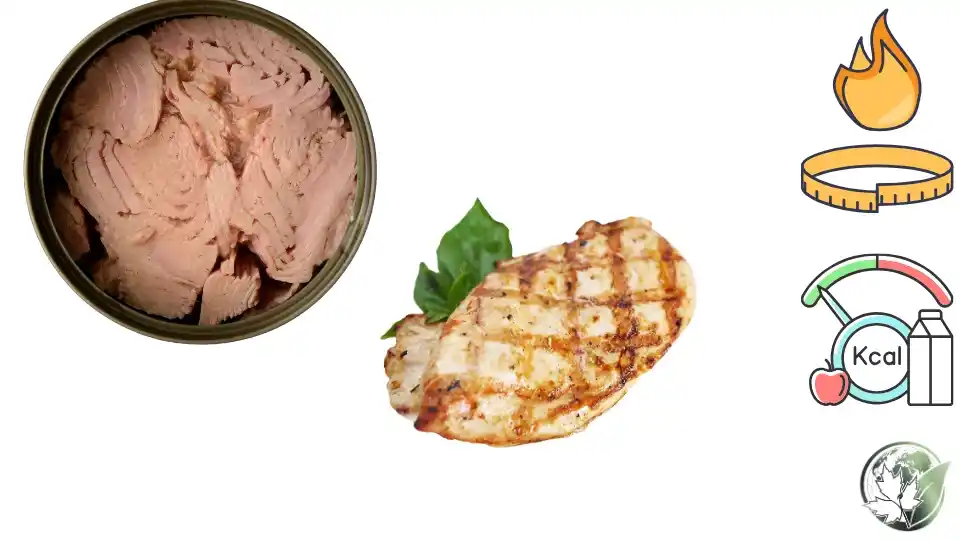
Check the label for the oil type and the drained weight when buying tuna
How to Count Tuna in Vegetable Oil Calories Accurately
Choose a method and stick to it. The simplest approach is to drain the can, weigh the tuna, and log 190 calories per 100 grams. If the label gives a different value per drained 100 grams, use that. If you eat part of the oil, count it at 120 calories per tablespoon. For chicken breast, weigh cooked meat and use 165 per 100 grams, or raw and use 120. If you use chicken thigh, use 209 for roasted skinless.
How Do You Cook With Tuna in Vegetable Oil Without Adding More Fat?
Because the tuna already contains oil, many recipes do not need any more. When making patties, drain the tuna, mix with an egg, a spoon of oats or breadcrumbs, grated onion and herbs, and cook in a nonstick pan with a spray or a teaspoon of oil, rather than frying in a quarter cup. Each patty then has about 110 to 130 calories instead of 200. When making a pasta sauce, use a spoon or two of the tuna oil to sauté garlic in place of extra olive oil, which makes use of the oil you would otherwise throw away and saves 120 calories. For salads, drain and flake the tuna, and dress with lemon juice, mustard and a little yogurt rather than mayonnaise, which saves 70 to 80 calories per tablespoon.
Baking is another way to make the oil work harder. A tuna and potato bake with tomatoes, with the drained tuna layered in, needs only a teaspoon of added oil for the top. In every case, the principle is to count the oil already in the can before adding more.
What Are the Differences Between Tuna in Vegetable Oil and Tuna in Water for Taste and Texture?
Tuna in vegetable oil is softer, moister and milder than tuna in water, which can taste drier and more pronounced. Oil keeps flakes tender and carries flavor, so it is a favorite for sandwiches, salads and pasta dishes where the tuna is the main element. Water-packed tuna is firmer, often with a stronger fish taste, which some people prefer for dishes with strong dressings. In blind tastings, people often prefer oil-packed tuna for plain eating, and water-packed for mixing with creamy sauces. The calorie difference is about 70 per 100 grams, or 80 for a can, so if you enjoy the oil version, a smaller portion gives the same satisfaction.
Can You Eat Tuna in Vegetable Oil on a Low Fat or Heart Healthy Diet?
On a low fat diet, drained tuna in vegetable oil with 8 grams of fat per 100 grams is moderate, while tuna in water at about 1 gram is better. For a heart healthy diet, the main goals are limiting saturated fat and trans fat and eating oily fish. Tuna in vegetable oil has little saturated fat, about 1.3 grams per 100 grams, and no trans fat if drained properly, and as a fish it contributes omega-3. It can fit into these diets, particularly when used in place of processed meats such as salami or bacon, which have far more saturated fat and sodium. Where cholesterol is a concern, tuna has only 18 milligrams per 100 grams, much lower than chicken at 85.
How Does the Price of Tuna in Vegetable Oil Compare With Chicken?
Tuna in vegetable oil is typically the least expensive canned tuna, often costing 20 to 40 percent less than tuna in olive oil, because vegetable oils are cheaper. For protein per unit cost, a can with 30 grams of protein often costs about the same as 100 to 150 grams of chicken breast in many markets, so both are economical, and both are cheaper than red meat or fish fillets. If you are on a tight budget, buy tuna in bulk packs when on sale, check the drained weight, and combine it with inexpensive sources such as eggs, beans, lentils and yogurt for protein. Chicken thighs are generally cheaper than breasts and have a more forgiving texture, though with more fat and calories, a trade-off to bear in mind when counting.
What Should You Do If You Eat Tuna Several Times a Week?
Variety is the main guidance. Rotate tuna types, mixing oil, water and tomato sauce versions, and choose light tuna more often than albacore. Alternate with other fish, such as salmon, sardines, mackerel and trout, which are higher in omega-3 and typically lower in mercury. Watch the sodium by choosing no salt added cans where available, and balance your day with fresh vegetables, fruit and unsalted foods. If you are pregnant, planning pregnancy or feeding young children, follow your national guidelines, which usually set a weekly maximum for tuna. If you are unsure, ask your doctor or a dietitian, who can tailor advice to your health and medications.
How Do You Read the Nutrition Label on Tuna in Vegetable Oil?
Start with the serving size and the number of servings per can. Many labels show a serving as 56 grams, which is about two ounces, so a 112 gram drained can has two servings, and the calories on the front may refer to half of what you eat. Next, check whether the values are "as packaged" or "drained": as packaged includes the oil in the can, and is higher, perhaps 100 calories per serving, while drained is closer to 95. Look at total fat and the split between saturated and polyunsaturated fat, then sodium, which should be under 300 milligrams per serving if you want a lower salt choice. Finally, read the ingredient list to see which oils are named. With these five checks, you can compare brands in under a minute and pick the best match for your goals.
Key Takeaways: Tuna in Vegetable Oil Calories vs Chicken Breast
Tuna in vegetable oil has about 190 calories per 100 grams drained and about 285 with the oil, compared with 165 for cooked chicken breast and 209 for chicken thigh. Chicken breast has more protein per calorie, while tuna offers omega-3, vitamin D and selenium. Drain well, check the oil type, and keep an eye on sodium and mercury.
Frequently Asked Questions
6 questions answered
How many calories are in a can of tuna in vegetable oil?
About 213 drained and about 305 with the oil.
Is tuna in vegetable oil higher in calories than chicken breast?
Yes, about 190 against 165 per 100 grams.
What is vegetable oil in canned tuna?
Usually a refined blend such as soybean, canola or sunflower oil.
Is tuna in vegetable oil unhealthy?
No, but it has more calories than tuna in water.
Does draining reduce calories?
Yes, by about 90 per can.
Is chicken thigh higher in calories than tuna?
Yes, 209 against 190 per 100 grams.