How Many Calories Are in Tuna in Sunflower Oil? The Quick Answer
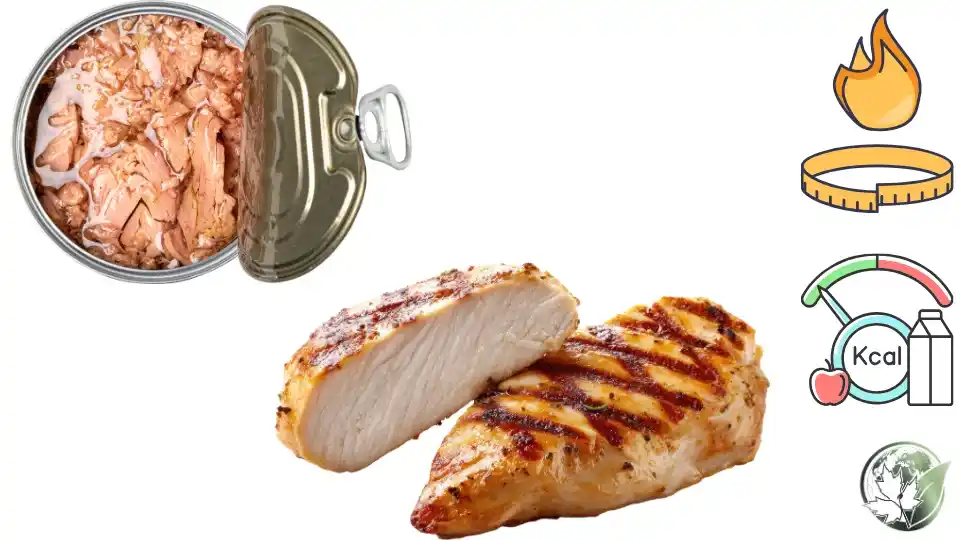
Canned tuna in sunflower oil has about 190 calories per 100 grams when drained, and about 280 calories per 100 grams if you eat the oil with it. A standard 5 ounce (142 gram) can has about 112 grams of drained tuna, which comes to about 213 calories, while the entire can with its oil holds about 300 calories. A 3 ounce (85 gram) drained portion has about 162 calories. Cooked, skinless, roasted chicken breast has about 165 calories per 100 grams, with 31 grams of protein, and a whole cooked breast (172 grams) has about 284 calories.
By weight, then, tuna in sunflower oil is slightly higher in calories than cooked chicken breast, about 15 percent higher when drained, and quite a bit higher when the oil is eaten. Per gram of protein it is higher again, because chicken breast has about 31 grams of protein per 100 grams, compared with about 27 for drained tuna in oil. For 100 calories, chicken breast gives 18.8 grams of protein, and tuna in sunflower oil, drained, gives 14.2 grams.
Sunflower oil is the most common oil used in European, Middle Eastern and Iranian canned tuna because it is neutral in flavor and affordable. This guide covers the calories in tuna in sunflower oil by can, serving and weight, compares drained and undrained values, sets them against chicken breast cooked in different ways, looks at the fats, including sunflower oil's omega-6 content, and gives advice on meal planning. There are three comparison tables, a set of tips and an FAQ.
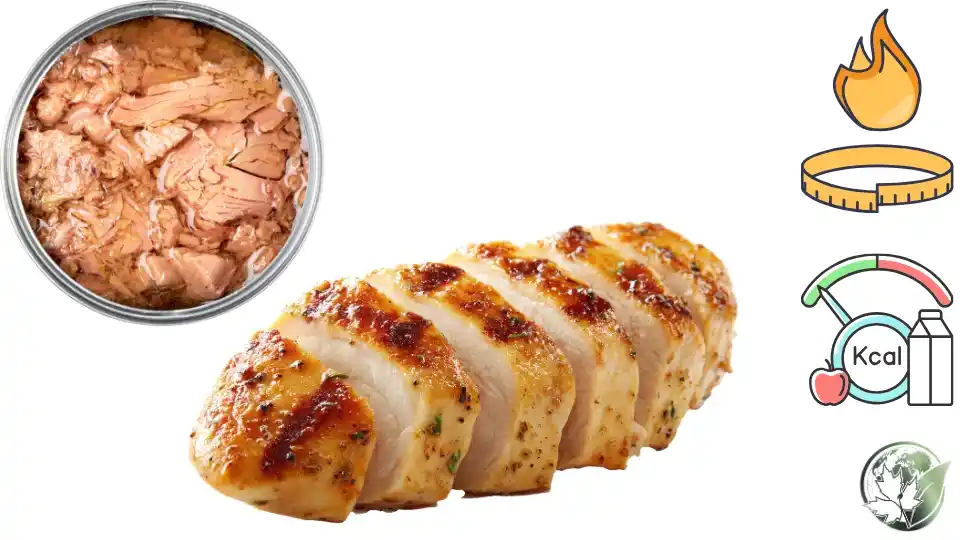
A drained 100 g of tuna in sunflower oil has about 190 calories
How Many Calories Are in Tuna in Sunflower Oil by Can and Serving?
| Portion | Weight | Calories | Protein | Fat |
|---|---|---|---|---|
| 1 oz drained | 28 g | 53 kcal | 7.6 g | 2.2 g |
| 2 oz drained | 56 g | 106 kcal | 15.1 g | 4.4 g |
| 3 oz drained | 85 g | 162 kcal | 23.0 g | 6.7 g |
| 100 g drained | 100 g | 190 kcal | 27.0 g | 7.9 g |
| 1 small can (80 g), drained | about 60 g | 114 kcal | 16.2 g | 4.7 g |
| 1 can (5 oz), drained | about 112 g | 213 kcal | 30.2 g | 8.8 g |
| 1 can (5 oz), with oil | 142 g | 300 kcal | 30.2 g | 19.5 g |
| 1 large can (185 g), drained | about 145 g | 276 kcal | 39.2 g | 11.5 g |
| Oil from 1 can (about 25 g) | 25 g | 221 kcal | 0 g | 25 g |
| 1 tablespoon sunflower oil | 13.6 g | 120 kcal | 0 g | 13.6 g |
The packing oil in a typical can can supply 100 to 220 calories. If you drain it, you remove most of it, but the flesh keeps some oil, which is why drained tuna in oil has about 70 more calories per 100 grams than tuna in water.
How Many Calories Are in Chicken Breast?
| Chicken breast preparation | Serving | Calories | Protein | Fat |
|---|---|---|---|---|
| Raw, skinless | 100 g | 120 kcal | 22.5 g | 2.6 g |
| Roasted, skinless | 100 g | 165 kcal | 31.0 g | 3.6 g |
| Roasted, skinless | 3 oz (85 g) | 140 kcal | 26.4 g | 3.1 g |
| Roasted, skinless | 1 breast (172 g) | 284 kcal | 53.4 g | 6.2 g |
| Roasted, with skin | 100 g | 197 kcal | 29.8 g | 7.8 g |
| Boiled, skinless | 100 g | 151 kcal | 29.0 g | 3.2 g |
| Grilled, skinless | 100 g | 165 kcal | 31.0 g | 3.6 g |
| Fried, breaded | 100 g | 260 kcal | 23 g | 12 g |
| Canned chicken in water | 3 oz | 100 kcal | 21 g | 1.5 g |
| Chicken breast slices, deli | 2 oz | 50 kcal | 10 g | 0.7 g |
Chicken breast is one of the leanest high protein foods. Cooking removes water, so cooked breast has more calories per 100 grams than raw, but about the same per original piece. A raw 150 gram breast, for example, has about 180 calories, and ends up as about 110 grams of cooked chicken with the same 180 calories.
Tuna in Sunflower Oil vs Chicken Breast: Calories Compared
| Food | Portion | Weight | Calories | Protein | Fat |
|---|---|---|---|---|---|
| Tuna in sunflower oil, drained | 100 g | 100 g | 190 kcal | 27.0 g | 7.9 g |
| Tuna in sunflower oil, with oil | 100 g | 100 g | 280 kcal | 21 g | 20 g |
| Tuna in sunflower oil, drained | 1 can | 112 g | 213 kcal | 30.2 g | 8.8 g |
| Tuna in sunflower oil, drained | 3 oz | 85 g | 162 kcal | 23.0 g | 6.7 g |
| Chicken breast, cooked | 100 g | 100 g | 165 kcal | 31.0 g | 3.6 g |
| Chicken breast, cooked | 3 oz | 85 g | 140 kcal | 26.4 g | 3.1 g |
| Chicken breast, cooked | 1 breast | 172 g | 284 kcal | 53.4 g | 6.2 g |
| Chicken breast, cooked | 112 g | 112 g | 185 kcal | 34.7 g | 4.0 g |
| Tuna in water, drained | 1 can | 112 g | 130 kcal | 28.5 g | 1.2 g |
For the same weight as one drained can of tuna, 112 grams, cooked chicken breast has 185 calories and 34.7 grams of protein, while tuna has 213 calories and 30.2 grams of protein. Chicken breast therefore has about 13 percent fewer calories and 15 percent more protein than tuna in sunflower oil.
Tuna in Sunflower Oil vs Chicken Breast: Nutrition Compared
| Per 100 g | Tuna in sunflower oil (drained) | Chicken breast (roasted, skinless) |
|---|---|---|
| Calories | 190 kcal | 165 kcal |
| Protein | 27.0 g | 31.0 g |
| Fat | 7.9 g | 3.6 g |
| Saturated fat | 1.3 g | 1.0 g |
| Polyunsaturated fat | 4.0 g | 0.8 g |
| Omega-6 | 3.5 g | 0.7 g |
| Omega-3 (EPA and DHA) | 0.3 g | 0.03 g |
| Cholesterol | 18 mg | 85 mg |
| Sodium | 350 mg | 74 mg |
| Selenium | 76 mcg | 27 mcg |
| Vitamin D | 5.7 mcg | 0.1 mcg |
| Vitamin B12 | 2.2 mcg | 0.3 mcg |
| Niacin | 14 mg | 14.8 mg |
| Iron | 1.0 mg | 1.0 mg |
| Per 100 calories | Tuna in sunflower oil | Chicken breast |
|---|---|---|
| Weight | 53 g | 61 g |
| Protein | 14.2 g | 18.8 g |
| Fat | 4.2 g | 2.2 g |
| Selenium | 40 mcg | 16 mcg |
| Vitamin D | 3.0 mcg | 0.1 mcg |
Chicken has more protein and less fat, while tuna in oil contains omega-3, vitamin D, vitamin B12 and selenium that chicken has little of. Tuna's sodium is nearly five times higher than chicken's.
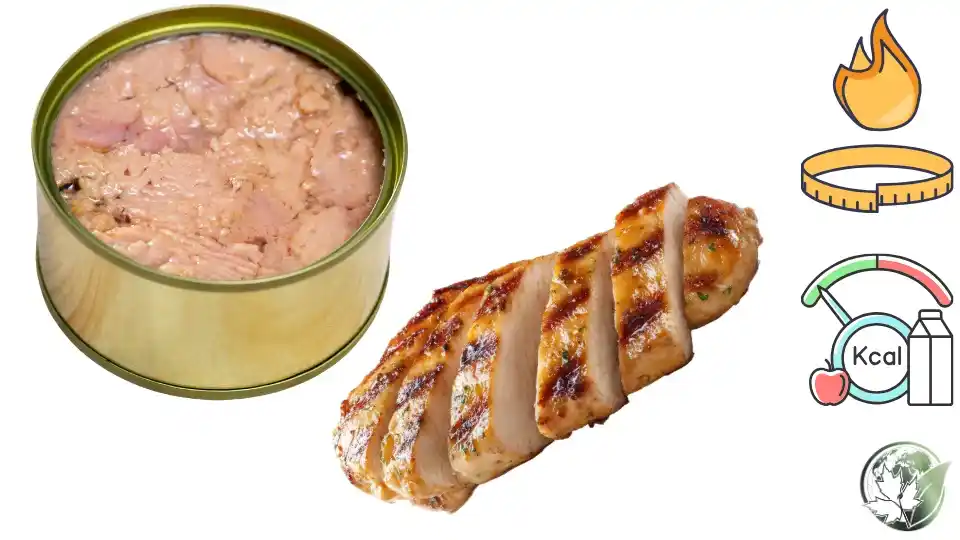
Cooked chicken breast has 165 calories per 100 grams and drained tuna in sunflower oil 190
Is Sunflower Oil in Tuna Healthy?
Sunflower oil is rich in polyunsaturated fat, mainly linoleic acid, an omega-6. Omega-6 is an essential fatty acid, and replacing saturated fat with polyunsaturated fat is linked with lower LDL cholesterol. The concern is balance: many people already eat much more omega-6 than omega-3 through seed oils and processed foods, and a very high ratio may promote inflammation, according to some researchers, although controlled trials have not shown clear harm from usual amounts of linoleic acid. High oleic sunflower oil, now increasingly used, is mostly monounsaturated, closer to olive oil.
For tuna, the practical point is that the oil dilutes some of tuna's own omega-3. As the oil is drained, some fish oil goes with it. Tuna in water preserves more EPA and DHA, so if omega-3 matters to you, choose water-packed tuna, or tuna in olive oil. For most people the amount of sunflower oil from a drained can, about 4 grams of fat, is minor.
How Does Draining Change the Calories in Tuna in Sunflower Oil?
| Method | 5 oz can | Calories | Fat |
|---|---|---|---|
| Whole can with all oil | 142 g | 300 kcal | 19.5 g |
| Drained | 112 g | 213 kcal | 8.8 g |
| Drained and pressed | 105 g | 195 kcal | 7.8 g |
| Drained and rinsed | 105 g | 175 kcal | 6.0 g |
| Water-packed, drained | 112 g | 130 kcal | 1.2 g |
Draining saves about 90 calories per can, and pressing and rinsing a further 20 to 40. The drained weight matters when you log: use the drained weight on the label, usually printed beside the net weight, and the nutrition per 100 grams drained if provided.
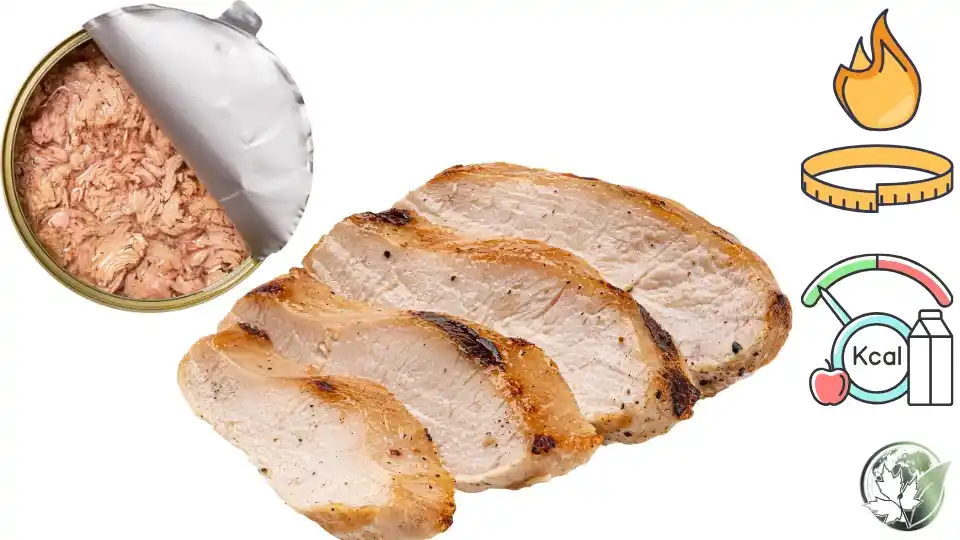
Drain the can well, since the oil can account for up to a third of the calories
How Many Calories Are in Common Dishes With Tuna and Chicken Breast?
| Dish | Serving | Calories | Protein | Notes |
|---|---|---|---|---|
| Tuna salad with mayonnaise | 1/2 cup | 190 kcal | 16 g | Mayo |
| Tuna and bean salad | 1 cup | 270 kcal | 22 g | Oil, beans |
| Tuna sandwich | 1 sandwich | 400 kcal | 22 g | Mayo, bread |
| Tuna pasta bake | 1 cup | 380 kcal | 24 g | Cheese |
| Tuna and rice bowl | 1 bowl | 420 kcal | 30 g | Rice, veg |
| Grilled chicken breast with salad | 1 plate | 330 kcal | 45 g | Light oil |
| Chicken breast sandwich | 1 sandwich | 380 kcal | 32 g | Lettuce, mayo |
| Chicken stir-fry | 1 cup | 250 kcal | 28 g | Vegetables, oil |
| Chicken Caesar salad | 1 plate | 470 kcal | 38 g | Dressing |
| Chicken and rice bowl | 1 bowl | 450 kcal | 40 g | Brown rice |
| Persian chicken kebab (joojeh), no rice | 1 skewer | 220 kcal | 30 g | Saffron marinade |
| Breaded chicken cutlet | 1 piece | 330 kcal | 28 g | Fried |
Which Is Better for Weight Loss: Tuna in Sunflower Oil or Chicken Breast?
For losing weight, chicken breast has a slight edge, as it has fewer calories and more protein per 100 grams, and it is naturally low in sodium. Tuna, though, is quick, requires no cooking and is easy to take to work. A drained can of tuna in sunflower oil at 213 calories with 30 grams of protein is a perfectly reasonable lunch base when combined with vegetables. Water-packed tuna is even better for calories, at 130 per can.
A good rule is to use whichever one you will actually eat consistently, and to watch the additions. The mayonnaise in tuna salad, at 94 calories per tablespoon, and the oil used to cook chicken, at 120, often add more than the protein itself.
How Do You Buy and Store Tuna in Sunflower Oil?
Look at the ingredient list for tuna, sunflower oil and salt only. Compare the drained weight between brands, since some cans contain 20 percent more fish for the same price. Choose skipjack for lower mercury, and pole-and-line caught for sustainability. Store unopened cans in a cool cupboard for up to three years, and opened tuna in a covered glass container in the refrigerator for up to three days. Do not store opened tuna in the can.
Compare the drained weight on the label when buying canned tuna
How to Count Calories for Tuna in Sunflower Oil Accurately
Weigh the tuna after draining and use 190 calories per 100 grams, or check the label. If you eat part of the oil, add 120 calories per tablespoon. For chicken, weigh it cooked and use 165 calories per 100 grams, or weigh raw and use 120, but do not mix the two. Count marinades, breading and cooking oil separately.
What Is the Difference Between Sunflower Oil, High Oleic Sunflower Oil and Olive Oil in Canned Tuna?
The calories do not change: all three have about 9 calories per gram, or 120 calories per tablespoon. What changes is the fat profile. Regular sunflower oil is about 65 percent linoleic acid (omega-6), 20 percent oleic acid and 10 percent saturated fat. High oleic sunflower oil flips this, with about 80 percent oleic acid, similar to olive oil, and is more stable for cooking. Olive oil is about 73 percent oleic acid, and contains polyphenols that sunflower oil lacks.
| Oil (1 tbsp) | Calories | Monounsaturated | Polyunsaturated | Saturated |
|---|---|---|---|---|
| Regular sunflower oil | 120 kcal | 2.7 g | 8.9 g | 1.4 g |
| High oleic sunflower oil | 120 kcal | 10.4 g | 1.7 g | 1.0 g |
| Olive oil | 119 kcal | 9.9 g | 1.4 g | 1.9 g |
| Canola oil | 124 kcal | 8.9 g | 4.1 g | 1.0 g |
If you buy tuna in sunflower oil often, check whether the label says "high oleic". Otherwise, regular sunflower oil is fine for occasional use, but pairing it with omega-3 rich foods through the week, such as oily fish, walnuts and flaxseed, improves the balance.
How Do You Make Tuna Meals Lighter and Higher in Protein?
A few swaps keep a tuna meal lean. Replace mayonnaise with plain Greek yogurt, at about 15 calories per tablespoon instead of 94, and add mustard and lemon for flavor. Mix tuna with chopped celery, cucumber, tomato and herbs to add volume. Use a lettuce wrap or whole grain bread in place of two slices of white bread, and serve with a side of vegetables. If you want more protein without more calories, combine half a can of tuna in sunflower oil with an egg white or two. Choose a smaller can of 80 grams if you eat tuna as a snack, since a can of 213 calories may be too much between meals.
For a high protein plate that is still moderate, combine 3 ounces of drained tuna in sunflower oil at 162 calories, a cup of white beans at 250, and a large tomato and onion salad at 60 for about 470 calories and 40 grams of protein, which fills most people for hours.
How Do You Cook and Prepare Chicken Breast Without Drying It Out?
Chicken breast is lean, which makes it easy to overcook. Cook to an internal temperature of 74 degrees Celsius (165 degrees Fahrenheit), then rest for five minutes. Brining in salted water for 30 minutes, pounding to an even thickness, or marinating in yogurt and lemon for an hour keeps it juicy. Poaching in simmering stock gives tender meat with no added fat, and a good base for salads and sandwiches. Grilling and baking need only a teaspoon of oil, or none in a nonstick pan. Each tablespoon of oil, at 120 calories, equals the energy in about 73 grams of the cooked chicken, so a light touch matters. Breading and deep-frying nearly double the calories, from 165 to about 260 per 100 grams.
Is Chicken Breast or Tuna Better for Building Muscle?
For muscle, the key is total daily protein, spread across meals, with about 25 to 40 grams per meal. Chicken breast provides 31 grams per 100 grams, with a complete amino acid profile and a high leucine content of about 2.4 grams, which triggers muscle protein synthesis. Tuna provides about 27 grams of protein per 100 grams drained, with a similar quality, and also supplies vitamin D and omega-3. Many athletes eat both, using chicken for bulk and tuna for convenience. The difference in protein per calorie is small enough that either is a good choice, and the extra fat in tuna in oil can even be helpful for people in a calorie surplus.
How Much Does Tuna in Sunflower Oil Cost Compared With Chicken Breast?
Price is a major reason people choose one over the other. Canned tuna in sunflower oil is generally among the cheapest sources of protein per can, and it needs no refrigeration, so it is also practical for travel, camping and emergency supplies. A can of about 112 grams drained, with 30 grams of protein, costs less than a comparable portion of fresh chicken breast in many markets, though chicken breast sold in bulk or frozen can be competitive, especially when bought whole and portioned at home. If you compare cost per 25 grams of protein, tuna in oil is usually close to or cheaper than boneless chicken breast, while water-packed tuna of the same quality costs about the same. Eggs and canned beans are cheaper still. Shelf life is the clear advantage of the can: it lasts for years, while fresh chicken must be cooked or frozen within two days.
Who Should Limit Tuna in Sunflower Oil?
Most healthy adults can eat canned tuna in moderation. People who should be more careful include pregnant women and young children, because of mercury, and people on a low sodium diet, since a drained can can contain 350 to 500 milligrams of sodium. Those with fish allergy must avoid it altogether. Anyone managing triglycerides or aiming for a strict low fat intake may prefer tuna in water. People taking blood thinners should keep the amount consistent, since fish oils can have mild effects on clotting, and ask their doctor if unsure. For everyone else, a can or two a week is a reasonable part of a varied diet that includes other proteins.
How Do You Plan a Day of Meals Around Tuna and Chicken?
A simple one day plan shows how the two fit together at about 1,700 calories. Breakfast: two boiled eggs, a tomato and a slice of whole grain toast, about 270 calories. Lunch: a drained 5 ounce can of tuna in sunflower oil mixed with beans, cucumber and lemon, about 460 calories. Snack: plain yogurt and an apple, about 150 calories. Dinner: a 150 gram grilled chicken breast with a cup of rice and roasted vegetables, about 520 calories. Add a handful of nuts and two teaspoons of oil for the day, and you have roughly 1,700 calories and about 130 grams of protein. Swapping lunch and dinner proteins, or alternating days, brings variety and reduces the mercury and sodium load from tuna.
What Mistakes Do People Make When Logging Tuna in Oil?
The most common error is logging the can as "tuna" without distinguishing oil from water packing, which understates calories by 70 to 80 per 100 grams. The second is mixing weights: weighing the tuna with its oil and then using the drained value per 100 grams. The third is ignoring the oil when you tip the whole can into a salad. The last is forgetting that the can's serving size is often 56 grams, so a whole can may be two servings. Small corrections of this kind can account for 100 calories a day for someone who eats tuna regularly.
Key Takeaways: Tuna in Sunflower Oil Calories vs Chicken Breast
Tuna in sunflower oil has about 190 calories per 100 grams drained and 280 with the oil, against 165 for cooked chicken breast. Chicken has more protein per calorie, and tuna has more omega-3, vitamin D and selenium. Drain tuna well, measure the oil, and keep mayonnaise and cooking fat in check.
Frequently Asked Questions
6 questions answered
How many calories are in a can of tuna in sunflower oil?
About 213 drained and about 300 with the oil.
Does tuna in sunflower oil have more calories than chicken breast?
Slightly more per 100 grams, 190 against 165.
Is tuna in sunflower oil healthy?
Yes, in moderation, though water-packed has more omega-3.
Does draining tuna reduce calories?
Yes, by about 90 calories per can.
Which has more protein, tuna or chicken breast?
Chicken breast, 31 grams against 27 per 100 grams.
Can I eat tuna in sunflower oil every day?
Limit it because of mercury, and vary your fish.