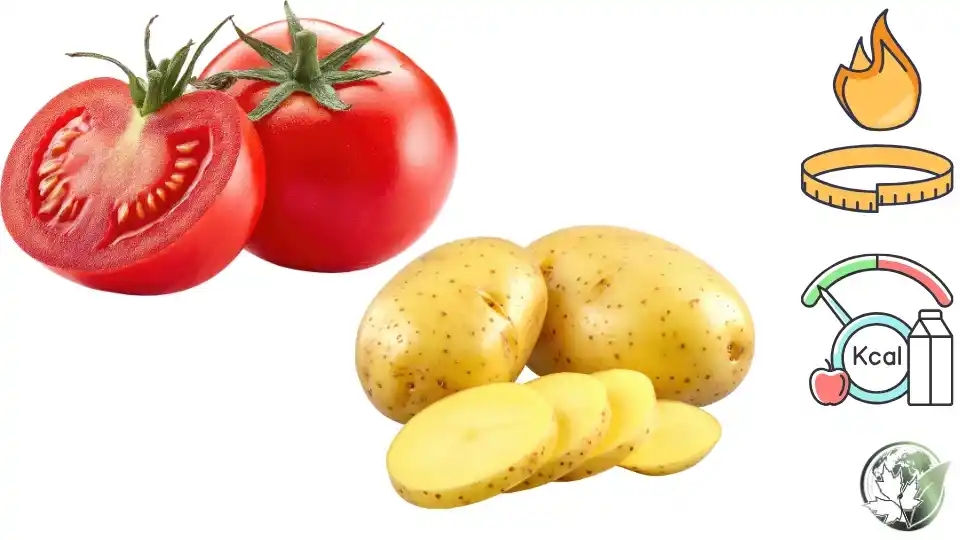
Tomato vs Potato Calories: The Quick Answer
A tomato has about 18 calories per 100 grams, and a medium tomato (123 grams) has about 22. A raw potato has about 77 calories per 100 grams, and a medium potato (173 grams) has about 133 raw, 161 baked with the skin and about 118 boiled. So a tomato has about 77 percent fewer calories than a potato per 100 grams, and a medium tomato has about 83 percent fewer calories than a medium raw potato. You could eat seven medium tomatoes, about 860 grams, for the calories of one medium baked potato.
The difference comes from composition. Tomato is about 94.5 percent water with only 3.9 grams of carbohydrate per 100 grams. Potato is about 79 percent water and holds 17.5 grams of carbohydrate per 100 grams, nearly all of it starch, a long chain of glucose that is a dense source of energy. Tomatoes contain almost no starch and a little natural sugar, at 2.6 grams per 100 grams.
Interestingly, the two are botanical cousins. Both belong to the Solanaceae, or nightshade family, along with eggplant and peppers, though we eat the fruit of the tomato and the underground tuber of the potato. Both arrived in Europe from the Americas in the 1500s, and they now sit together in dishes from French ratatouille-style stews to Persian khoresh and Indian curries. This guide compares their calories by weight and by portion, shows how cooking changes the totals, compares nutrients, glycemic index and satiety, and answers common questions about weight loss, diabetes and nightshade sensitivity. There are three tables and an FAQ.
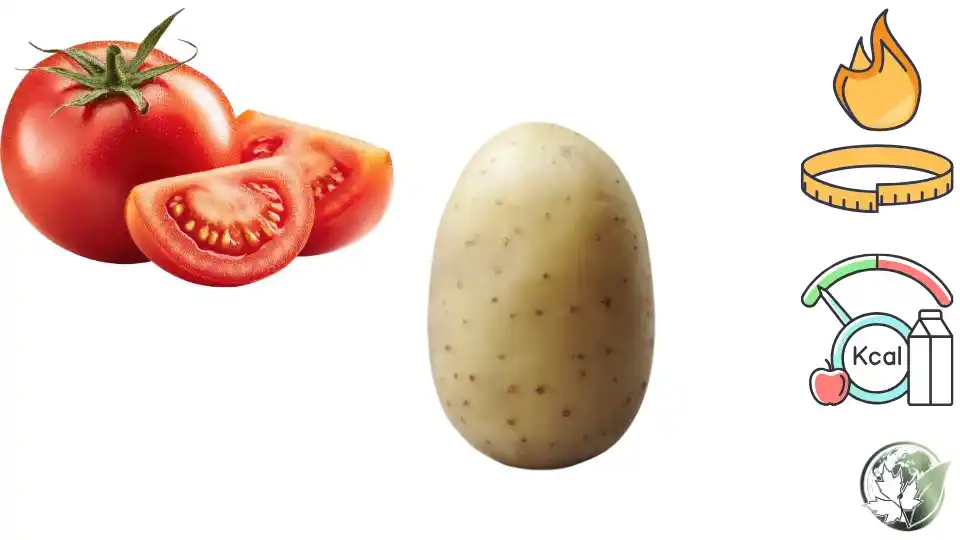
A tomato has about 18 calories per 100 grams and a potato about 77
How Many Calories Are in a Tomato vs a Potato by Portion?
| Portion | Tomato | Potato (raw) |
|---|---|---|
| 100 g | 18 kcal | 77 kcal |
| 1 small | 16 kcal (91 g) | 100 kcal (130 g) |
| 1 medium | 22 kcal (123 g) | 133 kcal (173 g) |
| 1 large | 33 kcal (182 g) | 190 kcal (247 g) |
| 1 cup, chopped or diced | 32 kcal (180 g) | 116 kcal (150 g) |
| 200 g | 36 kcal | 154 kcal |
| 500 g | 90 kcal | 385 kcal |
| 1 kg | 180 kcal | 770 kcal |
| What 100 calories buys | Tomato | Potato |
|---|---|---|
| Weight | 556 g | 130 g |
| Medium pieces | 4.5 tomatoes | 3/4 of a potato |
| Cups chopped | 3.1 cups | 0.9 cup |
A kilogram of tomatoes provides 180 calories, which is about the same as a single medium potato eaten with a little butter. The tomato is among the most voluminous foods per calorie, while the potato is a compact source of energy.
How Many Calories Are in Potato Cooked Different Ways?
| Potato preparation | Serving | Calories | Fat | Carbs |
|---|---|---|---|---|
| Raw | 100 g | 77 kcal | 0.1 g | 17.5 g |
| Boiled, peeled | 100 g | 86 kcal | 0.1 g | 20.0 g |
| Boiled with skin | 100 g | 87 kcal | 0.1 g | 20.1 g |
| Baked with skin | 100 g | 93 kcal | 0.1 g | 21.2 g |
| Baked, medium | 173 g | 161 kcal | 0.2 g | 36.6 g |
| Microwaved with skin | 100 g | 105 kcal | 0.1 g | 24 g |
| Mashed with milk and butter | 1 cup (210 g) | 237 kcal | 8.9 g | 35 g |
| Roasted with oil | 1 cup (150 g) | 220 kcal | 7 g | 34 g |
| Hash browns | 1 cup (156 g) | 413 kcal | 19 g | 58 g |
| French fries | 100 g | 312 kcal | 15 g | 41 g |
| Potato chips | 1 oz (28 g) | 152 kcal | 9.8 g | 15 g |
| Potato salad with mayonnaise | 1 cup (250 g) | 360 kcal | 21 g | 28 g |
Plain potatoes are a moderate calorie food. The numbers climb when they are fried or finished with butter, cream or mayonnaise. Fries have four times the calories per 100 grams of a baked potato because they absorb frying oil.
How Many Calories Are in Tomato Cooked Different Ways?
| Tomato preparation | Serving | Calories | Fat | Carbs |
|---|---|---|---|---|
| Raw | 100 g | 18 kcal | 0.2 g | 3.9 g |
| Boiled | 100 g | 18 kcal | 0.2 g | 3.9 g |
| Grilled, dry | 1 medium | 22 kcal | 0.2 g | 4.8 g |
| Roasted with 1 tsp oil | 1 medium | 62 kcal | 4.7 g | 4.8 g |
| Fried slices | 1 medium | 80 kcal | 6 g | 5 g |
| Canned, diced | 1/2 cup | 25 kcal | 0.2 g | 5.5 g |
| Sun-dried | 1 oz | 73 kcal | 0.8 g | 16 g |
| Tomato soup, canned | 1 cup | 90 kcal | 1.9 g | 17 g |
| Tomato juice | 1 cup | 41 kcal | 0.1 g | 9.5 g |
| Tomato sauce | 1/2 cup | 30 kcal | 0.4 g | 6.6 g |
Tomatoes stay low in calories however they are prepared, unless oil is added. Only sun-drying and concentrating remove water enough to raise the calories per gram.
Tomato vs Potato: Nutrition Compared
| Per 100 g, raw | Tomato | Potato |
|---|---|---|
| Calories | 18 kcal | 77 kcal |
| Carbohydrate | 3.9 g | 17.5 g |
| Starch | 0 g | 15.4 g |
| Sugar | 2.6 g | 0.8 g |
| Fiber | 1.2 g | 2.1 g |
| Protein | 0.9 g | 2.0 g |
| Fat | 0.2 g | 0.1 g |
| Vitamin C | 13.7 mg | 19.7 mg |
| Vitamin B6 | 0.08 mg | 0.30 mg |
| Vitamin K | 7.9 mcg | 2.0 mcg |
| Vitamin A | 42 mcg | 0 mcg |
| Potassium | 237 mg | 421 mg |
| Magnesium | 11 mg | 23 mg |
| Iron | 0.3 mg | 0.8 mg |
| Lycopene | 2,573 mcg | 0 mcg |
| Water | 94.5 g | 79.3 g |
| Per 100 calories | Tomato | Potato |
|---|---|---|
| Weight | 556 g | 130 g |
| Vitamin C | 76 mg | 26 mg |
| Potassium | 1,317 mg | 547 mg |
| Fiber | 6.7 g | 2.7 g |
| Protein | 5.0 g | 2.6 g |
| Vitamin A | 233 mcg | 0 mcg |
Potatoes have more vitamin B6, potassium, magnesium and iron per 100 grams, while tomatoes provide vitamin A and lycopene. Per calorie, tomatoes deliver more vitamin C, fiber, protein and potassium, which is a result of how little energy they contain. The potato's strength is that it is filling, inexpensive and a good source of potassium, especially with the skin on.
One medium potato has the calories of about seven medium tomatoes
Do Tomatoes or Potatoes Raise Blood Sugar More?
The glycemic index, a scale of how fast a food raises blood glucose, differs sharply. A tomato has a glycemic index of about 15, which is very low, and a glycemic load of about 1 per medium fruit, because it has so few carbohydrates. A baked potato has a glycemic index of about 85, in the high range, and a boiled white potato about 78. A medium boiled potato has a glycemic load of about 20. Mashed and instant potatoes score the highest, near 87 to 95, and French fries about 75.
This does not mean that people with diabetes must avoid potatoes. Portion, preparation and combination matter. Boiling, cooling and reheating potatoes increases resistant starch and lowers the glycemic response by up to a quarter. Eating potatoes with the skin, with protein, with vegetables or with a vinegar-based dressing slows absorption. Tomatoes are one of the best choices for those who need to limit carbohydrates.
Which Is More Filling: A Tomato or a Potato?
In the well-known satiety index experiment from the University of Sydney, boiled potatoes ranked at the top of 38 foods for how full they made people feel per calorie, with a score of 323 percent compared with white bread at 100 percent. The explanation is volume, water, fiber and a protein called proteinase inhibitor 2, which is thought to affect appetite hormones. Tomatoes were not on the list, but they would be expected to fill the stomach with large volume and few calories, though with less staying power since they have almost no starch or protein. A sensible meal combines both: a boiled potato for lasting fullness, and tomatoes in a salad or sauce for volume, flavor and vitamins.
Which Is Better for Weight Loss: Tomato or Potato?
Both can help. Tomatoes help because they are so low in calories that you can eat a large amount, they add moisture and flavor so you need less oil and sauce, and they provide fiber and water. Potatoes help because they are so filling when prepared simply. A plain boiled or baked potato, at 120 to 160 calories, is more satisfying than the same calories in a pastry or chips. The key difference is what you do to them. Fried or buttered potatoes can triple the calories, and a tomato soaked in cheese and oil is no longer a diet food. A plate with half tomatoes and salad, a modest baked potato and a lean protein is a sound structure for a low calorie meal.
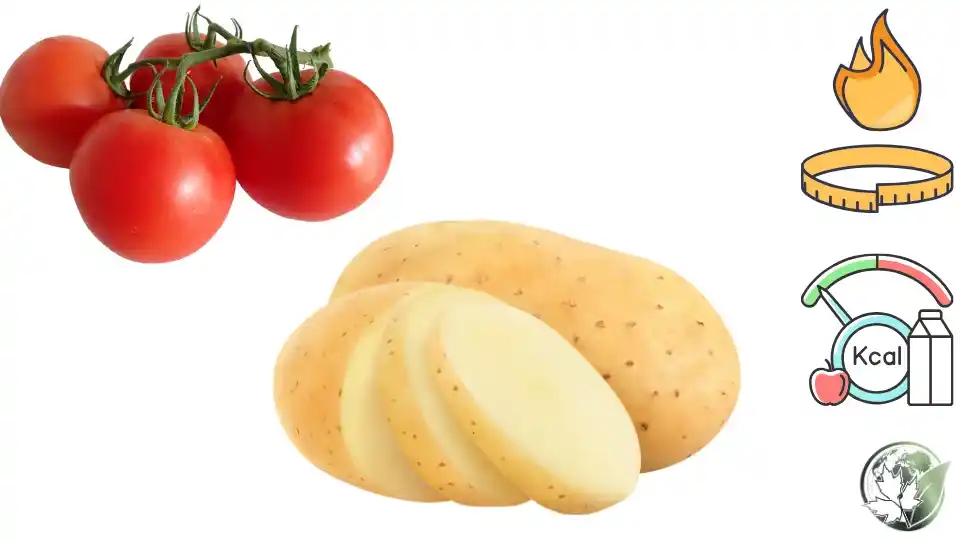
Pair a baked potato of 161 calories with a tomato salad of 40 calories for a filling light meal
Are Tomatoes and Potatoes Bad Because They Are Nightshades?
Both foods belong to the nightshade family, which contains alkaloids such as solanine in potatoes and tomatine in tomatoes. In normal amounts these are harmless. Green, sprouted or damaged potatoes can contain high levels of solanine, which can cause nausea and stomach upset, so cut away green patches and sprouts, and discard badly green potatoes. Unripe green tomatoes contain tomatine, but ripe red ones contain very little.
Some people claim that nightshades worsen arthritis or inflammation, but research does not support avoiding them in general. A small number of people may be sensitive and can test by removing the foods for a few weeks. For most, tomatoes and potatoes provide vitamins, potassium and antioxidants and are part of healthy diets.
How Do Tomato and Potato Dishes Compare in Calories?
| Dish | Serving | Calories | Notes |
|---|---|---|---|
| Tomato and cucumber salad | 1 cup | 35 kcal | No dressing |
| Tomato soup, homemade | 1 cup | 100 kcal | With oil |
| Baked potato, plain | 1 medium | 161 kcal | Skin on |
| Potato and tomato stew | 1 cup | 160 kcal | With oil |
| Roasted potatoes and cherry tomatoes | 1 cup | 190 kcal | 1 tbsp oil |
| Caprese salad | 1 serving | 280 kcal | Mozzarella, oil |
| Mashed potatoes | 1 cup | 237 kcal | Milk, butter |
| Potato gratin | 1 cup | 320 kcal | Cream, cheese |
| Spanish tortilla (potato omelet) | 1 slice | 250 kcal | Oil, eggs |
| Patatas bravas with tomato sauce | 1 serving | 300 kcal | Fried potatoes |
| Shakshuka | 1 serving | 280 kcal | Eggs, tomatoes |
| French fries with ketchup | 1 medium | 365 kcal | Fried |
How to Choose and Store Tomatoes and Potatoes
Choose firm, smooth potatoes without green patches, sprouts or soft spots, and store them in a cool, dark, dry place, around 8 to 10 degrees Celsius, away from onions. Do not refrigerate them for long, as cold storage converts starch to sugar and can increase acrylamide when fried. Tomatoes, by contrast, taste best stored at room temperature, stem side down, and eaten within a few days. Keep them in separate places, since tomatoes release ethylene gas, which can encourage potatoes to sprout.
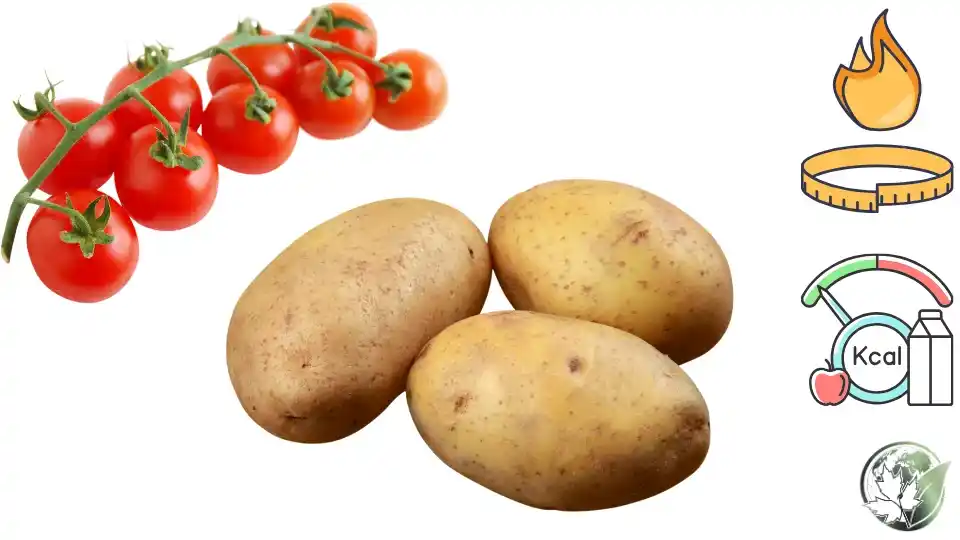
Store potatoes in a dark cool place and tomatoes at room temperature, separately
How to Count Tomato and Potato Calories Accurately
Weigh potatoes raw before cooking, and use 77 calories per 100 grams, or weigh them cooked and use 87 for boiled or 93 for baked. Do not mix raw and cooked values for the same potato. Add the calories of any butter, oil, cream and cheese separately: a tablespoon of butter adds 102 and a tablespoon of oil 119. For tomatoes, use 18 calories per 100 grams, or count a medium tomato as 22, and log oil and dressings on their own.
What Is the History of the Tomato and the Potato?
Both foods come from the Americas. The potato was domesticated in the Andes of Peru and Bolivia more than 7,000 years ago, and its ability to grow at altitude in poor soil made it a staple for the Inca. Spanish explorers brought it to Europe in the late 1500s. At first, Europeans were suspicious of it, partly because it was not mentioned in the Bible and partly because of its resemblance to poisonous nightshades, but by the 1700s it had become a staple that supported population growth across Ireland, Germany, Russia and beyond. The tomato was domesticated in Mexico and Central America, where the Aztecs called it tomatl. It reached Spain in the early 1500s and was grown as an ornamental plant for a long time in northern Europe, since people feared it was poisonous. Italians adopted it as food by the 1700s, and tomato sauce became the foundation of Neapolitan cuisine.
Today the potato is the fourth most produced food crop worldwide, after rice, wheat and maize, and the tomato is the most widely grown vegetable-fruit, with over 180 million tonnes grown every year. Iran is among the leading tomato producers, with tomatoes central to its cooking, in dishes such as ghormeh sabzi variants, kuku, and the classic eggs and tomatoes of breakfast.
How Do You Combine Tomato and Potato for a Balanced Meal?
A balanced plate matches a modest portion of potato, a large portion of tomato and vegetables, and a source of protein. For example, a baked potato of 161 calories, a large tomato and cucumber salad of 60 calories with lemon and a teaspoon of olive oil at 40, and grilled chicken breast of 165 calories for a total of about 425 calories. Roasting potato cubes with halved cherry tomatoes, garlic and herbs with a tablespoon of oil makes a side dish of about 190 calories a cup that brings out the sweetness of the tomatoes. A traditional Iranian stew of potatoes, tomatoes and lean meat in a tomato paste base provides carbohydrate, vitamin C and lycopene together, at about 300 calories a portion before rice.
Cooking potatoes in a tomato sauce is a good way to lower the glycemic effect of the meal, since the acid, fiber and protein in the dish slow absorption. Using potatoes with the skin on adds fiber and potassium. Avoid deep-frying, and use an oven or air fryer to give potatoes a crisp finish with a teaspoon of oil rather than a cup.
Does Cooking Destroy Nutrients in Tomatoes and Potatoes?
Heat affects the two foods differently. In potatoes, boiling leaches some vitamin C and potassium into the water, and peeling removes some fiber and minerals, so steaming or baking with the skin on retains more. In tomatoes, cooking reduces vitamin C by about 10 to 30 percent but increases the availability of lycopene several times over, so cooked tomatoes are better for lycopene and raw for vitamin C. Eating a combination of raw and cooked tomatoes through the week is a practical solution. The nutrient losses do not change the calories, which are almost the same raw and cooked per gram once water changes are accounted for.
How Do Sweet Potatoes and Cherry Tomatoes Fit Into This Comparison?
People often ask whether switching from white potatoes to sweet potatoes saves calories. It does not by much: a raw sweet potato has about 86 calories per 100 grams, slightly more than a white potato at 77, and a medium baked sweet potato (114 grams) has about 103 calories. The difference is that sweet potatoes provide beta carotene, with about 960 micrograms of vitamin A per 100 grams, and a lower glycemic index when boiled, about 63. Cherry tomatoes have the same 18 calories per 100 grams as large tomatoes, so a cup of 149 grams has about 27 calories, and they are a convenient snack. Grape tomatoes are slightly sweeter at 21.
| Food (100 g, raw) | Calories | Carbs | Fiber | Glycemic index |
|---|---|---|---|---|
| Tomato | 18 kcal | 3.9 g | 1.2 g | 15 |
| Cherry tomato | 18 kcal | 3.9 g | 1.2 g | 15 |
| White potato | 77 kcal | 17.5 g | 2.1 g | 78 to 85 |
| Sweet potato | 86 kcal | 20.1 g | 3.0 g | 63 |
| Red potato | 70 kcal | 15.9 g | 1.7 g | 89 |
| Yukon gold potato | 73 kcal | 16.6 g | 1.8 g | 65 |
| Purple potato | 77 kcal | 17.5 g | 2.1 g | 60 |
Waxy potatoes such as red and Yukon gold tend to have slightly fewer calories and a lower glycemic index than floury varieties such as Russet when boiled, and they hold their shape better in salads and stews.
How Do Children and Athletes Use Tomatoes and Potatoes Differently?
Needs vary by lifestyle. Growing children need energy and vitamins, and a boiled potato with a tomato salad provides both, with about 130 calories from the potato and 40 from the salad. Athletes need carbohydrate before and after training, and potatoes are an excellent, inexpensive source: a medium baked potato provides about 37 grams of carbohydrate and 900 milligrams of potassium, which helps replace what is lost in sweat. Tomato juice, at 41 calories a cup, has been used after exercise for its sodium and potassium. For older adults, both foods are soft when cooked, easy to chew, and supply potassium and vitamin C. For someone trying to lose weight, the plate should lean toward tomatoes and other vegetables, with a smaller potato portion.
What Is the Best Way to Eat Both Foods Daily?
A simple pattern works for most people: eat tomatoes every day, raw in salads and cooked in sauces, and eat potatoes a few times a week, boiled, baked or roasted with the skin on and a little oil. Leave fried potatoes for occasional meals. Keep a small portion of potato, about the size of your fist, if you are limiting carbohydrate, and fill the rest of the plate with tomatoes, leafy greens and other low energy vegetables. In this way you benefit from the lycopene and vitamin C of tomatoes and the potassium and fullness of potatoes, without overshooting your daily calories.
Key Takeaways: Tomato vs Potato Calories
A tomato has about 18 calories per 100 grams against 77 for a potato, so a medium tomato at 22 calories is about one sixth of a medium potato at 133. Tomatoes give lycopene and vitamin A with a glycemic index near 15, while potatoes give potassium, vitamin B6 and strong fullness. Both fit a healthy diet, and the calories rise mainly with frying, butter and cream.
Frequently Asked Questions
6 questions answered
Does a tomato have fewer calories than a potato?
Yes, 18 per 100 grams against 77, about four times fewer.
How many calories are in a medium potato?
About 133 raw and 161 baked.
Which has more carbs, tomato or potato?
Potato, with 17.5 grams per 100 grams against 3.9.
Is a tomato or a potato better for diabetes?
A tomato has a much lower glycemic index, but potatoes can be eaten in controlled portions.
Are tomatoes and potatoes related?
Yes, both belong to the nightshade family.
Are French fries more fattening than baked potatoes?
Yes, 312 calories per 100 grams against 93.