How Many Calories Are in Tomato Sauce? The Quick Answer
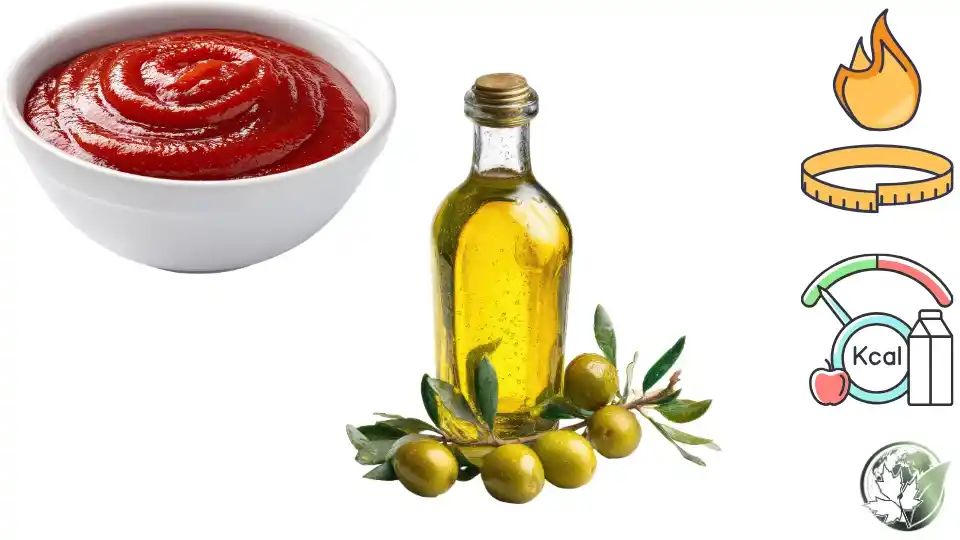
Plain canned tomato sauce has about 24 calories per 100 grams, about 30 calories in a half cup (122 grams), and about 59 calories in a full cup (245 grams). A standard 15 ounce can (425 grams) holds about 102 calories. Olive oil has about 884 calories per 100 grams, 119 calories per tablespoon (13.5 grams), 40 calories per teaspoon and about 1,910 calories per cup. So, per gram, plain tomato sauce has about 36 times fewer calories than olive oil, and a half cup of sauce has the calories of about a quarter of a tablespoon of oil.
The comparison changes with the type of sauce. Marinara and other cooked pasta sauces typically include olive oil, onion and sometimes sugar, and a half cup of jarred marinara has about 70 to 90 calories, with 2 to 4 grams of fat. Pasta sauces with cream, cheese or meat range from 120 to 200 calories per half cup. The more olive oil in the sauce, the closer it moves toward oil's energy density, though even a sauce with 2 tablespoons of oil per cup stays far below pure oil, because the sauce is mostly water.
This guide gives tomato sauce calories by spoon, cup, can and jar, compares them with olive oil, shows how much oil there is in typical recipes, compares plain, marinara, arrabbiata, vodka, Alfredo and meat sauces, explains sugar and sodium in jars, and offers ways to make a lighter sauce. There are three comparison tables, a set of practical tips and an FAQ.
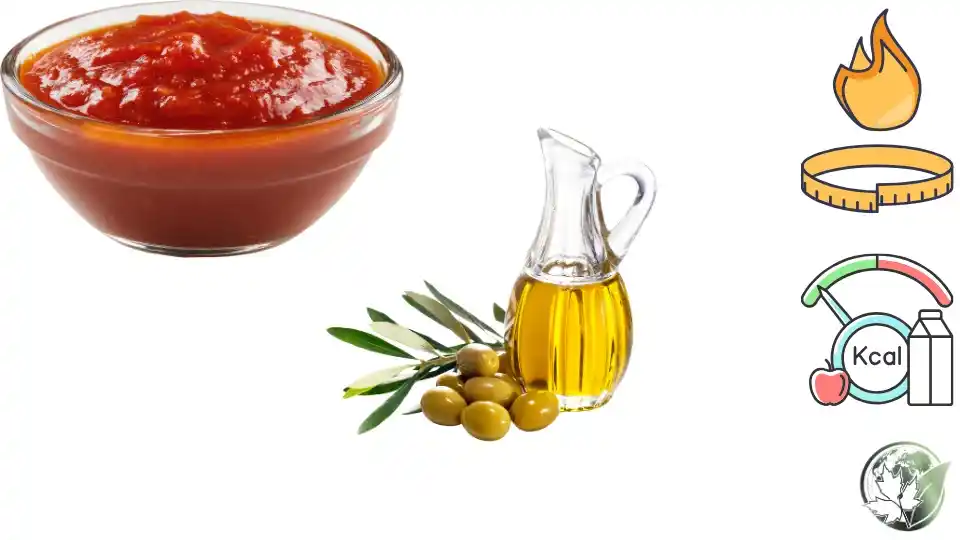
A half cup of plain tomato sauce has about 30 calories
How Many Calories Are in Tomato Sauce by Spoon, Cup and Can?
| Portion | Weight | Calories | Carbs | Sugar | Sodium |
|---|---|---|---|---|---|
| 1 tablespoon | 15 g | 4 kcal | 0.9 g | 0.6 g | 36 mg |
| 1/4 cup | 61 g | 15 kcal | 3.3 g | 2.2 g | 160 mg |
| 1/2 cup | 122 g | 30 kcal | 6.6 g | 4.4 g | 321 mg |
| 1 cup | 245 g | 59 kcal | 13.1 g | 8.8 g | 642 mg |
| 1 small can (8 oz) | 227 g | 54 kcal | 12.2 g | 8.2 g | 595 mg |
| 1 can (15 oz) | 425 g | 102 kcal | 22.7 g | 15.3 g | 1,115 mg |
| 1 pouch (200 g) | 200 g | 48 kcal | 10.7 g | 7.2 g | 524 mg |
| 100 g | 100 g | 24 kcal | 5.3 g | 3.6 g | 262 mg |
| 100 g, no salt added | 100 g | 22 kcal | 5.2 g | 3.5 g | 18 mg |
Plain tomato sauce has very few calories, but canned versions can be high in sodium, with a full cup providing about 640 milligrams, over a quarter of the recommended daily limit of 2,300 milligrams. No salt added versions have only 18 milligrams per 100 grams.
How Many Calories Are in Olive Oil?
| Portion | Weight | Calories | Fat | Saturated fat |
|---|---|---|---|---|
| 1 teaspoon | 4.5 g | 40 kcal | 4.5 g | 0.6 g |
| 1 tablespoon | 13.5 g | 119 kcal | 13.5 g | 1.9 g |
| 2 tablespoons | 27 g | 238 kcal | 27 g | 3.7 g |
| 1/4 cup | 54 g | 477 kcal | 54 g | 7.4 g |
| 1 cup | 216 g | 1,909 kcal | 216 g | 29.2 g |
| 1 fl oz (30 ml) | 27 g | 239 kcal | 27 g | 3.7 g |
| 100 g | 100 g | 884 kcal | 100 g | 13.8 g |
| 100 ml | 91 g | 806 kcal | 91 g | 12.6 g |
| 1 spray (cooking spray) | 0.25 g | 2 kcal | 0.25 g | 0.04 g |
Olive oil is almost pure fat, so all of its calories come from 9 calories per gram of fat. It contains no protein, carbohydrate or fiber, but it has monounsaturated fat, vitamin E and polyphenols, particularly in extra virgin oil, which are linked to heart health.
Tomato Sauce vs Olive Oil: Calories Compared
| Food | Portion | Weight | Calories | Fat |
|---|---|---|---|---|
| Tomato sauce, plain | 100 g | 100 g | 24 kcal | 0.3 g |
| Tomato sauce, plain | 1/2 cup | 122 g | 30 kcal | 0.4 g |
| Tomato sauce, plain | 1 cup | 245 g | 59 kcal | 0.7 g |
| Marinara, jarred | 1/2 cup | 125 g | 80 kcal | 3.5 g |
| Olive oil | 1 tsp | 4.5 g | 40 kcal | 4.5 g |
| Olive oil | 1 tbsp | 13.5 g | 119 kcal | 13.5 g |
| Olive oil | 100 g | 100 g | 884 kcal | 100 g |
| 4 cups of plain sauce | 980 g | 980 g | 236 kcal | 2.9 g |
| 2 tbsp oil added to 4 cups of sauce | 27 g | 27 g | 238 kcal | 27 g |
Two tablespoons of olive oil have as many calories as four full cups of plain tomato sauce. That is why oil, not the tomatoes, decides the calories in a cooked sauce, and why a "light" sauce usually just means one cooked with less oil.
Tomato Sauce vs Olive Oil: Nutrition Compared
| Per 100 g | Tomato sauce (plain) | Olive oil |
|---|---|---|
| Calories | 24 kcal | 884 kcal |
| Carbohydrate | 5.3 g | 0 g |
| Sugar | 3.6 g | 0 g |
| Fiber | 1.5 g | 0 g |
| Protein | 1.2 g | 0 g |
| Fat | 0.3 g | 100 g |
| Monounsaturated fat | 0 g | 73 g |
| Vitamin C | 7 mg | 0 mg |
| Vitamin E | 1.4 mg | 14.4 mg |
| Vitamin K | 3.1 mcg | 60 mcg |
| Potassium | 297 mg | 1 mg |
| Lycopene | 15,000 mcg | 0 mcg |
| Water | 91 g | 0 g |
The two foods are nutritional opposites: sauce is mostly water with carbohydrate, potassium and lycopene, while oil is entirely fat with vitamin E and K. They work well together, because lycopene is fat soluble and needs fat for absorption. A little oil, at about a teaspoon per serving, helps the body absorb the lycopene in the sauce.
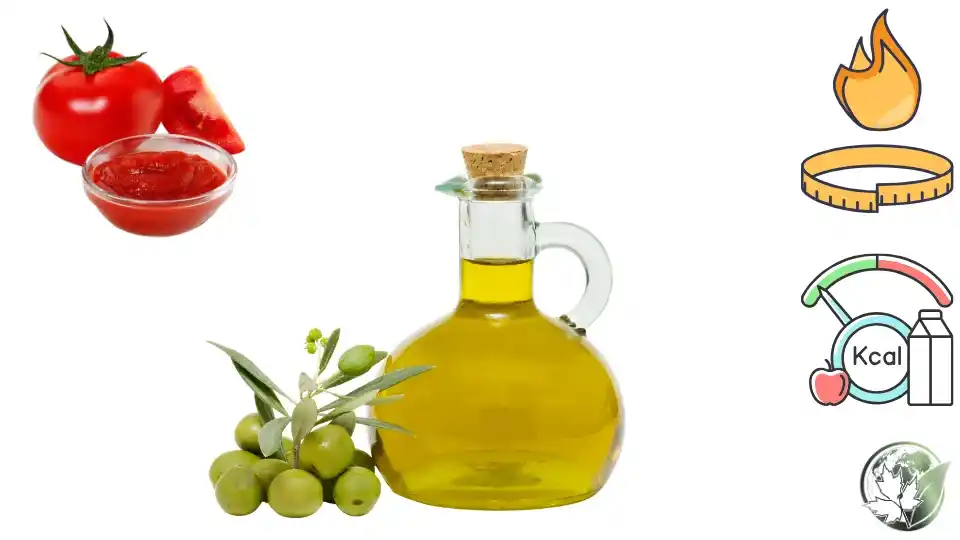
Two tablespoons of olive oil carry the same calories as four cups of plain tomato sauce
How Many Calories Are in Different Types of Tomato Sauce?
| Sauce | Serving | Calories | Fat | Sugar | Notes |
|---|---|---|---|---|---|
| Plain canned tomato sauce | 1/2 cup | 30 kcal | 0.4 g | 4.4 g | Basic |
| Passata | 1/2 cup | 30 kcal | 0.3 g | 4.5 g | Strained |
| Marinara, jarred | 1/2 cup | 80 kcal | 3.5 g | 7 g | With oil |
| Marinara, homemade | 1/2 cup | 70 kcal | 4 g | 5 g | 1 tbsp oil per 2 cups |
| Pasta sauce with garlic | 1/2 cup | 70 kcal | 2.5 g | 6 g | Seasoned |
| Arrabbiata | 1/2 cup | 75 kcal | 4 g | 5 g | Chili, oil |
| Puttanesca | 1/2 cup | 95 kcal | 6 g | 4 g | Olives, capers |
| Vodka sauce | 1/2 cup | 130 kcal | 8 g | 5 g | Cream |
| Bolognese | 1/2 cup | 130 kcal | 7 g | 5 g | Meat |
| Alfredo (white) | 1/2 cup | 220 kcal | 18 g | 2 g | Cream, cheese |
| Pizza sauce | 1/4 cup | 20 kcal | 0.5 g | 3 g | Seasoned |
| Ketchup | 1 tbsp | 17 kcal | 0 g | 4 g | Sweetened |
| Pesto | 1/4 cup | 260 kcal | 26 g | 1 g | Oil and nuts |
Marinara can differ by 50 calories per serving between brands, depending on how much oil and sugar are used. Reading the label for fat grams helps: every 1 gram of fat is 9 calories, so a serving with 4 grams of fat has 36 calories from oil alone, nearly half the calories of the serving.
How Much Olive Oil Is in a Typical Tomato Sauce?
Classic recipes use 2 to 4 tablespoons of olive oil to sauté onion and garlic in a sauce that serves four. With 119 calories per tablespoon, that means 238 to 476 calories from oil in the whole pot, or 60 to 120 calories per serving. The sauce itself, built from a 28 ounce can of crushed tomatoes with about 150 calories in total, adds fewer than 40 per serving. So oil may supply about 60 to 75 percent of the calories in a homemade marinara.
| Recipe (serves 4) | Olive oil | Oil calories | Tomato calories | Total per serving |
|---|---|---|---|---|
| Light sauce, 1 tsp oil | 1 tsp | 40 kcal | 150 kcal | 48 kcal |
| Moderate, 1 tbsp oil | 1 tbsp | 119 kcal | 150 kcal | 67 kcal |
| Classic, 3 tbsp oil | 3 tbsp | 357 kcal | 150 kcal | 127 kcal |
| Rich, 1/4 cup oil | 1/4 cup | 477 kcal | 150 kcal | 157 kcal |
| Restaurant style, 1/2 cup oil | 1/2 cup | 955 kcal | 150 kcal | 276 kcal |
A sauce at the restaurant style level, with generous amounts of oil, has more than five times the calories of a light version, although it looks the same in the bowl.
Is Olive Oil in Tomato Sauce Healthy?
Yes, in moderate amounts. Extra virgin olive oil is the cornerstone of the Mediterranean diet, which is linked in large studies to lower risk of heart disease. The monounsaturated fats and polyphenols can improve cholesterol profiles and reduce inflammation. Cooking tomatoes in oil also improves lycopene absorption, so the combination is more beneficial than either alone. The only issue is the calories: at 119 per tablespoon, it adds up quickly, so measure it rather than pouring from the bottle. One tablespoon per serving of pasta is a reasonable standard, giving about 120 calories.
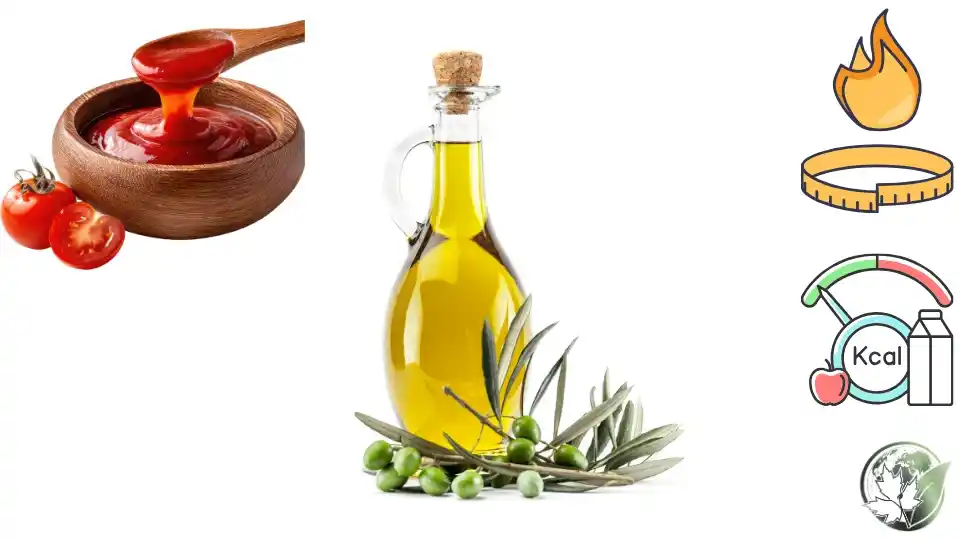
Measure olive oil with a spoon, since a tablespoon has 119 calories
Is Jarred Tomato Sauce High in Sugar and Sodium?
Many jarred pasta sauces include added sugar to offset acidity, and a half cup can contain 6 to 12 grams of sugar, of which about 4 grams is natural from the tomatoes. Sodium is often 400 to 600 milligrams per half cup, sometimes more. To choose a better jar, check that the first ingredient is tomatoes, that sugar is not listed in the first few ingredients, that sodium is under 400 milligrams per serving, and that the oil is olive oil, not a blend of cheaper oils. Making your own from canned whole tomatoes lets you control all of these, and it takes about 20 minutes.
How Do You Make a Lower Calorie Tomato Sauce?
Start with a nonstick pan and use a teaspoon of olive oil, or sauté the onion and garlic in a few tablespoons of water or stock, saving about 80 calories per batch. Use crushed or whole canned tomatoes with no added salt, and add herbs, a bay leaf, grated carrot for natural sweetness, and a pinch of baking soda to cut acidity instead of sugar. Finish with a little extra virgin oil, which has the best flavor and polyphenols, stirred in at the end rather than cooked at length. Simmer for 20 to 30 minutes to concentrate flavor, which makes a smaller amount of sauce taste richer.
How Many Calories Are in a Plate of Pasta With Tomato Sauce?
| Meal | Pasta (cooked) | Sauce | Oil | Total |
|---|---|---|---|---|
| Light plate | 1 cup, 220 kcal | 1/2 cup plain, 30 kcal | 0 | 250 kcal |
| Standard plate | 1.5 cups, 330 kcal | 1/2 cup marinara, 80 kcal | 1 tsp, 40 kcal | 450 kcal |
| Restaurant plate | 2.5 cups, 550 kcal | 1 cup marinara, 160 kcal | 2 tbsp, 238 kcal | 950 kcal |
| With parmesan | add 2 tbsp | 44 kcal | +44 kcal | |
| With meatballs | add 3 meatballs | 250 kcal | +250 kcal |
The sauce is rarely the problem. Portion size of the pasta and the oil, cheese and meat added drive the totals.
A plate of pasta with plain tomato sauce can be as low as 250 calories
How to Count Tomato Sauce and Olive Oil Calories Accurately
Weigh or measure the olive oil every time, because eyeballing a pour is the most common error: a "splash" is often 2 tablespoons, 240 calories. Use a measuring spoon or a spray. For store-bought sauce, use the label: calories, fat grams and serving size, and note that serving sizes are often a half cup, which is less than many people eat. For homemade sauce, add up the oil and tomatoes and divide by the number of servings.
What Is the Difference Between Tomato Sauce, Passata, Puree and Paste?
These products are all made from cooked tomatoes, but the water content differs, and so do the calories per spoon and per cup. Passata is raw tomatoes that have been strained of seeds and skins, then bottled, with a thin, fresh taste and about 30 calories per half cup. Tomato puree is cooked and strained, a little thicker, with about 48 calories per half cup. Canned tomato sauce is cooked, seasoned and thin, at about 30 calories per half cup. Tomato paste is cooked down until thick, with about 26 calories per two tablespoons. Crushed tomatoes keep some pulp and have about 40 calories per half cup, and diced tomatoes in juice about 25.
| Product | Per 1/2 cup | Per 100 g | Typical use |
|---|---|---|---|
| Passata | 30 kcal | 24 kcal | Base for fresh sauces |
| Tomato sauce, canned | 30 kcal | 24 kcal | Quick pasta, pizza |
| Crushed tomatoes | 40 kcal | 32 kcal | Chunky sauces |
| Tomato puree | 48 kcal | 38 kcal | Stews, soups |
| Diced tomatoes in juice | 25 kcal | 21 kcal | Chili, braises |
| Tomato paste | 107 kcal | 82 kcal | Flavor concentrate |
Choosing among them is mostly about texture and convenience, since the calories before any oil is added are modest in all of them.
How Many Calories Are in Other Cooking Oils Compared With Olive Oil?
Olive oil is not unusual in its energy density: all pure fats and oils have about 9 calories per gram, so they are within a few calories of each other. What differs is the fatty acid profile, flavor and smoke point, rather than the calories.
| Oil or fat (1 tbsp) | Calories | Saturated fat | Notes |
|---|---|---|---|
| Olive oil | 119 kcal | 1.9 g | Monounsaturated rich |
| Canola oil | 124 kcal | 1.0 g | Neutral |
| Sunflower oil | 120 kcal | 1.4 g | Light taste |
| Avocado oil | 124 kcal | 1.6 g | High smoke point |
| Coconut oil | 121 kcal | 11.2 g | Saturated |
| Butter | 102 kcal | 7.3 g | 80 percent fat, some water |
| Ghee | 112 kcal | 7.9 g | Pure milk fat |
| Cooking spray (1 second) | 7 kcal | 0.1 g | Very light |
A tablespoon of butter has slightly fewer calories than oil because it contains about 16 percent water. Whichever fat you choose, the amount, not the type, decides the calories in a sauce.
How Does Cooking Time Change Tomato Sauce Calories?
Cooking a sauce longer evaporates water, which makes it thicker and more concentrated, but it does not add or remove calories from the pot as a whole. A pot of sauce with 300 calories still has 300 calories after one hour or three hours; there are just fewer cups to divide it among. This matters when you log a cup of homemade sauce: a thicker sauce has more calories per cup than the same recipe cooked for less time. If you cook the sauce down to half its volume, a cup would carry twice the calories of a cup before the reduction. The easiest way to log accurately is to weigh the whole pot when finished, write down the total calories of all ingredients, and weigh your portion, then calculate portion weight divided by pot weight multiplied by total calories.
Is Tomato Sauce Good for Heart Health and Weight Management?
Tomato sauce made with olive oil fits well with Mediterranean-style eating, which has been associated in large trials with fewer cardiovascular events. The potassium in tomatoes, at about 297 milligrams per 100 grams of sauce, helps counter sodium, and lycopene is linked to lower blood pressure and cholesterol in several studies. For weight management, a sauce rich in vegetables boosts volume and flavor for few calories, so it can replace creamy and cheesy sauces, saving 100 to 150 calories per serving. The value is in what the sauce replaces and how it is made, not in the tomatoes alone.
How Should You Store Leftover Tomato Sauce?
Cool the sauce quickly and refrigerate it in a covered container for up to five days. Opened canned sauce should be moved to a glass or plastic container, since leaving it in the can can give it a metallic taste. Sauce freezes very well for up to six months, in portions of one cup, which also makes calorie tracking easier because you can label each container with its calories. Oil may separate on the surface when stored; stir it back in when reheating, since it forms part of the calories you counted.
Which Is Better for Cooking: A Lot of Sauce or a Little Oil?
Many people ask whether they should skip the oil altogether to save calories. The short answer is that you do not need to, but you should measure it. A teaspoon of olive oil, at 40 calories, gives enough fat to carry flavor, soften the onions and help absorb lycopene, and that is a trivial amount when spread over four servings, at 10 calories each. Skipping the oil completely makes the sauce taste flat and reduces how much lycopene you absorb, whereas pouring freely, as at many restaurants, can turn a light sauce into a 300 calorie one.
A practical rule is one teaspoon of oil per serving for cooking, and a small drizzle of good extra virgin oil at the end for flavor, which is more noticeable than oil cooked for an hour. If you want to go lower, use a nonstick pan with a spray, which adds only 2 to 7 calories. If you want a richer sauce, keep the oil at a tablespoon per serving and cut the cheese or the pasta portion instead, so the total stays the same.
How Much Tomato Sauce Does a Serving of Pasta Need?
A common serving of dried pasta is 2 ounces, 56 grams, which makes about 1 cup cooked and 200 calories. A standard serving of sauce is a half cup, but many people use a full cup or more. At 30 calories per half cup for plain sauce, the extra is trivial, but with marinara at 80 per half cup, a double serving adds 80 calories. Use about 1/3 to 1/2 cup of sauce per cup of cooked pasta, and toss the pasta in the pan with the sauce and a splash of pasta water so it coats evenly with less sauce. That creates a glossy, flavorful result with fewer calories than pouring sauce over the top.
Key Takeaways: Tomato Sauce Calories vs Olive Oil
Plain tomato sauce has about 24 calories per 100 grams and 30 per half cup, while olive oil has 884 per 100 grams and 119 per tablespoon. In a cooked sauce, the oil, not the tomatoes, supplies most of the calories, so measure it. Use a teaspoon of olive oil for flavor and lycopene absorption, choose sauces with little added sugar and salt, and count cheese and meat separately.
Frequently Asked Questions
6 questions answered
How many calories are in half a cup of tomato sauce?
About 30 for plain sauce, and about 80 for jarred marinara.
Does olive oil have more calories than tomato sauce?
Yes, 884 per 100 grams against 24, about 36 times more.
How many calories are in a tablespoon of olive oil?
About 119.
Is tomato sauce good for weight loss?
Yes, plain sauce is low in calories, but watch oil and sugar in jars.
Why does jarred sauce have more calories than canned?
Added oil, sugar and sometimes cheese.
Does olive oil help absorb lycopene?
Yes, since lycopene is fat soluble.