
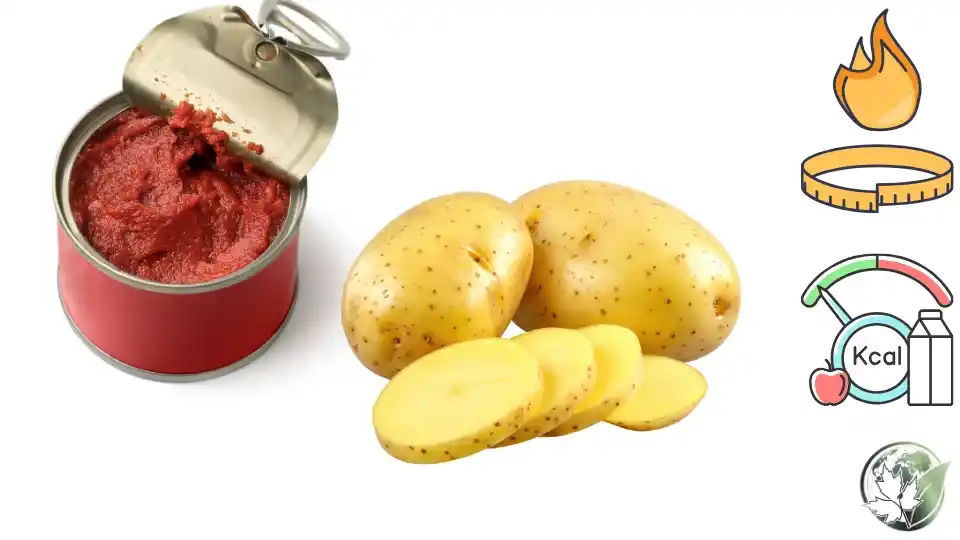
How Many Calories Are in Tomato Paste? The Quick Answer
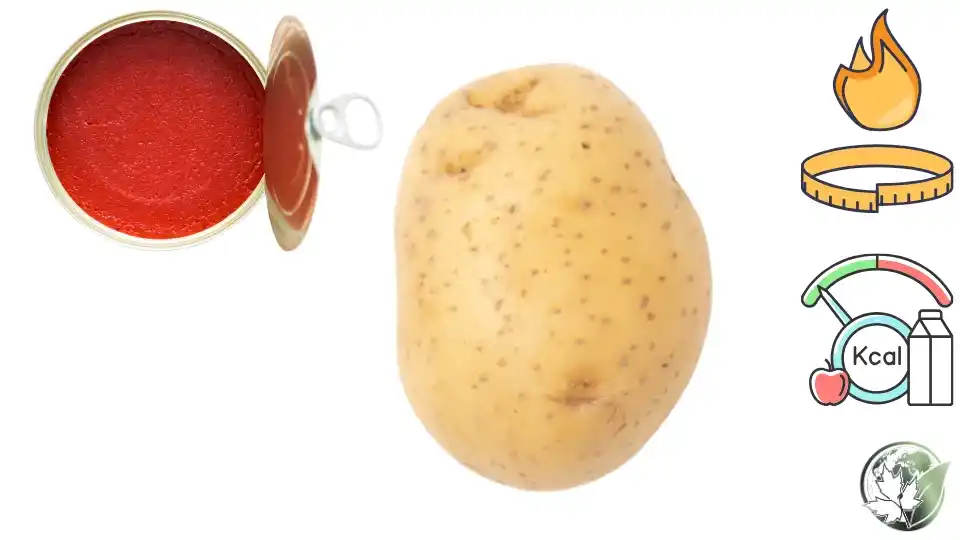
Tomato paste has about 13 calories per tablespoon (16 grams). Per 100 grams it has about 82 calories, per ounce (28 grams) about 23, per two tablespoon serving about 26, per quarter cup (62 grams) about 51, and a whole small 6 ounce can (170 grams) about 139. A raw potato has about 77 calories per 100 grams, so on a pure weight basis tomato paste is slightly higher than a raw potato, by about 6 percent. A medium potato (173 grams) has about 133 calories raw, 161 baked with the skin, and about 130 boiled.
That makes the answer to "higher or lower" depend on how you measure. Per gram, the two are nearly equal, with the paste a little higher, because tomato paste is tomatoes with about three quarters of the water cooked out. Per serving, tomato paste is far lower, because nobody eats 100 grams of paste with a spoon. A normal portion is one or two tablespoons, adding 13 to 26 calories to a dish, while a normal portion of potato is a whole medium potato at 130 to 160 calories, or about 200 grams of mash at 190.
The nutrition is different too. Tomato paste is a concentrated source of lycopene, potassium and vitamin C, with 18.9 grams of carbohydrate per 100 grams, of which 12.2 grams is natural sugar, and 4.1 grams of fiber. A potato has 17.5 grams of carbohydrate, almost all of it starch with under 1 gram of sugar, and 2.1 grams of fiber, plus vitamin C and potassium. This guide gives tomato paste calories by spoon, can, tube and brand type, compares them with potato in several forms, covers double and triple concentrate, passata, sauce and ketchup, and answers questions about sugar, sodium, lycopene and weight loss. There are three tables and an FAQ.
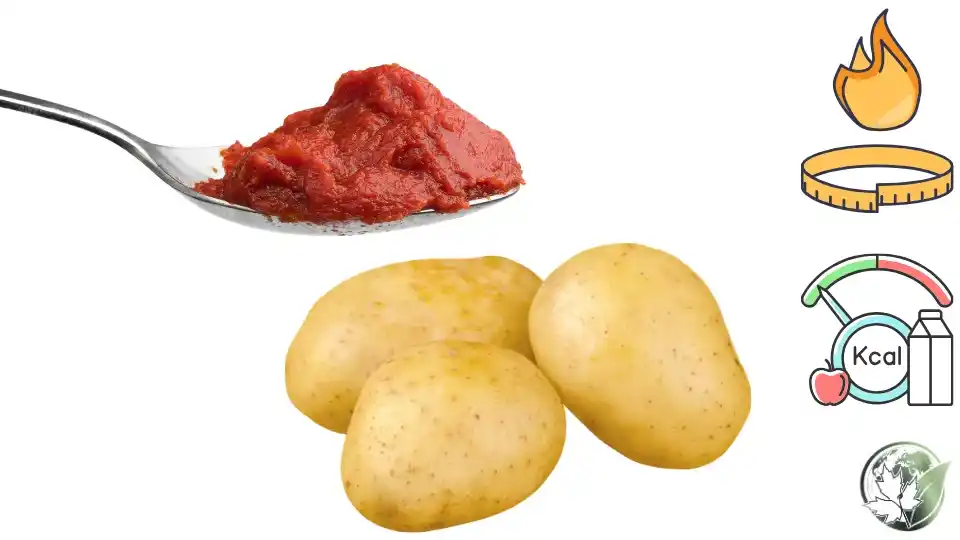
A level tablespoon of tomato paste has about 13 calories
How Many Calories Are in Tomato Paste by Spoon, Can and Tube?
| Portion | Weight | Calories | Carbs | Sugar | Sodium |
|---|---|---|---|---|---|
| 1 teaspoon | 5 g | 4 kcal | 0.9 g | 0.6 g | 6 mg |
| 1 tablespoon | 16 g | 13 kcal | 3.0 g | 2.0 g | 9 mg |
| 2 tablespoons | 32 g | 26 kcal | 6.1 g | 3.9 g | 18 mg |
| 3 tablespoons | 48 g | 39 kcal | 9.1 g | 5.9 g | 27 mg |
| 1/4 cup | 62 g | 51 kcal | 11.7 g | 7.6 g | 35 mg |
| 1/2 cup | 131 g | 107 kcal | 24.8 g | 16.0 g | 74 mg |
| 1 small can (6 oz) | 170 g | 139 kcal | 32.1 g | 20.7 g | 96 mg |
| 1 can (12 oz) | 340 g | 279 kcal | 64.3 g | 41.5 g | 191 mg |
| 1 tube (4.5 oz) | 130 g | 107 kcal | 24.6 g | 15.9 g | 73 mg |
| 100 g | 100 g | 82 kcal | 18.9 g | 12.2 g | 59 mg |
Salted tomato paste has more sodium, often 100 to 300 milligrams per tablespoon, depending on the brand, so check the label. The calories are close to constant, because the main ingredient is tomatoes, with a pinch of salt and sometimes citric acid.
How Many Calories Are in Different Kinds of Tomato Paste and Sauce?
| Product | Serving | Calories | Notes |
|---|---|---|---|
| Tomato paste, regular | 1 tbsp (16 g) | 13 kcal | About 24 percent solids |
| Double concentrate paste | 1 tbsp (16 g) | 16 kcal | About 36 percent solids |
| Triple concentrate (tube) | 1 tbsp (16 g) | 20 kcal | About 40 percent solids |
| Tomato paste, no salt added | 1 tbsp (16 g) | 13 kcal | Low sodium |
| Tomato puree | 1/4 cup (62 g) | 24 kcal | Less concentrated |
| Passata | 1/2 cup (125 g) | 30 kcal | Strained tomatoes |
| Tomato sauce, canned | 1/2 cup (122 g) | 30 kcal | Thin |
| Marinara sauce | 1/2 cup (125 g) | 70 kcal | With oil |
| Pizza sauce | 1/4 cup (62 g) | 20 kcal | Seasoned |
| Ketchup | 1 tbsp (17 g) | 17 kcal | Added sugar |
| Sun-dried tomato paste in oil | 1 tbsp (15 g) | 45 kcal | Oil added |
| Persian tomato paste (rob-e gojeh) | 1 tbsp (16 g) | 14 kcal | Typical |
The more concentrated the paste, the more calories per spoon, since less water is present. Double and triple concentrate give more flavor per tablespoon, so you can use half as much, and the calories per dish end up the same. Only pastes with oil, sugar or cheese added contribute noticeably more calories.
Tomato Paste vs a Potato: Calories Compared
| Food | Portion | Weight | Calories | Carbs | Fiber |
|---|---|---|---|---|---|
| Tomato paste | 1 tbsp | 16 g | 13 kcal | 3.0 g | 0.7 g |
| Tomato paste | 100 g | 100 g | 82 kcal | 18.9 g | 4.1 g |
| Tomato paste | 6 oz can | 170 g | 139 kcal | 32.1 g | 7.0 g |
| Potato, raw | 100 g | 100 g | 77 kcal | 17.5 g | 2.1 g |
| Potato, raw | 1 medium | 173 g | 133 kcal | 30.3 g | 3.6 g |
| Potato, boiled | 1 medium | 136 g | 118 kcal | 27.4 g | 2.5 g |
| Potato, baked with skin | 1 medium | 173 g | 161 kcal | 36.6 g | 3.8 g |
| Potato, mashed with milk and butter | 1 cup | 210 g | 237 kcal | 35.0 g | 4.0 g |
| French fries, fried | 100 g | 100 g | 312 kcal | 41.4 g | 3.8 g |
| Potato chips | 1 oz | 28 g | 152 kcal | 15.0 g | 1.2 g |
| 12 tablespoons of paste | 192 g | 192 g | 157 kcal | 36.4 g | 8.0 g |
You would need to eat about 10 tablespoons of tomato paste to match the calories in one medium baked potato, which is more than half a cup. No one does that in practice, since the paste is a seasoning rather than a staple. A single tablespoon, at 13 calories, is less than a tenth of a medium potato.
Tomato Paste vs a Potato: Nutrition Compared
| Per 100 g | Tomato paste | Potato, raw |
|---|---|---|
| Calories | 82 kcal | 77 kcal |
| Carbohydrate | 18.9 g | 17.5 g |
| Sugar | 12.2 g | 0.8 g |
| Starch | 0 g | 15.4 g |
| Fiber | 4.1 g | 2.1 g |
| Protein | 4.3 g | 2.0 g |
| Fat | 0.5 g | 0.1 g |
| Vitamin C | 21.9 mg | 19.7 mg |
| Vitamin A | 76 mcg | 0 mcg |
| Potassium | 1,014 mg | 421 mg |
| Iron | 3.0 mg | 0.8 mg |
| Lycopene | 28,764 mcg | 0 mcg |
| Water | 74 g | 79 g |
| Per tablespoon vs per medium potato | Tomato paste (16 g) | Potato (173 g, raw) |
|---|---|---|
| Calories | 13 kcal | 133 kcal |
| Potassium | 162 mg | 728 mg |
| Fiber | 0.7 g | 3.6 g |
| Lycopene | 4.6 mg | 0 mg |
| Vitamin C | 3.5 mg | 34 mg |
Tomato paste has more protein, fiber, potassium and iron per 100 grams than a potato, and about 29 milligrams of lycopene per 100 grams. Per portion, though, the potato provides more potassium and vitamin C because you eat more of it. The paste's role is to deliver flavor and lycopene in a small, low calorie dose.
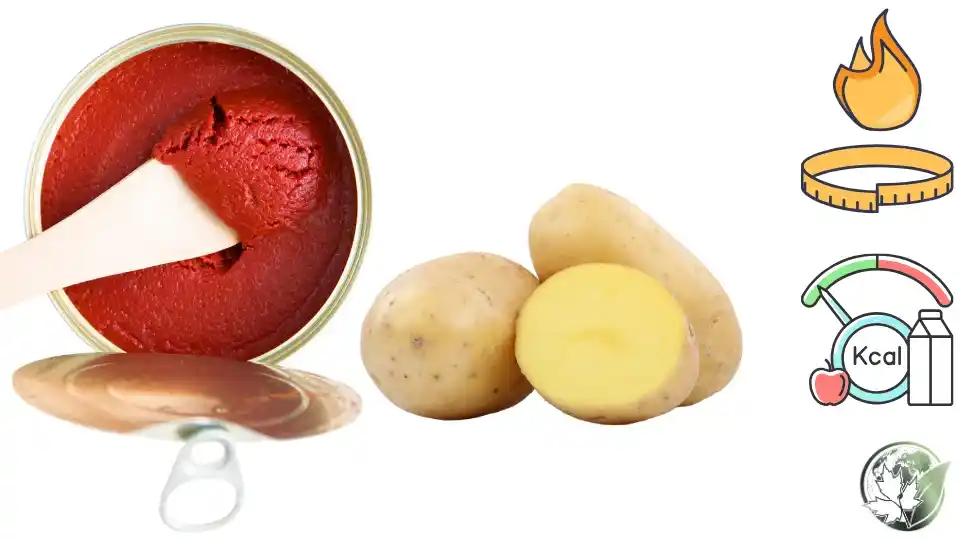
A medium potato has about 133 calories, ten times a tablespoon of tomato paste
Why Does Tomato Paste Have More Calories per Gram Than Fresh Tomato?
Fresh tomato is about 94.5 percent water and 18 calories per 100 grams. Tomato paste is made by cooking tomatoes for hours, straining out skins and seeds, and reducing the puree until about 74 percent or less of the water remains, or even lower for double and triple concentrate. About 4.5 to 6 kilograms of tomatoes make 1 kilogram of paste, depending on concentration. Since the calories come from the sugars, protein and fiber in the tomato solids, which are all kept, the energy per gram rises by a factor of four or five. A tablespoon of paste is therefore about the same as a medium tomato in solids, so 13 calories in a spoon compares with 22 in a medium fresh tomato, which has about 123 grams of weight to hold the same nutrients diluted in water.
This is why tomato paste adds such deep flavor: a spoonful holds the equivalent of several tomatoes. It also explains why 100 grams of paste has about the same calories as 100 grams of potato, though the comparison is not very practical.
Is Tomato Paste High in Sugar?
Tomato paste contains about 12 grams of sugar per 100 grams, or 2 grams per tablespoon, and all of it is natural sugar from the tomatoes, mostly glucose and fructose. Unlike ketchup, which has added sugar, with about 4 grams per tablespoon of which most is added, plain tomato paste contains no added sugar. Read the label to confirm the ingredients are only tomatoes, with perhaps salt and citric acid. Because the portion is so small, the sugar from a tablespoon of paste, at 2 grams, is minor, about half a sugar cube. Even a quarter cup serving gives 7.6 grams, similar to a small piece of fruit.
A potato has little sugar but a lot of starch, which breaks down to glucose when digested, and a baked potato has a high glycemic index of about 85. Tomato paste, with its fiber, acid and small portion, has a low glycemic index and a negligible glycemic load, at about 1 per tablespoon.
How Much Sodium Is in Tomato Paste?
Plain tomato paste has about 59 milligrams of sodium per 100 grams, which is naturally low, but many canned versions add salt, giving 100 to 300 milligrams per tablespoon. Concentrated sauces and ketchup contain more, with ketchup at 150 to 190 milligrams per tablespoon. If you are watching sodium, look for "no salt added" paste or tubes, which are widely available. Potatoes are naturally very low in sodium, with 6 milligrams per 100 grams, but become high when fried and salted, with fries holding about 210 milligrams per 100 grams or more.
What Is Lycopene and Why Is Tomato Paste a Top Source?
Lycopene is the red carotenoid pigment in tomatoes, studied as an antioxidant linked to heart health and a lower risk of some cancers, though trial evidence is limited. Cooking and concentrating tomatoes breaks down their cell walls and makes lycopene far more available to the body. Tomato paste has roughly 29 milligrams per 100 grams, about 11 times more than fresh tomatoes by weight, and about 4.6 milligrams per tablespoon, more than a medium fresh tomato at about 3 milligrams. Because lycopene is fat soluble, cooking the paste in a little olive oil, as in many classic recipes where the paste is fried for a minute before liquid is added, increases absorption. Potatoes contain no lycopene, but yellow and purple varieties provide other antioxidants such as carotenoids and anthocyanins.
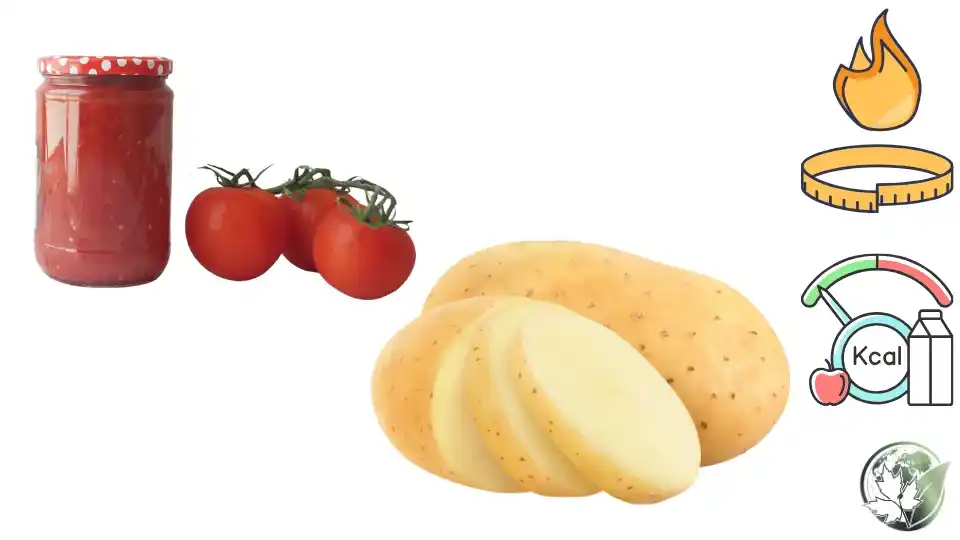
Frying tomato paste in a little oil deepens flavor and improves lycopene absorption
How Many Calories Are in Dishes Made With Tomato Paste and Potato?
| Dish | Serving | Calories | Notes |
|---|---|---|---|
| Stew with 2 tbsp tomato paste | 1 serving | 26 kcal from paste | Plus meat and oil |
| Persian ghormeh or khoresh with paste | 1 portion | 350 kcal | With meat, rice extra |
| Potato and tomato stew | 1 cup | 160 kcal | With oil |
| Shakshuka | 1 serving | 280 kcal | 2 eggs, paste, oil |
| Spaghetti with tomato sauce | 1 cup | 220 kcal | With paste |
| Bolognese sauce | 1/2 cup | 130 kcal | With meat |
| Chili | 1 cup | 260 kcal | Beans, paste |
| Baked potato, plain | 1 medium | 161 kcal | With skin |
| Baked potato with butter and sour cream | 1 medium | 310 kcal | Loaded |
| Mashed potatoes | 1 cup | 237 kcal | Milk and butter |
| Potato salad | 1 cup | 360 kcal | Mayonnaise |
| Roasted potatoes with oil | 1 cup | 220 kcal | 1 tbsp oil |
In a stew for four people, 2 tablespoons of tomato paste adds only 26 calories in total, under 7 calories a portion. A potato in the same stew adds 130 calories, and the oil used to start the dish adds more than both combined.
Tomato Paste and Potato for Weight Loss
Both foods can support weight loss when prepared simply. Tomato paste is a flavor booster that lets you cut back on oil, salt and sauces, since a spoonful makes soups and stews taste rich with only 13 calories. Boiled or baked potatoes are very filling, ranking first in satiety studies of common foods, since a plain boiled potato fills you up for about 130 calories. Cooled boiled potatoes also form resistant starch, which feeds gut bacteria and slightly lowers the available calories.
The risk is the preparation. Fried potatoes, with 312 calories per 100 grams, loaded baked potatoes and potato salads with mayonnaise carry far more. For tomato paste, the risk is fried in lots of oil or sweetened sauces. Count two tablespoons of paste as 26 calories, and count the oil, meat and carbohydrates separately.
How to Store and Use Tomato Paste Without Waste
Tomato paste in a can will spoil within about a week of opening in the refrigerator, even when covered. Tubes, with a cap, keep for about two months in the refrigerator. To avoid waste, freeze leftover paste in tablespoon portions on a tray, then store the cubes in a bag for up to six months. Each cube is about 13 calories and ready to drop into a dish. Fry the paste for one to two minutes in oil until it darkens from bright red to brick, which removes the raw metallic taste and develops sweetness. Add it early in a recipe, before liquid, for the best flavor.
Freeze leftover tomato paste in tablespoon cubes of 13 calories each
How to Count Tomato Paste Calories Accurately
Level the spoon rather than heaping it: a heaped tablespoon can hold 25 grams, nearly 20 calories. Weigh the paste if you cook the same dish often. For tubes, the label gives calories per tablespoon or 100 grams, and differences between brands are small. For a recipe, add the paste calories to the total and divide by the number of servings: a quarter cup of paste in a pot for six adds 51 calories, or 8.5 per person. Log potatoes by weight, raw before cooking, since boiled potato absorbs a little water and baked loses some, so use the same state each time.
Is Tomato Paste Good for Diabetes and Blood Sugar?
Tomato paste is generally considered safe for people with diabetes in cooking amounts. A tablespoon has about 3 grams of carbohydrate, of which 2 grams is sugar, and 0.7 gram is fiber, so the effect on blood glucose is very small. The concern is larger servings or commercial sauces, which may add sugar, so check the label for added sweeteners. Potatoes have a higher glycemic effect, especially when baked, mashed or fried, since their starch is quickly digested. Boiling and then cooling potatoes lowers the glycemic response somewhat, and eating potatoes with protein, vegetables, vinegar or tomato-based sauces slows absorption. A potato stew with tomato paste is therefore a better choice for blood sugar than a plain mashed potato, because the acid, fiber and mixed ingredients moderate the rise.
How Do Homemade and Store-Bought Tomato Paste Compare?
Homemade paste is made by simmering tomatoes slowly, straining them and drying the puree in the oven or sun until thick. It has the same calories per gram as store-bought paste when reduced to a similar concentration, at roughly 80 to 85 calories per 100 grams, but the texture and sweetness vary. A traditional Persian rob-e gojeh farangi is often sun-dried for days, with salt added, giving a dark, sticky paste with about 14 calories per tablespoon and more sodium, up to 200 milligrams. Store-bought tubes are triple concentrated and have 20 calories per tablespoon, so use less. The simplest rule is to use the label's calories per serving and the weight of the spoonful, and to account for any added oil, which some homemade pastes are preserved under.
Which Is Better in a Dish: Tomato Paste or Fresh Potatoes?
They do different jobs. Tomato paste seasons and colors a dish, while potatoes add bulk, starch and satisfying texture. In a stew, paste gives umami for a trivial number of calories. Potatoes make the meal filling, so a stew with both is balanced. If your goal is fewer calories, you can use less potato and more vegetables such as zucchini, carrots or cauliflower, while keeping the paste for flavor. If your goal is more energy, for a hungry family or an athlete, potatoes are an excellent, inexpensive carbohydrate source with potassium and vitamin C. Neither needs to be avoided, and the preparation, rather than the ingredient, usually decides the calories on the plate.
What Are the Best Low Calorie Ways to Use Tomato Paste?
Because a tablespoon has only 13 calories, tomato paste is one of the most efficient flavor tools in the kitchen. Stir a spoonful into soups, lentil dishes and braises for body without cream. Whisk one tablespoon with a splash of water, garlic and herbs for a quick pasta sauce at about 25 calories per serving, far lighter than a store-bought cream sauce. Rub a thin layer on chicken or fish before baking for a savory crust. Mix a teaspoon into plain yogurt with paprika for a light dip at about 30 calories per quarter cup. Add it to roasted potatoes in place of ketchup, tossing cubes with a teaspoon of paste, a teaspoon of oil and spices, which gives a deep red color and about 60 fewer calories per serving than a ketchup glaze with added sugar.
A few mistakes raise calories without notice. Adding sugar to cut the acidity of paste, using several tablespoons of oil to fry it, or topping a dish with cheese all outweigh the paste itself. Taste first, and if the dish is sharp, add a grated carrot, a pinch of baking soda or a splash of stock rather than sugar.
How Much Tomato Paste Is Too Much?
For most healthy people, there is no real upper limit for tomato paste in cooking, and studies on lycopene have used doses of 10 to 30 milligrams a day, equal to two to six tablespoons. People with acid reflux may find large amounts of tomato paste irritating, and anyone on a low potassium or low sodium diet should count the potassium, about 162 milligrams per tablespoon, and the salt in the product. For everyone else, one to three tablespoons a day in cooking is an easy habit, adding 13 to 39 calories.
Key Takeaways: Tomato Paste Calories vs a Potato
Tomato paste has about 13 calories per tablespoon and 82 per 100 grams, a little above the 77 of raw potato, but a typical serving of paste is under a tenth of a potato. It brings lycopene, potassium and flavor with only about 2 grams of natural sugar per spoon. Choose no salt added paste, cook it in a little oil, and count the oil and the meat separately.
Frequently Asked Questions
6 questions answered
How many calories are in a tablespoon of tomato paste?
About 13.
Does tomato paste have more calories than a potato?
Slightly more per 100 grams, 82 against 77, but far fewer per serving.
How many calories are in a can of tomato paste?
About 139 for a 6 ounce can.
Is tomato paste fattening?
No, a spoonful has 13 calories and almost no fat.
Does tomato paste have added sugar?
Plain paste does not, but ketchup and some sauces do.
Is tomato paste healthy?
Yes, it is rich in lycopene and potassium, but check the sodium.




