How Many Calories Are in a Pomegranate? The Quick Answer
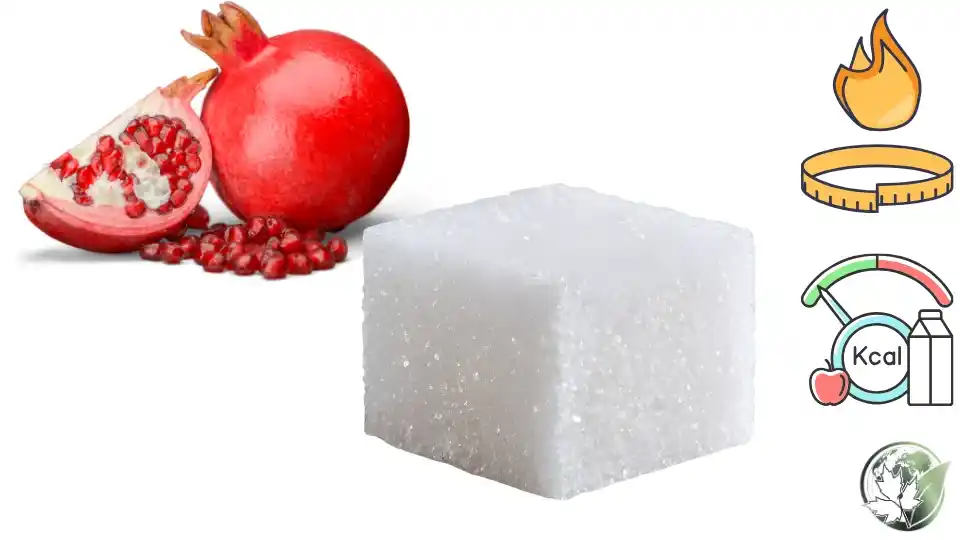
A medium pomegranate (about 282 grams, 4 inches across) has about 234 calories, including the 170 grams or so of edible arils and the small amount of pith and seed. A cup of pomegranate arils (174 grams) has about 144 calories, a half cup (87 grams) about 72 calories, a quarter cup (43 grams) about 36 calories, and a tablespoon (7 grams) about 6 to 8 calories. Per 100 grams, the arils have about 83 calories. A sugar cube (4 grams) has about 16 calories, so a cup of arils equals about 9 sugar cubes in energy, and a whole medium fruit about 14.6.
The sugar comparison is less simple than the calories suggest. A cup of arils has about 24 grams of sugar, the same as six sugar cubes, but it also has 7 grams of fiber, which slows the absorption of the sugar, along with potassium, vitamin K, folate, vitamin C and a high level of polyphenols. A sugar cube has 4 grams of sugar and nothing else. By weight, arils have about 80 percent fewer calories than sugar, because they are 78 percent water. A half cup of arils on a salad or a bowl of yogurt is a modest 72 calories.
Pomegranate is among the more energy-dense fresh fruits, with about 83 calories per 100 grams, compared with 47 for oranges, 52 for apples and 32 for strawberries, because of its higher sugar content, about 14 grams per 100 grams, and the oil in the seeds. It is also one of the most nutritious, and in Iranian, Turkish and Indian cooking, it is used in everything from stews to desserts. This guide gives the calories in a pomegranate by fruit, cup, spoon and weight, compares it with sugar cubes, covers sweet and sour varieties, dried seeds and molasses, discusses fiber, sugar, blood glucose and weight loss, and shows how to open and store the fruit. There are three comparison tables and an FAQ.
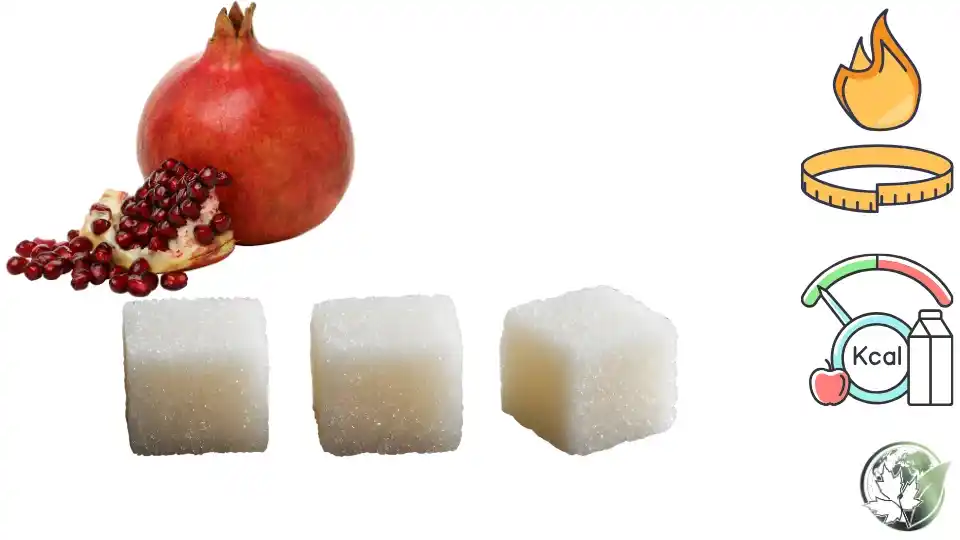
A cup of pomegranate arils has about 144 calories, 7 grams of fiber and 24 grams of sugar
How Many Calories Are in a Pomegranate by Fruit, Cup and Spoon?
The calories in a pomegranate depend on how much of the fruit you eat, since about 50 percent of its weight is rind and membrane.
| Portion | Weight | Calories | Sugar | Fiber | Potassium |
|---|---|---|---|---|---|
| 1 tablespoon arils | 7 g | 6 kcal | 1.0 g | 0.3 g | 24 mg |
| 1/4 cup arils | 43 g | 36 kcal | 6.0 g | 1.8 g | 102 mg |
| 1/2 cup arils | 87 g | 72 kcal | 12 g | 3.5 g | 205 mg |
| 3/4 cup arils | 131 g | 108 kcal | 18 g | 5.3 g | 308 mg |
| 1 cup arils | 174 g | 144 kcal | 24 g | 7.0 g | 411 mg |
| 1 small pomegranate (whole) | 200 g | 166 kcal | 28 g | 8.0 g | 470 mg |
| 1 medium pomegranate (whole) | 282 g | 234 kcal | 39 g | 11 g | 666 mg |
| 1 large pomegranate (whole) | 400 g | 332 kcal | 55 g | 15.6 g | 944 mg |
| Arils from 1 medium fruit | about 170 g | 141 kcal | 23 g | 6.8 g | 401 mg |
| 100 g arils | 100 g | 83 kcal | 13.7 g | 4.0 g | 236 mg |
| 250 g arils | 250 g | 208 kcal | 34 g | 10 g | 590 mg |
If you eat a whole medium pomegranate, you take in about 234 calories, equivalent to about 14 sugar cubes, but nearly all of the sugar comes with 11 grams of fiber, which is about 40 percent of the daily requirement.
Pomegranate vs a Sugar Cube: Calories Compared
| Item | Portion | Weight | Calories | Sugar | Fiber |
|---|---|---|---|---|---|
| Sugar cube | 1 cube | 4 g | 16 kcal | 4 g | 0 g |
| Sugar cubes | 6 cubes | 24 g | 96 kcal | 24 g | 0 g |
| Sugar cubes | 9 cubes | 36 g | 144 kcal | 36 g | 0 g |
| Pomegranate arils | 1 tablespoon | 7 g | 6 kcal | 1.0 g | 0.3 g |
| Pomegranate arils | 1/2 cup | 87 g | 72 kcal | 12 g | 3.5 g |
| Pomegranate arils | 1 cup | 174 g | 144 kcal | 24 g | 7.0 g |
| Pomegranate, medium whole | 1 fruit | 282 g | 234 kcal | 39 g | 11 g |
| Pomegranate arils | 100 g | 100 g | 83 kcal | 13.7 g | 4.0 g |
| Sugar | 100 g | 100 g | 400 kcal | 100 g | 0 g |
| Honey | 1 tablespoon | 21 g | 64 kcal | 17 g | 0 g |
Per 100 grams, the arils have about one fifth of the calories of sugar. A cup of arils has the same calories as 9 cubes, but only 24 grams of sugar against the 36 grams in nine cubes, because the rest of the energy comes from the seed oil, protein and fiber.
Pomegranate vs a Sugar Cube: Nutrition Compared
| Per 100 g | Pomegranate arils | Sugar |
|---|---|---|
| Calories | 83 kcal | 400 kcal |
| Carbohydrate | 18.7 g | 100 g |
| Sugar | 13.7 g | 100 g |
| Fiber | 4.0 g | 0 g |
| Protein | 1.7 g | 0 g |
| Fat | 1.2 g | 0 g |
| Vitamin C | 10 mg | 0 mg |
| Vitamin K | 16 mcg | 0 mcg |
| Folate | 38 mcg | 0 mcg |
| Potassium | 236 mg | 2 mg |
| Polyphenols | Very high | None |
| Water | 78 g | 0 g |
| Per 144 calories | Pomegranate arils | Sugar cubes |
|---|---|---|
| Amount | 1 cup (174 g) | 9 cubes (36 g) |
| Sugar | 24 g | 36 g |
| Fiber | 7 g | 0 g |
| Potassium | 411 mg | 0.7 mg |
| Vitamin K | 28 mcg | 0 mcg |
| Water | 136 g | 0 g |
For the same 144 calories, a cup of arils provides one third less sugar than nine cubes, plus fiber, potassium, vitamin K and a large amount of water, which fills the stomach. It also takes far longer to eat than swallowing nine sugar cubes, which makes it more satisfying.
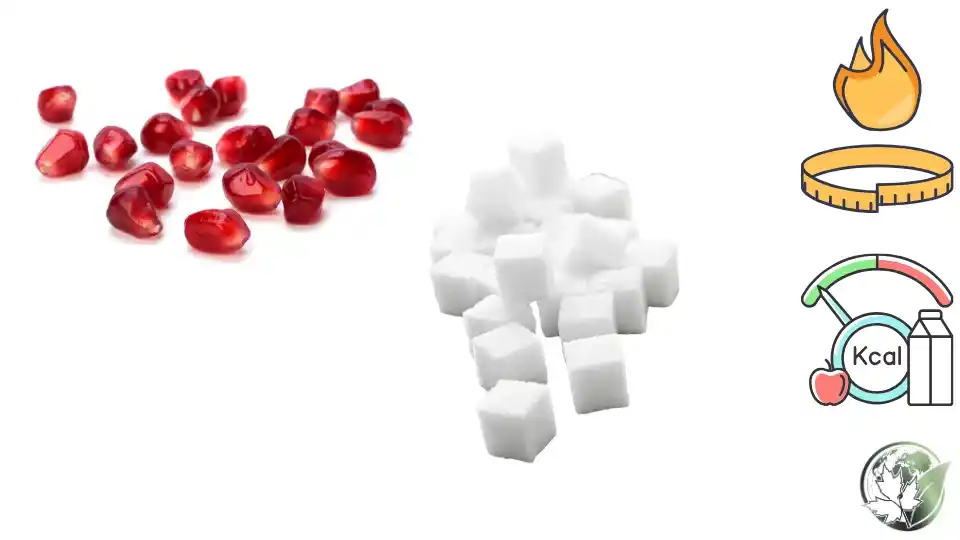
A cup of arils has the calories of nine sugar cubes but a third less sugar and 7 grams of fiber
Do Different Pomegranate Varieties Have Different Calories?
Pomegranates range from very sweet to very sour. In Iran, popular varieties include Malas, which are sweet and sour, Rabab, Shishe Kab and Ardestani, as well as sour ones used in cooking. In other countries, the Wonderful variety dominates, with deep red arils and a balanced flavor. The calories differ only slightly, because they depend on sugar content, which ranges from about 10 to 16 percent of the weight.
| Pomegranate type (100 g arils) | Calories | Sugar | Taste |
|---|---|---|---|
| Sweet (Malas, Ardestani) | 88 kcal | 15 g | Sweet, low acid |
| Sweet-sour (Wonderful) | 83 kcal | 13.7 g | Balanced |
| Sour (for cooking) | 70 kcal | 10 g | Tart |
| White or pale pomegranate | 80 kcal | 13 g | Mild |
| Dried arils (anardaneh) | 290 kcal | 55 g | Sour, chewy |
| Pomegranate seeds, dry roasted | 300 kcal | 10 g | Nutty |
Sour varieties have fewer calories per 100 grams, and are often used in savory dishes, where they add acidity without much sugar. In general the differences are smaller than the effect of portion size.
How Many Calories Are in Pomegranate Products?
| Product | Serving | Calories | Sugar |
|---|---|---|---|
| Fresh arils | 1/2 cup | 72 kcal | 12 g |
| Pomegranate juice | 1 cup | 134 kcal | 32 g |
| Pomegranate molasses | 1 tbsp (20 g) | 60 kcal | 15 g |
| Dried pomegranate seeds (anardaneh) | 1 tbsp (8 g) | 23 kcal | 4.4 g |
| Pomegranate seed oil | 1 tsp | 40 kcal | 0 g |
| Pomegranate sauce (narsharab) | 1 tbsp | 30 kcal | 7 g |
| Pomegranate yogurt (fruit on the bottom) | 1 cup | 190 kcal | 28 g |
| Pomegranate salad, with walnuts | 1 cup | 210 kcal | 14 g |
| Fesenjan with chicken | 1 cup | 430 kcal | 20 g |
| Pomegranate sorbet | 1/2 cup | 120 kcal | 28 g |
| Pomegranate leather (fruit roll) | 1 roll (14 g) | 50 kcal | 9 g |
| Pomegranate arils over oatmeal | 2 tbsp | 12 kcal | 2 g |
Most of the extra calories in these products come from sugar, nuts and meat added to the pomegranate, not the pomegranate itself.
Are Pomegranates Healthy?
Pomegranate arils are a good source of fiber, vitamin C, vitamin K, folate and potassium, and they are especially rich in polyphenols such as punicalagins and anthocyanins, which are responsible for the color and strong antioxidant properties. Research suggests that regular pomegranate intake may improve cardiovascular markers, including blood pressure and cholesterol oxidation, and may have anti-inflammatory effects. The studies are mainly small, and a lot of them used juice or extracts rather than whole fruit, so pomegranate should be seen as a healthy part of a varied diet, not a cure.
The seeds are edible and provide fiber and a small amount of oil, including punicic acid, an unusual omega-5 fatty acid. They can be crunchy, and some people prefer to swallow them whole, as chewing hard seeds is not for everyone. People with sensitive digestion may find that a large number of seeds causes bloating.
Does Pomegranate Raise Blood Sugar?
Whole pomegranate arils have a glycemic index of about 35 to 53, and a glycemic load of about 8 for a half cup, which is low to moderate. The fiber and polyphenols slow sugar absorption. For people with diabetes, a half cup of arils has about 15 grams of carbohydrate, and counts as one carbohydrate exchange. Some studies suggest that pomegranate polyphenols may improve insulin sensitivity, but the evidence is early. It is better to eat the arils than to drink the juice, which has no fiber and delivers 32 grams of sugar per cup.
Is Pomegranate Good for Weight Loss?
Pomegranate arils can fit well into a weight loss plan if portions are measured. They provide 4 grams of fiber per 100 grams, which helps with fullness, and they add flavor, color and crunch to meals so you can use less of higher calorie ingredients. A tablespoon of arils on a salad adds 6 calories, and a half cup on Greek yogurt adds 72. Where pomegranate can add up is when a whole fruit is eaten as a snack, which is 234 calories, or when juice is consumed in large amounts. Replacing a sugary dessert with a bowl of arils and a few walnuts is a strong swap.
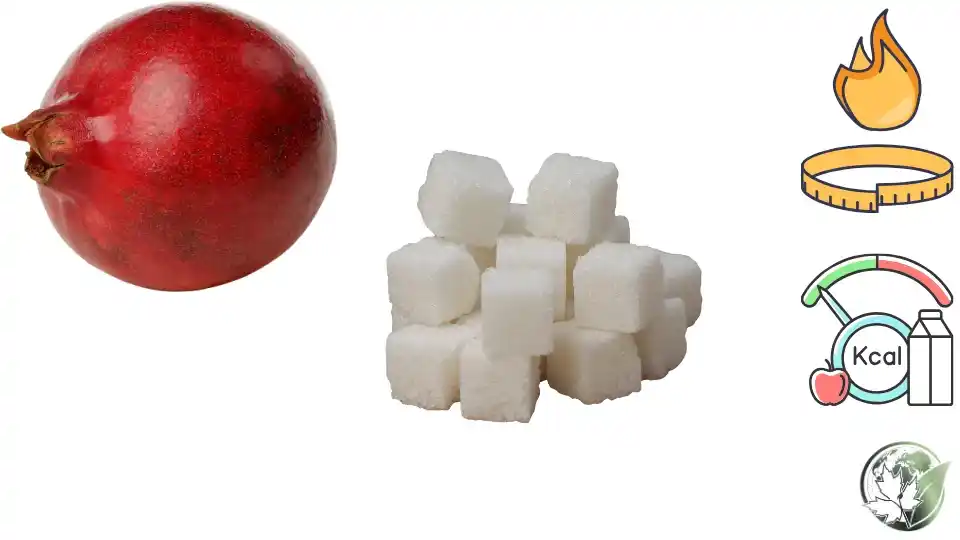
A half cup of pomegranate arils over yogurt adds about 72 calories and 3.5 grams of fiber
How Do You Open a Pomegranate Without the Mess?
Cut off the crown, score the skin from top to bottom in four or five places and pull the fruit apart into sections. Submerge each section in a bowl of cold water and gently pry out the arils with your fingers, since they sink and the white membrane floats. Skim off the membrane, drain and dry the arils. Alternatively, cut the fruit in half crosswise, hold each half cut side down over a bowl and tap the skin firmly with a wooden spoon so the arils fall out. A whole fruit takes about five minutes to open. Wear an apron, since the juice stains.
How to Choose and Store Pomegranates
Choose pomegranates that feel heavy for their size, with firm, smooth, slightly shiny skin and no cracks, soft spots or mold. Color varies by variety, and a flat-sided, angular shape suggests the arils are fully developed. Whole pomegranates keep for about a week on the counter and one to two months in the refrigerator. Arils keep for three to five days in the refrigerator in an airtight container, and they can be frozen on a tray and stored in a bag for up to a year, which is useful for smoothies and cooking. Frozen arils have the same calories, although they are softer after thawing.
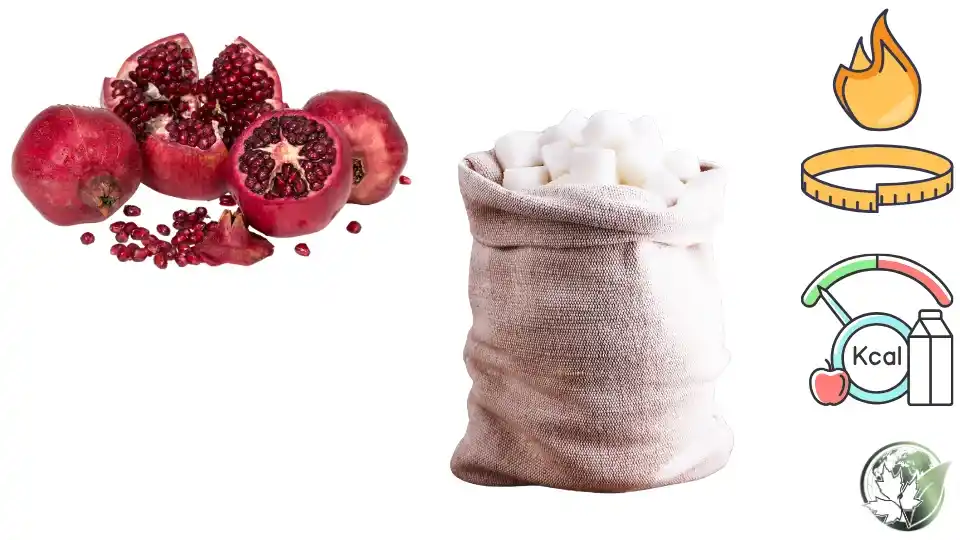
Whole pomegranates keep one to two months in the refrigerator
How to Count Pomegranate Calories Accurately
If you weigh the arils only, use 83 calories per 100 grams, or 144 per cup. If you weigh the whole fruit with the skin and membrane, use about 83 calories per 100 grams of edible portion, which is about 50 to 60 percent of the total weight, so about 45 calories per 100 grams of whole fruit. For juice, use 54 per 100 milliliters. When pomegranate is in a dish, count the arils separately, since a tablespoon adds only 6 to 8 calories.
How Many Pomegranates Can You Eat in a Day?
One pomegranate or a cup of arils a day is a reasonable amount for most people, providing about 144 to 234 calories, plenty of fiber and about 24 to 39 grams of natural sugar. Eating several pomegranates in a day might cause stomach discomfort. In large amounts, pomegranate may interact with some medicines, as it can affect liver enzymes. If you take medicines for blood pressure or cholesterol or anticoagulants, ask your doctor about regular intake of pomegranate or its juice.
How Does Pomegranate Compare with Other Fruits in Calories and Sugar?
Compared with other fruits, pomegranate sits in the middle to upper range for calories per 100 grams of edible portion, mostly because of its natural sugar and seed oil. The table lists common fruits per 100 grams and per typical serving.
| Fruit (100 g edible) | Calories | Sugar | Fiber | Typical serving | Calories per serving |
|---|---|---|---|---|---|
| Watermelon | 30 kcal | 6.2 g | 0.4 g | 1 cup (152 g) | 46 kcal |
| Strawberries | 32 kcal | 4.9 g | 2.0 g | 1 cup (152 g) | 49 kcal |
| Orange | 47 kcal | 9.4 g | 2.4 g | 1 medium (131 g) | 62 kcal |
| Apple | 52 kcal | 10.4 g | 2.4 g | 1 medium (182 g) | 95 kcal |
| Pear | 57 kcal | 9.8 g | 3.1 g | 1 medium (178 g) | 101 kcal |
| Grapes | 69 kcal | 15.5 g | 0.9 g | 1 cup (151 g) | 104 kcal |
| Pomegranate arils | 83 kcal | 13.7 g | 4.0 g | 1/2 cup (87 g) | 72 kcal |
| Banana | 89 kcal | 12.2 g | 2.6 g | 1 medium (118 g) | 105 kcal |
| Mango | 60 kcal | 13.7 g | 1.6 g | 1 cup (165 g) | 99 kcal |
| Figs, fresh | 74 kcal | 16 g | 2.9 g | 2 medium (100 g) | 74 kcal |
| Dates, dried | 277 kcal | 66 g | 6.7 g | 3 dates (72 g) | 200 kcal |
Pomegranate arils are about as calorie dense as bananas but with more fiber and polyphenols per bite. Because a serving is typically a half cup or less, the calories per serving of 72 are comparable to an orange or an apple.
What Is the Role of Pomegranate in Persian Cuisine and What Are the Calories of Typical Dishes?
Pomegranate is central to Persian food culture. It appears at Yalda night, the winter solstice celebration, where cut pomegranates are served with watermelon, nuts and dried fruit. It is also used in savory stews such as fesenjan, where pomegranate molasses and ground walnuts simmer with chicken, and in dishes like ash-e anar, a thick soup with pomegranate juice, herbs and meatballs. Salads such as shirazi may be garnished with arils, and rice dishes are often topped with them for color. A cup of fesenjan has about 430 calories, but the pomegranate molasses contributes only about 30 calories to this, since the walnuts and chicken supply most. Ash-e anar has about 250 calories per bowl, and a Yalda plate of pomegranate arils, watermelon and a few nuts usually adds up to 200 to 300 calories.
Can Pregnant Women, Children and Older Adults Eat Pomegranate?
Pomegranate arils are suitable for most people and are a good source of nutrients. During pregnancy, they provide folate, vitamin C and potassium, and eating the whole fruit is considered safe in normal amounts. For children, the arils are a colorful, healthy snack, though the seeds can be a choking hazard for toddlers, so serve them mashed or as juice with the seeds strained out for the youngest. Older adults benefit from the antioxidants and fiber, although hard seeds may be difficult for those with dental problems. As with all foods, people on blood thinners or blood pressure medicines should talk with their doctor about regular pomegranate or juice consumption.
What Are Easy Ways to Enjoy Pomegranate Without Adding Many Calories?
A tablespoon or two of arils adds color and a pop of tangy sweetness to almost any dish for 6 to 12 calories. Scatter them over green salads, roasted vegetables, grain bowls, yogurt, oatmeal, hummus, avocado toast or grilled meats. Mix them into plain sparkling water for a decorative drink, and freeze them in ice cubes. Make a quick salsa with arils, diced cucumber, lime juice and mint. Use them instead of dried fruit such as raisins in salads, since a tablespoon of arils has 6 calories and a tablespoon of raisins has 27.
Why Do Pomegranates Have So Many Seeds, and Can You Eat the White Membrane?
Each pomegranate holds hundreds of arils, up to about 600 in a large fruit, because each aril surrounds one seed and the fruit's strategy is to attract animals to spread them. The seed inside is edible, and it gives the aril its slight crunch and some of the fiber. The white membrane between the chambers is bitter but safe to eat. It contains fiber and some of the polyphenols that are in the rind, and it adds only a small number of calories. Most people discard it because of the taste. The leathery outer rind is not eaten, but it is used in traditional teas and extracts, and it contains the highest levels of antioxidants such as punicalagins, though it is also bitter and may cause stomach upset in large amounts.
How Many Pomegranate Arils Are in a Serving?
A tablespoon holds about 15 to 20 arils, and a half cup holds about 200 to 250, depending on their size. If you count arils for a very precise log, use about 0.4 calories per aril. This is not necessary for most people, but it is a useful measure for people who sprinkle a few on top of dishes. A handful of about 100 arils has about 40 calories, so even a generous handful on a salad is less than the calories in a teaspoon of olive oil, which has 40.
| Number of arils | Weight | Calories |
|---|---|---|
| 10 arils | 4 g | 3 kcal |
| 20 arils (1 tablespoon) | 7 g | 6 kcal |
| 50 arils | 17 g | 14 kcal |
| 100 arils | 35 g | 29 kcal |
| 250 arils (1/2 cup) | 87 g | 72 kcal |
| 500 arils (1 cup) | 174 g | 144 kcal |
Key Takeaways: Pomegranate Calories vs a Sugar Cube
A medium pomegranate has about 234 calories and a cup of arils 144, the same as 9 sugar cubes, but with a third less sugar and 7 grams of fiber, plus potassium and antioxidants. A tablespoon of arils has only 6 to 8 calories. Eat the arils instead of drinking the juice, measure a half cup as a serving and use them as a topping.
Frequently Asked Questions
6 questions answered
How many calories are in a pomegranate?
About 234 for a medium whole fruit.
How many calories are in a cup of pomegranate arils?
About 144.
How many sugar cubes equal a cup of pomegranate arils?
About 9 in calories, but with 24 grams of sugar instead of 36.
How many calories are in a tablespoon of pomegranate seeds?
About 6 to 8.
Is pomegranate good for weight loss?
Yes, in moderate portions, thanks to its fiber and flavor.
Are pomegranate seeds edible?
Yes, they provide fiber and can be eaten whole.