How Many Calories Are in Pistachio Paste? The Quick Answer
Pure pistachio paste, made from 100 percent ground pistachios, has about 560 calories per 100 grams, about 90 per tablespoon (16 grams) and about 45 per teaspoon (8 grams). A quarter cup (64 grams) has about 360 calories and a full cup (256 grams) about 1,435. Sweetened pistachio paste for pastry, which blends pistachios with sugar, oil and sometimes water, has about 520 to 560 calories per 100 grams, or about 105 per tablespoon (20 grams). Almonds have about 579 calories per 100 grams, 164 per ounce (28 grams) and about 98 per tablespoon of almond butter.
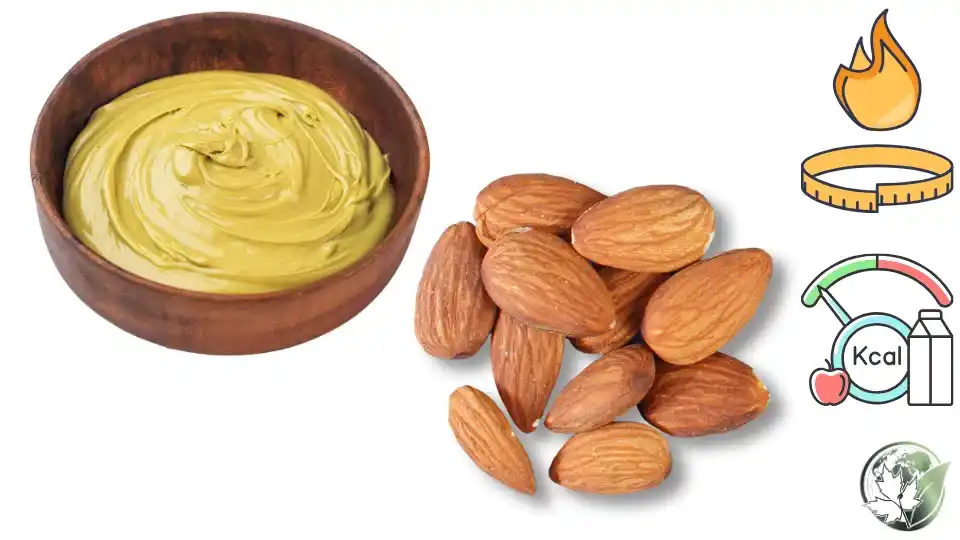
So pure pistachio paste has about the same calories as whole almonds, slightly fewer by weight at 560 against 579. The paste is simply ground pistachio kernels, so the calories are those of the nut. The important difference is that a tablespoon of paste (16 grams) is not the same as a handful of nuts. Whole nuts take time to chew, and people tend to stop at an ounce. Paste is soft, spreadable and easy to eat quickly by the spoonful, so it is easy to eat 3 or 4 tablespoons, which adds up to 270 to 360 calories.
Commercial pistachio spreads and creams, such as those sold as a green alternative to chocolate hazelnut spread, are a different product. They often contain only 20 to 40 percent pistachio and the rest is sugar, palm oil and milk powder, giving about 540 to 560 calories per 100 grams and about 12 to 14 grams of sugar per tablespoon. This guide gives the calories in pistachio paste by teaspoon, tablespoon and 100 grams, compares pure and sweetened pastes and spreads, compares them with almonds, almond butter and almond paste, and covers pastry, gelato, croissants and other desserts. There are three comparison tables and an FAQ.
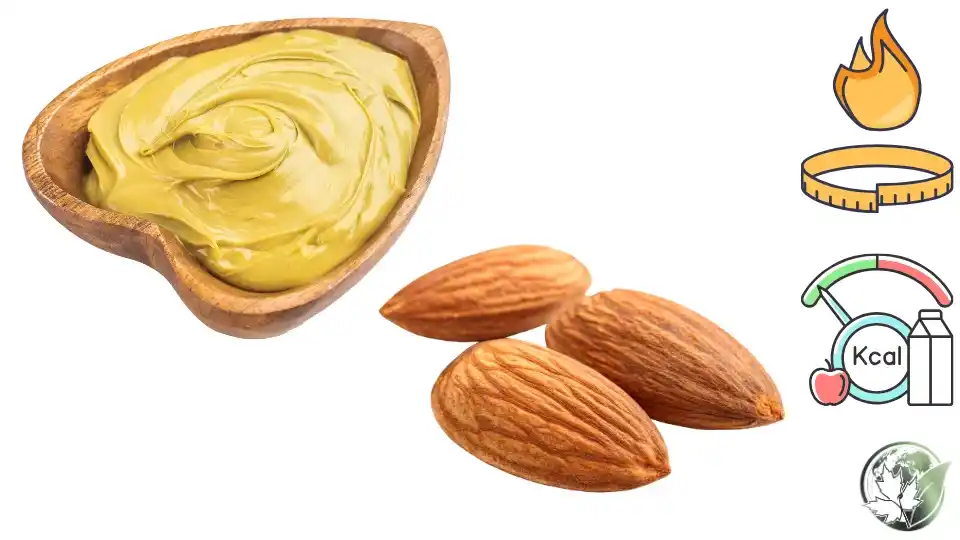
A tablespoon of pure pistachio paste has about 90 calories and 3 grams of protein
How Many Calories Are in Pistachio Paste by Spoon, Cup and Jar?
The table is for pure unsweetened paste (100 percent pistachio). A tablespoon holds about 16 grams.
| Portion | Weight | Calories | Fat | Protein | Sugar |
|---|---|---|---|---|---|
| 1 teaspoon | 5 g | 28 kcal | 2.3 g | 1.0 g | 0.4 g |
| 1 tablespoon | 16 g | 90 kcal | 7.3 g | 3.2 g | 1.2 g |
| 2 tablespoons | 32 g | 180 kcal | 14.5 g | 6.4 g | 2.5 g |
| 1/4 cup | 64 g | 360 kcal | 29 g | 12.9 g | 4.9 g |
| 1/2 cup | 128 g | 717 kcal | 58 g | 25.9 g | 9.9 g |
| 1 cup | 256 g | 1,435 kcal | 116 g | 51.7 g | 19.7 g |
| Small jar | 100 g | 560 kcal | 45 g | 20 g | 7.7 g |
| Medium jar | 200 g | 1,120 kcal | 90 g | 40 g | 15.4 g |
| Large jar | 500 g | 2,800 kcal | 226 g | 101 g | 38.5 g |
A tablespoon of pure pistachio paste has the calories of about 28 pistachio kernels, so it is a fairly dense food. A small 100 gram jar provides 560 calories, about a quarter of a day's energy.
How Many Calories Are in Sweetened Pistachio Paste, Spread and Cream?
The type of product matters because it determines how much of the weight is nuts and how much is sugar and oil.
| Product (1 tablespoon) | Weight | Calories | Sugar | Pistachio content |
|---|---|---|---|---|
| Pure pistachio paste | 16 g | 90 kcal | 1.2 g | 100% |
| Pastry pistachio paste, sweetened | 20 g | 105 kcal | 8 g | 50 to 60% |
| Pistachio marzipan | 20 g | 90 kcal | 12 g | 20 to 30% |
| Pistachio spread (chocolate spread style) | 18 g | 100 kcal | 10 g | 20 to 40% |
| Pistachio cream, Italian style | 20 g | 115 kcal | 9 g | 30% |
| Pistachio butter, smooth | 16 g | 90 kcal | 1.2 g | 100% |
| Pistachio butter with honey | 16 g | 85 kcal | 3.5 g | 90% |
| Pistachio tahini blend | 16 g | 92 kcal | 1.0 g | 60% |
| Pistachio frosting | 20 g | 85 kcal | 14 g | 5% |
| Pistachio sauce for pasta | 30 g | 120 kcal | 1 g | 40% |
Products labeled "paste" can contain very different amounts of nut, so read the ingredient list. If sugar is the first ingredient, the product is mainly sweet, and it will have a lower pistachio content and fewer of the nutritional benefits of the nuts.
Pistachio Paste vs Almonds: Calories Compared
| Food | Portion | Weight | Calories | Fat | Protein | Sugar |
|---|---|---|---|---|---|---|
| Pure pistachio paste | 1 tablespoon | 16 g | 90 kcal | 7.3 g | 3.2 g | 1.2 g |
| Pure pistachio paste | 100 g | 100 g | 560 kcal | 45 g | 20 g | 7.7 g |
| Pistachio spread, sweetened | 1 tablespoon | 18 g | 100 kcal | 6.5 g | 1.5 g | 10 g |
| Almonds, whole | 1 ounce (23) | 28 g | 164 kcal | 14 g | 6.0 g | 1.2 g |
| Almonds, whole | 100 g | 100 g | 579 kcal | 50 g | 21 g | 4.4 g |
| Almond butter | 1 tablespoon | 16 g | 98 kcal | 9.0 g | 3.4 g | 0.7 g |
| Almond butter | 100 g | 100 g | 614 kcal | 56 g | 21 g | 4.4 g |
| Almond paste (marzipan base) | 1 ounce | 28 g | 130 kcal | 7.5 g | 2.7 g | 15 g |
| Almond paste | 100 g | 100 g | 458 kcal | 27 g | 9.6 g | 51 g |
Pure pistachio paste has about 560 calories per 100 grams, slightly fewer than almonds at 579 and almond butter at 614. A tablespoon of pistachio paste has about 8 fewer calories than a tablespoon of almond butter. Almond paste, which contains a lot of sugar, has fewer calories per gram at 458 but is a sweet confection.
Pistachio Paste vs Almonds: Nutrition Compared
| Per 100 g | Pure pistachio paste | Almonds | Sweetened pistachio spread |
|---|---|---|---|
| Calories | 560 kcal | 579 kcal | 550 kcal |
| Fat | 45 g | 49.9 g | 34 g |
| Saturated fat | 5.5 g | 3.8 g | 12 g |
| Protein | 20 g | 21.2 g | 8 g |
| Carbohydrate | 27 g | 21.6 g | 52 g |
| Sugar | 7.7 g | 4.4 g | 48 g |
| Fiber | 10 g | 12.5 g | 3 g |
| Potassium | 1,000 mg | 733 mg | 300 mg |
| Vitamin E | 2.9 mg | 25.6 mg | 3 mg |
| Sodium | 3 mg | 1 mg | 50 mg |
| Per 100 calories | Pure pistachio paste | Almonds | Sweetened spread |
|---|---|---|---|
| Weight | 17.9 g | 17.3 g | 18.2 g |
| Protein | 3.6 g | 3.7 g | 1.5 g |
| Fiber | 1.8 g | 2.2 g | 0.5 g |
| Sugar | 1.4 g | 0.8 g | 8.7 g |
Pure pistachio paste provides nearly the same protein and fiber as almonds for the same calories. The sweetened spread has about six times the sugar per calorie and less than half of the protein and fiber, which makes it a dessert rather than a healthy nut product.
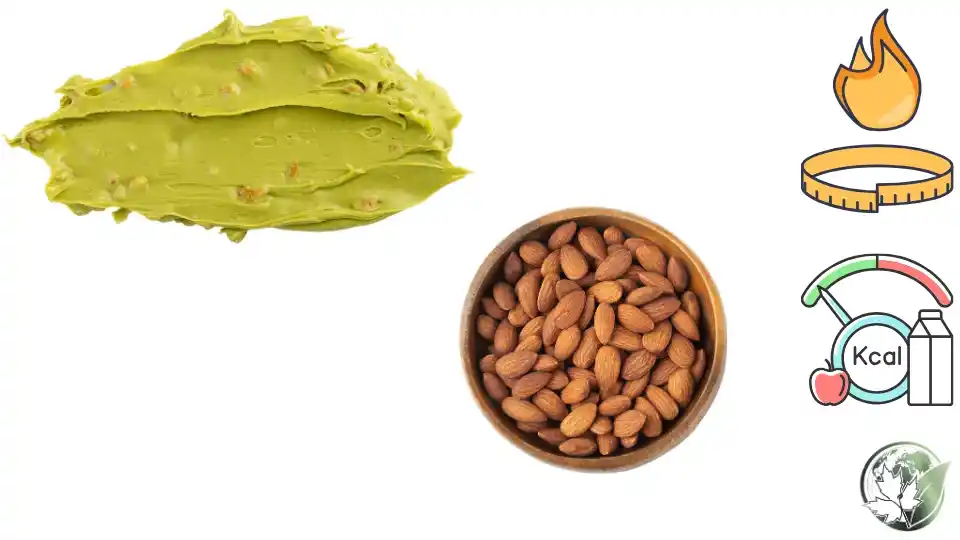
Pure pistachio paste has about the same calories as almonds, but sweetened spreads add sugar
Is Pistachio Paste Healthy?
Pure pistachio paste keeps the benefits of the nuts: protein, fiber, potassium, vitamin B6, healthy unsaturated fats and antioxidants. It has a low glycemic index and can be a nutritious addition to breakfast, smoothies or sauces. The main caveat is portion size. At 90 calories a tablespoon, a generous spread on toast can be 2 or 3 tablespoons, or 180 to 270 calories.
The sweetened versions are less healthy. Pistachio cream and spreads usually contain sugar, palm oil and milk powder in large quantities, and the nut content may be low. These have more saturated fat and sugar than pure paste, and they should be treated as a dessert ingredient. Check the label for the percentage of pistachios, the type of oil and the sugar content per serving, aiming for a product with a high percentage of nuts and little added sugar.
Is Pistachio Paste Good for Weight Loss?
Pistachio paste can be part of a weight loss diet in small amounts. A teaspoon stirred into oatmeal or yogurt gives flavor and healthy fat for 28 calories. A tablespoon spread on a slice of whole grain toast is a balanced snack of about 160 calories with 6 grams of protein. But because it is a calorie-dense, soft food that is easy to eat in large amounts, measuring is essential. Many people find that they eat 3 or 4 tablespoons without noticing, which is 270 to 360 calories.
A good strategy is to use paste in place of other spreads, such as chocolate spread, which has about 80 calories per tablespoon with 9 grams of sugar, and a sweet taste from pistachios can be a lower sugar option. A food scale or measuring spoon, with a level tablespoon, avoids the problem of heaping.
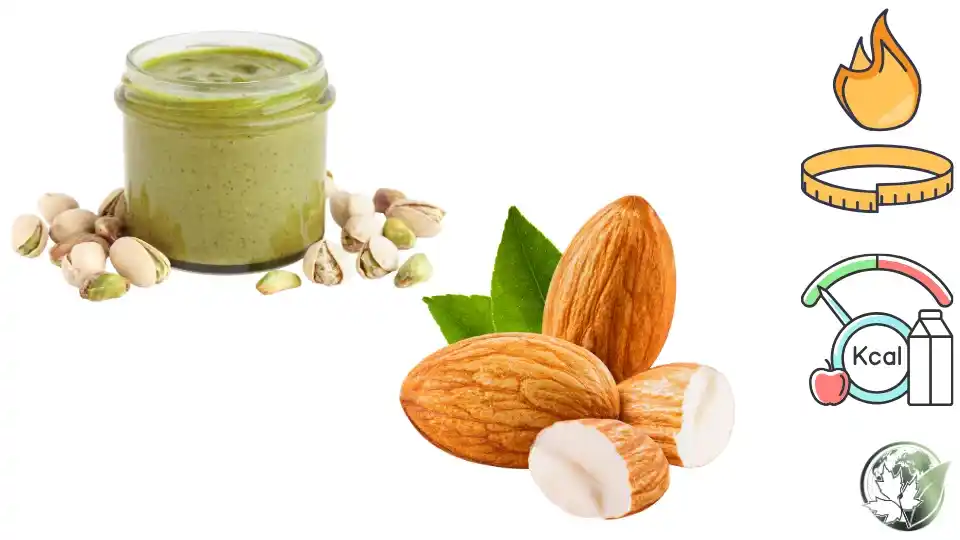
A level tablespoon of pure pistachio paste on toast adds about 90 calories
How Many Calories Are in Foods Made with Pistachio Paste?
Pistachio paste is one of the most popular flavors in pastry and gelato. The calories of the finished product come from sugar, butter, cream and flour as well as the paste.
| Food | Serving | Calories | Pistachio paste |
|---|---|---|---|
| Pistachio gelato | 1 scoop (100 g) | 220 kcal | About 10% |
| Pistachio ice cream | 1/2 cup | 200 kcal | About 5% |
| Pistachio croissant, filled | 1 croissant | 430 kcal | 30 g |
| Pistachio macaron | 1 macaron | 90 kcal | 3 g |
| Pistachio cake slice | 1 slice | 400 kcal | 30 g |
| Pistachio cream puff | 1 puff | 260 kcal | 15 g |
| Pistachio baklava | 1 piece | 250 kcal | Ground nuts |
| Pistachio cookie | 1 cookie | 120 kcal | 5 g |
| Pistachio mousse | 1/2 cup | 280 kcal | 20 g |
| Pistachio pesto on pasta | 1 cup | 480 kcal | 30 g |
| Pistachio cream tart | 1 slice | 380 kcal | 25 g |
| Pistachio latte | 12 oz | 290 kcal | Sauce |
The paste is a source of flavor and color, but the calories of these treats mostly come from sugar and fat. A single pistachio croissant has about as many calories as a tablespoon and a half of paste plus the croissant itself, around 430.
How Is Pistachio Paste Made and What Affects Its Calories?
Pure pistachio paste is made by grinding shelled pistachios, with or without roasting, until the oils are released and a smooth paste forms. Some paste is made with blanched kernels, which are skinned to produce a brighter green color. Sweetened paste includes sugar, glucose syrup, vegetable oil and sometimes a little water. Paste labeled 100 percent pistachio has the calories of the nuts, around 560 per 100 grams, and a sweetened product may have more or fewer depending on the water, sugar and oil. Oil separation on top of the jar is natural in pure paste, and does not change the calories if you stir it back in.
You can make pistachio paste at home by blending 1 cup (123 grams) of shelled, unsalted pistachios in a food processor for 5 to 10 minutes, scraping down the sides, until smooth, adding a teaspoon of neutral oil if needed. The result has about 690 calories per cup of nuts, and it makes about 1/2 cup of paste, or roughly 90 calories per tablespoon. You can add a pinch of salt or a teaspoon of honey.
How Can You Use Pistachio Paste With Fewer Calories?
Use it as a flavor accent rather than the main component. Swirl a teaspoon into Greek yogurt, giving 28 calories and a nutty flavor. Blend a tablespoon into a smoothie with banana and milk. Thin with lemon juice and olive oil to make a sauce or dressing for vegetables, which you can use with 1 tablespoon of paste for four servings. Spread a thin layer on toast and top with fruit slices. Replace part of the butter or cream in a recipe with paste to get richness from nuts. When baking, use a small amount of paste for flavor and rely on pistachio extract or a few chopped kernels for color.
| Use | Amount of paste | Calories added |
|---|---|---|
| Swirl in yogurt | 1 tsp | 28 kcal |
| Smoothie | 1 tbsp | 90 kcal |
| Toast topping, thin | 1 tbsp | 90 kcal |
| Toast topping, thick | 2 tbsp | 180 kcal |
| Pasta sauce for 4 | 4 tbsp | 360 kcal |
| Dressing for 4 salads | 1 tbsp | 90 kcal |
| Oatmeal stir-in | 2 tsp | 56 kcal |
How Should You Store Pistachio Paste?
Unopened commercial paste lasts several months to a year in a cool, dark cupboard. Once opened, keep it in the refrigerator, tightly closed, and use it within 2 to 3 months. Homemade paste should be stored in the refrigerator and used within a month, or frozen in small portions for up to six months. Stir the oil back in if it separates. Pistachio paste can go rancid, so discard it if it smells paint-like or bitter. Never use a wet spoon, since water can encourage mold.
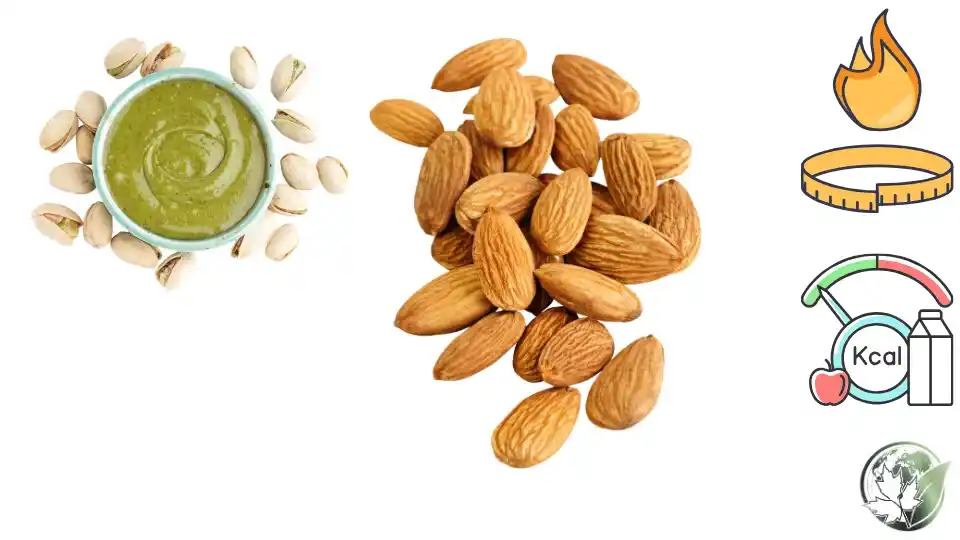
Pistachio paste keeps for two to three months in the refrigerator once opened
How to Count Pistachio Paste Calories Accurately
For pure paste, use 5.6 calories per gram, or 90 per level tablespoon. For sweetened paste and spreads, use the label, because the calories vary. Weigh the paste if you can, because a heaping tablespoon can be 25 grams and 140 calories. When you are eating a dessert that contains paste, look up the finished product, since the sugar and fat in the rest of the recipe matter.
How Does Pistachio Paste Compare with Other Nut Butters and Spreads?
Pistachio paste is similar in calories to other nut butters, as all are made from ground nuts with a high fat content. The comparison is for a level tablespoon.
| Spread (1 tablespoon) | Weight | Calories | Fat | Protein | Sugar |
|---|---|---|---|---|---|
| Pure pistachio paste | 16 g | 90 kcal | 7.3 g | 3.2 g | 1.2 g |
| Almond butter | 16 g | 98 kcal | 9.0 g | 3.4 g | 0.7 g |
| Peanut butter | 16 g | 94 kcal | 8.0 g | 3.6 g | 1.5 g |
| Cashew butter | 16 g | 94 kcal | 8.0 g | 3.1 g | 1.0 g |
| Hazelnut butter | 16 g | 99 kcal | 9.5 g | 2.3 g | 1.0 g |
| Tahini | 15 g | 89 kcal | 8.0 g | 2.6 g | 0.1 g |
| Chocolate hazelnut spread | 18 g | 100 kcal | 5.6 g | 1.2 g | 10.5 g |
| Pistachio spread, sweetened | 18 g | 100 kcal | 6.5 g | 1.5 g | 10 g |
| Honey | 21 g | 64 kcal | 0 g | 0 g | 17 g |
| Butter | 14 g | 102 kcal | 11.5 g | 0.1 g | 0 g |
| Strawberry jam | 20 g | 49 kcal | 0 g | 0.1 g | 12 g |
Pure nut pastes all have close to 90 to 100 calories per tablespoon, and they provide protein and fiber that jam, honey and butter lack. The choice between them can be made on flavor, price and individual tolerance, including allergies.
Why Is Pistachio Paste So Expensive?
Pistachios are labor-intensive to grow, since trees take 7 to 10 years to bear a good crop and fruit in alternating years, and harvesting and shelling take time. Green kernels used for pastry are selected for color, which adds to the cost. A good quality pure pistachio paste can cost several times as much as almond or peanut butter. The high price encourages some producers to add cheaper ingredients, such as sugar, other nuts, oils or green coloring, so the label is important. A paste made from 100 percent pistachios with no added color should have a muted olive-green color, not a bright neon green.
Is Pistachio Paste Suitable for Special Diets?
Pure pistachio paste is vegan, gluten free and dairy free. It is suitable for ketogenic diets in small portions, since it has about 18 grams of net carbohydrate per 100 grams. It is a tree nut product, so it is not safe for people with nut allergies, and it may carry cross-contamination warnings for other nuts. Sweetened spreads often contain milk powder and may not suit vegans or those with dairy allergies. For low sodium diets, pure paste has almost no sodium, while salted versions can have more. For people on low FODMAP diets, pistachios are high in FODMAPs, so only very small portions are suitable.
Can Children Eat Pistachio Paste?
Children can eat pistachio paste if they have no nut allergy, and it can be a way to give them protein and healthy fats. Introducing tree nuts early, in a smooth form, is generally considered safe, and current allergy guidelines suggest that early introduction may even reduce allergy risk, but parents of children with eczema or other allergies should talk to a doctor first. A thin spread is better than a thick sticky glob, which can be a choking hazard for toddlers. Sweetened spreads should be limited because of the sugar.
What Is the Difference Between Pistachio Paste, Marzipan and Almond Paste?
These three products are often confused. Pistachio paste is ground pistachios, with or without sugar. Almond paste is ground blanched almonds blended with sugar, in roughly equal parts, and it is used as a filling in pastries and baking. Marzipan is similar to almond paste but with more sugar, about two parts sugar to one part almonds, so it is sweeter and smoother and is molded into shapes or used to cover cakes. Pistachio marzipan, popular in Italy and the Middle East, uses pistachios in place of or alongside almonds. In calories, almond paste has about 458 per 100 grams and marzipan about 410 to 450, which is less than pure nut paste because of the high sugar content, but they have far more sugar, about 50 to 60 percent.
| Product (100 g) | Calories | Nut content | Sugar |
|---|---|---|---|
| Pure pistachio paste | 560 kcal | 100% | 7.7 g |
| Pure almond butter | 614 kcal | 100% | 4.4 g |
| Almond paste | 458 kcal | 50% | 51 g |
| Marzipan | 430 kcal | 25 to 33% | 60 g |
| Pistachio marzipan | 440 kcal | 25 to 33% | 55 g |
| Sweetened pistachio paste | 540 kcal | 50 to 60% | 30 g |
| Pistachio spread | 550 kcal | 20 to 40% | 48 g |
How Do You Weigh and Portion Pistachio Paste in Practice?
The most reliable way to portion paste is with a scale. Place a small bowl on the scale, zero it, and spoon in the amount you want. If you do not have a scale, use a level measuring spoon, scraping the top with a knife, and remember that a heaping spoon can hold twice as much. A good rule is to use a teaspoon (28 calories) when you want flavor and a tablespoon (90 calories) when the paste is the main topping. When you eat directly from the jar, count each spoonful as 90 calories, and consider how many you took.
How Does Pistachio Paste Taste and Why Do Pastry Chefs Use It?
Pistachio paste has a rich, sweet, slightly resinous flavor that is distinct from other nuts. Pastry chefs value it because it carries a lot of flavor in a small amount, produces a creamy texture in ice cream and mousses and gives a natural green color. It blends smoothly into custards, buttercream and fillings. In savory cooking, it can thicken and enrich sauces, such as pesto, and coat fish or meat. The taste is stronger in pure paste made from roasted nuts, and milder in paste from blanched raw pistachios. A small amount goes a long way, which is a useful property if you are counting calories: a teaspoon in a recipe adds noticeable pistachio flavor for only 28 calories.
Key Takeaways: Pistachio Paste Calories vs Almonds
Pure pistachio paste has about 90 calories per tablespoon and 560 per 100 grams, close to almonds at 579. Sweetened pistachio spreads and creams have more sugar and less nut, so they are dessert ingredients. Measure your spoon, use the paste as a flavor accent and choose products with a high pistachio content.
Frequently Asked Questions
6 questions answered
How many calories are in a tablespoon of pistachio paste?
About 90 for pure paste.
Does pistachio paste have fewer calories than almonds?
Slightly, 560 against 579 per 100 grams.
How many calories are in pistachio spread?
About 100 per tablespoon, with 10 grams of sugar.
Is pistachio paste healthy?
Pure paste is, because it keeps the nutrients of the nuts.
How many calories are in pistachio gelato?
About 220 per 100 gram scoop.
Can I make pistachio paste at home?
Yes, by blending shelled pistachios until smooth.