How Many Calories Are in a Peach? The Quick Answer
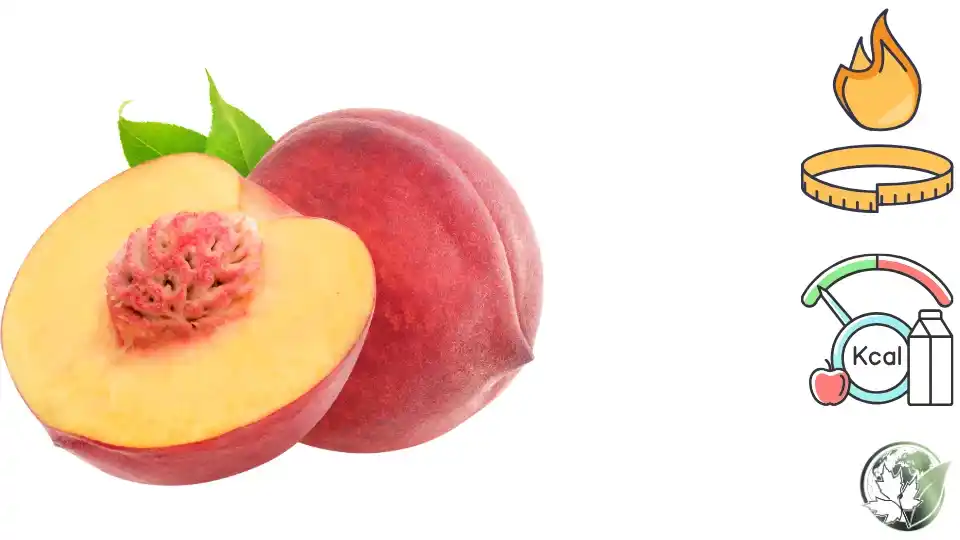
A medium fresh peach weighing about 150 grams has about 59 calories. One hundred grams of peach has about 39 calories, and one cup of sliced peaches (154 g) has about 60. A small peach of 130 grams has about 51 calories, and a large one of 175 grams has about 68. Peaches are a low calorie fruit with lots of water, a moderate amount of natural sugar and a good supply of vitamins A and C.
Nectarines are genetically almost the same fruit as peaches, but without the fuzzy skin. One hundred grams of nectarine has about 44 calories, so nectarines are about 13 percent higher per gram. A medium nectarine of 142 grams has about 63 calories, compared with 59 for a medium peach. In practice, the two fruits are interchangeable in calorie counting, and the small differences come from slightly higher sugar and lower water in nectarines.
This guide lists the calories in fresh, canned, dried and juiced peaches, compares peaches with nectarines on nutrients, and shows how recipes like cobbler, pie and smoothies change the totals. You will also find advice on blood sugar, weight loss, ripeness, buying and storage, along with three comparison tables and a full FAQ.
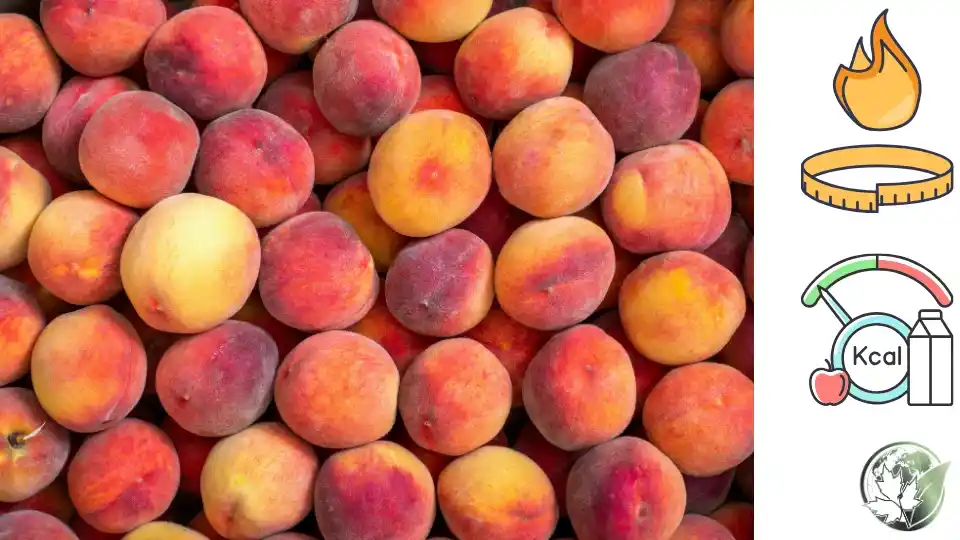
A medium peach has about 59 calories
How Many Calories Are in One Peach, One Cup and 100 Grams?
The calories in a peach depend on its size. The table below covers the common measures.
| Peach portion | Weight | Calories | Sugar | Fiber |
|---|---|---|---|---|
| 1 slice (1/8 medium peach) | 19 g | 7 kcal | 1.6 g | 0.3 g |
| 1 small peach | 130 g | 51 kcal | 10.9 g | 2.0 g |
| 1 medium peach | 150 g | 59 kcal | 12.6 g | 2.3 g |
| 1 large peach | 175 g | 68 kcal | 14.7 g | 2.6 g |
| 1 cup, sliced | 154 g | 60 kcal | 12.9 g | 2.3 g |
| 1 cup, diced | 165 g | 64 kcal | 13.9 g | 2.5 g |
| 100 g | 100 g | 39 kcal | 8.4 g | 1.5 g |
| 1 pound | 454 g | 177 kcal | 38 g | 6.8 g |
A peach with the pit weighs about 10 to 15 percent more than the edible part, so weigh the flesh if you want an exact number. For most people, counting a medium peach as 60 calories is accurate enough.
How Do Canned, Dried and Frozen Peaches Compare?
Processing changes the calories dramatically, mainly through added sugar. Fresh peaches are low in energy, but peaches in heavy syrup can have almost twice as many calories per serving.
| Form | Serving | Calories | Sugar |
|---|---|---|---|
| Fresh peach, sliced | 1 cup (154 g) | 60 kcal | 13 g |
| Canned in water | 1 cup (244 g) | 60 kcal | 12 g |
| Canned in juice | 1 cup (248 g) | 110 kcal | 25 g |
| Canned in light syrup | 1 cup (252 g) | 130 kcal | 29 g |
| Canned in heavy syrup | 1 cup (256 g) | 190 kcal | 43 g |
| Frozen, unsweetened | 1 cup (170 g) | 65 kcal | 13 g |
| Frozen, sweetened | 1 cup (250 g) | 235 kcal | 53 g |
| Dried peaches | 1/4 cup (40 g) | 96 kcal | 24 g |
| Peach jam | 1 tbsp (20 g) | 50 kcal | 12 g |
A cup of canned peaches in heavy syrup has about three times the calories of a fresh cup, and the extra energy is all added sugar. If you buy canned peaches, choose those packed in water or their own juice, and drain the liquid. Dried peaches are about six times more calorie dense per gram than fresh, because of the water lost.
Peach vs Nectarine: Calories and Nutrition Compared
Peaches and nectarines come from the same species, and nectarines result from a gene that removes the skin's fuzz. Their nutrition is almost identical, with a few small differences.
| Per 100 g (raw) | Peach | Nectarine |
|---|---|---|
| Calories | 39 kcal | 44 kcal |
| Carbohydrate | 9.5 g | 10.6 g |
| Sugar | 8.4 g | 7.9 g |
| Fiber | 1.5 g | 1.7 g |
| Protein | 0.9 g | 1.1 g |
| Fat | 0.3 g | 0.3 g |
| Vitamin C | 6.6 mg | 5.4 mg |
| Vitamin A | 16 mcg | 17 mcg |
| Potassium | 190 mg | 201 mg |
| Water | 88.9 g | 87.6 g |
| Per medium fruit | Peach (150 g) | Nectarine (142 g) |
|---|---|---|
| Calories | 59 kcal | 63 kcal |
| Fiber | 2.3 g | 2.4 g |
| Vitamin C | 9.9 mg | 7.7 mg |
| Potassium | 285 mg | 285 mg |
Nectarines have slightly more calories, fiber, protein and potassium, while peaches have slightly more vitamin C and vitamin A per gram. These differences are trivial. Choose the fruit you enjoy, and look at ripeness, not the type, to decide which one has better flavor.
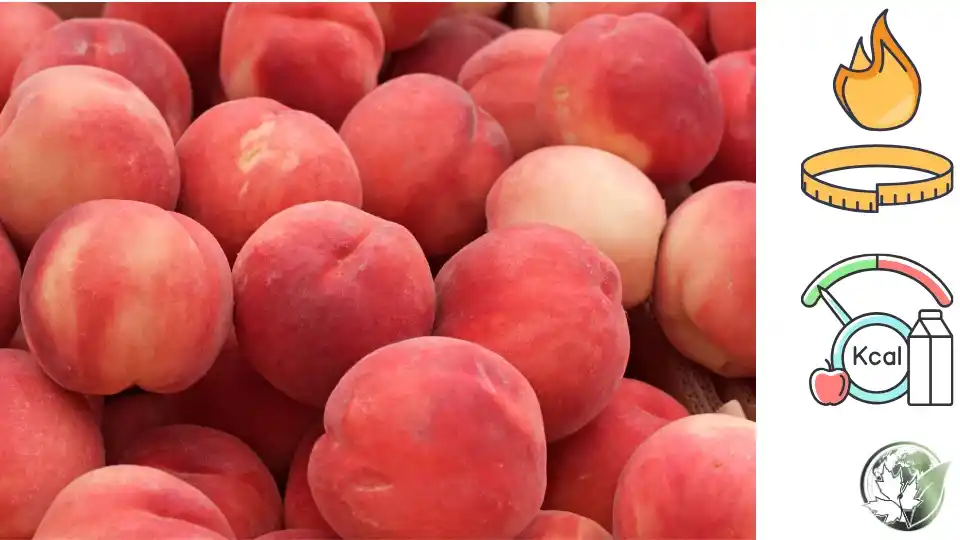
Peaches and nectarines have almost the same nutrition, with 59 and 63 calories per medium fruit
How Much Sugar Is in a Peach?
A medium peach has about 12.6 grams of sugar, which is natural fruit sugar made up of sucrose, glucose and fructose. This is about the same as three teaspoons. Because the sugar comes with fiber, water and vitamins, it is absorbed more slowly than the sugar in juice or sweets.
The glycemic index of fresh peaches is about 42, which is low, and the glycemic load of a medium peach is about 5, also low. This makes peaches a reasonable fruit for people with diabetes when eaten in portion and with protein such as yogurt or cottage cheese. Canned peaches in syrup have a higher glycemic effect and should be avoided.
For comparison, a medium banana has about 14 grams of sugar and 105 calories, a medium apple 19 grams and 95 calories and a cup of grapes 23 grams and 104 calories. Peaches are among the lowest sugar stone fruits.
How Do Peaches Compare With Other Fruits?
Peaches are in the lower range of fruit calories. Here is how they rank next to other popular fruits.
| Fruit (100 g) | Calories | Sugar | Fiber |
|---|---|---|---|
| Watermelon | 30 kcal | 6.2 g | 0.4 g |
| Strawberries | 32 kcal | 4.9 g | 2.0 g |
| Peach | 39 kcal | 8.4 g | 1.5 g |
| Apricot | 48 kcal | 9.2 g | 2.0 g |
| Nectarine | 44 kcal | 7.9 g | 1.7 g |
| Orange | 47 kcal | 9.4 g | 2.4 g |
| Plum | 46 kcal | 9.9 g | 1.4 g |
| Apple | 52 kcal | 10.4 g | 2.4 g |
| Pear | 57 kcal | 9.8 g | 3.1 g |
| Banana | 89 kcal | 12.2 g | 2.6 g |
Peaches are one of the lightest fruits, slightly higher than strawberries and watermelon. This makes them a favorite for summer desserts, where they can supply sweetness without a large calorie load.
What Vitamins and Antioxidants Do Peaches Provide?
A medium peach contains about 10 milligrams of vitamin C (11 percent of the daily value), 285 milligrams of potassium, about 5 percent of daily vitamin A and small amounts of vitamin E, vitamin K, niacin and manganese. Yellow-fleshed peaches are rich in beta-carotene and lutein, and white-fleshed peaches have less carotenoids but more floral sweetness and lower acidity.
Peach skin carries a large share of the polyphenols, including chlorogenic acid and anthocyanins, which function as antioxidants. Eating peaches with the skin, after washing, provides more fiber and antioxidants. Peaches also contain a small amount of sorbitol, a sugar alcohol that can have a mild laxative effect when eaten in very large amounts.
Are Peaches Good for Weight Loss?
Peaches are well suited to weight management. A medium peach has 59 calories and 2.3 grams of fiber, and about 89 percent of its weight is water. Eating a peach before a meal may help you feel fuller, and swapping a sugary dessert for a peach saves a lot of energy.
| Swap | Calories saved |
|---|---|
| Fresh peach instead of a granola bar | 110 kcal |
| Peach slices instead of canned fruit in syrup | 130 kcal |
| Peach instead of a slice of peach pie | 300 kcal |
| Grilled peach halves instead of ice cream | 150 kcal |
| Peach water instead of bottled peach iced tea | 90 kcal |
As with all fruit, portions matter in processed forms. Peach juice, nectar and smoothies may have 100 to 200 calories per glass, and they are less filling than whole fruit.
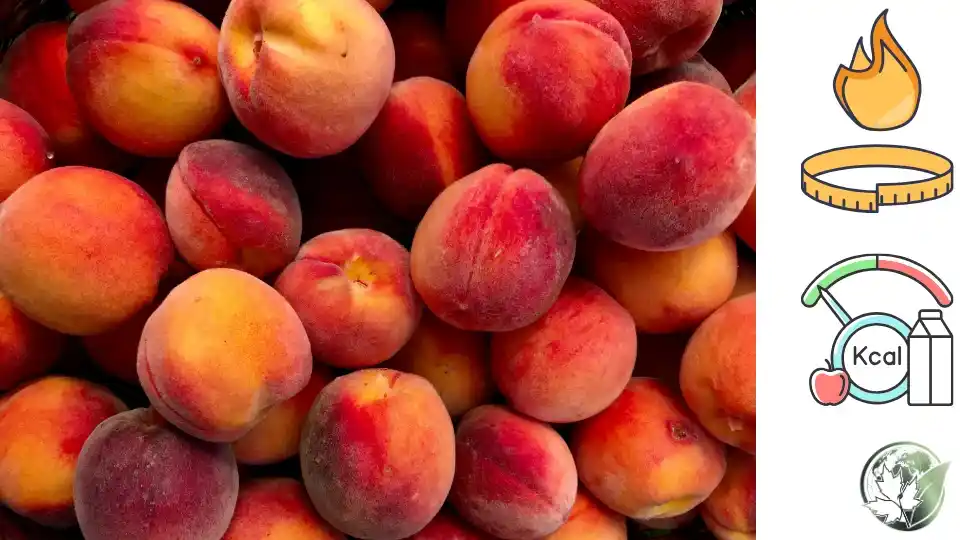
Grilled peach halves with yogurt make a dessert of about 120 calories
How Many Calories Are in Peach Desserts and Drinks?
The calories in desserts depend on pastry, sugar and cream. A peach adds sweetness and flavor, but most of the energy comes from the other ingredients.
| Peach food | Serving | Calories |
|---|---|---|
| Peach cobbler | 1 cup (210 g) | 420 kcal |
| Peach pie | 1 slice (125 g) | 300 kcal |
| Peach yogurt (flavored, low-fat) | 170 g | 150 kcal |
| Peach smoothie | 350 ml | 220 kcal |
| Peach nectar | 240 ml | 130 kcal |
| Peach iced tea (bottled) | 500 ml | 120 kcal |
| Peach Melba | 1 serving | 280 kcal |
| Peach ice cream | 1/2 cup | 150 kcal |
| Peach salsa | 1/4 cup | 25 kcal |
| Grilled peach with honey | 1 half | 70 kcal |
A fresh peach is a light dessert on its own, with 59 calories, while a slice of pie has five times as many. Peach salsa and grilled peaches are good low calorie ways to enjoy the fruit.
How to Choose a Ripe Peach
A ripe peach has a sweet aroma at the stem end, gives slightly under gentle pressure and has a background color of yellow or cream, not green. A red blush does not indicate ripeness, since it depends on the variety. Avoid peaches with bruises, wrinkled skin or very hard texture. If the fruit is firm, leave it on the counter for one to three days. Placing it in a paper bag with a banana speeds ripening.
Freestone peaches have pits that separate easily and are good for slicing and baking, while clingstone peaches hold the pit tightly and are often used for canning. Both have the same calories. In season, usually from late spring to early autumn, peaches are at their sweetest and cheapest.
How to Store Peaches
Store unripe peaches at room temperature, and move ripe ones to the refrigerator, where they keep for three to five days. Do not wash until you are ready to eat to avoid mold. To freeze peaches, slice them, toss with a little lemon juice to avoid browning, spread on a tray, freeze and transfer to bags. They keep for up to ten months.
To peel peaches, score an X on the bottom, blanch in boiling water for 30 seconds and transfer to ice water, after which the skin slips off. For importers and retailers, peaches are a delicate fruit with a short shelf life, so cold chain, careful packaging and fast distribution are essential for quality.
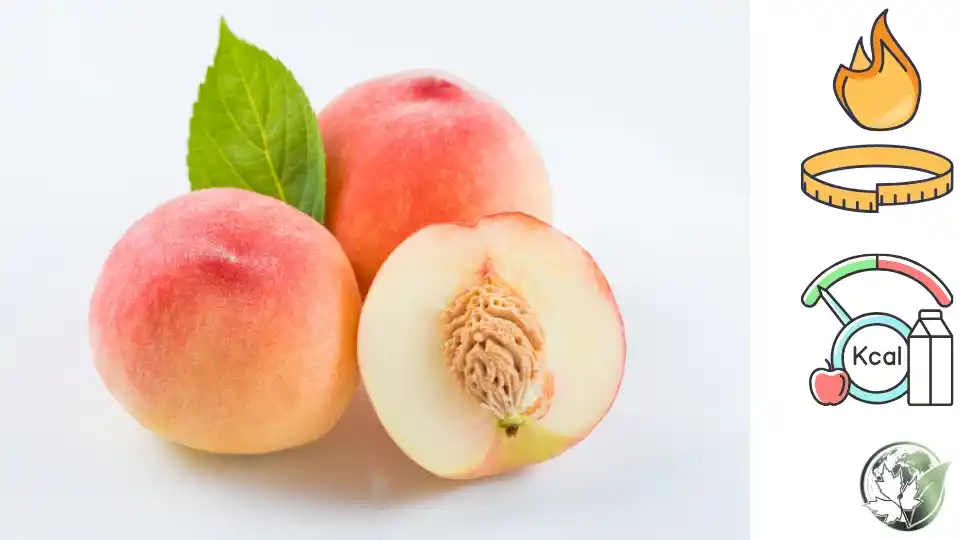
Sliced peaches freeze well and keep for up to ten months
How Many Peaches Can You Eat a Day?
One or two medium peaches per day is a sensible portion, giving 59 to 118 calories, 5 grams of fiber and a good share of vitamin C. Large amounts are not harmful for most people, but eating many peaches at once may cause bloating because of fiber and sorbitol. People with oral allergy syndrome linked to birch pollen may notice itching of the mouth from raw peaches, and cooked peaches are usually tolerated.
How to Count Peach Calories in Recipes
Weigh the peach after removing the pit and use 0.39 calories per gram. For example, 450 grams of sliced peaches in a crisp adds about 175 calories to the dish. Add the topping, sugar and butter separately. When using canned peaches, check the label for the packing liquid and count the syrup if you do not drain it. As a rule of thumb, the fruit is the lightest part of any peach dessert.
Why Are Peaches Low in Calories but Sweet?
A peach is about 89 percent water, 9.5 percent carbohydrate, 0.9 percent protein and 0.3 percent fat. The carbohydrate includes fiber, and the sugars are a modest 8.4 grams per 100 grams. Sweetness is not simply a matter of the quantity of sugar. Peaches also contain acids, mainly malic and citric acid, and aroma compounds such as lactones that make the fruit taste sweeter and richer than its sugar content suggests.
Because water makes up most of the weight, a whole peach is a small amount of energy. The calories per gram, 0.39, are about one tenth of those in bread and one twentieth of those in butter. Ripeness also plays a role: as peaches ripen, starch converts to sugar, so a very ripe peach tastes sweeter but has only slightly more calories than a firm one.
How Do White and Yellow Peaches Differ?
White peaches tend to be sweeter and lower in acid, with a delicate floral flavor, while yellow peaches have a tangier, more robust taste. Calories are almost the same, with white peaches at about 38 per 100 grams and yellow at about 39. Yellow peaches contain more beta-carotene and lutein, while white peaches contain more of some phenolic compounds. Both are good sources of vitamin C and potassium.
Flat peaches, sometimes called donut or Saturn peaches, have a similar nutrient profile but a lower acid content and thin skin that makes them easy to eat whole. A medium flat peach of 80 grams has about 31 calories, so a pair of them makes a light snack. Whatever the variety, the key points are ripeness and portion.
How Do You Make Peaches the Star of a Light Meal?
Peaches are versatile and work in sweet and savory dishes. You can slice them into oatmeal or yogurt for breakfast, add them to salads with arugula, mozzarella and a drizzle of balsamic for lunch, grill them to serve with chicken or pork for dinner and finish with a baked peach for dessert. Each of these uses adds roughly 60 calories for one peach, and the fruit brings moisture, sweetness and fiber.
| Meal idea | Ingredients | Calories |
|---|---|---|
| Peach oatmeal bowl | 1/2 cup oats, 1 peach, cinnamon | 190 kcal |
| Peach and cottage cheese | 1/2 cup cottage cheese, 1 peach | 160 kcal |
| Peach arugula salad | Peach, arugula, 30 g mozzarella, vinegar | 170 kcal |
| Grilled chicken with peach salsa | 120 g chicken, 1/2 cup salsa | 230 kcal |
| Baked peach with cinnamon | 1 peach, 1 tsp honey | 80 kcal |
| Peach and yogurt parfait | 150 g yogurt, 1 peach, 15 g granola | 220 kcal |
These ideas show how fruit can replace higher calorie ingredients in a meal. A baked peach has about a quarter of the calories of a slice of pie but delivers a similar warm, sweet experience.
How Does Fruit Ripeness Change the Taste and Calories?
As a peach ripens, enzymes break down pectin and starch. The flesh softens, the sugar content rises slightly and the flavor develops. A firm, underripe peach may contain 5 percent more starch and slightly fewer sugars, but the total calories are almost the same. The main effect is taste and texture. An underripe peach is harder to digest for some people and may be more astringent, while a fully ripe peach is juicy and sweet.
If you cannot wait for ripening, cooking softens firm peaches and brings out flavor. Poaching in water with a cinnamon stick and a squeeze of lemon takes ten minutes and adds no calories. Roasting at 200 degrees Celsius for 15 minutes caramelizes the natural sugar and gives a dessert-like taste without added sweetener.
Are Peach Pits and Kernels Safe?
Peach pits contain amygdalin, a compound that can release cyanide when crushed and digested. Do not eat the kernels inside the pits, and do not use them in homemade extracts or teas. Accidentally swallowing a whole pit is generally not dangerous, but chewing or crushing kernels in quantity is. The flesh of the fruit is safe and healthy. Keep this in mind when making jams, where whole pits are sometimes added for flavor, and remove them before eating.
How Can Peaches Fit Into a Diabetes-Friendly Plan?
For people who monitor blood sugar, fresh peaches are a good fruit choice. A medium peach has about 14 grams of total carbohydrate, which is under one carbohydrate exchange. Pairing the fruit with protein or healthy fat, for example peach slices with a spoon of almond butter or Greek yogurt, slows glucose absorption further. Avoid peaches in syrup, sweetened juice and large dessert servings, which can deliver 40 to 60 grams of carbohydrate at once.
It is also helpful to eat fruit whole, not blended, because chewing and the intact fiber slow digestion. A peach smoothie made with one peach has a similar carbohydrate load, but blending speeds absorption slightly and makes it easier to drink more fruit than you would eat. Test your own response, and consult a healthcare professional for individual guidance.
What Should You Check When Buying Packaged Peach Products?
Read the label for the packing liquid, serving size and added sugar. "No sugar added" and "in water" are the lightest. "In juice" is lighter than syrup but still adds about 50 calories per cup. Dried peaches may be treated with sulfur dioxide for color. Peach drinks often have as little as 5 to 10 percent real juice, with the rest water and sweetener, so the flavor of peach does not mean the nutrients of peach. Comparing calories per 100 grams on the label is the fastest way to identify a lighter option.
Key Takeaways: Peach Calories vs Nectarine
A medium peach has about 59 calories, and 100 grams has about 39, slightly fewer than a nectarine at 44. Fresh peaches are low in sugar and rich in vitamins, and canned peaches in syrup can have three times the calories. Choose fresh or water-packed fruit, enjoy peaches whole and count the extras in desserts and drinks.
Frequently Asked Questions
9 questions answered
How many calories are in a peach?
A medium peach (150 g) has about 59 calories, and a large one has about 68.
How many calories are in 100 grams of peach?
One hundred grams of fresh peach has about 39 calories.
Does a peach have fewer calories than a nectarine?
Slightly. Peaches have about 39 calories per 100 grams and nectarines about 44.
How many calories are in canned peaches?
A cup of canned peaches has about 60 calories in water, 110 in juice and 190 in heavy syrup.
How many calories are in a cup of sliced peaches?
One cup of fresh sliced peaches has about 60 calories.
Are peaches good for weight loss?
Yes, they are low in calories and high in water and fiber, and can replace higher calorie desserts.
Are peaches high in sugar?
A medium peach has about 12.6 grams of natural sugar, which is moderate and comes with fiber.
Can diabetics eat peaches?
Fresh peaches have a low glycemic index and can fit in a diabetic diet in sensible portions, but syrup-packed peaches should be avoided.
How many calories are in dried peaches?
A quarter cup of dried peaches (40 g) has about 96 calories.