How Many Calories Are in Orange Syrup? The Quick Answer
Traditional sugar-based orange syrup, the thick, sweet concentrate that is mixed with water to make a cold drink, has about 52 calories per tablespoon (20 grams), 260 calories per 100 grams and about 340 per 100 milliliters, because the syrup is denser than water, at about 1.3 grams per milliliter. A teaspoon (7 grams) has about 17 calories, two tablespoons have about 104, and a quarter cup (80 grams) has about 208. A sugar cube (4 grams) has about 16 calories, so one tablespoon of orange syrup equals about 3.3 sugar cubes, and a teaspoon equals about one cube.
Lighter products have fewer calories. Orange squash, which is a less concentrated cordial with about 25 percent sugar, has about 100 calories per 100 milliliters of concentrate, or 15 per tablespoon. A no-added-sugar orange squash, sweetened with sucralose or acesulfame, has about 8 to 20 calories per 100 milliliters of concentrate. A drink made by diluting one part syrup with five parts water, a typical ratio, has about 60 to 130 calories per glass, depending on the syrup. The calories in diluted syrup come mostly from sugar. The orange flavor itself, whether from juice, oil or essence, adds only a few calories.
The comparison with a sugar cube is useful because syrup is simply dissolved sugar. A glass of orange drink made with a standard sweetened syrup contains the equivalent of about five to eight sugar cubes. This guide gives the calories in orange syrup by teaspoon, tablespoon, glass and bottle, compares heavy syrup, squash, cordial and sugar-free versions, shows what a diluted drink contains, covers homemade syrup, uses of syrup in cooking and cocktails, and explains how to enjoy it with fewer calories. There are three comparison tables and an FAQ.
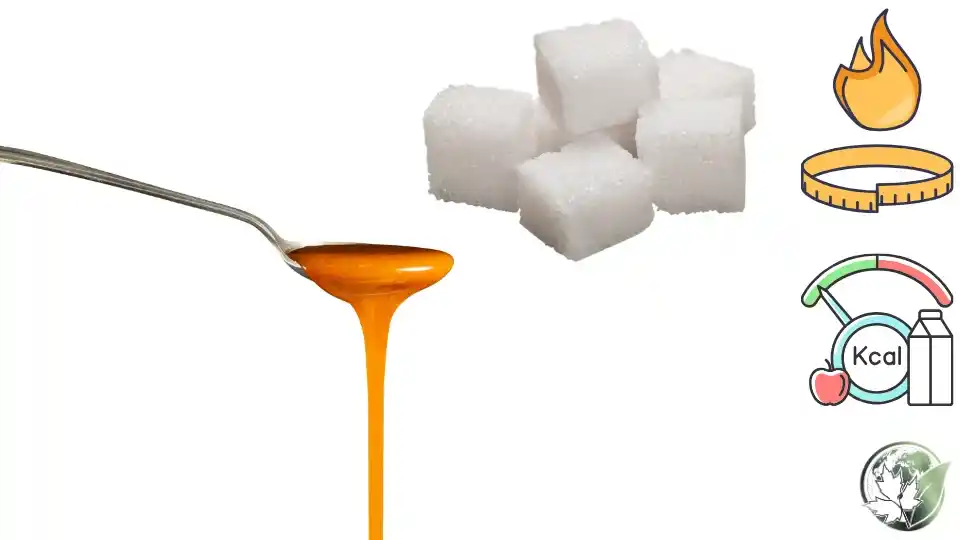
A tablespoon of sugar-based orange syrup has about 52 calories, about 3.3 sugar cubes
How Many Calories Are in Orange Syrup by Spoon, Cup and Bottle?
The table is for a traditional heavy orange syrup with about 65 percent sugar.
| Portion | Weight | Calories | Sugar |
|---|---|---|---|
| 1 teaspoon | 7 g | 17 kcal | 4.5 g |
| 1 tablespoon | 20 g | 52 kcal | 13 g |
| 2 tablespoons | 40 g | 104 kcal | 26 g |
| 1/4 cup | 80 g | 208 kcal | 52 g |
| 1/2 cup | 160 g | 416 kcal | 104 g |
| 1 cup | 320 g | 832 kcal | 208 g |
| Small bottle (250 ml) | 325 g | 845 kcal | 211 g |
| Large bottle (700 ml) | 910 g | 2,370 kcal | 590 g |
| 100 g | 100 g | 260 kcal | 65 g |
| 100 ml | 130 g | 338 kcal | 85 g |
Syrup is measured by volume in the kitchen, but sold by volume and weight on labels, so it helps to know that the syrup is about 30 percent heavier than water. A 700 milliliter bottle contains more than 2,300 calories, which is about a full day of food, although it makes about 4 liters of drink.
How Many Calories Are in a Glass of Diluted Orange Syrup?
Most people drink syrup diluted with water, so what matters is the amount in the glass. The common dilution for a traditional syrup is 1 part syrup to 4 or 5 parts water.
| Glass (250 ml) | Syrup used | Calories | Sugar |
|---|---|---|---|
| Light, 1:7 dilution | 2 tbsp (40 ml) | 80 kcal | 20 g |
| Standard, 1:5 dilution | 3 tbsp (45 ml) | 117 kcal | 29 g |
| Strong, 1:4 dilution | 4 tbsp (60 ml) | 156 kcal | 39 g |
| Very strong | 5 tbsp (75 ml) | 195 kcal | 49 g |
| Sparkling with soda water | 2 tbsp | 104 kcal | 26 g |
| With ice and mint | 3 tbsp | 117 kcal | 29 g |
| Orange squash 1:5, sweetened | 40 ml concentrate | 40 kcal | 10 g |
| Orange squash 1:5, no added sugar | 40 ml concentrate | 5 kcal | 0 g |
A standard glass of diluted heavy orange syrup has about 117 calories, about the same as a cup of orange juice, but with no vitamin C, fiber or potassium from the fruit. Two glasses have 234 calories, which is over 14 sugar cubes.
Orange Syrup vs a Sugar Cube: Calories Compared
| Item | Portion | Weight | Calories | Sugar |
|---|---|---|---|---|
| Sugar cube | 1 cube | 4 g | 16 kcal | 4 g |
| Sugar cubes | 3 cubes | 12 g | 48 kcal | 12 g |
| Sugar cubes | 8 cubes | 32 g | 128 kcal | 32 g |
| Orange syrup | 1 teaspoon | 7 g | 17 kcal | 4.5 g |
| Orange syrup | 1 tablespoon | 20 g | 52 kcal | 13 g |
| Orange syrup | 3 tablespoons | 60 g | 156 kcal | 39 g |
| Orange squash | 1 tablespoon | 15 ml | 15 kcal | 3.8 g |
| Orange squash, no sugar | 1 tablespoon | 15 ml | 2 kcal | 0 g |
| Simple syrup, homemade 1:1 | 1 tablespoon | 20 g | 40 kcal | 10 g |
| Sugar | 100 g | 100 g | 400 kcal | 100 g |
| Honey | 1 tablespoon | 21 g | 64 kcal | 17 g |
One teaspoon of heavy orange syrup has about the same calories as one sugar cube, and a tablespoon has more than three. By weight, orange syrup has about 35 percent fewer calories than sugar, because it contains water. But because people use much more of it than a cube, the real comparison is by serving, and a glass of drink has the sugar of five to eight cubes.
Orange Syrup vs a Sugar Cube: Nutrition Compared
| Per 100 g | Orange syrup (heavy) | Orange squash | Sugar |
|---|---|---|---|
| Calories | 260 kcal | 100 kcal | 400 kcal |
| Sugar | 65 g | 25 g | 100 g |
| Fat | 0 g | 0 g | 0 g |
| Protein | 0 g | 0 g | 0 g |
| Vitamin C | 0 to 5 mg | 0 to 10 mg | 0 mg |
| Fiber | 0 g | 0 g | 0 g |
| Water | 33 g | 73 g | 0 g |
| Sodium | 5 mg | 10 mg | 1 mg |
Orange syrup is a source of sugar and flavor, with no meaningful nutrients. Some products are enriched with vitamin C, and a few contain a small amount of real juice or peel extract, but the quantities are small compared with a fresh orange. A sugar cube is the same sugar in a drier and purer form.
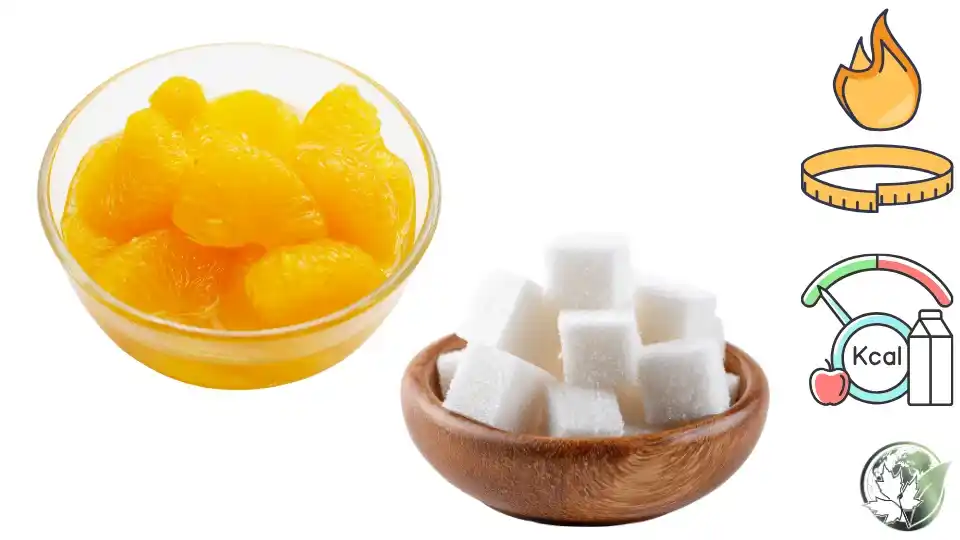
Three tablespoons of orange syrup have about 156 calories, about the same as ten sugar cubes
How Many Calories Are in Different Types of Orange Syrup?
Orange syrups differ in how much sugar they contain, and some are made for different uses, such as drinks, desserts and coffee.
| Type (1 tablespoon, about 15 to 20 g) | Calories | Sugar | Notes |
|---|---|---|---|
| Traditional heavy orange syrup | 52 kcal | 13 g | 65% sugar |
| Orange squash (UK style), sweetened | 15 kcal | 3.8 g | About 25% sugar |
| Orange squash, no added sugar | 2 kcal | 0 g | Sweeteners |
| Orange cordial | 30 kcal | 7.5 g | Lighter |
| Orange blossom syrup | 50 kcal | 12.5 g | Floral |
| Orange coffee syrup | 40 kcal | 10 g | Barista style |
| Orange cocktail syrup | 45 kcal | 11 g | Bar use |
| Orange simple syrup, homemade | 40 kcal | 10 g | 1:1 sugar and water |
| Orange rich syrup, 2:1 | 70 kcal | 17 g | Thicker |
| Orange sugar-free syrup | 0 to 5 kcal | 0 g | Artificial sweeteners |
| Orange marmalade (for comparison) | 49 kcal | 12 g | Contains peel |
| Orange blossom honey | 64 kcal | 17 g | A honey, not a syrup |
The lowest calorie options are no-added-sugar syrups and squash. A diluted glass of those has only 5 to 20 calories.
Is Orange Syrup Healthy?
Orange syrup is a sweetened drink concentrate. It provides calories mostly from sugar and has little in the way of nutrition. For occasional use it fits into a normal diet, but regular consumption of sugary drinks is linked to weight gain, type 2 diabetes, fatty liver and dental decay. Health authorities recommend limiting free sugars to less than 10 percent of daily calories, and ideally less than 5 percent, which is about 25 grams, or 6 teaspoons, a day. One glass of orange drink made with a standard syrup contains about 29 grams, which uses up the entire allowance.
Some traditional orange syrups are made with real juice and peel and may have a modest amount of vitamin C and flavonoids. A teaspoon of homemade orange peel syrup can add flavor to tea or desserts. In Iran and other countries, sharbat is also a cultural drink, often served to guests and at gatherings. Serving it in smaller glasses with more water can make it lighter without losing the tradition.
Does Orange Syrup Raise Blood Sugar?
Yes. Orange syrup is nearly pure sugar dissolved in water, and it is absorbed quickly. The glycemic index of sugar syrups is about 65, and a drink with 29 grams of sugar produces a rapid rise in blood glucose. People with diabetes should avoid sugar-based syrups except to treat low blood sugar, when a quarter cup of diluted syrup can be used because it provides about 15 grams of fast carbohydrate. For regular use, sugar-free syrups and squash are a better option, although it is still worth checking the carbohydrate on the label.
Is Orange Syrup Good for Weight Loss?
Heavy orange syrup is not suited to weight loss because it supplies sugar calories that do not fill you up. A glass at 117 calories drunk twice a day adds 234 calories, about 1,640 calories a week. Swapping to a no-added-sugar squash with 5 calories per glass saves almost the entire amount, which over a year is about 80,000 calories, equal to over 10 kilograms of body fat if the rest of the diet is unchanged. Sugar-free syrups taste different, but many people adapt within a couple of weeks. Another approach is to dilute more: a 1:8 dilution cuts the sugar by nearly half while the drink is still pleasantly flavored.
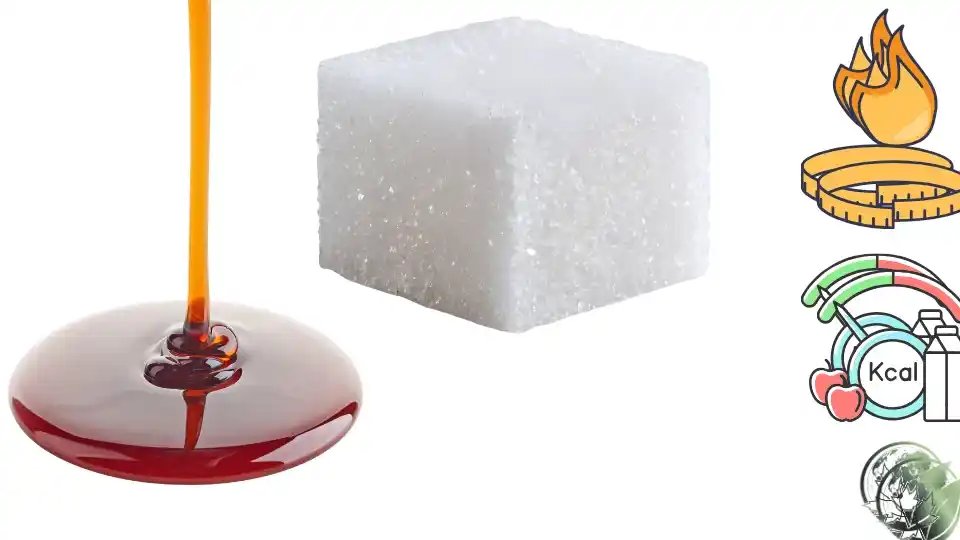
Swapping a sweetened orange syrup for a sugar-free squash saves over 100 calories a glass
How Many Calories Are in Foods Made with Orange Syrup?
Orange syrup is also used as an ingredient in desserts and drinks, and it can add a lot of sugar.
| Use | Serving | Calories | Notes |
|---|---|---|---|
| Orange syrup drink | 1 glass (250 ml) | 117 kcal | 1:5 dilution |
| Orange syrup over pancakes | 2 tbsp | 104 kcal | Instead of maple syrup |
| Orange syrup soaked cake (syrup cake) | 1 slice | 380 kcal | Syrup adds 100 |
| Orange syrup in a cocktail | 1 oz | 80 kcal | Without alcohol |
| Orange syrup in coffee | 1 pump | 25 kcal | Barista syrup |
| Orange syrup on ice cream | 2 tbsp | 104 kcal | Topping |
| Orange syrup in a fruit salad | 1 tbsp | 52 kcal | Dressing |
| Orange baklava or syrup pastry | 1 piece | 260 kcal | Soaked |
| Orange granita | 1/2 cup | 90 kcal | Frozen slush |
| Orange gelatin dessert made with syrup | 1/2 cup | 90 kcal | With jelly |
| Orange panna cotta with syrup glaze | 1 serving | 280 kcal | Cream dessert |
How to Make Orange Syrup at Home
To make a simple orange syrup, dissolve 1 cup of sugar in 1 cup of water and 1 cup of fresh orange juice over medium heat, add a strip of orange peel, and simmer for 10 to 15 minutes until it thickens slightly. Cool, remove the peel and store in a clean bottle in the refrigerator for up to two weeks. This makes about 1.5 cups of syrup with roughly 55 percent sugar and about 46 calories per tablespoon. If you want a lighter version, use 1/2 cup of sugar with a cup of juice and add a few drops of stevia. For a sugar-free version, simmer orange juice and peel with a sweetener and a teaspoon of cornstarch for body.
How to Count Orange Syrup Calories Accurately
For a bottle of syrup, read the label and multiply the calories per 100 milliliters by the amount you use. For a tablespoon, use 52 calories for a heavy syrup, 15 for a squash and 2 for a sugar-free squash. Remember that the calories are in the syrup, not the water, so the dilution does not change the total, only how it is spread over the glass. If you use a measuring cup, you will keep your intake consistent, instead of pouring by eye, which tends to be generous.
How to Store Orange Syrup
Unopened syrup keeps for a year or more in a cool, dark cupboard. Once opened, keep the bottle capped and in the refrigerator, where it lasts for several months. Homemade syrup lasts for two to four weeks in the refrigerator. Discard syrup that is cloudy, moldy, fizzy or smells fermented. Sugar syrups can crystallize in the bottle, which does not harm them, and can be fixed by warming the bottle in warm water.
Homemade orange syrup keeps for two weeks in the refrigerator
How Does Orange Syrup Compare with Orange Juice and a Whole Orange?
Many people assume that an orange-flavored drink is close to orange juice, but the calories and nutrition are quite different. A cup of 100% orange juice has about 112 calories, 21 grams of sugar and 124 milligrams of vitamin C. A glass of diluted heavy syrup has about 117 calories, 29 grams of sugar and little or no vitamin C. A whole orange has 62 calories, 12 grams of sugar, 3 grams of fiber and 70 milligrams of vitamin C. Syrup is therefore the most sugary and the least nutritious per calorie of the three.
| Orange option | Calories | Sugar | Fiber | Vitamin C |
|---|---|---|---|---|
| 1 medium orange | 62 kcal | 12 g | 3.1 g | 70 mg |
| 1 cup orange juice | 112 kcal | 21 g | 0.5 g | 124 mg |
| 1 glass diluted orange syrup | 117 kcal | 29 g | 0 g | 0 to 5 mg |
| 1 glass orange squash, sweetened | 40 kcal | 10 g | 0 g | 0 to 10 mg |
| 1 glass orange squash, no added sugar | 5 kcal | 0 g | 0 g | 0 to 10 mg |
| 1 can orange soda | 180 kcal | 49 g | 0 g | 0 mg |
If you like the flavor of orange but want a healthier drink, try water with fresh orange slices, which gives a light aroma with almost no calories, or dilute orange juice half and half with sparkling water.
What Is the Role of Orange Syrup in Iranian and Middle Eastern Drinks?
Fruit syrups are a long tradition in Persian and Middle Eastern cuisine. Sharbat, made by boiling fruit juice, peel or flower essence with sugar, is served cold on hot days and to guests, and orange and bitter orange (narenj) are popular choices. Sekanjabin, made with vinegar and sugar, is another example. These syrups are meant to be diluted generously, and a small amount flavors a large glass. Traditional serving sizes were also smaller than today's large tumblers. If you prepare the drink the traditional way, with a spoon of syrup for a small glass, the sugar content is much lower than from the large amounts that come with modern habits.
Can You Use Orange Syrup in Coffee and Tea?
Orange syrup is sometimes added to coffee, tea or sparkling water for flavor. A single pump of barista-style syrup is about 10 milliliters and has about 25 to 40 calories, a tablespoon of heavy syrup has 52, and two tablespoons are comparable with five or six sugar cubes. In tea, a teaspoon of orange syrup gives about 17 calories and sweetens a cup, about the same as a sugar cube, with a pleasant citrus flavor. A sugar-free syrup can add the taste without calories, making orange coffee or orange iced tea a lower sugar option.
What Are the Common Mistakes When Using Orange Syrup?
The most common mistake is pouring the syrup without measuring, since a free pour of 4 to 5 tablespoons gives a glass of over 200 calories. The second is forgetting that the syrup, not the dilution, carries the calories, so adding more water does not reduce the amount of sugar you drink unless you also reduce the syrup. The third is assuming that because it is orange flavored it counts as fruit, when in most products there is little or no actual juice. The fourth is comparing the calories of the diluted drink with those of juice by volume, rather than by serving. Measuring, diluting generously and choosing a no-added-sugar version when possible avoids all of these.
Can Children Drink Orange Syrup Drinks?
Children enjoy sweet orange drinks, but they are best treated as an occasional treat. Health authorities advise that children aged 2 to 18 should have less than 25 grams of added sugar a day, and one glass of a standard syrup drink has about 29 grams. Sugary drinks are also a major source of dental decay in children, since sipping them over a long time bathes the teeth in sugar and acid. If children drink orange syrup, use a smaller glass of about 150 milliliters, dilute it generously, serve it with a meal and offer water the rest of the time. Real orange slices or a whole orange are a better way to give an orange taste to a child.
How Do Sugar-Free Orange Syrups Taste, and Are They Safe?
Sugar-free orange syrups and squashes are sweetened with sucralose, acesulfame potassium, aspartame or steviol glycosides. Regulatory agencies such as the FDA and EFSA have reviewed these sweeteners and consider them safe within acceptable daily intakes, which are far higher than a person would get from a few glasses a day. Some people notice an aftertaste, and blends of sweeteners usually taste better than a single one. A few studies suggest that heavy use of artificial sweeteners might affect appetite or gut bacteria, but the evidence is not conclusive. For most people, replacing sugar-sweetened drinks with sugar-free versions is a helpful step toward lower sugar intake, with water as the best default.
Key Takeaways: Orange Syrup Calories vs a Sugar Cube
A tablespoon of sugar-based orange syrup has about 52 calories, equal to about 3.3 sugar cubes, and a diluted glass has 60 to 130 calories. Squash has about 15 per tablespoon, and no-added-sugar versions only 2. Measure the syrup, dilute it generously, and choose sugar-free squash when you want the flavor without the sugar.
Frequently Asked Questions
6 questions answered
How many calories are in a tablespoon of orange syrup?
About 52 for a traditional sugar syrup.
How many sugar cubes equal a tablespoon of orange syrup?
About 3.3.
How many calories are in a glass of diluted orange syrup?
About 117 for a standard 1:5 dilution.
Is sugar-free orange syrup lower in calories?
Yes, it has about 0 to 5 calories per glass.
Is orange syrup healthier than sugar?
It is dissolved sugar, so no, unless it contains real juice.
How can I reduce the calories in orange syrup drinks?
Use less syrup, dilute more or choose a no-added-sugar squash.