
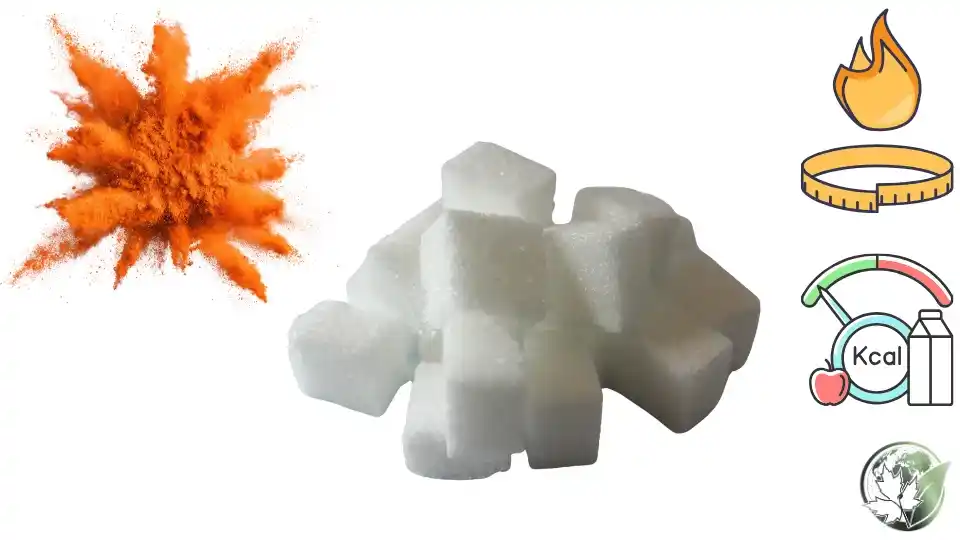
How Many Calories Are in Orange Jelly Powder? The Quick Answer
Regular orange jelly powder (gelatin dessert mix) has about 400 calories per 100 grams of dry powder. A standard box of 85 grams (3 ounces) has about 340 calories and makes four half-cup servings, so each serving has about 80 calories. A smaller 100 gram box, common in Iranian stores, has about 370 to 400 calories and makes five to six servings of about 65 to 80 calories. One sugar cube (4 grams) has about 16 calories, so a serving of ordinary orange jelly is equal in energy to about five sugar cubes. A sugar-free orange jelly powder has about 10 calories per serving, and a whole 8.5 gram box has about 30.
Why does it have so many calories for a food that is mostly water when served? The powder is about 85 percent sugar by weight, with about 8 to 10 percent gelatin, plus acids, salts, flavor and color. When you dissolve it in water and chill it, the water is added and the calories stay the same, so the finished jelly is about 85 percent water and has about 65 to 70 calories per 100 grams. A half-cup serving has about 19 grams of sugar, almost five teaspoons, which is the same as about five sugar cubes.
The orange flavor is not what makes jelly sweet or caloric. It comes from artificial or natural flavors, citric acid and a color such as Yellow 6 or Red 40, with no relevant orange juice in most powders. This guide gives the calories in orange jelly powder dry and prepared, by box, serving and spoon, compares it with sugar cubes and other desserts, and explains sugar-free options, homemade jelly with real orange juice, jelly desserts such as trifles and jelly cups, and how jelly fits diets for weight loss, diabetes and recovery from illness. There are three comparison tables and an FAQ.
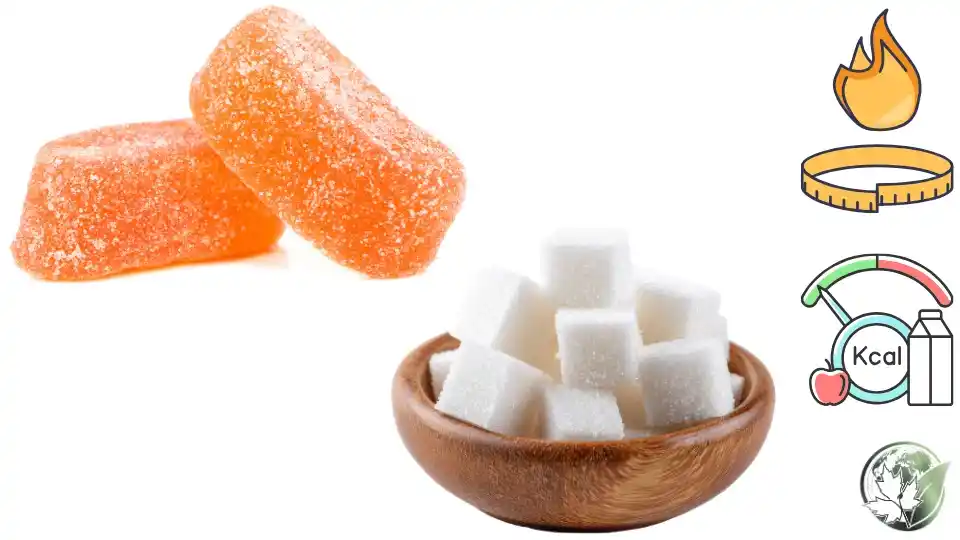
A half-cup serving of orange jelly has about 80 calories and 19 grams of sugar
How Many Calories Are in Orange Jelly Powder by Box and Serving?
The numbers below are for regular sweetened orange gelatin dessert mix prepared according to the box directions.
| Portion | Weight | Calories | Sugar | Protein |
|---|---|---|---|---|
| 1 teaspoon dry powder | 4 g | 16 kcal | 3.4 g | 0.4 g |
| 1 tablespoon dry powder | 12 g | 48 kcal | 10 g | 1.2 g |
| 1/4 box dry (one serving) | 21 g | 84 kcal | 18 g | 1.8 g |
| 1 small box dry (85 g) | 85 g | 340 kcal | 73 g | 7.3 g |
| 1 box dry (100 g) | 100 g | 400 kcal | 86 g | 8.6 g |
| 1 serving prepared (1/2 cup) | 120 g | 80 kcal | 18 g | 1.6 g |
| 1 cup prepared | 240 g | 160 kcal | 36 g | 3.2 g |
| 1 jelly cup (ready made) | 100 g | 70 kcal | 15 g | 1.0 g |
| Whole box prepared (2 cups) | 480 g | 340 kcal | 73 g | 7.3 g |
| 100 g prepared | 100 g | 67 kcal | 15 g | 1.4 g |
A person who eats a cup of jelly from a box has had about 160 calories and 36 grams of sugar, as much as eight to nine sugar cubes, which is the amount of sugar in a can of soda.
Orange Jelly Powder vs a Sugar Cube: Calories Compared
| Item | Portion | Weight | Calories | Sugar | Protein |
|---|---|---|---|---|---|
| Sugar cube | 1 cube | 4 g | 16 kcal | 4 g | 0 g |
| Sugar cubes | 5 cubes | 20 g | 80 kcal | 20 g | 0 g |
| Orange jelly, prepared | 1/2 cup | 120 g | 80 kcal | 18 g | 1.6 g |
| Orange jelly, prepared | 1 cup | 240 g | 160 kcal | 36 g | 3.2 g |
| Orange jelly powder, dry | 1 teaspoon | 4 g | 16 kcal | 3.4 g | 0.4 g |
| Orange jelly powder, dry | 100 g | 100 g | 400 kcal | 86 g | 8.6 g |
| Sugar | 100 g | 100 g | 400 kcal | 100 g | 0 g |
| Sugar-free orange jelly | 1/2 cup | 120 g | 10 kcal | 0 g | 1.2 g |
| Sugar-free orange jelly | 1 cup | 240 g | 20 kcal | 0 g | 2.4 g |
The dry powder has about the same calories as sugar itself, 400 per 100 grams, because it is mostly sugar. A teaspoon of dry powder has the same calories as one sugar cube. A serving of prepared jelly has the calories of five cubes, while the sugar-free version has less than one.
Orange Jelly Powder vs a Sugar Cube: Nutrition Compared
| Per 100 g | Jelly powder, regular | Sugar | Jelly powder, sugar free |
|---|---|---|---|
| Calories | 400 kcal | 400 kcal | 350 kcal |
| Sugar | 86 g | 100 g | 0 g |
| Protein | 8.6 g | 0 g | 53 g |
| Fat | 0 g | 0 g | 0 g |
| Sodium | 1,000 mg | 1 mg | 2,500 mg |
| Fiber | 0 g | 0 g | 0 g |
| Vitamins | None | None | None |
| Artificial colors | Yes | No | Yes |
The protein in jelly is gelatin, a collagen protein that is low in some essential amino acids, particularly tryptophan, so it is not a complete protein. The amount in a serving, under 2 grams, is small. Sugar-free powder has no sugar, but it appears to have 350 calories per 100 grams because the mix is mostly gelatin protein, which has 4 calories per gram. In practice a pack of 8.5 grams has about 30 calories, and a serving about 10.
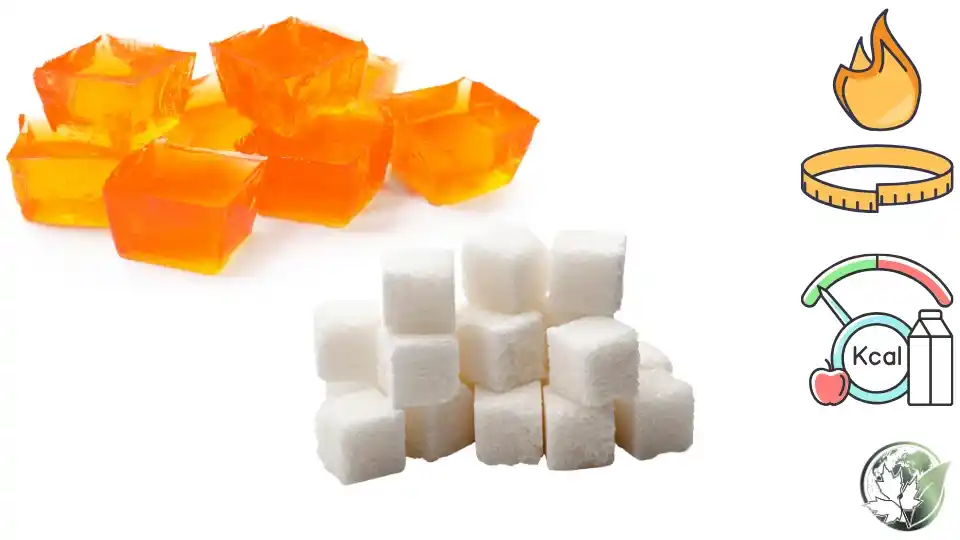
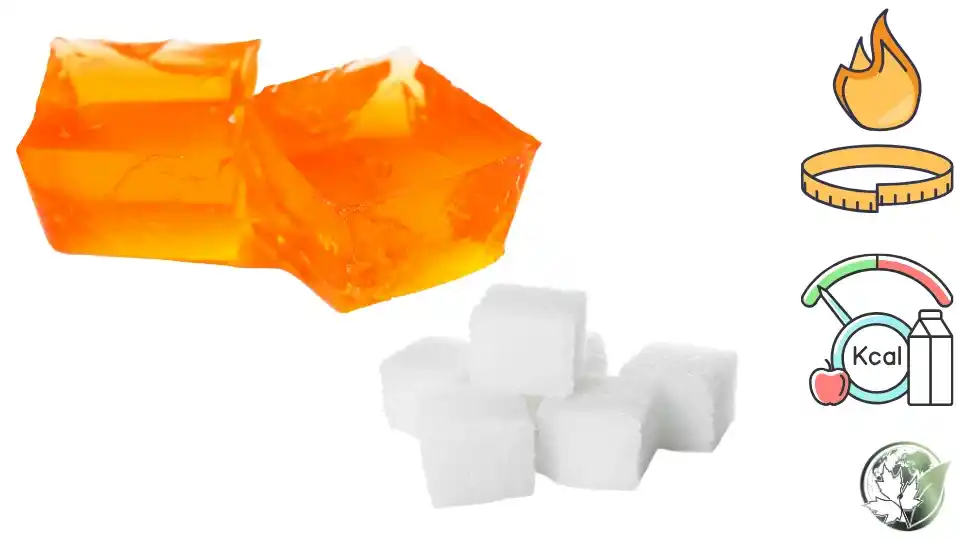
A half cup of orange jelly has the same calories as five sugar cubes
How Many Calories Are in Sugar-Free Orange Jelly?
Sugar-free jelly mixes use artificial sweeteners, usually aspartame, acesulfame potassium or sucralose, instead of sugar. This reduces the calories by about 85 to 90 percent.
| Jelly type (1/2 cup prepared) | Calories | Sugar | Notes |
|---|---|---|---|
| Regular orange jelly | 80 kcal | 18 g | Sweetened with sugar |
| Sugar-free orange jelly | 10 kcal | 0 g | Artificial sweeteners |
| Reduced sugar jelly | 45 kcal | 9 g | Half sugar |
| Jelly cup, ready made | 70 kcal | 15 g | Single portion |
| Sugar-free jelly cup | 10 kcal | 0 g | Single portion |
| Homemade jelly, orange juice, gelatin | 60 kcal | 11 g | See below |
| Homemade jelly with stevia and juice | 35 kcal | 5 g | Lighter |
| Agar-based orange jelly with sugar | 90 kcal | 20 g | Vegetarian |
Sugar-free jelly is one of the lowest calorie desserts, at about 10 calories per serving, which makes it popular with people who are dieting. The tradeoff is the artificial sweeteners and colors, which some people prefer to avoid.
Is Orange Jelly Good or Bad for You?
A serving of regular orange jelly has few nutrients, and its calories mostly come from sugar. It is fat free and easy to digest, so it is often served in hospitals when people are recovering from illness or surgery and need light food. It contains no fiber, vitamins or minerals of note, so it should be considered a treat, not a source of nutrition. The sugar content is similar to soda, and eating it often can contribute to excess sugar intake.
The commercial powder contains artificial colors, such as Yellow 6 and Red 40, and flavors. Studies have linked certain synthetic food dyes to hyperactivity in some children, and some countries require warning labels. The evidence is mixed, but families who prefer to avoid them can choose natural alternatives or make jelly at home with juice. Gelatin is made from animal collagen, usually from pork or beef, so regular jelly is not suitable for vegetarians, vegans, or people who follow halal or kosher rules unless the gelatin is certified. Agar or pectin based jelly powders are alternatives.
Does Jelly Help With Weight Loss?
Sugar-free jelly can be a useful low calorie snack. At 10 calories per half cup it satisfies a craving for something sweet and cold, and it takes time to eat. It does not provide any protein or fiber to speak of, so it will not keep you full for long. Regular jelly is not suited to weight loss because a serving has about 80 calories and 18 grams of sugar, with no benefits for fullness. The best use of jelly in a diet is as a vehicle: setting fruit in sugar-free jelly can make a dessert of 40 to 60 calories.
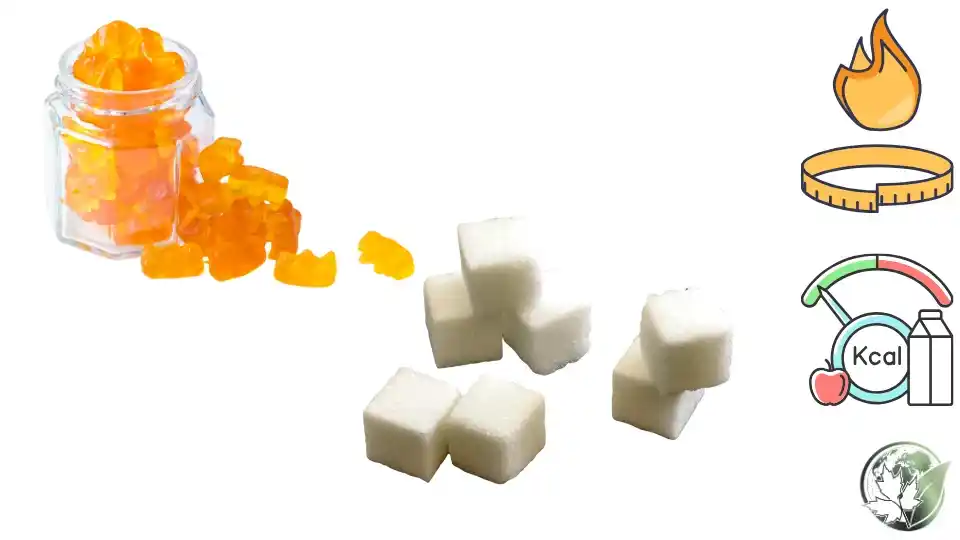
Setting fresh fruit in sugar-free jelly makes a dessert of 40 to 60 calories
How Many Calories Are in Orange Jelly Desserts?
Jelly is often combined with other ingredients, and these can add a great deal of energy.
| Dessert | Serving | Calories | Notes |
|---|---|---|---|
| Orange jelly | 1/2 cup | 80 kcal | Regular |
| Orange jelly with whipped cream | 1/2 cup and 2 tbsp | 120 kcal | Light topping |
| Orange jelly with fruit cocktail | 1 cup | 190 kcal | Canned in syrup |
| Orange jelly with fresh orange segments | 1 cup | 140 kcal | Fresh fruit |
| Trifle with jelly, cake and custard | 1 cup | 310 kcal | Layered |
| Jelly and ice cream | 1/2 cup each | 220 kcal | Cold dessert |
| Jelly shots (with vodka) | 1 shot (30 ml) | 70 kcal | Alcohol adds 50 |
| Jelly sweet (gummy) | 1 piece | 25 kcal | Gelatin candy |
| Jelly roll cake slice | 1 slice | 200 kcal | With jam |
| Persian faloodeh jelly mix | 1 bowl | 250 kcal | With syrup |
| Fruit jelly cup with pieces | 1 cup | 100 kcal | Ready made |
The jelly itself usually provides a third to a half of the calories in these desserts. Cake, cream, ice cream and syrups are much more energy dense.
How to Make Orange Jelly at Home With Real Juice
You can make jelly with real orange juice and unflavored gelatin. One packet of unflavored gelatin (7 grams) has about 23 calories and sets two cups of liquid. Dissolve the packet in 1/4 cup of cold orange juice, then add 3/4 cup of hot juice and stir until clear. Add another cup of cold juice, pour into molds and chill for four hours. This makes about 2 cups of jelly with about 250 calories in total, or about 60 per half cup. It has natural orange flavor and vitamin C, no artificial colors, and about the same sugar as the juice. For less sugar, mix half juice and half water, and add a few drops of stevia, for about 35 calories per half cup.
A vegetarian version uses agar-agar powder, about 2 teaspoons per 2 cups of liquid, which has to be boiled for a couple of minutes to dissolve and sets at room temperature.
How to Choose Orange Jelly Powder
Check the label for the calories per serving, which should be about 80 for regular and 10 for sugar-free. Check how many servings the box makes, since it is usually four, and that a serving is 1/2 cup. Look at the ingredient list: sugar should be the first ingredient in regular jelly, and gelatin the second. For people avoiding pork, check for halal or kosher certification. Choose products from reputable brands with a clear production date and an expiry date. Store the dry powder in a cool, dry cupboard, where it keeps for a year or more, and keep prepared jelly in the refrigerator for up to a week.
Check the label for calories per serving: regular jelly has about 80 and sugar-free about 10
How to Count Orange Jelly Calories Accurately
For regular jelly, count the dry powder, using 4 calories per gram, or the serving, using 80 calories for 1/2 cup. If you make the jelly with fruit juice instead of water, add the juice calories, which are 56 per half cup of orange juice. Remember to add the calories of toppings, cream and fruit. For sugar-free jelly, you can generally count 10 calories per serving, and 30 for the whole box of 8.5 grams.
What Is in Orange Jelly Powder?
A typical box of regular orange jelly powder lists sugar first, then gelatin, adipic acid, disodium phosphate, fumaric acid, artificial flavor, sodium citrate and artificial colors. Sugar makes up the bulk, about 85 percent, and provides nearly all of the calories. Gelatin, about 8 to 10 percent, is the gelling agent that makes the dessert set. Adipic acid and fumaric acid give the sharp, citrusy taste, and the phosphate and citrate salts control the acidity so the gel sets properly. The orange flavor and color are added, and the amounts are tiny. Understanding this helps explain the calories: when you hold a box of jelly powder, you are holding a box of sugar with a little protein and flavoring.
Sugar-free powders replace the sugar with high-intensity sweeteners that provide sweetness at a thousandth of the weight, so they leave a larger share of the powder as gelatin and acids. Their weight per box is much lower, at about 8.5 grams compared with 85 grams for the sweetened version, which is why the calories drop from 340 to about 30.
How Does Jelly Powder Compare with Other Sweet Desserts?
For a dessert, jelly is among the lighter options per serving, but it is not especially nutritious. The comparison below uses typical serving sizes.
| Dessert | Serving | Calories | Sugar | Fat |
|---|---|---|---|---|
| Sugar-free jelly | 1/2 cup | 10 kcal | 0 g | 0 g |
| Regular orange jelly | 1/2 cup | 80 kcal | 18 g | 0 g |
| Fruit sorbet | 1/2 cup | 120 kcal | 28 g | 0 g |
| Vanilla pudding | 1/2 cup | 150 kcal | 24 g | 4 g |
| Caramel custard (crème caramel) | 1 serving | 190 kcal | 26 g | 5 g |
| Ice cream, vanilla | 1/2 cup | 137 kcal | 14 g | 7 g |
| Chocolate cake | 1 slice | 350 kcal | 38 g | 15 g |
| Milk chocolate bar | 43 g | 230 kcal | 22 g | 13 g |
| Gummy candy | 10 pieces | 140 kcal | 28 g | 0 g |
| Fresh orange | 1 medium | 62 kcal | 12 g | 0 g |
A fresh orange has about 62 calories, 12 grams of sugar, 3 grams of fiber and 70 milligrams of vitamin C, compared with 80 calories, 18 grams of sugar and no fiber or vitamin C for a half cup of orange jelly. If the aim is something orange flavored and sweet, the fruit is the better choice nutritionally, and it is more filling.
Is Orange Jelly Safe for Children?
Orange jelly is a popular children's dessert. It is soft and easy to eat, and it has few allergens, since it is free of milk, eggs, nuts and gluten. The concerns are the sugar and the artificial colors. A serving of 80 calories and 18 grams of sugar is within the limits of a treat, but frequent servings add up, since health authorities advise that children aged 2 to 18 should have less than 25 grams of added sugar per day. One serving of regular jelly provides about 70 percent of that. For children, sugar-free jelly can reduce sugar, but artificial sweeteners are not recommended in large amounts for young children, so a homemade juice version is a good compromise. For babies under one year, jelly is not suitable because of the sugar and because some jelly can be a choking risk when firm, so always serve it in small pieces to young toddlers.
Does Jelly Help With Joints or Skin Because of the Gelatin?
Many people believe that eating jelly helps the joints, skin, hair and nails because gelatin comes from collagen. The reality is that a serving of regular jelly has less than 2 grams of gelatin, far below the 5 to 15 grams a day that was used in some small studies of collagen supplements. The sugar in jelly is also not helpful for skin and joints. If you are interested in collagen, a dedicated supplement or homemade jelly with unflavored gelatin and real juice is more reasonable, but the evidence is still developing, and a varied, protein-adequate diet matters more.
How Long Does Prepared Jelly Keep?
Prepared jelly can be stored covered in the refrigerator for five to seven days. After that the texture can become watery and the surface can begin to weep. Jelly made with fresh fruit pieces should be eaten within two to three days. Do not freeze jelly, because the gel structure breaks when it thaws. Do not use fresh pineapple, kiwi, papaya or mango in jelly made with gelatin, because they contain enzymes that break down gelatin and keep it from setting, unless the fruit is cooked or canned first. Orange is safe, since it does not contain these enzymes.
Is Jelly Good for People With Diabetes?
Regular jelly is not a good choice for people with diabetes, because a half cup has 18 grams of sugar and almost no fiber, protein or fat to slow absorption, so it raises blood glucose quickly. The carbohydrate in one serving counts as more than one carbohydrate exchange. Sugar-free jelly has little effect on blood glucose, since it has no sugar and only about 1 to 2 grams of protein, so it is often used as a dessert for people with diabetes. Anyone managing blood sugar should check the label for the carbohydrate content and talk to a dietitian about how to fit jelly into a meal plan, since some sugar-free products use sugar alcohols that may have minor effects on glucose and the digestive system.
What Are Some Creative Ways to Use Orange Jelly Powder in Recipes?
Jelly powder is more flexible than just a dessert. A teaspoon of dry powder sprinkled over a plain yogurt gives it flavor and color, though it adds 16 calories as sugar. Dissolving a small amount in hot water and adding it to a fruit salad creates a light glaze. A popular approach is to make a layered dessert in a glass with fresh orange segments, yogurt and jelly. Jelly powder can also add color to cakes and cookies, though these uses add sugar. In bakeries, orange jelly is used to glaze fruit tarts. When you use it this way, count the powder by weight, using 4 calories per gram.
| Use | Powder used | Calories added | Notes |
|---|---|---|---|
| Layered fruit dessert, 4 servings | 1 box, 85 g | 340 kcal total | 85 per serving |
| Yogurt flavoring | 1 tsp, 4 g | 16 kcal | Sweet and colored |
| Fruit glaze for a tart | 2 tbsp, 24 g | 96 kcal | Whole tart |
| Sugar-free fruit dessert, 4 servings | 1 box, 8.5 g | 30 kcal total | 8 per serving |
| Gelatin popsicles | 1 box, 85 g, 8 pops | 340 kcal total | 43 each |
| Jelly cubes in a salad | 1/2 cup | 80 kcal | Regular |
Key Takeaways: Orange Jelly Powder Calories vs a Sugar Cube
Regular orange jelly powder has about 400 calories per 100 grams dry, and a half-cup serving has about 80, the same as five sugar cubes. A sugar-free powder has about 10 per serving. Jelly is a sweet treat with few nutrients, so enjoy it in small portions, choose sugar-free for fewer calories, or make it at home from real juice.
Frequently Asked Questions
6 questions answered
How many calories are in orange jelly powder?
About 400 per 100 grams dry, or 80 per half-cup serving once prepared.
How many calories are in sugar-free orange jelly?
About 10 per half-cup serving.
How many sugar cubes are in a serving of jelly?
About five.
Is jelly powder healthy?
It has few nutrients and is mostly sugar, so it is a treat.
Does jelly contain gelatin from animals?
Yes, unless it is made with agar or pectin.
Can I make low calorie jelly at home?
Yes, with unflavored gelatin, juice or water and a little stevia.




