How Many Calories Are in an Orange? The Quick Answer
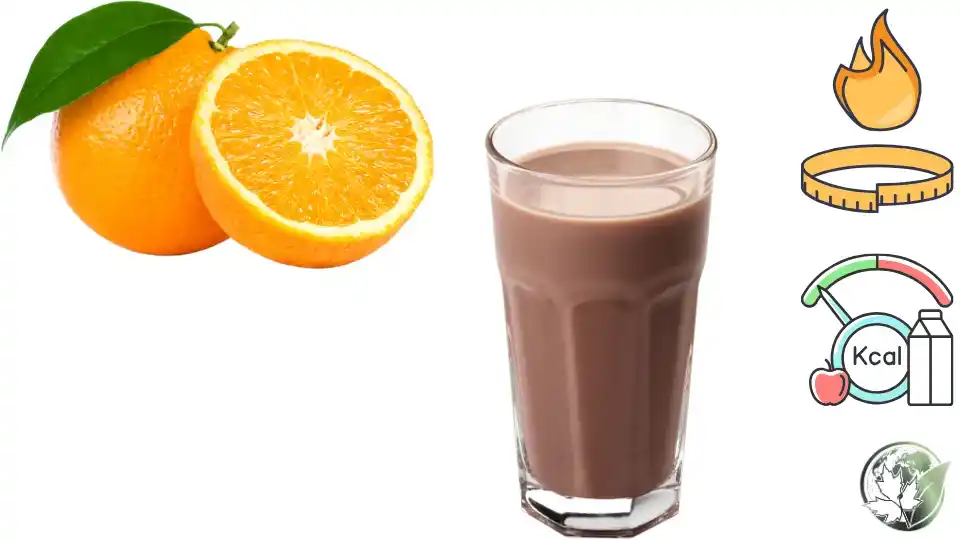
A medium orange (about 131 grams, 2 5/8 inches across) has about 62 calories. A small orange (96 g) has about 45, a large orange (184 g) about 87, and a cup of orange sections (180 g) about 85. Per 100 grams, an orange has about 47 calories. One segment weighs about 14 grams and has about 7 calories, and a round slice 1/4 inch thick (about 40 g) has about 19. Milk chocolate has about 535 calories per 100 grams, with a 10 gram square at 54 calories and a 43 gram bar at 230.
So an orange is about 11 times lower in calories than milk chocolate by weight. A medium orange has about the same calories as a bit more than a single square of chocolate, and it takes nearly four medium oranges to match the calories of a 43 gram milk chocolate bar. Oranges are about 87 percent water, which means a large part of what you eat is water that has no calories. The remaining 13 percent is carbohydrate, mainly sugar, with 3 grams of fiber, 70 milligrams of vitamin C (about 78 percent of the daily value), potassium, folate and thiamin. They have no fat or cholesterol.
Milk chocolate has the opposite profile. It is about 30 percent fat, mostly saturated, and about 52 percent sugar, with almost no vitamin C. One bar of milk chocolate can have more sugar than a medium orange has calories. But chocolate is not simply bad, and orange and chocolate are a classic pair. This guide gives the calories in oranges by size, variety, slice and weight, compares them with milk chocolate and with chocolate orange treats, covers peel, zest and marmalade, discusses sugar, weight loss and diabetes, and tells you how to choose and store oranges. There are three comparison tables and an FAQ.
A medium orange has about 62 calories, 3 grams of fiber and 70 milligrams of vitamin C
How Many Calories Are in an Orange by Size and Variety?
Oranges vary in size and sweetness, so the calories vary a little. The table is for the edible flesh.
| Orange type | Typical weight | Calories | Sugar | Fiber | Vitamin C |
|---|---|---|---|---|---|
| Small orange | 96 g | 45 kcal | 9.0 g | 2.3 g | 51 mg |
| Medium orange | 131 g | 62 kcal | 12.2 g | 3.1 g | 70 mg |
| Large orange | 184 g | 87 kcal | 17.2 g | 4.3 g | 98 mg |
| Navel orange, medium | 140 g | 69 kcal | 12 g | 3.4 g | 83 mg |
| Valencia orange, medium | 121 g | 59 kcal | 11.5 g | 2.9 g | 60 mg |
| Blood orange, medium | 140 g | 70 kcal | 13 g | 3.4 g | 68 mg |
| Cara Cara orange, medium | 140 g | 63 kcal | 11 g | 3.1 g | 82 mg |
| Seville (bitter) orange | 150 g | 70 kcal | 8 g | 4.0 g | 75 mg |
| Orange, 100 g | 100 g | 47 kcal | 9.4 g | 2.4 g | 53 mg |
| Orange, 250 g | 250 g | 118 kcal | 23.5 g | 6.0 g | 133 mg |
A typical serving is one orange, with 62 to 87 calories. Even a large orange has fewer calories than a small cookie.
How Many Calories Are in an Orange Segment, Slice and Cup?
| Portion | Weight | Calories | Sugar |
|---|---|---|---|
| 1 segment | 14 g | 7 kcal | 1.3 g |
| 3 segments | 42 g | 20 kcal | 4 g |
| 5 segments | 70 g | 33 kcal | 6.6 g |
| 1 round slice (1/4 inch) | 40 g | 19 kcal | 3.8 g |
| 1 wedge (1/8 orange) | 16 g | 8 kcal | 1.5 g |
| 1/2 orange | 65 g | 31 kcal | 6 g |
| 1 cup sections | 180 g | 85 kcal | 17 g |
| 1 tablespoon zest | 6 g | 3 kcal | 0 g |
| 1 teaspoon zest | 2 g | 1 kcal | 0 g |
| 1 tablespoon juice | 15 ml | 7 kcal | 1.3 g |
Because oranges are eaten in segments, you can count them as about 7 calories each. A plate of 10 segments has about 70 calories, which is about the same as a quarter of a chocolate bar.
Orange vs Milk Chocolate: Calories Compared
| Food | Portion | Weight | Calories | Sugar | Fat |
|---|---|---|---|---|---|
| Orange | 1 medium | 131 g | 62 kcal | 12.2 g | 0.2 g |
| Orange | 100 g | 100 g | 47 kcal | 9.4 g | 0.1 g |
| Orange | 1 cup sections | 180 g | 85 kcal | 17 g | 0.2 g |
| Milk chocolate | 1 square | 10 g | 54 kcal | 5.2 g | 3.1 g |
| Milk chocolate | 3 squares | 30 g | 161 kcal | 15.6 g | 9.0 g |
| Milk chocolate | 1 bar | 43 g | 230 kcal | 22 g | 13 g |
| Milk chocolate | 100 g | 100 g | 535 kcal | 52 g | 30 g |
| 4 medium oranges | 524 g | 524 g | 248 kcal | 49 g | 0.8 g |
| Terry's style chocolate orange segment | 1 segment (20 g) | 20 g | 105 kcal | 11 g | 6 g |
Four medium oranges, weighing more than half a kilogram, have the calories of one 43 gram chocolate bar, and they provide 12 grams of fiber and 280 milligrams of vitamin C in the bargain. The sugar is about the same in both, around 50 grams versus 22 for the bar, because oranges are much larger by weight.
Orange vs Milk Chocolate: Nutrition Compared
| Per 100 g | Orange | Milk chocolate |
|---|---|---|
| Calories | 47 kcal | 535 kcal |
| Carbohydrate | 11.8 g | 59 g |
| Sugar | 9.4 g | 52 g |
| Fiber | 2.4 g | 3.4 g |
| Protein | 0.9 g | 7.7 g |
| Fat | 0.1 g | 30 g |
| Saturated fat | 0.0 g | 18.5 g |
| Vitamin C | 53 mg | 0 mg |
| Folate | 30 mcg | 10 mcg |
| Potassium | 181 mg | 372 mg |
| Calcium | 40 mg | 189 mg |
| Water | 86 g | 1 g |
| Per 100 calories | Orange | Milk chocolate |
|---|---|---|
| Weight | 213 g | 19 g |
| Fiber | 5.1 g | 0.6 g |
| Vitamin C | 113 mg | 0 mg |
| Sugar | 20 g | 9.7 g |
| Fat | 0.2 g | 5.6 g |
For 100 calories, you can eat more than 200 grams of orange, equal to one and a half medium fruits, or less than 20 grams of milk chocolate, about two squares. The orange gives eight times as much fiber and a day's worth of vitamin C. Chocolate gives protein, calcium and flavanols, along with the pleasure of a rich texture that fruit cannot replicate.
Four medium oranges have about the same calories as one 43 gram milk chocolate bar
How Many Oranges Equal a Chocolate Bar?
| Chocolate | Calories | Equals this many medium oranges | Weight of oranges |
|---|---|---|---|
| 1 square (10 g) | 54 kcal | 0.9 | 115 g |
| 2 squares (20 g) | 108 kcal | 1.7 | 230 g |
| 1 fun size bar (17 g) | 90 kcal | 1.5 | 190 g |
| 1 standard bar (43 g) | 230 kcal | 3.7 | 490 g |
| 1 large bar (100 g) | 535 kcal | 8.6 | 1,140 g |
| 1 Terry's chocolate orange ball (157 g) | 820 kcal | 13 | 1,740 g |
This does not mean that chocolate should be avoided. It can be helpful to see that a small piece of chocolate and a whole orange have similar calories, so you can choose based on what you want. A common approach is to eat the orange first, and if you still want chocolate, have a square or two.
Are Oranges Good for Weight Loss?
Oranges are well suited to weight loss for several reasons. They have a low energy density, at 0.47 calories per gram, which allows you to eat a satisfying volume. They have fiber, 3 grams in a medium fruit, and the pectin in the pulp slows digestion and promotes fullness. They take time to peel and eat, which slows you down, and they taste sweet, which can reduce cravings. Studies on citrus fruit intake show an association with lower body weight and lower waist size, although whole fruit rather than juice is the key.
A good habit is to keep oranges on the counter and have one as a snack mid-morning or mid-afternoon, when you would otherwise reach for sweets. A medium orange before a meal can slightly reduce the amount you eat in that meal. For dessert, orange segments with a square or two of dark chocolate provide a satisfying end to a meal for under 120 calories.
Do Oranges Raise Blood Sugar?
Whole oranges have a low glycemic index of about 40 to 45 and a glycemic load of about 5 for a medium fruit. The fiber and structure of the fruit slow absorption of the sugar. Oranges are suitable for most people with diabetes as part of a balanced diet, with one medium orange counting as about 15 grams of carbohydrate, or one fruit exchange. Orange juice has a higher glycemic index of about 50 and raises blood sugar more quickly. Milk chocolate has a glycemic index around 43, but the large amount of fat and sugar in a bar makes the glycemic load higher.
Are Oranges Healthy?
Oranges are best known for vitamin C, but they provide much more. They contain folate, thiamin, potassium and a range of flavonoids including hesperidin and naringenin, and carotenoids such as beta cryptoxanthin. A diet rich in citrus fruit is associated with a lower risk of heart disease and stroke, better cognitive function in older adults and a lower risk of kidney stones due to the citrate they provide. Vitamin C helps the body absorb iron from plant foods, so eating an orange alongside beans, lentils or spinach can improve iron uptake. Oranges are also acidic, which can aggravate heartburn or mouth sores in some people, and they can wear enamel if eaten constantly, so rinsing the mouth with water after eating helps.
Peeling an orange slows eating and helps you feel full for only 62 calories
How Many Calories Are in Orange Peel, Zest, Marmalade and Candied Orange?
| Item | Serving | Calories | Notes |
|---|---|---|---|
| Orange peel, raw | 1 tablespoon (6 g) | 6 kcal | Contains fiber and oils |
| Orange peel, 100 g | 100 g | 97 kcal | Whole peel |
| Orange zest | 1 teaspoon (2 g) | 1 kcal | Flavoring |
| Orange marmalade | 1 tablespoon (20 g) | 49 kcal | Sugar added |
| Candied orange peel | 1 piece (10 g) | 32 kcal | Sugar coated |
| Chocolate-covered candied orange | 1 piece (12 g) | 55 kcal | Dark chocolate |
| Orange slice, dried | 1 slice (5 g) | 17 kcal | Concentrated |
| Orange sorbet | 1/2 cup | 120 kcal | Sweetened |
| Orange cake slice | 1 slice | 340 kcal | With sugar and butter |
| Orange cream chocolate truffle | 1 truffle (14 g) | 75 kcal | Filled |
The peel is edible but bitter, and it contains fiber, flavonoids and essential oils. Zest is a flavor booster for almost no calories, and it can reduce the sugar needed in a recipe. Marmalade, candied peel and chocolate orange treats are sweets, and their calories mostly come from sugar and fat.
How Can You Enjoy Orange and Chocolate Together With Fewer Calories?
The combination of orange and chocolate is popular. To enjoy it without a large calorie load, use orange segments as the base and a little chocolate as the accent. Dip orange segments in a spoonful of melted dark chocolate, about 10 grams, for 5 or 6 segments, giving about 90 calories. Grate orange zest over a cup of hot chocolate or a small square of chocolate. Choose dark chocolate with 70 percent cocoa, which has a stronger flavor so that a smaller portion satisfies you. Add orange slices to a yogurt with a sprinkle of cacao nibs. Avoid chocolate orange bars and candies as a daily snack, since a single ball of 157 grams has about 820 calories.
How to Choose and Store Oranges
Choose oranges that feel heavy for their size, with firm, smooth skin and a fresh citrus smell. Color is not always a sign of ripeness, since oranges can be green in warm climates and remain sweet. Avoid soft spots, mold and wrinkled skins. At room temperature, oranges keep for about a week, and in the refrigerator crisper they keep for three to four weeks. Keep them in a bowl with air circulation, and do not store them in sealed plastic bags, which encourage mold. Wash the skin before using zest, since the peel may have wax or residues.
Oranges keep for a week on the counter and three to four weeks in the refrigerator
How to Count Orange Calories Accurately
For whole fruit, count one medium orange as 62 calories. Because the peel and pith are removed, weigh the peeled fruit and use 47 calories per 100 grams, or weigh the fruit with its peel and use about 35 calories per 100 grams, since the peel is about 25 percent of the weight. For orange juice, add the calories of the juice. For chocolate, use the label, or 54 calories per 10 grams.
How Does an Orange Compare with Other Citrus Fruits?
Citrus fruits are all low in calories, and the differences come mostly from size. Per 100 grams, a lemon has 29 calories, a lime 30, a grapefruit 42, an orange 47, a tangerine 53 and a kumquat 71. Per fruit, a medium lemon has about 17, a grapefruit half about 52, an orange 62 and a large pomelo about 230 because it weighs so much. Oranges are the most popular because they are sweet, juicy and easy to eat.
| Citrus (raw) | Per 100 g | Typical fruit | Calories per fruit | Vitamin C per fruit |
|---|---|---|---|---|
| Lemon | 29 kcal | 58 g | 17 kcal | 31 mg |
| Lime | 30 kcal | 67 g | 20 kcal | 20 mg |
| Grapefruit | 42 kcal | 123 g (half) | 52 kcal | 38 mg |
| Orange | 47 kcal | 131 g | 62 kcal | 70 mg |
| Mandarin | 53 kcal | 88 g | 47 kcal | 23 mg |
| Clementine | 47 kcal | 74 g | 35 kcal | 36 mg |
| Pomelo | 38 kcal | 600 g | 228 kcal | 370 mg |
| Kumquat | 71 kcal | 19 g | 13 kcal | 7 mg |
An orange provides the highest vitamin C among the everyday citrus fruits for the lowest calories per fruit, other than lemon and lime, which are rarely eaten whole.
How Do Oranges Fit Different Diets?
Oranges fit almost every diet. They are vegan, gluten free and naturally low in fat and sodium. On a low carbohydrate diet, one orange has about 9 grams of net carbohydrate, so it is generally too high for strict ketosis but fine for moderate low carbohydrate eating. On a Mediterranean diet, citrus fruit is a staple, eaten whole and used in salads and dressings. On a low FODMAP diet, one medium orange is generally considered a safe portion. For people with kidney disease who need to limit potassium, an orange has about 237 milligrams, and the care team may advise limiting portions. During pregnancy, oranges are a source of folate and vitamin C and are widely recommended, although unpasteurized juice should be avoided.
What Is the Best Time to Eat an Orange?
There is no time of day when oranges are bad for you. Many people enjoy them in the morning with breakfast, which helps the body to absorb iron from cereals and eggs, or as an afternoon snack, when they can replace a sweet craving. Eating one an hour before exercise provides quick carbohydrate energy. At night, some people with reflux find that citrus fruit worsens symptoms, so they may prefer to eat it earlier in the evening. The calories count the same at any time.
How Do Oranges Compare with Vitamin C Supplements?
A medium orange provides about 70 milligrams of vitamin C, about 78 percent of the daily value. Studies suggest that vitamin C from food has similar bioavailability to supplements, but food comes with fiber and flavonoids that are not found in a tablet. Regular intake of vitamin C does not prevent colds in the general population, though it may shorten their duration slightly. It is difficult to get too much vitamin C from oranges, since the body excretes the excess, while very high supplement doses can cause stomach upset and may increase the risk of kidney stones in susceptible people. For most people, eating an orange or two a day is a better way to get vitamin C than a pill.
Can Dogs, Babies and Older Adults Eat Oranges?
Babies can eat oranges from around six months, once they have started solids, in small peeled and de-seeded pieces or as a juice diluted with water in small amounts, although whole fruit is preferred. Older adults benefit from the vitamin C, potassium and fiber, and the soft flesh is easy to eat, though acidity may bother some people. Dogs can eat small amounts of peeled orange as an occasional treat, but the sugar and acid mean that it should not be a regular part of the diet, and peel and seeds should be removed. The calories for a small dog would be significant, since a single segment is 7 calories on a daily intake of about 200 to 300.
Why Do Some Oranges Taste Sweeter Than Others?
Sweetness depends on the variety, the climate and how ripe the fruit was when picked. Oranges do not ripen after harvest, so fruit that was picked too early will not get sweeter on the counter. Navel and Cara Cara oranges are generally sweet with little acid, while Valencia oranges have a balance of sweetness and tartness and are often used for juice. Blood oranges are sweet with a hint of raspberry. The sugar content ranges from about 8 to 12 percent of the weight, which translates into only a few calories of difference between a sweet orange and a sour one. A sweeter-tasting orange does not necessarily have many more calories, because acidity also affects how sweet we perceive the fruit to be.
What Should You Pair With an Orange for a Complete Snack?
An orange on its own is mostly carbohydrate and water. To make a snack that keeps you full longer, pair it with protein or healthy fat. An orange and a handful of almonds (about 14 nuts) has about 180 calories, with 6 grams of protein. An orange with a cup of plain Greek yogurt has about 190 calories and 17 grams of protein. An orange with a hard boiled egg has about 135 calories. Compare these to a chocolate bar of 230 calories, which is high in sugar and fat but low in protein. All of these combinations give a better balance of nutrients and keep you full for longer than the fruit or chocolate alone.
| Snack | Calories | Protein | Fiber |
|---|---|---|---|
| 1 orange | 62 kcal | 1.2 g | 3.1 g |
| 1 orange and 14 almonds | 162 kcal | 6.2 g | 6.6 g |
| 1 orange and 170 g Greek yogurt | 160 kcal | 18 g | 3.1 g |
| 1 orange and 1 boiled egg | 134 kcal | 7.3 g | 3.1 g |
| 1 orange and 2 squares dark chocolate | 170 kcal | 2.5 g | 4.5 g |
| 1 milk chocolate bar (43 g) | 230 kcal | 3.3 g | 1.5 g |
Key Takeaways: Orange Calories vs Milk Chocolate
A medium orange has about 62 calories and 100 grams has 47, against 535 per 100 grams for milk chocolate. It takes nearly four oranges to match a 43 gram bar. Oranges add fiber and vitamin C, so eat the fruit for volume and enjoy chocolate in small pieces.
Frequently Asked Questions
6 questions answered
How many calories are in a medium orange?
About 62.
How many calories are in 100 grams of orange?
About 47.
Does an orange have fewer calories than milk chocolate?
Yes, about 11 times fewer per gram.
How many oranges equal a chocolate bar?
About 3.7 medium oranges equal a 43 gram bar.
How many calories are in an orange segment?
About 7.
Is orange juice as low in calories as the fruit?
Per gram yes, but a glass uses several oranges, so it has more calories.