How Many Calories Are in Mustard? The Quick Answer
Yellow mustard has about 3 calories per teaspoon (5 grams), about 9 per tablespoon (15 grams) and about 60 calories per 100 grams. Dijon mustard has about 5 calories per teaspoon, 15 per tablespoon and 66 per 100 grams. Whole grain mustard has about 15 to 20 calories per tablespoon, and honey mustard about 45 to 60. Butter has about 34 calories per teaspoon, 102 per tablespoon and 717 per 100 grams.
Plain mustard therefore has about 11 times fewer calories than butter per tablespoon, and about 12 times fewer per 100 grams. The reason is simple: butter is 80 percent fat, which has 9 calories per gram, while mustard is mostly water, vinegar and ground mustard seed, with almost no fat. A tablespoon of mustard has about 0.5 gram of fat, and a tablespoon of butter has 11.5 grams. For people who spread, dip or season with butter every day, replacing it with mustard where the flavor allows is one of the largest calorie savings in the kitchen, at about 90 calories per tablespoon.
Mustard is a condiment, which means it is eaten in small amounts, so its calories are rarely a problem. The exceptions are honey mustard and mustard-based dressings, which have added sugar and oil, and mustard oil, which is pure fat. This guide gives the calories in mustard by teaspoon, tablespoon and 100 grams for every common type, compares them with butter, and covers mustard seeds and powder, honey mustard, mustard sauces and dressings, sandwiches and hot dogs, nutrition, sodium, health effects, and ways to use mustard to replace butter and mayonnaise. There are three comparison tables and an FAQ.
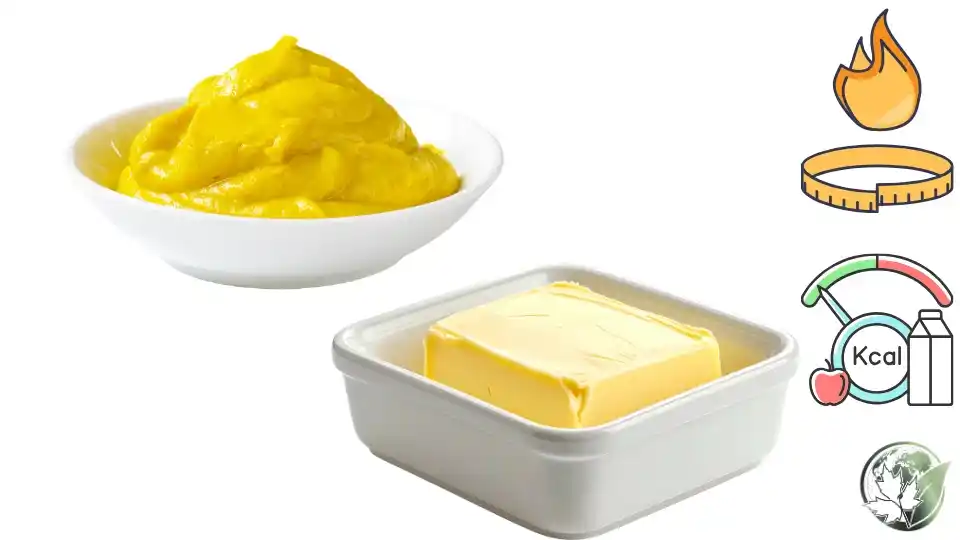
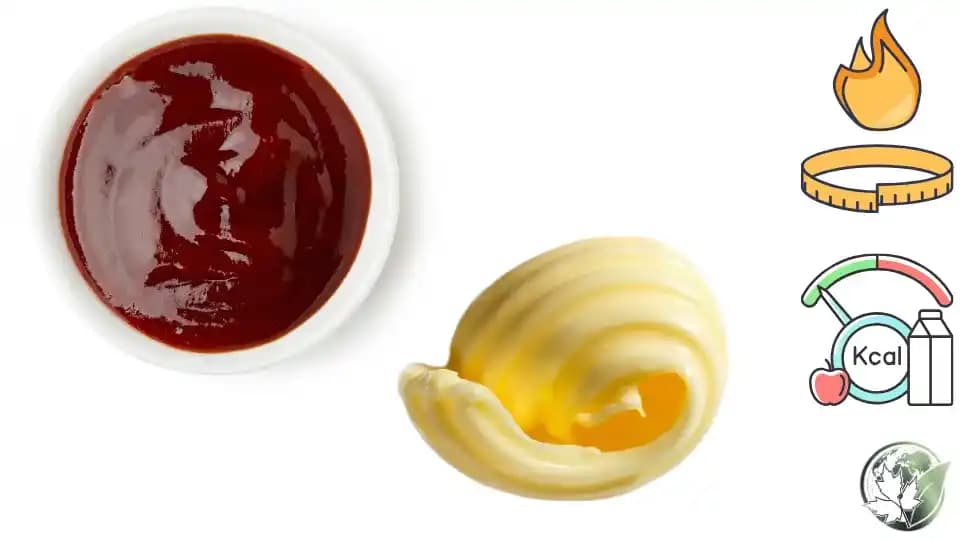
A tablespoon of yellow mustard has only about 9 calories
How Many Calories Are in Mustard by Teaspoon, Tablespoon and Weight?
The table is for classic prepared yellow mustard, the kind used on hot dogs.
| Portion | Weight | Calories | Fat | Carbs | Sodium |
|---|---|---|---|---|---|
| 1 packet (single serve) | 5 g | 3 kcal | 0.2 g | 0.3 g | 55 mg |
| 1 teaspoon | 5 g | 3 kcal | 0.2 g | 0.3 g | 57 mg |
| 1 tablespoon | 15 g | 9 kcal | 0.5 g | 0.8 g | 170 mg |
| 2 tablespoons | 30 g | 18 kcal | 1.0 g | 1.6 g | 340 mg |
| 1/4 cup | 62 g | 37 kcal | 2.0 g | 3.3 g | 700 mg |
| 1/2 cup | 125 g | 75 kcal | 4.1 g | 6.6 g | 1,400 mg |
| 1 cup | 250 g | 150 kcal | 8.2 g | 13 g | 2,800 mg |
| 100 g | 100 g | 60 kcal | 3.3 g | 5.3 g | 1,120 mg |
| 1 squeeze bottle (8 oz) | 226 g | 136 kcal | 7.5 g | 12 g | 2,530 mg |
A typical hot dog or burger gets one teaspoon to one tablespoon of mustard, or 3 to 9 calories. Even a whole 8 ounce squeeze bottle of yellow mustard has only about 136 calories, which is about the same as a single tablespoon and a half of butter.
How Many Calories Are in Different Types of Mustard?
Mustard comes in many styles. Differences in calories are small, except for sweetened and oil-based types.
| Type (1 tablespoon) | Calories | Fat | Sugar | Notes |
|---|---|---|---|---|
| Yellow mustard | 9 kcal | 0.5 g | 0.1 g | Mild, turmeric colored |
| Dijon mustard | 15 kcal | 0.9 g | 0.1 g | Sharper, white wine |
| Whole grain mustard | 15 to 20 kcal | 1.0 g | 0.2 g | Seeds left whole |
| Stone ground mustard | 15 kcal | 1.0 g | 0.1 g | Coarse |
| Spicy brown mustard | 14 kcal | 0.8 g | 0.2 g | Deli style |
| English mustard (prepared) | 20 kcal | 1.1 g | 0.5 g | Very hot |
| Chinese hot mustard | 12 kcal | 0.7 g | 0.1 g | Made with water |
| Honey mustard | 45 to 60 kcal | 2.5 g | 6.0 g | Honey and often mayonnaise |
| Honey Dijon | 35 kcal | 1.0 g | 5.0 g | Lighter honey mustard |
| Mustard and mayonnaise sauce | 70 kcal | 7.0 g | 0.5 g | Half and half |
| Mustard vinaigrette | 60 kcal | 6.5 g | 0.5 g | Oil based |
| Mustard powder | 10 kcal (1 tsp, 3 g) | 0.6 g | 0 g | Dry spice |
Yellow mustard is the lightest at about 9 calories, while Dijon and whole grain have a little more because they have more mustard seed and less water. Honey mustard has up to six times the calories of Dijon, since it is sweetened and often thickened with mayonnaise.
Mustard vs Butter: Calories Compared
| Food | Portion | Weight | Calories | Fat | Saturated fat |
|---|---|---|---|---|---|
| Yellow mustard | 1 teaspoon | 5 g | 3 kcal | 0.2 g | 0.0 g |
| Yellow mustard | 1 tablespoon | 15 g | 9 kcal | 0.5 g | 0.0 g |
| Dijon mustard | 1 tablespoon | 15 g | 15 kcal | 0.9 g | 0.1 g |
| Honey mustard | 1 tablespoon | 15 g | 50 kcal | 2.5 g | 0.3 g |
| Butter | 1 teaspoon | 4.7 g | 34 kcal | 3.8 g | 2.4 g |
| Butter | 1 tablespoon | 14 g | 102 kcal | 11.5 g | 7.3 g |
| Butter | 1 pat | 5 g | 36 kcal | 4.1 g | 2.5 g |
| Butter | 100 g | 100 g | 717 kcal | 81 g | 51 g |
| Yellow mustard | 100 g | 100 g | 60 kcal | 3.3 g | 0.2 g |
| Butter equal to a hot dog bun spread | 1 tbsp | 14 g | 102 kcal | 11.5 g | 7.3 g |
One tablespoon of butter has the same calories as 11 tablespoons of yellow mustard, or 7 tablespoons of Dijon, or 2 tablespoons of honey mustard. If you replace a tablespoon of butter with a tablespoon of yellow mustard, you save 93 calories and 7 grams of saturated fat.
Mustard vs Butter: Nutrition Compared
| Per 100 g | Yellow mustard | Dijon mustard | Butter |
|---|---|---|---|
| Calories | 60 kcal | 66 kcal | 717 kcal |
| Fat | 3.3 g | 3.6 g | 81 g |
| Saturated fat | 0.2 g | 0.2 g | 51 g |
| Carbohydrate | 5.3 g | 5.8 g | 0.1 g |
| Protein | 3.7 g | 4.0 g | 0.9 g |
| Fiber | 4.0 g | 3.3 g | 0 g |
| Cholesterol | 0 mg | 0 mg | 215 mg |
| Sodium | 1,120 mg | 1,200 mg | 643 mg |
| Selenium | 29 mcg | 30 mcg | 1 mcg |
| Water | 83 g | 80 g | 16 g |
Mustard is lower in calories and fat and has no cholesterol. It is higher in sodium per 100 grams, but a typical serving is only a teaspoon or two, which has about 57 to 114 milligrams, while butter's sodium in a tablespoon is 90. The selenium in mustard seed is a bonus, as it supports thyroid and antioxidant functions.
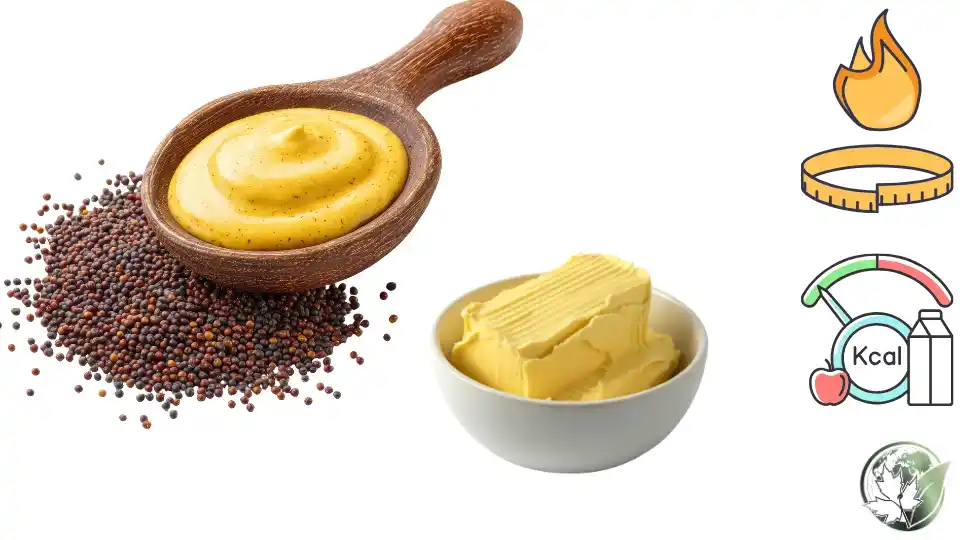
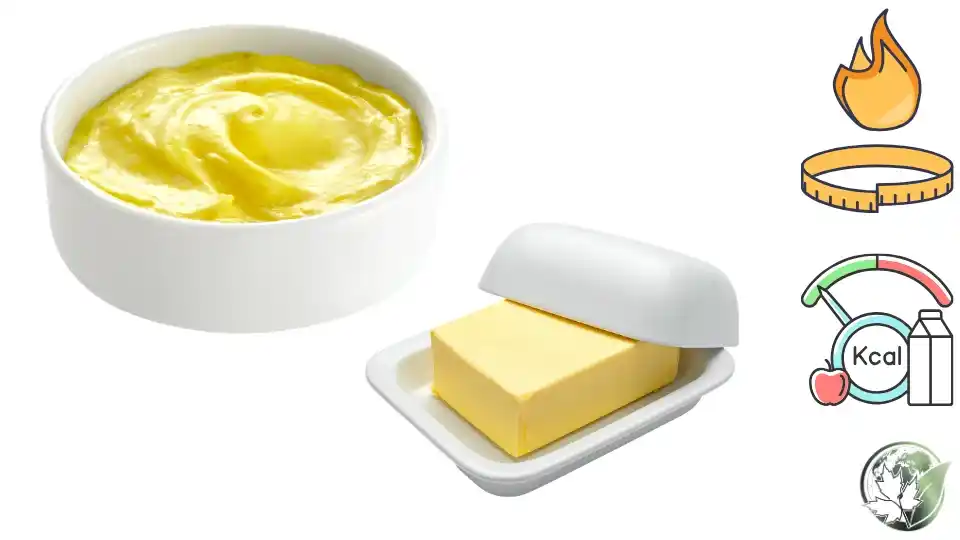
Dijon mustard has about 15 calories per tablespoon, a seventh of the calories of butter
Is Mustard Healthy?
Mustard is a low calorie way to add flavor, and plain mustard has some potentially beneficial compounds. Mustard seeds contain glucosinolates, the same family of sulfur compounds found in broccoli, cabbage and horseradish. When the seed is crushed and mixed with liquid, an enzyme called myrosinase converts them into isothiocyanates, which give mustard its pungent taste and which have been studied for anti-inflammatory and anti-cancer properties. Mustard also provides small amounts of selenium, magnesium, calcium and omega-3 fatty acids. Turmeric, which gives yellow mustard its color, contains curcumin, though the amounts in a teaspoon of mustard are small.
The main nutritional concern is sodium. A tablespoon of yellow mustard has about 170 milligrams, which is 7 percent of the daily limit of 2,300 milligrams. People who are watching their sodium should use mustard sparingly or choose lower sodium products. Mustard is also very low in sugar, unlike ketchup, which has about 4 grams per tablespoon, and unlike barbecue sauce or honey mustard, which can have 6 to 10.
Some people are allergic to mustard, which is one of the major allergens in Europe, Canada and elsewhere. Reactions can range from itching and hives to severe anaphylaxis, so people with a known allergy must check labels carefully, as mustard is found in many sauces, dressings, spice blends, soups and processed meats.
Is Mustard Good for Weight Loss?
Yes, as a replacement for higher calorie condiments. Mustard adds a lot of flavor for very few calories, which makes plain food more interesting without adding fat. Some small studies have suggested that mustard may slightly increase metabolic rate for a short time after eating, but the effect is too small to matter for weight loss. Its real value is substitution.
| Swap | Original | Calories | Mustard version | Calories | Saved |
|---|---|---|---|---|---|
| Sandwich spread | 1 tbsp mayonnaise | 94 kcal | 1 tbsp yellow mustard | 9 kcal | 85 kcal |
| Toast topping | 1 tbsp butter | 102 kcal | 1 tbsp Dijon | 15 kcal | 87 kcal |
| Burger sauce | 2 tbsp special sauce | 150 kcal | 1 tbsp mustard | 9 kcal | 141 kcal |
| Salad dressing | 2 tbsp ranch | 129 kcal | 2 tsp Dijon with lemon | 10 kcal | 119 kcal |
| Roast chicken glaze | 2 tbsp butter | 204 kcal | 2 tbsp Dijon | 30 kcal | 174 kcal |
| Hot dog topping | 1 tbsp ketchup | 17 kcal | 1 tbsp mustard | 9 kcal | 8 kcal |
| Potato topping | 1 tbsp butter | 102 kcal | 1 tbsp whole grain mustard | 17 kcal | 85 kcal |
Swapping mayonnaise for mustard on a daily sandwich saves about 85 calories each day, or roughly 31,000 calories over a year. It is a simple change that does not remove foods from the diet.
A line of yellow mustard on a hot dog adds only 3 to 9 calories
How Many Calories Are in Foods Made with Mustard?
| Dish or sauce | Serving | Calories | Notes |
|---|---|---|---|
| Hot dog with mustard | 1 hot dog and bun | 280 kcal | 1 tsp mustard |
| Ham sandwich with mustard | 1 sandwich | 290 kcal | Lean ham |
| Pretzel with mustard | 1 soft pretzel | 340 kcal | 2 tbsp mustard |
| Honey mustard dipping sauce | 2 tbsp | 100 kcal | Sweetened |
| Honey mustard dressing | 2 tbsp | 130 kcal | Creamy |
| Mustard vinaigrette | 2 tbsp | 120 kcal | With oil |
| Mustard cream sauce | 1/4 cup | 140 kcal | With cream |
| Potato salad with mustard | 1/2 cup | 170 kcal | With mayonnaise |
| Deviled eggs | 2 halves | 130 kcal | Mustard and mayonnaise |
| Mustard glazed salmon | 1 fillet | 320 kcal | Honey and Dijon |
| Mustard greens, cooked | 1 cup | 21 kcal | A different food |
Mustard itself adds so few calories that the other ingredients nearly always determine the total.
How Many Calories Are in Mustard Seeds, Powder and Mustard Oil?
The raw ingredients for mustard are far more energy dense than the prepared condiment, because they have not been diluted with water and vinegar.
| Product | Serving | Calories | Fat |
|---|---|---|---|
| Yellow mustard seeds | 1 teaspoon (5 g) | 24 kcal | 1.4 g |
| Yellow mustard seeds | 1 tablespoon (11 g) | 52 kcal | 3.1 g |
| Black mustard seeds | 1 teaspoon (5 g) | 25 kcal | 1.6 g |
| Mustard powder | 1 teaspoon (3 g) | 15 kcal | 0.8 g |
| Mustard seeds | 100 g | 469 kcal | 28 g |
| Mustard oil | 1 tablespoon (14 g) | 124 kcal | 14 g |
| Mustard oil | 1 teaspoon (4.5 g) | 40 kcal | 4.5 g |
| Mustard greens, raw | 1 cup (56 g) | 15 kcal | 0.2 g |
Mustard seeds are used in cooking, pickling and in Indian dishes, where they are fried in a little oil at the start of a recipe. Mustard oil is pure fat, with about 124 calories per tablespoon, and it is used in Indian and Bangladeshi cooking. It has more calories than butter per tablespoon, so it should be measured. Mustard oil also contains a high level of erucic acid, and is sold in some countries only for external use, so check local regulations and labels.
How Do You Make Mustard at Home and What Are the Calories?
Homemade mustard is easy. Soak 1/4 cup of mustard seeds in 1/4 cup of vinegar or beer overnight, add 1/4 cup of water, a teaspoon of salt and optional spices or a teaspoon of honey, blend to the texture you like, and rest it for a day or two so the bitterness fades. The result has about 15 to 20 calories per tablespoon, depending on the seeds and sweetener. You control the sodium and can avoid added sugar. It keeps for several months in the refrigerator.
How Can You Use Mustard to Replace Butter and Mayonnaise?
Mustard is one of the most versatile tools for cutting fat. Spread a thin layer on sandwiches instead of butter or mayonnaise. Whisk a teaspoon of Dijon into a vinaigrette, where it also acts as an emulsifier that helps oil and vinegar stay mixed, so you can use less oil. Brush it on chicken, pork or fish before roasting for a crisp, flavorful crust. Stir a spoonful into mashed potatoes or a sauce for tang. Mix it with plain Greek yogurt for a creamy, low calorie dip with about 12 calories per tablespoon. Use it in marinades, where it helps tenderize and add flavor. In each case, you add flavor with a few calories instead of tens or hundreds.
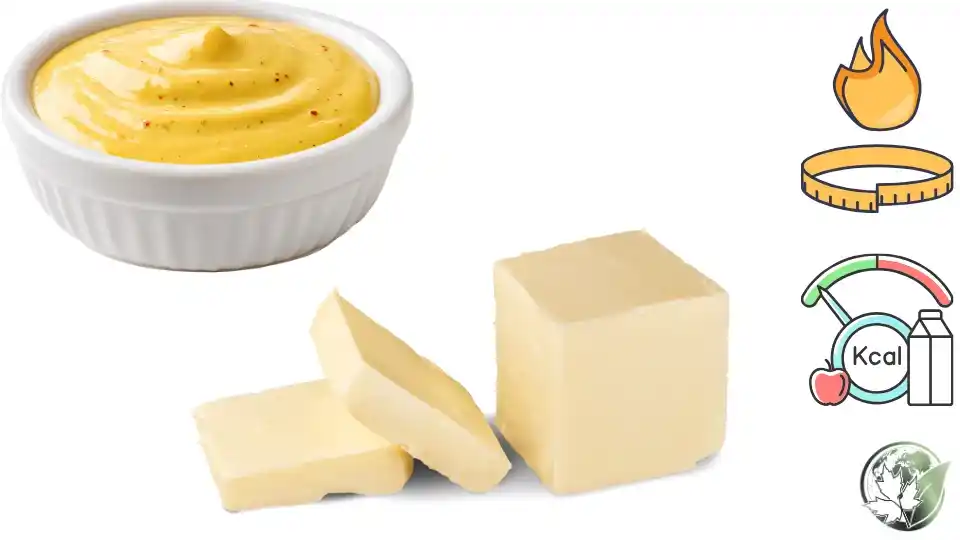
Mustard mixed with Greek yogurt makes a creamy sauce with about 12 calories per tablespoon
How to Count Mustard Calories Accurately
For yellow mustard, you can count 3 calories per teaspoon and 9 per tablespoon, or ignore it if you use less than a tablespoon. For Dijon and whole grain, use 15 per tablespoon. For honey mustard and mustard-based sauces, always check the label, as the sugar and oil can bring a spoonful to 50 or more. Butter should be measured, because a casual swipe of a knife can add 1 to 2 teaspoons, or 34 to 68 calories.
How Long Does Mustard Keep?
Unopened mustard keeps for a year or more in the pantry. Once opened, store it in the refrigerator, where it keeps its flavor for one to two years, although the color may darken and the heat fade over time. Dijon and whole grain mustards are best used within a year. Homemade mustard keeps for several months in the refrigerator. If you see mold, or notice a sour smell, throw it away.
How Does Mustard Compare with Other Condiments?
Among table condiments, mustard is one of the lightest, along with hot sauce, vinegar and soy sauce. The table compares one tablespoon of each, which is a typical serving.
| Condiment (1 tablespoon) | Calories | Sugar | Fat | Sodium |
|---|---|---|---|---|
| Hot sauce | 1 kcal | 0 g | 0 g | 124 mg |
| Vinegar | 3 kcal | 0 g | 0 g | 1 mg |
| Soy sauce | 8 kcal | 0.1 g | 0 g | 879 mg |
| Yellow mustard | 9 kcal | 0.1 g | 0.5 g | 170 mg |
| Dijon mustard | 15 kcal | 0.1 g | 0.9 g | 360 mg |
| Salsa | 5 kcal | 0.8 g | 0 g | 120 mg |
| Ketchup | 17 kcal | 3.7 g | 0 g | 154 mg |
| Barbecue sauce | 29 kcal | 5.5 g | 0.1 g | 175 mg |
| Honey mustard | 50 kcal | 6.0 g | 2.5 g | 130 mg |
| Ranch dressing | 65 kcal | 0.7 g | 7.0 g | 135 mg |
| Mayonnaise | 94 kcal | 0.1 g | 10.3 g | 88 mg |
| Butter | 102 kcal | 0 g | 11.5 g | 90 mg |
Mustard is a better choice than ketchup and barbecue sauce if you want to avoid added sugar, and better than mayonnaise and butter if you want to avoid fat. Dijon has more sodium than yellow mustard, so it may not be the best choice for a low sodium diet.
Why Is Mustard So Low in Calories?
Prepared mustard is mostly water and vinegar, with ground mustard seed as the main solid ingredient. The seed itself is rich in oil, about 28 percent, but a tablespoon of prepared mustard contains only a small amount of ground seed, about 2 to 3 grams, so the fat that reaches your plate is about half a gram. Prepared mustard has no added oil or sugar in most traditional recipes. The pungency comes from the compounds formed when the crushed seed meets water, not from calories, which is why a very hot English mustard can have fewer calories than a mild sauce with mayonnaise.
What Makes Mustard Hot, and Does Heat Change the Calories?
The heat of mustard comes from the isothiocyanates formed when the enzyme myrosinase acts on glucosinolates in the crushed seed. Cold water and vinegar influence how hot the result is: cold water gives a stronger heat, while vinegar and heat stop the enzyme and produce a milder, more stable mustard. This is why Dijon, which is made with wine or acidic verjuice, is milder than freshly mixed English mustard. Cooking mustard in a sauce loses much of its pungency, so it is often added at the end. None of this changes the calories, which are determined by the ingredients and not by the heat.
What Are Some Easy Low Calorie Mustard Recipes?
A simple honey mustard that is lower in sugar can be made with equal parts Dijon mustard and plain Greek yogurt with a teaspoon of honey, which gives about 20 calories per tablespoon, compared with 50 for store-bought. A mustard vinaigrette can be made with 1 tablespoon of Dijon, 1 tablespoon of lemon juice, 1 tablespoon of olive oil and a pinch of salt, for about 70 calories in total, or 23 per teaspoon. For a sandwich spread, mix a teaspoon of whole grain mustard with a tablespoon of hummus, for about 35 calories. For a glaze, mix 2 tablespoons of Dijon mustard with a teaspoon of honey and brush it over chicken thighs before roasting.
Can Mustard Be Used for Health Remedies?
Mustard is sometimes mentioned as a home remedy. A teaspoon of yellow mustard is a folk remedy for muscle cramps, and a few small studies suggest that the acetic acid in vinegar-based condiments may help, although the evidence is limited. Mustard plasters and mustard baths were once used for chest congestion, but they can burn the skin and are not recommended. Mustard will not cure any disease, so enjoy it for flavor. If you take medicines for blood pressure or have kidney disease, remember the sodium in a condiment you may use daily.
How Many Calories Can You Save With Mustard in a Week?
Small daily swaps add up. A person who uses a tablespoon of mayonnaise on a daily lunch sandwich and replaces it with a tablespoon of mustard saves 85 calories a day, or 595 a week. A person who puts a tablespoon of butter on a baked potato four times a week and uses Dijon instead saves about 350 calories a week. Replacing 2 tablespoons of ranch dressing on a salad with a mustard vinaigrette at 60 calories saves about 70 calories each time. Together these could save around 1,000 calories a week, equal to about 140 grams of body fat over a month, without drastically changing what you eat.
Key Takeaways: Mustard Calories vs Butter
Yellow mustard has about 3 calories per teaspoon and 9 per tablespoon, Dijon about 15 per tablespoon, against 34 and 102 for butter. Mustard has about a tenth of the calories and none of the saturated fat. Honey mustard is the exception at 45 to 60 per tablespoon. Use mustard in place of butter and mayonnaise to add flavor with very few calories.
Frequently Asked Questions
6 questions answered
How many calories are in a tablespoon of mustard?
About 9 for yellow and 15 for Dijon.
Does mustard have fewer calories than butter?
Yes, about 11 times fewer per tablespoon.
How many calories are in honey mustard?
About 45 to 60 per tablespoon.
Is mustard good for weight loss?
Yes, as a replacement for mayonnaise and butter.
How many calories are in mustard seeds?
About 24 per teaspoon.
Is mustard high in sodium?
A tablespoon has about 170 milligrams, so use it in moderation.