How Many Calories Are in Milk? The Quick Answer
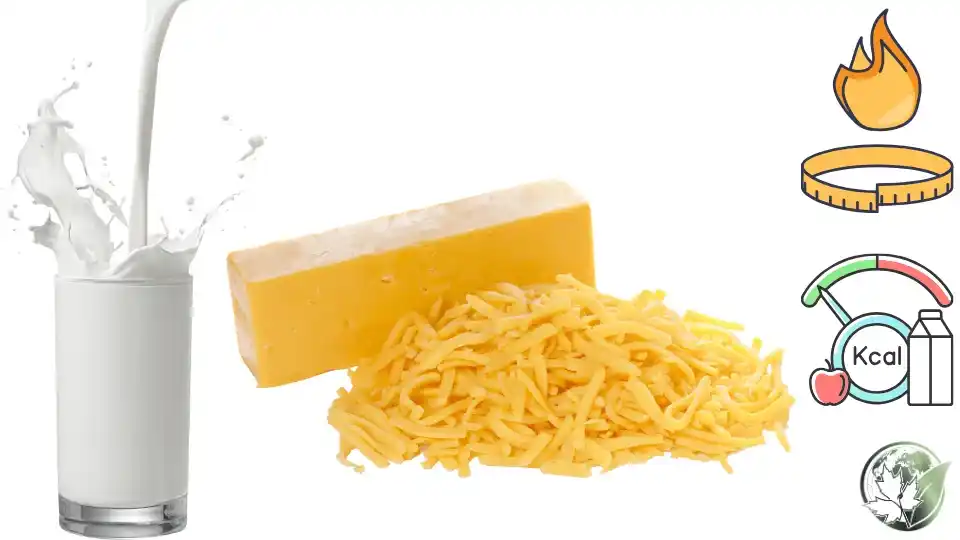
A cup (244 grams, 240 ml) of whole milk has about 149 calories, and 100 milliliters has about 61. A cup of 2 percent reduced-fat milk has about 122, 1 percent low-fat milk about 102 and skim (fat-free) milk about 83. A standard 200 ml glass of whole milk has about 122 calories. Cheddar cheese has about 403 calories per 100 grams, with an ounce (28 grams) at 113 calories, a thin slice (21 grams) at about 85 and a cup of shredded cheese (113 grams) at about 455.
Per gram, cheddar has about 6.6 times as many calories as whole milk, because cheese is concentrated milk. It takes about 10 liters of milk to make 1 kilogram of cheddar. Milk is about 87 percent water, while cheddar is about 37 percent water, and nearly all the water is removed, leaving the fat, protein and minerals. That is why a single ounce of cheddar has nearly the calories of three quarters of a cup of milk, and a single slice has the calories of about half a cup.
Neither is simply better or worse. Milk is a drink that delivers calcium, protein, potassium, vitamin D (when fortified), vitamin B12 and riboflavin at a modest calorie cost. Cheddar delivers more protein and calcium per bite but also more saturated fat and sodium. This guide covers the calories in milk by cup, glass, 100 milliliters and fat level, compares them with cheddar by slice, ounce and weight, and covers plant milks, goat milk, flavored milk, nutrients, weight loss, lactose and how to count dairy accurately. There are three comparison tables and an FAQ.
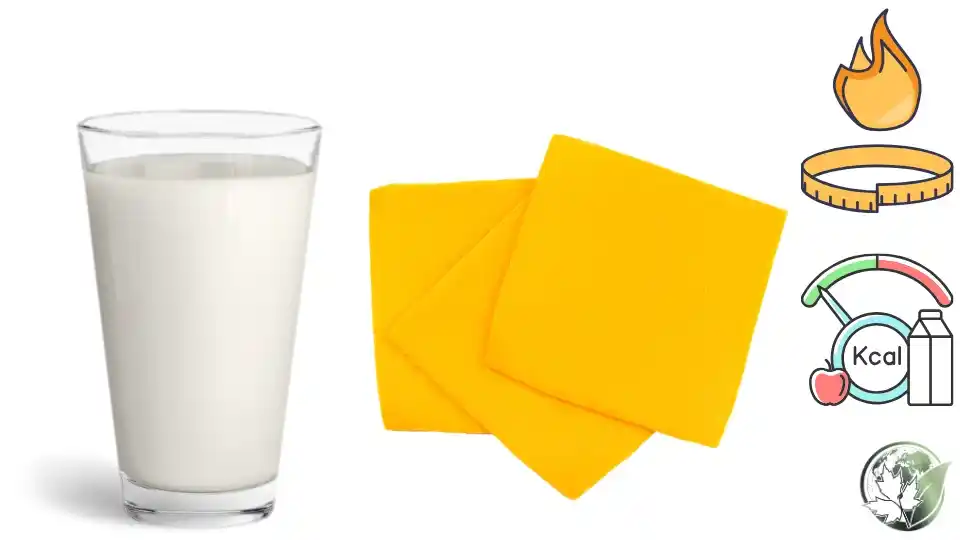
A cup of whole milk has about 149 calories and 8 grams of protein
How Many Calories Are in Milk by Cup, Glass and Fat Level?
The fat level is what changes the calories, since protein, lactose and calcium are almost the same in every type of cow's milk.
| Milk type (1 cup, 244 g) | Calories | Fat | Protein | Carbs | Calcium |
|---|---|---|---|---|---|
| Whole milk (3.25% fat) | 149 kcal | 7.9 g | 7.7 g | 11.7 g | 276 mg |
| 2% reduced-fat milk | 122 kcal | 4.8 g | 8.1 g | 11.7 g | 293 mg |
| 1% low-fat milk | 102 kcal | 2.4 g | 8.2 g | 12.2 g | 305 mg |
| Skim milk (fat free) | 83 kcal | 0.2 g | 8.3 g | 12.2 g | 299 mg |
| Lactose-free whole milk | 150 kcal | 8.0 g | 8.0 g | 12.0 g | 300 mg |
| Lactose-free 2% milk | 130 kcal | 5.0 g | 8.0 g | 13.0 g | 300 mg |
| Buttermilk, low fat | 98 kcal | 2.2 g | 8.1 g | 11.7 g | 284 mg |
| Goat milk | 168 kcal | 10.1 g | 8.7 g | 10.9 g | 327 mg |
| Evaporated milk, whole | 338 kcal | 19 g | 17 g | 25 g | 658 mg |
| Sweetened condensed milk | 982 kcal | 27 g | 24 g | 166 g | 869 mg |
A cup of skim milk has about 66 fewer calories than a cup of whole milk, a saving of 44 percent. Both have the same amount of protein and calcium. Evaporated and condensed milk are concentrated, so a cup has many times the calories of fresh milk, although they are typically used in tablespoons.
How Many Calories Are in Milk by Volume and Common Portions?
| Portion | Whole milk | 2% milk | Skim milk |
|---|---|---|---|
| 1 tablespoon (15 ml) | 9 kcal | 8 kcal | 5 kcal |
| 1 splash in coffee (30 ml) | 18 kcal | 15 kcal | 10 kcal |
| 100 ml | 61 kcal | 50 kcal | 34 kcal |
| 1 small glass (150 ml) | 92 kcal | 75 kcal | 51 kcal |
| 1 glass (200 ml) | 122 kcal | 100 kcal | 68 kcal |
| 1 cup (240 ml) | 149 kcal | 122 kcal | 83 kcal |
| 1 large glass (300 ml) | 183 kcal | 150 kcal | 102 kcal |
| 500 ml | 305 kcal | 250 kcal | 170 kcal |
| 1 liter | 610 kcal | 500 kcal | 340 kcal |
| 1 gallon (3.8 liters) | 2,300 kcal | 1,900 kcal | 1,300 kcal |
A liter of whole milk has about 610 calories, which is more than many people realize when they pour a glass at breakfast, a bowl of cereal and milk in coffee. Three cups a day of whole milk, the amount recommended in some guidelines, provides about 450 calories.
How Many Calories Are in Cheddar Cheese?
| Cheddar portion | Weight | Calories | Fat | Protein | Calcium |
|---|---|---|---|---|---|
| 1 thin slice | 21 g | 85 kcal | 7.0 g | 5.3 g | 149 mg |
| 1 slice (deli) | 28 g | 113 kcal | 9.3 g | 7.0 g | 200 mg |
| 1 cube (1 inch) | 17 g | 69 kcal | 5.7 g | 4.3 g | 122 mg |
| 1 ounce | 28 g | 113 kcal | 9.3 g | 7.0 g | 200 mg |
| 1 tablespoon shredded | 7 g | 28 kcal | 2.3 g | 1.8 g | 50 mg |
| 1/4 cup shredded | 28 g | 113 kcal | 9.3 g | 7.0 g | 200 mg |
| 1 cup shredded | 113 g | 455 kcal | 37.5 g | 28.3 g | 815 mg |
| 100 g | 100 g | 403 kcal | 33.1 g | 24.9 g | 721 mg |
| Reduced-fat cheddar, 1 oz | 28 g | 78 kcal | 4.9 g | 8.0 g | 230 mg |
| Cheddar string cheese stick | 28 g | 80 kcal | 6.0 g | 7.0 g | 200 mg |
A typical sandwich slice of cheddar has 85 to 113 calories. A burger topped with two slices has an extra 170 to 226 calories. On a cheese platter, a generous serving of four ounces would add up to 452 calories.
Milk vs Cheddar Cheese: Calories Compared
| Food | Portion | Weight | Calories | Protein | Calcium |
|---|---|---|---|---|---|
| Whole milk | 1 cup | 244 g | 149 kcal | 7.7 g | 276 mg |
| Whole milk | 100 g | 100 g | 61 kcal | 3.2 g | 113 mg |
| Skim milk | 1 cup | 245 g | 83 kcal | 8.3 g | 299 mg |
| Cheddar | 1 ounce | 28 g | 113 kcal | 7.0 g | 200 mg |
| Cheddar | 1 slice | 21 g | 85 kcal | 5.3 g | 149 mg |
| Cheddar | 100 g | 100 g | 403 kcal | 24.9 g | 721 mg |
| 1 cup whole milk | equals | 1.3 oz cheddar | 149 kcal | 9.2 g | 265 mg |
| 1 oz cheddar | equals | 0.76 cup whole milk | 113 kcal | 5.9 g | 210 mg |
For the same calories, a cup of whole milk (149) is roughly equal to 1.3 ounces of cheddar (147), and they give similar amounts of protein and calcium. That means that the two foods are about equal in calories for the nutrients they give. Where they differ is in volume: a cup of milk is a satisfying drink, and 1.3 ounces of cheddar is a small piece, so milk fills the stomach more.
Milk vs Cheddar Cheese: Nutrition Compared
| Per 100 g | Whole milk | Cheddar |
|---|---|---|
| Calories | 61 kcal | 403 kcal |
| Fat | 3.3 g | 33.1 g |
| Saturated fat | 1.9 g | 21.1 g |
| Protein | 3.2 g | 24.9 g |
| Carbohydrate | 4.8 g | 1.3 g |
| Sugar (lactose) | 5.1 g | 0.5 g |
| Calcium | 113 mg | 721 mg |
| Sodium | 43 mg | 653 mg |
| Cholesterol | 10 mg | 105 mg |
| Vitamin B12 | 0.45 mcg | 1.1 mcg |
| Water | 88 g | 37 g |
| Per 100 calories | Whole milk | Cheddar |
|---|---|---|
| Weight | 164 g | 25 g |
| Protein | 5.2 g | 6.2 g |
| Calcium | 185 mg | 179 mg |
| Fat | 5.4 g | 8.2 g |
| Sodium | 70 mg | 162 mg |
| Lactose | 8.4 g | 0.1 g |
For 100 calories, whole milk provides slightly less protein, a bit more calcium, a third less fat and less than half the sodium of cheddar, with a much larger volume to eat. Cheddar has almost no lactose, which makes it suitable for many people who are lactose intolerant, while milk has about 12 grams per cup.
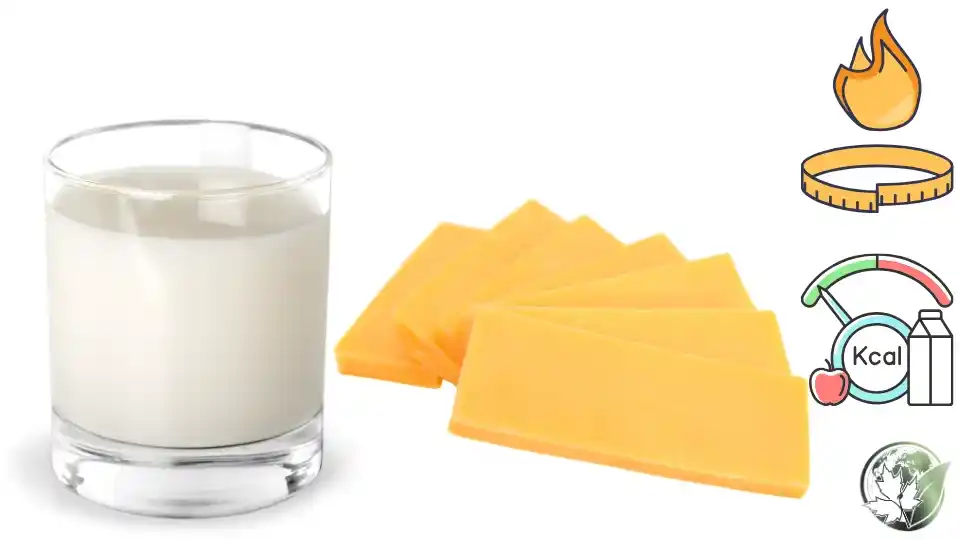
One cup of whole milk and 1.3 ounces of cheddar have about the same calories and similar calcium
Is Milk or Cheddar Better for Weight Loss?
For weight loss, milk is easier to portion and more filling for its calories. A glass of skim milk has 83 calories and 8 grams of protein, which is a lot of protein for the energy. Cheese is calorie dense and easy to overeat, since a few slices and a handful of cubes can add 400 calories. However, cheese is also satiating, and a small portion of about an ounce can make a snack or a salad much more satisfying. Studies on dairy and body weight suggest that dairy products as part of a calorie-controlled diet are neutral to mildly helpful for weight loss, mostly because of the protein.
If you want the benefits of dairy with the least energy, choose skim or 1 percent milk, plain low fat yogurt and small portions of strongly flavored cheeses such as sharp cheddar or parmesan, where a little goes a long way. A tablespoon of grated parmesan has 22 calories, and it adds plenty of flavor to a dish.
| Dairy choice | Serving | Calories | Protein | Calcium |
|---|---|---|---|---|
| Skim milk | 1 cup | 83 kcal | 8.3 g | 299 mg |
| 2% milk | 1 cup | 122 kcal | 8.1 g | 293 mg |
| Plain nonfat yogurt | 1 cup | 137 kcal | 14.0 g | 488 mg |
| Cottage cheese, low fat | 1/2 cup | 90 kcal | 12.0 g | 69 mg |
| Cheddar | 1 oz | 113 kcal | 7.0 g | 200 mg |
| Mozzarella, part skim | 1 oz | 72 kcal | 6.9 g | 222 mg |
| Parmesan, grated | 1 tbsp | 22 kcal | 2.0 g | 55 mg |
| Cream cheese | 1 tbsp | 50 kcal | 0.9 g | 14 mg |
How Does Milk Compare with Plant Milks?
Plant-based milks vary widely. Unsweetened versions have fewer calories than dairy milk, but they also have less protein, except for soy.
| Milk (1 cup) | Calories | Protein | Fat | Sugar | Calcium |
|---|---|---|---|---|---|
| Cow, whole | 149 kcal | 7.7 g | 7.9 g | 12 g | 276 mg |
| Cow, skim | 83 kcal | 8.3 g | 0.2 g | 12 g | 299 mg |
| Soy, unsweetened | 80 kcal | 7.0 g | 4.0 g | 1 g | 300 mg (fortified) |
| Almond, unsweetened | 30 kcal | 1.0 g | 2.5 g | 0 g | 450 mg (fortified) |
| Oat, original | 120 kcal | 3.0 g | 5.0 g | 7 g | 350 mg (fortified) |
| Coconut beverage | 45 kcal | 0.5 g | 4.5 g | 0 g | 450 mg (fortified) |
| Rice, original | 113 kcal | 0.7 g | 2.3 g | 13 g | 283 mg (fortified) |
| Pea protein milk | 70 kcal | 8.0 g | 4.5 g | 0 g | 450 mg (fortified) |
| Cashew, unsweetened | 25 kcal | 1.0 g | 2.0 g | 0 g | 450 mg (fortified) |
Soy and pea milks are the closest to cow's milk in protein. Almond and cashew milks are lowest in calories but also low in protein.
Is Milk Healthy?
Milk is a nutrient-dense food. A cup supplies about 25 to 30 percent of the daily calcium need, about 8 grams of high quality protein, 12 percent of the potassium needed per day, about 15 to 25 percent of vitamin D (when fortified), a large share of vitamin B12 and riboflavin, and iodine. Dairy is linked to better bone density in children and adolescents and a lower risk of some chronic conditions. The saturated fat in whole milk is a consideration for people at risk of heart disease, and guidelines often suggest lower fat versions, though newer research suggests the effects of dairy fat on heart health are neutral for many people. Lactose intolerance affects a large part of the world's adults, and can be managed with lactose-free milk or small portions.
Milk in cereal and coffee adds up to about 150 to 250 calories a day without much notice
How Many Calories Are in Milk Drinks and Dairy Dishes?
| Item | Serving | Calories | Notes |
|---|---|---|---|
| Cappuccino, whole milk | 12 oz | 120 kcal | Half milk |
| Latte, whole milk | 12 oz | 190 kcal | Mostly milk |
| Hot chocolate, whole milk | 1 cup | 190 kcal | Mix and milk |
| Chocolate milk, whole | 1 cup | 208 kcal | Added sugar |
| Milkshake | 12 oz | 450 kcal | With ice cream |
| Cheese sandwich, cheddar | 1 sandwich | 400 kcal | Two slices and bread |
| Macaroni and cheese | 1 cup | 380 kcal | Cheddar sauce |
| Cheeseburger | 1 burger | 540 kcal | With a slice |
| Grilled cheese | 1 sandwich | 440 kcal | With butter |
| Cheddar omelet | 1 omelet | 320 kcal | Two eggs |
| Cheese and crackers | 1 oz and 5 crackers | 190 kcal | Snack |
How to Count Milk and Cheddar Calories Accurately
Milk is easy to measure by volume, and the cup is a convenient unit: 149 for whole, 122 for 2 percent and 83 for skim. Do not forget milk in coffee, tea and cereal, which can add up to several hundred calories a week. For cheddar, a scale is by far the most accurate tool, using 4 calories per gram. A visual guide is that one ounce is about the size of two dice or a pair of thumbs. Shredded cheese is lighter than blocks, so a cup of shredded cheese is about 113 grams, while a cup of cubes can weigh 135 grams. Reduced-fat cheeses can be significantly lower in calories, but check the label.
How to Store Milk and Cheddar
Milk should be refrigerated at or below 4 degrees Celsius and used within about five to seven days of opening, or by the date on the carton. Do not leave it out for more than two hours. Cheddar keeps for several weeks in the refrigerator when wrapped in wax paper or cheese paper, and for up to six months in the freezer, although the texture becomes more crumbly. Mold on hard cheese can be cut off with a margin of one inch around it, but mold on soft cheese or milk means it should be thrown out.
Hard cheeses like cheddar keep for weeks in the refrigerator when wrapped well
Why Does Cheese Have So Many More Calories Than Milk?
Cheese making is a process of concentration. Milk is warmed, and an enzyme called rennet, or an acid, causes the proteins to clump into curds, which separate from the liquid whey. The curds are pressed, salted and aged, and most of the water, and much of the lactose, goes away with the whey. What remains is fat, casein protein and minerals, packed into a small piece. Since water has no calories, removing it raises the calories per gram. Whole milk is 88 percent water and has 61 calories per 100 grams. Cheddar is aged to about 37 percent water and has 403.
A rough conversion explains the numbers. About 10 liters of whole milk, which contain about 6,100 calories, yield about 1 kilogram of cheddar, which has about 4,030 calories. The difference is the calories that stay in the whey, mainly lactose and some protein. Whey is used to make ricotta, whey protein powder and animal feed. So a 28 gram slice of cheddar is the concentrated product of about 280 milliliters of milk, which is slightly more than a cup.
How Do Different Cheeses Compare with Cheddar?
Cheddar is in the middle of the range. Soft, moist cheeses have fewer calories per gram, and hard, aged cheeses have more.
| Cheese (1 oz, 28 g) | Calories | Fat | Protein | Calcium |
|---|---|---|---|---|
| Cottage cheese, low fat | 23 kcal | 0.3 g | 3.5 g | 17 mg |
| Ricotta, part skim | 39 kcal | 2.2 g | 3.2 g | 77 mg |
| Fresh mozzarella | 72 kcal | 5.5 g | 5.0 g | 140 mg |
| Feta | 75 kcal | 6.0 g | 4.0 g | 140 mg |
| Swiss | 108 kcal | 7.9 g | 7.6 g | 224 mg |
| Cheddar | 113 kcal | 9.3 g | 7.0 g | 200 mg |
| Gouda | 101 kcal | 7.8 g | 7.1 g | 198 mg |
| Brie | 95 kcal | 7.9 g | 5.9 g | 52 mg |
| Parmesan, hard | 111 kcal | 7.3 g | 10.1 g | 336 mg |
| Cream cheese | 99 kcal | 9.8 g | 1.7 g | 28 mg |
| Processed American slice | 71 kcal | 6.0 g | 4.0 g | 156 mg |
An ounce of cheddar has about the same calories as an ounce of parmesan or Swiss, but about three times as many as an ounce of low-fat cottage cheese. If you love cheese but are watching calories, softer and fresher cheeses let you eat a larger portion.
How Do Milk and Cheddar Fit Different Diets?
On a low carbohydrate or ketogenic diet, cheddar is a staple, because it has about 1 gram of carbohydrate per 100 grams and is high in fat. Milk is less suitable, with 12 grams of lactose per cup, though a splash in coffee is usually acceptable. On a high protein diet, skim milk, cottage cheese and cheddar all contribute, and a glass of milk after exercise supplies about 8 grams of protein and fluids. For a low sodium diet, milk is the better choice, because a cup has about 105 milligrams of sodium, and an ounce of cheddar has 180, while processed cheese can have 400 or more. For a low saturated fat diet, skim milk and reduced-fat cheeses are preferable. People with lactose intolerance often tolerate aged cheddar, which is naturally almost lactose-free, even when they cannot drink milk.
How Much Dairy Should You Have Each Day?
Dietary guidelines for Americans recommend three cups per day of dairy or equivalents for adults and children aged 9 and above, with one and a half ounces of natural cheese counting as one cup. That means that three cups of 2 percent milk would supply 366 calories, or about 18 percent of a 2,000 calorie diet, while the equivalent in cheddar, 4.5 ounces, would give about 510 calories. Many adults eat less than this and rely on yogurt, cheese and fortified plant milks, so it is useful to look at the totals over the day rather than aiming at a particular food.
What Are Some Easy Ways to Cut Dairy Calories?
You can keep the taste of dairy while trimming the calories with a few habits. Move one step down in fat: whole to 2 percent saves 27 calories a cup, and 2 percent to skim saves another 39. In coffee, a splash of 30 milliliters of whole milk adds 18 calories, so three coffees a day add 54, which is small, but a large flat white with 250 milliliters of milk adds over 150. Use a strongly flavored cheddar and grate it, since a tablespoon of finely grated sharp cheddar has 28 calories and gives more flavor per calorie than slices. Measure cheese on a scale rather than guessing, and put it on a plate instead of eating from the block. Choose reduced-fat cheese for melting on sandwiches, where it is least noticeable.
Does Cooking or Heating Change the Calories in Milk and Cheese?
Heating milk to make hot drinks, sauces or puddings does not change its calories, although some water may evaporate, so a reduced milk sauce has more calories per spoonful. Melting cheddar does not change its calories either, but it spreads, so people use a thick layer and may not notice how much they are eating. Cheese sauces made with butter and flour, such as in macaroni and cheese, have far more calories than cheese alone. A cup of homemade cheese sauce can have 400 to 500 calories, with the roux and milk adding to what the cheddar provides.
What Is the Difference Between Raw, Pasteurized and Homogenized Milk?
Raw milk, pasteurized milk and homogenized milk all have the same calories if the fat content is the same. Pasteurization heats milk briefly to kill harmful bacteria, and homogenization breaks up fat globules so they stay mixed. Neither changes the calories. Raw milk, which is not pasteurized, can carry bacteria such as Salmonella, Listeria and E. coli, and health authorities recommend against it for children, pregnant women and older adults. Organic milk, grass-fed milk and A2 milk have about the same calories as conventional milk of the same fat level, though they may differ slightly in the fatty acid profile.
Key Takeaways: Milk Calories vs Cheddar Cheese
A cup of whole milk has about 149 calories and 100 ml has 61, while cheddar has 113 calories per ounce and 403 per 100 grams. Per gram cheddar is about 6.6 times as energy dense, but a cup of milk and 1.3 ounces of cheddar have about the same calories and similar calcium. Choose lower fat milk to save calories, and measure cheese with a scale.
Frequently Asked Questions
6 questions answered
How many calories are in a glass of milk?
About 122 for 200 ml of whole milk.
How many calories are in 100 ml of milk?
About 61 for whole milk and 34 for skim.
Does milk have fewer calories than cheddar?
Per gram yes, about 6.6 times fewer.
How much cheddar equals a cup of milk?
About 1.3 ounces in calories.
Which has more calcium, milk or cheddar?
Cheddar per gram, but about equal per calorie.
Is skim milk as nutritious as whole milk?
It has the same protein and calcium with fewer calories.