
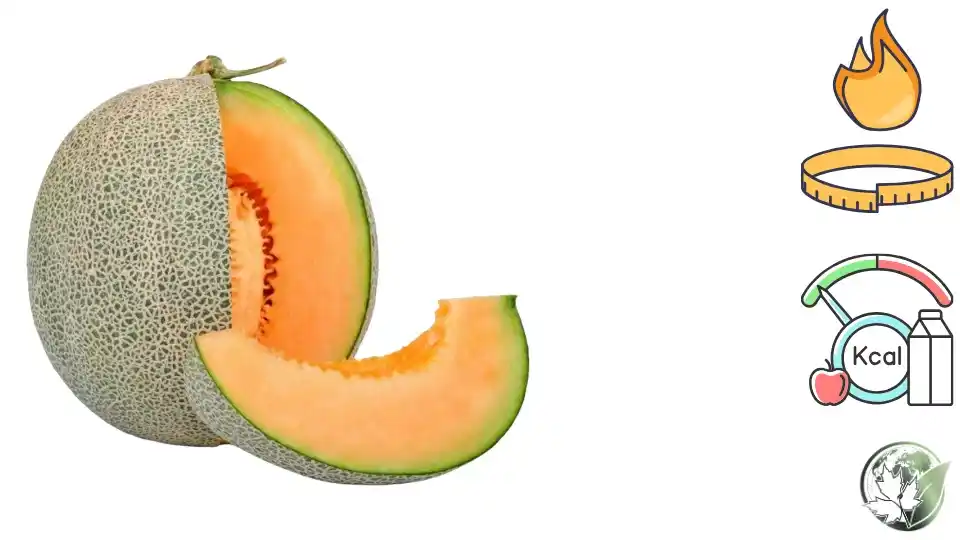
How Many Calories Are in Melon? The Quick Answer
Melon has about 34 calories per 100 grams for cantaloupe and 36 for honeydew, which puts it among the lowest calorie fruits. A cup of cantaloupe cubes (177 g) has about 60 calories, a cup of honeydew cubes (170 g) has about 61, a thick slice or wedge of about 150 grams has about 51, an eighth of a medium cantaloupe (about 69 g) has about 23 and a whole medium cantaloupe with about 550 grams of flesh has about 188 calories. Watermelon has about 30 calories per 100 grams, about 46 calories in a cup of diced fruit (152 g), about 86 calories in a large wedge of 286 grams and about 150 calories in a whole small watermelon slice of 500 grams.
Per gram, melon has about 13 to 20 percent more calories than watermelon, because it has a little more sugar and a little less water. Both fruits are over 90 percent water, and both are among the most hydrating, low-calorie foods you can eat. The practical difference is small: a cup of melon has about 14 more calories than a cup of watermelon.
This guide gives the calories in melon per slice, cup and 100 grams for cantaloupe, honeydew and the sweet Persian melons known as kharbuzeh, and compares them with watermelon on sugar, vitamins, hydration and fullness. It explains who should watch their intake, how to pick and store melons and how to count them. You will find three comparison tables and an FAQ.
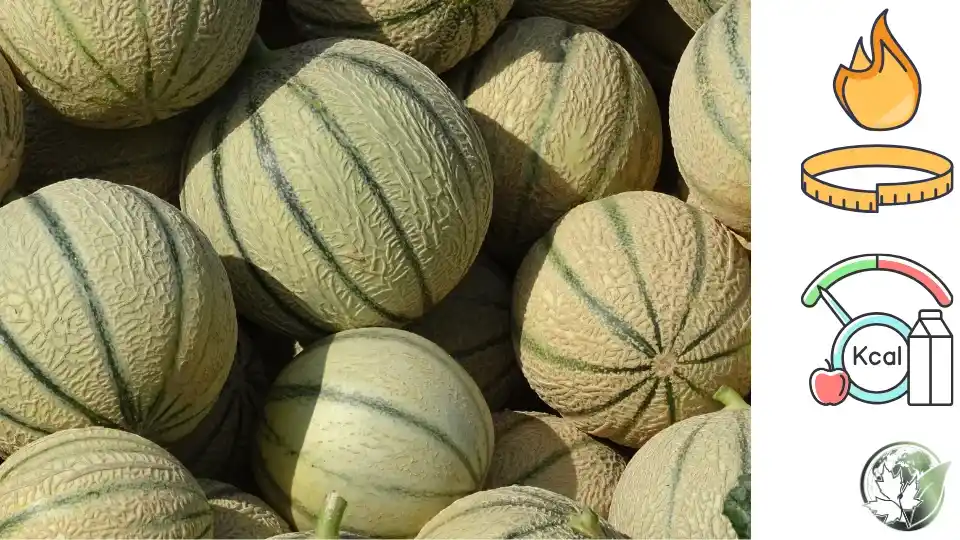
A cup of cantaloupe melon has about 60 calories
How Many Calories Are in a Slice, a Cup and a Whole Melon?
The values below are for the edible flesh without rind or seeds. A medium cantaloupe weighs about 900 grams whole and yields about 550 grams of flesh.
| Portion | Weight | Calories | Sugar | Fiber |
|---|---|---|---|---|
| 1 small cube (2 cm) | 8 g | 3 kcal | 0.6 g | 0.1 g |
| 1/8 medium melon | 69 g | 23 kcal | 5.5 g | 0.6 g |
| 1 thin slice | 100 g | 34 kcal | 7.9 g | 0.9 g |
| 1 thick wedge | 150 g | 51 kcal | 11.9 g | 1.4 g |
| 1 cup cubes | 177 g | 60 kcal | 14 g | 1.6 g |
| 1/4 medium melon | 138 g | 47 kcal | 10.9 g | 1.2 g |
| 1/2 medium melon | 275 g | 94 kcal | 21.7 g | 2.5 g |
| 1 medium melon | 550 g | 188 kcal | 43.5 g | 5.0 g |
| 100 g | 100 g | 34 kcal | 7.9 g | 0.9 g |
A generous serving of two cups of melon cubes has about 120 calories and 28 grams of sugar, so while melon is light in calories, it is not unlimited in sugar.
How Many Calories Are in Different Types of Melon?
Many types of melon are sold in different parts of the world, with similar calories. The sweetest varieties have slightly more.
| Melon type (100 g) | Calories | Sugar | Fiber | Notes |
|---|---|---|---|---|
| Watermelon | 30 kcal | 6.2 g | 0.4 g | Very watery |
| Cantaloupe (rockmelon) | 34 kcal | 7.9 g | 0.9 g | Orange flesh, vitamin A |
| Honeydew | 36 kcal | 8.1 g | 0.8 g | Green flesh, mild |
| Persian melon (kharbuzeh) | 35 kcal | 8.2 g | 0.8 g | Sweet, fragrant, many types |
| Galia melon | 36 kcal | 8.5 g | 0.8 g | Sweet, green flesh |
| Charentais | 35 kcal | 8.0 g | 0.9 g | Very aromatic |
| Winter melon (Iranian late melon) | 32 kcal | 7.0 g | 0.8 g | Firm, stores long |
| Bitter melon | 17 kcal | 1.9 g | 2.8 g | Vegetable, bitter |
| Canary melon | 33 kcal | 7.5 g | 0.8 g | Yellow rind |
All the sweet melons fall between 30 and 40 calories per 100 grams. Iranian varieties, such as the yellow Mashhadi or the soft Shahroudi, can be very sweet and juicy, so check their ripeness rather than the type to estimate sugar.
Melon vs Watermelon: Calories Compared
| Fruit | Portion | Weight | Calories | Sugar | Water |
|---|---|---|---|---|---|
| Cantaloupe | 1 cup | 177 g | 60 kcal | 14 g | 160 g |
| Honeydew | 1 cup | 170 g | 61 kcal | 13.8 g | 153 g |
| Persian melon | 1 cup | 170 g | 60 kcal | 14 g | 153 g |
| Watermelon | 1 cup diced | 152 g | 46 kcal | 9.4 g | 139 g |
| Watermelon | 2 cups | 304 g | 91 kcal | 18.9 g | 278 g |
| Watermelon | 1 wedge (1/16) | 286 g | 86 kcal | 17.7 g | 262 g |
| Cantaloupe | 1/8 melon | 69 g | 23 kcal | 5.5 g | 62 g |
| Watermelon | 100 g | 100 g | 30 kcal | 6.2 g | 91 g |
The calories per cup differ by 14, and by serving they differ even less, since a typical wedge of watermelon is larger than a typical slice of melon. In most diets you can treat the two as nearly equal.
Melon vs Watermelon: Nutrition Compared
| Per 100 g | Cantaloupe | Honeydew | Watermelon |
|---|---|---|---|
| Calories | 34 kcal | 36 kcal | 30 kcal |
| Water | 90 g | 90 g | 91 g |
| Carbohydrate | 8.2 g | 9.1 g | 7.6 g |
| Sugar | 7.9 g | 8.1 g | 6.2 g |
| Fiber | 0.9 g | 0.8 g | 0.4 g |
| Protein | 0.8 g | 0.5 g | 0.6 g |
| Fat | 0.2 g | 0.1 g | 0.2 g |
| Vitamin A | 169 mcg | 3 mcg | 28 mcg |
| Vitamin C | 36.7 mg | 18 mg | 8.1 mg |
| Potassium | 267 mg | 228 mg | 112 mg |
| Folate | 21 mcg | 19 mcg | 3 mcg |
| Lycopene | trace | 0 | 4,532 mcg |
| Citrulline | low | low | high |
| Per 100 calories | Cantaloupe | Watermelon |
|---|---|---|
| Weight | 294 g | 333 g |
| Vitamin C | 108 mg | 27 mg |
| Vitamin A | 497 mcg | 93 mcg |
| Potassium | 785 mg | 373 mg |
Cantaloupe is a standout source of vitamin A as beta-carotene, vitamin C and potassium, while watermelon is the main dietary source of lycopene, along with some citrulline. Honeydew is milder in nutrients but has a high potassium content. All three provide a lot of water for very few calories.
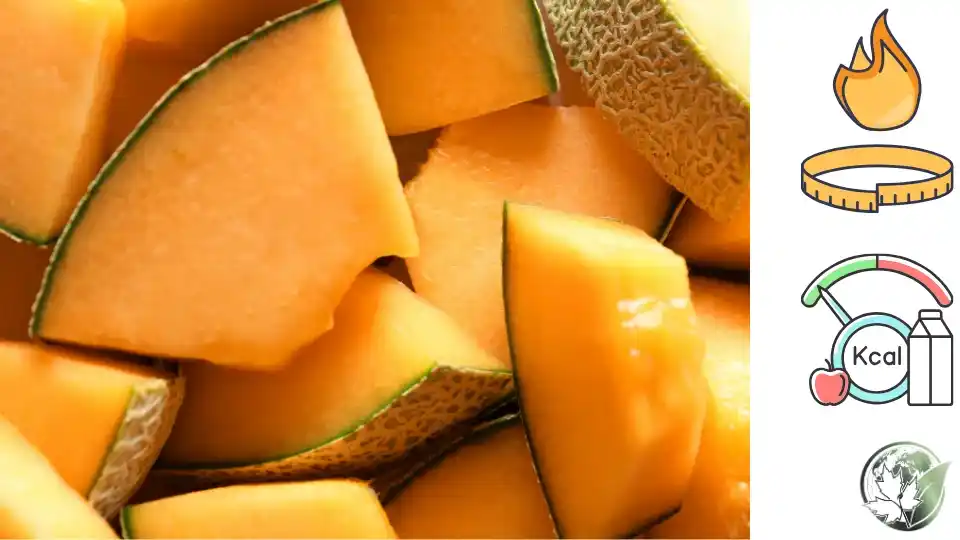
Cantaloupe has more vitamin A and C, while watermelon has lycopene and slightly fewer calories
How Much Sugar Is in Melon?
Melon tastes very sweet, and it has about 8 grams of sugar per 100 grams. Because we often eat a lot of it in one go, the total can reach 30 to 40 grams. A cup has about 14 grams, equal to 3.5 sugar cubes, and a quarter of a medium melon has about 11 grams.
| Portion | Sugar | Sugar cubes (4 g) |
|---|---|---|
| 1/8 melon | 5.5 g | 1.4 |
| 1 cup melon | 14 g | 3.5 |
| 2 cups melon | 28 g | 7 |
| 1/2 medium melon | 21.7 g | 5.4 |
| 1 cup watermelon | 9.4 g | 2.4 |
| 2 cups watermelon | 18.8 g | 4.7 |
This is natural sugar, accompanied by fiber, water and vitamins. For most people it is not a concern. For people with diabetes, who are advised to watch carbohydrate, a portion of one cup or a small wedge of 150 grams provides about 12 to 14 grams of carbohydrate, which fits easily into a meal plan.
Do Melon and Watermelon Raise Blood Sugar?
The glycemic index of cantaloupe is about 65 and watermelon about 72, which are considered medium to high. But the glycemic load is very low, since the carbohydrate per serving is small: about 4 to 5 for a cup of melon and about 5 for a cup of watermelon. In practice, neither food raises blood sugar much in normal portions.
| Fruit | Glycemic index | Carbohydrate per serving (150 g) | Glycemic load |
|---|---|---|---|
| Watermelon | 72 | 11.4 g | 8 |
| Cantaloupe | 65 | 12.3 g | 8 |
| Honeydew | 62 | 13.7 g | 8 |
| Apple | 36 | 21 g | 8 |
| Banana | 51 | 33 g | 17 |
| Grapes | 53 | 27 g | 14 |
For people managing blood sugar, a moderate portion of 150 grams with some protein, such as a few nuts or cheese, is generally fine, and melon is much easier on blood sugar than sweets.
Is Melon Good for Weight Loss?
Yes. Melon and watermelon are among the best fruits for volume per calorie. A large bowl of 300 grams has about 100 calories. They are over 90 percent water, taste sweet and satisfy sugar cravings. A study on water-rich foods found that eating a low-calorie, high-volume food before or with a meal reduced overall calorie intake.
| Snack | Calories | Weight | Fullness |
|---|---|---|---|
| 2 cups melon | 120 kcal | 354 g | High |
| 2 cups watermelon | 91 kcal | 304 g | High |
| 1 banana | 105 kcal | 118 g | Medium |
| 1 apple | 95 kcal | 182 g | High |
| 30 g milk chocolate | 161 kcal | 30 g | Low |
| 1 cup grapes | 104 kcal | 151 g | Medium to high |
If you want a refreshing dessert, a bowl of chilled melon with a squeeze of lime has about 60 to 100 calories, much less than ice cream at 137 calories per half cup.
Is Melon Healthy?
Melon provides a lot of hydration and some key nutrients. Cantaloupe and other orange melons offer beta-carotene, which the body converts to vitamin A for vision, skin and the immune system. Vitamin C and potassium support blood pressure and the immune system. Folate is also present in small amounts. Melons contain mostly water, so they are also good for hydration on hot days.
Potential concerns include their high water content, which is helpful for most but needs attention for people who restrict potassium in kidney disease. Melon skin can carry bacteria such as Salmonella and Listeria, so always wash the whole melon with water before cutting, because the knife can drag bacteria from the rind into the flesh. Cut melon should be refrigerated and eaten within three days.
How Do Melon and Watermelon Compare With Other Fruits?
| Fruit (100 g) | Calories | Sugar | Water |
|---|---|---|---|
| Watermelon | 30 kcal | 6.2 g | 91 g |
| Strawberries | 32 kcal | 4.9 g | 91 g |
| Cantaloupe | 34 kcal | 7.9 g | 90 g |
| Honeydew | 36 kcal | 8.1 g | 90 g |
| Peach | 39 kcal | 8.4 g | 89 g |
| Orange | 47 kcal | 9.4 g | 87 g |
| Apple | 52 kcal | 10.4 g | 86 g |
| Grapes | 69 kcal | 15.5 g | 81 g |
| Banana | 89 kcal | 12.2 g | 75 g |
| Mango | 60 kcal | 13.7 g | 84 g |
Melons are some of the lowest calorie fruits, comparable to strawberries and peaches.

Chilled melon cubes with mint make a dessert of about 60 calories per cup
How to Choose a Ripe Melon
For cantaloupe and similar melons, choose one that feels heavy for its size, with a sweet, musky smell at the stem end and a slightly soft blossom end. The stem scar should be smooth and clean, a sign that the melon slipped from the vine when ripe. The rind under the netting should be golden or cream, not green. For honeydew, the skin should be creamy and slightly waxy. For Persian melons, a strong fragrance and a slight give near the stem are good signs. Tapping a ripe melon gives a dull, deep sound.
How to Store and Serve Melon
Keep whole melons at room temperature until ripe, then refrigerate for up to a week. After cutting, cover the pieces and store them in the refrigerator for up to three days. Serve chilled, which brings out the sweetness. Try melon with mint or lime juice, with fresh cheese such as feta or mozzarella, wrapped in thin slices of cured meat in small amounts, or blended into a smoothie with yogurt.
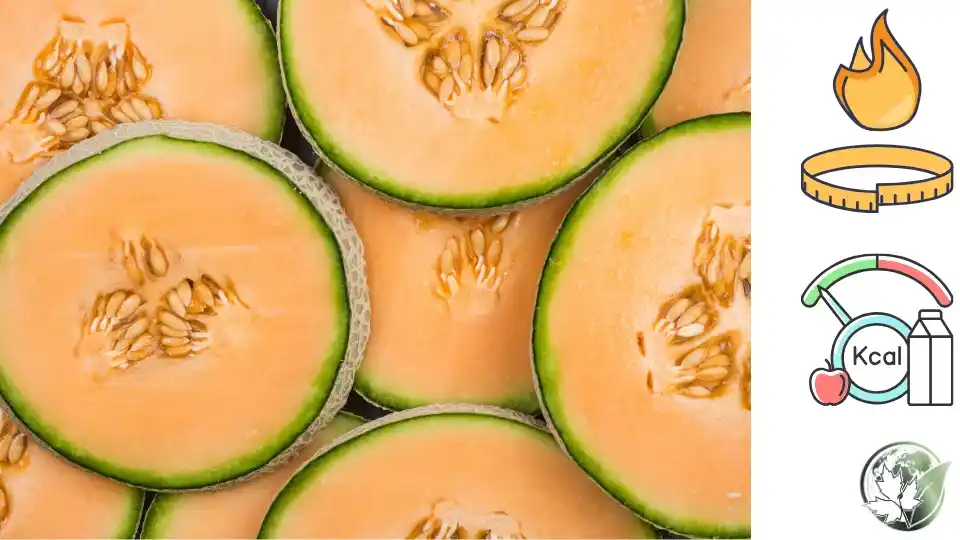
Choose melons that feel heavy for their size and smell sweet at the stem end
How to Count Melon Calories Accurately
Weigh the flesh after removing rind and seeds, and use 0.34 calories per gram. If you weigh the whole wedge with the rind, count about 55 to 60 percent of the weight as flesh. For cups, use 60 calories per cup of cubes. Add any sugar, syrup or ice cream you serve with it.
How Many Calories Are in Melon Drinks and Desserts?
Melon is often blended, mixed with milk or turned into desserts, and the extras change the calories quickly. The table lists common preparations with their typical calories.
| Preparation | Serving | Calories | Sugar | Notes |
|---|---|---|---|---|
| Fresh melon cubes | 1 cup | 60 kcal | 14 g | Plain |
| Melon juice, no sugar | 1 cup (240 ml) | 70 kcal | 16 g | Blended and strained |
| Melon smoothie with yogurt | 1 cup | 130 kcal | 20 g | Plain yogurt |
| Melon milkshake with ice cream | 1 glass (350 ml) | 320 kcal | 42 g | Ice cream and sugar |
| Melon sorbet | 1/2 cup | 110 kcal | 24 g | Added sugar |
| Melon and prosciutto | 1 serving (150 g melon, 30 g ham) | 110 kcal | 12 g | Salty and sweet |
| Melon with feta and mint | 1 cup | 130 kcal | 14 g | Cheese adds fat |
| Melon with ice cream | 1 cup melon, 1/2 cup ice cream | 200 kcal | 28 g | Dessert |
| Persian melon with ice | 2 cups | 120 kcal | 28 g | No sugar added |
| Melon jam | 1 tbsp | 45 kcal | 11 g | Sugar added |
A glass of melon juice has about 70 calories, but it takes about 350 grams of melon to make, so you drink the sugar of a large slice without the fiber. A bowl of cubes is more filling. If you want a drink, blend the flesh with ice and water without straining, which keeps the fiber and gives a thick, refreshing slush.
Is Melon Safe? What About Food Safety and Washing?
Melons grow on the ground, and the rind can carry bacteria such as Salmonella and Listeria from soil, water or handling. The netted skin of cantaloupe is especially difficult to clean, and several outbreaks have been linked to cut melon. Because a knife passing through the rind can transfer bacteria to the flesh, safe handling is important.
Wash the whole melon under running water for about a minute and scrub the skin with a clean brush before cutting, even if you are not eating the rind. Dry it with a clean towel, and use a clean knife and board. Refrigerate cut pieces within two hours, or within one hour if the weather is hot. Eat cut melon within three days, and throw it out if it looks slimy or smells fermented. Pregnant women, older adults, young children and people with weak immune systems should take particular care and avoid pre-cut melon of unknown age.
How Much Melon Is a Reasonable Daily Serving?
For most people, one to two cups, or 175 to 350 grams, of melon a day is reasonable, contributing 60 to 120 calories and one or two of the five or more daily servings of fruit and vegetables. Larger amounts are fine for healthy people, but the natural sugar adds up, and eating a half melon at once can mean 43 grams of sugar and a big dose of water. In some people, large amounts of melon can cause bloating or loose stools, because of its fructose and its water content.
A balanced approach is to vary your fruit through the day: melon in the morning or as a snack, berries with yogurt, an apple or orange later. This provides a wide range of vitamins and antioxidants. In hot weather, melon and watermelon are especially useful for fluid and electrolytes such as potassium.
How Do Melon and Watermelon Support Hydration?
Both fruits contain about 90 percent water, and their water comes with small amounts of electrolytes: potassium, a little magnesium and some sodium. This makes them a good complement to drinking water on hot days or after exercise. A cup of melon provides about 160 grams of water, nearly a third of a standard glass, and a large wedge of watermelon gives about 260 grams, a bit more than a glass.
Some research on watermelon and its amino acid citrulline suggests a potential reduction in muscle soreness after exercise, though results are mixed and the amounts used in studies are often larger than a normal serving. In general, the real benefit of these fruits for hydration comes from their combination of water, potassium and sweetness, which makes them easier to eat than plain water for many people, and it comes at about 60 calories per cup.
What Are Some Easy Melon Ideas for a Low Calorie Day?
**Breakfast:** A cup of melon cubes with plain yogurt and a teaspoon of chopped pistachios, about 190 calories.
**Snack:** A thick wedge of 150 grams chilled, about 51 calories.
**Lunch side:** Melon and cucumber salad with mint and lime, about 70 calories per bowl.
**Dessert:** Melon balls with a sprinkle of cinnamon and a few raspberries, about 80 calories.
**Frozen treat:** Freeze cubes and blend them into a quick sorbet without added sugar, about 60 calories per cup.
**Savory twist:** Toss with feta, olives and fresh herbs, about 130 calories a serving.
Why Do Some Melons Taste Sweeter Than Others With the Same Calories?
The sweetness of a melon depends on its ripeness, variety and how it was grown, but its calories change very little. A very sweet melon may contain 10 to 12 percent sugar by weight and a bland one only 6 to 7 percent, a difference of about 15 calories per 100 grams at most. This is why you can use 34 calories per 100 grams as a reasonable estimate for any sweet melon, whether it tastes mild or very sweet.
Ripening increases sugar slightly in some fruits, but melons that are picked before they are ripe do not gain much sugar afterward, because the sugar comes from the vine. They get softer and more aromatic, but not sweeter. That is why choosing a melon that was ripened on the vine, with a clean stem scar and a strong smell, matters more than keeping it on the counter. A cold melon also tastes less sweet than one at room temperature, which is why some people prefer to let the slices sit out for a few minutes before eating them.
If you are counting sugar and want to enjoy the sweetest melons, measure the portion. Two cups of a very sweet melon might have 30 grams of sugar, against 24 grams for a milder one. In both cases, the calories, 115 to 125, stay modest.
Key Takeaways: Melon Calories vs Watermelon
Melon has about 34 to 36 calories per 100 grams and 60 per cup, slightly more than watermelon at 30 and 46. Both are hydrating, low in calories and rich in vitamins, and the difference matters little. Enjoy either as a snack or dessert and watch the amounts if you are counting sugar.
Frequently Asked Questions
6 questions answered
How many calories are in a cup of melon?
About 60 calories for cantaloupe or honeydew.
How many calories are in a whole melon?
About 188 for a medium cantaloupe of 550 grams of flesh.
Does melon have more calories than watermelon?
Slightly: 34 against 30 per 100 grams.
Is melon good for weight loss?
Yes, it is high in water and low in calories.
How much sugar is in a cup of melon?
About 14 grams.
Can diabetics eat melon?
Yes, in moderate portions of about one cup.




