How Many Calories Are in Matcha Tea? The Quick Answer
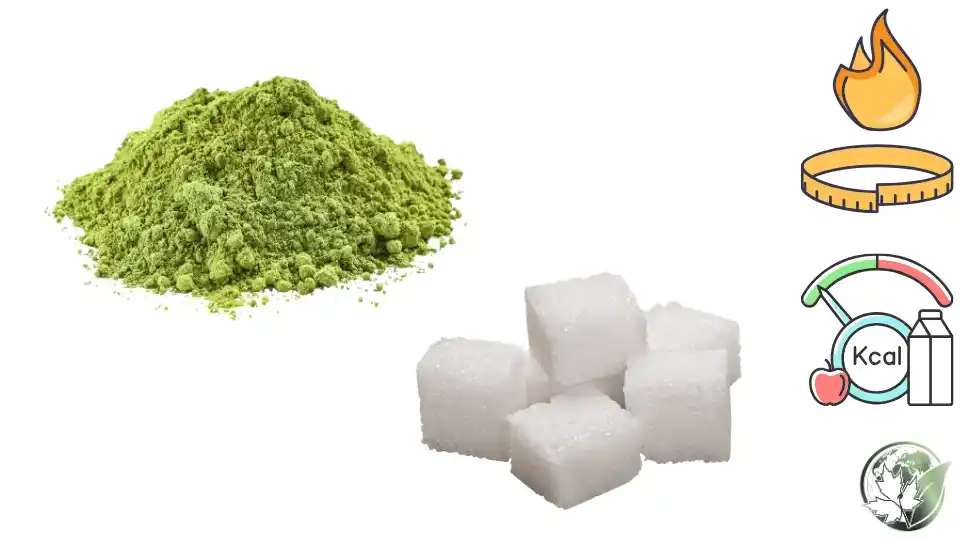
A traditional cup of matcha tea made with one teaspoon (about 2 grams) of matcha powder and hot water has about 6 calories. A level tablespoon of the powder (about 6 grams) has about 19 calories, and 100 grams of matcha powder has about 324 calories. Because you drink the whole leaf, not just an infusion, matcha has a few more calories than ordinary green tea, which has about 2 calories per cup, but the number is still tiny. A standard sugar cube has about 16 calories, so a cup of plain matcha has about 60 percent fewer calories than one sugar cube.
Add milk and sugar and the picture changes at once. A matcha latte made with a cup of whole milk has about 155 calories, with 2 percent milk about 128, with skim milk about 89, with unsweetened almond milk about 36 and with oat milk about 126. A café matcha latte that is pre-sweetened can have 200 to 280 calories because most commercial matcha powders in cafés are blended with sugar, sometimes more than half sugar by weight. A single sugar cube has fewer calories than the matcha in your cup, but the three or four cubes of sugar that a sweetened café drink may contain bring it to about 60 calories from sugar alone.
This guide gives the calories in matcha tea by teaspoon, cup and 100 grams, compares matcha with a sugar cube and with green tea, and covers matcha lattes with different milks, café drinks, sweetened mixes, matcha desserts and iced matcha. It also explains caffeine, antioxidants, how to choose good matcha, how to whisk it and how to keep the calories low. There are three comparison tables and an FAQ.
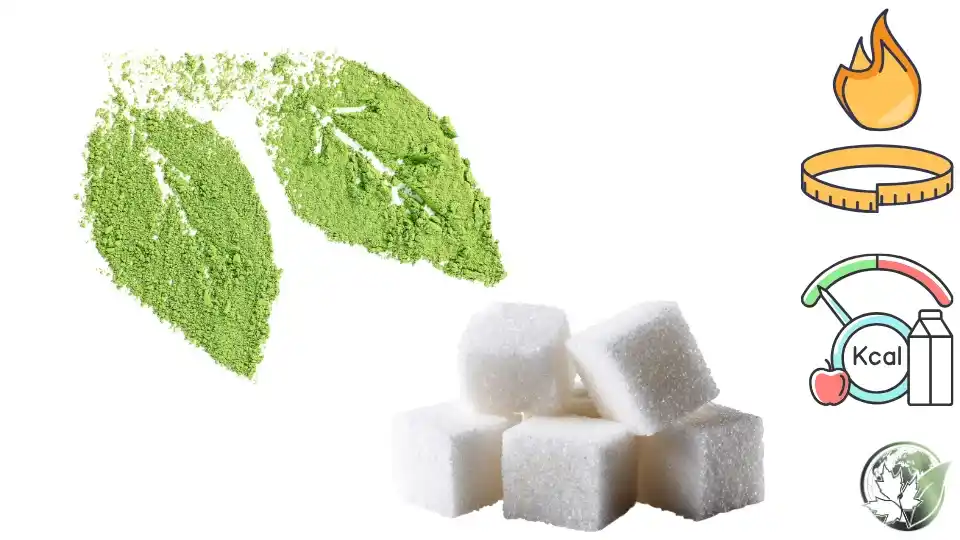
One teaspoon of matcha whisked in hot water has about 6 calories
How Many Calories Are in Matcha Powder by Spoon and Weight?
Matcha is finely ground whole green tea leaf, so unlike steeped tea, you consume the leaf itself, and that is why the powder has calories from protein, fiber and a little carbohydrate. The values below are for pure unsweetened matcha powder.
| Portion | Weight | Calories | Protein | Carbs | Fiber |
|---|---|---|---|---|---|
| 1/2 teaspoon | 1 g | 3 kcal | 0.3 g | 0.4 g | 0.4 g |
| 1 teaspoon | 2 g | 6 kcal | 0.6 g | 0.8 g | 0.8 g |
| 1 heaping teaspoon | 3 g | 10 kcal | 1.0 g | 1.2 g | 1.2 g |
| 1 tablespoon | 6 g | 19 kcal | 1.9 g | 2.4 g | 2.4 g |
| 1 sachet (stick pack) | 2 g | 6 kcal | 0.6 g | 0.8 g | 0.8 g |
| 30 g tin sample | 30 g | 97 kcal | 9.7 g | 12 g | 11 g |
| 100 g | 100 g | 324 kcal | 31 g | 39 g | 38 g |
A normal cup uses one to two grams of powder, so it provides 3 to 6 calories, 0.3 to 0.6 gram of protein and about a gram of fiber. A thick cup, called koicha, uses about 4 grams of powder and has about 13 calories.
How Many Calories Are in a Cup of Matcha Tea by Style?
Matcha can be prepared in several ways, from the traditional thin tea to modern lattes. The base powder is the same, so the differences come from what you add.
| Matcha drink (8 fl oz) | Powder | Calories | Sugar |
|---|---|---|---|
| Usucha (thin tea) with water | 1 g | 3 kcal | 0 g |
| Standard matcha with water | 2 g | 6 kcal | 0 g |
| Koicha (thick tea) | 4 g | 13 kcal | 0 g |
| Matcha with water and 1 tsp sugar | 2 g | 22 kcal | 4 g |
| Matcha with water and 1 tsp honey | 2 g | 27 kcal | 6 g |
| Iced matcha with water | 2 g | 6 kcal | 0 g |
| Matcha with lemon | 2 g | 8 kcal | 0.5 g |
| Matcha tonic (with sparkling water) | 2 g | 6 kcal | 0 g |
| Matcha with coconut water | 2 g | 51 kcal | 9 g |
| Matcha smoothie base, water | 3 g | 10 kcal | 0 g |
Plain matcha is in effect a zero sugar drink with a handful of calories. If you add one teaspoon of sugar, you add 16 calories, the same as one sugar cube, so the sweetener becomes the main source of calories.
How Many Calories Are in a Matcha Latte?
A matcha latte is mostly milk, and the milk decides the calories. The values below are for a 12 fluid ounce (355 ml) latte made with 1 teaspoon of unsweetened matcha, about 8 ounces of milk and no added sugar.
| Milk used | Milk calories | Latte total | Protein | Sugar |
|---|---|---|---|---|
| Whole milk (1 cup) | 149 kcal | 155 kcal | 8.6 g | 12 g |
| 2% milk (1 cup) | 122 kcal | 128 kcal | 8.9 g | 12 g |
| Skim milk (1 cup) | 83 kcal | 89 kcal | 8.8 g | 12 g |
| Oat milk (1 cup) | 120 kcal | 126 kcal | 3.0 g | 7 g |
| Soy milk, unsweetened | 80 kcal | 86 kcal | 7.0 g | 1 g |
| Almond milk, unsweetened | 30 kcal | 36 kcal | 1.0 g | 0 g |
| Coconut milk beverage | 45 kcal | 51 kcal | 0.5 g | 1 g |
| Lactose-free milk, 2% | 130 kcal | 136 kcal | 8.0 g | 12 g |
| Half and half (1/2 cup) | 160 kcal | 166 kcal | 4 g | 5 g |
Switching from whole milk to unsweetened almond milk drops a latte from 155 to 36 calories. Skim milk keeps the protein while saving about 66 calories compared with whole. Add a tablespoon of honey (64 calories) or a tablespoon of sugar (49 calories) and the numbers rise accordingly.
How Many Calories Are in a Café Matcha Latte?
Café matcha lattes usually have far more calories than a homemade one, for two reasons. The matcha mix is often pre-sweetened, and many cafés add syrup. Here are typical ranges for popular sizes.
| Café drink | Size | Calories | Sugar |
|---|---|---|---|
| Matcha latte, 2% milk, sweetened mix | Tall (12 oz) | 190 kcal | 32 g |
| Matcha latte, 2% milk, sweetened mix | Grande (16 oz) | 240 kcal | 34 g |
| Matcha latte, 2% milk, sweetened mix | Venti (24 oz) | 320 kcal | 46 g |
| Iced matcha latte, 2% milk | Grande (16 oz) | 200 kcal | 28 g |
| Matcha latte, oat milk, sweetened | Grande | 270 kcal | 36 g |
| Matcha latte, almond milk, sweetened | Grande | 190 kcal | 28 g |
| Matcha frappe with whipped cream | Grande | 420 kcal | 58 g |
| Bubble tea matcha milk tea with tapioca | 16 oz | 380 kcal | 45 g |
| Matcha with coconut milk, unsweetened | 12 oz | 70 kcal | 3 g |
A grande sweetened café matcha latte has about 34 grams of sugar, which is the equivalent of eight to nine sugar cubes. This is why a drink that sounds healthy can have more sugar than a can of soda.
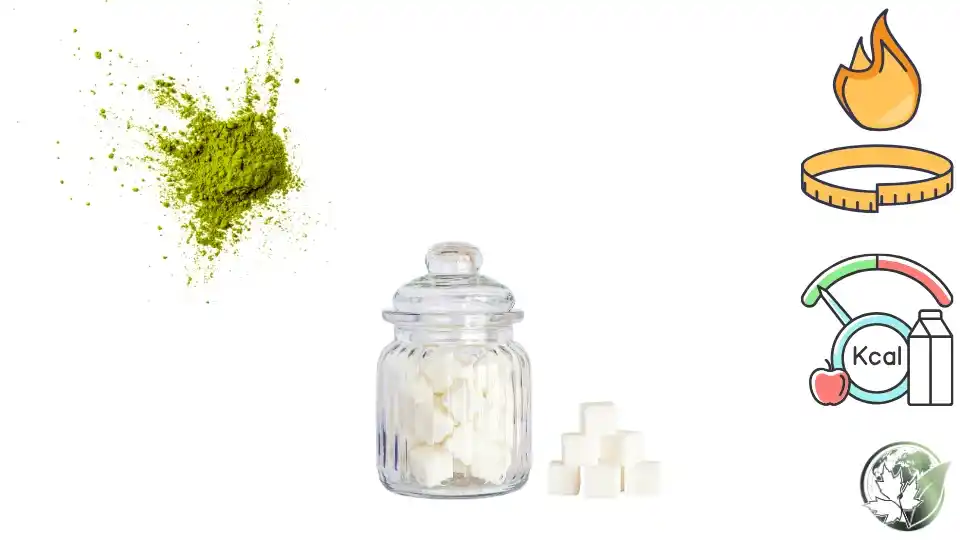
A café matcha latte can have 240 calories and over 30 grams of sugar, much of it from the sweetened powder
Matcha Tea vs a Sugar Cube: Calories Compared
| Item | Portion | Calories | Sugar | Caffeine |
|---|---|---|---|---|
| Sugar cube | 1 cube (4 g) | 16 kcal | 4 g | 0 mg |
| Sugar cube | 2 cubes (8 g) | 32 kcal | 8 g | 0 mg |
| Matcha, plain with water | 1 tsp powder | 6 kcal | 0 g | 35 to 70 mg |
| Matcha, thick koicha | 4 g powder | 13 kcal | 0 g | 70 to 140 mg |
| Matcha powder | 1 tbsp (6 g) | 19 kcal | 0 g | 105 to 210 mg |
| Green tea, steeped | 1 cup | 2 kcal | 0 g | 28 mg |
| Matcha latte, almond milk | 12 oz | 36 kcal | 0 g | 35 to 70 mg |
| Matcha latte, 2% milk | 12 oz | 128 kcal | 12 g | 35 to 70 mg |
| Sweetened café latte | 16 oz | 240 kcal | 34 g | 70 mg |
A single cup of plain matcha has fewer calories than one sugar cube. A tablespoon of the powder, which would be a lot for a single cup, has 19 calories, slightly more than a cube. By the time milk and sugar are added, the drink has the calories of ten or fifteen sugar cubes.
Matcha vs Green Tea: What Is the Difference in Calories?
Regular green tea is a steeped infusion, in which the leaves are removed, so the drink contains only what dissolves in water. A cup has about 2 calories. In matcha, the entire powdered leaf is suspended in the drink. You therefore consume the leaf's protein, fiber and minerals, which is why a cup has about 3 times as many calories as a bag of green tea. The difference of 4 calories is not significant, but matcha has higher concentrations of antioxidants, caffeine and L-theanine, because you eat the whole leaf.
| Per cup | Green tea (bag) | Matcha (2 g) |
|---|---|---|
| Calories | 2 kcal | 6 kcal |
| Caffeine | 28 mg | 35 to 70 mg |
| EGCG catechin | 50 to 100 mg | 100 to 150 mg |
| L-theanine | 10 to 20 mg | 20 to 40 mg |
| Protein | 0 g | 0.6 g |
| Fiber | 0 g | 0.8 g |
Is Matcha Good for Weight Loss?
Matcha has few calories on its own, and it contains caffeine and catechins that may increase fat oxidation and energy expenditure slightly. Studies on green tea extracts show small effects on weight and metabolism, usually less than a kilogram over twelve weeks, which is modest. Matcha will not melt fat by itself. Its practical value is that it can replace higher calorie drinks. Swapping a sweetened café latte of 240 calories for a homemade matcha with almond milk at 36 calories saves about 200 calories, which can add up to 1,400 calories in a week.
The caffeine and L-theanine in matcha also give a calm, focused kind of alertness that some people find less jittery than coffee. That can help replace a mid-afternoon sugary snack, because many people reach for sweets when they feel tired.
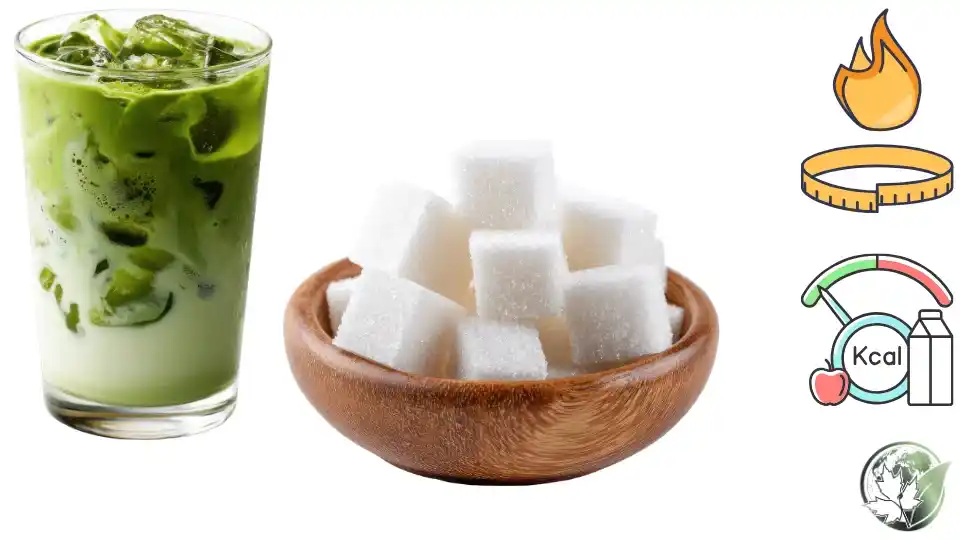
Swapping a sweetened café latte for homemade matcha with almond milk saves about 200 calories
How Much Caffeine Is in Matcha?
A teaspoon of matcha has roughly 35 to 70 milligrams of caffeine, depending on the grade and brand, compared with 95 milligrams in a cup of coffee and 28 milligrams in a bag of green tea. Because matcha is consumed with the leaf, the caffeine is absorbed more slowly, helped by the L-theanine, which gives a longer, gentler effect. Most adults can have up to 400 milligrams of caffeine per day, which would be a lot of matcha. Pregnant women are usually advised to limit caffeine to about 200 milligrams, and people sensitive to caffeine should keep servings small and avoid drinking it late in the day.
How Many Calories Are in Sweetened Matcha Mixes and Desserts?
Many products sold as matcha are mixes with sugar and milk powder. The calories vary widely, so read the label and check how much of the powder is actual tea.
| Product | Serving | Calories | Sugar |
|---|---|---|---|
| Pure matcha powder | 1 tsp (2 g) | 6 kcal | 0 g |
| Sweetened matcha latte mix | 2 tbsp (30 g) | 110 kcal | 21 g |
| Matcha latte sachet, instant | 1 sachet (25 g) | 100 kcal | 16 g |
| Matcha ice cream | 1/2 cup (66 g) | 140 kcal | 15 g |
| Matcha cookie | 1 cookie (30 g) | 140 kcal | 12 g |
| Matcha KitKat style wafer bar | 4 fingers (41 g) | 215 kcal | 22 g |
| Matcha mochi | 1 piece (40 g) | 95 kcal | 10 g |
| Matcha cake slice | 1 slice (100 g) | 340 kcal | 32 g |
| Matcha white chocolate bar | 1 bar (43 g) | 245 kcal | 24 g |
| Matcha cheesecake | 1 slice (115 g) | 360 kcal | 28 g |
Matcha itself adds almost nothing to the calories of these items. The calories come from sugar, cream, butter and flour. The green color and flavor do not make a dessert light.
How to Choose Good Matcha
Matcha comes in ceremonial grade, which is for drinking whisked with water, and culinary grade, which is for lattes, baking and smoothies. Ceremonial matcha is a bright, vivid green and has a smooth, sweet and slightly savory flavor with little bitterness. Culinary matcha is slightly duller and more bitter, which stands up to milk and sugar. Look for matcha grown in Japan, especially in regions such as Uji, Nishio or Kagoshima, with a harvest date and an airtight, opaque package. Pure matcha should list only green tea leaves, with no sugar or milk powder on the label. Avoid dull yellow or brown powder, which is old or low quality.
How to Make Matcha Tea at Home Without Adding Calories
Sift one teaspoon of matcha into a bowl to remove lumps. Add about 70 milliliters of water at about 75 to 80 degrees Celsius, not boiling, since boiling water makes the tea bitter. Whisk quickly in a zigzag motion with a bamboo whisk or a small electric frother until a fine foam forms, about 20 seconds. For a latte, pour the matcha over steamed or cold milk of your choice. For an iced version, whisk the matcha with a little water, then pour over ice and cold water or milk.
To sweeten with few calories, use a pinch of stevia, monk fruit or a very small amount of honey. A quarter teaspoon of honey has about 5 calories and is enough to take the edge off for many people.
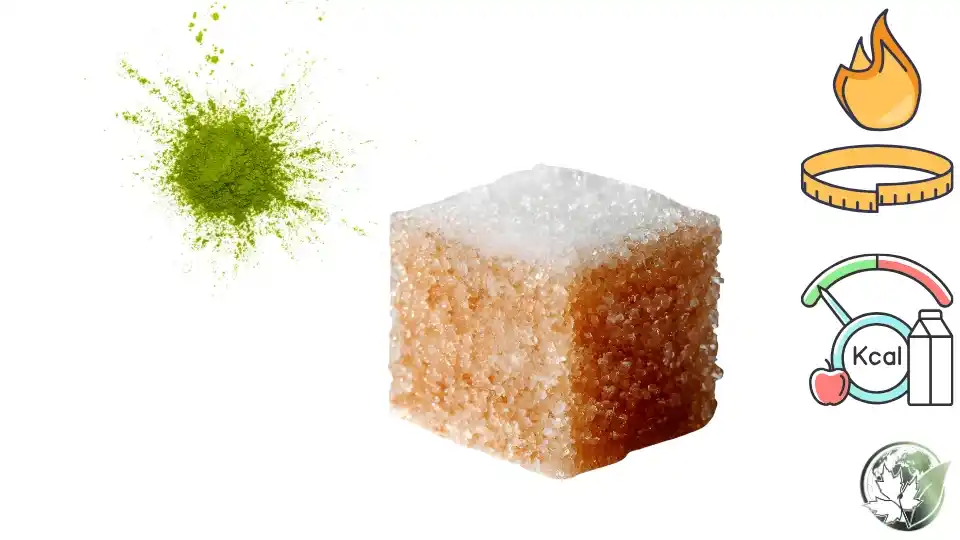
Sifting matcha and whisking with warm water gives a smooth cup with only about 6 calories
How to Count Matcha Calories Accurately
Treat a teaspoon of pure matcha as about 6 calories and count the milk, sugar, syrup and toppings separately. For lattes, the milk is almost always the main source of calories. For café drinks, check the nutrition information, because the sweetened powder and syrup can add 100 or more calories that you do not see. Measure powder with a level teaspoon or a scale, since heaping spoons can contain twice as much.
How Does Matcha Compare with Other Hot and Cold Drinks?
Plain matcha is one of the lowest calorie flavored drinks, but it is helpful to see it next to the other drinks people choose during the day. Black coffee has about 2 calories per cup, plain espresso 1 to 3 per shot, steeped green tea 2, and plain herbal tea 0 to 2. Once milk and sugar are added, the numbers are very different. A latte made with whole milk has about 190 calories, hot chocolate about 190 to 400, a regular cola 140 per can, orange juice 112 per cup and a sweetened iced tea about 90 per cup.
| Drink (8 fl oz unless noted) | Calories | Sugar |
|---|---|---|
| Herbal tea, plain | 2 kcal | 0 g |
| Black coffee | 2 kcal | 0 g |
| Steeped green tea | 2 kcal | 0 g |
| Matcha with water | 6 kcal | 0 g |
| Matcha latte, almond milk, homemade | 36 kcal | 0 g |
| Matcha latte, 2% milk, homemade | 128 kcal | 12 g |
| Café latte, whole milk | 190 kcal | 18 g |
| Sweetened iced tea | 90 kcal | 22 g |
| Cola (12 oz can) | 140 kcal | 39 g |
| Orange juice | 112 kcal | 21 g |
| Hot chocolate, café | 280 kcal | 34 g |
What Is the Difference Between Matcha, Hojicha and Genmaicha in Calories?
Other Japanese teas are often compared with matcha. Hojicha is roasted green tea, usually served as a steeped infusion or as a powder. A steeped cup has about 2 calories, and hojicha powder has similar calories to matcha, at about 5 to 6 per teaspoon. Genmaicha is green tea blended with roasted brown rice, and a cup has about 2 to 4 calories. Sencha, a standard steeped green tea, has about 2. Only powdered teas, such as matcha and powdered hojicha, bring the whole leaf into the cup. In every case the calories are negligible until you add milk and sweeteners.
Does Matcha Break a Fast?
For people practicing intermittent fasting, the question is whether matcha counts. A cup of plain matcha has about 6 calories and 0.6 gram of protein, which is small enough that many people do not count it, and many fasting guidelines allow up to 20 or 30 calories without breaking the metabolic effects of a fast. Those who follow a strict zero-calorie fast may prefer steeped green tea, which has almost none. Milk, sweetener and creamer would break a fast, so a plain bowl of matcha is the version to use if you decide it fits your rules.
What Happens If You Drink Matcha Every Day?
A cup or two of matcha daily is safe for most adults. People who drink it regularly report steady energy and less jitteriness than from coffee. The tea provides catechins, L-theanine and small amounts of vitamins and minerals. Because you consume the whole leaf, matcha contains more of the compounds that were in the tea plant, including trace amounts of fluoride and, depending on the soil, small amounts of lead and aluminum. Choosing matcha from a reputable source that tests its products and keeping to one or two cups daily is a sensible approach. Matcha can also reduce iron absorption when taken with meals, so people who are low in iron may prefer to drink it between meals.
How Should You Store Matcha to Keep It Fresh?
Matcha is delicate and loses color, aroma and flavor when exposed to light, heat, air and moisture. Keep an unopened tin in the refrigerator or a cool cupboard, and once opened, store it in an airtight container away from light and use it within one to two months for the best taste. Let the container reach room temperature before opening to avoid condensation. Stale matcha does not become unsafe quickly, but it tastes flat and bitter, and the calories stay the same. Buying small tins of 20 to 30 grams, which make 10 to 15 cups, helps you finish it while it is fresh.
How Many Cups of Matcha Does a Tin Make?
A 30 gram tin of matcha has about 97 calories in total and makes about 15 cups at 2 grams each, or about 30 cups of thin tea at 1 gram each. That makes the cost per cup low for the better grades and the calories per cup very small. A 100 gram bag makes about 50 cups, with 324 calories in the whole bag, which is about the same as a single sweetened café latte of a large size. This puts the calories of plain matcha in perspective: the bag that fills your cupboard for two months has fewer calories than one cake slice.
Key Takeaways: Matcha Tea Calories vs a Sugar Cube
A cup of plain matcha has about 6 calories, fewer than a 16 calorie sugar cube. The calories grow with what you add: a homemade latte has 36 to 155, and a sweetened café latte has 190 to 320. For the lightest option, whisk matcha with water or unsweetened plant milk and sweeten sparingly.
Frequently Asked Questions
6 questions answered
How many calories are in a cup of matcha?
About 6 with one teaspoon of powder and water.
How many calories are in a matcha latte?
About 36 with almond milk and 155 with whole milk when homemade.
Does matcha have fewer calories than a sugar cube?
Yes, a plain cup has about 6 against 16.
Is matcha lower in calories than green tea?
No, matcha has about 6 per cup and steeped green tea about 2.
Does matcha have a lot of caffeine?
About 35 to 70 milligrams per teaspoon.
Why does a café matcha latte have so many calories?
The powder is sweetened and the drink uses lots of milk and syrup.