How Many Calories Are in a Mandarin Orange? The Quick Answer
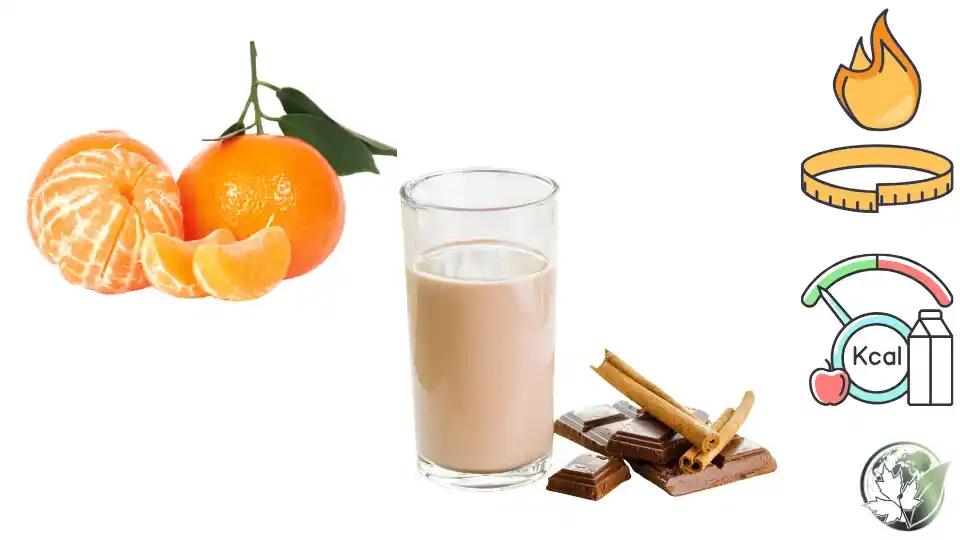
A medium mandarin orange (about 88 grams, 2 1/2 inches across) has about 47 calories. Per 100 grams, a mandarin has about 53 calories. A small clementine (74 g) has about 35, a large tangerine (109 g) about 58, one segment (about 8 grams) about 4 calories, and a cup of segments (195 g) about 103. Milk chocolate has about 535 calories per 100 grams, which is ten times as many, with a 10 gram square at about 54 calories and a standard 43 gram bar at about 230.
So the mandarin is far lower in calories than milk chocolate. One 43 gram milk chocolate bar has the same calories as about five medium mandarins, and a 100 gram bar equals eleven. Per gram, milk chocolate is about ten times as dense in energy. A mandarin is 85 percent water, while milk chocolate has less than 1 percent, and what is left in chocolate is mostly sugar and fat. A mandarin has about 12 grams of sugar in a whole fruit and 1.8 grams of fiber, and an entire fruit delivers about 24 milligrams of vitamin C, which is about a quarter to a third of the daily need.
This guide gives the calories in mandarins by size, segment, cup and weight, compares clementines, tangerines and satsumas, covers canned mandarins, mandarin juice and dried mandarin, and then compares all of it with milk chocolate and other sweets. It includes how mandarins fit weight loss and diabetes, the sugar content, how to choose and store them, and an FAQ. There are three comparison tables.
A medium mandarin has about 47 calories and almost no fat
How Many Calories Are in a Mandarin by Size, Segment and Weight?
Mandarins vary in size, so the number of calories in one fruit varies too. The table uses weights for the edible flesh without the peel.
| Portion | Edible weight | Calories | Sugar | Fiber | Vitamin C |
|---|---|---|---|---|---|
| 1 segment | 8 g | 4 kcal | 0.9 g | 0.1 g | 2 mg |
| 5 segments | 40 g | 21 kcal | 4.2 g | 0.7 g | 10.7 mg |
| 1 small mandarin | 60 g | 32 kcal | 6.4 g | 1.1 g | 16 mg |
| 1 medium mandarin | 88 g | 47 kcal | 9.3 g | 1.6 g | 23.5 mg |
| 1 large mandarin | 120 g | 64 kcal | 12.7 g | 2.2 g | 32 mg |
| 2 medium mandarins | 176 g | 93 kcal | 18.6 g | 3.2 g | 47 mg |
| 1 cup segments | 195 g | 103 kcal | 20.6 g | 3.5 g | 52 mg |
| 100 g | 100 g | 53 kcal | 10.6 g | 1.8 g | 26.7 mg |
| 250 g (about 3 mandarins) | 250 g | 133 kcal | 26.5 g | 4.5 g | 67 mg |
| 1 kg bag (with peel) | about 700 g edible | 370 kcal | 74 g | 12.6 g | 187 mg |
Most people eat one to three mandarins at a time, which is 47 to 140 calories. A kilogram bag, which is common in supermarkets, is about 370 calories of edible fruit, spread over perhaps ten fruits.
Are Clementines, Tangerines and Satsumas Different in Calories?
These names describe different mandarin varieties, and their calories are very close. Clementines are the smallest and sweetest, often seedless, and typically weigh 60 to 75 grams. Tangerines are somewhat larger and have a deeper orange color, and satsumas are loose-skinned and tend to be seedless and mild. Their calories per 100 grams range from about 47 to 53.
| Variety (100 g) | Calories | Sugar | Typical fruit weight | Calories per fruit |
|---|---|---|---|---|
| Mandarin (common) | 53 kcal | 10.6 g | 88 g | 47 kcal |
| Clementine | 47 kcal | 9.2 g | 74 g | 35 kcal |
| Tangerine | 53 kcal | 10.6 g | 109 g | 58 kcal |
| Satsuma | 47 kcal | 9.0 g | 76 g | 36 kcal |
| Navel orange (for comparison) | 49 kcal | 8.5 g | 140 g | 69 kcal |
| Blood orange | 50 kcal | 9.0 g | 130 g | 65 kcal |
| Pomelo (for comparison) | 38 kcal | 6.9 g | 600 g | 228 kcal |
A fruit has fewer calories than most people expect. Even three clementines have only about 105 calories, which is about the same as a medium apple.
Mandarin vs Milk Chocolate: Calories Compared
| Food | Portion | Weight | Calories | Sugar | Fat |
|---|---|---|---|---|---|
| Mandarin | 1 medium | 88 g | 47 kcal | 9.3 g | 0.2 g |
| Mandarin | 100 g | 100 g | 53 kcal | 10.6 g | 0.3 g |
| Mandarin | 1 cup segments | 195 g | 103 kcal | 20.6 g | 0.5 g |
| Milk chocolate | 1 square | 10 g | 54 kcal | 5.2 g | 3.1 g |
| Milk chocolate | 1 bar | 43 g | 230 kcal | 22.4 g | 13.1 g |
| Milk chocolate | 100 g | 100 g | 535 kcal | 52 g | 30 g |
| Milk chocolate | 1 king size bar | 85 g | 455 kcal | 44 g | 25.5 g |
| 5 mandarins | 5 medium | 440 g | 235 kcal | 46.5 g | 1.0 g |
| 1 milk chocolate bar | 43 g | 43 g | 230 kcal | 22.4 g | 13.1 g |
Five mandarins, weighing 440 grams, have about the same calories as a single 43 gram milk chocolate bar, with about the same sugar and almost none of the fat. The mandarins give you 9 grams of fiber and 117 milligrams of vitamin C for the same calories, while the chocolate provides 13 grams of fat, mostly saturated.
Mandarin vs Milk Chocolate: Nutrition Compared
| Per 100 g | Mandarin | Milk chocolate |
|---|---|---|
| Calories | 53 kcal | 535 kcal |
| Carbohydrate | 13.3 g | 59.4 g |
| Sugar | 10.6 g | 52.0 g |
| Fiber | 1.8 g | 3.4 g |
| Protein | 0.8 g | 7.7 g |
| Fat | 0.3 g | 29.7 g |
| Saturated fat | 0.0 g | 18.5 g |
| Water | 85 g | 1.4 g |
| Vitamin C | 26.7 mg | 0.0 mg |
| Calcium | 37 mg | 189 mg |
| Potassium | 166 mg | 372 mg |
| Caffeine | 0 mg | 20 mg |
| Per 100 calories | Mandarin | Milk chocolate |
|---|---|---|
| Weight | 189 g | 19 g |
| Sugar | 20 g | 9.7 g |
| Fiber | 3.4 g | 0.6 g |
| Vitamin C | 50 mg | 0 mg |
| Fat | 0.6 g | 5.6 g |
For 100 calories you can eat nearly two mandarins, which weigh 189 grams, or less than one fifth of a bar of chocolate, which weighs 19 grams. A mandarin may have twice the sugar per 100 calories, but the sugar comes with water, fiber and vitamin C, and the fruit is far more filling.

For 100 calories you can eat two mandarins or about two squares of milk chocolate
How Many Mandarins Equal a Chocolate Bar?
If you are trying to decide between a sweet snack and fruit, it helps to see the equivalents.
| Chocolate | Calories | Equals this many medium mandarins | Equals this much by weight |
|---|---|---|---|
| 1 square (10 g) | 54 kcal | 1.1 | 100 g |
| 2 squares (20 g) | 108 kcal | 2.3 | 205 g |
| 1 fun size bar (17 g) | 90 kcal | 1.9 | 170 g |
| 1 standard bar (43 g) | 230 kcal | 4.9 | 430 g |
| 1 large bar (100 g) | 535 kcal | 11.4 | 1,000 g |
| 1 chocolate bar (150 g) | 800 kcal | 17 | 1,500 g |
The comparison is not meant to say that chocolate is bad. A square or two of chocolate can be a satisfying treat. It shows that if you eat mandarins when you want something sweet, you can eat a large volume for the calories of a small amount of chocolate.
Are Mandarins Good for Weight Loss?
Mandarins are a good food for weight loss because they have low energy density, about 0.5 calories per gram, and they are sweet, juicy and portable. Peeling and eating segments takes time, and that slows the pace of eating. The fiber and water contribute to fullness, and a medium mandarin fills the hand, which helps with the feeling of having eaten something. Studies on whole fruit show that eating it is associated with lower weight gain over time, while fruit juice is not.
A practical strategy is to keep mandarins on the desk or in the bag in place of candy. Two mandarins have about 93 calories, about the same as two squares of milk chocolate, and they take longer to eat. If you crave chocolate specifically, a mandarin with a single square of dark chocolate can be satisfying, at about 100 calories in total.
Do Mandarins Raise Blood Sugar?
Mandarins have a glycemic index of about 30 to 47 and a glycemic load of about 3 to 5 per medium fruit, which is low. The fiber and the fruit's structure slow sugar absorption. Milk chocolate has a glycemic index of about 43 but a much higher glycemic load per serving because of its sugar content and large calorie density. Whole mandarins are generally suitable for people with diabetes in sensible portions, one or two at a time, and counting about 10 grams of carbohydrate per medium fruit. Juice has less fiber and raises blood glucose faster.
How Many Calories Are in Canned Mandarins, Juice and Dried Mandarin?
Processing changes the calories a great deal, mostly because of added sugar.
| Product | Serving | Calories | Sugar |
|---|---|---|---|
| Fresh mandarin | 1 medium (88 g) | 47 kcal | 9.3 g |
| Canned in juice | 1/2 cup (125 g) | 46 kcal | 10 g |
| Canned in light syrup | 1/2 cup (126 g) | 76 kcal | 17 g |
| Canned in heavy syrup | 1/2 cup (126 g) | 98 kcal | 22 g |
| Mandarin juice, fresh | 1 cup (247 g) | 106 kcal | 22 g |
| Mandarin juice, store bought | 1 cup | 110 kcal | 23 g |
| Mandarin segments, dried | 30 g | 95 kcal | 20 g |
| Mandarin jam | 1 tablespoon (20 g) | 50 kcal | 12 g |
| Mandarin sorbet | 1/2 cup | 110 kcal | 26 g |
| Mandarin jelly cup | 1 cup | 70 kcal | 16 g |
| Mandarin cake slice | 1 slice | 330 kcal | 28 g |
Fruit canned in juice is nearly the same as fresh, while fruit canned in heavy syrup has about twice the calories. A glass of mandarin juice has the sugar of about two fruits but little of the fiber, so it is less filling.
Mandarins canned in heavy syrup can have twice the calories of fresh fruit
What Nutrients Do Mandarins Provide?
Mandarins are best known for vitamin C, but they also supply folate, potassium, thiamin and vitamin A in the form of beta cryptoxanthin, a carotenoid that gives the fruit its orange color. One medium mandarin has about 26 percent of the daily value for vitamin C, around 10 micrograms of folate, 130 milligrams of potassium and about 2 percent of the daily need for calcium. Mandarins also contain flavonoids such as hesperidin and nobiletin, which have been studied for their possible roles in heart health and inflammation. The white pith and membranes between the segments contain much of the fiber and many of the flavonoids, so eating them along with the segments is worthwhile.
How to Choose and Store Mandarins
Choose mandarins that feel heavy for their size, with glossy, firm skin and no soft spots or mold. A loose, puffy skin is typical of some varieties and does not mean the fruit is bad, but a mandarin that feels light for its size may be dry inside. Mandarins keep for about a week at room temperature and for up to three to four weeks in the refrigerator. Keep them in a bowl with airflow rather than in a sealed bag, and remove any that start to spoil, because mold spreads quickly.
How Many Mandarins Can You Eat in a Day?
There is no strict limit, and for most people three to five mandarins a day is fine. Five mandarins provide about 235 calories, 50 grams of sugar and 9 grams of fiber. Eating a very large number can cause stomach upset in some people because of the acidity, and it can add up to a lot of sugar. People with acid reflux may find citrus aggravates symptoms. Citrus can also interact with some medicines: grapefruit is the most famous, but eating very large amounts of mandarins can sometimes matter with certain drugs, so ask a pharmacist if you take regular medication.
Peeling a mandarin takes time, which slows eating and helps you feel full
How to Count Mandarin Calories Accurately
For the best accuracy, weigh the peeled fruit and use 53 calories per 100 grams, or count one medium mandarin as about 47. If you weigh the fruit with its peel, remember that the peel is about 20 to 25 percent of the total weight, so 100 grams with peel is about 40 calories of edible fruit. For chocolate, use the label, and note that 10 grams is about 54 calories.
How Do Mandarins Compare with Other Fruits and Sweets?
Mandarins sit among the lighter fruits. Per 100 grams, strawberries have 32 calories, watermelon 30, oranges 47, apples 52, pears 57, grapes 69 and bananas 89. Mandarins at 53 are therefore close to an apple. Sweets are in a different league: dark chocolate has about 600 calories per 100 grams, gummy candy 340, a cookie 480 and a glazed doughnut 420.
| Food (100 g) | Calories | Sugar | Fat | Calories per typical portion |
|---|---|---|---|---|
| Watermelon | 30 kcal | 6.2 g | 0.2 g | 1 cup, 46 kcal |
| Strawberries | 32 kcal | 4.9 g | 0.3 g | 1 cup, 49 kcal |
| Orange | 47 kcal | 9.4 g | 0.1 g | 1 medium, 62 kcal |
| Mandarin | 53 kcal | 10.6 g | 0.3 g | 1 medium, 47 kcal |
| Apple | 52 kcal | 10.4 g | 0.2 g | 1 medium, 95 kcal |
| Banana | 89 kcal | 12.2 g | 0.3 g | 1 medium, 105 kcal |
| Gummy candy | 340 kcal | 46 g | 0.0 g | 10 pieces, 140 kcal |
| Milk chocolate | 535 kcal | 52 g | 30 g | 1 bar, 230 kcal |
| Chocolate chip cookie | 480 kcal | 36 g | 24 g | 1 cookie, 78 kcal |
How Can Mandarins Replace Chocolate Cravings?
A craving for chocolate is often a craving for sweetness, fat and a little pleasure at a certain time of day. Mandarins deliver sweetness and a burst of flavor, but not the creamy fat. A few strategies help in practice. Keep a bowl of mandarins in view and keep chocolate out of sight. Peel a mandarin before you start to want a snack, so the fruit is ready to eat. Pair a mandarin with a few almonds or a small square of chocolate to get the creaminess. Freeze segments for a sorbet-like treat that takes longer to eat. If the craving is for chocolate at night, a mandarin and a cup of warm milk can be enough.
How Can You Use Mandarins in Recipes Without Too Many Calories?
Mandarin segments are good in green salads, in yogurt with oats, on top of oatmeal, in chicken stir-fries and in fruit bowls. A salad with spinach, mandarin segments, a few almonds and a light vinaigrette has about 180 calories. Mandarin zest adds a strong flavor to baking at almost no calories, so you can use less sugar. Mandarin juice can be used in marinades and dressings in place of oil and sugar. The calories rise when mandarins are baked into cakes, tarts or candied peels, where sugar and flour dominate.
How Does the Peel Change the Calories?
The peel is not usually eaten, but it has uses. Mandarin peel contains about 97 calories per 100 grams, mostly from carbohydrate and fiber, with high levels of essential oils and flavonoids. A teaspoon of grated zest, about 2 grams, has about 2 calories. Dried mandarin peel, known as chenpi in Chinese cooking, is used in tea and in slow-cooked dishes in small amounts, adding flavor with negligible calories. Candied peel, on the other hand, is cooked in sugar syrup and has about 300 calories per 100 grams, so it is a treat.
Do Mandarins Have Any Downsides?
For most people mandarins are a good choice. The main points to consider are acidity, which can aggravate reflux or irritate mouth sores, and the sugar, which can add up if you eat many fruits or drink juice. Citrus fruits can also cause allergic reactions in a small number of people, especially those with pollen allergies who may experience mild itching in the mouth. People with kidney disease who have to limit potassium can usually eat a mandarin or two, but should follow their care team's advice. Eating the whole fruit rather than only drinking the juice keeps the fiber and slows sugar absorption.
How Many Calories Do Children and Adults Need From Fruit Like Mandarins?
Dietary guidelines suggest about one and a half to two cups of fruit a day for most adults and one to one and a half cups for young children. A cup of mandarin segments is about 103 calories, so two cups cover the daily fruit target for about 206 calories, which is about 10 percent of a 2,000 calorie diet. Children enjoy mandarins because they are easy to peel and seedless varieties are common. A small mandarin is a suitable snack for a child, with about 32 calories, and it can replace a sweet snack that might have 150 calories or more. For toddlers, segments should be separated and checked for seeds to reduce the choking risk.
How Do Mandarins and Milk Chocolate Fit Together in a Balanced Day?
You do not have to give up chocolate to eat well. A balanced day might include two mandarins at breakfast or as a snack, which is about 93 calories, and a small portion of milk chocolate after dinner, for example two squares at 108 calories. This gives you around 200 calories of treats and fruit combined, with fiber and vitamin C from the fruit and the enjoyment of chocolate in a portion that fits your goals. The key is that the chocolate is a deliberate portion rather than a whole bar eaten while distracted, and that fruit is the default snack rather than a sweet.
What Is the Best Time to Eat Mandarins?
Mandarins can be eaten at any time, and no time of day makes their calories count differently. Many people like them as a morning snack, with breakfast to add vitamin C, or in the afternoon when energy dips and a sweet craving appears. Eating a mandarin about 20 to 30 minutes before a meal can slightly reduce appetite because of the water and fiber, which can help with portion control at the meal that follows. In winter, when mandarins are in season, they are at their sweetest and cheapest, which makes them a practical staple.
Key Takeaways: Mandarin Calories vs Milk Chocolate
A medium mandarin has about 47 calories and 100 grams has 53, against 535 per 100 grams for milk chocolate. Five mandarins have about the same calories as one 43 gram chocolate bar, with more fiber and vitamin C and almost no fat. Choose fresh or canned in juice rather than syrup, and enjoy chocolate in small squares.
Frequently Asked Questions
6 questions answered
How many calories are in one mandarin?
About 47 for a medium fruit.
How many calories are in 100 grams of mandarin?
About 53.
Do mandarins have fewer calories than milk chocolate?
Yes, about ten times fewer per gram.
How many mandarins equal a chocolate bar?
About five mandarins equal a 43 gram milk chocolate bar.
Are clementines lower in calories than mandarins?
Slightly, at about 35 per fruit.
Is mandarin juice as healthy as the fruit?
It has similar sugar but less fiber, so the fruit is better.