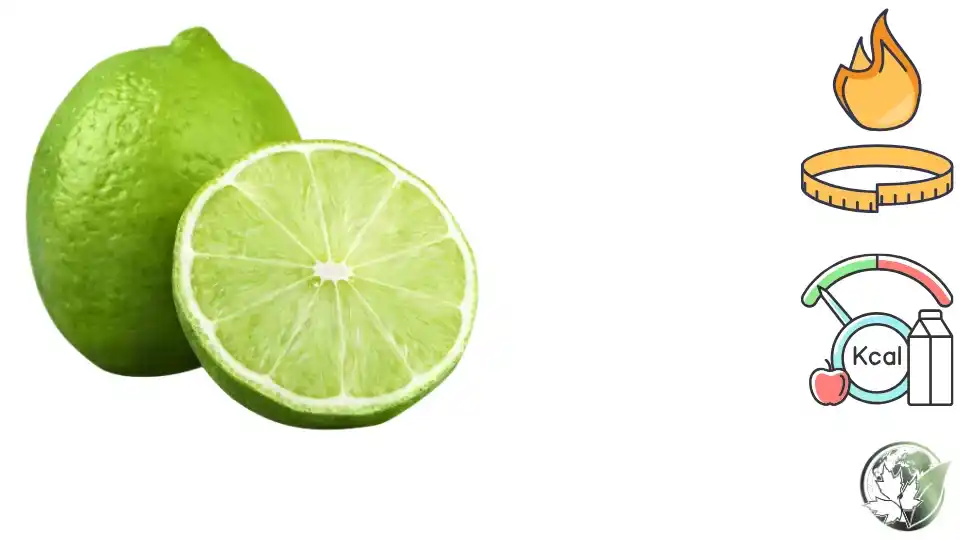
How Many Calories Are in a Lime? The Quick Answer
A medium lime weighing about 67 grams has roughly 20 calories. One hundred grams of lime has about 30 calories, and the juice of one lime (about 30 ml or two tablespoons) has about 10. A single tablespoon of lime juice has only 4 calories, and a wedge of lime has about 2. Because limes are small, acidic and used in small amounts, they add almost nothing to the calories in a dish or a drink.
Lemons are the obvious comparison. One hundred grams of lemon has about 29 calories, so the two citrus fruits are almost identical. A medium lemon (58 g) has about 17 calories, a little less than a lime only because it is a little smaller in the standard reference. A tablespoon of lemon juice has 3 calories, against 4 for lime. The real differences are in flavor, vitamin C and how each fruit is used in cooking and drinks.
This guide covers the calories in a whole lime, in lime juice, zest and wedges, in dried limes and in drinks such as limeade, margaritas and gin and tonic. It compares limes and lemons for energy, vitamins and acidity, explains how citrus fits into weight loss and gives practical tips for buying, juicing and storing. You will find three comparison tables and a full FAQ.
One medium lime has about 20 calories and its juice about 10
How Many Calories Are in One Lime, a Wedge and a Tablespoon of Juice?
Most people do not eat limes whole. They squeeze them, slice them into wedges or use the zest. The table converts each common use into calories.
| Lime portion | Amount | Calories | Vitamin C |
|---|---|---|---|
| 1 wedge (1/8 lime) | 8 g | 2 kcal | 2.4 mg |
| 1 slice | 6 g | 2 kcal | 1.7 mg |
| 1 medium lime, whole | 67 g | 20 kcal | 19.5 mg |
| Juice of 1 lime | 30 ml | 8 kcal | 8 mg |
| 1 tablespoon juice | 15 ml | 4 kcal | 4 mg |
| 1 cup juice | 242 ml | 65 kcal | 72 mg |
| 1 teaspoon zest | 2 g | 1 kcal | 1.2 mg |
| 100 g whole lime | 100 g | 30 kcal | 29.1 mg |
| 1 large lime | 100 g | 30 kcal | 29 mg |
The average squeeze of a lime into a glass of water or over a plate of food gives you about 8 to 10 calories. Even three limes' worth of juice in a pitcher of lemonade-style drink adds only about 30 calories before any sweetener.
How Many Calories Are in Lime Juice, Limeade and Lime Drinks?
Plain lime juice is low in calories, but the drinks made from it often contain a lot of sugar or alcohol.
| Drink | Serving | Calories | Sugar |
|---|---|---|---|
| Lime juice, fresh | 1 tbsp | 4 kcal | 0.1 g |
| Lime water (juice of half lime in 240 ml) | 240 ml | 5 kcal | 0.3 g |
| Sparkling water with lime | 355 ml | 2 kcal | 0 g |
| Limeade, homemade with 2 tbsp sugar | 240 ml | 110 kcal | 28 g |
| Limeade, bottled | 240 ml | 100 kcal | 25 g |
| Lime soda (lemon-lime) | 355 ml | 140 kcal | 38 g |
| Mojito | 240 ml | 170 kcal | 14 g |
| Margarita | 240 ml | 270 kcal | 25 g |
| Gin and tonic with lime | 240 ml | 170 kcal | 14 g |
| Persian doogh with lime | 240 ml | 70 kcal | 6 g |
A lime wedge in sparkling water is nearly a zero calorie drink, while limeade or a margarita has 100 to 270. The fruit is not the cause: sugar, tequila and soft drinks are.
Lime vs Lemon: Calories and Nutrition Compared
Limes and lemons are close relatives and share much of their nutritional profile, but each has a few strengths.
| Per 100 g (raw, without peel) | Lime | Lemon |
|---|---|---|
| Calories | 30 kcal | 29 kcal |
| Carbohydrate | 10.5 g | 9.3 g |
| Sugar | 1.7 g | 2.5 g |
| Fiber | 2.8 g | 2.8 g |
| Protein | 0.7 g | 1.1 g |
| Fat | 0.2 g | 0.3 g |
| Vitamin C | 29.1 mg | 53 mg |
| Calcium | 33 mg | 26 mg |
| Potassium | 102 mg | 138 mg |
| Water | 88.3 g | 88.98 g |
| Juice, 1 tablespoon (15 ml) | Lime juice | Lemon juice |
|---|---|---|
| Calories | 4 kcal | 3 kcal |
| Vitamin C | 4.1 mg | 6.0 mg |
| Citric acid | about 1.2 g | about 1.4 g |
| Typical pH | 2.0 to 2.35 | 2.0 to 2.6 |
Limes and lemons have almost identical calories. Lemons are a better source of vitamin C, with about 80 percent more per 100 grams, while limes contain slightly more calcium and carbohydrate. In practice, the amounts used are so small that the difference is not important, and the decision comes down to taste: lime is more bitter and aromatic, lemon is brighter and sweeter.
Limes and lemons both provide around 30 calories per 100 grams
How Much Vitamin C Is in a Lime?
A medium lime provides about 19 to 20 milligrams of vitamin C, which is roughly 22 percent of the daily value of 90 milligrams for adults. The juice of one lime has about 8 milligrams. This is lower than an orange, which has about 70 milligrams, but limes are strong in other protective compounds such as flavonoids, limonoids and citric acid.
Historically, limes were famous for preventing scurvy among sailors in the British navy, which is why British sailors came to be called limeys. The practice began with lemons and later switched to limes, which are actually lower in vitamin C, and this change contributed to outbreaks of scurvy on long voyages.
Vitamin C supports the immune system, collagen formation, iron absorption and antioxidant protection. Squeezing lime on beans, lentils or spinach increases the absorption of non-heme iron, which is useful for vegetarians. Vitamin C is sensitive to heat and light, so add lime juice at the end of cooking for the most benefit.
How Many Calories Are in Dried Limes and Lime Products?
Dried limes, known as limoo amani or loomi in the Middle East, are used in stews and soups, and they have more calories per gram than fresh ones because the water has evaporated. They are used in small amounts, so the energy is low in practice.
| Product | Serving | Calories |
|---|---|---|
| Dried lime (whole) | 1 piece, 5 g | 15 kcal |
| Dried lime powder | 1 tsp, 3 g | 9 kcal |
| Lime zest | 1 tsp | 1 kcal |
| Lime pickle | 1 tbsp, 15 g | 20 kcal |
| Lime marmalade | 1 tbsp, 20 g | 50 kcal |
| Key lime pie | 1 slice, 125 g | 350 kcal |
| Lime sorbet | 1/2 cup | 120 kcal |
| Lime cordial | 30 ml | 60 kcal |
A whole dried lime added to a stew of six servings adds about 3 calories per serving. The sweet products, such as marmalade, cordial and pie, get their calories from sugar and fat, not from the lime itself.
Does Lime Water Help You Lose Weight?
Lime water, made with the juice of half a lime in a glass of water, has about 5 calories. It does not burn fat, but it can help you drink more water and replace sugary drinks. A person who swaps one can of soda a day (140 calories) for lime water saves about 135 calories daily, or about 49,000 calories a year, equal to about 6 kilograms of body fat.
Studies on citrus compounds suggest possible effects on metabolism and fat storage, but the evidence in humans is limited. The benefits of lime water come mainly from hydration and the reduction of liquid calories. Drinking water before meals has been shown to reduce food intake modestly, and flavor from lime can make water more appealing.
Add a little honey if you like, but remember that a teaspoon of honey adds 21 calories, more than the whole lime. If you want to reduce sugar, add mint, cucumber or ginger instead.
How Do Lime and Lemon Compare as Cooking Ingredients?
The two fruits behave differently in the kitchen. Lime has a sharper, more floral and slightly bitter taste, and it dominates Mexican, Thai, Vietnamese, Indian and Middle Eastern cooking. Lemon has a cleaner acidity and is common in Mediterranean, French and Persian cuisine.
**Marinades:** Both tenderize meat and fish through acid, but limes in ceviche "cook" the fish in 15 to 20 minutes.
**Dressings:** Lime pairs with cilantro, chili and olive oil. Lemon pairs with garlic and herbs.
**Desserts:** Lime gives a distinct tang in pies and sorbets.
**Drinks:** Lime dominates mojitos, margaritas and gin cocktails.
**Finishing:** A squeeze at the end brightens soups, beans and rice with almost no calories.
For people reducing salt, citrus is an effective flavor substitute. A squeeze of lime can reduce the need for added salt in a dish, supporting lower sodium intake.
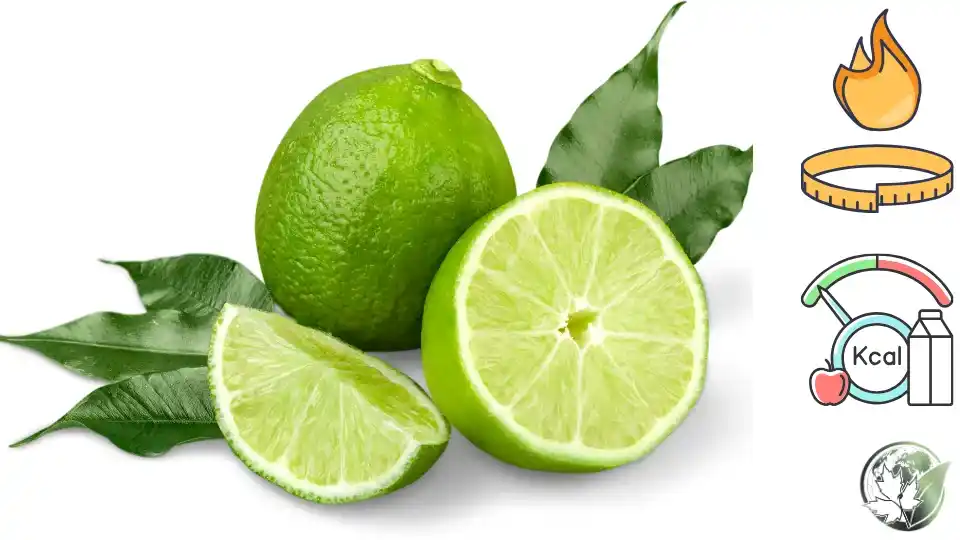
A lime wedge brightens fish and rice with about 2 calories
How to Choose, Juice and Store Limes
A good lime feels heavy for its size, with thin, smooth skin and a bright green color. Slight yellowing means it is ripe and often juicier, not bad. Avoid hard, shriveled or moldy fruit. Persian limes, the most common, yield about 2 tablespoons of juice, while smaller Key limes have more acidity and a stronger aroma.
To get more juice, roll the lime firmly on a counter before cutting, or warm it in the microwave for 10 seconds. Cut across rather than lengthwise to expose more juice cells. Store limes at room temperature for about a week, or in the refrigerator in a bag for three to four weeks. Freeze juice in ice cube trays, one cube is about 2 tablespoons, and use for months.

Freezing lime juice in cubes keeps it ready for cooking and drinks
Are There Any Health Concerns With Limes?
Limes are safe in food amounts, but there are some points to remember. The citric acid can erode tooth enamel if you sip lime water all day, so use a straw, rinse with plain water and avoid brushing for 30 minutes afterward. People with acid reflux may find citrus triggers symptoms. Handling limes and then exposing the skin to strong sun can cause phytophotodermatitis, a skin reaction that leaves red marks or dark patches, which is why bartenders and cooks wash their hands after squeezing.
Citrus fruits may interact with some medications. Grapefruit is the main problem, and limes have a smaller effect, but people on specific drugs should ask a pharmacist if they eat large quantities. Allergy to citrus is uncommon but possible.
How to Count Lime Calories When You Cook or Order Drinks
For cooking, count the juice at 4 calories per tablespoon and the zest at 1 calorie per teaspoon. For wedges, count 2 calories each. The important part is to separate the lime from the rest of the recipe. In a guacamole recipe with two limes, the limes add about 20 calories, and the avocados add hundreds.
When ordering drinks, ask for no sugar syrup or use soda water. A "skinny" margarita with fresh lime, tequila and a little agave has about 130 calories, compared with 270 for the standard bar version. Always remember that the lime is the light part of the drink.
Why Are Limes So Low in Calories Even Though They Taste Sour?
Sourness comes from acid, not from calories. Lime juice is about 6 percent citric acid and only about 1.7 percent sugar by weight of the fruit, and the rest is water. Citric acid provides about 2.5 calories per gram, but there is so little of it in a tablespoon of juice that the total stays at 4 calories. The sharp taste also means that people use limes in small amounts, so the energy intake from them is tiny in real life.
The low sugar content is why limes are easy to include in almost every eating pattern. Even people with diabetes or those on low carbohydrate diets can use lime juice freely for flavor. One lime has only about 7 grams of carbohydrate, and about 2 grams of that is fiber. The juice alone of a whole lime has about 2.5 grams of carbohydrate, which is negligible against a daily limit.
How Do Limes Compare With Other Citrus Fruits?
Citrus fruits are all light in calories, though larger sweet ones such as oranges and grapefruit have more sugar per fruit. The table compares the common choices.
| Citrus fruit (100 g) | Calories | Sugar | Vitamin C | One fruit |
|---|---|---|---|---|
| Lime | 30 kcal | 1.7 g | 29 mg | 20 kcal |
| Lemon | 29 kcal | 2.5 g | 53 mg | 17 kcal |
| Grapefruit | 42 kcal | 7 g | 31 mg | 52 kcal (half) |
| Orange | 47 kcal | 9.4 g | 53 mg | 62 kcal |
| Mandarin | 53 kcal | 10.6 g | 27 mg | 47 kcal |
| Pomelo | 38 kcal | 6.5 g | 62 mg | 230 kcal (whole) |
| Bergamot | 36 kcal | 3 g | 30 mg | 20 kcal |
Limes and lemons are the lowest in sugar and are mostly used as flavorings. Oranges, mandarins and grapefruit are eaten as fruit, and each contributes more sugar and energy per serving, but also more fiber, vitamin C and folate. For a refreshing low calorie boost, citrus water with lime or lemon works well, and for a snack, an orange or mandarin is a more filling choice.
How Can You Use Lime to Cut Salt, Sugar and Fat in Recipes?
A squeeze of lime juice increases the perception of flavor and lets you use less of other seasonings. Chefs describe acid as the "fifth seasoning" after salt, fat, sweet and heat, because it brightens dishes and makes them taste more complete. If a soup, stew or sauce tastes flat, a teaspoon of lime juice often fixes it better than extra salt.
Here are some practical ways to apply lime in a calorie-aware kitchen.
Replace part of the oil in dressings with lime juice. A dressing of 1 tablespoon oil and 2 tablespoons lime has 128 calories, while 3 tablespoons of oil has 357.
Use lime and chili on fruit instead of sugar, as in Mexican fruit cups.
Add lime to yogurt dips and sauces to replace mayonnaise or cream.
Season grilled chicken and fish with lime and herbs rather than butter.
Finish rice, beans and lentils with lime to reduce the need for salt.
Use lime zest in baking to boost flavor so you can reduce sugar.
A taco dinner shows the effect. A plate with grilled chicken, salsa and lime might have 350 calories, while one with creamy sauce and cheese could be 550. The lime and salsa version is lighter without losing taste.
How Do Lime and Lemon Affect Digestion and Hydration?
Many people drink warm lime or lemon water in the morning as a habit. It is a pleasant way to start hydration, and the aroma stimulates appetite and saliva. There is no strong evidence that it "detoxifies" the body, because the liver and kidneys handle that work, but it does contribute fluid and a small amount of vitamin C.
Citric acid in citrus can increase urinary citrate, which may reduce the risk of kidney stones in people who are prone to them. Some doctors recommend lemon or lime juice diluted in water as part of stone prevention, along with plenty of fluid. If you have a history of stones, ask your doctor about the right amount for you.
In people with sensitive stomachs, large amounts of citrus can cause heartburn. Diluting lime juice, drinking it with food and avoiding it on an empty stomach may help. For most people, one or two glasses of lime water per day is comfortable and safe.
What Are Some Easy Low-Calorie Lime Recipes?
You can build a whole day around lime without a calorie penalty. A few ideas follow, with approximate calories per serving.
| Recipe | Main ingredients | Calories |
|---|---|---|
| Lime and mint sparkling water | Lime, mint, soda water | 5 kcal |
| Cilantro lime rice (1/2 cup) | Rice, lime, cilantro | 110 kcal |
| Lime and chili cucumber slices | Cucumber, lime, chili | 20 kcal |
| Grilled lime chicken (100 g) | Chicken, lime, garlic | 150 kcal |
| Shrimp ceviche (1 cup) | Shrimp, lime, onion, tomato | 130 kcal |
| Lime yogurt dressing (2 tbsp) | Yogurt, lime, herbs | 20 kcal |
| Black beans with lime (1/2 cup) | Beans, lime, cumin | 125 kcal |
These recipes keep the lime in the spotlight and rely on fresh ingredients rather than fats or sugars. They also show that the calories in a dish depend mostly on the main ingredient, not on the citrus used to season it.
How Many Limes Do You Need for a Recipe?
When shopping, it helps to know how much juice a lime gives. One medium lime yields about 2 tablespoons of juice and about 1 teaspoon of zest. A recipe calling for 1/2 cup of juice needs about 4 limes, which adds about 32 calories in total. For a pitcher of lime water that serves six, three limes are enough, costing about 5 calories per glass. Buying limes by weight, a kilogram contains about 15 medium limes, which is plenty for a week of cooking and drinks.
Key Takeaways: Lime Calories vs Lemon
A medium lime has about 20 calories, and a tablespoon of juice 4, almost identical to a lemon at 29 calories per 100 grams. Lemons have more vitamin C, and limes are slightly higher in carbohydrate and calcium. The calories in lime drinks and desserts come from sugar and alcohol, so use fresh lime to add flavor, replace salt and sweet drinks and keep meals light.
Frequently Asked Questions
9 questions answered
How many calories are in a lime?
A medium lime (about 67 g) has about 20 calories, and 100 grams has about 30.
How many calories are in lime juice?
One tablespoon of lime juice has about 4 calories, and the juice of one lime has about 8 to 10.
Does a lime have more calories than a lemon?
They are almost the same. Lime has about 30 calories per 100 grams and lemon about 29.
How many calories are in a lime wedge?
A wedge of lime has about 2 calories.
How many calories are in lime water?
A glass of lime water made with half a lime has about 5 calories.
Is lime good for weight loss?
Lime is low in calories and makes water more appealing, which can help replace sugary drinks, but it does not burn fat on its own.
How many calories are in limeade?
Homemade or bottled limeade has about 100 to 110 calories per 240 ml because of the added sugar.
Which has more vitamin C, lime or lemon?
Lemon has more, about 53 mg per 100 grams versus 29 mg for lime.
Are dried limes high in calories?
One dried lime has about 15 calories, and it is used in small amounts for flavor.