How Many Calories Are in Lentils? The Quick Answer
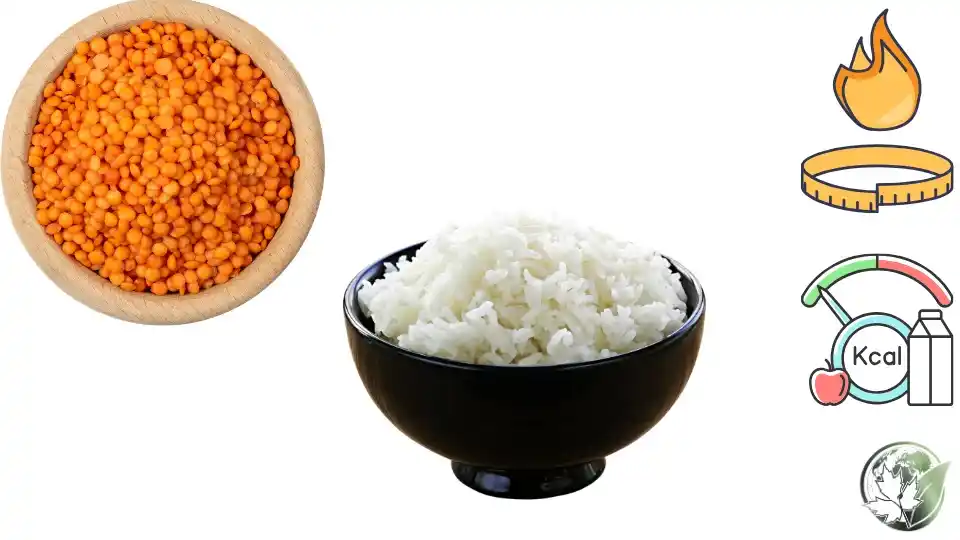
Cooked lentils have about 116 calories per 100 grams. A cup of cooked lentils (198 g) has about 230 calories, a half cup (99 g) has about 115, a quarter cup (50 g) has about 58 and a large serving of 250 grams has about 290. Dry, uncooked lentils have about 352 calories per 100 grams, with a quarter cup (48 g) having about 170 calories and a cup (192 g) having about 675. Cooked white rice has about 130 calories per 100 grams, with 205 calories in a cup (158 g).
Per gram, cooked lentils have about 11 percent fewer calories than cooked white rice. Per cup, lentils have about 12 percent more, because a cup of lentils is heavier, 198 grams against 158. The real difference is what comes with the calories. A cup of cooked lentils has about 18 grams of protein and 15.6 grams of fiber, while a cup of white rice has about 4.3 grams of protein and 0.6 gram of fiber. For the same calories, lentils give about four times the protein and many times the fiber.
This guide covers the calories in cooked and dry lentils per cup, spoon and 100 grams, for brown, green, red, yellow and black lentils, and compares them with cooked white and brown rice. It also covers how dry lentils expand, how to cook them, the calories in lentil dishes such as adas polo and lentil soup, and how lentils fit weight loss, diabetes and vegetarian diets. There are three comparison tables and an FAQ.
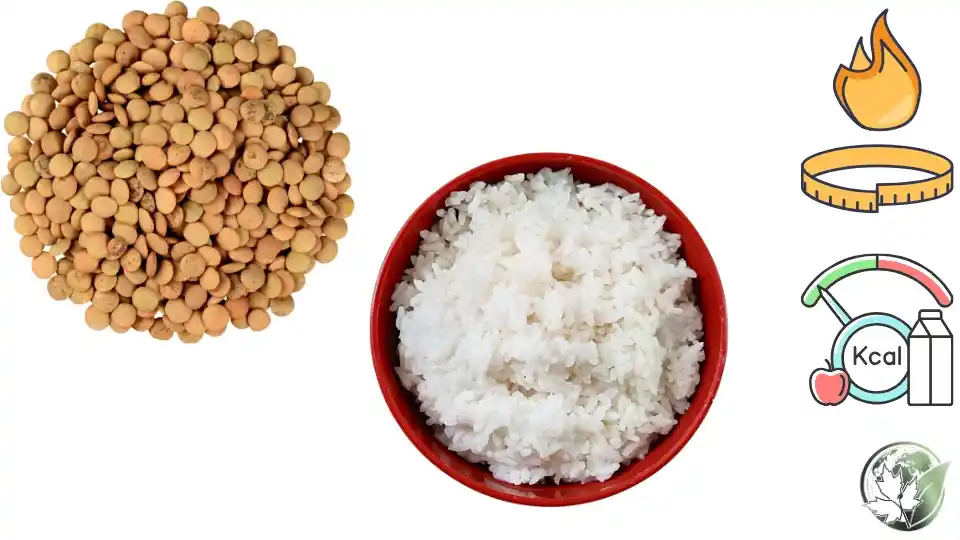
A cup of cooked lentils has about 230 calories and 18 grams of protein
How Many Calories Are in Cooked Lentils by Cup, Spoon and Weight?
The values below are for boiled lentils without salt or oil.
| Portion | Weight | Calories | Protein | Fiber | Carbs |
|---|---|---|---|---|---|
| 1 tablespoon | 12 g | 14 kcal | 1.1 g | 0.9 g | 2.4 g |
| 1/4 cup | 50 g | 58 kcal | 4.5 g | 3.9 g | 10 g |
| 1/2 cup | 99 g | 115 kcal | 8.9 g | 7.8 g | 19.9 g |
| 3/4 cup | 149 g | 173 kcal | 13.4 g | 11.7 g | 29.9 g |
| 1 cup | 198 g | 230 kcal | 17.9 g | 15.6 g | 39.9 g |
| 1 ladle (soup, lentils only) | 60 g | 70 kcal | 5.4 g | 4.7 g | 12 g |
| 200 g | 200 g | 232 kcal | 18 g | 15.8 g | 40 g |
| 100 g | 100 g | 116 kcal | 9.0 g | 7.9 g | 20.1 g |
A typical serving at a meal is half a cup to a cup, which gives 115 to 230 calories. For a main dish of lentil soup, you might use 1/2 cup of cooked lentils per bowl, at about 115 calories plus the broth, onions and any oil.
How Many Calories Are in Dry Lentils and How Much Do They Expand?
Dry lentils absorb water as they cook. A cup of dry lentils makes about 2.4 to 2.5 cups of cooked lentils, and their weight goes up by about 2.4 to 2.6 times. This explains why dry lentils have 352 calories per 100 grams and cooked ones 116.
| Dry lentils | Weight | Calories | Cooked yield | Cooked weight |
|---|---|---|---|---|
| 1 tablespoon | 12 g | 42 kcal | about 2.5 tbsp | 30 g |
| 1/4 cup | 48 g | 169 kcal | about 5/8 cup | 120 g |
| 1/2 cup | 96 g | 338 kcal | about 1 1/4 cup | 240 g |
| 1 cup | 192 g | 676 kcal | about 2 1/2 cups | 480 g |
| 100 g | 100 g | 352 kcal | about 250 g | 250 g |
| 1 kg bag | 1,000 g | 3,520 kcal | about 2.5 kg | 2,500 g |
For counting, you must be consistent about whether you use dry or cooked weight. If you weigh lentils dry, use 3.52 calories per gram. If you weigh them after cooking, use 1.16 per gram. A half cup of dry lentils, 338 calories, makes about 1 1/4 cups cooked, with the same calories.
How Many Calories Are in Different Types of Lentils?
The calories of cooked lentils are about the same across types, between 105 and 130 per 100 grams. The differences are in texture, cooking time and nutrition.
| Lentil type (cooked, 100 g) | Calories | Protein | Fiber | Notes |
|---|---|---|---|---|
| Brown or green lentils | 116 kcal | 9.0 g | 7.9 g | Hold shape, earthy |
| Red or orange split lentils | 110 kcal | 8.5 g | 4.0 g | Cook fast, creamy |
| Yellow split lentils | 110 kcal | 8.5 g | 4.0 g | Used in dal |
| Black beluga lentils | 120 kcal | 9.5 g | 8.0 g | Firm, glossy |
| French green (Puy) lentils | 115 kcal | 9.0 g | 8.0 g | Peppery, firm |
| Persian small brown lentils (adas) | 116 kcal | 9.0 g | 7.9 g | Common in adas polo |
| Sprouted lentils, raw | 106 kcal | 8.8 g | 2.6 g | Crunchy |
| Canned lentils, drained | 100 kcal | 7.5 g | 6.0 g | Convenient, salt added |
Red and yellow lentils are split and hulled, which is why they have less fiber and cook in 10 to 15 minutes. Brown and green lentils keep their skins and take 20 to 30 minutes.
Lentils vs Cooked Rice: Calories Compared
| Food | Portion | Weight | Calories | Protein | Fiber |
|---|---|---|---|---|---|
| Cooked lentils | 1/2 cup | 99 g | 115 kcal | 8.9 g | 7.8 g |
| Cooked lentils | 1 cup | 198 g | 230 kcal | 17.9 g | 15.6 g |
| Cooked lentils | 100 g | 100 g | 116 kcal | 9.0 g | 7.9 g |
| White rice, cooked | 1/2 cup | 79 g | 103 kcal | 2.1 g | 0.3 g |
| White rice, cooked | 1 cup | 158 g | 205 kcal | 4.3 g | 0.6 g |
| White rice, cooked | 100 g | 100 g | 130 kcal | 2.7 g | 0.4 g |
| Brown rice, cooked | 1 cup | 195 g | 216 kcal | 5.0 g | 3.5 g |
| Basmati rice, cooked | 1 cup | 163 g | 210 kcal | 4.4 g | 0.7 g |
| Lentils and rice mix (50/50) | 1 cup | 180 g | 210 kcal | 11 g | 8 g |
A cup of lentils has 25 more calories than a cup of white rice, but it provides four times as much protein and 26 times as much fiber. The mix of both, as in the traditional adas polo, gives a balanced dish of about 210 calories per cup with 11 grams of protein.
Lentils vs Cooked Rice: Nutrition Compared
| Per 100 g cooked | Lentils | White rice | Brown rice |
|---|---|---|---|
| Calories | 116 kcal | 130 kcal | 112 kcal |
| Carbohydrate | 20.1 g | 28.2 g | 23.5 g |
| Protein | 9.0 g | 2.7 g | 2.3 g |
| Fiber | 7.9 g | 0.4 g | 1.8 g |
| Fat | 0.4 g | 0.3 g | 0.8 g |
| Iron | 3.3 mg | 0.2 mg | 0.5 mg |
| Folate | 181 mcg | 3 mcg | 4 mcg |
| Potassium | 369 mg | 35 mg | 79 mg |
| Magnesium | 36 mg | 12 mg | 44 mg |
| Zinc | 1.3 mg | 0.5 mg | 0.6 mg |
| Glycemic index | 29 | 73 | 68 |
| Per 100 calories | Lentils | White rice |
|---|---|---|
| Weight | 86 g | 77 g |
| Protein | 7.8 g | 2.1 g |
| Fiber | 6.8 g | 0.3 g |
| Iron | 2.8 mg | 0.2 mg |
| Folate | 156 mcg | 2 mcg |
For 100 calories, lentils provide nearly four times the protein, more than 20 times the fiber, 14 times the iron and 78 times the folate of white rice. They also have a glycemic index of about 29 compared with 73 for white rice.
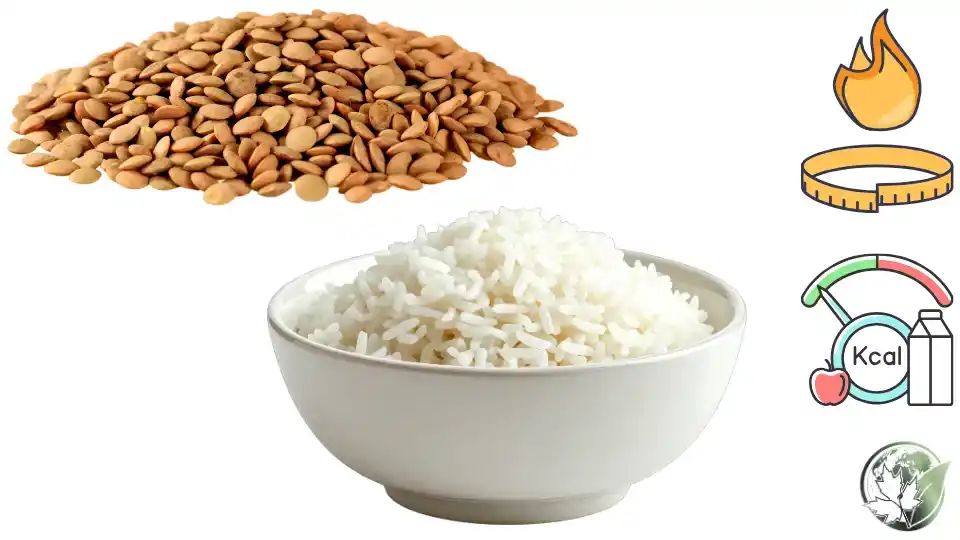
For 100 calories, lentils give nearly four times the protein and over 20 times the fiber of white rice
Are Lentils Good for Weight Loss?
Yes. Lentils are filling, high in protein and fiber, and low in fat, so they keep you full for hours. Studies find that eating lentils and other pulses is associated with lower body weight and a reduction in waist size, partly because they replace higher calorie foods. In controlled trials, a meal with lentils led to less hunger and a smaller appetite at the next meal than a meal with the same calories from rice or pasta.
| Meal side (1 cup) | Calories | Protein | Fiber | Fullness |
|---|---|---|---|---|
| Cooked lentils | 230 kcal | 17.9 g | 15.6 g | Very high |
| Cooked white rice | 205 kcal | 4.3 g | 0.6 g | Medium |
| Cooked brown rice | 216 kcal | 5.0 g | 3.5 g | Medium to high |
| Cooked pasta | 220 kcal | 8.1 g | 2.5 g | Medium |
| Mashed potatoes | 237 kcal | 4.0 g | 3.2 g | Medium |
| Quinoa, cooked | 222 kcal | 8.1 g | 5.2 g | High |
If you replace half of your usual rice with lentils, you keep the calories the same, and increase protein and fiber substantially. A plate with 3/4 cup of rice and 1/2 cup of lentils has about 270 calories, 9 grams of protein and 8 grams of fiber, compared with 205 calories, 4 grams of protein and less than 1 gram of fiber for a cup of rice alone.
Do Lentils Raise Blood Sugar?
Lentils have one of the lowest glycemic indexes among carbohydrate foods, about 29 for brown and green lentils and 26 for red lentils. A half-cup serving has a glycemic load of about 5, which is very low. They are digested slowly because of their fiber and resistant starch. In studies of people with type 2 diabetes, replacing part of rice or potatoes with lentils improved blood glucose and HbA1c.
White rice, by contrast, has a glycemic index of about 73 and a glycemic load of about 36 per cup. Mixing lentils with rice lowers the overall glycemic response of the meal. People with diabetes can benefit from filling a quarter of the plate with lentils, and the carbohydrate should still be counted: a half cup has about 20 grams.
Are Lentils Healthy?
Lentils are among the most nutrient-dense foods. They provide plant protein, soluble and insoluble fiber, iron, folate, potassium, magnesium, zinc and B vitamins. A cup gives more than 350 micrograms of folate, about 90 percent of the daily need. Regular intake of pulses is associated with a lower risk of heart disease, type 2 diabetes and some cancers.
Lentils contain antinutrients such as phytates and lectins, which can reduce mineral absorption, but cooking reduces them greatly. Pairing lentils with vitamin C-rich foods, such as lemon juice, tomato or peppers, improves iron absorption. Lentils can cause gas and bloating in people who are not used to them, which is why it is best to start with small portions and increase gradually. They are high in purines, so people with gout may need to limit them.
How Many Calories Are in Lentil Dishes?
| Dish | Serving | Calories | Notes |
|---|---|---|---|
| Lentil soup (shorba-ye adas) | 1 bowl (300 g) | 230 kcal | Onion, carrot, a little oil |
| Adas polo (lentil rice) | 1 plate (300 g) | 460 kcal | Rice, lentils, dates, fried onion |
| Adasi (Persian breakfast lentils) | 1 bowl | 280 kcal | Lentils, onion, oil |
| Dal (Indian lentils) | 1 cup | 210 kcal | Turmeric, onion, ghee |
| Lentil salad with vinaigrette | 1 cup | 250 kcal | Olive oil |
| Lentil curry | 1 cup | 260 kcal | Coconut milk |
| Lentil burger | 1 patty | 220 kcal | Fried |
| Mujaddara (lentils, rice, onions) | 1 plate | 480 kcal | Fried onions |
| Lentil stew with vegetables | 1 bowl | 200 kcal | Low oil |
| Lentil pasta, cooked | 1 cup | 190 kcal | Made from lentil flour |
The calories in these dishes depend greatly on the fat that is added, especially fried onions, oil, ghee and coconut milk. The lentils themselves usually provide about half of the calories.
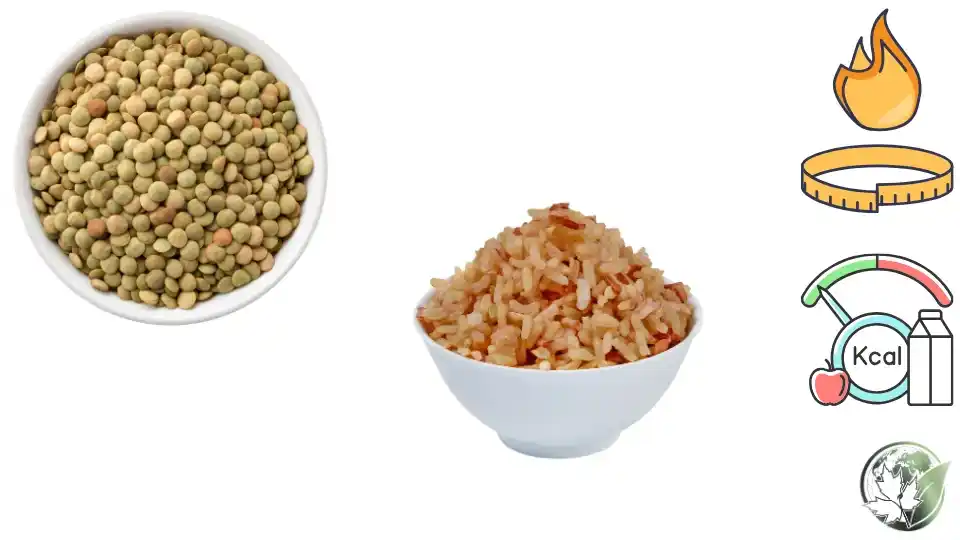
A bowl of lentil soup has about 230 calories and plenty of protein and fiber
How to Cook Lentils
Lentils do not need soaking. Rinse them and pick out any stones. Use about 2 to 3 parts water or stock for 1 part lentils. Bring to a boil, then simmer: red lentils for 10 to 15 minutes, green and brown for 20 to 30 minutes, until tender. Add salt near the end, and acid such as tomato or lemon after the lentils are soft, as acid can toughen them. For firm lentils for salads, cook until just tender and drain.
To reduce gas, rinse well, discard the cooking water if you are sensitive and add spices such as cumin, fennel or asafoetida. Soaking for a few hours and sprouting reduce the antinutrients further.
How to Store Lentils
Dry lentils keep for one to two years in an airtight container in a cool, dark place. Cooked lentils keep in the refrigerator for 4 to 5 days and in the freezer for up to six months. Cool them quickly after cooking and store in shallow containers.
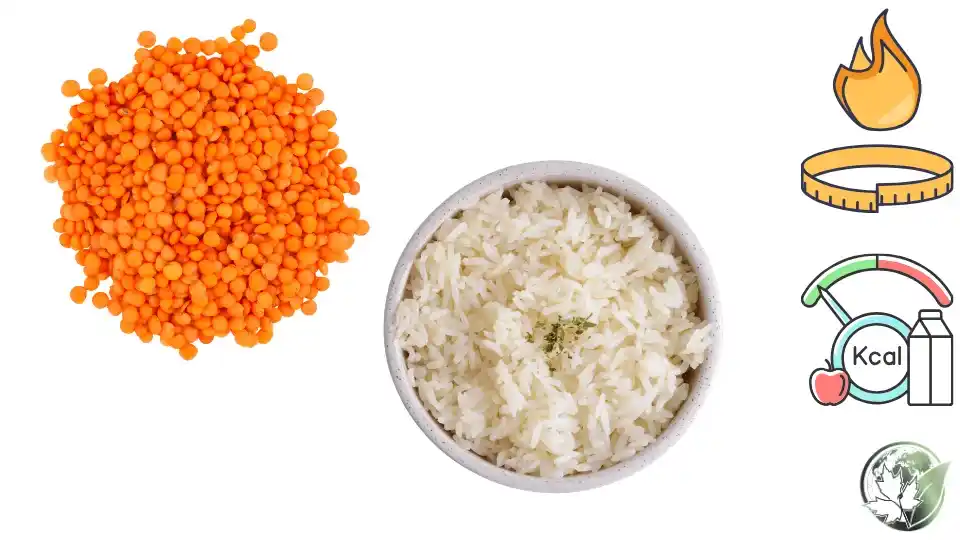
Dry lentils keep for one to two years in an airtight jar
How to Count Lentil Calories Accurately
Decide whether to weigh dry or cooked. Use 3.52 calories per gram for dry and 1.16 for cooked. A cup of cooked lentils is 230 calories. Add oil, onions fried in oil, coconut milk or meat, which often provide the bulk of the calories in a dish.
How Do Lentils Compare with Other Legumes and Grains?
Lentils sit at the lighter end of the legume family. Per 100 grams cooked, lentils have 116 calories, black beans 132, chickpeas 164, kidney beans 127 and split peas 118. Among grains, quinoa has 120, bulgur 83, couscous 112 and pasta 158. Lentils cook faster than any other dried legume, need no soaking, and give more protein per calorie than nearly every grain.
| Food (cooked, 100 g) | Calories | Protein | Fiber | Protein per 100 kcal |
|---|---|---|---|---|
| Lentils | 116 kcal | 9.0 g | 7.9 g | 7.8 g |
| Split peas | 118 kcal | 8.3 g | 8.3 g | 7.0 g |
| Kidney beans | 127 kcal | 8.7 g | 6.4 g | 6.9 g |
| Black beans | 132 kcal | 8.9 g | 8.7 g | 6.7 g |
| Chickpeas | 164 kcal | 8.9 g | 7.6 g | 5.4 g |
| Quinoa | 120 kcal | 4.4 g | 2.8 g | 3.7 g |
| Bulgur | 83 kcal | 3.1 g | 4.5 g | 3.7 g |
| White rice | 130 kcal | 2.7 g | 0.4 g | 2.1 g |
| Pasta | 158 kcal | 5.8 g | 1.8 g | 3.7 g |
The last column shows why lentils are a strong choice when you are watching calories and still want protein: they give more than three times the protein per calorie of white rice and more than twice that of quinoa or pasta.
How Do Lentils Fit a Vegetarian or Vegan Diet?
For people who eat no meat, lentils are a core protein source. A cup of cooked lentils has about 18 grams of protein, close to what you get from 60 grams of cooked chicken breast. Lentil protein is low in the amino acid methionine, and rice or other grains are low in lysine, so eating them together over the day gives a complete amino acid profile. This is one reason the pairing of lentils and rice appears in so many cuisines, from Persian adas polo to Egyptian koshari and Indian khichdi.
Lentils also supply iron, but it is non-heme iron, which is absorbed less well than iron from meat. Adding a source of vitamin C, such as lemon juice, tomatoes or bell peppers, can double or triple absorption. Tea and coffee taken with the meal reduce it, so it helps to keep them apart from lentil dishes by an hour or so.
How Many Calories Do You Need From Lentils Each Day?
There is no set requirement, but common dietary guidelines suggest around one and a half cups of pulses per week as a minimum, and many nutrition researchers suggest half to one cup per day for the greatest benefit. A half cup a day adds 115 calories, which is about 5 to 6 percent of a 2,000 calorie diet, while providing about 9 grams of protein and 8 grams of fiber, which is about 30 percent of the daily fiber target.
| Daily lentil intake | Calories | Protein | Fiber | Share of 2,000 kcal |
|---|---|---|---|---|
| 1/4 cup cooked | 58 kcal | 4.5 g | 3.9 g | 3% |
| 1/2 cup cooked | 115 kcal | 8.9 g | 7.8 g | 6% |
| 1 cup cooked | 230 kcal | 17.9 g | 15.6 g | 12% |
| 1.5 cups cooked | 345 kcal | 26.9 g | 23.4 g | 17% |
How Do You Swap Rice for Lentils to Cut Calories?
If you want to lower the calories of a meal without eating less food, replacing part of the rice with lentils is one of the simplest changes. A cup of white rice has 205 calories. If you replace a third of it with lentils, you get 2/3 cup of rice (137 calories) and 1/3 cup of lentils (77 calories), which is 214 calories in total, about the same as the original, but you gain 6 grams of protein and 5 grams of fiber. Replacing rice with lentils entirely lowers calories per gram but increases the weight of food on the plate.
Another approach is to cook the rice and lentils together in one pot, as in the Persian dish adas polo, but to use less oil and fewer fried onions and dates. A plate made this way with a teaspoon of oil has about 330 calories instead of 460.
How Can You Reduce the Calories in Lentil Dishes?
Most of the calories in a lentil dish come from added fat. To keep a dish light, sauté onions in a teaspoon of oil instead of a tablespoon, or cook them in a little stock. Use spices such as cumin, turmeric, coriander and paprika to add flavor without calories. Finish with lemon juice and fresh herbs rather than butter or cream. In soups, blend a portion of the lentils to create creaminess without cream. In salads, use a vinaigrette with more lemon juice than oil. Use coconut milk sparingly in curries, or replace half of it with stock.
Common Mistakes When Counting Lentil Calories
The most common mistake is mixing up dry and cooked weights, which makes the result off by a factor of about three. The second is forgetting the oil, since a tablespoon of oil adds 120 calories, as much as half a cup of lentils. The third is using the calories for canned lentils with the liquid, which adds sodium but few calories, or ignoring the added sugar in some sauces. Weigh lentils on a kitchen scale and log the oil separately for the most accurate result.
Are There Any Downsides to Eating Lentils?
For most people lentils are safe and beneficial. The main complaints are gas and bloating, which usually ease as the gut adapts. People with irritable bowel syndrome may tolerate small portions of canned, rinsed lentils or red lentils better, since they contain fewer fermentable carbohydrates when portions are small. Lentils are high in purines, so people with gout may be advised to limit them. They are also a source of potassium, so people with advanced kidney disease who have been told to limit potassium should check with a doctor or dietitian. Lentils are naturally gluten-free, although cross-contamination is possible in packaged products, so people with celiac disease should look for a gluten-free label.
Key Takeaways: Lentils Calories vs Cooked Rice
Cooked lentils have about 116 calories per 100 grams and 230 per cup, close to cooked white rice at 130 and 205. For the same calories they give four times the protein and more than 20 times the fiber, with a much lower glycemic index. Use lentils to replace part of the rice and enjoy both.
Frequently Asked Questions
6 questions answered
How many calories are in a cup of cooked lentils?
About 230.
How many calories are in dry lentils?
About 352 per 100 grams and 169 for a quarter cup.
Do lentils have fewer calories than rice?
Per gram yes, 116 against 130, but per cup slightly more.
Are lentils good for weight loss?
Yes, they are filling and high in protein and fiber.
How much protein is in a cup of lentils?
About 18 grams.
Do I need to soak lentils?
No, but soaking helps reduce gas.