How Many Calories Are in Honeycomb? The Quick Answer
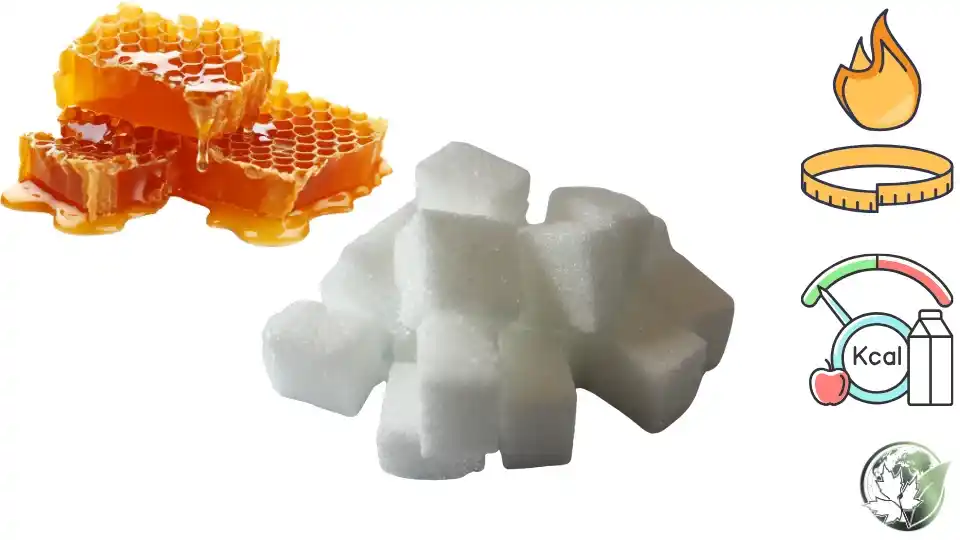
Honeycomb has about 290 calories per 100 grams, because it is about 90 to 95 percent honey by weight, with the rest being the beeswax cells that hold it. A small chunk of 10 grams has about 29 calories, a 20 gram chunk (about a heaped tablespoon) has about 58, a 30 gram piece has about 87, a 60 gram square has about 174 and a whole 250 gram jar of comb has about 725 calories. A sugar cube of 4 grams has about 16 calories, so a 30 gram piece of honeycomb has about as many calories as five and a half sugar cubes.
The wax contributes little energy. Beeswax is made of long-chain esters and fatty acids that the human body cannot digest efficiently, so most of it passes through. As a result, the calories you actually absorb come almost entirely from the honey in the cells. This is why honeycomb has slightly fewer calories than the same weight of strained honey, at 304 calories per 100 grams.
This guide gives honeycomb calories per piece, per spoon and per 100 grams, and compares them with sugar cubes, strained honey and other sweeteners. It explains what happens to the wax, whether comb honey is healthier, how to eat it, how to store it and how to count it. You will find three comparison tables and an FAQ.
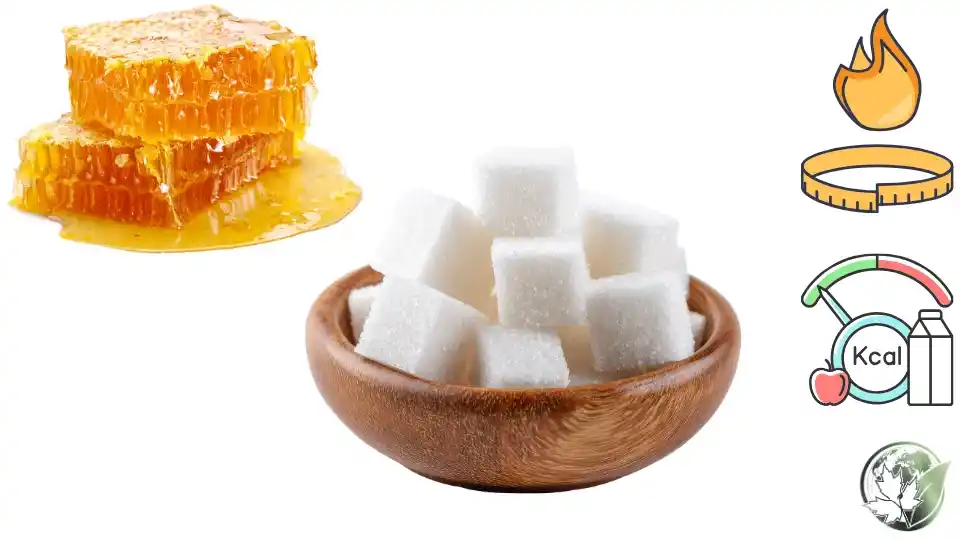
A 30 gram piece of honeycomb has about 87 calories
How Many Calories Are in One Piece, One Spoon and One Jar of Honeycomb?
Comb honey is sold in frames, cut squares or pieces in jars, usually floating in liquid honey. The weight of the pieces varies, so the table gives common portions based on honeycomb with about 90 percent honey.
| Portion | Weight | Calories | Sugar | Wax (approx.) |
|---|---|---|---|---|
| 1 small bite | 5 g | 14 kcal | 3.7 g | 0.5 g |
| 1 teaspoon of chopped comb | 8 g | 23 kcal | 6.0 g | 0.8 g |
| 1 small chunk | 10 g | 29 kcal | 7.4 g | 1.0 g |
| 1 heaped tablespoon | 20 g | 58 kcal | 14.8 g | 2.0 g |
| 1 piece | 30 g | 87 kcal | 22 g | 3.0 g |
| 1 cut square | 60 g | 174 kcal | 44 g | 6.0 g |
| 1 small jar | 125 g | 363 kcal | 92 g | 12.5 g |
| 1 jar | 250 g | 725 kcal | 185 g | 25 g |
| 100 g | 100 g | 290 kcal | 74 g | 10 g |
A piece eaten on its own is about 87 calories, but honeycomb is often served on cheese boards, with bread or on yogurt, where people may eat 50 grams or more without thinking, which is about 145 calories.
Honeycomb vs Sugar Cube: Calories and Sugar Compared
| Item | Weight | Calories | Sugar | Sugar cubes (by sugar) |
|---|---|---|---|---|
| Sugar cube | 4 g | 16 kcal | 4 g | 1 |
| 5 sugar cubes | 20 g | 80 kcal | 20 g | 5 |
| Honeycomb, small chunk | 10 g | 29 kcal | 7.4 g | 1.9 |
| Honeycomb, heaped tablespoon | 20 g | 58 kcal | 14.8 g | 3.7 |
| Honeycomb, piece | 30 g | 87 kcal | 22 g | 5.5 |
| Honeycomb, square | 60 g | 174 kcal | 44 g | 11 |
| Strained honey, 1 tbsp | 21 g | 64 kcal | 17.2 g | 4.3 |
| Strained honey, 1 tsp | 7 g | 21 kcal | 5.7 g | 1.4 |
A 30 gram piece of honeycomb has the sugar of about five and a half cubes. Weight for weight, honeycomb has slightly less sugar than strained honey, because part of the weight is wax: 74 grams of sugar per 100 grams, compared with 82 for strained honey.
What Happens to the Wax in Honeycomb?
The wax is edible. Beeswax is approved as a food additive in many countries, where it is used as a glazing agent. In small amounts, such as the 2 to 3 grams in a piece of honeycomb, it passes through the digestive tract mostly unchanged and provides very few calories, probably less than 5 per piece. It is chewy, and many people chew it for a while and then swallow it or spit it out. Both are fine.
Eating large amounts of wax is a different matter. In very large quantities, it could in theory contribute to constipation or a blockage in the intestine, although there are very few reported cases. People who eat a lot of comb honey should chew it well and drink plenty of water. For anyone with swallowing problems or a history of bowel obstruction, it is best to eat the honey and not the wax.
| Component of honeycomb | Share by weight | Calories per gram | Absorbed calories |
|---|---|---|---|
| Honey | 88 to 95 percent | 3.04 | Almost all |
| Beeswax | 5 to 10 percent | about 9 in theory | Very little |
| Pollen and propolis bits | less than 1 percent | about 3 | Trace |
If you swallow the wax, the label might count it as fat, because it is a waxy lipid. In practice, your body will use only a small part of it.
Honeycomb vs Strained Honey: Which Has More Calories?
| Per 100 g | Honeycomb | Strained honey |
|---|---|---|
| Calories | 290 kcal | 304 kcal |
| Sugar | 74 g | 82 g |
| Wax | 5 to 10 g | 0 g |
| Water | 15 g | 17 g |
| Pollen | trace | trace |
| Propolis | trace | none |
| Price | 2 to 4 times higher | baseline |
| Per tablespoon | Honeycomb (20 g) | Strained honey (21 g) |
|---|---|---|
| Calories | 58 kcal | 64 kcal |
| Sugar | 14.8 g | 17.2 g |
Honeycomb has about 5 percent fewer calories than strained honey at the same weight, and the difference is entirely due to the wax. The nutritional value is not different, and the extra cost is for the experience, since honeycomb is the least processed form of honey: no heating, no filtering and no pumping. If you want honey for its sugar and flavor, strained honey is cheaper, and if you want a natural treat with a chewy texture, comb honey is a delight.
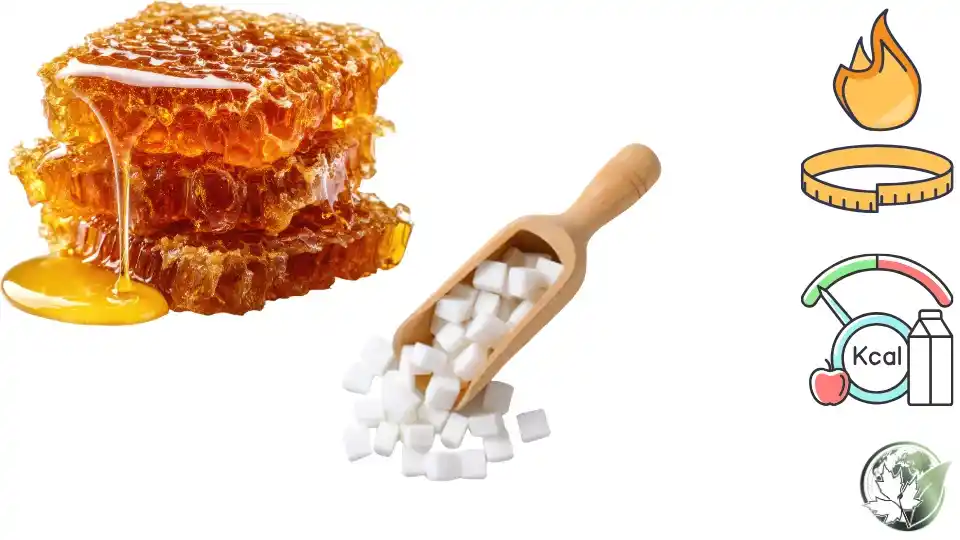
Honeycomb has about 5 percent fewer calories than strained honey because of the wax
Is Honeycomb Healthier Than Sugar?
Honeycomb is minimally processed and may contain small amounts of pollen, propolis and enzymes that are lost or reduced when honey is heated and filtered. It also contains the same antioxidants as raw honey. These compounds are in tiny amounts and their effects on health are not well proven, so there is no reason to believe that comb honey is a health food.
Nutritionally, honeycomb is a sweet: about 74 percent sugar by weight. Health organizations classify honey as a free sugar, and the advice is to limit total free sugars to less than 10 percent of daily calories. A 30 gram piece uses 22 grams of sugar, nearly half of the 50 gram limit, so it should be an occasional treat, not a daily habit. Compared with sugar cubes, honeycomb gives small amounts of minerals and antioxidants and a greater sense of satisfaction, but about the same calories per gram of sugar.
Does Honeycomb Raise Blood Sugar?
Honey has a glycemic index of about 58, and honeycomb is likely similar, although the wax may slow the release slightly. A 30 gram piece has a glycemic load of about 12, which is moderate. People with diabetes should count it as about 22 grams of carbohydrate per piece and eat it in small portions with other foods such as cheese, nuts or yogurt.
| Food | Carbohydrate per portion | Glycemic load |
|---|---|---|
| Honeycomb (30 g) | 22 g | 12 |
| Honeycomb (10 g) | 7.4 g | 4 |
| Sugar cubes (5) | 20 g | 13 |
| Apple (medium) | 25 g | 9 |
| White bread (1 slice) | 14 g | 10 |
| Milk chocolate (20 g) | 12 g | 5 |
How Does Honeycomb Compare With Other Sweet Treats?
| Treat | Portion | Calories | Sugar |
|---|---|---|---|
| Honeycomb | 30 g | 87 kcal | 22 g |
| Milk chocolate | 30 g | 161 kcal | 16 g |
| Gummy candy | 30 g | 103 kcal | 14 g |
| Sweet biscuits | 30 g | 135 kcal | 8 g |
| Baklava | 1 piece (40 g) | 190 kcal | 15 g |
| Dried dates | 2 dates (48 g) | 133 kcal | 32 g |
| Ice cream | 1/2 cup | 137 kcal | 14 g |
| Sugar cubes | 5 cubes (20 g) | 80 kcal | 20 g |
A piece of honeycomb has fewer calories than most treats, but a high sugar content for its size, which is typical of pure sugary foods. If you compare calories only, it looks light. If you compare sugar, it is on the high side.
How to Eat Honeycomb
Honeycomb is traditionally eaten on its own, spread on bread or served with cheese. Here are some serving ideas with their calorie impact.
**On a cheese board:** A small chunk of 10 grams goes well with sharp cheese, such as blue cheese or aged cheddar, adding 29 calories.
**On yogurt:** Crumble 10 to 20 grams over plain Greek yogurt for 29 to 58 calories.
**On toast:** Spread a thin layer on bread with butter.
**In tea:** Drop a small piece in hot tea and let the honey melt. Remove the wax afterward.
**On oatmeal or pancakes:** Use a spoonful of chopped comb for 58 calories.
**With nuts and fruit:** Serve with walnuts, figs and apple slices.
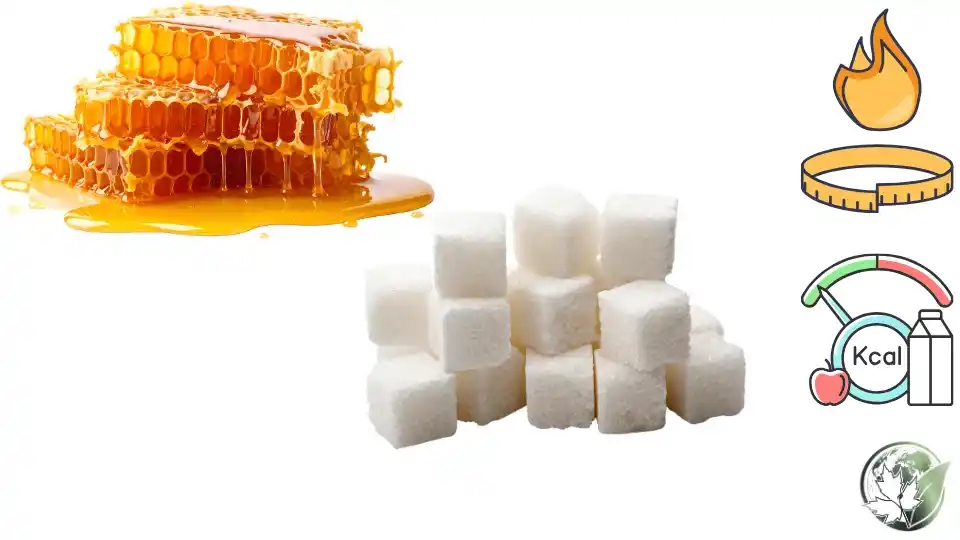
A small chunk of honeycomb with cheese makes a snack of about 150 calories
Can Children and Pregnant Women Eat Honeycomb?
Honey, including honeycomb, should not be given to infants under 12 months, because it may contain spores of Clostridium botulinum that can cause infant botulism. Older children can eat it in moderation, though the sticky wax can be a choking risk for very small children and should be removed. Pregnant women can generally eat honey in food amounts. As honeycomb is raw, choose a trusted source and make sure it was produced hygienically.
How to Choose Good Honeycomb
Choose comb that is evenly capped with fresh, pale wax, without cracks that leak honey. The cells should be full and clean, without dark spots, mold or insects. Check the source, as local beekeepers often produce the best quality. Prices are higher than for liquid honey, and a very cheap comb may be adulterated, for example with sugar syrup fed to the bees or comb made from artificial wax. The comb should smell sweet and floral. Avoid honeycomb that has a sour or fermented smell, which suggests excess moisture.
How to Store Honeycomb
Store honeycomb in a sealed container at room temperature, away from heat and light. Do not refrigerate it, since the cold will make the honey crystallize and the comb hard. It lasts for a year or more. If the honey crystallizes, it is still safe to eat. To keep the comb fresh, wrap it in food-grade paper and store in a container. If you want to freeze it for several months to kill any wax moth larvae, you can, and it will not change the taste.
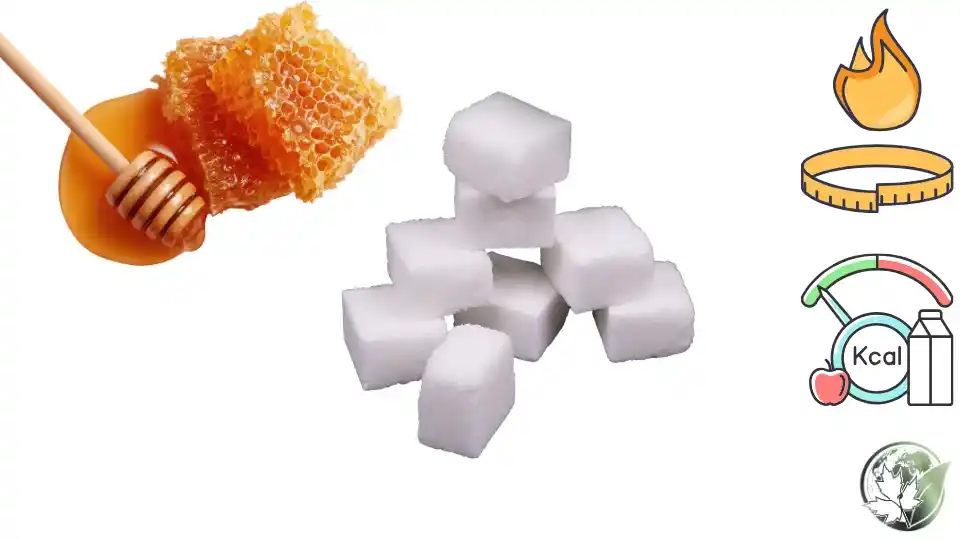
Store honeycomb in a sealed jar at room temperature, not in the refrigerator
How to Count Honeycomb Calories Accurately
Weigh your piece and multiply by 2.9 calories per gram. If you spread it with a knife, estimate by the spoon: a heaped tablespoon of 20 grams has about 58 calories. For pieces in jars with extra honey, weigh just the comb and count the honey separately at 3.04 per gram. You can subtract a little for the wax if you spit it out, but the difference is small.
Why Does Honeycomb Feel Like Less Sugar Than It Is?
Honeycomb is chewy, waxy and slightly sticky, so you eat it slowly and tend to feel that you have had a lot. The wax also gives a sensation of bulk, which can trick the brain into thinking that the portion is lighter in sugar than it is. A 30 gram piece has the sugar of five and a half cubes, but the effect of chewing and the mild flavor of fresh comb can make it feel like a modest, natural snack.
Because the wax is in effect a free filler, the same weight of comb gives about 5 to 10 percent fewer calories than liquid honey. That is a small difference, and it does not mean you can eat more with no consequence. If you are tracking sugar, count the comb the same way as any other sweet: about 3.7 grams of sugar per 5 grams of comb, or roughly one sugar cube's worth for every 5.4 grams.
How Do You Cut and Serve Honeycomb Neatly?
Honeycomb is easiest to cut when slightly cool and firm. Use a sharp, thin knife and wipe it between cuts so that the honey does not smear. Cut squares of about 4 by 4 centimeters for individual servings, which weigh about 30 to 40 grams and have 87 to 116 calories. If the comb is in a frame, let the honey drain from the cut edges for a few minutes on a rack before serving. For a cheese board, cut smaller pieces of about 10 grams and let guests take one or two. Serve it at room temperature, since the honey flows better, and provide a small spoon or knife for spreading.
| Serving style | Weight | Calories |
|---|---|---|
| Small bite for a cheese board | 10 g | 29 kcal |
| Single piece on toast | 20 g | 58 kcal |
| Dessert square | 40 g | 116 kcal |
| Breakfast spoonful on yogurt | 15 g | 44 kcal |
| Tea bite | 5 g | 14 kcal |
What Are the Best Foods to Pair With Honeycomb?
Salty, sour and rich foods balance honeycomb's sweetness. Blue cheese, goat cheese, aged cheddar and feta work especially well. Plain Greek yogurt and labneh add creamy tang. Nuts, such as walnuts or almonds, add crunch and protein. Fresh figs, apples, pears and grapes echo the floral notes. In Persian and Middle Eastern cooking, comb honey often appears with fresh bread, butter and cream at breakfast, with walnuts and sweet tea. Each of these pairings can be a satisfying plate of 150 to 250 calories if the honeycomb portion stays at 20 to 30 grams.
How Is Honeycomb Made, and Why Does It Matter for Quality?
Bees build honeycomb from wax secreted by glands on the underside of the abdomen. They shape it into hexagonal cells, a design that gives the most storage for the least wax. They fill the cells with nectar, fan it with their wings to reduce the water, and when the honey has reached about 17 to 18 percent moisture they seal each cell with a thin wax cap. The caps are a sign that the honey is ripe and ready, which is why comb honey from fully capped frames has the best quality.
Producing comb honey takes more effort than producing liquid honey, because the beekeeper must remove the frame intact without extraction and must cut or package the comb carefully. Bees also use the wax honey flow to build new comb, which means that comb honey production reduces the amount of honey harvested. These factors explain why it costs two to four times more than strained honey.
For consumers, good quality comb honey comes from clean, undamaged comb built on new foundation, with no traces of pesticide or sugar feeding. Local beekeepers who sell at markets can often tell you the floral source, the date of harvest and how the comb was handled. These details matter more than the calories, which are nearly the same for every comb honey.
How Do Different Kinds of Honeycomb Compare?
The flavor and color of the comb depend on the flowers the bees visited. The calories remain close to 290 per 100 grams across the board, since the sugar content is similar. The table lists common sources and their typical character.
| Source | Color | Flavor | Calories per 100 g | Calories per 30 g piece |
|---|---|---|---|---|
| Wildflower | Golden | Floral, varied | 290 kcal | 87 kcal |
| Clover | Pale | Mild, sweet | 290 kcal | 87 kcal |
| Thyme | Amber | Herbal, aromatic | 292 kcal | 88 kcal |
| Orange blossom | Pale gold | Citrus | 290 kcal | 87 kcal |
| Astragalus | Light | Mild | 290 kcal | 87 kcal |
| Ferula | Creamy white | Mild, resinous | 290 kcal | 87 kcal |
| Forest or mountain | Dark | Strong, malty | 286 kcal | 86 kcal |
If you want to keep calories in check, choose the type you enjoy most and eat a small piece. A stronger flavored comb, such as thyme or mountain honey, tends to satisfy with a smaller amount, which may help limit portions.
How Many Calories Does Honeycomb Add Over a Week or a Year?
Small daily habits are easy to underestimate, so a weekly and yearly view helps. Suppose you have a 20 gram piece of honeycomb with your yogurt or toast each morning. That is 58 calories and 14.8 grams of sugar a day, or 406 calories and 104 grams of sugar a week, and about 21,000 calories a year. If you eat a full 30 gram piece, the totals are 609 calories a week and 31,700 a year. These amounts are modest for an active person, but they add up for someone who is trying to lose weight, particularly when they are on top of other sweet foods.
| Habit | Per day | Per week | Per year |
|---|---|---|---|
| 10 g comb daily | 29 kcal | 203 kcal | 10,600 kcal |
| 20 g comb daily | 58 kcal | 406 kcal | 21,200 kcal |
| 30 g comb daily | 87 kcal | 609 kcal | 31,800 kcal |
| 3 sugar cubes in tea daily | 48 kcal | 336 kcal | 17,500 kcal |
| 1 tbsp strained honey daily | 64 kcal | 448 kcal | 23,400 kcal |
Replacing a daily 30 gram piece with a 10 gram piece saves about 21,000 calories a year, equal to about 2.7 kilograms of body fat, if nothing else changes. Because honeycomb is so rich in flavor, many people find that a small piece gives as much enjoyment as a large one.
Is Honeycomb Safe for Everyone?
Honeycomb is safe for most healthy children and adults, but a few precautions apply. Infants under 12 months should not eat any honey. People allergic to bee products, pollen or propolis should avoid it, since comb honey is richer in these than strained honey. People with diabetes should count the carbohydrate. And those with a history of bowel obstruction or swallowing difficulty should avoid the wax. If you collect or buy honeycomb from a hive, make sure the honey is not from rhododendron or other plants that produce toxic grayanotoxins, which can cause "mad honey" poisoning, an issue in some mountainous regions. Buying from a reliable source avoids this risk.
Key Takeaways: Honeycomb Calories vs Sugar Cube
Honeycomb has about 290 calories per 100 grams, so a 30 gram piece has about 87, as many as five and a half sugar cubes. It has slightly fewer calories than strained honey because of the wax, which is edible but barely digested. It is a natural, sweet treat, but still sugar, and should be eaten in small, measured pieces.
Frequently Asked Questions
7 questions answered
How many calories are in honeycomb?
About 290 per 100 grams and 87 in a 30 gram piece.
Does honeycomb have fewer calories than honey?
Slightly, because part of its weight is wax.
How many sugar cubes are in a piece of honeycomb?
About five and a half in a 30 gram piece.
Can you eat the wax in honeycomb?
Yes, in small amounts. It is mostly not digested.
Is honeycomb healthy?
It is natural, but it is still sugar, so keep portions small.
Can babies eat honeycomb?
No, not under 12 months.
Should I refrigerate honeycomb?
No, keep it at room temperature.