How Many Calories Are in Garlic? The Quick Answer
Garlic has about 149 calories per 100 grams, which makes it one of the more calorie-dense vegetables. But no one eats 100 grams of garlic, so the real numbers are small. One clove (3 g) has about 4.5 calories, a teaspoon of minced garlic (3 g) has about 4.5, a tablespoon of minced garlic (9 g) has about 13, a whole bulb with about 10 cloves (30 g edible) has about 45, and a teaspoon of garlic powder (3 g) has about 10 calories. Onion has about 40 calories per 100 grams, about 44 calories in a medium onion (110 g) and about 64 calories in a cup of chopped onion (160 g).
Per gram, garlic has about 3.7 times as many calories as onion, because it contains less water, about 59 percent against 89 percent, and more carbohydrate. Per realistic serving, though, garlic adds far fewer calories than onion: a clove of 4.5 calories against about 44 for an onion that you might eat in a dish. For calorie counting, garlic is almost free, and it provides flavor that lets you reduce salt, fat and sugar.
This guide lists garlic calories per clove, teaspoon, bulb and 100 grams, in fresh, roasted, powdered, pickled and black garlic forms, and compares them with onion and other aromatics. It covers the nutrition and health effects of garlic, how it affects dishes, how much to eat, how to store it and how to count it. You will find three comparison tables and an FAQ.
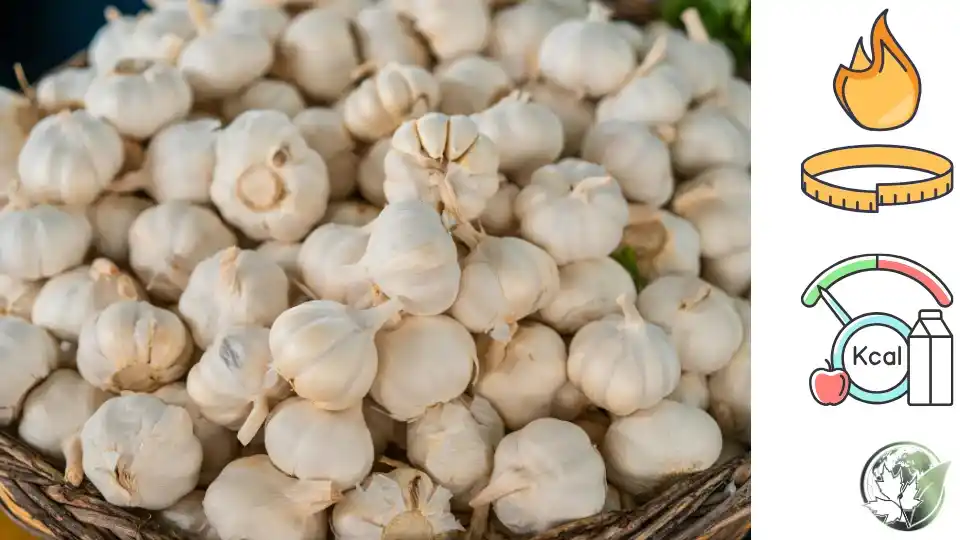
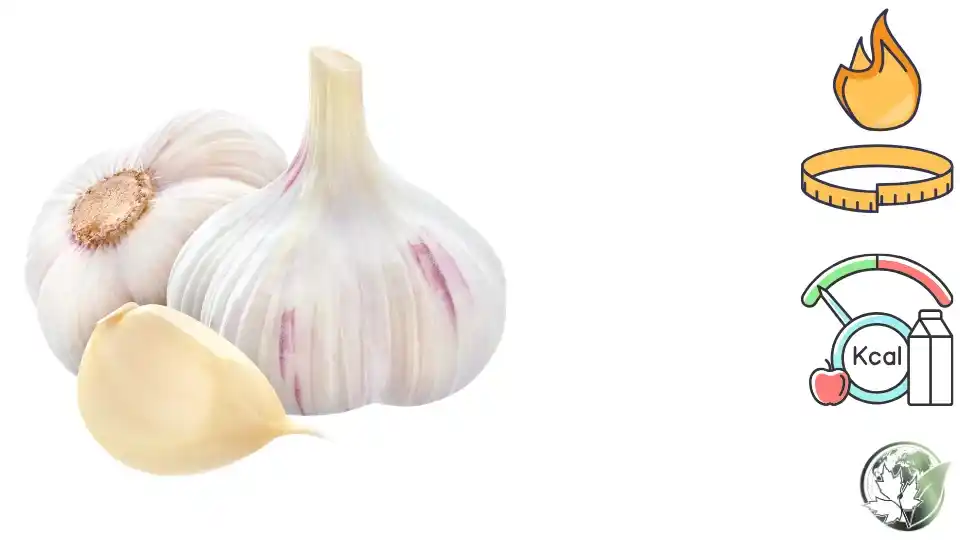
One garlic clove has about 4.5 calories
How Many Calories Are in One Clove, a Teaspoon and a Whole Bulb of Garlic?
Clove sizes vary from 1 gram for small ones to 8 grams for large ones in elephant garlic. The standard for nutrition tables is about 3 grams.
| Portion | Weight | Calories | Carbs | Protein |
|---|---|---|---|---|
| 1 small clove | 2 g | 3 kcal | 0.7 g | 0.1 g |
| 1 clove | 3 g | 4.5 kcal | 1.0 g | 0.2 g |
| 1 large clove | 6 g | 9 kcal | 2.0 g | 0.4 g |
| 1 teaspoon minced | 3 g | 4.5 kcal | 1.0 g | 0.2 g |
| 1 tablespoon minced | 9 g | 13 kcal | 3.0 g | 0.6 g |
| 3 cloves | 9 g | 13 kcal | 3.0 g | 0.6 g |
| 1 bulb (10 cloves) | 30 g | 45 kcal | 9.9 g | 1.9 g |
| 1 head, large (15 cloves) | 45 g | 67 kcal | 14.8 g | 2.9 g |
| 100 g | 100 g | 149 kcal | 33 g | 6.4 g |
| 1 teaspoon garlic powder | 3 g | 10 kcal | 2.2 g | 0.5 g |
Even a whole bulb of garlic, which is much more than most dishes use, has only 45 calories. Spreading it over a family-size pot gives only a few calories per serving.
Garlic vs Onion: Calories Compared
| Item | Portion | Weight | Calories | Carbs | Fiber |
|---|---|---|---|---|---|
| Garlic | 1 clove | 3 g | 4.5 kcal | 1.0 g | 0.06 g |
| Garlic | 1 bulb | 30 g | 45 kcal | 9.9 g | 0.6 g |
| Garlic | 100 g | 100 g | 149 kcal | 33 g | 2.1 g |
| Onion, raw | 1 slice | 14 g | 6 kcal | 1.3 g | 0.2 g |
| Onion, raw | 1 medium | 110 g | 44 kcal | 10.3 g | 1.9 g |
| Onion, raw | 1 cup chopped | 160 g | 64 kcal | 15 g | 2.7 g |
| Onion, raw | 100 g | 100 g | 40 kcal | 9.3 g | 1.7 g |
| Onion, cooked | 1/2 cup | 105 g | 46 kcal | 10.7 g | 1.5 g |
| Spring onion | 1 stalk | 15 g | 5 kcal | 1.1 g | 0.4 g |
| Shallot | 1 tbsp chopped | 10 g | 7 kcal | 1.7 g | 0.3 g |
Garlic and onion are cousins in the allium family, but they are used differently. Onion is a vegetable eaten in large quantity and is a main part of many dishes, while garlic is a seasoning. When counted by realistic portions, an onion adds ten times the calories of a clove of garlic.
Garlic vs Onion: Nutrition Compared
| Per 100 g raw | Garlic | Onion |
|---|---|---|
| Calories | 149 kcal | 40 kcal |
| Water | 59 g | 89 g |
| Carbohydrate | 33 g | 9.3 g |
| Sugar | 1.0 g | 4.2 g |
| Fiber | 2.1 g | 1.7 g |
| Protein | 6.4 g | 1.1 g |
| Fat | 0.5 g | 0.1 g |
| Vitamin C | 31 mg | 7.4 mg |
| Vitamin B6 | 1.24 mg | 0.12 mg |
| Manganese | 1.67 mg | 0.13 mg |
| Selenium | 14.2 mcg | 0.5 mcg |
| Calcium | 181 mg | 23 mg |
| Potassium | 401 mg | 146 mg |
| Allicin | present when crushed | none |
| Quercetin | small | high |
| Per usual serving | 1 clove garlic | 1/2 medium onion |
|---|---|---|
| Weight | 3 g | 55 g |
| Calories | 4.5 kcal | 22 kcal |
| Vitamin B6 | 0.04 mg | 0.07 mg |
| Manganese | 0.05 mg | 0.07 mg |
Per gram, garlic is a far richer source of vitamin B6, manganese, selenium and calcium than onion. But in a realistic serving, the amounts are small for both. The point of garlic is flavor and special sulfur compounds, not nutrition from bulk.
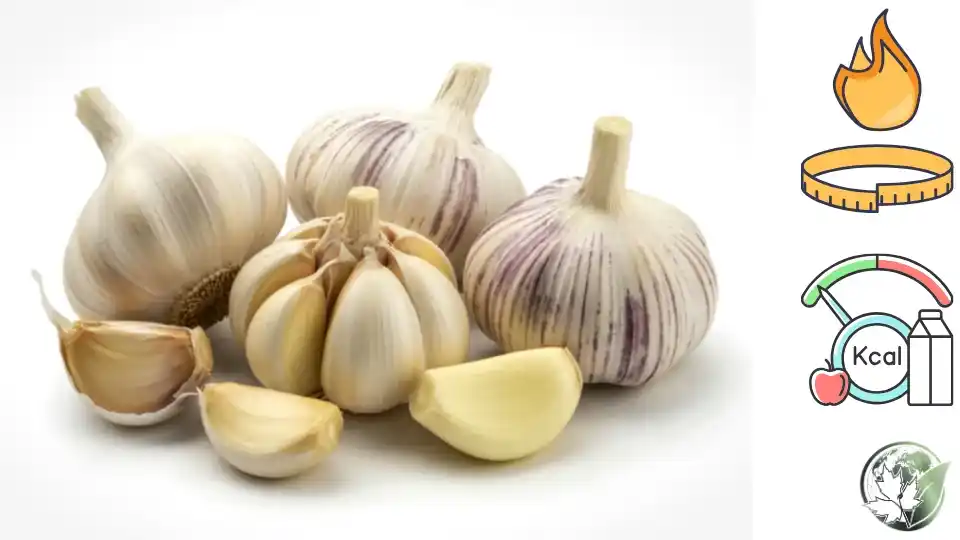
Garlic has about 3.7 times the calories of onion per gram, but a clove has only about 4.5 calories
How Many Calories Are in Different Forms of Garlic?
Garlic is sold fresh, dried, pickled, roasted, aged and in supplements. The calories differ mainly by water content.
| Form | Serving | Calories | Notes |
|---|---|---|---|
| Fresh garlic | 1 clove (3 g) | 4.5 kcal | Raw |
| Minced garlic in jar | 1 tsp (5 g) | 5 kcal | Often in oil or water |
| Roasted garlic | 1 clove (3 g) | 5 kcal | Soft, sweet, same energy |
| Roasted garlic spread | 1 tbsp (15 g) | 25 kcal | Cloves mashed with a little oil |
| Garlic powder | 1 tsp (3 g) | 10 kcal | Dehydrated, concentrated |
| Garlic granules | 1 tsp (3.5 g) | 11 kcal | Coarser |
| Garlic salt | 1 tsp (6 g) | 5 kcal | Mostly salt |
| Black garlic | 1 clove (4 g) | 7 kcal | Aged, sweet, slightly higher sugar |
| Pickled garlic (Persian seer torshi) | 3 cloves (15 g) | 10 kcal | Vinegar brine |
| Garlic in oil | 1 tbsp (14 g) | 100 kcal | Mostly oil |
| Garlic supplement pill | 1 pill | 0 to 5 kcal | Extract or powder |
The garlic itself is always a small contributor. Where calories do add up is in products that combine garlic with oil, butter, cream or mayonnaise.
Does Cooking Change the Calories in Garlic?
Roasting, boiling or sautéing garlic does not remove calories. Roasting drives off some water so the roasted cloves are lighter and sweeter, and weight for weight a roasted clove has a bit more calories than a raw one, but the calories per clove are about the same, about 5. Cooking can affect the nutrients: allicin, the compound responsible for garlic's strong smell and many of its proposed health effects, is formed when raw garlic is crushed, and heat reduces it. To keep more, crush or chop garlic and let it rest for about 10 minutes before heating, which lets the enzyme make allicin that is more stable.
If you sauté garlic in oil, count the oil. A tablespoon of oil is 120 calories, much more than the garlic. In dishes like garlic bread, where garlic is blended into butter, the butter is the main source: a tablespoon of garlic butter has about 100 calories, of which about 5 come from the garlic.
Is Garlic Healthy?
Garlic has been used as a food and medicine for thousands of years. Its main active compounds are sulfur compounds, including allicin, and it also contains flavonoids and selenium. Research suggests that regular garlic intake can lower blood pressure by a small amount, about 5 to 8 mmHg in people with hypertension, and lower total cholesterol by 5 to 10 mg/dL in some studies, though results are mixed. There is some evidence for reduced risk of certain cancers in people who eat many alliums, but it comes mainly from observational studies.
The quantities used in these studies are often about one to two cloves a day, or standardized supplements. The small amount in a pot of food provides flavor and a mild benefit but does not replace medicine. People on blood thinners such as warfarin should be careful with large amounts, since garlic may increase the risk of bleeding, and people having surgery are typically told to stop high-dose garlic supplements a week or two before. Raw garlic can cause heartburn, gas and bad breath in some people.
Does Garlic Raise Blood Sugar?
Garlic is low in sugar, about 1 gram per 100 grams, and a clove has about 1 gram of carbohydrate, so it has almost no effect on blood sugar. Some studies suggest that garlic may modestly lower fasting blood glucose, but the evidence is not strong enough to say it is a treatment for diabetes. It is a good flavoring for diabetic meals because it adds taste with almost no carbohydrate.
Is Garlic Good for Weight Loss?
Garlic is not a weight loss food by itself, and claims that it burns fat are overstated. Its value lies in helping you eat less salt, fat and sugar. Strong flavors help make low-calorie dishes tasty. Using garlic, lemon, herbs and spices instead of butter, cream or sweet sauces can cut hundreds of calories from a meal. For example, a pot of vegetables sautéed with three cloves of garlic and a teaspoon of olive oil has about 60 calories of fat and 14 of garlic in total, while the same vegetables in a cream sauce could carry 200 or more.
| Flavoring | Calories | Notes |
|---|---|---|
| 3 cloves garlic | 13 kcal | Aromatic base |
| 1 tbsp butter | 102 kcal | Rich, high in fat |
| 1 tbsp olive oil | 119 kcal | Heart-healthy fat |
| 1 tbsp cream | 52 kcal | Creamy |
| 1 tbsp sugar | 49 kcal | Sweet |
| 1 tbsp lemon juice | 3 kcal | Bright |
| 1 tsp soy sauce | 3 kcal | Salty |
| 1 tbsp fresh herbs | 1 kcal | Fresh |
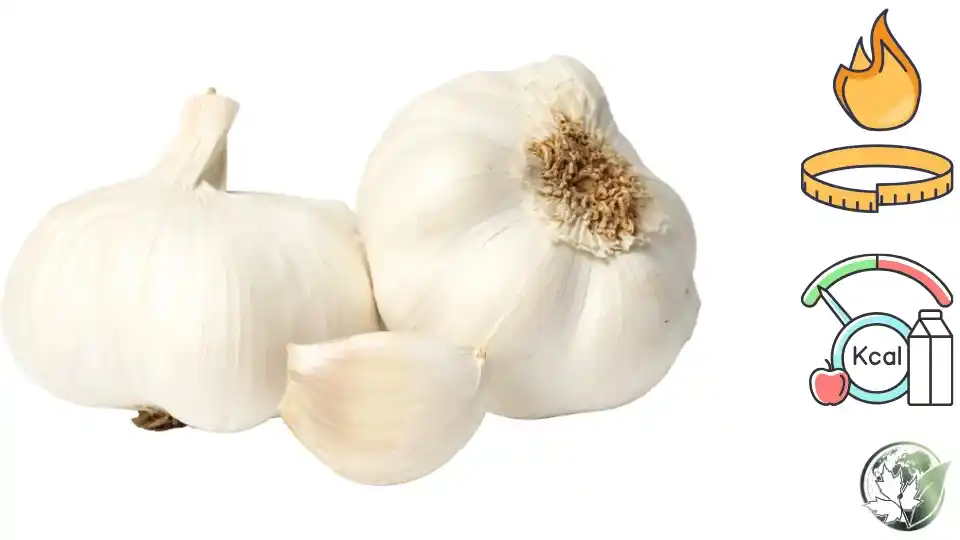
Three cloves of garlic add about 13 calories and plenty of flavor to a dish
How Much Garlic Is Safe and Reasonable to Eat?
For most adults, one to three cloves a day is safe and commonly consumed in many cuisines. This provides about 4.5 to 13 calories. Eating large amounts of raw garlic on an empty stomach may cause heartburn, nausea or diarrhea. Pets such as dogs and cats should not eat garlic or onions, as they can damage red blood cells.
Garlic also affects breath and body odor. Chewing parsley, apples, mint or drinking milk with the meal may reduce the smell. Cooked garlic has a milder odor than raw.
How to Choose and Store Garlic
Choose bulbs that are firm, heavy and plump, with tight, papery skins. Avoid bulbs that are soft, shriveled, sprouting or have dark spots. Store whole bulbs in a cool, dark, dry, ventilated place at room temperature, where they keep for two to four months. Do not refrigerate whole bulbs, because cold and humidity cause sprouting and mold. Peeled cloves can be kept in the refrigerator for about a week, and chopped garlic in a sealed container for up to three days. Do not store garlic in oil at room temperature, because of the risk of botulism.
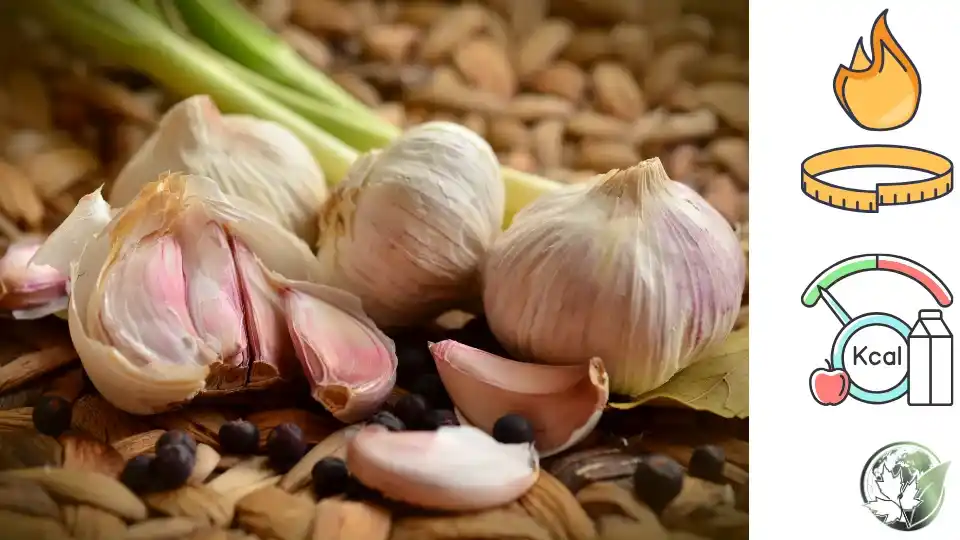
Store whole garlic bulbs in a cool, dry and ventilated place for two to four months
How to Count Garlic Calories Accurately
Count garlic by weight when possible, using 1.49 calories per gram, or by clove at about 4.5 calories. Garlic from a jar may contain added oil or preservatives, so check the label. Always add the oil, butter or sauce you use with the garlic, since this is where the calories are.
How Much Does Garlic Add to a Typical Dish?
Most recipes use between two and eight cloves for a whole pot, which serves four to six people. That means each person eats less than one clove, and the garlic contributes only 1 to 8 calories per serving. This is tiny compared with the other ingredients.
| Dish | Garlic used | Garlic calories per serving | Total calories per serving |
|---|---|---|---|
| Chicken curry, 4 servings | 4 cloves | 4.5 kcal | 340 kcal |
| Tomato pasta sauce, 4 servings | 3 cloves | 3.4 kcal | 160 kcal |
| Garlic fried rice, 2 servings | 4 cloves | 9 kcal | 380 kcal |
| Lentil soup, 6 servings | 5 cloves | 3.8 kcal | 180 kcal |
| Roasted vegetables, 4 servings | 6 cloves | 6.8 kcal | 120 kcal |
| Garlic yogurt dip, 4 servings | 2 cloves | 2.3 kcal | 35 kcal |
| Garlic bread, 1 slice | 1 clove | 4.5 kcal | 150 kcal |
| Chimichurri, 1 tbsp | 1 clove | 4.5 kcal | 55 kcal |
The takeaway is simple: garlic is the lightest ingredient in the dish. If you are trying to cut calories from a recipe, look at the oil, butter, cream, sugar, rice and pasta rather than the garlic.
How Do Garlic and Onion Compare in Cooking and Flavor?
Garlic and onion share a basic role: they build the flavor foundation for countless dishes. Onion gives sweetness and body, especially when cooked slowly until golden. Garlic gives sharp, pungent, savory depth that mellows with cooking. The calories of each follow their water content and the amount used.
A typical sauté starts with half an onion, which is 22 calories, and two cloves of garlic, which is 9 calories, in a tablespoon of oil at 120 calories. The total is about 150 calories for the base, of which 80 percent is oil. If you cook the onion and garlic in a splash of water or broth instead, or use a nonstick pan with a spray, the base is under 40 calories. This is a useful trick for lowering the calories of soups, stews and sauces.
Texture and effect differ as well. Onion contributes more fiber and a lot of quercetin, an antioxidant flavonoid, while garlic contributes allicin and more minerals per gram. Onion has more natural sugars, so it browns and caramelizes, while garlic burns quickly and turns bitter if cooked too hot. For the best flavor, add garlic after the onion has softened and cook it for just 30 to 60 seconds.
What Is Black Garlic and Does It Have More Calories?
Black garlic is whole bulbs that have been aged for several weeks at about 60 to 80 degrees Celsius and high humidity. The slow process turns the cloves dark brown to black, soft and sweet, with a taste like balsamic vinegar and molasses. It is not fermented, but chemically transformed by the Maillard reaction. Aging reduces the sharp, pungent flavor and increases the sugar content and some antioxidants.
Calorie estimates for black garlic range from about 150 to 190 per 100 grams, a bit higher than fresh garlic because it is drier and contains more sugar. One clove of about 4 grams has about 6 to 8 calories. It is eaten as a snack or added to sauces, spreads and dressings. Like fresh garlic, it contributes little to the calories of a dish.
| Garlic type | Calories per 100 g | Calories per clove | Flavor |
|---|---|---|---|
| Fresh | 149 kcal | 4.5 kcal | Sharp, pungent |
| Roasted | 160 kcal | 5 kcal | Mellow, sweet |
| Black garlic | 170 kcal | 7 kcal | Sweet, balsamic-like |
| Garlic powder | 331 kcal | 10 kcal per tsp | Concentrated |
| Pickled | 90 kcal | 3 kcal | Tangy |
Can You Eat Raw Garlic for Health, and How Much?
Many people eat raw garlic for its possible health benefits. A reasonable approach is to use one or two cloves a day, crushed and left for ten minutes, then mixed into food such as yogurt, salad dressing or hummus, not swallowed whole on an empty stomach. Eating it with food reduces the risk of heartburn and stomach irritation. If you are not used to it, start with half a clove.
Garlic supplements, such as aged garlic extract or garlic powder tablets, are used in many studies, and some show modest benefits for blood pressure. They contain almost no calories. But supplements are not regulated in the same way as medicines, and the allicin content varies. As with other supplements, check with a doctor if you take medication, particularly blood thinners, HIV medicines or drugs for diabetes.
How Can You Reduce Garlic Odor and Heartburn?
Garlic's sulfur compounds cause both bad breath and, for some people, heartburn. To reduce breath odor, eat garlic with fresh parsley, mint, apple or lettuce, drink milk with the meal, and brush your teeth and tongue afterward. The smell on your hands can be removed by rubbing them on stainless steel under cold water. To reduce heartburn, cook garlic, since cooked garlic is gentler than raw, eat it with food and avoid large amounts at night. If you consistently react to garlic, you may be sensitive to fructans, the fermentable carbohydrates in garlic and onion, which can cause gas and bloating in people with irritable bowel syndrome. In that case, garlic-infused oil, which contains flavor but not fructans, may be tolerated.
How Is Garlic Used in Persian and Middle Eastern Cooking?
Garlic is a staple in the cuisines of Iran and its neighbors. It appears in the flavor base of rice and bean dishes, in the herb stews of the north, in yogurt-based dips and in the famous pickles. Seer torshi, a pickle made from whole garlic cloves aged for years in vinegar, becomes dark, soft and mellow with time, and is eaten in small amounts with meals. Fresh green garlic appears in spring stews and omelets. Garlic is blended into yogurt with cucumber and herbs, and into the traditional cold soups of summer.
For calorie counting, these uses are favorable. A tablespoon of pickled garlic has about 10 to 15 calories, and garlic yogurt dips add about 15 calories per tablespoon, mostly from the yogurt. The few calories from garlic are not the issue. The larger numbers come from frying, rice, meat and bread that accompany it.
What Are Smart Ways to Use Garlic to Cut Salt and Fat?
Garlic is one of the best ways to flavor food without adding calories or salt. A few examples show how it works in practice.
**Replace part of the salt.** A clove of garlic in soup or vegetables gives strong flavor so that you can reduce salt by a quarter.
**Roast it and spread it.** Roasted garlic cloves mashed on toast have a creamy texture and a sweet taste, and can replace butter, saving about 80 calories per tablespoon.
**Add it to dressings.** Crushed garlic with lemon, vinegar and a little oil lets you use less oil.
**Season vegetables.** Steamed or roasted vegetables with garlic and herbs taste good without butter.
**Boost bland foods.** Garlic makes lentils, beans, chicken breast and fish more satisfying without extra fat.
**Use garlic yogurt instead of mayonnaise.** The swap saves about 80 calories per tablespoon.
The idea is to make flavor, not fat, the star of a dish.
Key Takeaways: Garlic Calories vs Onion
Garlic has about 149 calories per 100 grams, nearly four times onion at 40, but a clove has only about 4.5 calories and a bulb about 45. In normal use it adds almost nothing, and it can help you cut salt, fat and sugar. Use it freely, and count the oil or butter that goes with it.
Frequently Asked Questions
6 questions answered
How many calories are in a clove of garlic?
About 4.5 calories.
How many calories are in a bulb of garlic?
About 45 calories for a head of 10 cloves.
Does garlic have more calories than onion?
Per gram yes, about 149 against 40, but per serving garlic adds far fewer.
How many calories are in garlic powder?
About 10 per teaspoon.
Is garlic good for weight loss?
It adds flavor with few calories, but it does not burn fat.
Is raw or cooked garlic healthier?
Raw crushed garlic keeps more allicin, but cooked garlic is still beneficial.