How Many Calories Are in Fruit Nectar vs Fruit Juice? The Quick Answer
Fruit nectar has about 55 calories per 100 milliliters, or 135 per cup (250 ml). A 100 percent fruit juice has about 45 calories per 100 milliliters, or 110 per cup. So nectar is generally higher in calories and sugar than juice, because it is made from fruit puree or concentrate diluted with water and then sweetened with sugar or syrup. Juice contains only the fruit itself. The amount of fruit in nectar is usually between 25 and 50 percent, depending on the fruit and the country's rules.
The words on the front of the carton matter. "Juice" with the label 100 percent has no added sugar, "nectar" may have up to 20 percent added sugar, and "juice drink" often contains only 5 to 10 percent real juice. This guide compares calories per 100 milliliters, per cup and per carton, shows the sugar, fruit content and nutrients, and explains how to read labels, with three comparison tables and an FAQ.
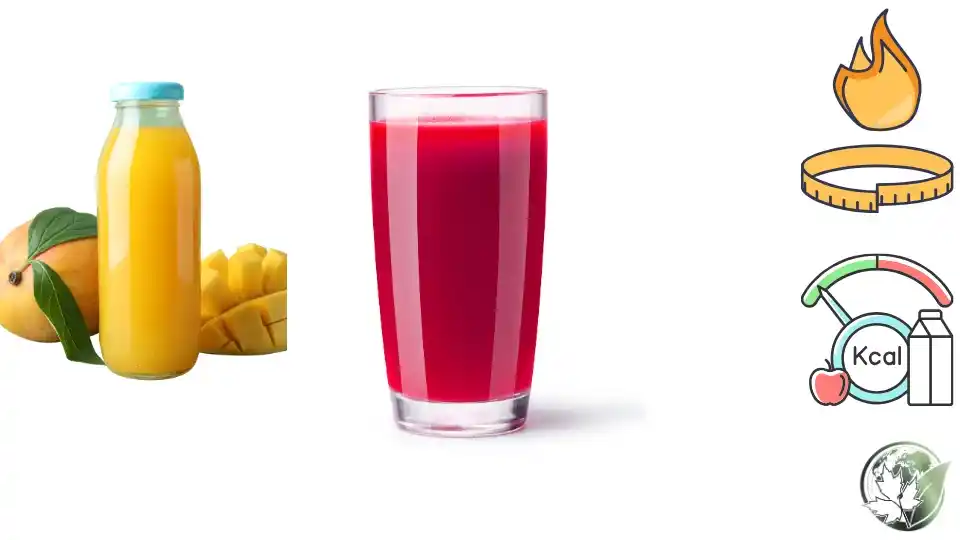
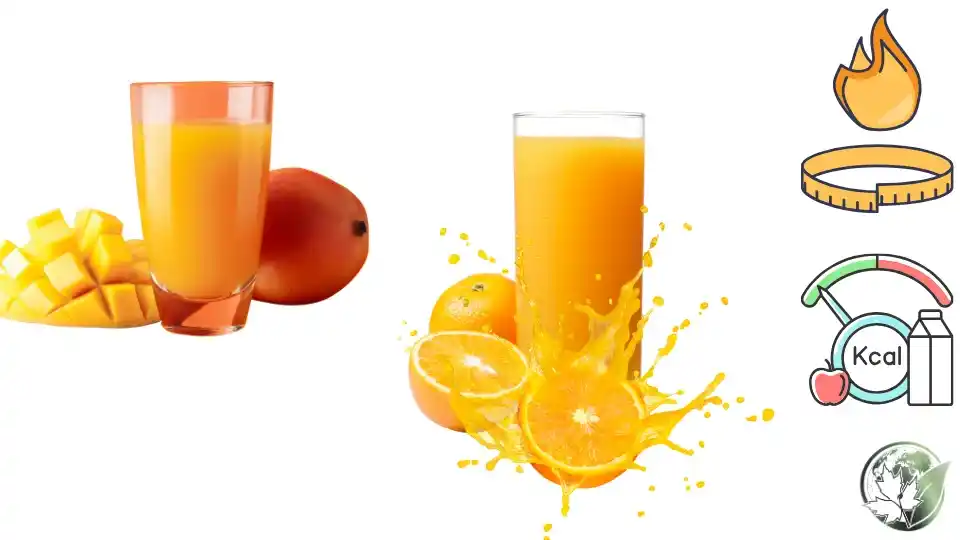
Nectar and 100 percent juice can look alike, but nectar contains added water and sugar
How Many Calories Are in Fruit Nectar?
| Fruit nectar | Serving | Calories | Sugar | Fruit content |
|---|---|---|---|---|
| Peach nectar | 250 ml | 140 kcal | 32 g | 40-50% |
| Apricot nectar | 250 ml | 143 kcal | 33 g | 40% |
| Mango nectar | 250 ml | 135 kcal | 31 g | 25-35% |
| Pear nectar | 250 ml | 150 kcal | 36 g | 50% |
| Guava nectar | 250 ml | 140 kcal | 32 g | 25-30% |
| Banana nectar | 250 ml | 145 kcal | 30 g | 25% |
| Mixed fruit nectar | 250 ml | 135 kcal | 31 g | 30% |
| Small carton | 200 ml | 110 kcal | 25 g | 30-50% |
| Per 100 ml | 100 ml | 55 kcal | 12.5 g | 30-50% |
| Litre carton | 1 liter | 550 kcal | 125 g | 30-50% |
How Many Calories Are in Fruit Juice?
| 100% fruit juice | Serving | Calories | Sugar | Fruit content |
|---|---|---|---|---|
| Orange juice | 250 ml | 112 kcal | 21 g | 100% |
| Apple juice | 250 ml | 115 kcal | 24 g | 100% |
| Grape juice | 250 ml | 152 kcal | 36 g | 100% |
| Pineapple juice | 250 ml | 132 kcal | 25 g | 100% |
| Pomegranate juice | 250 ml | 134 kcal | 32 g | 100% |
| Grapefruit juice | 250 ml | 96 kcal | 22 g | 100% |
| Cranberry juice (100%) | 250 ml | 116 kcal | 30 g | 100% |
| Small carton | 200 ml | 90 kcal | 18 g | 100% |
| Per 100 ml (average) | 100 ml | 45 kcal | 9.5 g | 100% |
| Litre carton | 1 liter | 450 kcal | 95 g | 100% |
Fruit Nectar vs Fruit Juice: Calories Compared
| Fruit | Nectar (250 ml) | 100% juice (250 ml) | Difference |
|---|---|---|---|
| Peach | 140 kcal | 120 kcal | +20 kcal |
| Apricot | 143 kcal | 125 kcal | +18 kcal |
| Mango | 135 kcal | 130 kcal | +5 kcal |
| Pear | 150 kcal | 130 kcal | +20 kcal |
| Apple | 125 kcal | 115 kcal | +10 kcal |
| Orange | 120 kcal | 112 kcal | +8 kcal |
| Average per 100 ml | 55 kcal | 45 kcal | +10 kcal |
| Sugar per 100 ml | 12.5 g | 9.5 g | +3 g |
Nectar is higher in calories than juice for the same fruit in most cases, by 5 to 20 calories per cup. The gap is smaller for sweet fruits such as grapes, whose pure juices are already high in sugar. For fruits that are tart or thick, such as peach and mango, juices are not drinkable straight, so makers dilute and sweeten them to create nectar.
Fruit Nectar vs Fruit Juice: Nutrition Compared
| Per 250 ml | Orange juice (100%) | Orange nectar | Peach nectar | Apple juice (100%) |
|---|---|---|---|---|
| Calories | 112 kcal | 120 kcal | 140 kcal | 115 kcal |
| Sugar | 21 g | 24 g | 32 g | 24 g |
| Added sugar | 0 g | 8 g | 14 g | 0 g |
| Fiber | 0.5 g | 0.3 g | 1 g | 0.5 g |
| Vitamin C | 124 mg | 60 mg (often fortified) | 30 mg | 2 mg |
| Potassium | 496 mg | 250 mg | 120 mg | 250 mg |
| Folate | 74 mcg | 30 mcg | 5 mcg | 0 mcg |
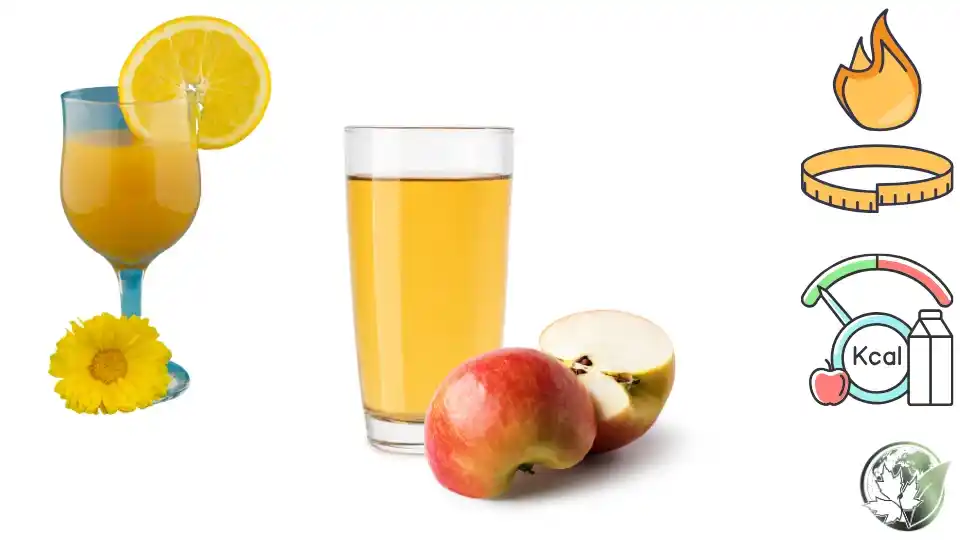
The label word nectar means added water and sugar, while 100 percent juice has neither
Which Has More Calories: Fruit Nectar or Fruit Juice?
Fruit nectar usually has more. At 135 calories per cup against 110, a nectar drinker gets about 25 additional calories and 6 to 8 grams more sugar from the same cup, while receiving less fruit. A litre carton of nectar contains about 550 calories, 100 more than a litre of juice. Over a year of a daily glass, the difference adds up to roughly 9,000 calories, or about two and a half pounds of body fat.
| Comparison | Nectar | 100% juice | Verdict |
|---|---|---|---|
| Calories per 250 ml | 135 kcal | 110 kcal | Juice lower |
| Sugar per 250 ml | 31 g | 24 g | Juice lower |
| Fruit content | 25-50% | 100% | Juice higher |
| Vitamin C | Lower unless fortified | Higher | Juice higher |
| Price per litre | Lower | Higher | Nectar cheaper |
| Taste | Smoother, sweeter | Stronger, tart | Personal |
Why Is Fruit Nectar Made at All?
Some fruits are not easy to drink as straight juice. Peaches, apricots, guavas, mangoes and bananas have thick pulp, and their juice is low in acid or very viscous. Processors blend the puree with water, add sugar or sweetener, and sometimes citric acid, to give a pourable drink. Nectar also costs less to produce, as less fruit is used per carton. Regulations such as the European Union fruit juice directive set minimum fruit content, 25 to 50 percent depending on the fruit, and limit added sugar to 20 percent by weight.
| Fruit | Typical minimum fruit content in nectar | Reason for nectar |
|---|---|---|
| Peach | 40% | Thick puree |
| Apricot | 40% | Thick puree |
| Mango | 25-35% | Fibrous pulp |
| Banana | 25% | Very thick |
| Passion fruit | 25% | Sour, intense flavor |
| Guava | 25% | Thick, seedy |
| Blackcurrant | 25% | Very tart |
Is Fruit Nectar Healthier Than Juice?
Usually not. Nectar contains added sugar, less fruit and fewer vitamins than 100 percent juice, though some nectars are fortified with vitamin C. It does retain a little more fiber in the puree than clear juice, particularly for peach, apricot and mango. Still, both drinks lack the fiber and chewing of whole fruit, deliver sugar rapidly, and are not very filling. Health organizations recommend limiting juice to about one cup a day for adults and less for young children, and counting nectar as a sugary drink.
| Factor | Nectar | 100% juice | Whole fruit |
|---|---|---|---|
| Added sugar | Yes | No | No |
| Fiber | Low | Very low | High |
| Fruit content | 25-50% | 100% | 100% |
| Satiety | Low | Low | High |
| Recommended limit | Occasional | 1 cup/day | 2 servings/day |
A whole peach has 60 calories and 2 grams of fiber, compared with 140 calories for a glass of peach nectar
How Do Juice Drinks Differ From Nectar?
"Juice drink," "fruit drink" and "fruit punch" contain even less fruit, sometimes only 5 to 10 percent, with water, sugar or high-fructose corn syrup, flavors and colors. They carry 40 to 55 calories per 100 milliliters, similar to nectar, but they contribute little nutrition. If the carton does not say 100 percent juice or nectar, treat it as a soft drink with a touch of fruit. Compare the percentage of fruit on the label, which is required in many countries.
| Product | Fruit content | Calories per 250 ml | Sugar per 250 ml |
|---|---|---|---|
| 100% juice | 100% | 110 kcal | 24 g |
| Nectar | 25-50% | 135 kcal | 31 g |
| Juice drink | 5-10% | 120 kcal | 30 g |
| Fruit punch | 5% | 125 kcal | 32 g |
| Soda | 0% | 105 kcal | 27 g |
How Can You Choose and Drink Smarter?
Choose cartons labeled 100 percent juice with no added sugar when you want a drink. If you prefer the taste of nectar, pick one with a high fruit percentage and no added sweeteners other than a little sugar, and have a small glass of 150 millilitres. Dilute half and half with water or sparkling water to halve the calories. Better still, eat the whole fruit: an orange has 62 calories and 3 grams of fiber, while the juice of three oranges has 110 with no fiber.
| Option | Calories | Sugar | Fiber |
|---|---|---|---|
| 1 whole orange | 62 kcal | 12 g | 3 g |
| 250 ml orange juice | 112 kcal | 21 g | 0.5 g |
| 250 ml orange nectar | 120 kcal | 24 g | 0.3 g |
| 125 ml nectar + 125 ml water | 68 kcal | 15 g | 0.2 g |
| 150 ml small glass of nectar | 81 kcal | 19 g | 0.2 g |
How Do Juice From Concentrate and Not From Concentrate Differ?
Fruit juice may be pressed and sold directly, called not from concentrate, or evaporated into a concentrate, shipped, and later reconstituted with water. The calories are about the same, since reconstituted juice is required to match the original sugar level. The difference is in flavor and processing: not from concentrate juice is pasteurized and often tastes fresher, while concentrate juice is cheaper to transport. Nectars are often made from concentrates or purees, with water and sugar added during blending. When comparing calories, the number on the nutrition label is the right guide, not the process.
| Product | Process | Calories per 250 ml | Typical price |
|---|---|---|---|
| Fresh squeezed juice | Pressed, unpasteurized | 112 kcal | High |
| Not from concentrate | Pressed, pasteurized | 112 kcal | Medium-high |
| From concentrate | Reconstituted | 110 kcal | Medium |
| Nectar from puree | Puree, water, sugar | 135 kcal | Medium |
| Nectar from concentrate | Concentrate, water, sugar | 130 kcal | Low |
How Much Sugar Is in a Carton of Nectar or Juice?
A one-litre carton of nectar contains about 125 grams of sugar, roughly 31 sugar cubes, while a litre of 100 percent juice has about 95 grams, or 24 cubes. A small 200 millilitre lunchbox carton of nectar carries 25 grams, the full daily limit of added sugar for a young child, though not all of it is added. Natural sugar in juice behaves much like added sugar in the body, since the fiber that slows absorption has been removed. That is why health agencies advise treating juice as an occasional drink and not as a fruit serving.
| Carton | Sugar | Sugar cubes (4 g) |
|---|---|---|
| 200 ml nectar | 25 g | 6 |
| 200 ml juice | 19 g | 4.8 |
| 330 ml nectar can | 41 g | 10 |
| 330 ml juice | 31 g | 7.8 |
| 1 liter nectar | 125 g | 31 |
| 1 liter juice | 95 g | 24 |
| 1 liter cola | 106 g | 26.5 |
How Do Specific Fruits Change the Answer?
Each fruit has its own sugar level. Grape juice is the sweetest at 36 grams of sugar per cup, so nectar adds little over it. Lemon and lime are so sour that a lemonade or limeade must be diluted and sweetened. Tomato and carrot juice have much less sugar, about 8 to 12 grams per cup, and are not sold as nectar. Berry nectars, such as blackcurrant, are very tart and require large amounts of sugar to be palatable, so they can be as high as 60 calories per 100 milliliters. Always check each product label rather than assuming.
| Drink (250 ml) | Calories | Sugar | Note |
|---|---|---|---|
| Grape juice | 152 kcal | 36 g | Highest among juices |
| Pomegranate juice | 134 kcal | 32 g | High natural sugar |
| Apple juice | 115 kcal | 24 g | Medium |
| Orange juice | 112 kcal | 21 g | Medium |
| Grapefruit juice | 96 kcal | 22 g | Lower |
| Tomato juice | 41 kcal | 8 g | Low |
| Carrot juice | 94 kcal | 9 g | Vegetable |
| Blackcurrant nectar | 150 kcal | 36 g | Very tart, sweetened |
What Vitamins Do Juice and Nectar Provide?
100 percent orange juice is a rich source of vitamin C, with about 124 milligrams per cup, more than the daily value, as well as folate and potassium. Apple juice is naturally low in vitamin C but is often fortified. Nectars have less because less fruit is used, and the vitamin C content depends on whether the maker adds ascorbic acid, which is also used as a preservative. Peach and apricot nectars supply some vitamin A as beta-carotene. If you drink juice for the vitamins, orange juice is the best option, and eating whole fruit gives the same vitamins with fiber.
| Vitamin (250 ml) | Orange juice | Orange nectar | Apricot nectar | Apple juice |
|---|---|---|---|---|
| Vitamin C | 124 mg | 60 mg | 2 mg | 2 mg |
| Vitamin A | 25 mcg | 10 mcg | 130 mcg | 0 mcg |
| Folate | 74 mcg | 30 mcg | 3 mcg | 0 mcg |
| Potassium | 496 mg | 250 mg | 290 mg | 250 mg |
| Calcium | 27 mg | 15 mg | 18 mg | 18 mg |
How Do Children and Adults Differ in Juice Limits?
The American Academy of Pediatrics recommends no juice for infants under 12 months, up to 120 millilitres a day for ages 1 to 3, 120 to 180 millilitres for ages 4 to 6, and up to 240 millilitres for older children and teenagers. Adults are generally advised to keep to one cup. Nectar should be counted as a sweetened drink. A child who drinks a 200 millilitre carton of nectar already takes in 25 grams of sugar, so offering water or milk with meals is a better habit. Serve juice in a cup at mealtimes, not in a bottle that is sipped all day.
| Age group | Suggested juice limit | Calories at limit |
|---|---|---|
| Under 12 months | None | 0 |
| 1-3 years | 120 ml | 54 kcal |
| 4-6 years | 120-180 ml | 54-81 kcal |
| 7-18 years | Up to 240 ml | 108 kcal |
| Adults | About 240 ml | 108 kcal |
How Do Diabetes and Weight Management Affect the Choice?
Juice and nectar both raise blood glucose quickly, as the fiber has been removed. People with diabetes should limit them and generally use them to treat low blood sugar, when 120 to 150 millilitres of juice provides about 15 grams of carbohydrate. Whole fruit is preferred for everyday use. For weight management, liquid calories are less filling than solid ones, so a glass of nectar adds 135 calories without much sense of fullness. Swapping a daily nectar for water or sparkling water with a squeeze of citrus saves almost 50,000 calories a year.
| Situation | Better choice | Reason |
|---|---|---|
| Daily drink | Water, tea | No calories |
| Low blood sugar | 150 ml juice | Fast 15 g carbohydrate |
| Weight loss | Whole fruit | Fiber and fullness |
| Sweet craving | Diluted juice | Half the calories |
| Child's lunchbox | Water + whole fruit | Less sugar |
What Are Healthier Alternatives to Fruit Nectar?
Water infused with slices of fruit, herbal teas, sparkling water with a splash of juice and homemade smoothies with whole fruit all give flavor with less sugar. A smoothie made from one peach, half a cup of yogurt and ice has 125 calories and 3 grams of fiber, compared with a cup of peach nectar at 140 calories and 1 gram. Frozen fruit blended with water creates a thick drink without added sugar. For a nectar-like texture, blend a ripe mango with water and a squeeze of lime.
| Alternative | Calories | Sugar | Fiber |
|---|---|---|---|
| Peach nectar (250 ml) | 140 kcal | 32 g | 1 g |
| Peach smoothie with yogurt | 125 kcal | 18 g | 3 g |
| Mango blended with water | 100 kcal | 23 g | 2.6 g |
| Sparkling water + 50 ml juice | 22 kcal | 5 g | 0 g |
| Fruit-infused water | 5 kcal | 1 g | 0 g |
How Do You Read Nectar and Juice Labels?
Check the front for the words "100% juice", "nectar", "juice drink" or "from concentrate". Then read the ingredient list: for pure juice it should show only the fruit, and perhaps vitamin C. For nectar, look at the order, as water or sugar listed before the fruit puree suggests a low fruit content. Find the "added sugars" line on the nutrition panel and compare per 100 millilitres rather than per serving, because serving sizes vary from 150 to 330 millilitres. Prefer cartons with under 10 grams of sugar per 100 millilitres.
| Label feature | Better sign | Warning sign |
|---|---|---|
| Front wording | 100% juice | Juice drink, flavored drink |
| First ingredient | Fruit juice or puree | Water, sugar |
| Added sugars | 0 g | Over 8 g per serving |
| Sugar per 100 ml | Under 10 g | Over 12 g |
| Fruit percentage | 100% | Under 25% |
| Sweeteners | None | Syrup, sucralose |
How Do Dental Health and Acidity Compare?
Fruit juices and nectars are acidic, with a pH between 3 and 4, and sugary, a combination that promotes enamel erosion and cavities. Orange and apple juice are among the most erosive, and nectar with added citric acid is similar. Sipping slowly over a long period is worse than drinking a glass quickly with a meal. Using a straw, rinsing with water afterwards and waiting 30 minutes before brushing reduce the damage. Whole fruit is far gentler because chewing produces saliva and the sugar is bound within the fiber.
| Drink | Typical pH | Sugar per 250 ml | Dental risk |
|---|---|---|---|
| Orange juice | 3.5 | 21 g | High |
| Apple juice | 3.7 | 24 g | High |
| Nectar | 3.6 | 31 g | High |
| Cola | 2.5 | 27 g | Very high |
| Milk | 6.7 | 12 g | Low |
| Water | 7.0 | 0 g | None |
How Many Glasses Equal One Piece of Fruit?
A medium orange yields about 100 millilitres of juice, so a 250 millilitre glass of orange juice represents two to three oranges. Eating two oranges takes several minutes and provides 6 grams of fiber, while drinking the juice takes seconds and provides under 1 gram. Nectar stretches the fruit even further, since a glass may contain only the pulp of half a peach plus water and sugar. This is why dietitians count juice as at most one fruit serving per day, regardless of how much the glass holds.
| Drink | Whole fruit needed | Fiber in fruit | Fiber in drink |
|---|---|---|---|
| 250 ml orange juice | 2.5 oranges | 7.5 g | 0.5 g |
| 250 ml apple juice | 2 apples | 8 g | 0.5 g |
| 250 ml peach nectar | About 1/2 peach plus water | 1 g | 1 g |
| 250 ml grape juice | 2 cups grapes | 3 g | 0.5 g |
How Should You Store Opened Nectar and Juice?
Once opened, both nectar and juice should be refrigerated and used within five to seven days, or as the label says. Unopened shelf-stable cartons keep for months at room temperature in a cool, dark place. Fresh squeezed juice lasts only two to three days in the fridge. If a carton smells fermented or has bubbles, discard it. Freezing leftover juice or nectar in ice cube trays is a handy way to add flavor to water or smoothies without waste.
| Product | Unopened | Opened in fridge |
|---|---|---|
| Shelf-stable nectar | 6-12 months | 5-7 days |
| Shelf-stable juice | 6-12 months | 7-10 days |
| Refrigerated juice | Until date | 5-7 days |
| Fresh squeezed juice | Not applicable | 2-3 days |
| Frozen juice cubes | Not applicable | 6 months in freezer |
Key Takeaways: Fruit Nectar vs Fruit Juice Calories
Fruit nectar has about 55 calories per 100 milliliters and fruit juice about 45, because nectar adds water and sugar and contains only 25 to 50 percent fruit. Choose 100 percent juice, keep to a small glass, dilute with water, and eat whole fruit when you can.
Frequently Asked Questions
6 questions answered
Does fruit nectar have more calories than juice?
Yes, about 55 against 45 per 100 ml.
What is the difference between nectar and juice?
Nectar is diluted fruit puree with added sugar.
Does nectar contain added sugar?
Usually, up to 20 percent by weight.
Is 100 percent juice healthy?
In moderation, one cup a day is a common limit.
How much fruit is in nectar?
Usually 25 to 50 percent.
What is better than juice?
Whole fruit, which keeps fiber and fills you up.