
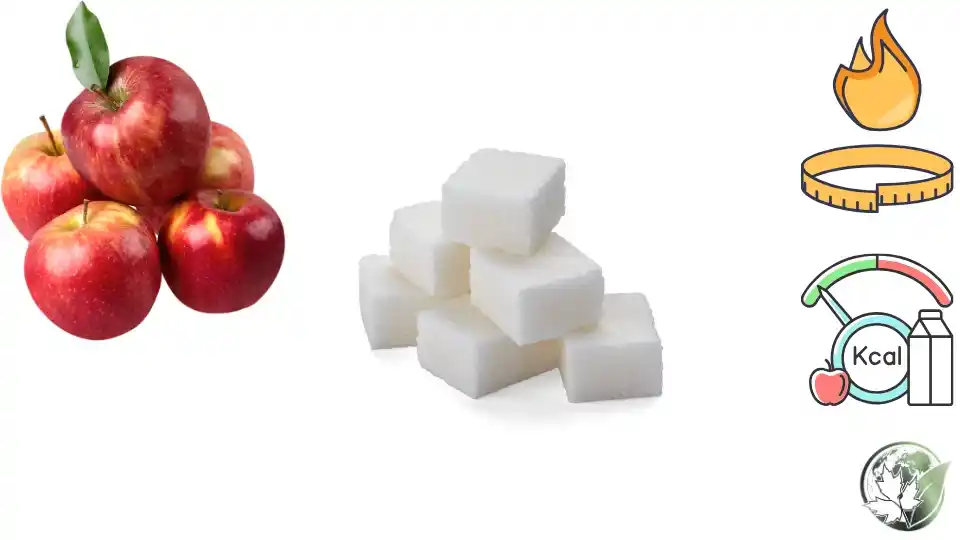
Fresh Apple vs Sugar Cube Calories: The Quick Answer
A medium fresh apple (182 g) has about 95 calories, 25 grams of carbohydrate, 19 grams of sugar and 4.4 grams of fiber. A sugar cube of 4 grams has about 16 calories and 4 grams of sugar. So one medium apple is worth about six sugar cubes in calories and about 4.8 cubes in sugar. A small apple (149 g) has about 77 calories, a large apple (223 g) has about 116, and 100 grams of apple has about 52 calories and 10.4 grams of sugar.
At first this comparison sounds alarming, because it seems an apple is the same as five or six cubes of sugar. The difference is how that sugar arrives. An apple is 86 percent water. Its sugar is locked inside cells, mixed with 4.4 grams of fiber, and takes five to ten minutes to chew, so the body absorbs it slowly. Six sugar cubes dissolved in tea take thirty seconds to swallow and hit the blood within minutes. The calories are similar, but the effect on hunger, blood sugar and fullness is completely different.
This guide compares fresh apples and sugar cubes by calories, sugar, fiber, fullness and glycemic effect. It covers apple varieties from small to large, apples with and without skin, sliced apple and apple compared with juice and dried apple. You will find three comparison tables and an FAQ.
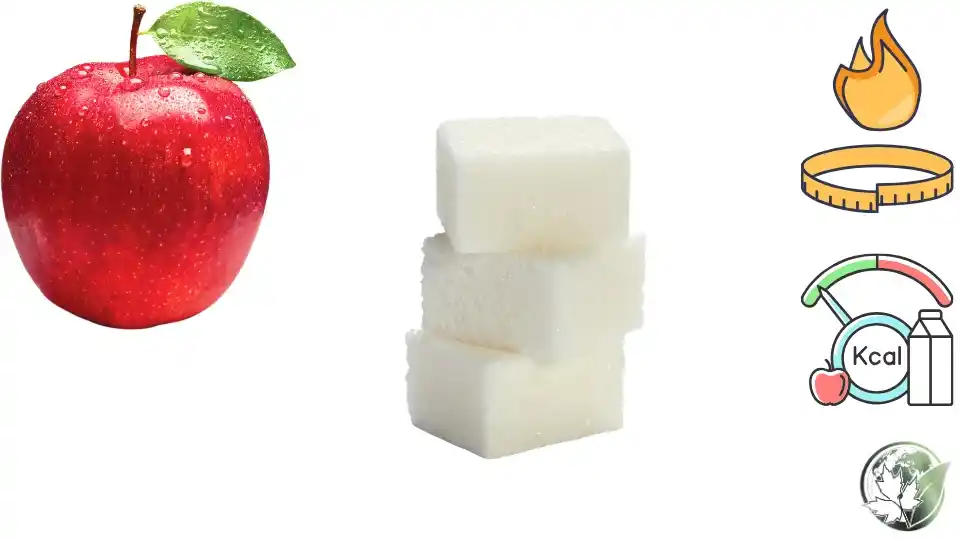
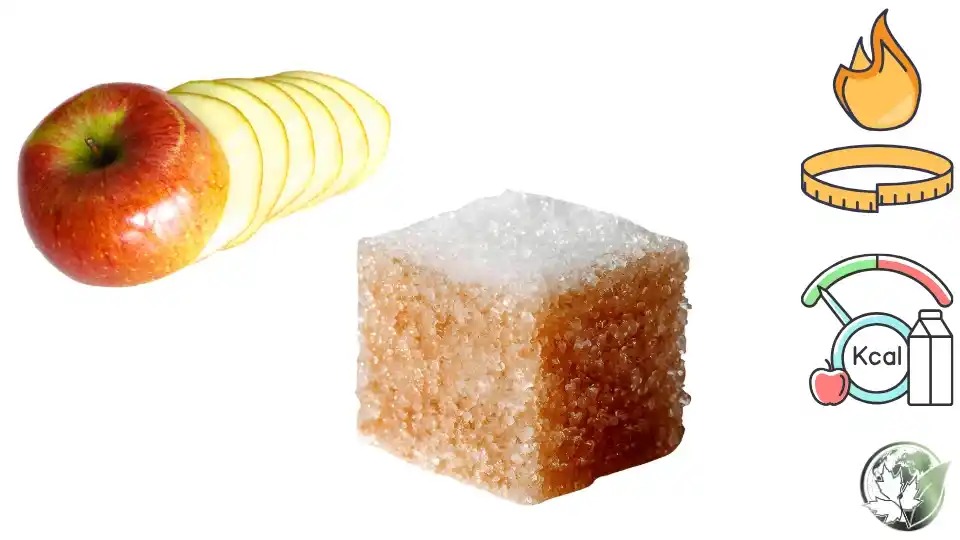
A medium apple has about the same calories as six sugar cubes, but it comes with fiber and water
How Many Calories Are in a Small, Medium and Large Apple?
Apple calories depend mostly on size. The following values are for raw apples with skin.
| Apple size | Weight | Calories | Sugar | Fiber | Sugar cubes (by sugar) |
|---|---|---|---|---|---|
| Very small (5 cm) | 100 g | 52 kcal | 10.4 g | 2.4 g | 2.6 |
| Small (6.5 cm) | 149 g | 77 kcal | 15.5 g | 3.6 g | 3.9 |
| Medium (7.5 cm) | 182 g | 95 kcal | 18.9 g | 4.4 g | 4.7 |
| Large (8.5 cm) | 223 g | 116 kcal | 23.2 g | 5.4 g | 5.8 |
| Extra large (9.5 cm) | 280 g | 146 kcal | 29.1 g | 6.7 g | 7.3 |
| Slices, 1 cup | 109 g | 57 kcal | 11.4 g | 2.6 g | 2.8 |
| Chopped, 1 cup | 125 g | 65 kcal | 13 g | 3.0 g | 3.3 |
| Half a medium apple | 91 g | 47 kcal | 9.5 g | 2.2 g | 2.4 |
A medium apple is a standard reference portion, about the size of a tennis ball. If your apples are larger, count a bit more. Weigh your apple for the best accuracy, and subtract about 10 percent for the core and stem if you weigh it before eating.
Fresh Apple vs Sugar Cube: Calories and Sugar Compared
| Item | Weight | Calories | Sugar | Fiber | Water |
|---|---|---|---|---|---|
| Sugar cube | 4 g | 16 kcal | 4 g | 0 g | 0 g |
| 3 sugar cubes | 12 g | 48 kcal | 12 g | 0 g | 0 g |
| 6 sugar cubes | 24 g | 96 kcal | 24 g | 0 g | 0 g |
| Small apple | 149 g | 77 kcal | 15.5 g | 3.6 g | 128 g |
| Medium apple | 182 g | 95 kcal | 18.9 g | 4.4 g | 156 g |
| Large apple | 223 g | 116 kcal | 23.2 g | 5.4 g | 191 g |
For about the same calories, six sugar cubes weigh 24 grams, while a medium apple weighs 182 grams. Weight is a rough measure of how much space the food takes up in your stomach, and it is one of the main drivers of fullness. Six cubes provide almost no volume, so they do little for hunger, while an apple takes up space, takes time to chew and provides fiber.
What Does an Apple Have That a Sugar Cube Doesn't?
An apple is much more than its calories. Compared with sugar, it provides fiber, vitamins, minerals and plant compounds.
| Per 100 g | Fresh apple (with skin) | Sugar cube (white sugar) |
|---|---|---|
| Calories | 52 kcal | 387 kcal |
| Water | 85.6 g | 0 g |
| Sugar | 10.4 g | 100 g |
| Fiber | 2.4 g | 0 g |
| Vitamin C | 4.6 mg | 0 mg |
| Potassium | 107 mg | 2 mg |
| Vitamin K | 2.2 mcg | 0 mcg |
| Polyphenols (quercetin, catechin) | present | none |
| Pectin | about 0.5 g | none |
| Per 100 calories | Fresh apple | Sugar cubes |
|---|---|---|
| Weight | 192 g | 26 g |
| Sugar | 20 g | 26 g |
| Fiber | 4.6 g | 0 g |
| Time to eat | about 6 minutes | about 20 seconds |
For 100 calories, an apple contains 20 grams of sugar against 26 grams in sugar cubes, along with nearly 5 grams of fiber. You eat almost 200 grams of apple, which makes you feel full, while the sugar cubes would give only 26 grams of food.
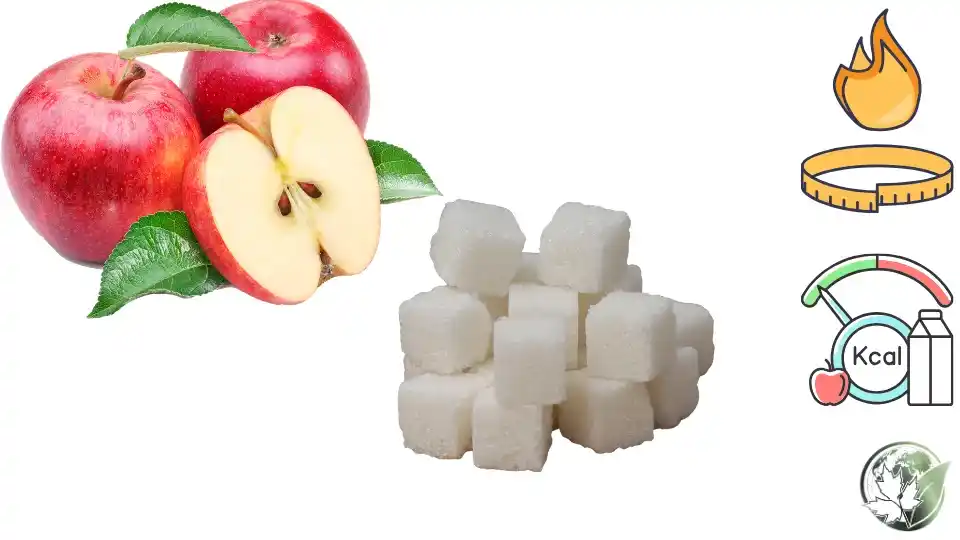
One cup of apple slices has about 57 calories and 11 grams of sugar
Does an Apple Raise Blood Sugar Like Sugar Cubes?
No, an apple has a low glycemic index of about 36, while table sugar is about 65. A medium apple has a glycemic load of about 6, which is low. The fiber and pectin slow stomach emptying, and fructose, the main sugar in apples, is processed in the liver and raises blood glucose gradually.
| Food | Glycemic index | Glycemic load per portion |
|---|---|---|
| Apple (medium) | 36 | 6 |
| Apple juice (1 cup) | 41 | 12 |
| Dried apple (30 g) | 29 | 5 |
| Sugar cubes (6) | 65 | 15 |
| Honey (1 tbsp) | 58 | 10 |
| White bread (1 slice) | 75 | 10 |
Even though an apple contains the same sugar as about five cubes, its effect on blood glucose is about one third of what the cubes would produce. People with diabetes commonly include apples in their diet, and clinical studies link regular apple intake with lower risk of type 2 diabetes. A medium apple counts as about 25 grams of carbohydrate, so it is worth counting in a meal plan.
Is an Apple Better Than Sugar Cubes for Weight Control?
Yes, strongly. Fruit with high water and fiber content gives a larger feeling of fullness per calorie, and studies of satiety show whole apples more filling than apple sauce or apple juice with the same calories. Eating an apple before a meal has been shown to reduce the amount people eat at the meal.
| Snack | Calories | Fiber | Weight | Fullness rating |
|---|---|---|---|---|
| Medium apple | 95 kcal | 4.4 g | 182 g | High |
| Apple sauce, 1/2 cup | 90 kcal | 2.0 g | 122 g | Medium |
| Apple juice, 1 cup | 114 kcal | 0.5 g | 248 g | Low |
| Dried apple, 1 oz | 68 kcal | 2.4 g | 28 g | Low to medium |
| Sugar cubes, 6 | 96 kcal | 0 g | 24 g | Very low |
| Plain biscuits, 3 | 110 kcal | 0.5 g | 25 g | Low |
For the same 95 to 100 calories, the apple gives you the most food volume and fiber, which explains why it is a staple of weight loss diets.
How Do Different Apple Varieties Compare?
Apple varieties vary in sweetness, but not much in calories. The sugar content and acidity differ, and tart varieties taste less sweet even when they contain nearly the same sugar.
| Variety (medium, 182 g) | Calories | Sugar | Fiber | Taste |
|---|---|---|---|---|
| Red Delicious | 100 kcal | 19 g | 4.5 g | Mild, sweet |
| Golden Delicious | 100 kcal | 19 g | 4.0 g | Sweet |
| Gala | 95 kcal | 18 g | 4.0 g | Sweet, crisp |
| Fuji | 100 kcal | 20 g | 3.5 g | Very sweet |
| Honeycrisp | 100 kcal | 20 g | 4.0 g | Sweet and tart |
| Granny Smith | 90 kcal | 15 g | 4.5 g | Tart |
| Pink Lady | 90 kcal | 17 g | 4.5 g | Sweet and tart |
| Iranian red (Shimran) | 90 kcal | 17 g | 4.0 g | Sweet |
| Yellow apple (golab) | 95 kcal | 18 g | 3.8 g | Sweet, soft |
The range from 90 to 100 calories is small. If you want to reduce sugar slightly, choose tart apples such as Granny Smith, which have about 20 to 25 percent less sugar than very sweet varieties like Fuji.
Should You Eat the Apple Skin?
Yes. The skin holds about half of the fiber and much of the polyphenols and vitamin K. A medium apple with skin has 4.4 grams of fiber, while a peeled one has about 2.8 grams. Calories are slightly lower for the peeled apple, about 80 for a medium one, but the nutrients are lower too. Wash the apple thoroughly, and if you are concerned about wax or pesticide residue, soak it in water with a spoon of baking soda for a few minutes and rub the skin.
How Many Calories Are in Apple Products Compared With Fresh Apple?
| Apple product | Portion | Calories | Sugar |
|---|---|---|---|
| Fresh apple | 1 medium (182 g) | 95 kcal | 19 g |
| Unsweetened apple sauce | 1/2 cup | 51 kcal | 11 g |
| Sweetened apple sauce | 1/2 cup | 97 kcal | 23 g |
| Apple juice | 1 cup | 114 kcal | 24 g |
| Dried apple rings | 1 oz | 68 kcal | 16 g |
| Baked apple with sugar | 1 apple | 180 kcal | 38 g |
| Apple pie | 1 slice | 411 kcal | 24 g |
| Apple chips, fried | 1 oz | 140 kcal | 17 g |
| Apple compote | 1/2 cup | 90 kcal | 20 g |
The fresh apple is among the lowest in calories and sugar per portion. Anything that adds sugar, juice concentrate or fat raises the totals quickly. An apple pie slice has about four times the calories of a fresh apple.
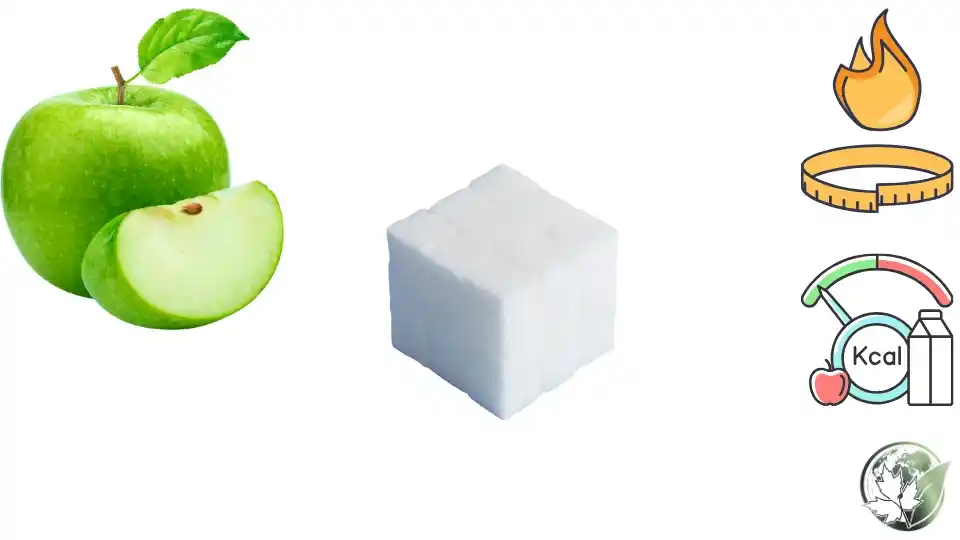
Dip apple slices in plain yogurt instead of sugary sauces for a snack of about 130 calories
How to Eat Apples for the Best Fullness
The way you eat an apple changes its effect. Eating it whole, with skin, and slowly gives the most fullness. Eating it before a meal reduces appetite. Pair with a source of protein or fat such as a spoon of peanut butter or a few almonds for a snack of about 200 calories that keeps you full for hours. Avoid peeling it, blending it into juice or removing fiber, since those steps lower fullness and speed absorption of sugar.
How to Store Apples
Apples keep best in the refrigerator, in the crisper drawer, for four to six weeks. At room temperature they last about a week. Store them away from other produce, since apples give off ethylene gas that ripens and spoils nearby fruit. Cut apples brown quickly, so dip them in water with a little lemon juice. Discard apples with soft, moldy spots, since mold can spread through the fruit.
Apples keep for several weeks in the refrigerator
How to Count Apple Calories Accurately
Weigh your apple and multiply by 0.52 calories per gram, or use 95 calories for a medium one. If you weigh with core and stem, subtract about 10 percent. For sliced or cooked apple, add any sugar, butter or syrup separately. If you replace a sugar cube habit with an apple, be sure the apple replaces the sweet and does not simply add calories.
Why Is the Sugar in an Apple Different From the Sugar in a Cube?
Chemically, the sugar in an apple and the sugar in a cube are close relatives. A sugar cube is pure sucrose, which splits into equal parts glucose and fructose during digestion. An apple contains mostly fructose, about 6 grams per 100 grams, with smaller amounts of glucose and sucrose. The difference lies not in the molecules but in the package.
In an apple, sugar is held inside plant cells whose walls are made of cellulose and pectin. Your teeth and digestive enzymes have to break these walls to release the sugar, which takes time. The pectin forms a gel in the stomach and small intestine that slows the release of sugar into the blood. The water dilutes the sugar, and the volume of the apple triggers stretch receptors in the stomach that signal fullness. In contrast, sugar dissolved in a drink is released immediately and does nothing to stimulate fullness.
Another difference is what happens in the liver. Fructose from whole fruit arrives in small amounts over a long period, and the liver can handle it without storing much fat. Large amounts of fructose from sweet drinks and sugary foods can overwhelm that capacity. This is one reason why health guidelines count sugar from whole fruit differently from added sugar. Free sugars, which include table sugar, honey and juice, are limited, while whole fruit is encouraged.
How Many Apples Equal the Sugar in Common Sweet Foods?
A useful way to put an apple in context is to compare its sugar with everyday foods that contain added sugar.
| Food | Portion | Sugar | Apples (medium) with same sugar |
|---|---|---|---|
| Cola | 330 ml can | 35 g | 1.9 |
| Chocolate bar | 43 g | 24 g | 1.3 |
| Fruit yogurt | 150 g | 17 g | 0.9 |
| Chocolate chip cookie | 1 medium | 9 g | 0.5 |
| Glazed donut | 1 | 12 g | 0.6 |
| Breakfast cereal, sweetened | 40 g | 12 g | 0.6 |
| Sugar cubes | 6 | 24 g | 1.3 |
| Apple juice | 250 ml | 24 g | 1.3 |
A can of cola has almost twice the sugar of a medium apple, and it has no fiber, no water volume and no vitamins. This is why dietitians encourage people to replace sweet drinks and sweets with fruit. The sugar load is similar or lower, but the effects on weight, teeth and blood sugar are better.
How Does Eating Apples Compare With Eating Sugar for Teeth?
Apples contain sugar and acid, so they are not entirely harmless to teeth, but they are much less harmful than sweets. Chewing an apple stimulates saliva, which neutralizes acid and washes away food particles. The fibrous texture helps scrub the surfaces of the teeth. Studies show that apple eating is associated with fewer cavities than sugary snacks, although apples are not a substitute for brushing.
Sugar cubes dissolved in tea are less sticky than candy, but frequent sipping of sweet tea means that teeth are bathed in sugar for hours, which is a major cause of decay. If you drink tea all day with sugar, it is likely to harm teeth more than a daily apple would.
How Can You Replace Sugar Cubes With Apples in Your Day?
If your goal is to reduce sugar, apples can help in several practical ways.
**Sweeten oatmeal with grated apple:** Half a grated apple at 47 calories adds sweetness and fiber, replacing two teaspoons of sugar at 32 calories while adding volume.
**Stew with spices:** Cook apple slices with cinnamon and a little water for a dessert of 60 to 80 calories with no added sugar.
**Use apple in baking:** Replace part of the sugar in muffins and cakes with unsweetened apple sauce to cut calories and fat.
**Snack on slices:** Cut an apple into eight wedges and eat slowly instead of reaching for biscuits.
**Add to tea:** Simmer a few apple slices with cinnamon for a naturally sweet herbal tea that needs no sugar.
**Pair with protein:** Eat apple slices with cheese or nuts for a balanced snack.
When you replace a daily habit of three sugar cubes in a cup of tea, which is 48 calories and 12 grams of sugar, with an apple at 95 calories, you add calories but you also add fiber, water and nutrients. A better approach is to gradually cut the sugar in the tea and also eat the apple as a snack in place of something less nutritious, such as biscuits.
What Does an Apple a Day Do for Your Health?
Observational studies link regular apple intake with a lower risk of heart disease, type 2 diabetes and some cancers. Part of the benefit comes from soluble fiber, mostly pectin, which can lower LDL cholesterol. Another part comes from polyphenols such as quercetin and catechin, which act as antioxidants. Randomized trials with whole apples or apple extracts have shown modest improvements in cholesterol and in markers of inflammation.
Apples are low in sodium, fat and calories and contain moderate potassium. They do not provide large amounts of vitamin C, with about 8 milligrams in a medium apple, so they are not a replacement for citrus or berries. But when they replace sugary snacks, their effect on health is positive.
How Should People With Diabetes Handle Apples and Sugar Cubes?
For people with diabetes, the key difference is predictability. A medium apple contains about 25 grams of carbohydrate, and its low glycemic index means that blood glucose rises slowly and peaks lower than it would after the same carbohydrate from sugar. Many diabetes dietitians recommend fresh whole fruit such as apples, pears and berries as part of a meal plan, usually one portion at a time, spread across the day.
Sugar cubes are best reserved for treating low blood sugar, where fast absorption is useful. In that case, about four cubes, or 16 grams of sugar, can raise glucose quickly. Outside of that use, most people with diabetes limit added sugar and replace it with fruit, fiber-rich foods and, if needed, sweeteners without calories. Checking blood glucose before and two hours after an apple gives a personal picture of how the fruit behaves. Pairing the apple with a source of protein, such as a few nuts or a slice of cheese, usually smooths the response further.
What Is the Best Time of Day to Eat an Apple?
Any time is fine, but a few moments work especially well. Eating an apple about 15 to 30 minutes before a meal can reduce appetite and total calories at that meal. An apple as a mid-afternoon snack prevents the late-day hunger that leads people to sweets. After exercise, an apple with a handful of nuts gives carbohydrate and a little protein for recovery. Late at night, a small apple is easier on the stomach than a heavy dessert, though some people find the acidity bothersome before bed.
Key Takeaways: Fresh Apple vs Sugar Cube Calories
A medium fresh apple has about 95 calories and 19 grams of sugar, equal to roughly six sugar cubes in calories and almost five in sugar. But it comes with 4.4 grams of fiber, 156 grams of water, a low glycemic index and plenty of chewing, so it fills you up and raises blood sugar slowly. An apple is a much better choice than sugar or sweets for the same calories.
Frequently Asked Questions
7 questions answered
How many calories are in a medium apple?
About 95 calories, with 19 grams of sugar and 4.4 grams of fiber.
How many sugar cubes are in an apple?
About five in sugar and six in calories for a medium apple.
Is an apple healthier than sugar?
Yes. It has fiber, water, vitamins and polyphenols, and it raises blood sugar slowly.
Does an apple raise blood sugar?
Only modestly. Its glycemic index is about 36.
Which apple has the fewest calories?
Tart varieties like Granny Smith have about 90 calories per medium fruit.
Is it better to eat apple with or without skin?
With skin, since it holds much of the fiber and antioxidants.
Can I eat an apple every day on a diet?
Yes, a daily apple fits most diets, including weight loss and diabetes diets.




