How Many Calories Are in Eggplant? The Quick Answer
Raw eggplant has about 25 calories per 100 grams. A whole medium eggplant of about 458 grams has about 115 calories, a cup of raw cubes (82 g) has about 20 calories, and a cup of cooked eggplant without oil (99 g) has about 35 calories. Cooked without added fat, 100 grams has about 35 calories because the water cooks away and the nutrients concentrate. Zucchini has about 17 calories per 100 grams raw, about 33 calories in a medium zucchini of 196 grams, and about 19 calories in a cup of slices.
So raw eggplant has about 50 percent more calories than zucchini, but both are very low. The big issue is cooking. Eggplant has a spongy, air-filled flesh that soaks up oil like a sponge, so fried eggplant can have 150 to 200 calories per 100 grams, five to six times the calories of the plain vegetable. A serving of fried eggplant slices may carry more calories than the same weight of rice.
This guide lists the calories in eggplant raw, boiled, grilled, baked, air-fried and fried, per slice, per cup and per 100 grams, and compares them with zucchini. It also shows the calories of classic eggplant dishes, such as kashk-e bademjan, mirza ghasemi, baba ganoush, khoresh bademjan and eggplant parmesan, and explains how to cook it with less oil. You will find three comparison tables and an FAQ.
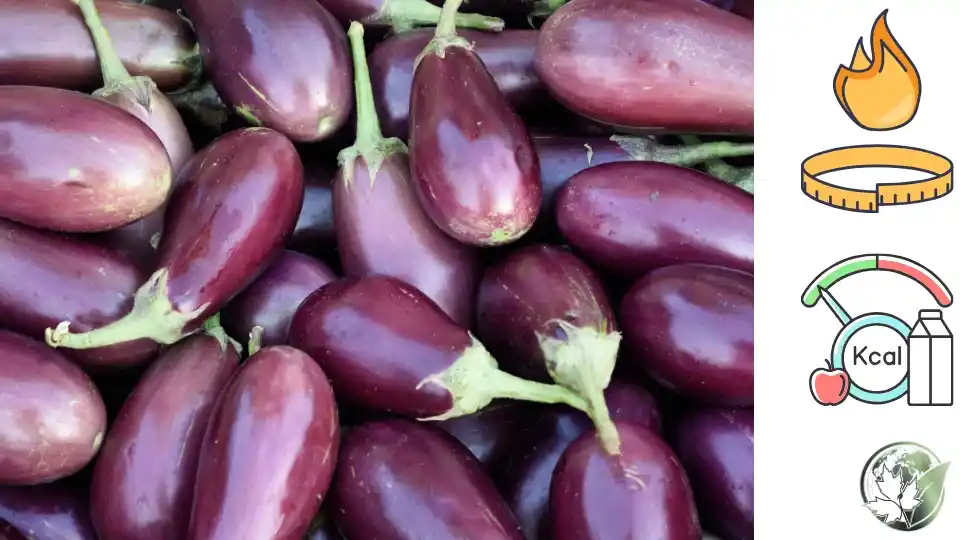
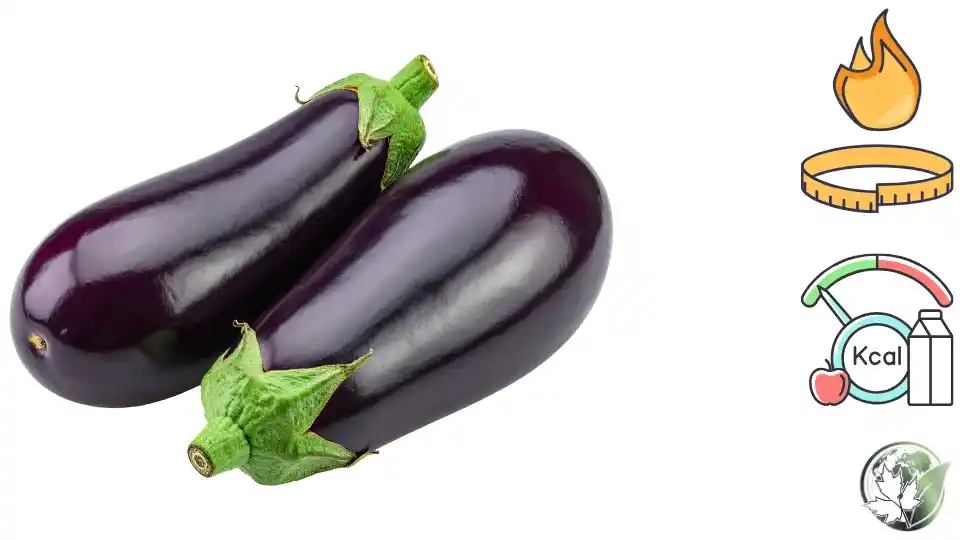
A medium raw eggplant has about 115 calories
How Many Calories Are in Eggplant by Weight, Slice and Cup?
The calories depend on the cooking method. The table shows raw eggplant and common preparations without added fat.
| Portion | Weight | Calories | Carbs | Fiber |
|---|---|---|---|---|
| 1 slice, raw (1 cm) | 30 g | 8 kcal | 1.8 g | 0.9 g |
| 1 cup raw cubes | 82 g | 20 kcal | 4.8 g | 2.5 g |
| 1 cup cooked, no oil | 99 g | 35 kcal | 8.6 g | 2.5 g |
| 1 small eggplant, raw | 250 g | 63 kcal | 14.5 g | 7.5 g |
| 1 medium eggplant, raw | 458 g | 115 kcal | 26.6 g | 13.7 g |
| 1 large eggplant, raw | 600 g | 150 kcal | 35 g | 18 g |
| 100 g raw | 100 g | 25 kcal | 5.9 g | 3.0 g |
| 100 g boiled or steamed | 100 g | 35 kcal | 8.7 g | 2.5 g |
| 100 g grilled, no oil | 100 g | 40 kcal | 9.5 g | 3.0 g |
| 100 g roasted, no oil | 100 g | 45 kcal | 10 g | 3.5 g |
A medium eggplant of 115 calories is a large vegetable with 13.7 grams of fiber, more than half the daily recommendation for many adults. Weight loss through fiber and volume is one of its appeals.
Eggplant vs Zucchini: Calories Compared
| Vegetable | Portion | Weight | Calories | Carbs | Fiber |
|---|---|---|---|---|---|
| Eggplant, raw | 100 g | 100 g | 25 kcal | 5.9 g | 3.0 g |
| Eggplant, raw | 1 cup cubes | 82 g | 20 kcal | 4.8 g | 2.5 g |
| Eggplant, cooked | 1 cup | 99 g | 35 kcal | 8.6 g | 2.5 g |
| Eggplant, raw | 1 medium | 458 g | 115 kcal | 26.6 g | 13.7 g |
| Zucchini, raw | 100 g | 100 g | 17 kcal | 3.1 g | 1.0 g |
| Zucchini, raw | 1 cup sliced | 113 g | 19 kcal | 3.5 g | 1.1 g |
| Zucchini, cooked | 1 cup | 180 g | 27 kcal | 5.2 g | 1.8 g |
| Zucchini, raw | 1 medium | 196 g | 33 kcal | 6.1 g | 2.0 g |
By weight, eggplant has about 8 more calories per 100 grams than zucchini, and about three times the fiber. Both are mostly water, over 90 percent, and in practice you could eat large amounts of either without significant calories, until oil enters the picture.
Eggplant vs Zucchini: Nutrition Compared
| Per 100 g raw | Eggplant | Zucchini |
|---|---|---|
| Calories | 25 kcal | 17 kcal |
| Water | 92 g | 95 g |
| Carbohydrate | 5.9 g | 3.1 g |
| Sugar | 3.5 g | 2.5 g |
| Fiber | 3.0 g | 1.0 g |
| Protein | 1.0 g | 1.2 g |
| Fat | 0.2 g | 0.3 g |
| Potassium | 229 mg | 261 mg |
| Vitamin C | 2.2 mg | 17.9 mg |
| Vitamin K | 3.5 mcg | 4.3 mcg |
| Manganese | 0.25 mg | 0.18 mg |
| Folate | 22 mcg | 24 mcg |
| Antioxidants | nasunin (peel) | lutein |
| Per 100 calories | Eggplant | Zucchini |
|---|---|---|
| Weight | 400 g | 588 g |
| Fiber | 12 g | 5.9 g |
| Potassium | 916 mg | 1,535 mg |
| Vitamin C | 8.8 mg | 105 mg |
For 100 calories you can eat 400 grams of eggplant or nearly 600 grams of zucchini, both substantial servings. Eggplant has more fiber and manganese, while zucchini has more vitamin C and potassium. They are equally good choices for a low calorie meal.
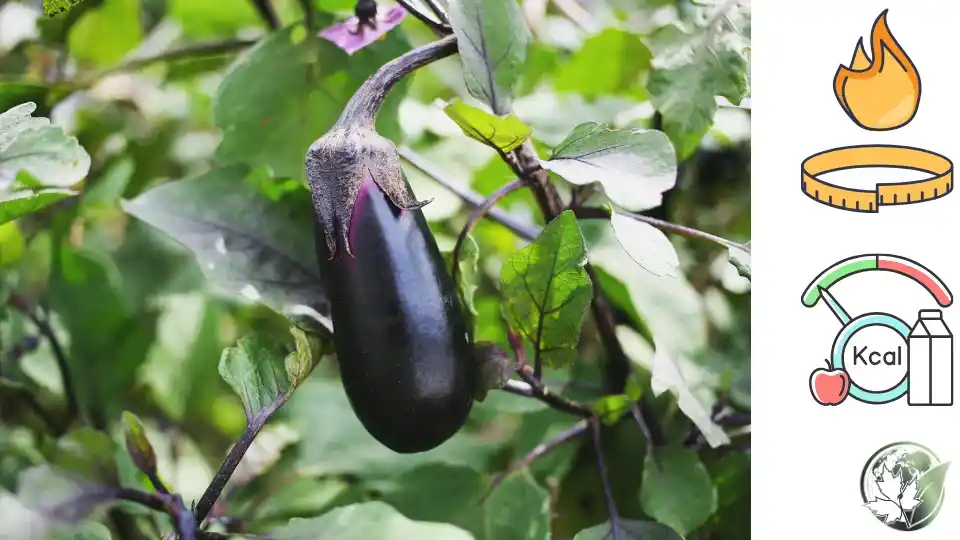
Eggplant and zucchini are both very low in calories until oil is added
How Much Oil Does Eggplant Absorb?
Eggplant's flesh is full of small air pockets. When the cell structure collapses in hot oil, the empty spaces fill with fat. A slice can absorb more than its own weight in oil if the pan is crowded and the oil is not hot enough, though typical home frying results in 20 to 30 percent of the final weight being oil. This makes the dish much higher in calories than the vegetable suggests.
| Preparation (100 g cooked) | Calories | Fat | Added oil |
|---|---|---|---|
| Raw | 25 kcal | 0.2 g | 0 |
| Boiled | 35 kcal | 0.4 g | 0 |
| Grilled, no oil | 40 kcal | 0.4 g | 0 |
| Roasted with 1 tsp oil per 100 g | 85 kcal | 4.5 g | 5 g |
| Air-fried with 1 tsp oil per 100 g | 80 kcal | 4 g | 5 g |
| Pan-fried, shallow oil | 160 kcal | 11 g | 14 g |
| Deep-fried | 190 kcal | 14 g | 17 g |
| Battered and deep-fried | 250 kcal | 17 g | 18 g |
Frying multiplies calories by four to six. The oil absorbed by a typical 200 gram portion is about 3 tablespoons, which is 360 calories. In baked or air-fried versions with a light brush of oil, the total is close to 80 per 100 grams.
How Many Calories Are in Common Eggplant Dishes?
| Dish | Serving | Calories | Notes |
|---|---|---|---|
| Baba ganoush | 2 tbsp (30 g) | 40 kcal | Tahini and olive oil |
| Mirza ghasemi | 1 serving (150 g) | 170 kcal | Smoked eggplant, egg, tomato |
| Kashk-e bademjan | 1 serving (150 g) | 210 kcal | Fried eggplant, kashk, onion |
| Khoresh bademjan | 1 serving (250 g) | 330 kcal | With meat, tomato, fried slices |
| Eggplant parmesan | 1 serving (250 g) | 400 kcal | Breaded, cheese, sauce |
| Moussaka | 1 serving (250 g) | 360 kcal | Meat, béchamel |
| Ratatouille | 1 cup (200 g) | 110 kcal | Eggplant, zucchini, tomato |
| Stuffed eggplant (dolmeh bademjan) | 2 halves | 300 kcal | Meat and rice filling |
| Grilled eggplant slices | 3 slices (100 g) | 85 kcal | Light oil brush |
| Eggplant stir-fry | 1 cup | 170 kcal | Oil, sauce |
| Eggplant pickle (torshi bademjan) | 2 tbsp | 35 kcal | Oil, vinegar, herbs |
The range is wide, from 40 calories for a spoon of dip to 400 for a baked, breaded dish with cheese. The vegetable itself usually contributes only 40 to 100 of these calories. The rest comes from oil, cheese, meat and rice.
How Does Eggplant Compare With Other Vegetables?
| Vegetable (100 g raw) | Calories | Carbs | Fiber |
|---|---|---|---|
| Cucumber | 15 kcal | 3.6 g | 0.5 g |
| Zucchini | 17 kcal | 3.1 g | 1.0 g |
| Tomato | 18 kcal | 3.9 g | 1.2 g |
| Lettuce | 15 kcal | 2.9 g | 1.3 g |
| Cabbage | 25 kcal | 5.8 g | 2.5 g |
| Eggplant | 25 kcal | 5.9 g | 3.0 g |
| Bell pepper (green) | 20 kcal | 4.6 g | 1.7 g |
| Carrot | 41 kcal | 9.6 g | 2.8 g |
| Potato | 77 kcal | 17.5 g | 2.2 g |
| Onion | 40 kcal | 9.3 g | 1.7 g |
Eggplant is at the low end for calories and at the high end for fiber. It is a useful bulking vegetable because its meaty texture can replace meat or pasta in some meals.
Is Eggplant Good for Weight Loss?
Yes, if it is prepared without much oil. Eggplant has few calories, is rich in fiber and water and gives a meaty texture, so it can replace higher calorie foods in lasagne, burgers and pasta bakes. A grilled eggplant slice can be used in place of bread in a sandwich, or as noodles in a lasagne, saving 100 or more calories per portion.
| Swap | Calories before | Calories after | Saved |
|---|---|---|---|
| Lasagne sheets (3) to eggplant slices | 220 kcal | 60 kcal | 160 kcal |
| Fried eggplant to grilled (200 g) | 380 kcal | 80 kcal | 300 kcal |
| White rice (1 cup) to roasted eggplant cubes | 205 kcal | 80 kcal | 125 kcal |
| Burger bun to 2 grilled eggplant slices | 150 kcal | 40 kcal | 110 kcal |
| Pizza base to eggplant pizza boats | 250 kcal | 100 kcal | 150 kcal |
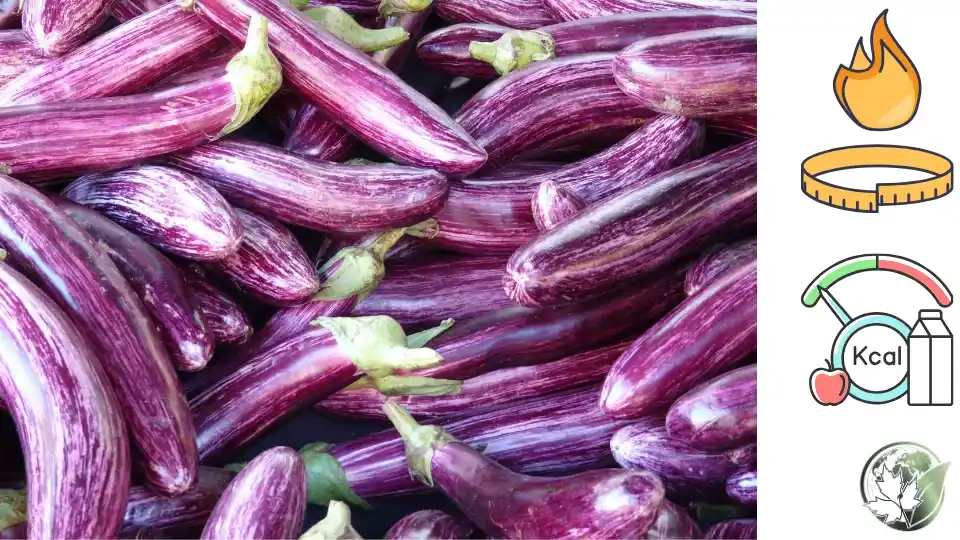
Grilled eggplant has about 40 calories per 100 grams with no oil
Is Eggplant Healthy?
Eggplant provides fiber, manganese, potassium and polyphenols. The deep purple skin contains nasunin, an anthocyanin antioxidant that gives the vegetable its color and may protect cell membranes. Chlorogenic acid, another polyphenol, is also present in large amounts. Studies in animals and early human trials suggest that eggplant may help to improve cholesterol and blood sugar, but evidence is limited.
Eggplant is a member of the nightshade family, together with tomatoes, potatoes and peppers. A few people report that nightshades trigger joint pain or digestive upset, but scientific evidence is lacking, and most people can eat them without problems. A small number of people have an allergy to eggplant. Raw eggplant is bitter and contains small amounts of solanine, so it should be cooked.
Does Eggplant Raise Blood Sugar?
Eggplant has a very low glycemic index of about 15 to 20 and only 6 grams of carbohydrate per 100 grams, so it has almost no effect on blood sugar. It is an excellent vegetable for people with diabetes. The main concern is the oil or other ingredients in the dish, not the eggplant.
How to Cook Eggplant With Less Oil
**Grill or broil slices:** Brush lightly with 1 teaspoon of oil for several slices.
**Roast cubes:** Toss 500 grams of eggplant cubes with 1 tablespoon of oil and bake at 220 degrees Celsius for 25 minutes.
**Microwave first:** Cook slices for 2 to 3 minutes before frying, which collapses the air pockets and reduces oil absorption by up to 70 percent.
**Salt and rinse:** Salting slices for 20 minutes draws out water and bitterness, and slightly reduces oil uptake.
**Air fry:** 1 teaspoon of oil is enough for a whole batch.
**Steam or smoke:** Whole eggplant roasted over a flame, as in mirza ghasemi and baba ganoush, needs no oil at all.
**Use a nonstick pan:** With a spray of oil.
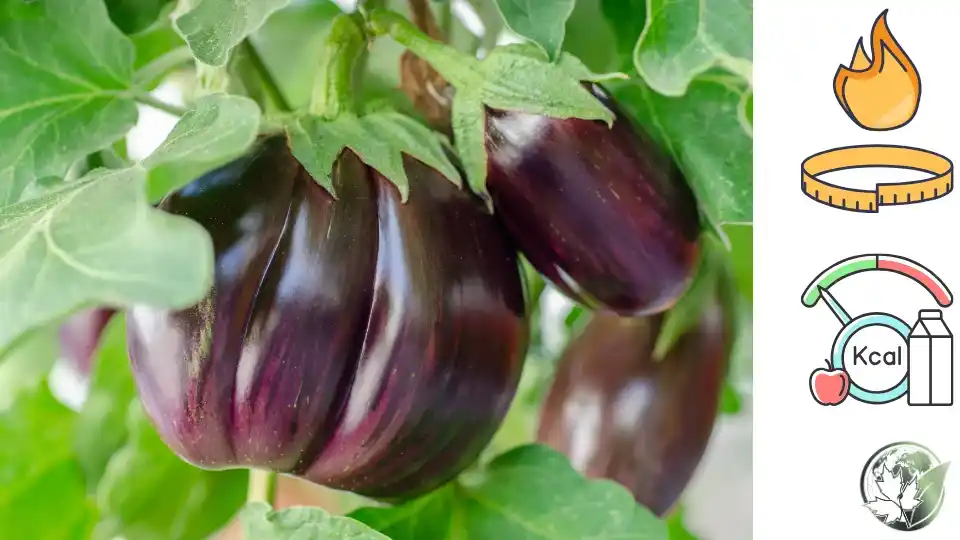
Roasting a whole eggplant over a flame needs no oil and gives a smoky taste
How to Choose and Store Eggplant
Pick eggplants that are firm, heavy for their size, with smooth, shiny skin and a fresh green cap. Press gently: the flesh should spring back. Avoid soft spots, wrinkles or brown patches. Younger, smaller eggplants have fewer seeds and less bitterness. Store eggplants at 10 to 12 degrees Celsius, not in a cold refrigerator, for up to a week, since they are sensitive to chilling. Cooked eggplant keeps for 3 to 4 days in the refrigerator.
How to Count Eggplant Calories Accurately
Weigh the raw vegetable and use 0.25 calories per gram. For cooked, weigh the finished dish and use the recipe total. Always count oil: a tablespoon of oil is 120 calories, and a typical fried eggplant recipe uses three to six tablespoons. If you fry slices and then drain them on paper, you reduce the oil by about 10 percent, but a large part remains.
Why Does Eggplant Soak Up So Much Oil?
The answer lies in the structure of the flesh. A raw eggplant is about 92 percent water, but much of its volume is not liquid at all; it is air. The tissue is made of large cells separated by air-filled spaces, which gives the vegetable its light, spongy feel and is why a whole eggplant floats in water. When you slice it and put it in hot oil, the heat makes the cells collapse. The air escapes as bubbles, and the empty spaces fill with whatever liquid is nearby, which in a frying pan is oil.
This explains several common experiences. The first slices in a pan seem to drink the oil, and you add more. A thicker slice absorbs less oil per gram than a thin one, since the surface area relative to volume is smaller. Cooking at too low a temperature gives the cells time to soak up fat before the surface seals, while hot oil at about 180 degrees Celsius seals more quickly. Slices that have been salted, pressed or microwaved first have already lost much of their air and water, so they take up less oil. Coating slices in breadcrumbs or batter adds a layer that absorbs oil on its own.
Understanding this helps you plan calories. If you fry eggplant, expect it to carry about 15 to 20 percent of its cooked weight in oil, which is 135 to 180 calories of oil for every 100 grams of finished food, beyond the 25 to 35 calories of the vegetable. If you want the taste of fried eggplant with fewer calories, microwave the slices first, brush them with a little oil and bake them or air-fry them.
How Many Calories Does the Oil in Eggplant Dishes Add?
A tablespoon of oil is about 120 calories, which is more than the calories in a whole medium eggplant at 115. This is a handy way to see the importance of oil.
| Oil used per 500 g eggplant | Added calories | Total calories (eggplant plus oil) | Calories per 100 g cooked |
|---|---|---|---|
| None (grilled or steamed) | 0 | 175 kcal | about 38 kcal |
| 1 tsp | 40 kcal | 215 kcal | about 47 kcal |
| 1 tbsp | 120 kcal | 295 kcal | about 65 kcal |
| 3 tbsp | 360 kcal | 535 kcal | about 120 kcal |
| 6 tbsp | 720 kcal | 895 kcal | about 200 kcal |
| 1/2 cup | 960 kcal | 1,135 kcal | about 250 kcal |
Cooked eggplant loses about 10 percent of its weight in water, so the numbers per 100 grams cooked are slightly higher than for raw. In many traditional recipes six tablespoons of oil or more are used for 500 grams of eggplant, which makes the dish over 200 calories per 100 grams.
How Does Eggplant Compare With Zucchini When Cooked?
Zucchini, in contrast, has a denser flesh and does not soak up oil as much. When fried, 100 grams of zucchini has about 70 to 90 calories, compared with 150 to 190 for eggplant. This is one reason why zucchini is often considered the lighter choice for pan frying.
| Preparation (100 g) | Eggplant | Zucchini |
|---|---|---|
| Raw | 25 kcal | 17 kcal |
| Boiled | 35 kcal | 15 kcal |
| Grilled with no oil | 40 kcal | 20 kcal |
| Roasted with light oil | 85 kcal | 55 kcal |
| Pan-fried | 160 kcal | 80 kcal |
| Battered and deep-fried | 250 kcal | 200 kcal |
The gap between the two vegetables is largest in frying. In steaming, grilling and raw preparations, both are extremely low in calories, and your choice can be made on taste and texture.
Who Should Be Careful With Eggplant?
Eggplant is safe for most people. A small group of people have a true allergy, with symptoms ranging from itching to hives. People with sensitivity to nightshades or with a history of kidney stones related to oxalates may choose to limit it, as eggplant contains some oxalate, though less than spinach or beets. People taking certain medications, such as nicotine replacement or some drugs metabolized by liver enzymes, should check with a pharmacist, although interactions with eggplant are not well documented. Raw eggplant should not be eaten in large amounts, as the bitter compounds, including small amounts of solanine, can upset the stomach.
How Can You Build a Light Meal Around Eggplant?
Eggplant works best as the center of a plate, not as a side that absorbs fat. A simple light meal might include roasted eggplant, a protein source and a fresh salad. For example, 200 grams of roasted eggplant with a teaspoon of oil has about 170 calories, a 100 gram portion of grilled chicken breast adds 165, a cup of cooked rice adds 205 and a large tomato and cucumber salad with lemon adds about 40. That is a meal of roughly 580 calories with plenty of fiber, protein and volume. The same plate with fried eggplant in place of the roasted one would be about 780 calories.
For breakfast, mirza ghasemi with a boiled egg and a slice of bread is about 330 calories. For lunch, a cup of ratatouille with a slice of whole grain bread is about 200 calories. For dinner, eggplant slices layered with tomato sauce and a thin layer of cheese baked in the oven, instead of fried, is about 220 calories a serving. These ideas keep the smoky, creamy qualities of the vegetable with far fewer calories.
What Are Some Easy Low Calorie Eggplant Recipes?
**Smoked eggplant dip:** Roast a whole eggplant over a flame, peel, mash with garlic, lemon and a teaspoon of tahini. About 30 calories per two tablespoons.
**Oven fries:** Cut into sticks, toss with a teaspoon of oil and spices, and bake for 25 minutes. About 80 calories per 100 grams.
**Eggplant pizza boats:** Halve, roast, top with tomato sauce and a little mozzarella. About 150 calories each.
**Stuffed eggplant with lentils:** Fill roasted halves with cooked lentils, onion and herbs. About 220 calories each.
**Curried eggplant:** Cook with tomatoes, onion and spices with one tablespoon of oil for four servings. About 110 calories a serving.
**Grilled slices with yogurt:** Top with garlic yogurt and mint. About 70 calories for three slices.
Key Takeaways: Eggplant Calories vs Zucchini
Raw eggplant has about 25 calories per 100 grams, a little more than zucchini at 17, and it offers more fiber. The big variable is cooking. Fried eggplant can reach 190 calories per 100 grams, while grilled, roasted or air-fried eggplant stays under 85. Cook it with minimal oil and enjoy it as a low calorie, filling vegetable.
Frequently Asked Questions
6 questions answered
How many calories are in eggplant?
About 25 per 100 grams raw, and 115 in a medium eggplant.
How many calories are in fried eggplant?
About 160 to 190 per 100 grams, because it absorbs oil.
Does eggplant have more calories than zucchini?
Slightly, about 25 against 17 per 100 grams.
Is eggplant good for weight loss?
Yes, if cooked with little oil.
How can I reduce oil in fried eggplant?
Microwave or roast it first, or use an air fryer.
How many calories are in kashk-e bademjan?
About 210 per 150 gram serving.