How Many Calories Are in Dried Apricots vs a Sugar Cube? The Quick Answer
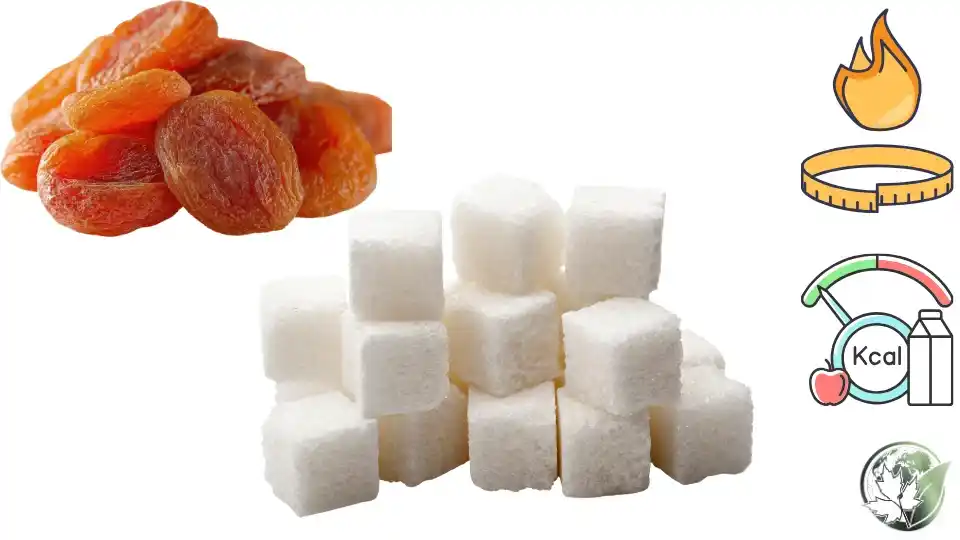
One whole dried apricot, which is two halves weighing about 7 grams, has roughly 17 calories and 3.7 grams of sugar. A standard sugar cube weighs 4 grams and has 16 calories and 4 grams of sugar. So one dried apricot is almost exactly equal to one sugar cube in calories and sugar. Per 100 grams, dried apricots have about 241 calories and sugar has 387, so apricots are about 38 percent lighter by weight, since they contain water and fiber. A handful of 30 grams has about 72 calories and 16 grams of sugar, or about 4 cubes' worth.
What differs is what comes with the sugar. A dried apricot carries 0.5 grams of fiber, 81 milligrams of potassium, small amounts of iron, vitamin E and beta-carotene, and antioxidants, while the cube gives nothing but sucrose. The comparison is useful because dried apricots are often described as a "healthy sweet" and eaten by the handful, so it helps to know that every apricot is roughly one cube of sugar. This guide compares dried apricots and sugar cubes per piece, per 100 grams and per serving, converts handfuls of apricots into cubes, and explains how to enjoy them sensibly. It has three comparison tables and an FAQ.
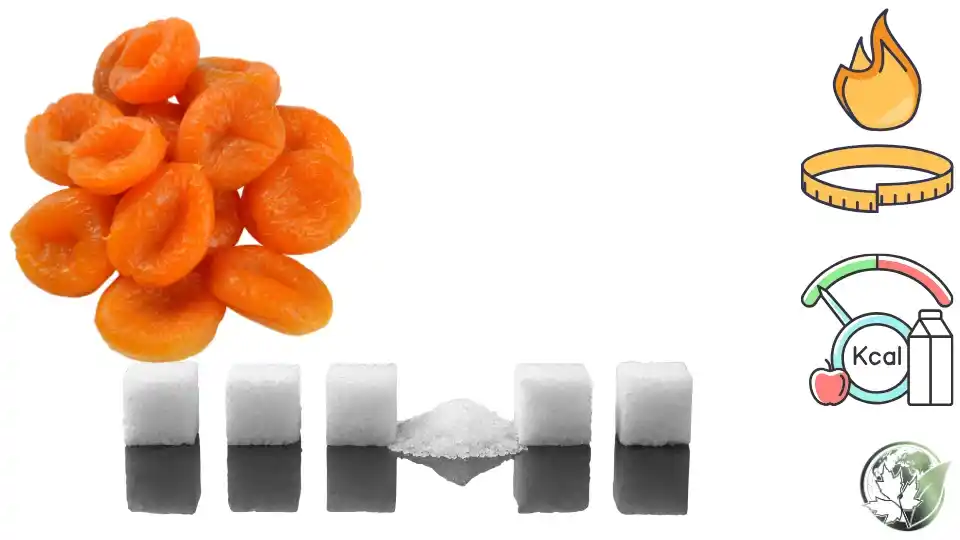
One whole dried apricot has almost exactly the calories and sugar of one sugar cube
How Many Calories Are in Dried Apricots?
| Dried apricots | Weight | Calories | Sugar | Sugar cubes |
|---|---|---|---|---|
| 1 half | 3.5 g | 8 kcal | 1.9 g | 0.5 |
| 1 whole (2 halves) | 7 g | 17 kcal | 3.7 g | 0.9 |
| 3 whole | 21 g | 51 kcal | 11 g | 2.8 |
| 5 whole | 35 g | 84 kcal | 18.5 g | 4.6 |
| 6 whole | 42 g | 101 kcal | 22 g | 5.6 |
| 10 whole | 70 g | 169 kcal | 37 g | 9.3 |
| 1/4 cup halves | 32 g | 77 kcal | 17 g | 4.2 |
| 1/2 cup halves | 65 g | 157 kcal | 34 g | 8.6 |
| 100 g | 100 g | 241 kcal | 53 g | 13.3 |
How Many Calories Are in a Sugar Cube?
| Sugar | Weight | Calories | Sugar |
|---|---|---|---|
| Small cafe cube | 2.5 g | 10 kcal | 2.5 g |
| Standard cube | 4 g | 16 kcal | 4 g |
| Large cube | 6 g | 23 kcal | 6 g |
| Rock sugar piece (nabat) | 5 g | 19 kcal | 5 g |
| 5 cubes | 20 g | 80 kcal | 20 g |
| 10 cubes | 40 g | 160 kcal | 40 g |
| 100 g | 100 g | 387 kcal | 100 g |
Dried Apricots vs Sugar Cube: Calories Compared
| Amount | Dried apricots | Sugar |
|---|---|---|
| 1 piece | 17 kcal | 16 kcal |
| 3 pieces | 51 kcal | 48 kcal |
| 5 pieces | 84 kcal | 80 kcal |
| 10 pieces | 169 kcal | 160 kcal |
| 7 g | 17 kcal | 27 kcal |
| 30 g | 72 kcal | 116 kcal |
| 100 g | 241 kcal | 387 kcal |
| 100 calories | 41 g (6 apricots) | 26 g (6.5 cubes) |
| Calories per gram | 2.4 | 3.9 |
Piece for piece they are the same. Weight for weight, dried apricots have 38 percent fewer calories, which means that for the same calories you can eat 41 grams of apricots against 26 grams of sugar.
Dried Apricots vs Sugar Cube: Nutrition Compared
| Per 100 g | Dried apricots | Sugar |
|---|---|---|
| Calories | 241 kcal | 387 kcal |
| Carbohydrate | 63 g | 100 g |
| Sugar | 53 g | 100 g |
| Fiber | 7.3 g | 0 g |
| Protein | 3.4 g | 0 g |
| Potassium | 1,162 mg | 2 mg |
| Iron | 2.7 mg | 0.1 mg |
| Calcium | 55 mg | 1 mg |
| Vitamin A | 180 mcg | 0 mcg |
| Vitamin E | 4.3 mg | 0 mg |
| Water | 31 g | 0 g |
| Per piece | 1 dried apricot (7 g) | 1 sugar cube (4 g) |
|---|---|---|
| Calories | 17 kcal | 16 kcal |
| Sugar | 3.7 g | 4 g |
| Fiber | 0.5 g | 0 g |
| Potassium | 81 mg | 0.1 mg |
| Iron | 0.2 mg | 0 mg |
| Vitamin A | 12.6 mcg | 0 mcg |
The sugar and calories are nearly identical, but each apricot supplies 81 milligrams of potassium and vitamin A, whereas the cube provides none. In a handful of 30 grams, you get about 2.2 grams of fiber and 349 milligrams of potassium, 7 percent of the daily potassium need.
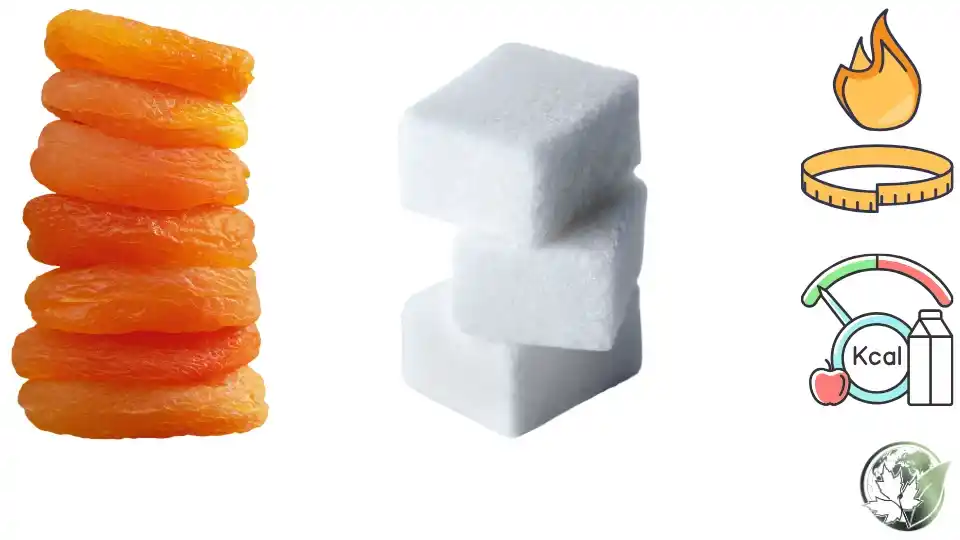
A 30 g handful of dried apricots has the sugar of about four cubes, plus fiber and potassium
Which Has More Calories: Dried Apricots or a Sugar Cube?
They are practically the same piece for piece, 17 against 16. Per gram, sugar has more. What matters is that people eat apricots by the handful but would rarely eat sugar cubes in the same way. A snack of 10 dried apricots would be 9 cubes of sugar if they were cubes, a number few people would accept. Looking at fruit through this lens helps you appreciate the sugar load without demonizing the fruit.
| Comparison | Calories | Verdict |
|---|---|---|
| 1 apricot vs 1 cube | 17 vs 16 | About equal |
| 5 apricots vs 5 cubes | 84 vs 80 | About equal |
| 30 g apricots vs 30 g sugar | 72 vs 116 | Apricots lower |
| 100 g apricots vs 100 g sugar | 241 vs 387 | Apricots lower |
| Sugar in 5 apricots vs 5 cubes | 18.5 g vs 20 g | About equal |
| Fiber in 5 apricots vs 5 cubes | 2.6 g vs 0 g | Apricots higher |
Why Are Dried Apricots and Sugar Cubes So Close Per Piece?
A sugar cube is 4 grams of pure sugar. A dried apricot weighs 7 grams but is only 53 percent sugar by weight, which comes to 3.7 grams. The other 47 percent is fiber, water, protein and minerals, which add little energy. Therefore, the sugar content per piece is almost the same, even though the apricot is almost twice the weight. By coincidence, the size of a dried apricot has been fixed by natural fruit size and the drying process, while the cube was standardized for tea.
Is a Dried Apricot Better Than a Sugar Cube?
Nutritionally, yes. The apricot comes with fiber, potassium, iron and carotenoids, while the cube provides only sugar. The glycemic index of dried apricots is about 30 to 40, much lower than that of sugar at 65. The World Health Organization's definition of free sugars excludes sugars in whole fruit, so dried apricots count differently from sugar cubes in dietary guidelines, though dried fruit is sticky and concentrated, so it is not a free pass. Dental health is similar: both stick to or coat teeth. A balanced view is that apricots are a more nutritious way to take the same sweetness.
| Factor | Dried apricot | Sugar cube |
|---|---|---|
| Calories per piece | 17 | 16 |
| Sugar | 3.7 g | 4 g |
| Fiber | 0.5 g | 0 g |
| Potassium | 81 mg | 0 mg |
| Glycemic index | 30-40 | 65 |
| Free sugar (WHO) | No | Yes |
| Satiety | Some | None |
| Dental risk | Moderate (sticky) | Moderate to high |
How Many Sugar Cubes Are in a Pack of Dried Apricots?
The numbers add up quickly. A 250 gram pack has 132 grams of sugar, which is 33 cubes, and 603 calories. A 500 gram bag has 66 cubes and 1,205 calories. Divided into portions of 30 grams, the 250 gram pack gives eight servings of 72 calories each. The pack is not a problem, but eating it in one or two sittings would be the equivalent of eating 30 sugar cubes.
| Pack | Calories | Sugar | Sugar cubes | Servings of 30 g |
|---|---|---|---|---|
| 100 g | 241 kcal | 53 g | 13 | 3.3 |
| 250 g | 603 kcal | 132 g | 33 | 8.3 |
| 500 g | 1,205 kcal | 265 g | 66 | 16.7 |
| 1 kg | 2,410 kcal | 530 g | 133 | 33 |
Can Dried Apricots Replace Sugar Cubes in Tea?
Apricots are not used to sweeten tea in the same way as cubes, because they do not dissolve, but a dried apricot or two eaten alongside plain tea gives the sweetness without stirring in sugar. A tea with two cubes has 32 calories and 8 grams of sugar. Plain tea with two dried apricots has 34 calories and 7.4 grams of sugar, along with 1 gram of fiber. You can also simmer dried apricots in tea to make a fruit infusion, or chop them into a hot drink.
| Tea | Calories | Sugar | Fiber |
|---|---|---|---|
| Plain tea | 0 kcal | 0 g | 0 g |
| Tea + 2 cubes | 32 kcal | 8 g | 0 g |
| Plain tea + 2 dried apricots | 34 kcal | 7.4 g | 1 g |
| Plain tea + 1 date | 26 kcal | 6 g | 0.6 g |
| Plain tea + 1 cube in mouth | 8 kcal | 2 g | 0 g |
| Tea simmered with 3 dried apricots | 51 kcal | 11 g | 1.5 g |
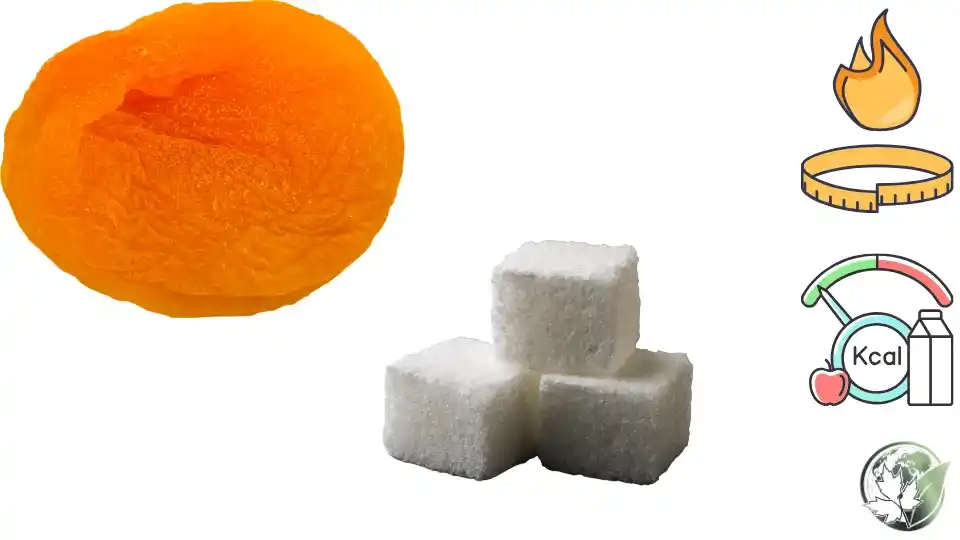
Dried apricots with plain tea and a few almonds make a lighter alternative to sweets
How Many Dried Apricots Are Reasonable Per Day?
A common recommendation is 4 to 6 whole apricots, which is 68 to 100 calories and 15 to 22 grams of sugar. That equals about 4 to 6 sugar cubes. Within the WHO limit of 50 grams of free sugars, whole fruit sugars are not counted, but they still contribute calories and carbohydrates. Eating more than 10 at once may cause stomach discomfort. Portion into small containers in advance, and combine with nuts to stay satisfied.
Do Sulfites in Dried Apricots Matter?
Many orange dried apricots are treated with sulfur dioxide, a preservative that keeps the color and extends shelf life. It is safe for most people, but a minority, especially people with asthma, may experience wheezing, hives or stomach upset. Labels must declare sulfites if they exceed 10 parts per million in many countries. If you are sensitive, choose unsulfured, brown apricots. They look less attractive but taste richer and have the same calories and sugar. Sugar cubes, on the other hand, contain no preservatives.
How Can You Swap Sugary Snacks for Dried Apricots?
If you usually snack on candy, replacing a handful of gummy sweets (30 grams, 100 calories, 14 grams of sugar) with 5 dried apricots (84 calories, 18.5 grams of sugar) does not save sugar but adds fiber, potassium and no artificial colors. A better change is to replace the candy with 2 or 3 apricots and a handful of almonds. The calories remain similar but you gain protein and healthy fat, and feel fuller. The ideal is to have fresh fruit when possible, and dried fruit in moderation.
| Snack | Calories | Sugar | Fiber |
|---|---|---|---|
| Gummy candy (30 g) | 100 kcal | 14 g | 0 g |
| 5 dried apricots | 84 kcal | 18.5 g | 2.6 g |
| 3 dried apricots + 8 almonds | 108 kcal | 11 g | 3 g |
| 3 fresh apricots | 50 kcal | 9.7 g | 2.1 g |
| 5 sugar cubes | 80 kcal | 20 g | 0 g |
| Chocolate bar (43 g) | 230 kcal | 24 g | 1.5 g |
How Do Dried Apricots Compare With Other Dried Fruits in Sugar Cubes?
Every dried fruit carries sugar equal to several cubes per handful. Looking at a standard 30 gram handful, dried apricots are in the middle of the pack, with raisins and dates higher, and prunes and dried figs somewhat lower. Seen in cubes, the differences are clear. A handful of dried mango or sweetened cranberries holds more sugar than a handful of apricots, and more than a chocolate bar's worth in some cases if you eat 100 grams.
| Dried fruit (30 g) | Calories | Sugar | Sugar cubes |
|---|---|---|---|
| Prunes | 72 kcal | 11.4 g | 2.9 |
| Dried figs | 75 kcal | 14.4 g | 3.6 |
| Dried apricots | 72 kcal | 16 g | 4 |
| Dried apples | 73 kcal | 17 g | 4.3 |
| Raisins | 90 kcal | 17.7 g | 4.4 |
| Zahedi dates (3) | 78 kcal | 18 g | 4.5 |
| Dried cranberries (sweetened) | 92 kcal | 19.5 g | 4.9 |
| Dried mango (sweetened) | 96 kcal | 20 g | 5 |
| Medjool dates (1.3) | 83 kcal | 20 g | 5 |
What Are Tips for Snacking on Dried Apricots Mindfully?
Eat them slowly, one at a time, noticing the sweet-tart flavor and chewy texture. Put the amount you plan to eat in a bowl, rather than eating out of the bag. Combine with nuts or cheese for fat and protein. Drink a glass of water after to clear sugar from the mouth. Store the bag out of sight, and consider buying small packs. Remember that a handful of dried fruit does not replace a serving of fresh fruit and vegetables, but it can complement them well, particularly in winter.
How Do Apricots Fit Into Diets for Athletes and Active People?
Dried apricots are a handy source of quick carbohydrate and potassium for athletes. Five apricots give 22 grams of carbohydrate and about 400 milligrams of potassium for 84 calories, making them a good snack before a walk, run or bike ride. Compared with sugar cubes, they offer micronutrients, and compared with gels, they are a whole food. They are lightweight and do not need refrigeration. For long events, combine them with salty snacks such as pretzels or salted nuts to replace sodium lost in sweat.
| Fuel | Carbohydrate | Calories | Potassium |
|---|---|---|---|
| 5 dried apricots | 22 g | 84 kcal | 407 mg |
| 5 sugar cubes | 20 g | 80 kcal | 0.5 mg |
| 1 banana | 27 g | 105 kcal | 422 mg |
| 3 dates | 20 g | 78 kcal | 176 mg |
| Energy gel | 22 g | 90 kcal | 40 mg |
| Raisins (2 tbsp) | 16 g | 54 kcal | 190 mg |
Can Children and Older Adults Eat Dried Apricots Instead of Sweets?
For children, dried apricots are a better option than candy, because they provide iron, fiber and vitamin A. Cut them for children under four to avoid choking, and give two or three at a time. For older adults, they are easy to chew when soft, and supply potassium, which may help to maintain healthy blood pressure, although those on potassium-restricted diets, such as people with advanced kidney disease, should check with their doctor. Anyone prone to loose stools should limit portions, since the sorbitol can have a laxative effect.
What Do Dried Apricots Add to Baking and Cooking in Place of Sugar?
Chopped dried apricots can replace some of the sugar in muffins, cakes and granola by adding sweetness and moisture. Blending 1 cup of soaked dried apricots with 1/4 cup of water makes a puree to replace up to half the sugar in a recipe, and cuts the calories slightly because of the fiber and water. In savory dishes like tagines, stews or rice, a handful of apricots balances salt and spice. Because a single apricot has the sugar of a cube, it takes only a few to sweeten a whole dish. A tray of 12 muffins with 1/2 cup chopped dried apricots adds 157 calories in total, only 13 per muffin.
| Recipe use | Amount of apricot | Calories added | Sugar replaced |
|---|---|---|---|
| Oatmeal topping | 3 apricots | 51 kcal | 2 cubes |
| Muffins (12), chopped | 1/2 cup | 157 kcal total | 8 cubes total |
| Apricot puree in cake | 1 cup puree | 313 kcal | 17 cubes |
| Granola bars (12) | 1 cup chopped | 313 kcal total | 17 cubes total |
| Chicken tagine (4) | 1/2 cup | 157 kcal total | 8 cubes total |
| Rice pilaf (4) | 1/4 cup | 77 kcal total | 4 cubes total |
Is the Sugar in Dried Fruit the Same as the Sugar in a Cube?
Chemically, the sugars in dried apricots are glucose, fructose and sucrose, in the proportions of roughly 30 percent glucose, 25 percent fructose and 45 percent sucrose, so the body handles them in much the same way as table sugar. What differs is the context. In a dried apricot, the sugar is held in cell walls together with fiber, which slows digestion. It is also accompanied by water that makes you feel fuller, though in dried fruit there is little. The result is a lower glycemic response than the same amount of pure sugar. Over the long term, studies of dried fruit consumption show neutral or modestly positive associations with health, as long as portions are sensible.
| Sugar profile | Dried apricot (per 100 g) | Sugar cube (per 100 g) |
|---|---|---|
| Sucrose | 25 g | 100 g |
| Glucose | 16 g | 0 g |
| Fructose | 12 g | 0 g |
| Fiber | 7.3 g | 0 g |
| Glycemic index | 30-40 | 65 |
How Should You Read Labels on Dried Apricot Packs?
Look at the ingredient list: it should say only "apricots" (and perhaps sulfur dioxide). Avoid products that list sugar, glucose syrup, honey or oil. The nutrition panel's "total sugars" for a pure dried apricot should be about 53 grams per 100 grams, and added sugars zero. Serving sizes are often 40 grams, so multiply accordingly. Compare calories per 100 grams across brands: soft "ready-to-eat" apricots may have as little as 210, while very dry ones have 260.
What Is a Smart Way to Use the "Cube Equivalent" Idea?
Converting foods into cubes is a simple awareness tool, not a rule. Divide the grams of sugar on the label by 4 and you have the number of cubes. Use it to compare your snacks: a can of soda at nine cubes, a chocolate bar at six, a 30 gram handful of dried apricots at four, three fresh apricots at 2.4. It can help you to see where the sugar in your day comes from and to prioritize cutting the sources that give you the least enjoyment and nutrition. A cup of sweet tea, for example, might be a more worthwhile cut than the apricots, which at least bring fiber and potassium.
| Food | Sugar | Cubes |
|---|---|---|
| Can of cola | 35 g | 8.8 |
| Chocolate bar (43 g) | 24 g | 6 |
| Fruit yogurt (150 g) | 17 g | 4.3 |
| Handful of dried apricots (30 g) | 16 g | 4 |
| Glass of orange juice | 21 g | 5.3 |
| 3 fresh apricots | 9.7 g | 2.4 |
| 1 banana | 14.4 g | 3.6 |
| Tea with 2 cubes | 8 g | 2 |
Key Takeaways: Dried Apricots vs Sugar Cube Calories
One dried apricot has about 17 calories and 3.7 grams of sugar, practically the same as a sugar cube at 16 and 4. Per 100 grams, apricots have 241 calories and sugar 387. Apricots bring fiber and potassium to the same sugar load, so they are a better choice than cubes, but keep portions to 4 to 6 a day.
Frequently Asked Questions
6 questions answered
How many sugar cubes are in a dried apricot?
About one cube's worth of sugar (3.7 g).
How many calories are in a dried apricot?
About 17 for a whole apricot of two halves.
Is a dried apricot higher in calories than a sugar cube?
About the same, 17 against 16.
Are dried apricots healthier than sugar?
Yes, they provide fiber, potassium and vitamin A.
How many dried apricots can I eat a day?
About 4 to 6.
Do dried apricots contain added sugar?
Usually not; check the label for added sugar or syrup.