How Many Calories Are in Dried Apricots vs Fresh Apricots? The Quick Answer
Dried apricots have about 241 calories per 100 grams, while fresh apricots have about 48. Dried apricots are therefore five times as calorie dense. Per piece, the picture is different. One fresh apricot (about 35 grams) has roughly 17 calories, and one dried apricot half (3.5 grams) has about 8 calories, so a whole dried apricot of two halves has around 17, the same as a fresh fruit. Three fresh apricots (105 grams) have about 50 calories, and a small handful of 30 grams of dried apricots has 72 calories.
The explanation is water. Fresh apricots are about 86 percent water. Drying removes most of that, leaving a fruit with only 30 percent water, in which the sugar, fiber, vitamins and minerals are concentrated about fivefold. This means dried apricots deliver more potassium, iron and fiber per bite, but also more sugar and calories per gram, and it is easy to eat far more of them. This guide compares dried and fresh apricots per piece, per 100 grams, per cup and per serving, covers sugar, fiber, vitamin A and potassium, and gives advice on portion sizes. It has three comparison tables and an FAQ.
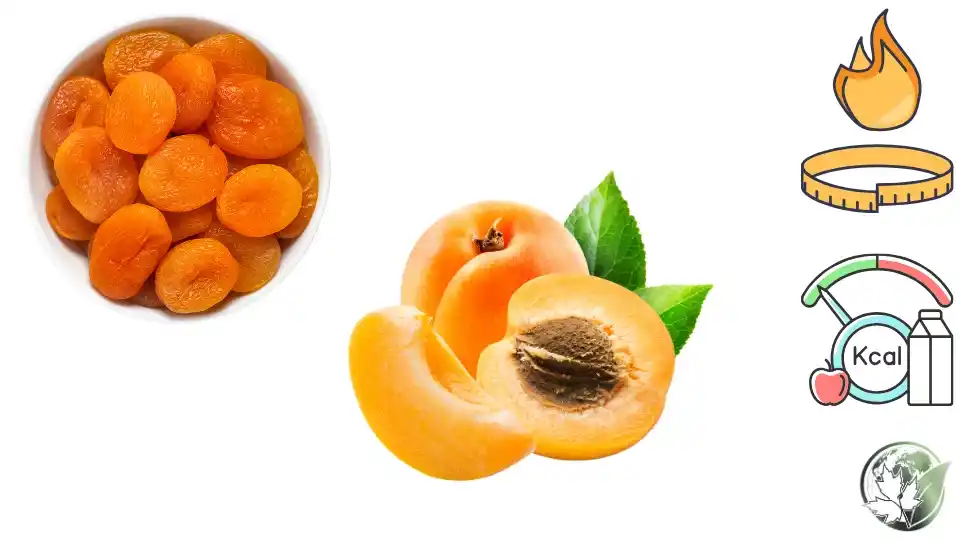
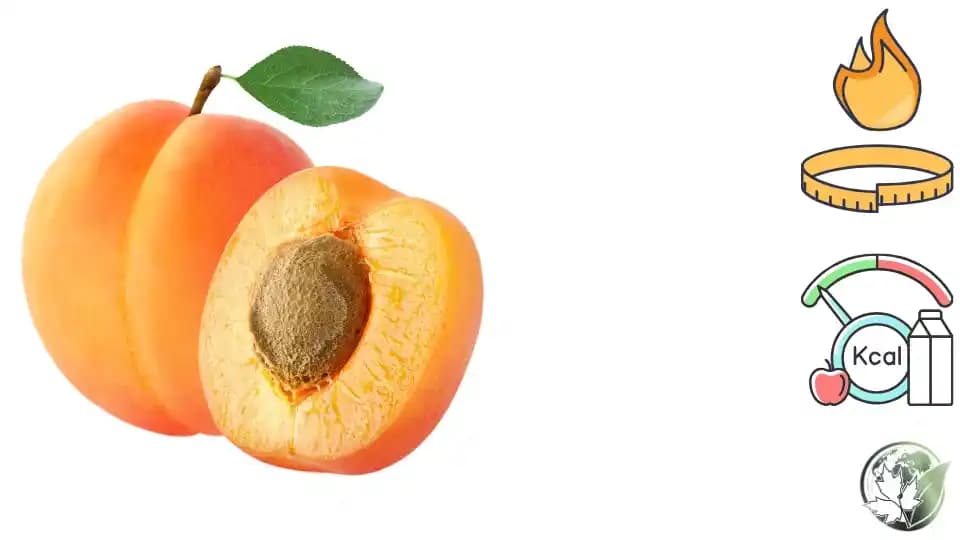
One dried apricot (two halves) has about the same calories as one fresh apricot, but weighs a fifth as much
How Many Calories Are in Dried Apricots?
| Dried apricots | Weight | Calories | Sugar | Fiber |
|---|---|---|---|---|
| 1 half | 3.5 g | 8 kcal | 1.9 g | 0.3 g |
| 1 whole apricot (2 halves) | 7 g | 17 kcal | 3.7 g | 0.5 g |
| 5 halves | 17.5 g | 42 kcal | 9.3 g | 1.3 g |
| 10 halves | 35 g | 84 kcal | 18.5 g | 2.6 g |
| 1/4 cup halves | 32 g | 77 kcal | 17 g | 2.3 g |
| 1/2 cup halves | 65 g | 157 kcal | 34 g | 4.7 g |
| 1 cup halves | 130 g | 313 kcal | 69 g | 9.5 g |
| 100 g | 100 g | 241 kcal | 53 g | 7.3 g |
| Sulfured (bright orange) | 100 g | 241 kcal | 53 g | 7.3 g |
| Unsulfured (brown) | 100 g | 241 kcal | 53 g | 7.3 g |
Both sulfured (bright orange) and unsulfured (brown, often labeled "organic") dried apricots have the same calories. The sulfur dioxide simply preserves the color.
How Many Calories Are in Fresh Apricots?
| Fresh apricots | Weight | Calories | Sugar | Fiber |
|---|---|---|---|---|
| 1 small apricot | 25 g | 12 kcal | 2.3 g | 0.5 g |
| 1 medium apricot | 35 g | 17 kcal | 3.2 g | 0.7 g |
| 3 medium apricots | 105 g | 50 kcal | 9.7 g | 2.1 g |
| 5 medium apricots | 175 g | 84 kcal | 16 g | 3.5 g |
| 1 cup halves | 155 g | 74 kcal | 14 g | 3.1 g |
| 1 cup sliced | 165 g | 79 kcal | 15 g | 3.3 g |
| 100 g | 100 g | 48 kcal | 9.2 g | 2 g |
| Canned in juice | 100 g | 50 kcal | 10 g | 1.5 g |
| Canned in syrup | 100 g | 83 kcal | 19 g | 1.4 g |
Dried vs Fresh Apricots: Calories Compared
| Amount | Dried apricots | Fresh apricots |
|---|---|---|
| 1 whole apricot | 17 kcal (7 g) | 17 kcal (35 g) |
| 3 apricots | 51 kcal (21 g) | 50 kcal (105 g) |
| 5 apricots | 85 kcal (35 g) | 84 kcal (175 g) |
| 10 apricots | 169 kcal (70 g) | 168 kcal (350 g) |
| 30 g | 72 kcal | 14 kcal |
| 100 g | 241 kcal | 48 kcal |
| 1 cup | 313 kcal | 74 kcal |
| 100 calories | 41 g (6 apricots) | 208 g (6 apricots) |
For the same number of fruits, dried and fresh apricots have the same calories (about 17 each) because the dried fruit is simply the fresh one without its water. The difference in weight and volume is large: 6 fresh apricots weigh 208 grams, whereas the dried version is a small handful of 41 grams.
Dried vs Fresh Apricots: Nutrition Compared
| Per 100 g | Dried apricots | Fresh apricots |
|---|---|---|
| Calories | 241 kcal | 48 kcal |
| Carbohydrate | 63 g | 11 g |
| Sugar | 53 g | 9.2 g |
| Fiber | 7.3 g | 2 g |
| Protein | 3.4 g | 1.4 g |
| Fat | 0.5 g | 0.4 g |
| Water | 31 g | 86 g |
| Potassium | 1,162 mg | 259 mg |
| Iron | 2.7 mg | 0.4 mg |
| Calcium | 55 mg | 13 mg |
| Vitamin A | 180 mcg | 96 mcg |
| Vitamin C | 1 mg | 10 mg |
| Vitamin E | 4.3 mg | 0.9 mg |
| Per typical serving | 5 dried apricots (35 g) | 3 fresh apricots (105 g) |
|---|---|---|
| Calories | 85 kcal | 50 kcal |
| Sugar | 18.5 g | 9.7 g |
| Fiber | 2.6 g | 2.1 g |
| Potassium | 407 mg | 272 mg |
| Vitamin C | 0.4 mg | 10.5 mg |
| Iron | 0.9 mg | 0.4 mg |
Dried apricots are richer in potassium, iron, fiber and vitamin E per gram, while fresh apricots keep their vitamin C, which is largely lost in drying. Sulfured dried apricots retain more vitamin A than unsulfured ones.
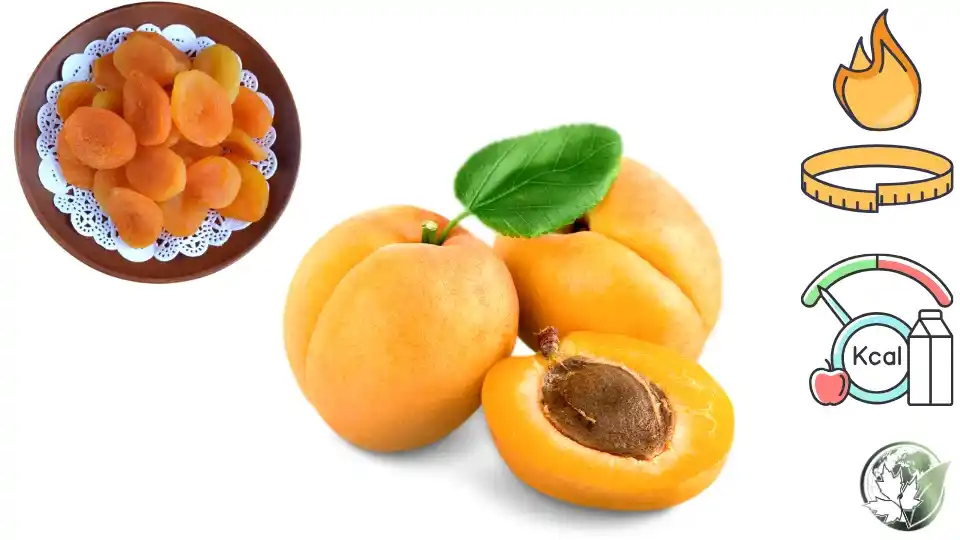
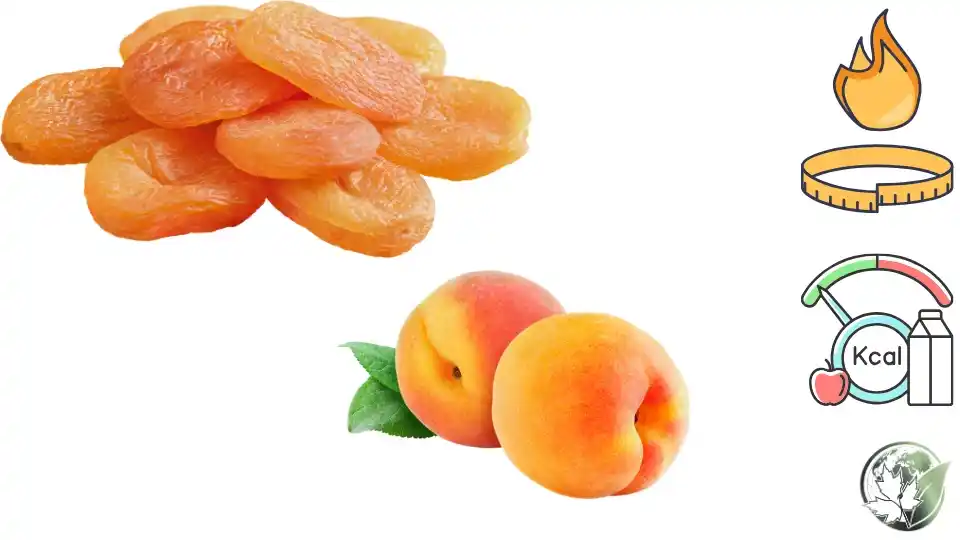
Five dried apricots have about 85 calories, and three fresh apricots about 50
Which Has More Calories: Dried or Fresh Apricots?
Per 100 grams dried apricots have five times the calories. Per piece they are equal. The most practical way to look at it is by serving: a typical serving of five dried apricots gives 85 calories, while a typical serving of three fresh apricots gives 50. Dried apricots are easy to over-eat because they are small and sweet, with a 30 gram handful at 72 calories, 100 grams at 241, a whole 250 gram pack at 600.
| Comparison | Calories | Verdict |
|---|---|---|
| 1 dried vs 1 fresh apricot | 17 vs 17 | Equal |
| 100 g dried vs 100 g fresh | 241 vs 48 | Fresh lower |
| 5 dried vs 3 fresh (typical serving) | 85 vs 50 | Fresh lower |
| 1 cup dried vs 1 cup fresh | 313 vs 74 | Fresh lower |
| 30 g handful dried vs 30 g fresh | 72 vs 14 | Fresh lower |
| Pack of 250 g dried vs 250 g fresh | 603 vs 120 | Fresh lower |
Why Do Dried Apricots Have More Calories per Gram?
Drying removes about 80 percent of the weight of an apricot, but none of its sugar, fiber or minerals. 100 grams of dried apricots corresponds to roughly 500 grams of fresh. If you compare 500 grams of fresh apricots (about 240 calories) with 100 grams of dried (241), the energy is the same. That is why dried fruit seems so calorie-dense: it is fresh fruit with the water taken away.
Are Dried Apricots Healthy?
Yes, in moderation. They are a good source of potassium, with 1,162 milligrams per 100 grams, iron, fiber and carotenoids such as beta-carotene, which the body converts to vitamin A. They have a moderate glycemic index of about 30 to 40, which is low because of the fiber and fructose. The downsides are the high sugar density and, for sulfured fruit, the sulfites, which can trigger symptoms in some people with asthma or sensitivity. A portion of 30 to 40 grams (4 to 6 whole apricots) is a sensible daily amount.
| Health aspect | Dried apricots | Fresh apricots |
|---|---|---|
| Fiber | Higher per gram | Moderate |
| Vitamin C | Very low | Moderate |
| Potassium | Very high | Moderate |
| Beta-carotene | Concentrated | Good |
| Sugar density | High | Low |
| Shelf life | 6-12 months | 3-5 days |
| Sulfites | Possible | None |
How Many Dried Apricots Equal One Fresh Apricot?
One fresh apricot of 35 grams has about 7 grams of dry matter once dried, so it makes about one dried apricot of two halves (7 grams). In recipes, 1 cup of chopped dried apricots (130 grams) is about equal to 3 cups of halved fresh ones (465 grams). Both give about 310 calories. If a recipe calls for 10 dried halves, you can use 5 fresh apricots to get the same energy and a similar amount of sweetness, although the flavor of dried fruit is more intense.
| Fresh | Dried equivalent | Calories |
|---|---|---|
| 1 apricot (35 g) | 1 apricot (7 g, 2 halves) | 17 kcal |
| 3 apricots (105 g) | 3 apricots (21 g) | 51 kcal |
| 6 apricots (210 g) | 6 apricots (42 g) | 101 kcal |
| 1 cup halves (155 g) | 1/3 cup halves (43 g) | 104 kcal |
| 500 g | 100 g | 240 kcal |
Dried apricots with a few almonds make a snack of about 150 calories
How Many Dried Apricots Should You Eat a Day?
A reasonable portion is 4 to 6 whole dried apricots (8 to 12 halves), or 30 to 40 grams, which gives 72 to 96 calories, and 10 to 20 percent of your daily potassium. Eating larger amounts, such as 15 to 20 at once, can lead to bloating or loose stools because of the fiber and sorbitol they contain. Pair them with nuts or yogurt to balance the sugar. If you are trying to lose weight, choose fresh apricots when they are in season, as you get a larger portion for fewer calories.
What Is the Difference Between Sulfured and Unsulfured Dried Apricots?
Sulfured apricots are treated with sulfur dioxide before drying, which keeps the bright orange color and preserves vitamin A and some vitamin C. Unsulfured apricots turn dark brown, taste more caramel-like, and have a chewier texture. They are often labeled organic or natural. The calories, sugar and fiber are practically the same, but sulfured products can trigger symptoms such as wheezing in people with asthma or sulfite sensitivity. If you have these concerns, choose unsulfured. If you prefer a sweet-tart flavor and a vibrant look, sulfured apricots are fine for most people.
| Feature | Sulfured | Unsulfured |
|---|---|---|
| Color | Bright orange | Dark brown |
| Flavor | Sweet-tart | Caramel, deeper |
| Calories per 100 g | 241 kcal | 241 kcal |
| Vitamin A retention | Higher | Lower |
| Sulfite content | Present | Absent |
| Texture | Soft | Chewier |
| Shelf life | Longer | Shorter |
How Do Apricots Compare With Other Fruits in Fresh and Dried Forms?
All fruits follow the same rule: drying concentrates calories by roughly three to five times. Apricots, with 86 percent water, show one of the largest changes, while grapes (raisins) and plums (prunes) show a similar jump. Placing apricots in the context of other fruits helps you decide what to eat when. For fresh, the lowest calorie options such as strawberries, melon and apricots allow big servings. For dried, expect around 240 to 320 calories per 100 grams across the board.
| Fruit | Fresh (per 100 g) | Dried (per 100 g) | Increase |
|---|---|---|---|
| Apricots | 48 kcal | 241 kcal | 5.0x |
| Plums / prunes | 46 kcal | 240 kcal | 5.2x |
| Grapes / raisins | 69 kcal | 299 kcal | 4.3x |
| Figs | 74 kcal | 249 kcal | 3.4x |
| Dates | 142 kcal (fresh rutab) | 285 kcal | 2x |
| Mango | 60 kcal | 319 kcal | 5.3x |
| Apples | 52 kcal | 243 kcal | 4.7x |
| Cranberries | 46 kcal | 308 kcal (sweetened) | 6.7x |
How Can You Enjoy Dried Apricots Without Overeating?
Portion them out in advance, for example 5 apricots in a small bag. Soak them in warm water for 15 minutes to plump them up, so that they feel like a larger snack. Chop them into oatmeal, salads or yogurt, where a few pieces flavor the entire dish. Pair with protein and fat, like almonds or cheese. Keep the package in a cupboard, not on the desk. For recipes, such as Persian stews (khoresh) or rice dishes with dried apricots, a small handful of 30 grams per serving adds sweetness and tang for under 80 calories.
| Idea | Calories |
|---|---|
| 5 dried apricots + 8 almonds | 169 kcal |
| Oatmeal with 3 chopped dried apricots | 51 kcal added |
| Yogurt (150 g) with 4 dried apricots | 150 kcal |
| Chicken tagine with 30 g apricots | 72 kcal added |
| Apricot and nut energy ball | 70 kcal |
| Soaked dried apricots (5) with tea | 85 kcal |
What Do Apricots Offer for Eye Health and Skin?
Apricots are a good source of beta-carotene, which the body converts to vitamin A, important for vision, immunity and skin health. Fresh apricots contain about 96 micrograms RAE per 100 grams, while dried contain 180 (sulfured) because of the concentration. Three fresh apricots provide around 100 micrograms, about 11 percent of the daily need. They also contain lutein and zeaxanthin in small amounts, plus vitamin E and polyphenols. Eating them as part of a varied diet of colorful fruits and vegetables is a good strategy, since no single food is responsible for health benefits.
How Do Apricot Kernels, Jam and Juice Compare?
Apricots show up in many forms, and the calories differ widely. Apricot jam is mostly sugar and has about 56 calories per tablespoon. Apricot nectar contains added sugar and water at 56 calories per 100 milliliters, and canned apricots in heavy syrup have 83 per 100 grams. Apricot leather (qamar al-din) is a sweet, dried sheet of fruit pulp, at around 300 calories per 100 grams. A Persian specialty, apricot kernels, sold as snacks or used in sweets, are high in fat and are often bitter. Bitter kernels contain amygdalin, which can release cyanide, so they should be avoided in more than very small amounts.
| Apricot product | Amount | Calories |
|---|---|---|
| Fresh apricot | 1 medium | 17 kcal |
| Dried apricot | 1 whole | 17 kcal |
| Apricot jam | 1 tbsp (20 g) | 56 kcal |
| Apricot nectar | 250 ml | 140 kcal |
| Canned in juice | 1/2 cup | 60 kcal |
| Canned in heavy syrup | 1/2 cup | 107 kcal |
| Apricot leather | 20 g | 60 kcal |
| Apricot fruit roll-up | 14 g | 50 kcal |
| Apricot pie slice | 1 slice (120 g) | 330 kcal |
When Are Fresh Apricots in Season, and How Do You Choose Them?
Fresh apricots are at their best in late spring and summer, from May to August depending on the region. Choose fruits that are plump, golden orange with a rosy blush, and that yield slightly to gentle pressure. Avoid very hard, green, or mushy fruits. Ripen at room temperature in a paper bag and then refrigerate for up to 5 days. A ripe apricot has about 17 calories, mostly sugar, with a refreshing, tart flavor. Out of season, dried apricots can supply a concentrated reminder of summer, but at a higher density.
How Do You Store Dried and Fresh Apricots?
Keep dried apricots in an airtight container in a cool, dark place for up to 6 months, or in the refrigerator for a year. If they dry out, a short soak in hot water will revive them. Fresh apricots should be eaten within a few days; if you have a surplus, halve and pit them and freeze on a tray, then bag them for up to 8 months. Frozen apricots work well in smoothies, jams and baking.
Are Dried Apricots Good for Digestion and Constipation?
Dried apricots contain 7.3 grams of fiber per 100 grams, a mix of soluble fiber (pectin) and insoluble fiber, along with a small amount of sorbitol, which draws water into the intestine. For this reason, they are a traditional remedy for constipation, though prunes are better known for it. A portion of 5 to 8 apricots (35 to 55 grams) provides 2.5 to 4 grams of fiber. If you are not used to eating much fiber, start with a small portion and drink plenty of water, as large amounts can cause gas, cramping or diarrhea.
| Food (35 g) | Fiber | Sorbitol | Calories |
|---|---|---|---|
| Dried apricots | 2.6 g | Moderate | 84 kcal |
| Prunes | 2.5 g | High | 84 kcal |
| Dried figs | 3.4 g | Low | 87 kcal |
| Raisins | 1.3 g | Low | 105 kcal |
| Dates | 2.5 g | Moderate | 100 kcal |
Can Diabetics Eat Dried Apricots?
They can in small amounts. Dried apricots have a low to moderate glycemic index (about 30 to 40), thanks to their fiber and fructose content, which has a lesser direct effect on blood glucose. But a portion of five apricots has about 18.5 grams of sugar and 22 grams of carbohydrate, and that counts as one carbohydrate serving. Pairing with protein or fat, like a few nuts or plain yogurt, reduces the glycemic effect. Fresh apricots are a better choice for larger servings, with 3 apricots giving only 12 grams of carbohydrate.
| Serving | Carbohydrate | Sugar | Glycemic load |
|---|---|---|---|
| 5 dried apricots | 22 g | 18.5 g | 7 |
| 3 fresh apricots | 12 g | 9.7 g | 3 |
| 1 cup fresh apricots | 17 g | 14 g | 4 |
| 1/4 cup dried apricots | 20 g | 17 g | 7 |
| 1/4 cup raisins | 33 g | 27 g | 17 |
Are Dried Apricots Safe for Children?
Yes, in age-appropriate form. Dried apricots are chewy and sticky, which poses a choking risk for children under four, so chop them into small pieces or soak them until soft. A serving for a young child is two to three dried apricots (35 to 50 calories). They offer iron, which many toddlers lack, and fiber for regularity. Because the sugar is concentrated and sticky, they can contribute to tooth decay if eaten constantly, so offer them at meal or snack times and give water afterwards.
What Are the Best Uses for Dried and Fresh Apricots in Persian Cooking?
Dried apricots (zard-alu) feature in Persian stews and rice dishes such as morasa polo, in sweet-and-sour khoresh with chicken or lamb, and in tea-time snacks. Fresh apricots (zard-alu) are eaten as fruit, made into jam and cooked into stews in spring. Apricot leather, called lavashak, is a popular sour-sweet snack. In each use, the calories depend on additional ingredients: a serving of rice with dried apricots and nuts can easily exceed 450 calories. Using a small amount of fruit for flavor and filling the plate with vegetables and protein keeps the dish balanced.
How Many Calories Are in a Day Eating Only Fruit Servings of Apricots?
If you set a goal of two fruit servings a day, choosing apricots in either form is an easy way to hit it. Two cups of fresh apricot halves give 148 calories, 6 grams of fiber and 40 percent of vitamin C. The same two servings as dried (1/2 cup each) give 314 calories and 9 grams of fiber, but far less vitamin C. A mix, such as 3 fresh apricots in the morning and 3 dried apricots in the afternoon, is a practical combination, with about 100 calories in total.
Key Takeaways: Dried Apricots vs Fresh Apricots Calories
Dried apricots have about 241 calories per 100 grams and fresh apricots 48, but one dried apricot has the same 17 calories as one fresh apricot. Dried apricots offer more potassium, iron and fiber per gram, and fresh ones more vitamin C and water. Count dried apricots by number, keep to 4 to 6 a day and enjoy fresh apricots in larger servings.
Frequently Asked Questions
6 questions answered
How many calories are in a dried apricot?
About 8 per half and 17 for a whole apricot of two halves.
How many calories are in a fresh apricot?
About 17 for a medium fruit.
Are dried apricots higher in calories than fresh ones?
Per 100 grams, yes, 241 against 48; per piece they are equal.
How many dried apricots can I eat a day?
About 4 to 6 whole apricots (30 to 40 grams).
Do dried apricots have more sugar?
Yes, 53 grams per 100 grams against 9 for fresh.
Are sulfured dried apricots safe?
For most people, but those sensitive to sulfites should avoid them.