How Many Calories Are in Dried Apricots? The Quick Answer
Dried apricots have about 241 calories per 100 grams. A single dried apricot half weighs about 3.5 grams and has about 8 calories, five halves (17 g) have about 42, a one ounce handful (28 g) has about 67 and one cup of halves (about 130 g) has about 313. Fresh apricots are much lighter, at 48 calories per 100 grams, because drying removes about 80 percent of the water and concentrates the sugar, fiber and minerals.
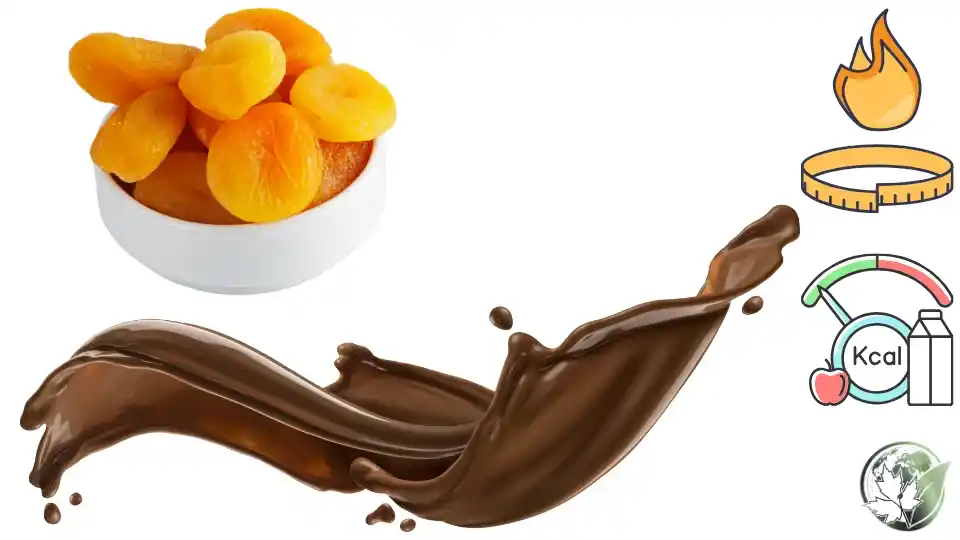
Milk chocolate is the comparison that matters for many people choosing a sweet snack. One hundred grams of milk chocolate has about 535 calories, so dried apricots have about 55 percent fewer calories per gram. A one ounce handful of apricots has 67 calories, while one ounce of milk chocolate has about 152. For 100 calories you can eat about 41 grams of dried apricots, around twelve halves, or 19 grams of milk chocolate, which is two squares.
This guide covers the calories in dried apricots by the piece, handful and cup, compares them with milk chocolate, fresh apricots and other dried fruit, and explains the roles of sugar, fiber, potassium and vitamin A. You will also find advice about sulfites, portion sizes, choosing the right type, using apricots in recipes and storing them. Three comparison tables and a full FAQ are included.
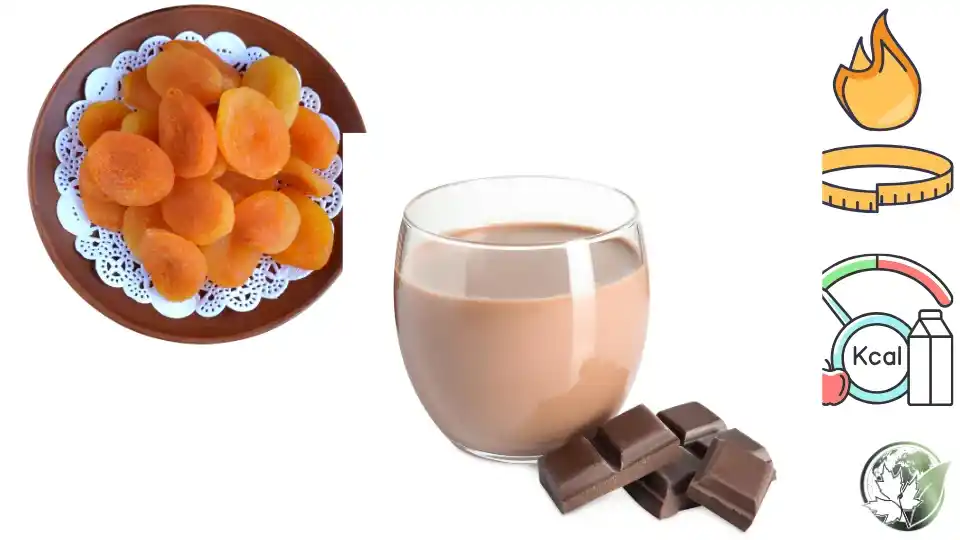
A one ounce handful of dried apricots has about 67 calories
How Many Calories Are in One Dried Apricot, a Handful and a Cup?
Apricots are dried as halves, and each half is small. The numbers below are for standard dried apricots, either sulfured (bright orange) or unsulfured (brown).
| Portion | Weight | Calories | Sugar | Fiber |
|---|---|---|---|---|
| 1 half | 3.5 g | 8 kcal | 1.9 g | 0.3 g |
| 5 halves | 17 g | 42 kcal | 9 g | 1.2 g |
| 10 halves | 35 g | 84 kcal | 18.5 g | 2.6 g |
| 1 handful (1 oz) | 28 g | 67 kcal | 14.8 g | 2.0 g |
| 1/4 cup | 33 g | 80 kcal | 17.5 g | 2.4 g |
| 1/2 cup | 65 g | 157 kcal | 34.5 g | 4.7 g |
| 1 cup | 130 g | 313 kcal | 69 g | 9.5 g |
| 100 g | 100 g | 241 kcal | 53 g | 7.3 g |
Five or six halves are a good portion, giving about 50 calories and some of your daily fiber and potassium. A 200 gram bag has about 480 calories, which is as much as a large meal.
How Many Calories Are in Fresh vs Dried Apricots?
The calories in an apricot do not change when it is dried. A fresh apricot weighing about 35 grams has about 17 calories, and when it is dried it becomes about 9 grams, or two and a half halves, with the same energy.
| Apricot form | Serving | Weight | Calories | Sugar |
|---|---|---|---|---|
| Fresh apricot | 1 fruit | 35 g | 17 kcal | 3.2 g |
| Fresh apricots | 1 cup sliced | 165 g | 79 kcal | 15 g |
| Dried apricots | 5 halves | 17 g | 42 kcal | 9 g |
| Dried apricots | 1 oz | 28 g | 67 kcal | 14.8 g |
| Canned in juice | 1/2 cup | 122 g | 60 kcal | 13 g |
| Canned in heavy syrup | 1/2 cup | 129 g | 107 kcal | 25 g |
| Apricot jam | 1 tbsp | 20 g | 50 kcal | 12 g |
| Apricot leather (fruit roll) | 1 piece | 30 g | 90 kcal | 18 g |
| Apricot nectar | 1 cup | 251 g | 141 kcal | 33 g |
Three fresh apricots equal about 50 calories, while five dried halves equal about the same. If you want volume for your calories, fresh fruit is better, and if you want a portable snack, dried is more convenient.
Dried Apricots vs Milk Chocolate: Calories and Nutrition Compared
Dried apricots and milk chocolate are both sweet, but the two foods are very different in fat, protein and minerals.
| Per 100 g | Dried apricots | Milk chocolate |
|---|---|---|
| Calories | 241 kcal | 535 kcal |
| Carbohydrate | 63 g | 59 g |
| Sugar | 53 g | 52 g |
| Fiber | 7.3 g | 3.4 g |
| Total fat | 0.5 g | 30 g |
| Saturated fat | 0 g | 18 g |
| Protein | 3.4 g | 7.7 g |
| Potassium | 1,162 mg | 372 mg |
| Iron | 2.7 mg | 2.3 mg |
| Vitamin A | 180 mcg | 30 mcg |
| Sodium | 10 mg | 79 mg |
| Per typical serving | 28 g dried apricots | 28 g milk chocolate | 43 g chocolate bar |
|---|---|---|---|
| Calories | 67 kcal | 150 kcal | 230 kcal |
| Sugar | 14.8 g | 14.6 g | 22 g |
| Fiber | 2.0 g | 1.0 g | 1.5 g |
| Saturated fat | 0 g | 5 g | 7.7 g |
| Potassium | 325 mg | 104 mg | 160 mg |
The sugar content is nearly equal, but the calories in dried apricots are less than half those of chocolate because apricots contain almost no fat. They also give twice the fiber, about three times the potassium and no saturated fat. Chocolate provides more protein and a pleasant creamy taste. If you are choosing a sweet snack based on nutrition and calories, dried apricots are the lighter option, as long as you watch the portion.
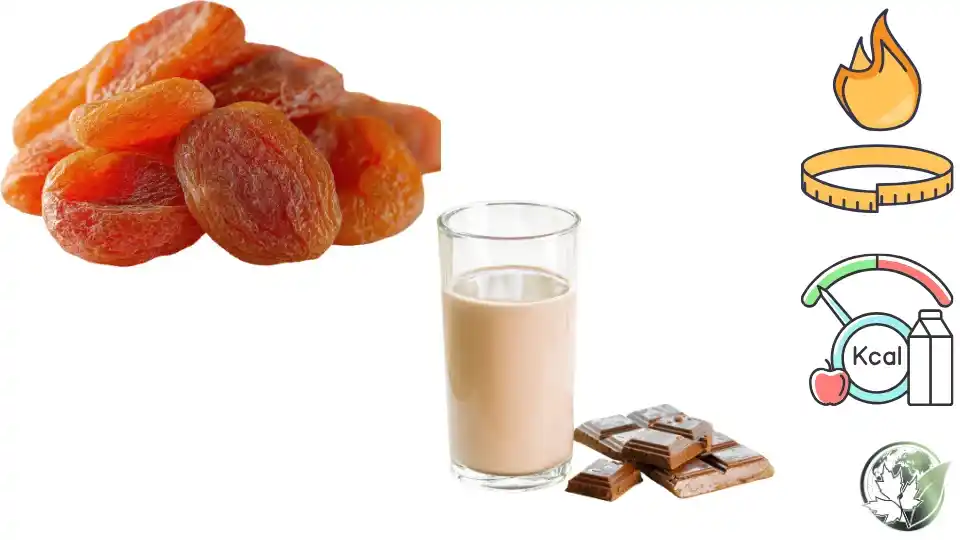
Dried apricots have less than half the calories of milk chocolate per gram, with similar sugar
How Many Apricots Equal a Chocolate Bar?
A standard 43 gram milk chocolate bar has about 230 calories. That equals about 95 grams of dried apricots, or around 27 halves, which is more than most people would eat in one go. A single square of chocolate, 54 calories, equals about 6.5 apricot halves.
| Milk chocolate portion | Calories | Equal dried apricot halves | Equal weight of dried apricots |
|---|---|---|---|
| 1 square (10 g) | 54 kcal | 6.5 halves | 22 g |
| 2 squares (20 g) | 107 kcal | 13 halves | 44 g |
| Fun-size bar (17 g) | 91 kcal | 11 halves | 38 g |
| Standard bar (43 g) | 230 kcal | 28 halves | 95 g |
| Large bar (100 g) | 535 kcal | 65 halves | 222 g |
If you choose apricots in place of chocolate, you can eat about twice the weight for the same calories. That does not mean unlimited apricots are good, since 95 grams has 50 grams of sugar. But for a daily treat of about 100 calories, a small handful of apricots can feel more generous than two squares of chocolate.
Which Gives More Potassium and Vitamin A: Apricots or Chocolate?
Dried apricots are among the richest fruit sources of potassium, with 1,162 milligrams per 100 grams, about 25 percent of the daily value in 100 grams and 7 percent in a one ounce handful. Potassium helps regulate blood pressure and muscle function, and most adults do not get enough. Milk chocolate contributes about 372 milligrams per 100 grams, and a typical serving gives under 3 percent of the daily value.
Apricots also provide beta-carotene, which the body converts to vitamin A. A one ounce serving supplies about 50 micrograms of vitamin A, 5 percent of the daily value, plus vitamin E, iron and polyphenols. Chocolate contains small amounts of iron and magnesium, and flavanols in dark varieties, but milk chocolate is lower in these than dark. For micronutrients per calorie, dried apricots are clearly superior.
Are Dried Apricots Good for Digestion?
Dried apricots have about 7.3 grams of fiber per 100 grams, both soluble and insoluble, and they contain sorbitol, a sugar alcohol with a mild laxative effect. For many people, a small handful helps regularity. Eating too many at once may cause gas, bloating or loose stools, especially if you are not used to high fiber. Start with three to five halves and drink water.
Chocolate has less fiber and can aggravate reflux in some people because of fat, caffeine and theobromine. If you are prone to heartburn or constipation, apricots are usually the better choice.
What Are Sulfites in Dried Apricots?
Many dried apricots are treated with sulfur dioxide to preserve the bright orange color and prevent spoilage. Unsulfured apricots are darker brown and have a deeper, caramel-like flavor. Sulfites are considered safe for most people, but they can trigger wheezing, hives or stomach upset in sensitive people, especially those with asthma. Labels must declare sulfites above 10 parts per million in many countries.
If you are sensitive, choose products labeled unsulfured, organic or "no sulfur dioxide added." Calories are the same, at about 241 per 100 grams. Unsulfured fruit may be a little darker and chewier. It is also a good idea to wash dried apricots briefly in warm water to remove some residue, though this does not eliminate all sulfites.
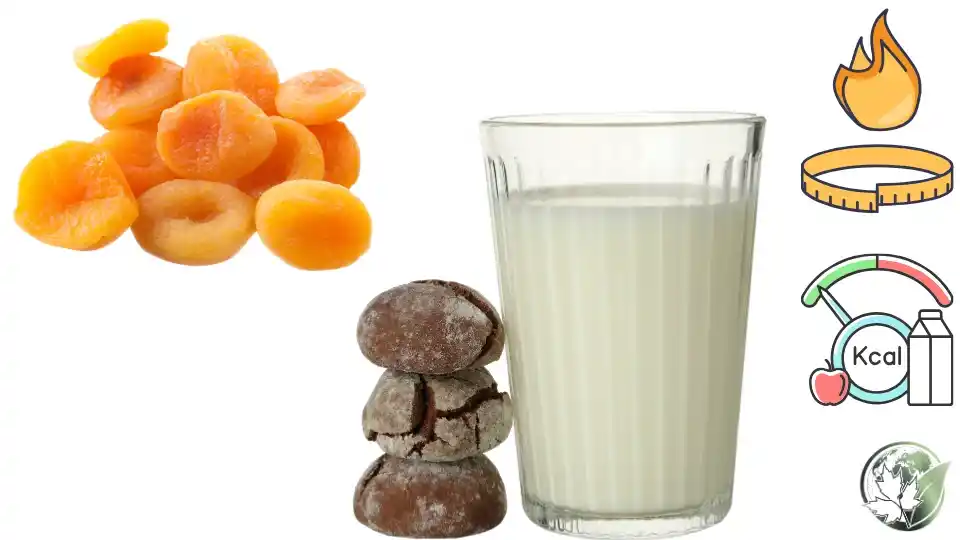
Sulfured apricots are bright orange, while unsulfured apricots are brown, with the same calories
Are Dried Apricots Good for Weight Loss?
Dried apricots can be part of a weight loss plan in small portions. Their fiber and sweetness satisfy cravings for sugar with fewer calories than chocolate or candy. A portion of five halves, 42 calories, is a modest snack. But because they are dense, a handful can turn into a cupful quickly.
| Snack swap | Calories saved |
|---|---|
| 5 apricot halves instead of 2 squares of chocolate | 65 kcal |
| 1 oz dried apricots instead of 1 oz milk chocolate | 85 kcal |
| 1 oz dried apricots instead of 1 oz gummy candy | 33 kcal |
| 1 oz dried apricots instead of 1 oz potato chips | 85 kcal |
| 3 fresh apricots instead of 1 oz dried apricots | 17 kcal |
To keep control, portion them into small containers, mix with nuts to slow eating and pair them with a protein such as yogurt.
How Do Dried Apricots Affect Blood Sugar?
Dried apricots have a low to moderate glycemic index of about 30 to 40, and a glycemic load of about 9 for a one ounce serving, which is moderate. Fiber and organic acids slow the absorption of sugar. Milk chocolate has a glycemic index of about 43, and a similar glycemic load for a one ounce serving. Both foods affect blood sugar in a modest way when eaten in small portions.
For people with diabetes, a serving of three to five dried apricots contains about 10 to 15 grams of carbohydrate. It is best eaten with protein or fat and not on an empty stomach. Large amounts can cause a significant rise because of the sugar concentration.
How Can You Use Dried Apricots in Recipes?
Dried apricots add sweet and tart flavor and are used in sweet and savory dishes.
**Oatmeal and yogurt:** Chop three halves for about 25 calories.
**Tagines and stews:** A classic combination with lamb, chicken and spices.
**Rice dishes:** Pilaf with apricots, almonds and saffron.
**Baking:** Muffins, breads and bars, replacing some sugar.
**Energy balls:** Blend with oats and nuts.
**Sauces:** Simmer with orange juice and spices for a glaze.
**Snack mix:** Combine with almonds and a few chocolate chips.
A simple energy ball made from 50 grams of apricots, 30 grams of oats and 20 grams of almonds makes about four balls with about 70 calories each.
How to Choose and Store Dried Apricots
Choose plump, pliable apricots with a uniform color and no crystals or mold. Check the ingredient list for added sugar or preservatives. Store in an airtight container in a cool, dark place for six months to a year, or refrigerate or freeze for up to two years. Sticky or hardened apricots can be softened by soaking them for ten minutes in warm water.
For importers and retailers, key quality points include moisture content (usually 18 to 25 percent), sulfite level, size grade, color, and the absence of pits and insects. Turkish, Iranian and Uzbek apricots are well known, and many are sold in bulk.
Dried apricots keep for six to twelve months in an airtight container
How to Count Dried Apricot Calories Accurately
Weigh dried apricots on a scale and multiply by 2.41. If you count halves, estimate 8 calories each, but sizes vary, so weigh a handful occasionally to check. For packaged apricots, use the label and check the serving size. For recipes, weigh before cooking and divide by the number of portions. Add the calories of any syrup, sugar or sweeteners if you buy sweetened versions.
Why Do Dried Apricots Have Fewer Calories Than Milk Chocolate?
Fat is the answer. Dried apricots contain less than 1 gram of fat per 100 grams, while milk chocolate contains about 30 grams. Because fat has 9 calories per gram, 30 grams of fat contribute about 270 calories, and that alone accounts for almost the entire gap between the two foods. The carbohydrate content is similar, with 63 grams in apricots and 59 in chocolate, so the sugar-related energy is about the same.
Another factor is that apricots contain about 30 percent water and 7 percent fiber, which have little or no usable energy. Chocolate is almost entirely dry matter. In practical terms, one dried apricot half gives the sweetness and chew of fruit at 8 calories, while a square of chocolate gives richness and melt at 54 calories. Neither is better in an absolute sense, since each satisfies a different craving, but they should not be treated as equals in the energy budget.
How Do Dried Apricots Compare With Other Fruit and Sweet Snacks?
Placing apricots in a wider context helps you choose. The table compares common snack options per 100 calories.
| Snack | Weight for 100 kcal | Sugar | Fiber |
|---|---|---|---|
| Dried apricots | 41 g | 22 g | 3.0 g |
| Raisins | 33 g | 20 g | 1.2 g |
| Dates (Medjool) | 36 g | 24 g | 2.4 g |
| Dried figs | 40 g | 19 g | 3.9 g |
| Milk chocolate | 19 g | 9.7 g | 0.6 g |
| Gummy candy | 29 g | 17 g | 0 g |
| Fresh apricots | 208 g | 19 g | 4.2 g |
| Fresh apple | 192 g | 20 g | 4.6 g |
Fresh fruit gives the most weight per calorie, and dried apricots offer a convenient middle path between fruit and sweets. They are lower in sugar per 100 calories than dates and similar to raisins, with more fiber.
How Do Traditional Dishes Use Dried Apricots?
Dried apricots appear in cuisines across Iran, Turkey, the Levant and North Africa. In Iran they are served with tea, cooked with rice, added to stews with meat and prepared as qeysi, sun-dried halves. Turkish cuisine uses them in desserts and as a stuffed treat with walnuts or cream. Moroccan tagines combine apricots with lamb, almonds and cinnamon. In each use, the sweetness and acidity balance rich or salty flavors, and a small amount goes a long way.
Calories in these dishes depend on the other ingredients, but the apricots usually add 40 to 80 calories per serving. A plate of Persian rice with apricots and almonds has about 350 calories, and a serving of lamb tagine with apricots about 450. As with other dishes, the fruit supplies flavor and nutrients rather than the bulk of the energy.
What Are Some Healthy Pairings for Dried Apricots?
Because apricots are rich in sugar, combining them with protein or healthy fat makes the snack more balanced. Good pairings include almonds, walnuts, pistachios, plain yogurt, cottage cheese, ricotta and hard-boiled eggs. Five apricot halves with ten almonds (42 + 70 = 112 calories) have a better balance of carbohydrate, fat and protein than apricots alone, and they keep you full for longer. A square of dark chocolate with two apricot halves makes a small dessert of about 60 calories that satisfies both cravings.
How Many Calories Do Dried Apricots Add Over a Week?
A daily serving of five halves adds about 294 calories a week, which is a modest amount. A daily one ounce handful adds 469 calories a week. If you eat a cup of apricots every day, that is 2,191 calories a week, about as much as a full day of food. In contrast, a daily 43 gram chocolate bar adds 1,610 calories a week. Planning a small, fixed portion is the easiest way to enjoy dried apricots without letting them add up.
What Should Parents and Retailers Know About Dried Apricots?
For children, dried apricots are a useful snack, but whole pieces can be sticky and a choking risk for very young children, so cut them into small pieces for toddlers. Because they are high in sugar, they should not replace fresh fruit, and teeth should be brushed or rinsed afterward. For retailers, offering both sulfured and unsulfured options, with clear labeling of sulfites, ingredients and calories per 100 grams, helps customers choose products that match their needs. Clear information builds trust and repeat purchases in a category where quality and price vary widely.
Can Dried Apricots Replace Chocolate Completely?
For most people, not completely, and there is no need to. Dried apricots satisfy a sweet craving with fiber and minerals, but they do not have the creamy, melting quality that makes chocolate special. A practical approach is to use apricots as your everyday sweet snack and keep chocolate for planned treats, in small portions of one or two squares. This approach reduces average sugar, saturated fat and calorie intake, while still allowing you to enjoy chocolate without guilt. If you notice that you eat a lot of apricots to satisfy a chocolate craving, switching to a square of good dark chocolate may feel more satisfying and reduce the total.
Key Takeaways: Dried Apricots Calories vs Milk Chocolate
Dried apricots have about 241 calories per 100 grams and about 8 calories per half, compared with 535 per 100 grams for milk chocolate. They have similar sugar but no saturated fat, twice the fiber and about three times the potassium. Choose unsweetened apricots, measure portions of about five halves and enjoy them as a lighter sweet snack with nuts or yogurt.
Frequently Asked Questions
9 questions answered
How many calories are in dried apricots?
About 241 per 100 grams, 67 in a one ounce handful and 8 per half.
How many calories are in 5 dried apricots?
Five halves have about 42 calories.
Do dried apricots have fewer calories than milk chocolate?
Yes. Per gram, dried apricots have less than half the calories: 241 versus 535 per 100 grams.
How much sugar is in dried apricots?
About 53 grams per 100 grams, and 14.8 grams in a one ounce serving.
Are dried apricots healthy?
They are a good source of potassium, fiber and beta-carotene, but are high in sugar and calories if overeaten.
How many dried apricots can I eat a day?
A serving of about 5 halves, or one ounce, is reasonable for most people.
Are sulfured dried apricots bad?
They are safe for most people but may trigger reactions in those with sulfite sensitivity or asthma.
Do dried apricots help with constipation?
Their fiber and sorbitol may help regularity in some people when eaten in moderate amounts.
Are dried apricots good for weight loss?
In small portions, they offer a lighter sweet snack than chocolate or candy.