How Many Calories Are in a Cucumber? The Quick Answer
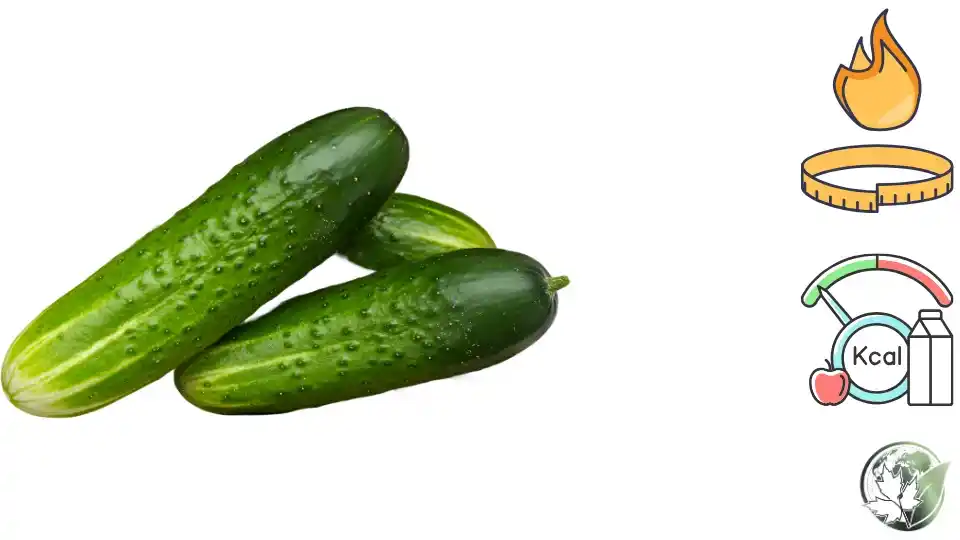
A cucumber is one of the lowest calorie foods you can eat. One hundred grams of raw cucumber with peel has about 15 calories, one cup of sliced cucumber (104 g) has about 16 and a whole medium cucumber of about 300 grams has about 45. A small snack of six slices (about 50 g) has only 8 calories. Because cucumbers are 95 percent water, you can eat a large volume and take in very little energy.
Tomatoes are a common companion in salads, so the comparison is natural. One hundred grams of raw tomato has about 18 calories, slightly more than cucumber, and a medium tomato (123 g) has about 22. A cup of chopped tomato (180 g) has about 32. Cucumbers are lower in calories and carbohydrate than tomatoes, while tomatoes provide more vitamin C, vitamin A and the antioxidant lycopene.
This guide shows the calories in whole, sliced, peeled and pickled cucumbers, compares cucumber with tomato in energy, vitamins and minerals, and explains how salads, yogurt dips and dressings change the totals. It also covers hydration, weight loss, buying and storage, and answers common questions. You will find three comparison tables and an FAQ.
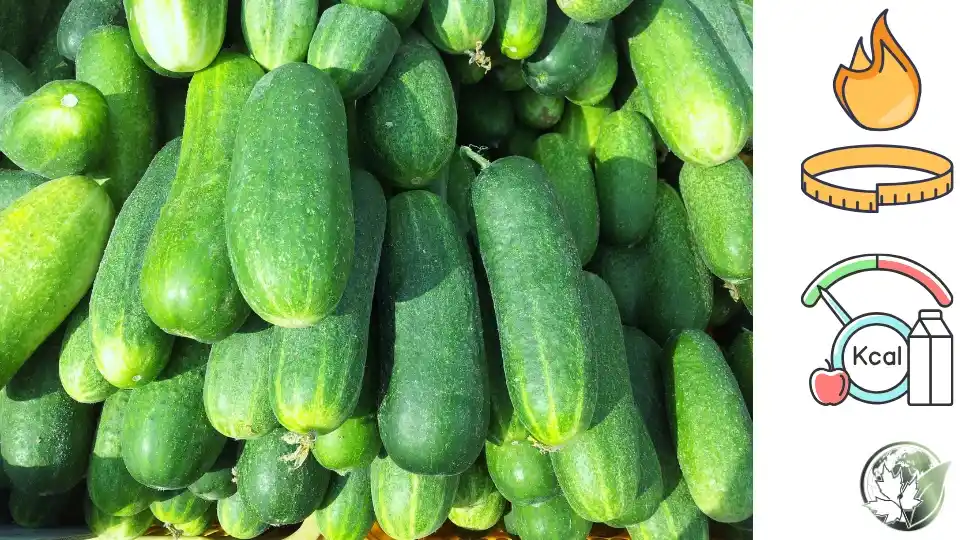
A cup of sliced cucumber has only about 16 calories
How Many Calories Are in One Cucumber, One Cup and 100 Grams?
Cucumber calories depend on the size and whether the peel is included. The table lists the most common portions.
| Cucumber portion | Weight | Calories | Carbohydrate |
|---|---|---|---|
| 1 slice (1/8 inch) | 7 g | 1 kcal | 0.3 g |
| 6 slices | 50 g | 8 kcal | 1.8 g |
| 1 cup, sliced | 104 g | 16 kcal | 3.8 g |
| 1 small cucumber | 150 g | 22 kcal | 5.4 g |
| 1 medium cucumber | 300 g | 45 kcal | 10.9 g |
| 1 large cucumber | 400 g | 60 kcal | 14.5 g |
| 100 g with peel | 100 g | 15 kcal | 3.6 g |
| 100 g peeled | 100 g | 12 kcal | 2.2 g |
| English (seedless) cucumber | 1 whole, 350 g | 50 kcal | 12 g |
Peeled cucumber has slightly fewer calories because the peel contains some fiber and carbohydrate. The skin also holds most of the vitamin K and a good part of the antioxidants, so peeling reduces nutrition more than it reduces energy.
How Do Different Cucumber Types and Preparations Compare?
The calories of fresh cucumbers are similar across varieties, but pickled, salted and dressed cucumbers vary.
| Preparation | Serving | Calories | Notes |
|---|---|---|---|
| Fresh, sliced | 1 cup | 16 kcal | No added ingredients |
| Peeled and sliced | 1 cup | 14 kcal | Less fiber |
| Dill pickle | 1 medium (65 g) | 4 kcal | High sodium |
| Sweet pickle | 1 medium (35 g) | 40 kcal | Added sugar |
| Pickled cucumber (torshi), Persian style | 100 g | 20 kcal | High salt |
| Cucumber with yogurt (mast-o-khiar) | 1 cup | 100 kcal | Depends on yogurt |
| Cucumber salad with oil and vinegar | 1 cup | 80 kcal | 1 tsp oil adds 40 |
| Cucumber water | 240 ml | 2 kcal | Infused |
| Cucumber juice | 240 ml | 45 kcal | Fiber removed |
Dill pickles are very low in calories, but the sodium content is often 800 to 1,200 milligrams per pickle, a large share of the daily limit. Sweet pickles contain around ten times more calories, because sugar is added to the brine.
Cucumber vs Tomato: Calories and Nutrition Compared
Cucumber and tomato are both watery vegetable-fruits eaten raw in salads, and they differ in calories and nutrients.
| Per 100 g (raw) | Cucumber (with peel) | Tomato |
|---|---|---|
| Calories | 15 kcal | 18 kcal |
| Carbohydrate | 3.6 g | 3.9 g |
| Sugar | 1.7 g | 2.6 g |
| Fiber | 0.5 g | 1.2 g |
| Protein | 0.7 g | 0.9 g |
| Fat | 0.1 g | 0.2 g |
| Vitamin C | 2.8 mg | 13.7 mg |
| Vitamin K | 16.4 mcg | 7.9 mcg |
| Vitamin A | 5 mcg | 42 mcg |
| Potassium | 147 mg | 237 mg |
| Water | 95.2 g | 94.5 g |
| Per typical serving | 1 cup cucumber (104 g) | 1 medium tomato (123 g) |
|---|---|---|
| Calories | 16 kcal | 22 kcal |
| Vitamin C | 3 mg | 17 mg |
| Potassium | 153 mg | 292 mg |
| Vitamin K | 17 mcg | 10 mcg |
Cucumbers are slightly lower in calories and sugar. Tomatoes provide about five times more vitamin C, about eight times more vitamin A and considerably more potassium, and are the richest common source of lycopene. Cucumbers contain more vitamin K, and their main advantage is hydration and a very low energy density. For nutrition, the two work best together.
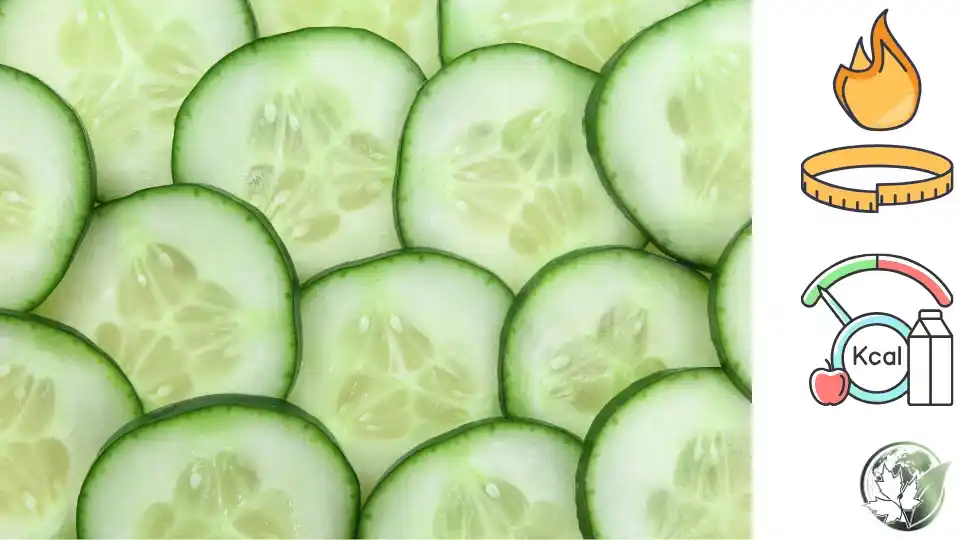
Cucumber and tomato together make a salad of around 40 calories per cup before dressing
How Hydrating Is a Cucumber?
Cucumbers are about 95 percent water, among the highest of any solid food. A 300 gram cucumber provides about 285 milliliters of water, nearly a cup and a quarter. Water-rich foods contribute roughly 20 percent of a person's daily fluid intake, and cucumbers, watermelon and lettuce are the most hydrating.
The water in cucumbers comes with a small amount of electrolytes, especially potassium and some magnesium. This is one reason cucumber slices are popular in hot weather and in spa water. They are also a good way to increase fluid intake for people who forget to drink. However, cucumbers do not replace drinking water entirely, and they have little sodium, so they are not a rehydration solution after heavy sweating.
Is Cucumber Good for Weight Loss?
Cucumbers are an excellent food for weight management because of their very low energy density, about 0.15 calories per gram. A plate of 300 grams has only 45 calories, and chewing the crunchy flesh takes time and gives a feeling of volume. Replacing a higher calorie snack with cucumber can create a meaningful deficit.
| Swap | Calories saved |
|---|---|
| 1 cup cucumber slices instead of 1 cup crackers | 110 kcal |
| Cucumber boats instead of bread with tuna salad | 120 kcal |
| Cucumber noodles instead of 1 cup cooked pasta | 180 kcal |
| Cucumber water instead of 1 can of cola | 140 kcal |
| Cucumber sticks with yogurt dip instead of chips and dip | 150 kcal |
Cucumber alone does not cause fat loss. It helps by displacing more energy-dense foods and adding bulk. The most helpful way to use it is as part of meals, for example a large cucumber and tomato salad with lean protein, or as a crunchy snack with a protein-rich dip.
What Vitamins and Antioxidants Are in Cucumber?
A cup of sliced cucumber with peel provides about 17 micrograms of vitamin K, which is 14 percent of the daily value, plus small amounts of vitamin C, potassium, magnesium and manganese. Cucumbers also contain cucurbitacins, which give some a slightly bitter taste, and flavonoids such as quercetin and kaempferol. Lignans and triterpenes found in cucumber are being studied for anti-inflammatory effects.
The peel is the most nutritious part. It contains much of the fiber and vitamin K and most of the antioxidants. Wash cucumbers well and eat them with the peel when possible, unless the skin is waxed, in which case peeling is recommended. Organic and unwaxed cucumbers are best for eating whole.
How Many Calories Do Cucumber Salads and Dips Have?
The cucumber itself is almost free, so dressings determine the energy in a dish. These common preparations show the range.
Plain cucumber and tomato salad with lemon: 40 calories per cup
Greek-style salad with feta and olives: 130 calories per cup
Cucumber with yogurt and mint: 70 to 100 calories per cup
Tzatziki, 2 tablespoons: 40 calories
Cucumber sushi roll (kappa maki), 6 pieces: 140 calories
Creamy cucumber salad with sour cream: 120 calories per cup
Cucumber sandwiches, 2 small: 180 calories
If you want a light salad, use lemon juice, vinegar, herbs and a teaspoon of olive oil. A tablespoon of ranch dressing has about 73 calories, which is more than four cups of cucumber.
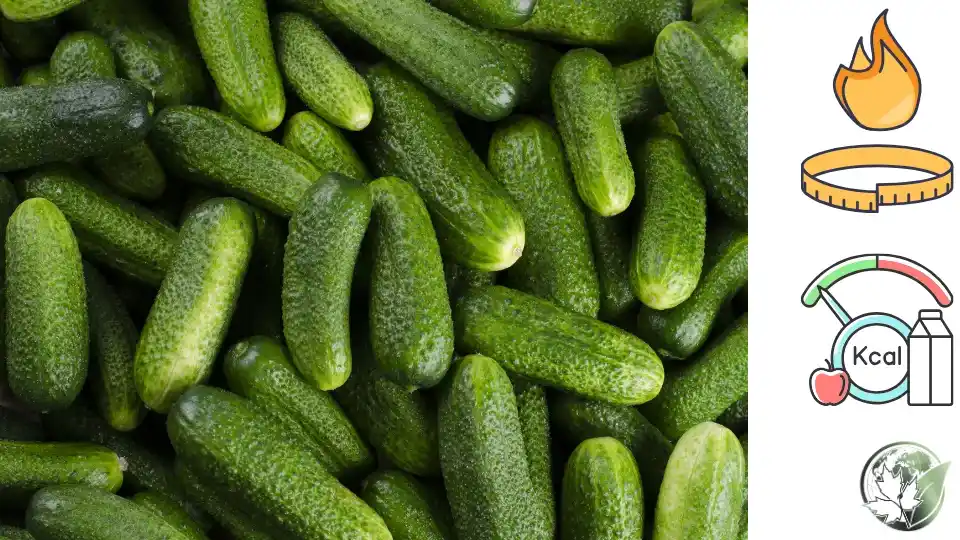
Cucumber in yogurt has around 70 to 100 calories per cup depending on the yogurt
How Do Cucumbers Compare With Other Low Calorie Vegetables?
The table shows where cucumber sits among low calorie vegetables.
| Vegetable (100 g raw) | Calories | Water | Fiber |
|---|---|---|---|
| Cucumber | 15 kcal | 95 g | 0.5 g |
| Lettuce (iceberg) | 14 kcal | 96 g | 1.2 g |
| Celery | 14 kcal | 95 g | 1.6 g |
| Zucchini | 17 kcal | 94 g | 1.0 g |
| Tomato | 18 kcal | 94.5 g | 1.2 g |
| Radish | 16 kcal | 95 g | 1.6 g |
| Bell pepper, green | 20 kcal | 93 g | 1.7 g |
| Cabbage | 25 kcal | 92 g | 2.5 g |
| Spinach | 23 kcal | 91 g | 2.2 g |
Cucumber is nearly tied with lettuce and celery as the lowest calorie vegetable. If you want more fiber and vitamins at a similar energy level, add tomatoes, radishes, peppers or leafy greens to the mix.
How to Choose, Store and Prepare Cucumbers
Pick cucumbers that are firm, dark green and without soft spots, yellowing or wrinkles. Smaller cucumbers have fewer seeds and are less bitter. Seedless English cucumbers are thinner skinned and easier to eat whole, and Persian cucumbers are small and crisp.
Store unwashed cucumbers in the refrigerator for up to a week, ideally in the crisper drawer. Keep them away from tomatoes, bananas and melons, which release ethylene and make them yellow faster. If a cucumber is cut, wrap it and use within two days.
To reduce bitterness, cut off the stem end and rub it on the cut surface, or peel the first few centimeters near the stem. To make crisp salads, salt sliced cucumber lightly for 10 minutes and drain the water, which prevents the salad from becoming watery.
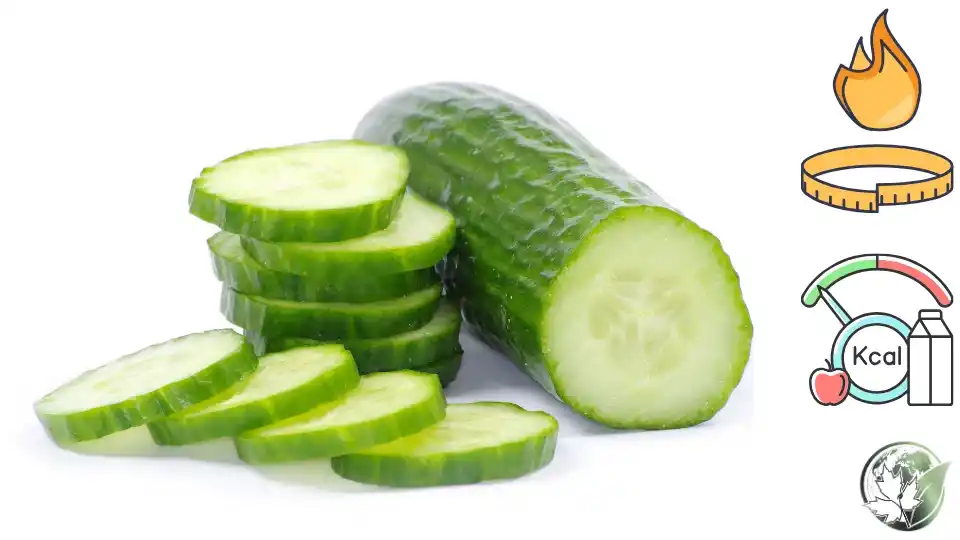
Fresh cucumbers keep for about a week in the refrigerator
How Many Cucumbers Can You Eat in a Day?
There is no strict limit, and one or two medium cucumbers a day is common in many cuisines. Because of the water and fiber, very large amounts may cause bloating or gas in some people. Cucumbers contain cucurbitacin, which can cause burping or indigestion in sensitive people. They are safe for most people, including those with diabetes, because the glycemic index is under 15 and carbohydrate is minimal.
How to Count Cucumber Calories
Weigh the cucumber before peeling for the closest estimate and use 15 calories per 100 grams. If you are measuring slices, one cup is about 16 calories. In a salad, count the cucumber at about 15 percent of its weight in calories, then add dressing, cheese and other items. For a quick estimate, assume that one whole medium cucumber is under 50 calories, and any dish that is much higher gets those calories from additions.
Why Is Cucumber So Low in Calories?
The reason is its composition. A cucumber is about 95 percent water, 3.6 percent carbohydrate, 0.7 percent protein and 0.1 percent fat. Water has no calories, and the carbohydrate that remains includes fiber and a little sugar. This gives an energy density of about 0.15 calories per gram, which is among the lowest of any food. For comparison, apples have 0.52 calories per gram, bread about 2.65 and olive oil 8.84.
Energy density matters because the stomach responds to the weight and volume of food, not just its calories. Eating 300 grams of cucumber fills the stomach about as much as 300 grams of any other food, but supplies only 45 calories instead of hundreds. That is why meals based on high-water foods, such as salads, soups and fruit, are linked in research with lower calorie intake and easier weight control.
How Do Cucumber and Tomato Work Together in a Meal?
Cucumbers and tomatoes complement each other. Cucumber provides crunch, water and vitamin K, while tomato adds acidity, vitamin C and lycopene. Eating them together with a little olive oil increases the absorption of fat-soluble lycopene and carotenoids from the tomato. A bowl with 150 grams of each has about 50 calories before dressing, and with a teaspoon of olive oil and lemon juice about 90 calories.
In Persian, Turkish, Greek and Arab cuisines this pair appears at nearly every meal. A traditional Shirazi salad, made from diced cucumber, tomato, onion, lemon juice and mint, has about 60 calories per cup with a little oil. It accompanies rice and kebabs, where the fresh acidity balances richer dishes and adds volume to the plate for few calories.
| Salad (1 cup, about 150 g) | Calories |
|---|---|
| Cucumber only | 22 kcal |
| Tomato only | 27 kcal |
| Cucumber and tomato, no dressing | 25 kcal |
| Shirazi salad with 1 tsp olive oil | 65 kcal |
| Greek salad with feta and olives | 130 kcal |
| Cucumber and tomato with ranch (2 tbsp) | 170 kcal |
How Can You Use Cucumber to Replace Higher Calorie Foods?
Cucumber's mild taste and crisp texture make it a useful substitute in many recipes. Slice it into thick rounds and top with tuna, cheese or hummus instead of crackers. Use long strips as sandwich wraps in place of bread or tortillas. Spiralize it into noodles and toss with a sesame or peanut sauce. Blend it into smoothies and cold soups such as gazpacho or cacik, where it adds body and freshness without changing the flavor.
Each swap removes calories while keeping a satisfying crunch. For example, a tuna sandwich on two slices of bread has about 350 calories, while tuna salad on cucumber rounds has about 150. Over a week of lunches, that saves about 1,000 calories, enough for a loss of about 130 grams of body fat, on top of the extra fiber and water from the vegetable.
Are There Any Downsides to Eating Cucumber?
Cucumbers are safe for most people, but a few points are worth knowing. Because they are low in calories, protein and fat, relying on them as a main food would leave you short of energy and nutrients. They contain very little iron, calcium or protein, so they work best as part of mixed meals. Pickled cucumbers can be high in salt, which matters for people with high blood pressure or kidney disease.
Cucumbers are on lists of produce that may carry pesticide residues when grown conventionally, so wash them thoroughly under running water, scrub with a soft brush and peel if the skin is waxed. People with ragweed pollen allergy may react to cucumbers in rare cases through oral allergy syndrome, which causes itching of the mouth. Those who are sensitive to cucurbitacins may notice a bitter taste or digestive upset, in which case peeling and removing seeds can help.
How Do You Make Cucumber Water and Is It Worth It?
Cucumber water is made by soaking slices in cold water for two to four hours. It has only about 2 calories per glass and offers a subtle flavor that makes it easier to drink more water. The nutrients that dissolve into the water are minimal, so the benefit is mostly hydration rather than vitamins. To make it, add half a sliced cucumber to a liter of water with mint or lemon and refrigerate. Eat the slices afterward, since they keep most of their fiber and nutrients.
For people trying to reduce sugary drinks, cucumber water is an easy replacement for soda or juice. A 330 ml can of cola has about 139 calories, so switching from one can a day saves nearly 50,000 calories a year, about 6.5 kilograms of potential fat.
How Does Cucumber Fit Into Different Diets?
Cucumber suits nearly every eating plan. On a low-carbohydrate or ketogenic diet, one cup has only about 3 grams of net carbohydrate. On a Mediterranean diet it appears daily in salads and yogurt dishes. Vegans and vegetarians use it as a crisp, hydrating base for grain bowls and wraps. People who follow low-FODMAP diets can usually tolerate cucumber in moderate portions, and diabetic meal plans often include it as a free vegetable because its glycemic impact is negligible.
For athletes, cucumber is not a source of fuel, but it adds hydration and potassium to meals and snacks. For older adults or people with small appetites, it is best combined with protein-rich foods so that the meal remains nutritious as well as light. In every case the principle is the same: use cucumber to add volume, texture and freshness, and rely on other foods for energy and protein.
What Is the Best Way to Add Cucumber to Your Day?
Start with breakfast by adding slices to an omelet or a yogurt bowl. At lunch, make a salad of cucumber, tomato and herbs, or fill a pita with hummus and cucumber. In the afternoon, keep a container of cucumber sticks to snack on, which costs about 30 calories per cup of sticks. At dinner, serve a cucumber and yogurt side with grilled meat or rice. Together these uses add about 100 calories to your day and contribute more than a liter of fluid-rich food volume.
How Accurate Are Cucumber Calorie Counts on Apps and Labels?
Most calorie apps use the USDA value of 15 calories per 100 grams, and it is reliable for fresh cucumbers. Differences arise from size and weighing method. A whole cucumber weighed with the ends and skin includes about 5 to 10 percent that you may not eat, so weigh the portion you actually consume. For pre-cut packs, the label should show calories per 100 grams, usually 12 to 16. Any dressing in the pack should be counted separately.
Key Takeaways: Cucumber Calories vs Tomato
Cucumber has about 15 calories per 100 grams and a medium one about 45, slightly lower than tomato's 18 per 100 grams. Cucumber brings hydration and vitamin K, while tomato brings vitamin C, vitamin A and lycopene. Both are ideal low calorie foods, and the main source of extra calories is the dressing, cheese or oil that comes with them.
Frequently Asked Questions
9 questions answered
How many calories are in a cucumber?
A medium cucumber (about 300 g) has about 45 calories. A cup of sliced cucumber has about 16.
How many calories are in 100 grams of cucumber?
One hundred grams of raw cucumber with peel has about 15 calories.
Is cucumber lower in calories than tomato?
Slightly. Cucumber has about 15 calories per 100 grams and tomato about 18.
How many calories are in a cucumber slice?
One slice has about 1 calorie.
Is cucumber good for weight loss?
It is very low in calories and high in water, so it helps you feel full with few calories, as part of a balanced diet.
How many calories are in a pickle?
A dill pickle has about 4 calories, but it is high in sodium. Sweet pickles can have about 40.
Does peeling a cucumber reduce calories?
Slightly, from about 15 to 12 per 100 grams, but it also removes fiber and vitamin K.
How many calories are in cucumber water?
A glass of cucumber-infused water has about 2 calories.
Can you eat cucumber every day?
Yes, for most people. One or two a day is safe and a good source of hydration.