
How Many Calories Are in Chicken Liver? The Quick Answer
Raw chicken liver has about 119 calories per 100 grams, and cooked chicken liver has about 167. The difference is water loss during cooking, which concentrates the nutrients. A typical serving of 85 grams (three ounces) of cooked liver has about 142 calories, and a single cooked chicken liver weighing about 25 grams has roughly 42. If the liver is pan-fried in oil or butter, or coated in flour, the calories rise to about 200 per 100 grams or more.
A large egg is a familiar comparison because both are nutrient-dense animal proteins that appear at breakfast tables and in traditional dishes. One large egg of 50 grams has about 72 calories, and 100 grams of whole egg has about 143. Cooked chicken liver is therefore about 17 percent higher per gram, but per typical serving a three ounce portion of liver (142 calories) has about the same calories as two eggs (144). In terms of nutrition, chicken liver is far richer in vitamin A, vitamin B12, folate and iron.
This guide covers the calories in chicken liver raw, cooked, fried and as pâté, compares liver with a large egg on protein, fat, cholesterol, vitamins and minerals, and explains how often it is wise to eat. You will also find cooking tips, safety advice and an FAQ. Three comparison tables are included.
A three ounce serving of cooked chicken liver has about 142 calories
How Many Calories Are in Chicken Liver Raw, Cooked and Fried?
Cooking changes the weight of chicken liver, so the calories per gram change too. Raw liver is about 76 percent water, and cooked liver about 68 percent.
| Chicken liver | Serving | Calories | Protein | Fat |
|---|---|---|---|---|
| Raw | 100 g | 119 kcal | 16.9 g | 4.8 g |
| Cooked (simmered) | 100 g | 167 kcal | 24.5 g | 6.5 g |
| Cooked (simmered) | 85 g (3 oz) | 142 kcal | 20.8 g | 5.5 g |
| 1 cooked liver | 25 g | 42 kcal | 6.1 g | 1.6 g |
| Pan-fried in 1 tsp oil | 100 g | 205 kcal | 24 g | 11 g |
| Floured and fried | 100 g | 230 kcal | 22 g | 13 g |
| Grilled skewer (kabab) | 100 g | 175 kcal | 25 g | 7 g |
| Chicken liver pâté | 30 g (2 tbsp) | 60 kcal | 3 g | 5 g |
| Chopped liver (with egg and onion) | 1/4 cup | 110 kcal | 8 g | 7 g |
Pan-frying with oil adds roughly 40 calories per 100 grams, and flouring adds a bit more. Pâté and spreads are higher in fat because butter or cream is added.
How Many Calories Are in a Large Egg?
A large egg weighs about 50 grams without the shell and has about 72 calories. The yolk contains most of the fat and cholesterol, and the white is mostly protein and water.
| Egg preparation | Serving | Calories | Protein | Fat |
|---|---|---|---|---|
| Raw, whole | 1 large (50 g) | 72 kcal | 6.3 g | 4.8 g |
| Hard-boiled | 1 large | 78 kcal | 6.3 g | 5.3 g |
| Egg white only | 1 large (33 g) | 17 kcal | 3.6 g | 0 g |
| Egg yolk only | 1 large (17 g) | 55 kcal | 2.7 g | 4.5 g |
| Fried in 1 tsp oil | 1 large | 90 kcal | 6.3 g | 7 g |
| Scrambled with milk and butter | 1 large | 100 kcal | 6.7 g | 7.5 g |
| Poached | 1 large | 72 kcal | 6.3 g | 4.8 g |
| 100 g whole egg, raw | 100 g | 143 kcal | 12.6 g | 9.5 g |
Eggs are a standard measure for protein quality, with an excellent amino acid profile. Cooking does not change the calories significantly, except for the fat added in the pan.
Chicken Liver vs a Large Egg: Calories and Nutrition Compared
Here is how cooked chicken liver stacks up against whole eggs per 100 grams and per serving.
| Per 100 g | Chicken liver, cooked | Egg, whole |
|---|---|---|
| Calories | 167 kcal | 143 kcal |
| Protein | 24.5 g | 12.6 g |
| Total fat | 6.5 g | 9.5 g |
| Saturated fat | 2.1 g | 3.1 g |
| Cholesterol | 563 mg | 372 mg |
| Carbohydrate | 0.9 g | 0.7 g |
| Iron | 11.6 mg | 1.8 mg |
| Vitamin A | 3,296 mcg | 160 mcg |
| Vitamin B12 | 16.6 mcg | 0.9 mcg |
| Folate | 588 mcg | 47 mcg |
| Choline | 290 mg | 294 mg |
| Selenium | 80 mcg | 31 mcg |
| Per typical serving | 85 g cooked liver | 1 large egg (50 g) | 2 large eggs |
|---|---|---|---|
| Calories | 142 kcal | 72 kcal | 144 kcal |
| Protein | 20.8 g | 6.3 g | 12.6 g |
| Iron | 9.9 mg | 0.9 mg | 1.8 mg |
| Vitamin B12 | 14 mcg | 0.5 mcg | 1.0 mcg |
| Cholesterol | 479 mg | 186 mg | 372 mg |
Liver has slightly more calories per gram than egg but twice the protein and far more iron, vitamin A, B12 and folate. A single 85 gram serving of liver delivers about 550 percent of the daily value of iron for men and 55 percent for women, and over 500 percent of vitamin B12 and vitamin A. Eggs are lower in cholesterol per serving and have more fat. Both provide complete protein and choline.
Chicken liver and eggs have similar calories per serving, but liver has far more iron and vitamin A
Which Has More Protein per Calorie: Chicken Liver or Egg?
Protein per calorie gives a good idea of how lean a food is. Cooked chicken liver edges out the egg.
| Food | Calories per 100 g | Protein per 100 g | Protein per 100 calories |
|---|---|---|---|
| Egg white | 52 kcal | 10.9 g | 21.0 g |
| Chicken breast, cooked | 165 kcal | 31 g | 18.8 g |
| Chicken liver, cooked | 167 kcal | 24.5 g | 14.7 g |
| Beef liver, cooked | 175 kcal | 27 g | 15.4 g |
| Whole egg | 143 kcal | 12.6 g | 8.8 g |
| Salmon, cooked | 206 kcal | 22 g | 10.7 g |
| Ground beef 85 percent lean, cooked | 250 kcal | 26 g | 10.4 g |
Liver provides about 15 grams of protein per 100 calories, 67 percent more than whole egg. Per egg or per liver, the amounts are small, but if you are choosing a nutritious protein food that does not carry many calories, liver is a strong choice.
How Do Iron, Vitamin A and B12 Compare?
These three nutrients are where liver stands out. A 85 gram serving of cooked chicken liver provides:
Iron: about 9.9 mg, which is 55 percent of the daily value (18 mg)
Vitamin A: about 2,800 mcg RAE, over 300 percent of the daily value
Vitamin B12: about 14 mcg, more than 500 percent of the daily value
Folate: about 500 mcg, more than 100 percent of the daily value
Riboflavin, niacin and copper in large amounts
Eggs offer iron in smaller quantities, about 0.9 mg per egg, vitamin A at about 80 mcg, and B12 at about 0.5 mcg, but they are the best everyday source of choline, vitamin D and lutein. Liver's iron is heme iron, which is absorbed two to three times better than iron from plants. For people with iron deficiency, a small serving of liver once a week can improve iron stores.
How Much Cholesterol Is in Chicken Liver and Eggs?
Chicken liver has about 563 milligrams of cholesterol per 100 grams, which is high. A 85 gram serving contains about 479 milligrams, while one large egg has 186 milligrams. Older guidelines recommended a limit of 300 milligrams per day, but current evidence shows that dietary cholesterol has a smaller effect on blood cholesterol than saturated and trans fat for most people. Many guidelines no longer set a firm limit, though people with high LDL, diabetes or heart disease are sometimes advised to be cautious.
Both foods are low in saturated fat. Chicken liver has 2.1 grams per 100 grams, less than whole egg at 3.1 grams, and far less than red meat. If you have high cholesterol, ask your doctor how much of each is suitable for you.
Is It Safe to Eat Chicken Liver Often?
Liver is a nutritional powerhouse, but its very high vitamin A content means it should not be eaten daily. Preformed vitamin A is fat-soluble and can build up in the body. The upper limit for adults is 3,000 micrograms per day, and a single serving of chicken liver can contain close to that amount. Eating liver once a week is generally considered safe and beneficial, and two servings a month may be better for people who take vitamin A supplements.
Pregnant women are advised by many health agencies to limit or avoid liver, because excess preformed vitamin A can harm fetal development. They should talk to their doctor about their needs. People with gout, a condition linked to purines, are often told to limit organ meats. Liver must always be cooked thoroughly, because raw or undercooked poultry liver can carry Campylobacter and Salmonella.
Chicken liver should be rinsed, trimmed and cooked until no longer pink inside
How Do You Cook Chicken Liver Without Adding Many Calories?
Liver cooks quickly, and the cooking method determines the calories. Use these approaches.
**Sauté in a non-stick pan with a teaspoon of oil.** Add about 40 calories per serving.
**Grill or broil skewers.** Brush lightly with lemon and spices.
**Simmer in broth with onions.** No added fat.
**Bake in a covered dish with vegetables.** Minimal oil and gentle heat.
**Soak in milk for 30 minutes before cooking.** This reduces bitterness and a strong taste.
**Add acidity and aromatics.** Onion, garlic, parsley, pomegranate molasses or lemon juice balance the flavor.
Cook liver to 74 degrees Celsius internally, until there is no pink, but do not overcook, as it becomes grainy and dry. Three to five minutes per side in a hot pan is usually enough for small pieces.
How Many Calories Are in Liver Dishes and Egg Dishes?
Dishes made with liver and egg vary a lot, depending on what is added.
| Dish | Serving | Calories |
|---|---|---|
| Chicken liver sauté with onions | 1 cup (150 g) | 250 kcal |
| Chicken liver kebab, 2 skewers | 100 g | 175 kcal |
| Chicken liver pâté on toast | 1 slice | 150 kcal |
| Chopped liver | 1/4 cup | 110 kcal |
| Fried chicken livers (breaded) | 100 g | 270 kcal |
| Liver and rice (Persian jigar polo) | 1 plate | 480 kcal |
| Boiled egg | 1 large | 78 kcal |
| Two-egg omelet with vegetables | 1 omelet | 220 kcal |
| Egg salad sandwich | 1 sandwich | 350 kcal |
| Shakshuka (2 eggs) | 1 serving | 280 kcal |
Liver dishes are typically lean when sautéed, but breaded and fried versions climb quickly. Eggs follow the same pattern: simple preparation is light, and added butter, cheese and bread raise the total.
How Do They Fit Into Different Diets?
For high protein diets, both are valuable. Liver is rich in nutrients and affordable, and eggs are versatile. On low carbohydrate and ketogenic diets, both are staples, since they have almost no carbohydrate. For weight loss, liver is a lean, filling protein at about 142 calories per 85 grams, and eggs are a good breakfast option because they are filling, with studies showing reduced hunger compared with a bagel of equal calories.
For vegetarian diets, eggs may be allowed and liver is not. For people with anemia, liver is among the most effective food sources of iron and B12. Athletes can use liver occasionally as a nutrient booster, and eggs as a daily protein source.
How to Choose and Store Chicken Liver
Buy livers that are plump, glossy and uniformly reddish-brown, without green spots or dark discoloration. They should smell fresh and mild. Fresh liver spoils fast, so cook within one to two days of buying, or freeze it. Wrap tightly and freeze for up to three months. Thaw in the refrigerator overnight. Remove any connective tissue and the green gall bladder remnant, which tastes bitter.
Eggs keep for four to five weeks in the refrigerator, and a simple float test tells whether an egg is fresh: a fresh egg sinks, while an old one stands on end or floats.
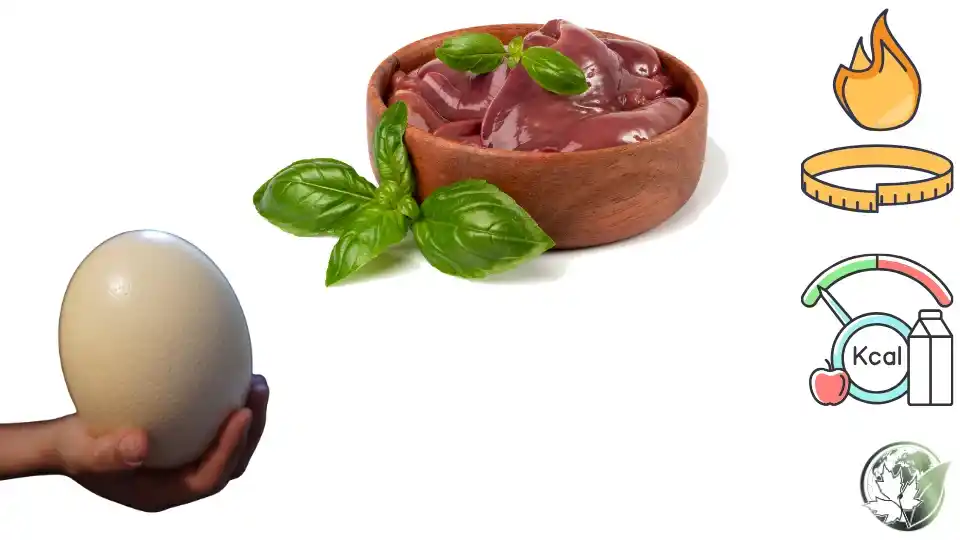
Fresh liver should be cooked within two days, while eggs keep for about four weeks in the refrigerator
How to Count Calories for Chicken Liver and Eggs
Weigh liver cooked and use 167 calories per 100 grams, or weigh it raw and use 119. Count any oil or butter in the pan. For eggs, count one large egg as 72 calories raw or poached, 78 hard-boiled and 90 when fried in a teaspoon of oil. When combining, add each item. For example, a breakfast of one egg and 50 grams of liver sautéed in a teaspoon of oil has about 72 + 83 + 40 = 195 calories.
Why Does Cooked Liver Have More Calories per Gram Than Raw?
The calories in the food do not change when you cook it. What changes is the weight. Raw chicken liver is about 76 percent water, and simmering or frying drives off water, so the liver shrinks by roughly 20 to 25 percent. The same protein, fat and vitamins are now packed into less weight, so each 100 grams of cooked liver represents about 130 grams of raw liver. That explains the jump from 119 to 167 calories per 100 grams.
This matters when you count calories. If you weigh liver raw, use the raw value, and if you weigh it cooked, use the cooked value. Mixing them leads to errors of about 40 percent. The same principle applies to chicken breast, beef and fish, which lose water when cooked and gain calories per gram.
How Do Chicken Liver and Eggs Support Different Health Goals?
Each food brings something different to the table, and they can be combined in a varied diet.
| Health goal | Chicken liver | Egg |
|---|---|---|
| Iron deficiency | Excellent source of heme iron | Small amount |
| Vitamin B12 | Very high | Moderate |
| Eye health | Vitamin A and zinc | Lutein and zeaxanthin |
| Brain health | Folate, B12, choline | Choline, DHA in enriched eggs |
| Muscle building | 24.5 g protein per 100 g | Complete protein, 6.3 g each |
| Weight control | Lean, filling | Filling, versatile |
| Convenience | Needs cooking and preparation | Ready in minutes |
For women of childbearing age who tend to have lower iron stores, a weekly serving of liver can help, but pregnant women should follow their doctor's advice on vitamin A. For older adults, B12 absorption declines, and liver or eggs can help meet needs. Children can eat small amounts of cooked liver and eggs as part of a varied diet, with attention to portion sizes.
What Do Traditional Cuisines Do With Liver and Eggs?
Liver and eggs appear in many cuisines. In Iran, grilled chicken liver kebab (jigar) is served with rice, tomatoes and lemon, and liver is also cooked in stews and fried with onions. In Jewish cuisine, chopped liver with egg and onion is a staple appetizer. In France, pâté and mousse made from chicken liver and butter are classics. In Southeast Asia, chicken livers are grilled on skewers or simmered in coconut milk. Eggs are found in every culture, in forms from Persian nargesi to Spanish tortilla and Japanese tamagoyaki.
In each tradition, liver is eaten in small portions, often as an appetizer or a side dish with plenty of vegetables, herbs and acidic elements such as lemon or pomegranate. This approach matches modern advice: treat liver as a nutrient-rich accent, not an everyday main course.
How Much Do Chicken Liver and Eggs Cost per Gram of Protein?
Both are economical sources of protein. Chicken liver is often among the cheapest animal proteins, and a 85 gram serving with 20.8 grams of protein usually costs less than the same protein in chicken breast. Eggs are priced per piece, and a large egg gives about 6.3 grams of protein. To get 20 grams of protein, you need about three eggs. Prices vary by region and season, but liver and eggs generally give a very high nutrient return per unit of cost, making them useful foods for budget-conscious cooking.
How Can You Build a Balanced Meal Around Liver or Eggs?
A balanced plate starts with the protein and adds vegetables, a whole grain and a small amount of healthy fat. A meal of 85 grams of sautéed chicken liver with onions, a cup of steamed spinach and half a cup of brown rice has about 360 calories, with 28 grams of protein, 5 grams of fiber and large amounts of iron, folate and vitamin A. A breakfast of two eggs, a slice of whole grain toast and a tomato salad has about 330 calories and 17 grams of protein. Rotating these meals with fish, legumes and other proteins gives a varied intake of nutrients without relying on a single food. Pair iron-rich liver with vitamin C foods such as lemon, peppers or tomatoes to increase absorption even more.
Key Takeaways: Chicken Liver Calories vs a Large Egg
Cooked chicken liver has about 167 calories per 100 grams, and an 85 gram serving about 142, similar to two eggs at 144. Liver provides twice the protein per gram and far more iron, vitamin A, B12 and folate than eggs, with more cholesterol and a need for moderation. Cook it gently with little oil, eat it once or twice a week and enjoy eggs more often as an everyday protein.
Frequently Asked Questions
9 questions answered
How many calories are in chicken liver?
Cooked chicken liver has about 167 calories per 100 grams, or about 142 in an 85 gram serving. Raw has about 119 per 100 grams.
How many calories are in one chicken liver?
One cooked chicken liver of about 25 grams has about 42 calories.
Does chicken liver have more calories than an egg?
Per gram, slightly: 167 versus 143. A large egg has about 72 calories and a 85 gram serving of liver about 142.
Which has more protein, chicken liver or egg?
Chicken liver has about 24.5 grams per 100 grams cooked, almost twice the 12.6 grams in whole egg.
Is chicken liver healthy?
It is a nutrient-dense food rich in iron, vitamin A and B12, but it is high in cholesterol and vitamin A, so it should be eaten in moderation.
How often can I eat chicken liver?
Once a week is generally fine for most adults. Pregnant women should ask a doctor.
How many calories are in fried chicken liver?
Pan-fried liver has about 205 calories per 100 grams, and breaded and fried about 270.
Does liver have more iron than egg?
Yes, far more: about 11.6 mg per 100 grams versus 1.8 mg.
How do I remove the bitter taste of liver?
Soak it in milk for 30 minutes, trim connective tissue and avoid overcooking.




