How Many Calories Are in Cherries? The Quick Answer
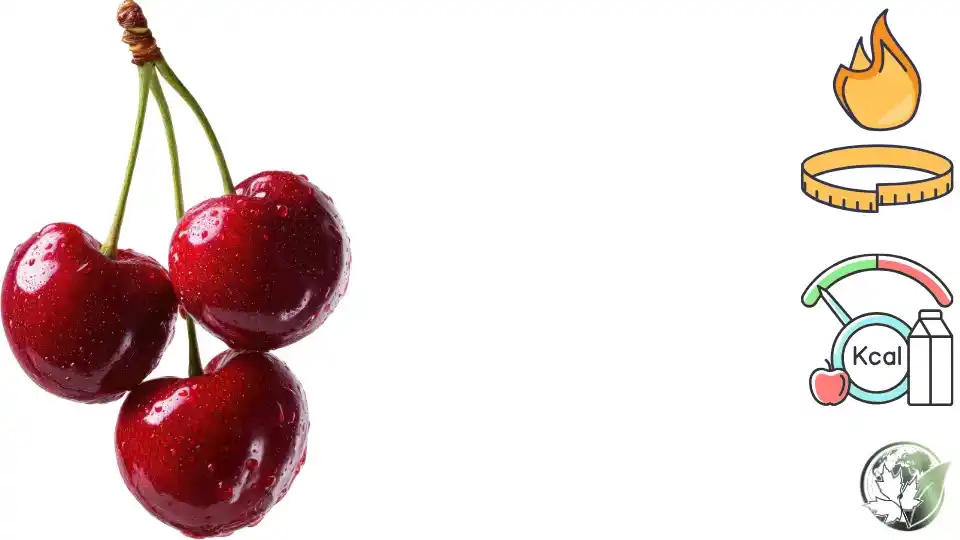
Sweet cherries have about 63 calories per 100 grams of pitted fruit. A single cherry weighing about 8 grams has roughly 5 calories, ten cherries have about 50, a cup of pitted cherries (154 g) has about 97 and a pound of cherries with pits has about 215. Tart or sour cherries are lighter at about 50 calories per 100 grams. Cherries are a low calorie fruit that delivers a lot of flavor, vitamin C, potassium and antioxidants.
Grapes are the natural comparison because both are small, sweet, snackable fruits eaten by the handful. One hundred grams of grapes has about 69 calories, so cherries are about 9 percent lower per gram. A cup of grapes (151 g) has about 104 calories, compared with 97 for a cup of pitted cherries. The difference is small, but cherries have more fiber, less sugar per gram and a stronger antioxidant profile, while grapes are slightly easier to over-eat because they have no pits to slow you down.
This guide gives the calories in cherries by the piece, handful, cup and pound, compares sweet, sour, dried, canned and juiced cherries, and puts cherries side by side with grapes on sugar, fiber and vitamins. You will also find tips on blood sugar, weight loss, choosing, pitting and storing cherries, along with three comparison tables and a full FAQ.
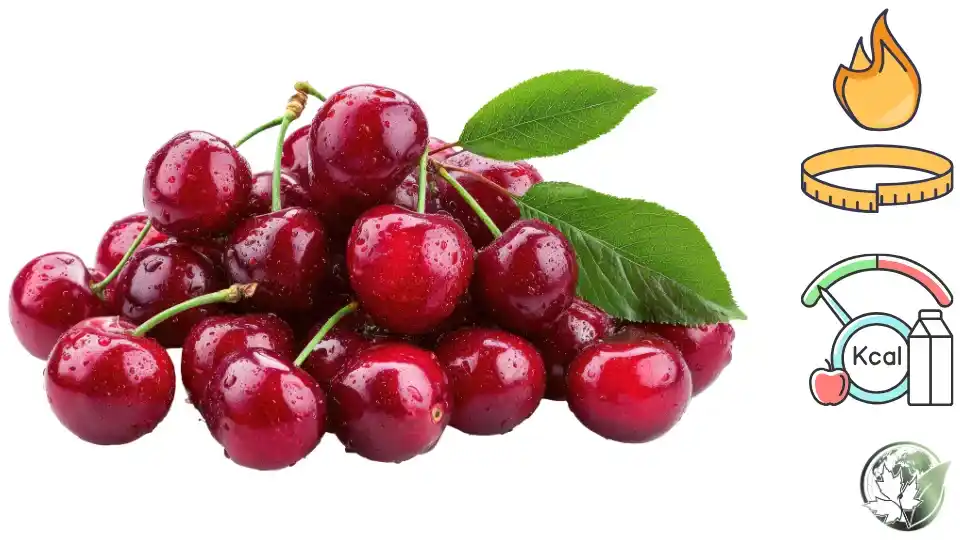
One sweet cherry has about 5 calories and a cup of pitted cherries about 97
How Many Calories Are in One Cherry, a Handful and a Cup?
Cherries are often eaten with the pits in, so a "cup" of whole cherries weighs less than a cup of pitted. The table shows common portions of sweet cherries.
| Cherry portion | Weight | Calories | Sugar | Fiber |
|---|---|---|---|---|
| 1 cherry | 8 g | 5 kcal | 1.0 g | 0.2 g |
| 5 cherries | 40 g | 25 kcal | 5.1 g | 0.8 g |
| 10 cherries | 80 g | 50 kcal | 10.2 g | 1.7 g |
| 20 cherries (large handful) | 160 g | 101 kcal | 20.5 g | 3.4 g |
| 1 cup, with pits | 138 g | 87 kcal | 17.7 g | 2.9 g |
| 1 cup, pitted | 154 g | 97 kcal | 19.7 g | 3.2 g |
| 100 g, pitted | 100 g | 63 kcal | 12.8 g | 2.1 g |
| 1 pound, with pits | 454 g | 215 kcal | 44 g | 7.3 g |
A snack of about 20 cherries has about 100 calories, a similar energy to a medium apple. The pit makes up about 10 to 12 percent of the weight of a whole cherry, so weigh the fruit without the pit if you want precise numbers.
How Do Sweet, Sour, Dried and Canned Cherries Compare?
Cherries come in many forms, and calories vary widely, especially when sugar is added.
| Form | Serving | Calories | Sugar |
|---|---|---|---|
| Sweet cherries, fresh | 1 cup (154 g) | 97 kcal | 20 g |
| Sour (tart) cherries, fresh | 1 cup (155 g) | 78 kcal | 13 g |
| Frozen sweet cherries, unsweetened | 1 cup (155 g) | 90 kcal | 18 g |
| Canned in water | 1 cup (244 g) | 114 kcal | 24 g |
| Canned in heavy syrup | 1 cup (257 g) | 210 kcal | 48 g |
| Dried, sweetened | 1/4 cup (40 g) | 130 kcal | 26 g |
| Maraschino cherry | 1 cherry (5 g) | 8 kcal | 1.6 g |
| Cherry juice, tart | 240 ml | 130 kcal | 28 g |
| Cherry jam | 1 tbsp (20 g) | 50 kcal | 12 g |
| Cherry pie | 1 slice (125 g) | 360 kcal | 33 g |
Dried and canned cherries can be two to three times more calorie dense than fresh. Tart cherry juice is a concentrated source of sugar and is popular as a sleep and recovery drink, but a glass has more than a cup of fresh cherries in calories and no fiber.
Cherries vs Grapes: Calories and Nutrition Compared
Both fruits are about 80 percent water and contain similar sugars, but cherries are a bit lighter and have more fiber and potassium. Grapes have more vitamin K.
| Per 100 g | Sweet cherries | Grapes (red or green) |
|---|---|---|
| Calories | 63 kcal | 69 kcal |
| Carbohydrate | 16 g | 18.1 g |
| Sugar | 12.8 g | 15.5 g |
| Fiber | 2.1 g | 0.9 g |
| Protein | 1.1 g | 0.7 g |
| Fat | 0.2 g | 0.2 g |
| Vitamin C | 7 mg | 3.2 mg |
| Vitamin K | 2.1 mcg | 14.6 mcg |
| Potassium | 222 mg | 191 mg |
| Water | 82 g | 80.5 g |
| Per cup | Cherries (pitted, 154 g) | Grapes (151 g) |
|---|---|---|
| Calories | 97 kcal | 104 kcal |
| Sugar | 19.7 g | 23 g |
| Fiber | 3.2 g | 1.4 g |
| Vitamin C | 10.8 mg | 4.8 mg |
| Potassium | 342 mg | 288 mg |
Cherries win on calories, sugar, fiber, vitamin C and potassium per cup. Grapes win only on vitamin K, but both are modest sources. For a lighter fruit snack that is also better for digestion, cherries are the better choice, as long as you have the patience to eat around the pits.
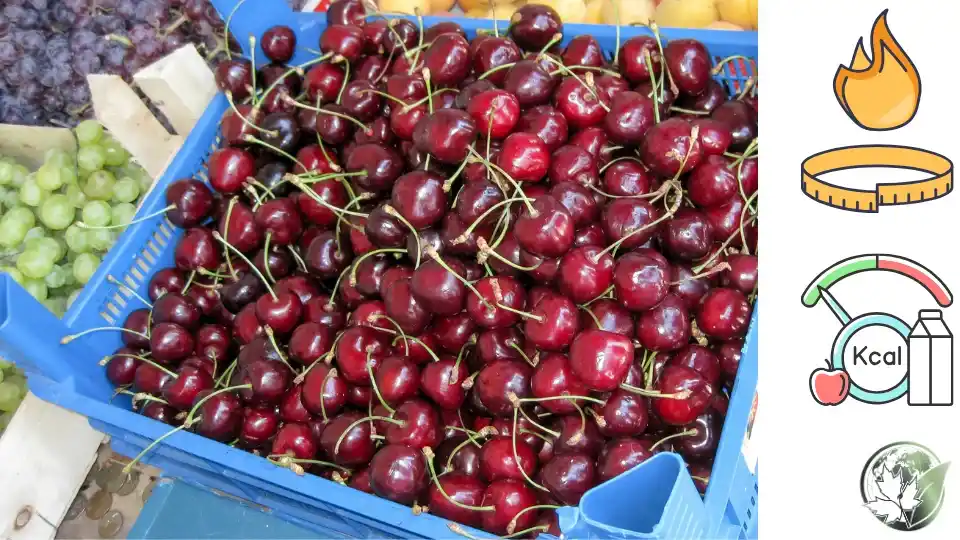
Cherries have about 63 calories per 100 grams, a bit fewer than grapes at 69
How Much Sugar Is in Cherries?
A cup of sweet cherries contains about 20 grams of natural sugar, roughly five teaspoons. This is similar to a medium apple. The sugar is mainly glucose and fructose, along with sorbitol, a sugar alcohol that can have a mild laxative effect when eaten in large quantities. Tart cherries have less sugar, about 8 grams per 100 grams.
Despite their sweetness, cherries have a low glycemic index of about 20 to 25, among the lowest of all fruits. This is due to their fiber and organic acids, and to the way fructose is metabolized. The glycemic load of a cup of cherries is about 6, which is low. That makes fresh cherries a reasonable choice for people managing blood sugar, in moderate portions. Dried and canned varieties raise sugar and glycemic effect considerably.
What Vitamins and Antioxidants Do Cherries Provide?
Cherries contain a wide range of beneficial plant compounds. Their deep red color comes from anthocyanins, such as cyanidin-3-glucoside, which act as antioxidants and have anti-inflammatory properties. A cup of cherries provides about 12 percent of the daily value of vitamin C, 10 percent of potassium and 14 percent of fiber, plus small amounts of vitamin A, magnesium and copper.
Tart cherries are studied for their effect on exercise recovery and sleep. They contain natural melatonin, the hormone involved in sleep regulation, and some small trials suggest that tart cherry juice may improve sleep duration modestly and reduce muscle soreness after intense exercise. Cherries have also been linked with lower uric acid and fewer gout attacks in observational studies. These results are encouraging but not definitive, and cherries should be considered a healthy food, not a treatment.
Are Cherries Good for Weight Loss?
Cherries are well suited to weight management. A cup has 97 calories and more than 3 grams of fiber, and the pits and stems slow eating. Compared with typical snacks, they offer sweetness with far fewer calories.
| Swap | Calories saved |
|---|---|
| 1 cup cherries instead of 1 cup grapes | 7 kcal |
| 1 cup cherries instead of a granola bar | 80 kcal |
| 1 cup cherries instead of a small cookie pack | 100 kcal |
| 1 cup cherries instead of a scoop of ice cream | 50 kcal |
| 1 cup cherries instead of a slice of cherry pie | 263 kcal |
| Fresh cherries instead of dried (equal weight) | 270 kcal per 100 g |
Cherries are best fresh or frozen without sugar. They are portable, naturally sweet and satisfy a craving for dessert. The main risk is eating too many at once because they are small and tasty, so a bowl of 20 to 30 cherries is a reasonable serving.
The pits and stems slow eating, making cherries easier to portion than grapes
How Do Cherries Compare With Other Fruits?
Cherries sit in the middle of the range for fruit calories.
| Fruit (100 g) | Calories | Sugar | Fiber |
|---|---|---|---|
| Strawberries | 32 kcal | 4.9 g | 2.0 g |
| Peach | 39 kcal | 8.4 g | 1.5 g |
| Plum | 46 kcal | 9.9 g | 1.4 g |
| Apple | 52 kcal | 10.4 g | 2.4 g |
| Sweet cherries | 63 kcal | 12.8 g | 2.1 g |
| Pear | 57 kcal | 9.8 g | 3.1 g |
| Grapes | 69 kcal | 15.5 g | 0.9 g |
| Mango | 60 kcal | 13.7 g | 1.6 g |
| Banana | 89 kcal | 12.2 g | 2.6 g |
Cherries have more calories than strawberries, peaches and plums, but fewer than grapes and bananas. Their combination of flavor and fiber makes them a satisfying fruit.
How Do You Choose Good Cherries?
Look for plump, glossy cherries with firm flesh and fresh green stems. Dark red or mahogany varieties such as Bing are sweet, and lighter ones such as Rainier are mild and delicate. Avoid cherries that are soft, wrinkled, bruised or sticky. The stem color is a sign of freshness, since brown, dry stems mean they have been stored for some time.
Cherry season runs from late spring to mid summer. Out of season, frozen unsweetened cherries are a good alternative with similar calories and nutrients. For dried cherries, check the label, since many are sweetened and have 130 calories per quarter cup.
How to Store and Pit Cherries
Store unwashed cherries in the refrigerator in a breathable container, where they keep for five to ten days. Wash them just before eating. To freeze them, wash, dry, pit if desired and spread on a tray before transferring to a bag, and they keep for up to a year.
To pit a cherry, push a chopstick or a straw through the stem end to push the pit out, or use a dedicated pitter. Pitting makes cherries easier to bake or use in sauces and removes the risk of choking for children. Always remove pits before giving cherries to young children.
Pitted cherries are convenient for baking, freezing and feeding young children
Are Cherry Pits Dangerous?
Cherry pits contain amygdalin, which can release small amounts of cyanide if the kernel is crushed or chewed. Swallowing a whole pit by accident is generally harmless and passes through the digestive system. Chewing or crushing many pits is unsafe. Do not use crushed cherry pits in recipes or teas. The flesh is safe, and the amount of amygdalin in the occasional swallowed pit is not a concern for healthy adults.
How Many Cherries Can You Eat in a Day?
A serving of one cup, about 20 to 25 cherries, gives about 100 calories and counts as one portion of fruit. Many people eat two cups in a sitting, which is fine, but large amounts of cherries can cause gas, bloating or loose stools due to the fiber and sorbitol. Eating cherries gradually, with other foods, helps. People who take medications to control blood sugar should count the carbohydrate in a large portion.
How to Count Cherry Calories in Recipes
Weigh the cherries after pitting and use 0.63 calories per gram for sweet cherries and 0.50 for sour. A pie with 600 grams of pitted sweet cherries has 378 calories from fruit, while the pastry and sugar usually add 1,500 or more. A cherry smoothie with one cup of fruit, a cup of milk and ice has about 250 calories. As with most fruit-based desserts, the fruit is the lighter part.
Why Are Cherries Lower in Calories Than Grapes?
The difference comes from water, sugar and fiber. A cherry is about 82 percent water and a grape about 80 percent, and cherries contain about 12.8 grams of sugar per 100 grams versus 15.5 for grapes. Cherries also contain more fiber, 2.1 grams versus 0.9, and fiber has little usable energy. Each of these small differences adds up to about 6 calories per 100 grams.
There is also a practical difference. Grapes are easy to eat in large handfuls because there is nothing to remove. Cherries come with pits and stems, so you eat them one at a time, and the effort slows you down. Studies on eating behavior show that a little friction, such as shelling pistachios or removing pits, reduces the amount people eat by 10 to 20 percent. That is another reason cherries can be easier to portion.
How Do Sweet and Sour Cherries Differ in Taste and Use?
Sweet cherries, such as Bing, Rainier and Lambert, are eaten fresh. They have a sugar to acid ratio that makes them pleasant to eat raw. Sour or tart cherries, such as Montmorency, are too acidic for most people to eat raw and are used for pies, jams, juices, dried fruit and sauces. They have lower sugar and calories per gram but are often sweetened in recipes, which raises the final calories.
In Iranian cuisine, sour cherries are used in cherry rice (albaloo polo), syrup, jams and drinks, and a typical plate of cherry rice with chicken has about 550 calories. Sour cherry jam has about 50 calories per tablespoon, and a glass of sour cherry sharbat has about 90 to 120 calories, depending on the sugar added.
| Use | Serving | Calories |
|---|---|---|
| Fresh sweet cherries | 1 cup | 97 kcal |
| Fresh sour cherries | 1 cup | 78 kcal |
| Sour cherry jam | 1 tbsp | 50 kcal |
| Sour cherry rice with chicken | 1 plate | 550 kcal |
| Sour cherry syrup drink | 240 ml | 110 kcal |
| Cherry clafoutis | 1 slice | 230 kcal |
| Cherry yogurt | 170 g | 150 kcal |
| Cherry smoothie | 350 ml | 250 kcal |
Sour cherries are naturally lower in sugar, so unsweetened sour cherry preparations are among the lightest ways to enjoy the fruit. The calories come mostly from sugar added during cooking.
How Do Cherries Affect Blood Sugar and Insulin?
Cherries have a low glycemic index, about 20 to 25, which means that the sugar enters the bloodstream slowly. The fruit's fiber, organic acids and polyphenols contribute to this effect. Some research suggests that the anthocyanins in cherries may help improve insulin sensitivity, although most of the evidence comes from animal and small human studies.
For people with diabetes, a serving of about 15 cherries has 15 grams of carbohydrate and works as one carbohydrate exchange. Having cherries with a source of protein such as Greek yogurt or nuts slows absorption further. Avoid canned cherries in syrup and cherry juice with added sugar, which have a much higher glycemic effect.
Can Cherries Help With Gout, Sleep and Muscle Recovery?
Several observational and small trial studies have looked at cherries for specific health goals. A study of people with gout found that eating cherries over two days was linked to a 35 percent lower risk of gout attacks, and the risk was even lower when combined with allopurinol. Cherry compounds may lower uric acid and inflammation. Tart cherry juice has also been studied in athletes, with some trials showing reduced muscle soreness and faster recovery after marathons or heavy training.
Sleep studies, though small, found that adults drinking tart cherry juice twice a day slept slightly longer, probably due to melatonin and tryptophan. The effects are modest, and people with persistent sleep problems or gout should seek medical advice. For general health, eating a cup of fresh cherries is a pleasant way to gain these compounds along with fiber.
How Can You Add Cherries to Everyday Meals?
Cherries can be used in far more ways than a snack. Add pitted cherries to oatmeal, yogurt or cottage cheese at breakfast. Toss them into a spinach and goat cheese salad at lunch. Make a quick sauce for chicken or pork by simmering cherries with balsamic vinegar and a little honey. For dessert, bake cherries with a sprinkle of oats and cinnamon, or freeze them and blend into a sorbet-style treat with no added sugar.
A frozen cherry sorbet of one cup of frozen cherries blended with a splash of milk has about 110 calories and tastes much richer than the calories suggest. This is a good replacement for ice cream, which has about 270 calories per cup. Using fruit to deliver sweetness in recipes lowers the amount of added sugar you need and increases fiber.
What Mistakes Do People Make Counting Cherry Calories?
The most common mistake is weighing cherries with the pits and using the pitted value. A 100 gram handful with pits has only about 90 grams of edible fruit and about 57 calories. The second is ignoring the added sugar in cherry products such as pie filling, juice and dried fruit, which can double the calories. A third is forgetting that cherry-flavored foods may contain no actual cherry. Cherry candy, soda and yogurt often have only flavoring and a lot of sugar. For an accurate count, weigh the fruit, check the label for added sugar and use the right category for fresh, frozen, dried or canned.
How Many Cherries Make a Healthy Snack Plate?
A balanced plate might include 15 cherries (75 calories), 15 grams of almonds (87 calories) and 100 grams of plain yogurt (60 calories), which together make about 220 calories with 9 grams of protein and 4 grams of fiber. The fruit supplies sweetness and vitamin C, the almonds provide healthy fats and the yogurt adds protein and calcium. Compared with a store-bought dessert of the same energy, it keeps you fuller for longer and gives a better balance of nutrients.
Key Takeaways: Cherry Calories vs Grapes
Sweet cherries have about 63 calories per 100 grams and a cup of pitted cherries about 97, slightly less than grapes at 69 per 100 grams and 104 per cup. Cherries also have more fiber, vitamin C and potassium, with a low glycemic index. Choose fresh or frozen cherries without sugar, watch portions of dried and canned ones and enjoy them as a lighter alternative to many sweets.
Frequently Asked Questions
9 questions answered
How many calories are in a cherry?
One sweet cherry has about 5 calories.
How many calories are in a cup of cherries?
A cup of pitted sweet cherries has about 97 calories, and a cup with pits has about 87.
Do cherries have fewer calories than grapes?
Slightly. Cherries have about 63 calories per 100 grams and grapes about 69.
How many calories are in 10 cherries?
About 50 calories.
How many calories are in dried cherries?
A quarter cup of sweetened dried cherries has about 130 calories.
Are cherries good for weight loss?
Yes, they are low in calories and rich in fiber, and satisfy a sweet craving.
Are cherries high in sugar?
A cup has about 20 grams of natural sugar, but cherries have a low glycemic index.
Do cherries help you sleep?
Tart cherries contain melatonin and small studies show modest benefits, but evidence is limited.
How many calories are in a maraschino cherry?
About 8 calories each, mostly from added sugar.