Cheese vs Whole Milk Calories at a Glance
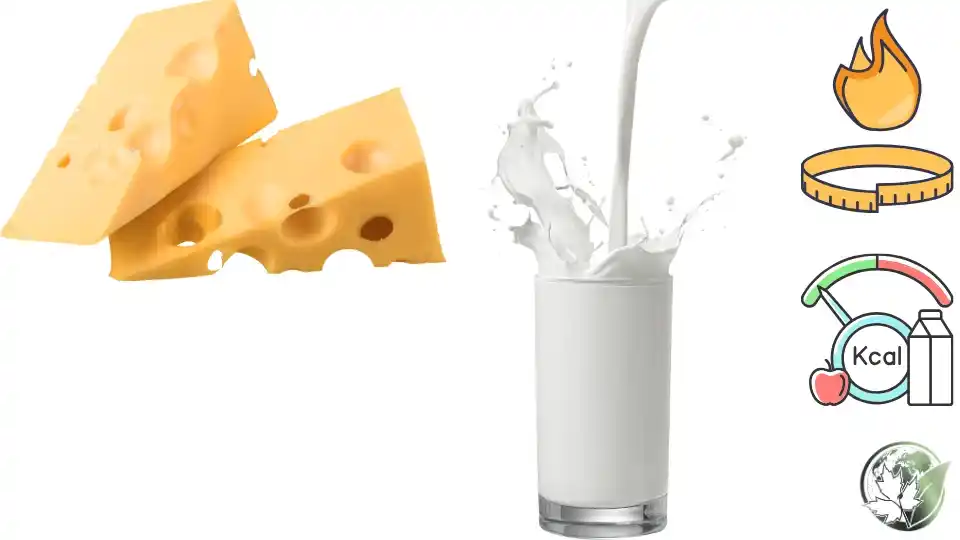
Cheese is made from milk, but it is a very different food in terms of calories. One hundred grams of cheddar cheese has about 403 calories, while one hundred grams of whole milk has about 61. That means cheddar has about 6.6 times the calories per gram. The reason is simple: it takes about ten kilograms of milk to make one kilogram of cheddar, so most of the water is removed and the fat and protein are concentrated.
Serving size changes the picture. A one ounce (28 g) slice or cube of cheddar has about 113 calories, while a cup of whole milk (244 g) has about 149 calories. A single slice of cheese therefore has fewer calories than a glass of milk, though it contains about the same amount of protein, 7 grams in the cheese and 7.7 grams in the milk, and more calcium than you might expect: 202 milligrams in the cheese compared with 276 milligrams in the milk.
Not all cheeses are equally dense. Cottage cheese has only 98 calories per 100 grams, while parmesan has 431. This guide compares ten popular cheeses with whole milk per 100 grams and per serving, shows how much milk is needed to make each cheese, and explains the differences in protein, fat, calcium, sodium and lactose. You will also find tips for portions, weight loss and cooking. Three tables and a full FAQ are included.
One ounce of cheddar has about 113 calories
How Many Calories Are in Cheese?
The calories in cheese depend on its fat and water content. Soft, fresh cheeses contain more water and have fewer calories, while aged, hard cheeses are dry and dense.
| Cheese | Calories per 100 g | Per 28 g (1 oz) | Fat per 100 g | Protein per 100 g |
|---|---|---|---|---|
| Cottage cheese, low-fat | 72 kcal | 20 kcal | 1.0 g | 12.4 g |
| Cottage cheese, regular | 98 kcal | 27 kcal | 4.3 g | 11.1 g |
| Ricotta, whole milk | 174 kcal | 49 kcal | 13 g | 11.3 g |
| Feta | 264 kcal | 74 kcal | 21 g | 14.2 g |
| Mozzarella, whole milk | 300 kcal | 84 kcal | 22 g | 22 g |
| Brie | 334 kcal | 94 kcal | 28 g | 21 g |
| Cream cheese | 342 kcal | 96 kcal | 34 g | 6 g |
| Swiss | 380 kcal | 106 kcal | 28 g | 27 g |
| Cheddar | 403 kcal | 113 kcal | 33 g | 25 g |
| Parmesan | 431 kcal | 121 kcal | 29 g | 38 g |
The range is huge, from 72 to 431 calories per 100 grams. If calories matter to you, cottage cheese, ricotta, feta and fresh mozzarella are lighter choices, and a small amount of a strongly flavored aged cheese like parmesan can add flavor with few calories.
How Many Calories Are in a Slice, a Cube or a Spoonful of Cheese?
Most people eat cheese in small servings. The table shows common portions.
| Cheese serving | Weight | Calories |
|---|---|---|
| 1 slice processed cheese | 21 g | 70 kcal |
| 1 slice cheddar (deli) | 28 g | 113 kcal |
| 1 string cheese stick | 28 g | 80 kcal |
| 1 cube cheddar (1 inch) | 17 g | 69 kcal |
| 1 tablespoon grated parmesan | 5 g | 22 kcal |
| 1/4 cup shredded cheddar | 28 g | 113 kcal |
| 1/2 cup cottage cheese | 113 g | 110 kcal |
| 2 tablespoons cream cheese | 29 g | 99 kcal |
| 30 g feta (crumbled) | 30 g | 79 kcal |
| 1 slice pizza-style mozzarella | 28 g | 84 kcal |
A slice of cheese on a sandwich adds about 70 to 113 calories, while a sprinkle of parmesan adds only 22 per tablespoon. Because cheese is salty and rich, a little goes a long way.
Cheese vs Whole Milk: Calories and Nutrition Compared
Cheese and milk have the same origin, but the concentration changes the numbers. The table compares them per 100 grams and per typical serving.
| Per 100 g | Cheddar | Mozzarella | Cottage cheese | Whole milk |
|---|---|---|---|---|
| Calories | 403 kcal | 300 kcal | 98 kcal | 61 kcal |
| Fat | 33 g | 22 g | 4.3 g | 3.3 g |
| Saturated fat | 21 g | 13 g | 1.7 g | 1.9 g |
| Protein | 25 g | 22 g | 11 g | 3.2 g |
| Carbohydrate | 1.3 g | 2.2 g | 3.4 g | 4.8 g |
| Calcium | 721 mg | 505 mg | 83 mg | 113 mg |
| Sodium | 621 mg | 627 mg | 364 mg | 43 mg |
| Cholesterol | 105 mg | 79 mg | 17 mg | 10 mg |
| Per typical serving | 28 g cheddar | 28 g mozzarella | 1/2 cup cottage cheese | 1 cup whole milk |
|---|---|---|---|---|
| Calories | 113 kcal | 84 kcal | 110 kcal | 149 kcal |
| Protein | 7.0 g | 6.2 g | 12.5 g | 7.7 g |
| Calcium | 202 mg | 141 mg | 94 mg | 276 mg |
| Sodium | 174 mg | 176 mg | 410 mg | 105 mg |
Cheese is more energy dense, but per serving it is not necessarily higher in calories than milk. A one ounce slice of cheddar has fewer calories than a cup of milk and about the same protein. Cottage cheese is particularly high in protein for its calories. Cheese is higher in saturated fat and sodium per gram, while milk is a better source of calcium per calorie.
Cheese and milk can deliver similar protein per serving, but cheese is far more concentrated in calories and sodium
How Much Milk Is Needed to Make One Slice of Cheese?
The idea of concentration explains why cheese has more calories per gram. It takes about 10 liters of whole milk to make 1 kilogram of cheddar, so one ounce (28 g) of cheddar is made from about 280 milliliters of milk, a little more than a cup. The calories are concentrated even though the water is removed, since the cheese keeps the fat and protein but loses most of the lactose, which drains away with the whey.
| Cheese | Milk needed per kg | Milk in one 28 g serving | Calories in that milk | Calories in the cheese |
|---|---|---|---|---|
| Cheddar | 10 liters | 280 ml | 176 kcal | 113 kcal |
| Parmesan | 16 liters | 450 ml | 283 kcal | 121 kcal |
| Mozzarella | 8 liters | 224 ml | 141 kcal | 84 kcal |
| Feta | 6 liters | 170 ml | 107 kcal | 74 kcal |
| Cottage cheese | 7 liters | 195 ml | 123 kcal | 27 kcal |
| Cream cheese | 8 liters of milk and cream | 224 ml | 141 kcal | 96 kcal |
The remaining calories from the milk go into the whey, which contains lactose, whey protein and some fat. This is why the cheese contains fewer calories than the amount of milk used to make it, though it feels more energy-dense in the mouth.
Which Has More Protein per Calorie: Cheese or Milk?
For people who want protein without too many calories, the best choices are lean cheeses and low-fat dairy.
| Dairy food | Calories per 100 g | Protein per 100 g | Protein per 100 calories |
|---|---|---|---|
| Cottage cheese, low-fat | 72 kcal | 12.4 g | 17.2 g |
| Skim milk | 34 kcal | 3.4 g | 10.0 g |
| Parmesan | 431 kcal | 38 g | 8.8 g |
| Mozzarella (part skim) | 254 kcal | 24 g | 9.4 g |
| Whole milk | 61 kcal | 3.2 g | 5.2 g |
| Swiss | 380 kcal | 27 g | 7.1 g |
| Cheddar | 403 kcal | 25 g | 6.2 g |
| Feta | 264 kcal | 14.2 g | 5.4 g |
| Cream cheese | 342 kcal | 6 g | 1.8 g |
Low-fat cottage cheese beats nearly everything, with more than 17 grams of protein per 100 calories. Whole milk offers about 5 grams per 100 calories, similar to feta. Cream cheese is mostly fat and has very little protein.
Which Is Better for Calcium: Cheese or Milk?
Calcium is the main reason many people eat dairy. A one cup glass of whole milk provides 276 milligrams, about 21 percent of the daily value. One ounce of cheddar has 202 milligrams, 16 percent, and the same amount of parmesan has 336 milligrams, 26 percent, a surprisingly high amount because it is so concentrated. Cottage cheese is low in calcium, with about 94 milligrams per half cup, because much of the calcium is lost in the whey.
When you compare calcium per calorie, milk is a good deal: 276 milligrams for 149 calories, or 1.85 milligrams per calorie. Cheddar gives 202 milligrams for 113 calories, or 1.79, almost the same. Parmesan gives 2.8 milligrams per calorie. In other words, you can reach your calcium goal with either, though cheese also brings more sodium and saturated fat.
How Do Cheese and Milk Compare for Lactose and Digestion?
Milk contains about 4.8 grams of lactose per 100 grams, and a cup has about 12 grams, enough to cause symptoms in many lactose intolerant people. In cheese, most of the lactose drains out with the whey and is further broken down during aging. Aged cheeses like cheddar, parmesan and Swiss have less than 0.1 gram per serving and are usually well tolerated. Fresh cheeses such as ricotta, cottage cheese and cream cheese contain more, about 1 to 3 grams per 100 grams.
This makes hard cheese a good way for lactose intolerant people to get calcium and protein. If you have a milk protein allergy, however, both milk and cheese are problems, because cheese contains casein.
Aged cheeses like parmesan contain almost no lactose and have strong flavor, so small amounts go far
How Do Sodium and Saturated Fat Compare?
Cheese is significantly higher in sodium than milk. One ounce of cheddar contains 174 milligrams, which is about 7 percent of the daily limit, and one ounce of feta about 316 milligrams. A cup of milk has 105 milligrams. For people with high blood pressure, large amounts of cheese can be a concern.
Saturated fat is also higher. An ounce of cheddar provides about 6 grams, 30 percent of the 20 gram daily limit, while a cup of whole milk has 4.6 grams, 23 percent. Lower-fat options include part-skim mozzarella, ricotta and cottage cheese. In practice, one or two servings of cheese a day fits most diets, as long as the rest of the day is balanced.
Is Cheese or Milk Better for Weight Loss?
Both can support weight loss when portioned, thanks to protein. Milk provides volume and hydration, and cheese provides intense flavor in small amounts. The risk with cheese is overeating, because it is so dense: it is easy to eat 100 grams, 403 calories, on a cheese board without noticing. A cup of milk has a built-in portion limit.
Practical suggestions include choosing strongly flavored cheeses and grating them, since a tablespoon of parmesan gives a big taste for 22 calories, using part-skim mozzarella, measuring portions with a scale and building meals around vegetables and lean protein with cheese as an accent. A glass of milk or a serving of cottage cheese can be a satisfying snack of 100 to 150 calories.
How to Choose the Best Cheese
Consider flavor, calories and use. For sandwiches, a thin slice of sharp cheddar has more taste than a thick slice of mild cheese. For salads, feta or goat cheese add punch with small quantities. For cooking, mozzarella melts well, and parmesan adds umami. For snacks, string cheese and cottage cheese offer portion control. Check the label for added ingredients and sodium, and choose cheese with a short ingredient list: milk, salt, cultures and rennet.
Iranian white cheese, similar to feta, has about 260 calories per 100 grams and is usually stored in brine. It is lower in calories than cheddar and is a staple in breakfasts with bread and herbs. Rinsing it briefly can reduce sodium by 10 to 20 percent.
How to Store Cheese and Milk
Hard cheeses keep for weeks in the refrigerator when wrapped in wax paper or parchment and placed in a container. Soft cheeses should be consumed within a week or two of opening. Cheese can be frozen, though the texture becomes crumbly, so it is best used for cooking afterward. Milk should be kept at 4 degrees Celsius or below and used within five to seven days of opening for pasteurized milk, or within the date on the carton.
Wrapped cheese keeps well for weeks in the refrigerator, while milk needs colder storage and faster use
Why Does Aging Change the Calories in Cheese?
As cheese ages, it loses moisture, and the remaining solids become more concentrated. A young cheddar has about 37 percent water and 380 calories per 100 grams, while a well-aged cheddar has 33 percent water and up to 410. Parmesan, aged for at least 12 months, holds only about 30 percent water and has 431 calories per 100 grams. The same principle explains why dry salami is more calorie dense than fresh sausage and why raisins have more calories than grapes.
Aging also changes flavor. Proteins and fats break down into amino acids and fatty acids that give sharp, nutty and savory notes. Because the flavor is so intense, people tend to use less of an aged cheese, which can lower the calories in a dish. A tablespoon of grated parmesan on pasta gives more taste than three tablespoons of mild mozzarella, with a quarter of the calories.
How Do Different Cooking Uses Change the Calories?
Cheese in cooking is often combined with other fatty ingredients, so a dish can multiply the calories quickly. The table compares everyday uses.
| Dish | Cheese amount | Cheese calories |
|---|---|---|
| Cheese sandwich | 2 slices cheddar (56 g) | 226 kcal |
| Grilled cheese sandwich | 2 slices + butter | 330 kcal |
| Cheese omelet | 28 g cheddar | 113 kcal |
| Pizza slice (cheese) | 40 g mozzarella | 120 kcal |
| Macaroni and cheese | 1 cup | 380 kcal total |
| Salad with feta | 30 g feta | 79 kcal |
| Pasta with parmesan | 2 tbsp | 44 kcal |
| Cheeseburger | 1 slice cheese | 70 kcal |
| Cheese board | 100 g mixed cheeses | 350 kcal |
Cooking with milk instead of cheese, for example in a white sauce, adds fewer calories. A cup of milk-based sauce has about 250 calories, while a cup of cheese sauce has about 400. This difference is small per serving but important in big recipes.
What Are the Best Ways to Fit Cheese Into a Healthy Diet?
Cheese is nutritious in moderation. Several simple habits help. Choose cheeses with strong flavor so that a small amount satisfies. Measure portions at first so that you learn what 28 grams looks like, about the size of four dice. Pair cheese with fruit, vegetables or whole grain crackers rather than refined bread and cured meats. Use cheese as a flavoring, not the main component of a meal. Limit processed cheese products, which have more sodium and additives than natural cheese.
For children, cheese is a convenient source of calcium and protein, and string cheese or small cubes make good snacks. For older adults, dairy supports bone health, and softer cheeses are easy to eat. People with heart disease or high cholesterol may be advised to choose low-fat cheese and keep intake moderate, so it is best to follow your doctor's guidance.
How Can You Track Cheese Calories More Accurately?
Cheese is easy to underestimate because it is often grated, sliced or crumbled. Weigh it on a kitchen scale if possible, since volume measures vary: a cup of shredded cheddar weighs about 113 grams (455 calories), but a packed cup can weigh 150 grams. When you eat out, assume cheese in a dish adds at least 100 calories per visible layer, and ask for sauces and extra cheese on the side. A little attention to portions can easily save 200 to 300 calories per day without removing cheese from your diet.
How Do Cheese and Milk Fit Into a Day of Meals?
A practical day might include milk with breakfast cereal, a slice of cheese in a lunch sandwich, a yogurt snack and a sprinkle of parmesan on dinner pasta. That adds up to about 149 calories from milk, 113 from cheese, 22 from parmesan and 100 from yogurt, a total of about 385 calories. The same day provides about 1,000 milligrams of calcium, which is close to the daily need for most adults, and 25 grams of protein. By contrast, eating 100 grams of cheddar alone would deliver 403 calories and 721 milligrams of calcium, with more sodium and saturated fat. Spreading dairy across the day, and mixing milk, cheese and yogurt, offers more variety and better control.
Understanding these numbers makes it easier to include cheese without worry. Enjoy it for flavor, measure the portion and balance it with the milk, vegetables and whole foods that make up the rest of your meals.
What Should Shoppers and Importers Know About Cheese Labels?
Cheese labels list calories per serving, usually 28 grams, but cheese sold by weight at the deli has no label, so use the per 100 gram values from this guide. Look for the fat in dry matter percentage on some European cheeses, which is different from the fat content of the whole cheese. A cheese labeled 45 percent fat in dry matter has about 27 percent fat in the cheese itself. For importers, moisture content, salt level and shelf life are key quality points that affect calories and taste.
Key Takeaways: Cheese vs Whole Milk Calories
Cheese has far more calories per gram than whole milk, about 403 for cheddar against 61 for milk, because it is concentrated milk. Per serving the gap is smaller: an ounce of cheddar has 113 calories and a cup of milk 149. Cheese offers more protein per gram and is lower in lactose, but it has more saturated fat and sodium. Choose lighter cheeses such as cottage cheese or part-skim mozzarella when you need to cut calories, and measure portions of rich cheeses.
Frequently Asked Questions
9 questions answered
How many calories are in cheese?
It varies, from about 72 per 100 grams for low-fat cottage cheese to 431 for parmesan. Cheddar has about 403, or 113 per ounce.
How many calories are in a slice of cheese?
A slice of processed cheese has about 70 calories, and a slice of cheddar about 113.
Does cheese have more calories than whole milk?
Per gram, yes: cheddar has about 6.6 times as many. Per typical serving, an ounce of cheddar has fewer calories than a cup of milk.
Which cheese has the fewest calories?
Cottage cheese, ricotta made with part-skim milk and fresh mozzarella are among the lightest.
Which has more calcium, cheese or milk?
Per ounce, hard cheeses like parmesan and cheddar have more calcium than a quarter cup of milk, but a full cup of milk has more than an ounce of cheddar.
Is cheese good for weight loss?
In moderation. Choose lean cheeses, control portions and use strong-flavored varieties.
Can lactose intolerant people eat cheese?
Many can eat aged hard cheeses, which have very little lactose.
How many calories are in feta compared with milk?
Feta has about 264 calories per 100 grams versus 61 for whole milk, but a 30 gram portion has only about 79 calories.
How much milk is needed to make cheese?
About 10 liters of milk make one kilogram of cheddar.