
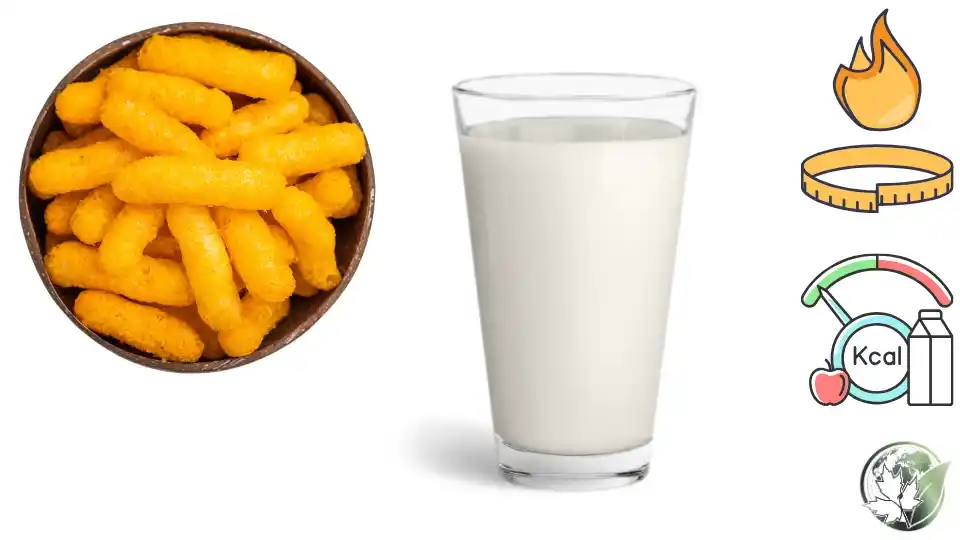
How Many Calories Are in Cheese Puffs? The Quick Answer
Cheese puffs are one of the most calorie dense snacks in the supermarket. A 28 gram serving, about one ounce or a small handful of roughly 13 to 15 puffs, has about 150 calories. One hundred grams has about 540 calories, a single puff has about 11 and a large 227 gram party bag has about 1,225. Because the puffs are light and airy, a handful looks small, but the calories add up very fast.
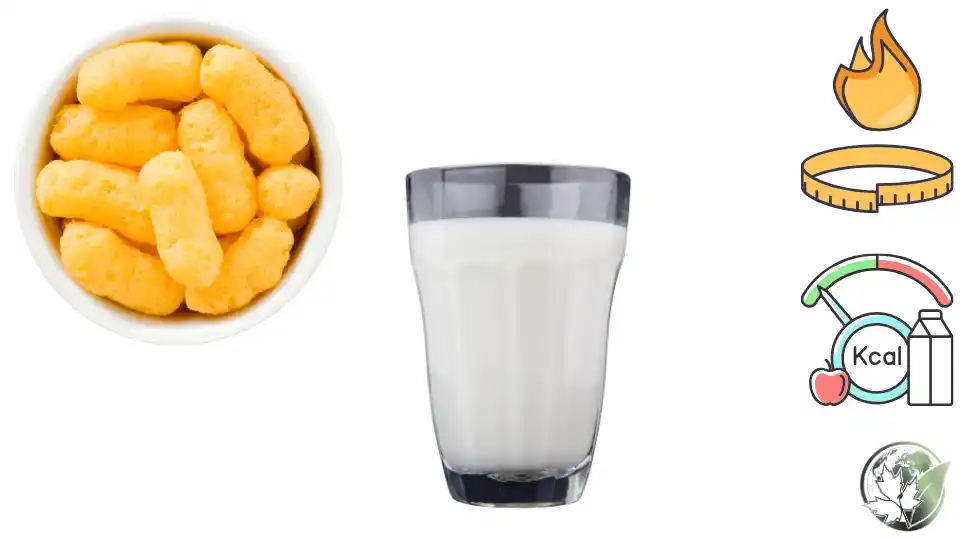
Whole milk is the comparison here because both are dairy-flavored foods that people reach for as snacks or drinks. One hundred grams of whole milk has about 61 calories, so cheese puffs have about 8.9 times the calories per gram. A 28 gram handful of puffs has the same calories as about 240 milliliters of whole milk, a full glass. Measured by volume, the difference is even greater, because puffs are mostly air.
This guide shows the calories in cheese puffs by the piece, handful and bag, compares them with whole milk on fat, protein, sodium and nutrients, and explains why the calories are so high. You will also find baked and low-fat alternatives, tips for portion control and answers to common questions. Three comparison tables and a full FAQ are included.
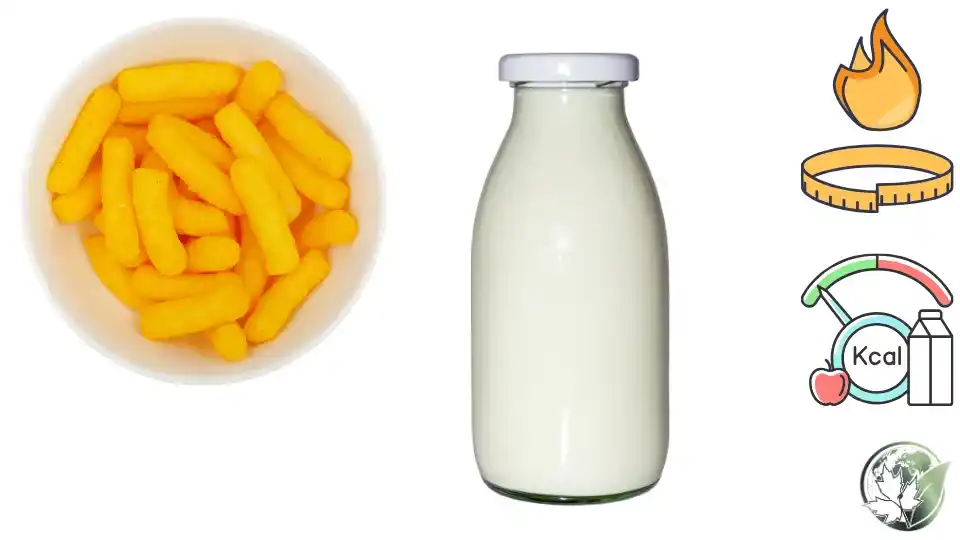
A 28 gram handful of cheese puffs has about 150 calories
How Many Calories Are in a Handful, a Bag and a Single Cheese Puff?
Cheese puffs are made from cornmeal, vegetable oil and cheese seasoning. The calories depend on the brand, but the typical range is 520 to 570 calories per 100 grams for fried puffs.
| Portion | Weight | Approx. pieces | Calories | Fat |
|---|---|---|---|---|
| 1 puff | 2 g | 1 | 11 kcal | 0.7 g |
| Small handful | 14 g | 7 | 75 kcal | 4.9 g |
| 1 ounce serving | 28 g | 14 | 150 kcal | 9.8 g |
| Snack bag | 43 g | 21 | 232 kcal | 15 g |
| Vending bag | 85 g | 42 | 459 kcal | 30 g |
| Large bag | 227 g | 113 | 1,225 kcal | 79 g |
| Party tub | 400 g | 200 | 2,160 kcal | 140 g |
| 100 g | 100 g | 50 | 540 kcal | 35 g |
A snack bag of 43 grams already has more calories than a slice of plain cake, and it is easy to finish in a few minutes. The powdery cheese coating also contributes sodium and flavor enhancers that encourage you to keep eating.
How Do Different Types of Cheese Puffs Compare?
Puffs, curls and balls are made in several versions. Baked or popped varieties have less fat, and some products use whole grains or legumes.
| Type of cheese snack | Per 100 g | Per 28 g | Fat per 28 g |
|---|---|---|---|
| Fried cheese puffs (crunchy or puffed) | 540 kcal | 150 kcal | 9.8 g |
| Cheese curls (extruded, fried) | 560 kcal | 157 kcal | 10.5 g |
| Baked cheese puffs | 460 kcal | 129 kcal | 6 g |
| Cheese balls, fried | 550 kcal | 154 kcal | 10 g |
| Popped cheese chips | 440 kcal | 123 kcal | 5 g |
| White cheddar popcorn | 520 kcal | 146 kcal | 9 g |
| Air-popped popcorn, plain | 387 kcal | 108 kcal | 1.2 g |
| Cheese crackers (small squares) | 490 kcal | 137 kcal | 6.5 g |
| Freeze-dried cheese snack | 450 kcal | 126 kcal | 7.5 g |
Baked puffs cut fat by a third but save only about 20 calories per serving. Plain air-popped popcorn is far lighter, since a 28 gram serving is about three cups.
Cheese Puffs vs Whole Milk: Calories and Nutrition Compared
Both foods contain some dairy flavor, but they could hardly be more different in nutrition. Milk is a liquid food with protein, calcium and vitamins. Puffs are a dried, fried, seasoned snack.
| Per 100 g | Cheese puffs | Whole milk |
|---|---|---|
| Calories | 540 kcal | 61 kcal |
| Total fat | 35 g | 3.3 g |
| Saturated fat | 7 g | 1.9 g |
| Carbohydrate | 51 g | 4.8 g |
| Sugar | 2 g | 5.1 g |
| Fiber | 1.5 g | 0 g |
| Protein | 6 g | 3.2 g |
| Calcium | 60 mg | 113 mg |
| Sodium | 1,000 mg | 43 mg |
| Water | 1 g | 88 g |
| Per typical serving | 28 g cheese puffs | 1 cup whole milk (244 g) |
|---|---|---|
| Calories | 150 kcal | 149 kcal |
| Fat | 9.8 g | 7.9 g |
| Protein | 1.7 g | 7.7 g |
| Calcium | 17 mg | 276 mg |
| Sodium | 280 mg | 105 mg |
A handful of puffs and a full cup of milk have nearly the same calories, but the milk provides four and a half times the protein, sixteen times the calcium and one third the sodium. In terms of nutrition per calorie, milk is much more valuable. In terms of satisfaction, a cup of milk fills the stomach more than a handful of puffs, because puffs dissolve quickly and have very little volume once chewed.
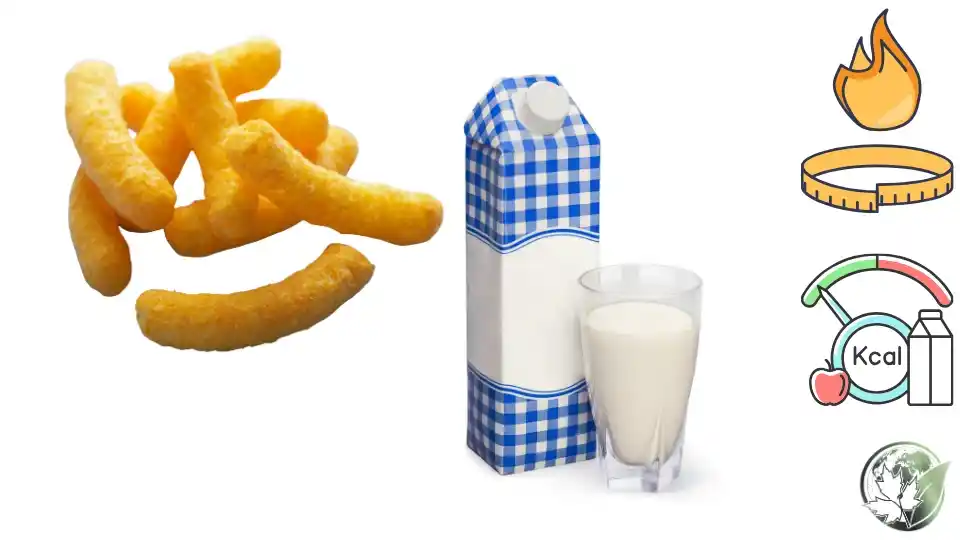
A handful of cheese puffs has about as many calories as a whole glass of milk
How Much Milk Equals a Bag of Cheese Puffs?
Looking at puffs in terms of milk puts the energy in perspective. Each puff holds about 11 calories, about the same as 18 milliliters of milk.
| Cheese puff portion | Calories | Equal volume of whole milk |
|---|---|---|
| 1 puff | 11 kcal | 18 ml |
| 14 puffs (28 g) | 150 kcal | 246 ml |
| Snack bag (43 g) | 232 kcal | 380 ml |
| Vending bag (85 g) | 459 kcal | 750 ml |
| Large bag (227 g) | 1,225 kcal | 2 liters |
A large bag of cheese puffs has the same energy as two liters of whole milk. Nobody drinks that much milk in an evening, yet many people eat a large bag while watching a movie. The difference is satiety: liquids and high-volume foods tell the brain that you have eaten, while crunchy, airy snacks do not.
Why Are Cheese Puffs So High in Calories?
Cheese puffs are made by pushing cornmeal dough through a machine called an extruder at high pressure and temperature. The dough puffs as it leaves the machine, creating the airy structure. The pieces are then fried in vegetable oil or baked, and tossed with cheese powder, salt and seasoning. Frying is the main cause of the high energy: puffs absorb 25 to 35 percent of their weight in oil, and each gram of oil has 9 calories.
The structure makes things worse for calorie control. The puffs are 99 percent dry, so there is no water to dilute calories, and they dissolve on the tongue, which means you can eat large numbers without feeling that you have eaten much. This is known as "vanishing caloric density": food that melts away quickly tricks the brain into thinking it contains fewer calories, so you keep eating. Combined with salt and savory flavor enhancers, it makes cheese puffs very easy to overeat.
How Much Sodium Is in Cheese Puffs?
A 28 gram serving of cheese puffs has about 280 milligrams of sodium, or 12 percent of the daily limit of 2,300 milligrams. A snack bag of 43 grams has about 430 milligrams, and a large bag has about 2,270 milligrams, almost the entire daily limit. The sodium comes from salt, cheese powder and flavor enhancers such as monosodium glutamate and yeast extract.
Whole milk has only about 105 milligrams per cup. Replacing a bag of puffs with a glass of milk and a piece of fruit cuts sodium by about 80 percent. If you have high blood pressure, kidney disease or are watching sodium for another reason, puffs are among the snacks to limit.
How Do Cheese Puffs Compare With Other Snacks?
For context, here is where cheese puffs sit among familiar snacks, per 28 gram serving.
| Snack (28 g) | Calories | Fat | Sodium |
|---|---|---|---|
| Cheese puffs | 150 kcal | 9.8 g | 280 mg |
| Potato chips | 152 kcal | 9.8 g | 148 mg |
| Tortilla chips | 140 kcal | 7 g | 110 mg |
| Pretzels | 108 kcal | 0.8 g | 360 mg |
| Air-popped popcorn | 108 kcal | 1.2 g | 2 mg |
| Rice cakes (3) | 105 kcal | 0.8 g | 30 mg |
| Salted peanuts | 166 kcal | 14 g | 120 mg |
| Cheddar cheese | 113 kcal | 9.3 g | 174 mg |
| Plain yogurt, 1/2 cup | 75 kcal | 2 g | 70 mg |
A cheese puff serving has about the same calories as potato chips, but it has far more sodium. Real cheddar cheese has fewer calories per ounce than puffs and gives 6.4 grams of protein, so it is a more nutritious way to satisfy a cheesy craving.
Air-popped popcorn with cheese seasoning has about 110 to 120 calories per serving
How to Enjoy Cheese Puffs Without Overeating
You do not have to give up the snack. The key is to control the portion before you start.
**Pour a serving into a bowl.** Never eat straight from the bag. A 28 gram portion is about a handful and a half.
**Choose small bags.** Single-serve bags of 28 to 43 grams save you from the temptation of a large bag.
**Pair with protein or produce.** A glass of milk, an apple or carrot sticks make the snack more filling.
**Eat slowly.** Taking time lets satiety signals reach the brain.
**Skip the snack when bored.** Check whether you are actually hungry or just snacking out of habit.
**Put the bag away.** Out of sight reduces mindless refills.
A snack plate with 14 puffs (150 calories), a cup of cucumber slices (16 calories) and a small glass of milk (75 calories for 120 ml) comes to about 240 calories and offers protein, calcium and hydration alongside the treat.
Which Cheese Snacks Are Better Choices?
If you want a cheesy snack with more nutrition, there are several options.
**Real cheese:** 28 g of cheddar has 113 calories and 6.4 g protein.
**String cheese:** One stick has about 80 calories and 7 g protein.
**Baked cheese crisps:** Made of 100 percent baked cheese, about 130 calories per 28 g with 10 g protein.
**Cottage cheese with crackers:** 1/2 cup has about 90 calories with 12 g protein.
**Whole grain cheese crackers:** Check the fiber content, at least 2 g per serving.
**Roasted chickpeas with cheese seasoning:** About 120 calories with 6 g protein and 5 g fiber.
These choices often have fewer calories per serving or more protein and fiber, which makes them more satisfying. Always compare per 100 grams, then adjust for the portion you will actually eat.
What About Children and Cheese Puffs?
Cheese puffs are popular with children, and some brands market them as finger foods for toddlers. The puffs dissolve easily, which lowers choking risk, but they provide little nutrition and plenty of salt. For young children, milk is a better drink, and finger foods such as cooked vegetables, soft fruit and small pieces of cheese are better snacks. Whole milk is recommended from 12 to 24 months for most children, as it provides fat for brain development and calcium for bones. A small portion of puffs on occasion is fine, but make sure it does not replace meals.
How to Read the Label on a Bag of Cheese Puffs
Look first at the serving size. A label may state "about 21 pieces" or "28 g", and the whole bag may contain two to eight servings. Calories per serving multiplied by servings per bag gives the real total. Next, look at the sodium, which can be 250 to 350 milligrams per serving, and the saturated fat, which is typically 2 to 3 grams. Check the ingredient list: corn meal, vegetable oil, whey, cheese, salt and flavorings are typical.
For comparison across brands, use the per 100 gram column. If one brand shows 540 calories and another 460, the second one is lighter, but both are far above most whole foods. When shopping for a wholesale or retail business, look at fat content, oil type and shelf life, which is usually six to nine months in sealed bags.
Check how many servings are in the bag, because a snack bag may contain 1.5 servings
How to Store Cheese Puffs
Keep opened bags tightly closed with a clip or move the puffs to an airtight container. Moisture makes them soft and stale, and heat and light speed up the oil going rancid. A cool, dry cupboard is best. Opened puffs stay crisp for one to two weeks, and an unopened bag lasts until the date on the package. If they soften, a few minutes in a low oven restores crunch.
How to Count Cheese Puff Calories
Use a food scale if you want precise numbers, and weigh the portion you will eat. If you do not have a scale, count the puffs: 14 puffs is about one serving and 150 calories. For flavored or baked varieties, read the label for per-serving calories. Add the calories of any dip you eat with them. As a rule, assume that about 10 to 11 calories are in each puff, so a handful of 20 is about 215 calories.
Why Does Milk Fill You Up More Than Cheese Puffs?
Satiety depends on volume, protein, fat and how fast food leaves the mouth. A cup of milk occupies 244 milliliters of stomach space and contains 7.7 grams of protein, two proteins that digest at different speeds, casein slowly and whey quickly. Together they trigger hormones such as cholecystokinin and GLP-1 that signal fullness. A handful of puffs takes up almost no space once it dissolves, contains only 1.7 grams of protein and is mostly fat and refined starch, which are less effective at signaling satiety in the short term.
Studies comparing equal-calorie snacks consistently find that people feel less full after crunchy, airy, high-fat savory snacks and eat more at the next meal compared with protein-rich or high-volume foods. That is why 150 calories of puffs can leave you wanting more, and 150 calories of milk, yogurt or fruit usually does not. If you are trying to manage your weight, pairing a small portion of puffs with a glass of milk can improve the effect and reduce the amount you eat.
How Many Calories Do Cheese Puffs Add Over a Week or Year?
Habits matter more than single servings. The table shows what regular puffs add up to.
| Habit | Calories per week | Calories per year | Body fat equivalent per year |
|---|---|---|---|
| 1 handful (28 g) a week | 150 kcal | 7,800 kcal | 1.0 kg |
| 1 snack bag (43 g) a week | 232 kcal | 12,100 kcal | 1.6 kg |
| 1 snack bag (43 g) daily | 1,624 kcal | 84,700 kcal | 11 kg |
| 1 large bag (227 g) a week | 1,225 kcal | 63,700 kcal | 8.3 kg |
Eating a snack bag every day, if nothing else changes, adds the energy equivalent of about 11 kilograms of body fat in a year. Replacing it with a glass of milk and a piece of fruit would cut about 90 calories a day, which still gives a snack that feels satisfying.
How Do You Cut Back on Cheese Puffs Without Feeling Deprived?
Cutting out a favorite snack completely often backfires, so gradual changes work better. First, choose single-serve bags and keep large ones out of the house. Second, replace some snack times with alternatives such as popcorn or cheese. Third, plan treat days so that puffs are an event rather than a habit. Fourth, add a protein-rich snack such as yogurt to your afternoon, so that you are less hungry when the craving arrives. Many people find their desire for salty, fatty snacks decreases after a few weeks of eating more protein and fiber.
What Do Experts Say About Ultra-Processed Snacks Like Cheese Puffs?
Cheese puffs are classified as ultra-processed foods, meaning they are made from industrial ingredients and additives that are rarely used in home cooking. Large observational studies link high intake of ultra-processed foods with higher risk of weight gain, type 2 diabetes and heart disease, and a controlled trial found that people eating ultra-processed diets consumed about 500 more calories per day than those eating unprocessed diets. Experts generally recommend that these foods make up a small part of the diet and that people build most of their meals around whole foods such as vegetables, fruit, legumes, dairy, eggs, fish and whole grains. Occasional puffs are not a problem, and the pattern of eating matters most.
How Can Retailers and Parents Choose Better Snack Options?
When stocking shelves or packing lunch boxes, offering a mix of snacks helps. A row of single-serve cheese puffs next to cheese sticks, popcorn and fruit lets customers choose according to their goals. For parents, a good approach is to keep puffs as an occasional treat and offer milk, yogurt and fruit as everyday snacks, which gives children protein, calcium and fiber while still leaving room for the foods they enjoy.
Key Takeaways: Cheese Puffs Calories vs Whole Milk
Cheese puffs have about 540 calories per 100 grams and 150 per 28 gram serving, nearly nine times the calories of whole milk per gram. A handful has about the same calories as a full glass of milk, but milk gives far more protein and calcium and much less sodium. Portion the puffs into a bowl, pair them with protein or fruit and consider real cheese, popcorn or baked options when you want a lighter snack.
Frequently Asked Questions
9 questions answered
How many calories are in cheese puffs?
About 150 calories in a 28 gram serving of roughly 14 puffs, and about 540 calories per 100 grams.
How many calories are in one cheese puff?
About 11 calories per puff.
Do cheese puffs have more calories than whole milk?
Yes, about nine times as many per gram. A 28 gram handful has about the same calories as a full cup of whole milk.
How many calories are in a bag of cheese puffs?
A 43 gram snack bag has about 232 calories, and a large 227 gram bag has about 1,225.
Are baked cheese puffs lower in calories?
Slightly. Baked puffs have about 460 calories per 100 grams and 129 per serving, compared with 150 for fried.
Are cheese puffs high in sodium?
Yes, about 280 mg per 28 gram serving, or 1,000 mg per 100 grams.
What is a healthier snack than cheese puffs?
Real cheese, string cheese, air-popped popcorn, roasted chickpeas or yogurt are lighter or more nutritious choices.
Is milk a better snack than cheese puffs?
Milk offers protein, calcium and vitamins for a similar number of calories per cup, and it is much lower in sodium.
Why are cheese puffs so easy to overeat?
They dissolve quickly, are salty and fatty and contain little volume, so they do not signal fullness.




