Cheese Dip vs Greek Yogurt Calories at a Glance
Cheese dip and Greek yogurt are both creamy and both come from milk, but their calories are far apart. One hundred grams of cheese dip has about 160 calories, and a two tablespoon serving of 32 grams has about 51. One hundred grams of plain nonfat Greek yogurt has about 59 calories, and the same two tablespoons (30 g) has only 18. Whole-milk Greek yogurt has about 97 calories per 100 grams, or 29 per two tablespoons.
That means cheese dip has about 2.7 times the calories of nonfat Greek yogurt and about 1.6 times those of the whole-milk version. It also has about 4 times the sodium of plain yogurt, and much less protein per calorie: nonfat Greek yogurt supplies about 17 grams of protein per 100 calories, while cheese dip gives only about 4 grams.
This guide compares the two on calories per gram, per serving and per 100 calories, and explains how fat, protein, calcium and sodium differ. You will learn how to turn Greek yogurt into a dip that tastes cheesy, how many calories common yogurt-based dips have and how to choose between a cheese dip and a yogurt dip for a snack, a party or a meal. It includes three comparison tables and a full FAQ.
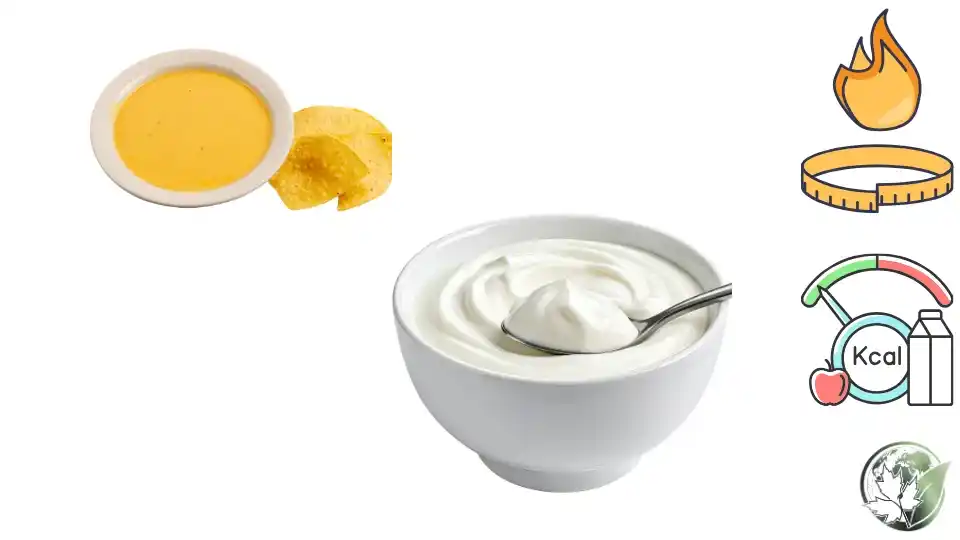
Plain nonfat Greek yogurt has about 59 calories per 100 grams
How Many Calories Are in Cheese Dip?
Cheese dip comes in many forms, but a typical queso or nacho cheese sauce has about 160 calories per 100 grams. It is made from processed cheese, milk, oil and starch, and it is rich in fat and salt.
| Cheese dip portion | Weight | Calories | Fat | Protein |
|---|---|---|---|---|
| 1 tablespoon | 16 g | 26 kcal | 1.8 g | 1.0 g |
| 2 tablespoons | 32 g | 51 kcal | 3.6 g | 1.9 g |
| 1/4 cup | 62 g | 99 kcal | 7 g | 3.7 g |
| 1/2 cup | 124 g | 198 kcal | 14 g | 7.4 g |
| 1 cup | 248 g | 397 kcal | 28 g | 15 g |
| 100 g | 100 g | 160 kcal | 11 g | 6 g |
Cheese dip is energy dense because it is mostly fat from cheese and oil. Protein is modest, and sodium is high at about 780 milligrams per 100 grams.
How Many Calories Are in Greek Yogurt?
Greek yogurt is regular yogurt that has been strained to remove whey, which makes it thicker and higher in protein. The calories depend on the fat level.
| Greek yogurt (plain) | Per 100 g | Per 2 tbsp (30 g) | Per 3/4 cup (170 g) | Protein per 100 g |
|---|---|---|---|---|
| Nonfat (0 percent) | 59 kcal | 18 kcal | 100 kcal | 10.2 g |
| Low-fat (2 percent) | 73 kcal | 22 kcal | 124 kcal | 9.9 g |
| Whole milk (5 percent) | 97 kcal | 29 kcal | 165 kcal | 9.0 g |
| Flavored, nonfat (fruit) | 80 kcal | 24 kcal | 136 kcal | 8.0 g |
| Flavored, whole milk | 120 kcal | 36 kcal | 204 kcal | 7.0 g |
| Greek-style yogurt with honey | 130 kcal | 39 kcal | 221 kcal | 6.5 g |
Plain Greek yogurt is a high protein, low calorie base. Flavored versions with fruit and sugar can have 25 to 60 percent more calories, so plain is the best choice for dips and savory recipes.
Cheese Dip vs Greek Yogurt: Calories and Nutrition Compared
When the two are compared per 100 grams, the contrasts in fat, protein and sodium are clear.
| Per 100 g | Cheese dip | Nonfat Greek yogurt | Whole-milk Greek yogurt |
|---|---|---|---|
| Calories | 160 kcal | 59 kcal | 97 kcal |
| Fat | 11 g | 0.4 g | 5 g |
| Saturated fat | 6 g | 0.1 g | 3.2 g |
| Carbohydrate | 8 g | 3.6 g | 4 g |
| Sugar | 3 g | 3.2 g | 3.9 g |
| Protein | 6 g | 10.2 g | 9 g |
| Calcium | 180 mg | 110 mg | 100 mg |
| Sodium | 780 mg | 36 mg | 35 mg |
| Cholesterol | 30 mg | 5 mg | 13 mg |
| Per typical dip serving | 2 tbsp cheese dip | 2 tbsp nonfat yogurt | 1/4 cup nonfat yogurt |
|---|---|---|---|
| Calories | 51 kcal | 18 kcal | 36 kcal |
| Protein | 1.9 g | 3.1 g | 6.2 g |
| Sodium | 250 mg | 11 mg | 22 mg |
Greek yogurt has less than half the fat and calories, about 70 percent more protein per gram and about one twentieth of the sodium. Cheese dip has more calcium per gram, but the difference is small given the large gap in everything else. In plain nutritional terms, Greek yogurt is the winner for a dip, and cheese dip wins for the strong savory flavor.

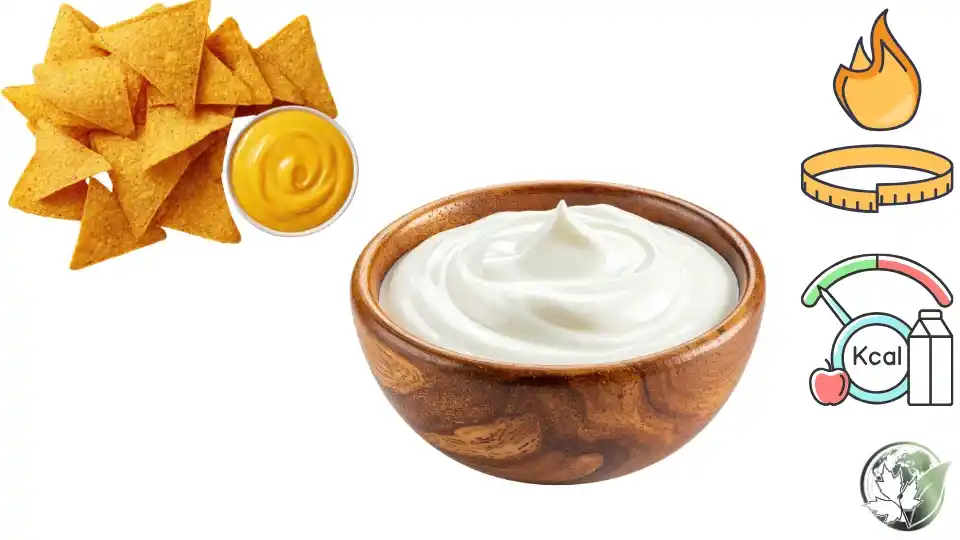
Greek yogurt dips can have about one third of the calories of cheese dips
Which Has More Protein per Calorie?
Protein per calorie is a good index of how filling a food is for its energy. Greek yogurt leads by a wide margin.
| Food | Calories per 100 g | Protein per 100 g | Protein per 100 calories |
|---|---|---|---|
| Nonfat Greek yogurt | 59 kcal | 10.2 g | 17.3 g |
| Low-fat Greek yogurt | 73 kcal | 9.9 g | 13.6 g |
| Whole-milk Greek yogurt | 97 kcal | 9.0 g | 9.3 g |
| Cottage cheese, low-fat | 72 kcal | 12.4 g | 17.2 g |
| Hummus | 166 kcal | 8 g | 4.8 g |
| Cheese dip | 160 kcal | 6 g | 3.8 g |
| Guacamole | 160 kcal | 2 g | 1.3 g |
| Ranch dressing dip | 430 kcal | 1 g | 0.2 g |
A half cup of nonfat Greek yogurt supplies 8.7 grams of protein for 50 calories, while the same calories of cheese dip, a quarter cup, supply only 3.7 grams. For people who want to feel full with fewer calories, yogurt-based dips offer a clear advantage.
How Do You Make a Cheesy Dip With Greek Yogurt?
You can keep the cheese flavor and cut most of the calories by using yogurt as the base and a small amount of sharp cheese for taste. The method is simple.
Mix 1 cup of plain Greek yogurt with 1/4 cup of finely grated sharp cheddar or parmesan.
Add a teaspoon of mustard, a pinch of garlic powder, smoked paprika and a few drops of hot sauce.
Stir in a spoon of chopped chives or pickled jalapeños for brightness.
Warm gently, if you want a hot dip, over low heat or in a 175 degree Celsius oven for 10 minutes, because high heat makes yogurt curdle.
Thicken with a teaspoon of cornstarch stirred into the yogurt before heating, which helps stability.
This recipe makes about 1.25 cups and has about 400 calories in total, or 40 calories per two tablespoons. That is about 20 percent fewer calories than cheese dip, with more protein and much less sodium. If you use nonfat yogurt and parmesan, you can bring it down to about 30 calories per serving.
How Many Calories Are in Common Yogurt-Based Dips?
Yogurt dips are popular across Mediterranean, Middle Eastern and Indian cuisines. Their calories depend on added oil, cheese and herbs.
| Dip | Per 2 tbsp | Main ingredients |
|---|---|---|
| Plain Greek yogurt | 18 kcal | Strained yogurt |
| Tzatziki | 30 kcal | Yogurt, cucumber, garlic |
| Mast-o-khiar (Persian) | 22 kcal | Yogurt, cucumber, mint |
| Raita | 20 kcal | Yogurt, cucumber, spices |
| Greek yogurt ranch | 25 kcal | Yogurt, herbs, garlic |
| Yogurt cheese dip (recipe above) | 40 kcal | Yogurt, cheddar |
| Labneh with olive oil | 60 kcal | Strained yogurt, oil |
| Whipped feta dip | 70 kcal | Feta, yogurt, oil |
| Cheese dip, standard | 51 kcal | Processed cheese |
Most yogurt dips are around half the calories of cheese dip or less, and they pair well with vegetables, whole grain pita and grilled meats. Adding olive oil or feta raises the calories, but still often stays under the level of a heavy cheese dip.

Yogurt-based dips such as tzatziki have about 30 calories per two tablespoons
What Are the Differences in Fat and Saturated Fat?
Cheese dip contains about 6 grams of saturated fat per 100 grams, which is 30 percent of the daily limit of about 20 grams for a 2000 calorie diet. Two tablespoons has about 1.9 grams, a smaller amount, but a half cup contains 7.4 grams, or 37 percent of the limit. Nonfat Greek yogurt has only 0.1 gram of saturated fat per 100 grams, and whole-milk Greek yogurt about 3.2 grams.
Current research on dairy fat is nuanced. Some studies show that full-fat yogurt may be linked with a neutral or slightly lower risk of type 2 diabetes, so whole-milk Greek yogurt is not a bad choice, and its higher fat helps with satiety. The main point is that you will get more protein and fewer calories from Greek yogurt in either form compared with cheese dip, and a lot less sodium.
How Do Sodium and Calcium Compare?
Sodium is where cheese dip loses most. A half cup of cheese dip has about 970 milligrams of sodium, while the same volume of Greek yogurt has about 50. People with high blood pressure or kidney disease are often advised to limit sodium, and a yogurt dip is a better snack for them.
Calcium is more evenly matched. A half cup of cheese dip provides about 220 milligrams of calcium and a half cup of Greek yogurt about 130 milligrams, but yogurt also provides probiotics, potassium and vitamin B12. If you rely on dairy for calcium, either contributes, but yogurt delivers it with fewer calories and less salt.
Is Greek Yogurt Better for Weight Loss Than Cheese Dip?
For most people, yes. The combination of high protein and low energy density helps control appetite. Replacing a quarter cup of cheese dip (99 calories) with a quarter cup of nonfat Greek yogurt dip (about 36 calories) saves about 63 calories each time. If you do this four times a week, it adds up to about 13,000 calories a year, equal to about 1.7 kilograms of body fat.
Of course, calories are not the only consideration. Many people enjoy cheese dip as an occasional treat, and there is no need to avoid it completely. The approach that works best is to keep cheese dip for special occasions and use yogurt dips for everyday snacks, so that enjoyment and health goals both stay on track.
How Do Cheese Dip and Greek Yogurt Taste and Behave in Cooking?
Cheese dip is salty, rich and smooth, and it melts and coats chips. Greek yogurt is tangy, cool and thick, and it can curdle if boiled. In cooking, yogurt can replace sour cream, mayonnaise and cream cheese in many recipes. It works well in baked potatoes, tacos, sauces, dressings and marinades, but it needs gentler heat.
To prevent curdling, stir cornstarch into the yogurt, use full-fat or low-fat yogurt for cooking and add it at the end over low heat. For a creamy cheese sauce with yogurt, combine it with grated cheese off the heat, so the cheese melts in the residual warmth.
How to Choose the Best Greek Yogurt and Cheese Dip
For yogurt, look for "plain" with only milk and live cultures on the ingredient list. Avoid versions with added sugar, starch or thickeners. Check protein, which should be about 9 to 10 grams per 100 grams, and compare the calories per 100 grams. Plain nonfat, low-fat and whole-milk versions each have a place depending on your needs.
For cheese dip, choose those with real cheese listed first, lower sodium and fewer additives. Look at the serving size on the label, which may be only a tablespoon. Refrigerated dips and those from the deli often have more natural ingredients than shelf-stable jars.

Plain Greek yogurt is the lighter base, and cheese dip is best in small portions
How to Store Greek Yogurt and Cheese Dip
Store Greek yogurt in the refrigerator at 4 degrees Celsius or below, and use it within one to two weeks of opening, or by the date on the tub. If a little liquid whey collects on top, stir it back in or pour it off. Keep cheese dip refrigerated after opening and use within five to seven days. Do not freeze Greek yogurt if you want a smooth texture, because it separates when thawed, although it can still be used in smoothies or baking.
How to Count Dip Calories Accurately
Weigh dips on a kitchen scale for the best accuracy. A level tablespoon of cheese dip weighs about 16 grams and of Greek yogurt about 15 grams, so two tablespoons is about 32 and 30 grams. If you serve a dip in a bowl for a party, estimate the portion per person as 60 grams, which means a 300 gram bowl serves five. Remember to count what you dip as well, since chips, pita and bread usually have as many calories as the dip.
Why Is Greek Yogurt So Much Lighter Than Cheese Dip?
Greek yogurt is made from milk that is fermented and then strained. The straining removes whey, which is mostly water and lactose, so the remaining solids are mostly protein. If the milk is skimmed first, the fat is also low, and the result is a thick food with 59 calories per 100 grams. Cheese dip is made from cheese, which contains concentrated milk fat, then combined with oils, starches and salts to make it smooth and shelf stable. Fat has more than twice the calories of protein per gram, so a food built on fat will always have more energy than one built on protein.
Water also matters. Greek yogurt is about 85 percent water, and cheese dip about 65 to 70 percent. Each percentage point of water removed raises the calories per gram. When you pick between the two, it is useful to think about composition: protein and water make a food filling and light, while fat and salt make it rich and heavy.
How Do You Build a Balanced Snack Plate With Dip?
A dip is best served as part of a snack that provides fiber and protein. A plate with 1/4 cup of Greek yogurt dip, a cup of raw vegetables and five whole grain crackers comes to about 150 calories, with 9 grams of protein and 5 grams of fiber. The same plate with cheese dip would be about 220 calories, with 6 grams of protein.
| Snack plate | Calories | Protein | Sodium |
|---|---|---|---|
| 1/4 cup yogurt dip + vegetables + 5 crackers | 150 kcal | 9 g | 330 mg |
| 1/4 cup cheese dip + vegetables + 5 crackers | 220 kcal | 7 g | 790 mg |
| 1/4 cup yogurt dip + 28 g tortilla chips | 176 kcal | 8 g | 200 mg |
| 1/4 cup cheese dip + 28 g tortilla chips | 239 kcal | 7 g | 650 mg |
| 1/4 cup hummus + pita triangles | 230 kcal | 8 g | 330 mg |
The yogurt versions save 60 to 70 calories and between 330 and 460 milligrams of sodium per snack. For a family or party of ten, a big bowl of yogurt dip instead of cheese dip can save more than 600 calories in total.
How Do Greek Yogurt and Cheese Dip Fit Different Eating Plans?
Greek yogurt suits most eating plans. It is high protein for muscle maintenance, moderate in carbohydrate for balanced diets and low in sodium for heart health. People on low-carbohydrate diets can use plain Greek yogurt in moderation, with about 4 grams of carbohydrate per 100 grams. Cheese dip has less carbohydrate per serving, about 2.5 grams per two tablespoons, and fits a keto plan in small portions, though the sodium and additives are drawbacks.
For lactose intolerance, Greek yogurt is often better tolerated than milk, because straining and fermentation remove much of the lactose. Cheese dip may be tolerated in small amounts. For people who are vegan, neither is suitable, but there are plant-based yogurts and dips, which differ in calories and protein.
What Mistakes Make a Yogurt Dip Less Healthy?
A yogurt dip can lose its advantage if it is built wrongly. Common mistakes include using flavored yogurt with added sugar, pouring in too much oil or mayonnaise, mixing it with packaged seasoning that is very high in sodium and serving it with a large basket of fried chips. A ranch seasoning packet may add 300 milligrams of sodium per serving, and a quarter cup of mayonnaise adds nearly 400 calories to a batch.
Keep the recipe simple: plain yogurt, fresh herbs, garlic, lemon juice, a pinch of salt and a spoon of olive oil. Taste and adjust. This keeps calories near 30 per two tablespoons while giving a fresh, tangy flavor.
How Can You Make the Switch Without Missing the Cheese?
Changing habits is easier when you do it gradually. Start by mixing half cheese dip and half Greek yogurt, which cuts calories by about 30 percent while keeping a familiar taste. After a few weeks, move to a yogurt base with a small amount of sharp cheese. Add a pinch of smoked paprika, mustard or hot sauce to give the savory depth that cheese dip usually provides. Many people find that the tang of yogurt is refreshing and soon prefer it, especially with crisp vegetables and warm bread.
Key Takeaways: Cheese Dip vs Greek Yogurt Calories
Cheese dip has about 160 calories per 100 grams, while nonfat Greek yogurt has about 59 and whole-milk Greek yogurt about 97. Greek yogurt has far more protein per calorie and much less sodium. You can build a cheesy dip with a Greek yogurt base and a little sharp cheese, which saves about 20 percent of calories, or use plain yogurt dips such as tzatziki for even fewer. Keep cheese dip for treats and choose yogurt dips for everyday snacks.
Frequently Asked Questions
9 questions answered
How many calories are in cheese dip?
About 160 calories per 100 grams, or about 51 calories in two tablespoons.
How many calories are in Greek yogurt?
Plain nonfat Greek yogurt has about 59 calories per 100 grams, and whole-milk Greek yogurt about 97.
Does cheese dip have more calories than Greek yogurt?
Yes. Cheese dip has about 2.7 times the calories of nonfat Greek yogurt and 1.6 times those of whole-milk Greek yogurt.
Which has more protein, cheese dip or Greek yogurt?
Greek yogurt, with about 9 to 10 grams per 100 grams, compared with about 6 grams for cheese dip.
Can I use Greek yogurt instead of cheese dip?
Yes, as a base. Mix it with a little sharp cheese and seasoning for a cheesy flavor with fewer calories.
How many calories are in two tablespoons of Greek yogurt?
About 18 calories for nonfat and 29 for whole milk.
Is Greek yogurt dip healthier than cheese dip?
For most goals, yes, since it is lower in calories, fat and sodium and higher in protein.
Why does Greek yogurt curdle when heated?
High heat causes the milk proteins to clump. Use low heat, add a little starch and stir gently.
Is flavored Greek yogurt a good dip base?
No. Flavored yogurts contain added sugar and more calories, so plain is best for savory dips.