How Many Calories Are in Canned Tuna? The Quick Answer
The calories in canned tuna depend almost entirely on what it is packed in. One hundred grams of drained light tuna in water has about 116 calories, while the same amount of tuna in oil has about 198. A standard can of 142 grams holds about 112 grams of drained tuna, so a can in water has roughly 130 calories and a can in oil about 220. Albacore, or white tuna, in water is slightly higher at about 128 calories per 100 grams because it contains more fat.
Chicken breast is the most common benchmark for lean protein. One hundred grams of cooked, skinless chicken breast has about 165 calories, 31 grams of protein and 3.6 grams of fat. That means tuna in water has about 30 percent fewer calories than cooked chicken breast, while tuna in oil has about 20 percent more. Per calorie, tuna in water gives more protein than chicken: about 22 grams of protein per 100 calories, compared with 19 grams for chicken breast.
This guide lays out the calories in canned tuna by type and by can size, compares them with chicken breast on calories, protein, fat, omega-3 fatty acids, sodium and cost, and shows how mayonnaise, bread and other additions change a tuna meal. It also covers mercury safety, how to choose the best can and how to fit tuna and chicken into a balanced week. Three comparison tables and a complete FAQ are included.
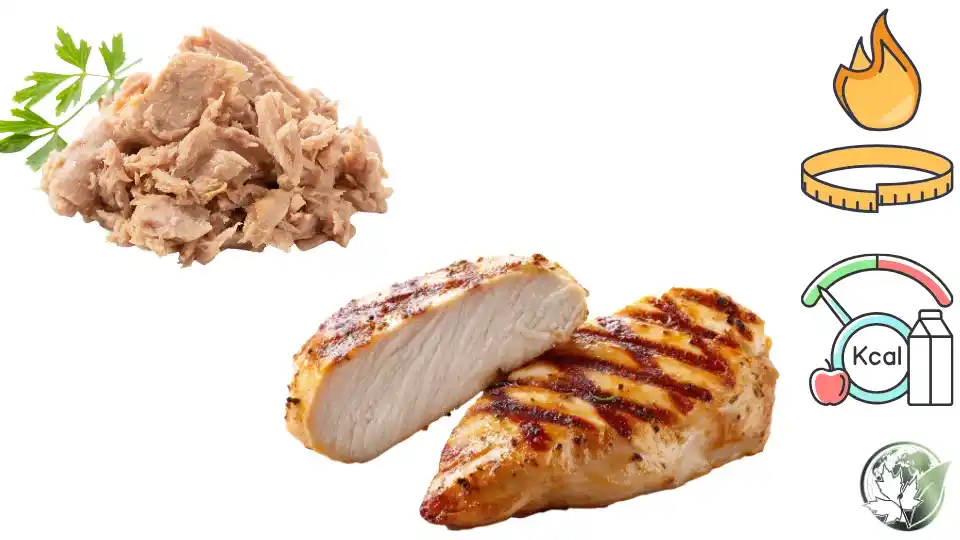
Canned tuna in water has about 116 calories per 100 grams drained
How Many Calories Are in Different Types of Canned Tuna?
The packing liquid, the species and whether the product is drained all change the numbers. These are typical values for drained tuna.
| Type of canned tuna | Per 100 g | Per 85 g serving | Protein per 100 g | Fat per 100 g |
|---|---|---|---|---|
| Light tuna in water | 116 kcal | 99 kcal | 25.5 g | 0.8 g |
| Albacore (white) in water | 128 kcal | 109 kcal | 23.6 g | 2.7 g |
| Light tuna in oil | 198 kcal | 168 kcal | 29.1 g | 8.2 g |
| Albacore in oil | 210 kcal | 179 kcal | 26.5 g | 12.0 g |
| Tuna in brine | 110 kcal | 94 kcal | 24 g | 0.6 g |
| Tuna in tomato sauce | 105 kcal | 89 kcal | 17 g | 3.5 g |
| Tuna with vegetables | 120 kcal | 102 kcal | 14 g | 5 g |
| Flavored pouch (lemon pepper) | 100 kcal | 85 kcal | 21 g | 1 g |
| Undrained, in oil | 280 kcal | 238 kcal | 20 g | 22 g |
The last row shows an important point: if you pour the oil into the dish and do not drain, the calories rise sharply. Draining tuna in oil removes some of the oil but not all, because the fish absorbs part of it. Rinsing tuna in water lowers the sodium without changing the calories.
How Many Calories Are in One Can of Tuna?
Cans come in many sizes, and the drained weight is usually 70 to 80 percent of the labeled weight. The table converts typical cans into calories.
| Can size | Drained weight | In water | In oil |
|---|---|---|---|
| Small can (80 g) | 60 g | 70 kcal | 119 kcal |
| Standard can (142 g, 5 oz) | 112 g | 130 kcal | 222 kcal |
| Medium can (160 g) | 125 g | 145 kcal | 248 kcal |
| Large can (185 g) | 140 g | 162 kcal | 277 kcal |
| Pouch (74 g) | 74 g | 85 kcal | none |
| Family can (400 g) | 310 g | 360 kcal | 614 kcal |
Because the numbers depend on the brand, read the label. Many brands print calories per serving of 56 or 85 grams, so check the serving size before comparing.
Canned Tuna vs Chicken Breast: Calories and Nutrition Compared
Both are staple lean proteins. The table compares tuna in water, tuna in oil and cooked chicken breast per 100 grams.
| Per 100 g | Tuna in water | Tuna in oil | Chicken breast, cooked |
|---|---|---|---|
| Calories | 116 kcal | 198 kcal | 165 kcal |
| Protein | 25.5 g | 29.1 g | 31 g |
| Fat | 0.8 g | 8.2 g | 3.6 g |
| Saturated fat | 0.2 g | 1.3 g | 1.0 g |
| Cholesterol | 30 mg | 26 mg | 85 mg |
| Sodium | 247 mg | 354 mg | 74 mg |
| Omega-3 (EPA + DHA) | 0.2 g | 0.3 g | 0.03 g |
| Selenium | 80 mcg | 76 mcg | 27 mcg |
| Vitamin D | 1.7 mcg | 5.0 mcg | 0.1 mcg |
| Iron | 1.4 mg | 1.2 mg | 1.0 mg |
| Per typical serving | 1 can tuna in water (112 g) | 1 can tuna in oil (112 g) | 1 chicken breast (120 g, cooked) |
|---|---|---|---|
| Calories | 130 kcal | 222 kcal | 198 kcal |
| Protein | 28.6 g | 32.6 g | 37 g |
| Fat | 0.9 g | 9.2 g | 4.3 g |
Tuna in water is the leanest choice per calorie. Chicken breast provides more protein per portion because breasts are larger, and it has much less sodium. Tuna offers omega-3 fats, vitamin D and selenium that chicken does not. Tuna in oil is higher in calories and fat, but those are mostly unsaturated, and the oil can be olive oil, which adds flavor.
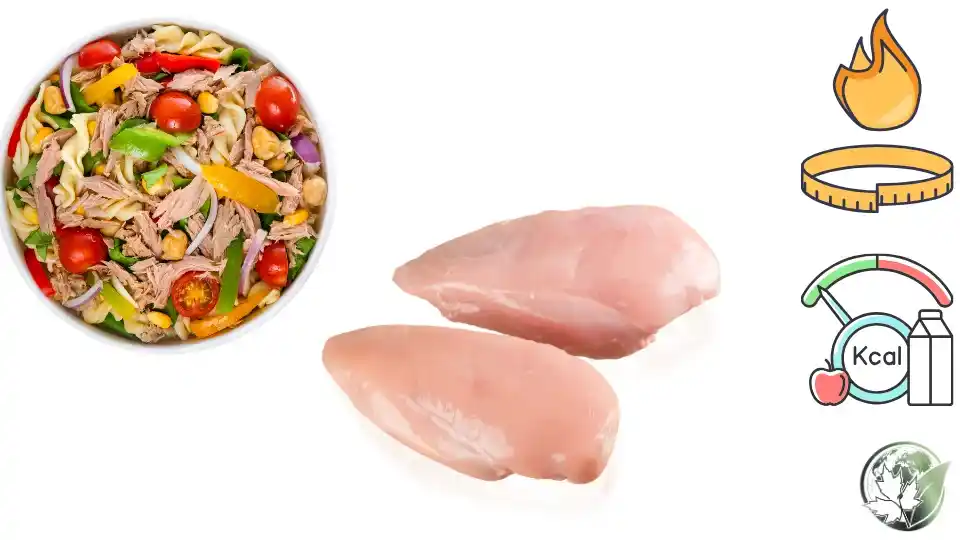
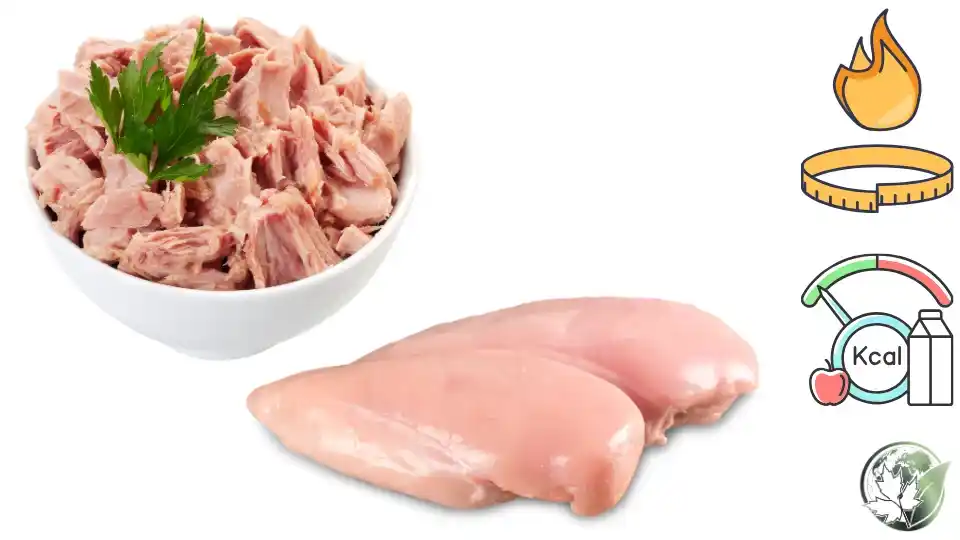
Tuna in water and chicken breast are both lean proteins, with tuna lower in calories per 100 grams
Which Has More Protein per Calorie: Tuna or Chicken?
Protein per calorie is a useful measure for people who want to build muscle or lose fat without hunger. The numbers are close but tuna in water leads.
| Food | Calories per 100 g | Protein per 100 g | Protein per 100 calories |
|---|---|---|---|
| Tuna in water | 116 kcal | 25.5 g | 22.0 g |
| Chicken breast, cooked | 165 kcal | 31.0 g | 18.8 g |
| Tuna in oil | 198 kcal | 29.1 g | 14.7 g |
| Turkey breast, cooked | 135 kcal | 30 g | 22.2 g |
| Egg white | 52 kcal | 10.9 g | 21.0 g |
| Salmon, cooked | 206 kcal | 22 g | 10.7 g |
| Lean beef, cooked | 217 kcal | 26 g | 12.0 g |
Tuna in water is among the best protein sources per calorie. A can of tuna in water offers 28 grams of protein for 130 calories, which is hard to beat for convenience. Chicken breast has the benefit of being easy to cook in many ways and being lower in sodium.
How Do the Fats Differ: Omega-3 in Tuna vs Chicken?
Fatty fish are the main dietary source of EPA and DHA, the long-chain omega-3 fats linked with heart and brain health. Canned light tuna has less omega-3 than salmon, with about 0.2 grams per 100 grams, and albacore has more, at about 0.7 grams per 100 grams. Chicken breast has almost none.
Health authorities recommend eating fish twice a week, with at least one portion of oily fish. A can of albacore tuna per week contributes meaningfully to that target. Tuna in olive oil adds monounsaturated fat, but the oil in sunflower or soybean varieties adds mostly omega-6, which most diets already have in excess.
Chicken breast is a low-fat food, with most of its fat in the skin. If you eat chicken with the skin, calories rise to about 197 per 100 grams cooked and fat to 8 grams. Removing the skin before eating reduces calories by about 20 percent.
How Much Sodium Is in Canned Tuna Compared With Chicken?
Sodium is the main nutritional drawback of canned fish. A standard can of tuna in water has 250 to 400 milligrams of sodium per 100 grams, which is 10 to 17 percent of the daily limit of 2,300 milligrams. Chicken breast has about 74 milligrams per 100 grams, unless it has been brined or seasoned.
Low-sodium tuna, labeled "no salt added," has about 50 milligrams per 100 grams. Draining and rinsing regular tuna removes up to 25 percent of the sodium. If you eat canned tuna often or have high blood pressure, choose low-sodium cans and balance salty items elsewhere in the meal.
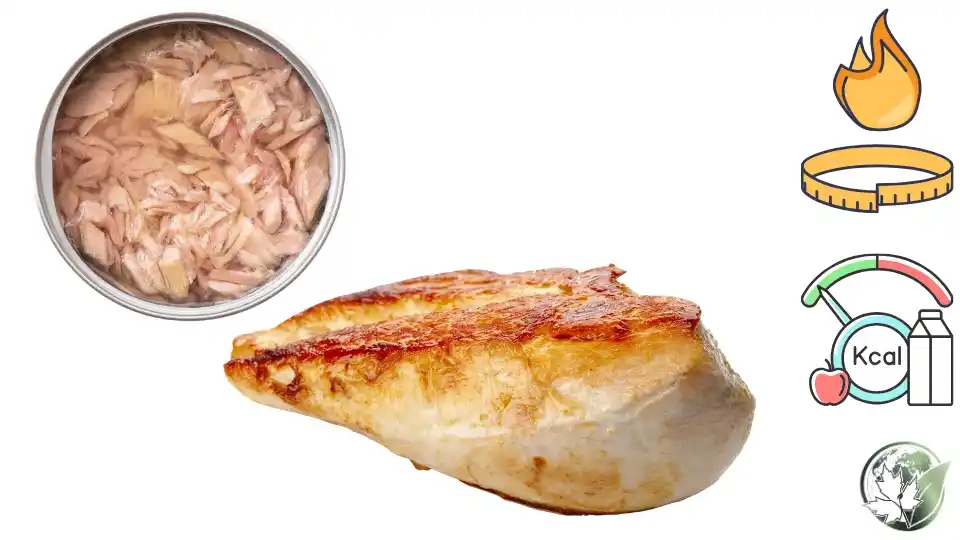
Draining and rinsing canned tuna removes some sodium without changing the calories
How Many Calories Are in a Tuna Sandwich or Salad?
Tuna itself is lean, and the extras decide the total. A traditional tuna salad with mayonnaise has more than twice the calories of plain tuna.
| Tuna dish | Serving | Calories |
|---|---|---|
| Tuna, plain, in water | 1 can | 130 kcal |
| Tuna salad with mayonnaise | 1/2 cup | 190 kcal |
| Tuna salad with Greek yogurt | 1/2 cup | 130 kcal |
| Tuna sandwich with mayo | 1 sandwich | 350 kcal |
| Tuna melt | 1 sandwich | 480 kcal |
| Tuna and bean salad | 1 cup | 260 kcal |
| Tuna pasta salad | 1 cup | 330 kcal |
| Tuna sushi roll | 6 pieces | 180 kcal |
| Tuna casserole | 1 cup | 380 kcal |
Compare that with chicken: a chicken breast sandwich with mayo has about 400 calories, and a grilled chicken salad with dressing about 350. Swapping mayonnaise for plain yogurt, mustard or mashed avocado saves 60 to 80 calories per serving.
Is Mercury in Canned Tuna a Concern?
Tuna, like other large predatory fish, contains methylmercury. Light tuna, mostly skipjack, has lower levels, about 0.12 parts per million, while albacore has about 0.35 and bigeye or yellowfin can be higher. Guidelines in many countries suggest that adults can eat two to three servings of light tuna a week, and one serving of albacore, with pregnant people and children advised to limit intake further.
Chicken contains no mercury. If you eat tuna often, alternate with other fish and sources of protein. Choose light or skipjack tuna more often than albacore, and check local health agency guidance. Small amounts of tuna a few times a week fit within most guidelines, and the benefits of fish generally outweigh the risk for most adults.
Which Is More Affordable: Canned Tuna or Chicken Breast?
Price varies by region, but both are budget protein sources. A can of tuna in water providing 28 grams of protein often costs less than a chicken breast with 37 grams, and it needs no cooking, refrigeration or preparation. Chicken breast is cheaper in bulk and can be cooked in large batches and frozen. For meal prep, a mixture of both gives variety and controls cost.
Canned tuna has a shelf life of two to five years, making it a convenient emergency staple. For retailers and importers, can integrity, lining, packing liquid, species labeling and sustainable fishing certification are main quality points to check.
How to Choose the Best Canned Tuna
Look at the ingredient list. Good tuna should contain fish, water or oil and salt, with no flavor enhancers. Check the species, which should be listed as skipjack, yellowfin or albacore, and look for sustainable fishing certification such as pole-and-line or MSC labels. Solid or fillet tuna is firmer and better for salads, while chunk tuna is cheaper and suits sandwiches and casseroles.
Choose tuna in water when your priority is calories, and tuna in olive oil when you want flavor and are willing to use the extra 80 calories. Pouches are convenient and have no liquid to drain, with about 100 calories per 74 gram pouch. Avoid damaged or bulging cans.
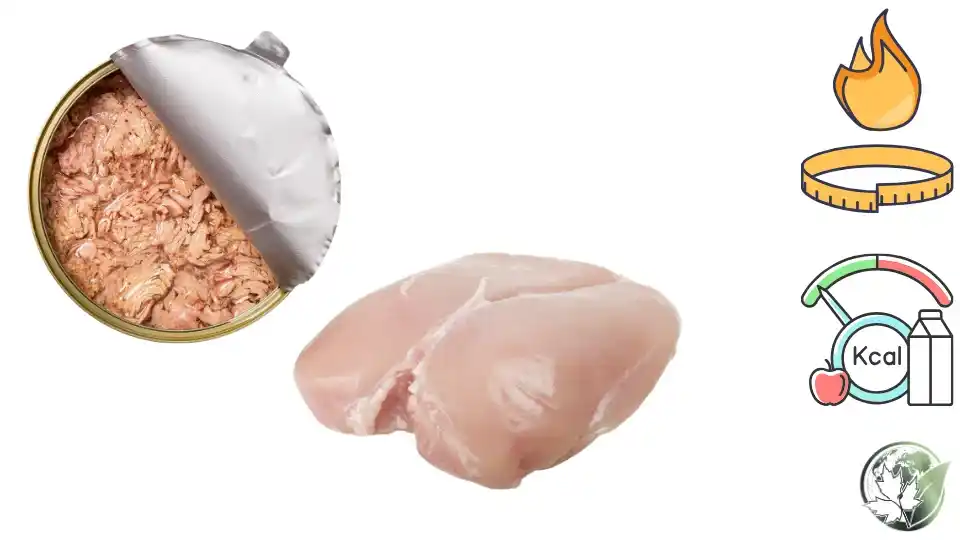
Cans and pouches of tuna differ in calories mainly because of the packing liquid
How to Include Tuna and Chicken in a Balanced Week
A sensible plan alternates sources of protein to get a mix of nutrients. For example, eat tuna twice a week for omega-3 and selenium, chicken three times for lean protein, and fill the other days with eggs, beans, dairy, lentils and other fish. Combine them with vegetables, whole grains and healthy fats so that meals are complete.
For weight loss, a lunch of a can of tuna in water, a large salad and a slice of whole grain bread comes to about 300 calories with 35 grams of protein. A dinner of 120 grams of grilled chicken breast, rice and vegetables is about 450 calories with 42 grams of protein. Together they leave room for breakfast and snacks within a 1,500 to 1,800 calorie plan.
How to Count Calories for Tuna and Chicken Accurately
Weigh tuna after draining, and use 116 calories per 100 grams for water-packed light tuna or 198 for oil-packed. For chicken, weigh the breast cooked and use 165 per 100 grams, or weigh raw and use 120 per 100 grams, because chicken loses about 25 percent of its weight in cooking. Mixing up raw and cooked weights is the most common mistake. If you add oil in cooking, count it at 119 calories per tablespoon.
Why Does Tuna in Oil Have So Many More Calories Than Tuna in Water?
The difference is the oil. Fat has 9 calories per gram, and the fish absorbs part of the packing oil during canning. A drained can of tuna in oil contains about 8 grams of fat per 100 grams, versus under 1 gram in water-packed tuna. That extra 7 grams of fat is worth about 63 calories, and the rest of the difference comes from the fact that oil-packed fish loses less water and is a little denser in protein.
The type of oil also matters. Olive oil adds mostly monounsaturated fat and a pleasant flavor. Sunflower or soybean oil adds mostly polyunsaturated omega-6 fat. If you do not drain the can, a tablespoon of oil adds about 119 calories to your meal. Water-soluble nutrients such as some B vitamins stay in water-packed fish only if you do not drain the liquid, and the omega-3 fats stay in the fish itself. Draining water-packed tuna removes sodium and a small amount of protein but does not significantly change calories.
How Can You Make Tuna and Chicken Meals Without Extra Calories?
Both proteins are very low in fat, so the cooking method is the main source of added calories. These are practical approaches.
Use Greek yogurt, mustard or lemon juice in tuna salad in place of mayonnaise.
Bake, grill or poach chicken breast instead of frying it.
Marinate chicken in lemon, garlic and herbs, which add flavor without fat.
Stir tuna into a bean and vegetable salad with a light vinaigrette.
Use lettuce leaves, cucumber slices or whole grain wraps in place of white bread.
Measure oil with a spoon, not by pouring from the bottle.
A tuna salad bowl with a can of tuna, cucumber, tomato, a tablespoon of olive oil and lemon comes to about 240 calories with 30 grams of protein. A chicken bowl made with 120 grams of chicken breast, quinoa, roasted vegetables and a spoon of tahini sauce is about 450 calories with 42 grams of protein.
How Do Tuna and Chicken Fit Different Diets?
On a high-protein diet, both foods are staples. For low-carbohydrate or ketogenic diets, tuna in olive oil fits well because of the extra fat, and chicken thighs with skin are often chosen over breasts. For the Mediterranean diet, fish appears several times a week, with chicken in moderate amounts. For muscle gain, chicken breast is easier to eat in larger quantities because it is milder and can be seasoned in many ways.
People watching sodium, such as those with high blood pressure, should favor fresh chicken and low-sodium tuna. People who are pregnant should follow advice on mercury and limit tuna accordingly. Those with gout may be advised to limit tuna and some other seafood, because of purine content, while chicken breast has moderate purines. When in doubt, ask a registered dietitian for advice tailored to you.
What Is the Best Time to Eat Tuna or Chicken?
Protein is helpful at every meal. Research suggests that spreading protein over the day, with 25 to 35 grams per meal, supports muscle maintenance better than eating most of it at dinner. A tuna and egg breakfast bowl, a chicken wrap at lunch and a fish or chicken dinner would meet this goal. After workouts, either food supplies the amino acids needed for recovery, and pairing them with carbohydrate such as rice or fruit helps restore glycogen.
How Do You Store Opened Cans and Cooked Chicken Safely?
Once a can of tuna is opened, transfer the contents to a glass or plastic container with a lid, refrigerate and eat within two days. Do not store opened fish in the metal can. Cooked chicken breast should be cooled within two hours and kept refrigerated for three to four days, or frozen for up to four months. Reheat to an internal temperature of 74 degrees Celsius. Following these steps protects flavor and prevents foodborne illness, and it makes weekly meal prep with both proteins simple and safe.
Whichever protein you choose, check the label for added ingredients, weigh portions and keep sauces light, because these small habits decide the real calories of your meal far more than the choice between tuna and chicken.
Key Takeaways: Canned Tuna Calories vs Chicken Breast
Canned tuna in water has about 116 calories per 100 grams, lower than cooked chicken breast at 165, while tuna in oil has about 198. A can in water has about 130 calories and 28 grams of protein. Tuna brings omega-3, vitamin D and selenium, while chicken has less sodium. Choose water-packed tuna for the fewest calories, and watch mayonnaise, oil and sodium.
Frequently Asked Questions
9 questions answered
How many calories are in a can of tuna?
A standard can of tuna in water has about 130 calories drained, and a can in oil has about 220.
How many calories are in 100 grams of tuna?
One hundred grams of drained tuna in water has about 116 calories, and in oil about 198.
Does tuna have fewer calories than chicken breast?
Tuna in water does: about 116 calories per 100 grams versus 165 for cooked chicken breast. Tuna in oil has more, about 198.
Which has more protein, tuna or chicken?
Per 100 grams, chicken breast has about 31 grams and tuna in water about 25.5 grams. Per calorie, tuna in water has more.
Is canned tuna good for weight loss?
Yes, tuna in water is low in calories and high in protein, but watch mayonnaise and sodium.
How many calories are in tuna with mayo?
A half cup of tuna salad with mayonnaise has about 190 calories, compared with about 130 using Greek yogurt.
Should I drain tuna in oil?
Draining removes some of the oil and calories, but the fish still keeps part of it. Undrained tuna in oil can have around 280 calories per 100 grams.
How often can I eat canned tuna?
Two to three servings a week of light tuna is generally considered safe for adults, with albacore limited to about one serving a week.
Is canned tuna high in sodium?
It can be, around 250 to 400 mg per 100 grams. Choose low-sodium cans or rinse the tuna.