Cake vs Milk Chocolate Calories at a Glance
Cake and milk chocolate are two of the most popular sweet treats, and their calories are closer than most people expect. A typical slice of plain sponge cake weighing 70 grams has about 260 calories, while a standard 43 gram bar of milk chocolate has about 230. Per 100 grams, cake has about 370 calories and milk chocolate about 535, so chocolate is denser, but a slice of cake is a larger portion, which brings the totals together.
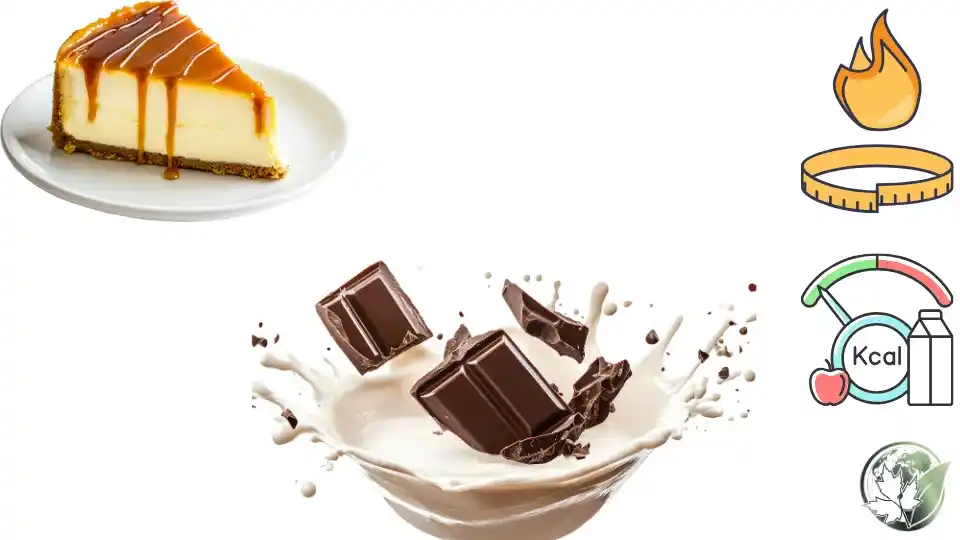
The result changes with the type of cake. A slice of frosted chocolate cake can reach 350 to 450 calories, a slice of cheesecake 400 or more and a light angel food slice only 130. Milk chocolate is more consistent, since the product is similar everywhere, and the only question is how many squares you eat.
This guide compares cake and milk chocolate per slice, per piece, per 100 grams and per 100 calories, and shows how sugar, fat and protein differ. You will learn how many squares of chocolate equal a slice of cake, which types of cake are lighter and how to enjoy dessert without losing track of calories. It includes three comparison tables and an FAQ.
A slice of plain sponge cake has about 260 calories
How Many Calories Are in a Slice of Cake?
The calories in cake depend on the recipe, especially the amount of butter, sugar and frosting. A plain sponge cake is made from flour, sugar, eggs and a little fat, and has about 370 calories per 100 grams. Butter cakes, chocolate cakes and cakes with cream are richer.
| Cake type | Typical slice | Calories | Sugar | Fat |
|---|---|---|---|---|
| Angel food cake | 50 g | 130 kcal | 21 g | 0.1 g |
| Plain sponge cake | 70 g | 260 kcal | 22 g | 8 g |
| Pound cake | 80 g | 310 kcal | 20 g | 16 g |
| Carrot cake with cream cheese frosting | 110 g | 420 kcal | 36 g | 22 g |
| Chocolate cake with frosting | 100 g | 380 kcal | 38 g | 17 g |
| Cheesecake | 125 g | 400 kcal | 25 g | 28 g |
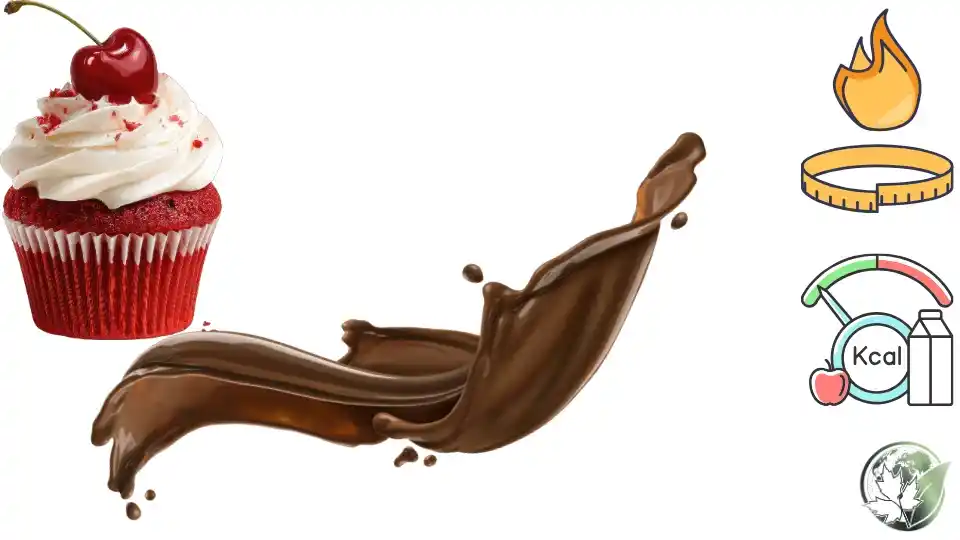
| Red velvet cake | 110 g | 400 kcal | 38 g | 20 g |
| Cupcake with frosting | 75 g | 290 kcal | 30 g | 13 g |
| Fruit cake, dense | 60 g | 190 kcal | 28 g | 4 g |
The calorie range is wide, from 130 to over 450 per slice. Frosting, filling and a thick slice raise the number quickly. A bakery slice is often 120 to 150 grams, nearly twice the size of the reference slice, so a real portion may be 500 calories or more.
How Many Calories Are in Milk Chocolate?
Milk chocolate is made of cocoa butter, sugar and milk powder, and has about 535 calories per 100 grams. A standard bar weighs 43 grams, which is the serving size used on many labels in the United States.
| Chocolate portion | Weight | Calories | Sugar | Fat |
|---|---|---|---|---|
| 1 square | 10 g | 54 kcal | 5.2 g | 3.0 g |
| 1 fun-size bar | 17 g | 91 kcal | 8.8 g | 5.1 g |
| 4 squares | 40 g | 214 kcal | 21 g | 12 g |
| Standard bar | 43 g | 230 kcal | 22 g | 13 g |
| King-size bar | 70 g | 375 kcal | 36 g | 21 g |
| Large bar | 100 g | 535 kcal | 52 g | 30 g |
One square has about 54 calories, which makes chocolate easy to portion. Cake, by contrast, is cut by eye, and slices vary widely.
Cake vs Milk Chocolate: Calories per 100 g and per Serving
When both foods are compared by weight and by typical serving, you can see where each one is lighter or heavier.
| Per 100 g | Plain sponge cake | Chocolate cake with frosting | Milk chocolate |
|---|---|---|---|
| Calories | 370 kcal | 380 kcal | 535 kcal |
| Fat | 11 g | 17 g | 30 g |
| Saturated fat | 3 g | 5 g | 18 g |
| Carbohydrate | 60 g | 55 g | 59 g |
| Sugar | 32 g | 38 g | 52 g |
| Protein | 5 g | 4 g | 7.7 g |
| Fiber | 1 g | 2 g | 3.4 g |
| Sodium | 300 mg | 290 mg | 79 mg |
| Typical serving | Sponge slice (70 g) | Chocolate cake slice (100 g) | Chocolate bar (43 g) |
|---|---|---|---|
| Calories | 260 kcal | 380 kcal | 230 kcal |
| Sugar | 22 g | 38 g | 22 g |
| Saturated fat | 2 g | 5 g | 7.7 g |
Per gram, cake has about 30 percent fewer calories than milk chocolate, because it contains more water and starch and less fat. Per serving, a plain slice has slightly more calories than a standard chocolate bar, and a frosted slice has about 65 percent more.
Notice also that milk chocolate has much more saturated fat per serving, about 7.7 grams in a bar compared with 2 grams in a plain sponge slice. Cakes with butter cream or cream cheese frosting close the gap.
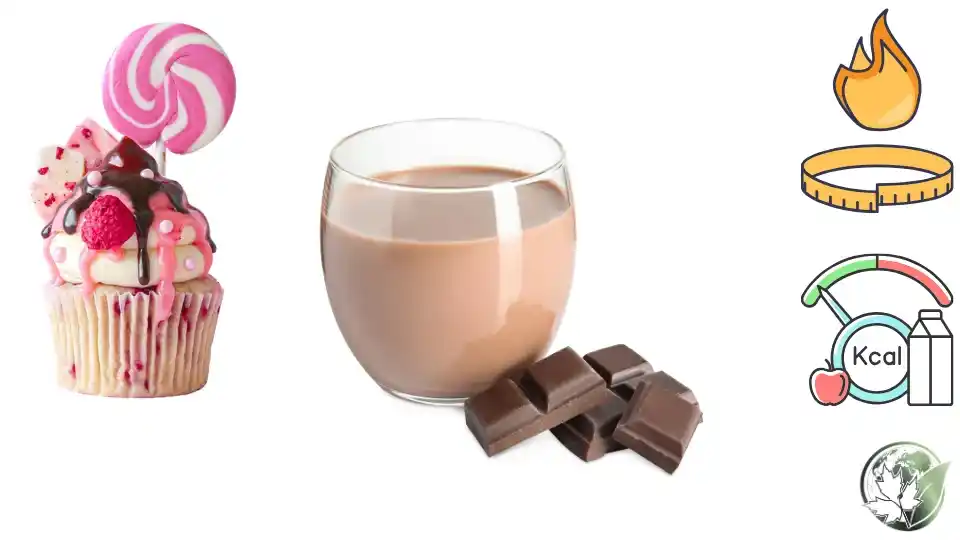
A frosted chocolate cake slice has about 380 calories, about 65 percent more than a standard milk chocolate bar
How Many Squares of Chocolate Equal a Slice of Cake?
Converting cake into squares of chocolate helps you picture the energy. One square has 54 calories, so a slice of sponge cake at 260 calories equals about five squares, which is half a bar. A slice of cheesecake at 400 calories equals about seven and a half squares.
| Cake slice | Calories | Equal squares of milk chocolate (54 kcal) | Equal 43 g bars |
|---|---|---|---|
| Angel food slice | 130 kcal | 2.4 squares | 0.6 bar |
| Plain sponge slice | 260 kcal | 4.8 squares | 1.1 bars |
| Cupcake with frosting | 290 kcal | 5.4 squares | 1.3 bars |
| Chocolate cake slice | 380 kcal | 7.0 squares | 1.7 bars |
| Cheesecake slice | 400 kcal | 7.4 squares | 1.7 bars |
| Bakery slice (150 g) | 560 kcal | 10.4 squares | 2.4 bars |
This view helps when you are deciding between desserts. If you want only a small sweet bite, two squares of chocolate at about 108 calories cost less than one third of a slice of cake. If you want a satisfying plate, a small slice of angel food cake with berries may give more volume for the same energy.
How Do 100 Calories of Cake and Chocolate Compare?
What 100 calories looks like helps you judge which one feels like more food. One hundred calories of plain sponge cake is about 27 grams, a thin slice or a small cube. One hundred calories of milk chocolate is about 19 grams, which is two squares.
| 100 calorie portion | Weight | Sugar | Fat |
|---|---|---|---|
| Plain sponge cake | 27 g | 8.6 g | 3.0 g |
| Chocolate cake with frosting | 26 g | 10 g | 4.5 g |
| Angel food cake | 77 g | 12.6 g | 0.1 g |
| Cheesecake | 31 g | 6 g | 7 g |
| Milk chocolate | 19 g | 9.7 g | 5.6 g |
| Dark chocolate 70 percent | 17 g | 4.1 g | 7.3 g |
Angel food cake wins the volume contest, because its egg-white base contains almost no fat. A 77 gram slice with fruit is an easy 100 calorie dessert. At the other extreme, cheesecake and chocolate are small for 100 calories, since they are mostly fat.
How Do Frosting, Filling and Toppings Change Cake Calories?
Frosting is often responsible for a third of a cake's energy. Different toppings add very different amounts.
Buttercream frosting, 2 tablespoons: about 140 calories
Cream cheese frosting, 2 tablespoons: about 100 calories
Whipped cream, 2 tablespoons: about 50 calories
Chocolate ganache, 2 tablespoons: about 130 calories
Fondant, 2 tablespoons: about 90 calories
Powdered sugar dusting, 1 teaspoon: about 10 calories
Fresh berries, 1/4 cup: about 20 calories
Jam filling, 1 tablespoon: about 50 calories
A plain slice with berries and a spoon of whipped cream totals about 330 calories, while the same slice with a thick layer of buttercream and a drizzle of chocolate reaches 450. When you are watching calories, choose cakes with simple toppings, and share the slice with a friend if the frosting is rich.
Is Cake or Milk Chocolate Easier to Overeat?
Portion control is different for each. Chocolate comes in squares and bars, and the wrapper provides a natural stopping point. Cake is cut in a way that depends on the host, the bakery or the situation. At celebrations, a second slice is common, and large slices may be 150 grams or more.
Cake is also moist and soft, which can lead to fast eating, while chocolate melts slowly and has an intense flavor that satisfies in small amounts. Many people find that two squares of good chocolate feel like a complete treat, while a slice of cake feels more like a meal. In practical terms, if you want to limit calories, decide the portion before you start, and eat dessert slowly after a meal rather than as a snack on an empty stomach.
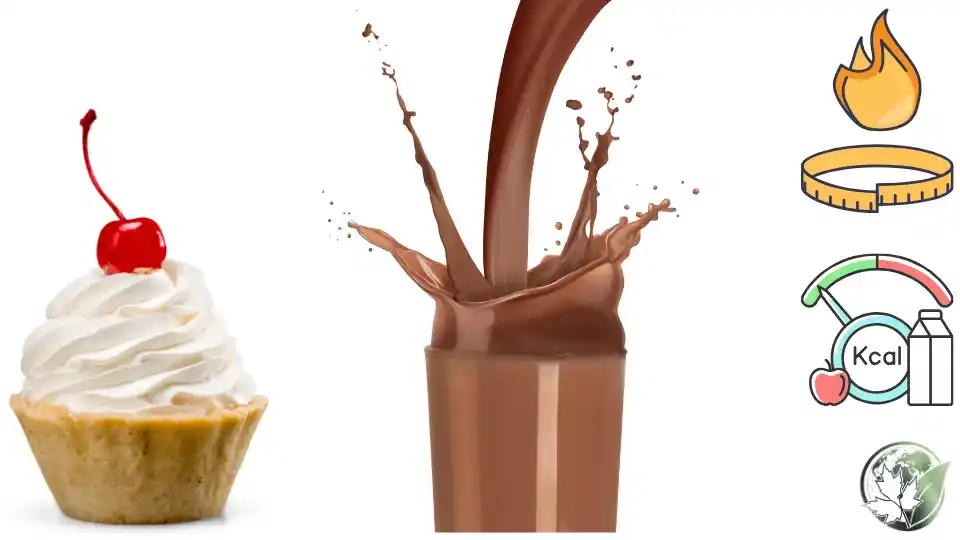
A smaller slice with fresh berries keeps dessert closer to 200 calories
How to Choose a Lighter Cake
Not all cakes are heavy. Choose by looking at the ingredients and the method.
**Angel food and chiffon cakes:** Made with whipped egg whites and little or no fat.
**Fruit-based cakes:** Apple, banana or pumpkin cakes can use puree to replace some butter.
**Smaller slices:** A 50 gram slice has about 185 calories for sponge.
**Open-crumb cakes with fruit toppings:** Less dense, so you eat less by weight.
**No frosting or a light glaze:** A glaze of lemon and powdered sugar adds about 30 calories.
When baking at home, you can replace up to half of the butter with applesauce or yogurt and reduce the sugar by one quarter without much change in texture. Each tablespoon of butter replaced with applesauce saves about 90 calories in the recipe.
How to Choose Better Milk Chocolate
Look for higher cocoa content and a shorter ingredient list. Cocoa butter should be the main fat, and sugar should not be listed first. A milk chocolate with 40 percent cocoa has a stronger flavor and often satisfies you with a smaller portion. If you enjoy dark chocolate, 70 percent cocoa has about 598 calories per 100 grams, but much less sugar, and two squares of 20 grams has about 120 calories.
Read serving sizes carefully. A "serving" may be 4 squares, 40 grams, or 214 calories. If you plan on eating two squares, divide the numbers by two. Check bars with fillings like caramel, nougat or wafers, which add calories and sugar.
How Do Cake and Chocolate Fit in a Balanced Diet?
Dietary guidelines suggest limiting added sugar to less than 10 percent of daily calories, which is about 50 grams for a 2000 calorie diet. A slice of frosted chocolate cake with 38 grams of sugar uses about three quarters of this, and a standard chocolate bar with 22 grams uses almost half. Both foods can be part of a healthy pattern if they are occasional and the rest of the day is rich in vegetables, whole grains, lean proteins and fruits.
A practical approach is the 80/20 rule: aim to eat nutritious foods 80 percent of the time and allow flexibility for treats the other 20 percent. For someone eating 2000 calories, that leaves about 400 calories for treats, such as a slice of cake and two squares of chocolate. Planning treats for specific occasions makes them more enjoyable and less likely to become daily habits.
How to Store Cake and Chocolate
Plain cakes keep at room temperature for two to three days in an airtight container. Cakes with cream, custard or cheese frosting should be refrigerated and eaten within three to four days. Slices can be wrapped and frozen for up to three months, which helps portion control because you can take out one slice at a time.
Chocolate keeps for up to a year when stored at 15 to 18 degrees Celsius, wrapped and dry. Avoid the refrigerator unless the weather is hot, as it may cause condensation and sugar bloom. For importers and retailers, temperature control is more critical for chocolate, while cake requires attention to freshness and shelf life.
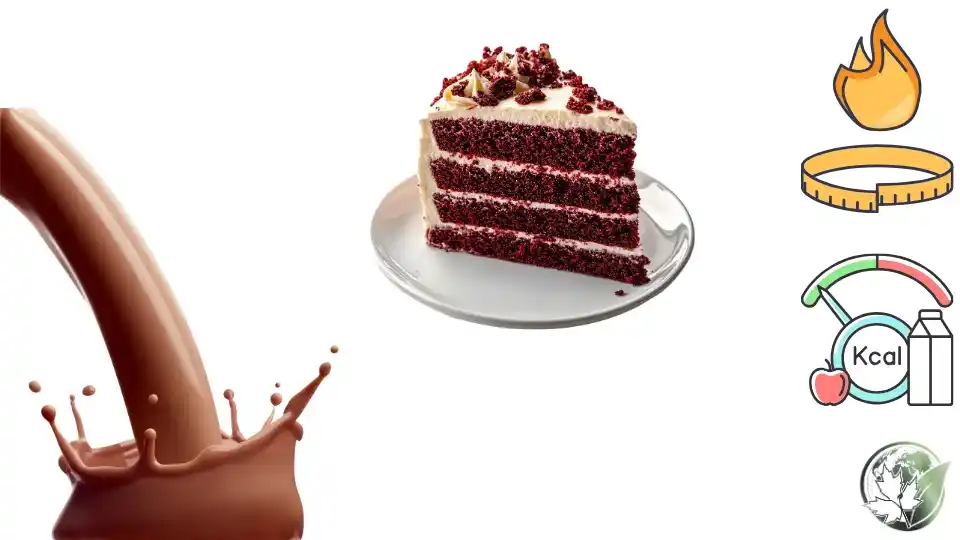
Breaking chocolate into squares makes it easy to count 54 calories at a time
Why Does Cake Have Fewer Calories per Gram Than Chocolate?
The difference comes from water and fat. A baked sponge cake is about 25 to 30 percent water, because the batter holds moisture during baking, and the crumb is full of air pockets. Milk chocolate contains less than 2 percent water and about 30 percent fat. Since fat provides 9 calories per gram and carbohydrate 4, a food that is nearly one third fat will always be denser in energy than one that is mostly starch and sugar with water and air.
This explains why cake feels like a bigger portion for similar calories. A 70 gram slice looks large on a plate, while the 43 gram chocolate bar fits in the palm. When you compare weight, chocolate is the concentrated food, and cake is the bulky one. If you want to feel satisfied by volume, a light cake gives more food per calorie. If you want a small intense treat, chocolate delivers flavor in a small, easily counted amount.
How Many Calories Are in Popular Cake Brands and Bakery Items?
Packaged cakes and bakery items follow the same pattern, but labels help you check exact numbers. Typical values are listed below.
| Item | Serving | Calories |
|---|---|---|
| Packaged sponge cake roll | 1 slice (35 g) | 130 kcal |
| Cream-filled snack cake | 1 piece (40 g) | 170 kcal |
| Bakery muffin, chocolate chip | 1 large (113 g) | 420 kcal |
| Brownie, with nuts | 1 square (60 g) | 260 kcal |
| Chocolate lava cake | 1 piece (115 g) | 450 kcal |
| Tiramisu | 1 slice (120 g) | 340 kcal |
| Birthday cake with buttercream | 1 slice (110 g) | 380 kcal |
| Mini cupcake | 1 piece (30 g) | 120 kcal |
Muffins and brownies are often sold as healthy or small, yet a large bakery muffin can have more calories than a slice of cake. Always check weight, not just the name of the product.
How Do You Calculate Calories for Homemade Cake?
To work out the calories of a homemade cake, add the calories of all ingredients and divide by the number of slices. A basic sponge cake made with 200 grams of flour (728 calories), 200 grams of sugar (774), 200 grams of butter (1,434), four eggs (286) and a little milk (30) totals about 3,250 calories. Cut into 12 slices, each slice has about 270 calories, close to the packaged value for sponge.
If you add frosting made from 150 grams of butter and 250 grams of powdered sugar, you add about 2,150 calories, which brings each slice to nearly 450. This shows that the frosting can account for more than a third of the cake's total energy. Weigh the finished cake and a slice to make a precise estimate for the portion you eat.
How Can You Enjoy Both Without Overdoing It?
A few habits make sweet treats more manageable. Eat dessert at the end of a meal when you are already partly full. Share a slice or split a bar with someone. Pair the sweet with protein or fiber, such as a glass of milk with cake or almonds with chocolate, to slow digestion. Avoid eating from large packages; place the portion on a plate. Finally, savor each bite, because attention to taste increases satisfaction and makes smaller portions feel enough.
How Do Cake and Chocolate Affect Blood Sugar and Energy?
Both foods contain fast-digesting sugar and refined starch, so they raise blood glucose within 30 to 60 minutes. Plain sponge cake has a glycemic index of about 46 to 54 and a high glycemic load for a typical slice, because it contains around 40 grams of carbohydrate. Milk chocolate has a glycemic index near 43 and a lower load per portion, since a 43 gram bar has about 25 grams of carbohydrate and its fat slows absorption.
After the quick rise, blood sugar may fall and cause hunger or tiredness, particularly if the sweet was eaten alone. Having it with a meal, or adding protein and fiber, reduces the spike. People with diabetes should count the carbohydrates in the portion and consider smaller servings, such as a thin slice of cake or two squares of chocolate, and follow their own care plan.
What Should You Check Before Buying Cake or Chocolate?
Check the serving size, the calories per 100 grams, the sugar content and the type of fat on every label. Avoid products that list hydrogenated oils, and watch for sweeteners such as glucose syrup that rank high in the ingredients. For cakes bought fresh, ask the weight of a slice. For chocolate, compare cocoa percentage and see whether the bar contains extra fillings. These few seconds of reading help you pick the product that fits your goals and gives the best flavor for the calories.
Key Takeaways: Cake vs Milk Chocolate Calories
A slice of plain cake has about 260 calories and a standard milk chocolate bar about 230. Per 100 grams, milk chocolate has more at 535 versus about 370 for cake, but slice sizes make cake higher per portion, especially with frosting. Chocolate has more saturated fat and sugar per gram, and light cakes such as angel food are far lower. Choose your portion deliberately, and either can fit.
Frequently Asked Questions
9 questions answered
How many calories are in a slice of cake?
A 70 gram slice of plain sponge cake has about 260 calories. Frosted chocolate cake has about 380 per slice, and cheesecake about 400.
How many calories are in a bar of milk chocolate?
A standard 43 gram milk chocolate bar has about 230 calories.
Which has more calories, cake or milk chocolate?
Per 100 grams, milk chocolate has more, about 535 compared with 370 for plain cake. Per typical serving, a slice of cake usually has about the same or more.
How many squares of chocolate equal a slice of cake?
A 260 calorie slice of sponge cake equals about five squares of milk chocolate at 54 calories each.
Which has more sugar, cake or chocolate?
Per 100 grams, milk chocolate has about 52 grams versus 32 for plain cake. Per typical serving, a frosted cake slice has about 38 grams, more than a chocolate bar's 22.
What is the lowest calorie cake?
Angel food cake, at about 130 calories per slice, is among the lightest.
Does frosting double the calories of a cake?
Not usually, but a thick layer of buttercream can add 100 to 200 calories per slice.
Is dark chocolate better than cake?
Dark chocolate has less sugar per gram and is eaten in smaller portions, so it often totals fewer calories, but it is still energy dense.
How can I eat cake without gaining weight?
Choose a small slice, skip extra frosting, eat it slowly after a balanced meal and count it in your daily total.