Butter vs Whole Milk Calories at a Glance
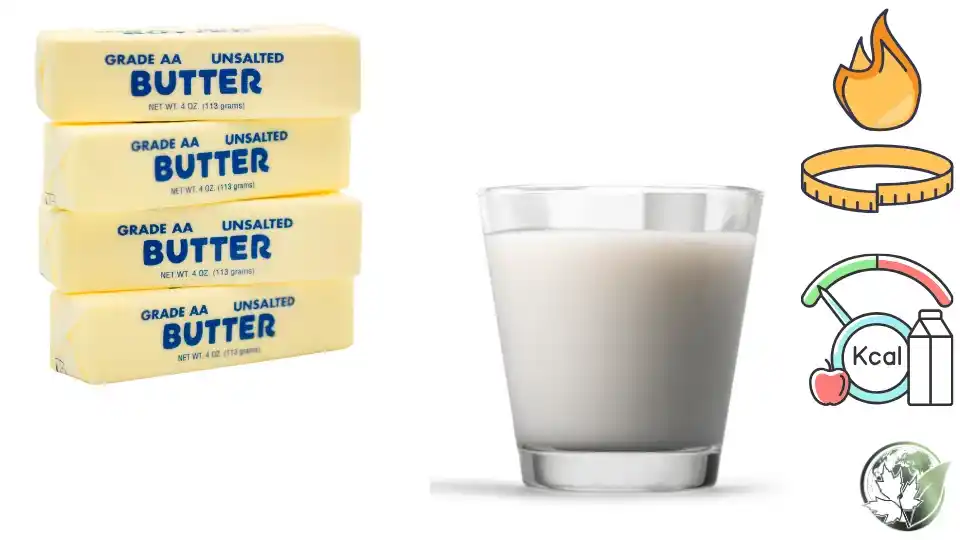
Butter is one of the most concentrated sources of calories in the kitchen, while whole milk is a lightweight drink by comparison. Per 100 grams, butter has about 717 calories and whole milk about 61. That makes butter nearly twelve times as dense as milk. Per household measure the gap narrows, because you eat butter by the teaspoon and drink milk by the cup: one tablespoon of butter (14 g) has about 102 calories, while one cup of whole milk (244 g) has about 149.
So the answer to "which has more calories" depends on the unit. Gram for gram, butter wins by a wide margin. Serving for serving, a cup of milk has about 1.5 times the calories of a tablespoon of butter, but a cup of milk also gives you 8 grams of protein, 276 milligrams of calcium and a feeling of fullness, while the butter provides almost no protein or calcium. Butter is nearly pure fat, and milk is mostly water.
This guide explains where these calories come from, how they compare in teaspoons, tablespoons, cups and 100 gram portions, and how fat types, protein, vitamins and cooking uses differ. It also covers how to estimate butter in recipes, what low-fat swaps are worth and how to keep dairy in a balanced diet. Three comparison tables and a full FAQ are included.
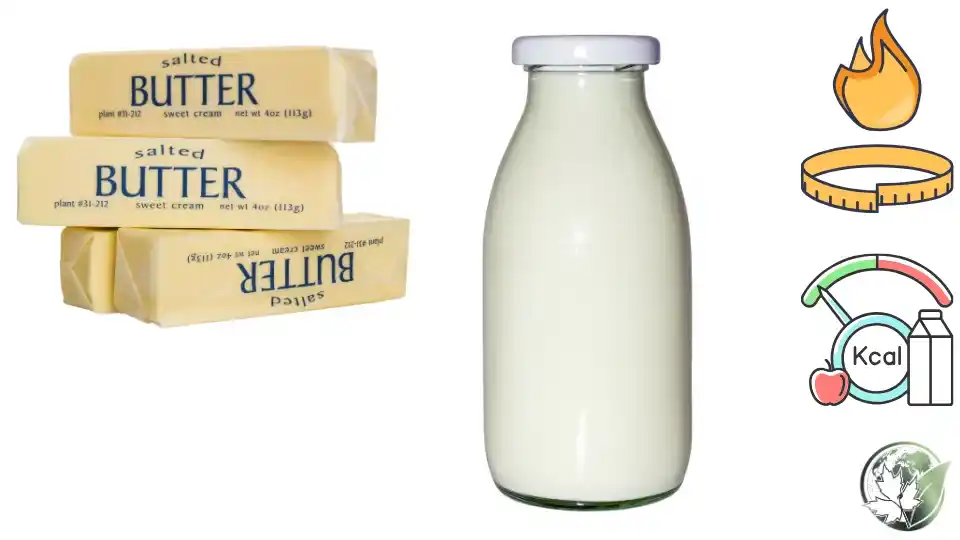
Butter is about 80 percent fat and provides 102 calories per tablespoon
How Many Calories Are in Butter?
Butter is made by churning cream until the fat separates from the liquid. Standard butter contains about 80 percent milk fat, 16 to 17 percent water and a small amount of milk solids. Because fat provides 9 calories per gram, butter is very energy dense.
| Butter measure | Weight | Calories | Fat |
|---|---|---|---|
| 1 teaspoon | 4.7 g | 34 kcal | 3.8 g |
| 1 tablespoon | 14 g | 102 kcal | 11.5 g |
| 1 pat (restaurant) | 5 g | 36 kcal | 4.1 g |
| 1 ounce | 28 g | 203 kcal | 23 g |
| 1/4 cup (half stick) | 57 g | 408 kcal | 46 g |
| 1 cup (2 sticks) | 227 g | 1,628 kcal | 184 g |
| 100 g | 100 g | 717 kcal | 81 g |
Salted and unsalted butter have almost identical calories. Clarified butter or ghee is slightly higher at about 900 calories per 100 grams, because the water has been removed. Whipped butter, which contains air, has fewer calories per tablespoon, about 67, but the same calories per gram.
How Many Calories Are in Whole Milk?
Whole milk contains about 3.25 percent fat, 3.4 percent protein and 4.8 percent lactose, with the rest water. The calories come from all three macronutrients, and they add up to about 61 calories per 100 grams or about 63 per 100 milliliters.
| Whole milk measure | Volume | Calories | Fat | Protein |
|---|---|---|---|---|
| 1 tablespoon | 15 ml | 9 kcal | 0.5 g | 0.5 g |
| 1/4 cup | 61 ml | 37 kcal | 2.0 g | 2.0 g |
| 1 small glass | 150 ml | 92 kcal | 4.9 g | 4.9 g |
| 1 cup | 244 ml | 149 kcal | 7.9 g | 7.7 g |
| 1 large glass | 350 ml | 214 kcal | 11.4 g | 11.1 g |
| 1 liter | 1,000 ml | 610 kcal | 32 g | 32 g |
| 100 ml | 100 ml | 63 kcal | 3.3 g | 3.2 g |
A glass of milk is a balanced food that provides energy, protein, calcium, potassium, vitamin B12 and vitamin D when fortified. Butter is a cooking fat.
Butter vs Whole Milk: Calories per 100 g and per Serving
The most direct comparison uses equal weights, and then typical servings.
| Per 100 g | Butter | Whole milk |
|---|---|---|
| Calories | 717 kcal | 61 kcal |
| Total fat | 81 g | 3.3 g |
| Saturated fat | 51 g | 1.9 g |
| Cholesterol | 215 mg | 10 mg |
| Carbohydrate | 0.1 g | 4.8 g |
| Protein | 0.9 g | 3.2 g |
| Calcium | 24 mg | 113 mg |
| Water | 16 g | 88 g |
| Per typical serving | 1 tbsp butter (14 g) | 1 cup milk (244 g) |
|---|---|---|
| Calories | 102 kcal | 149 kcal |
| Fat | 11.5 g | 7.9 g |
| Saturated fat | 7.3 g | 4.6 g |
| Protein | 0.1 g | 7.7 g |
| Calcium | 3 mg | 276 mg |
So butter is the concentrated, low-nutrient choice, and milk is the dilute, nutrient-rich one. A tablespoon of butter has more fat than a full cup of whole milk (11.5 g versus 7.9 g), which is a surprising comparison for many people.
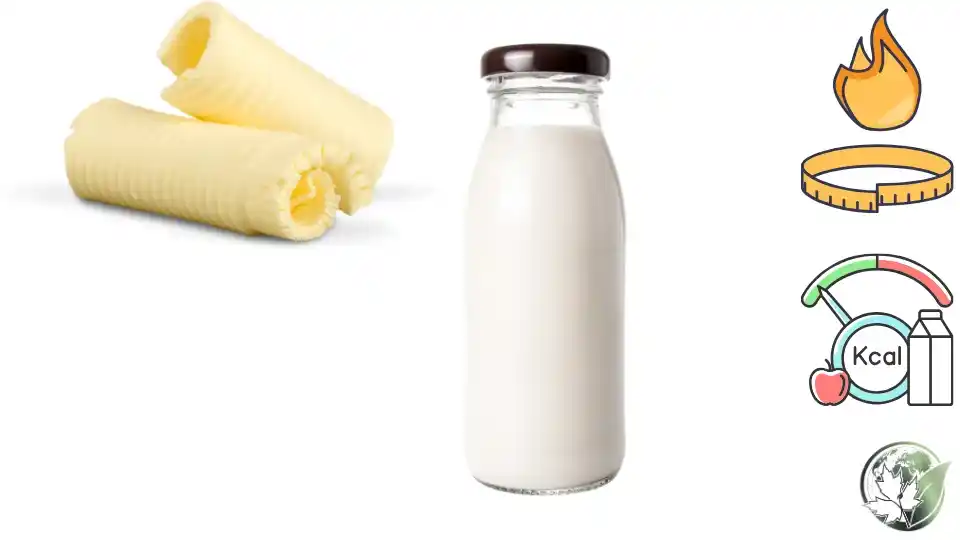
One tablespoon of butter has more fat than a whole cup of milk, but fewer calories
How Much Milk Equals One Tablespoon of Butter in Calories?
Because the calories per gram are so different, the equivalent portions look very different on a plate. A tablespoon of butter at 102 calories equals about 160 milliliters of whole milk, which is roughly two thirds of a cup. Half a cup of milk, 122 ml, is about 75 calories and equals about 10 grams of butter, or two teaspoons.
| Butter portion | Calories | Equal volume of whole milk |
|---|---|---|
| 1 teaspoon | 34 kcal | 54 ml |
| 1 tablespoon | 102 kcal | 162 ml |
| 2 tablespoons | 204 kcal | 324 ml |
| 1/4 cup | 408 kcal | 648 ml |
| 1 cup | 1,628 kcal | 2.6 liters |
Put simply, the butter you spread on two slices of toast, about two teaspoons, has the calories of 110 ml of milk. If you use a generous tablespoon on a baked potato, that is a small glass and a half of milk in energy terms.
How Do the Fats in Butter and Whole Milk Differ?
Both are dairy fats and both are high in saturated fat as a share of fat, around 62 percent. But the amount is very different. A tablespoon of butter provides 7.3 grams of saturated fat, which is about 33 percent of the 22 gram daily limit for a 2000 calorie diet. A cup of whole milk provides 4.6 grams, or 21 percent.
Dietary guidelines in many countries recommend keeping saturated fat below 10 percent of daily calories. For a 2000 calorie diet this equals about 22 grams. Four tablespoons of butter in cooking would consume almost all of it, while two cups of milk would use less than half.
Research on dairy fat is nuanced. Some studies suggest that fermented dairy and whole milk may be neutral for heart health, but butter intake has been more consistently linked to slightly higher LDL cholesterol compared with vegetable oils. Replacing butter with olive oil or other unsaturated fats is associated with better cardiovascular outcomes, though the evidence for milk is less clear.
How Do Protein, Calcium and Vitamins Compare?
Butter contains very little protein or calcium, but is a source of vitamin A and vitamin E. Whole milk supplies a wider range of nutrients.
| Nutrient | 1 tbsp butter | 1 cup whole milk |
|---|---|---|
| Vitamin A | 97 mcg (11 percent DV) | 112 mcg (12 percent DV) |
| Vitamin D | 0.1 mcg | 3.2 mcg (fortified) |
| Vitamin B12 | 0.02 mcg | 1.1 mcg (46 percent DV) |
| Riboflavin | 0.01 mg | 0.45 mg (35 percent DV) |
| Calcium | 3 mg | 276 mg (21 percent DV) |
| Potassium | 4 mg | 322 mg |
| Protein | 0.1 g | 7.7 g |
For 149 calories, milk delivers 11 nutrients in meaningful amounts. For 102 calories, butter delivers fat and flavor. That does not make butter bad, but it should be treated as a flavor ingredient, not a nutrient source.
How Many Calories Do You Add When You Cook With Butter?
The main calorie risk with butter is in cooking, where it is easy to add several tablespoons without measuring. Here are some common uses.
Pat of butter on toast: 36 to 70 calories
Butter to fry an egg: 34 to 68 calories
Buttered popcorn (2 tablespoons): 204 calories
Garlic bread, 1 slice: 80 to 100 calories from butter
Mashed potatoes with 2 tablespoons: 204 calories
Pan sauce with 3 tablespoons: 306 calories
Chocolate chip cookies, per cookie: about 25 calories from butter
When milk is used in cooking, the numbers are lower. A cup of milk in pancake batter adds 149 calories to the whole batch, about 25 calories per pancake. A white sauce with one cup of milk and two tablespoons of butter has 353 calories in total, and 204 of those come from the butter.
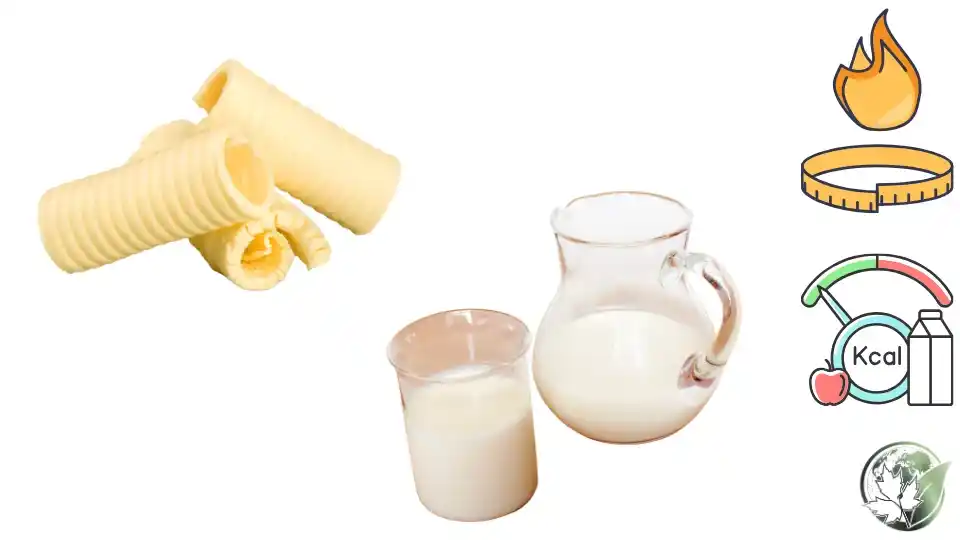
A single pat of melting butter adds about 36 calories to a pancake stack
Whole Milk vs Other Milks and Other Fats
Looking at alternatives helps put the numbers in context.
| Item | Serving | Calories |
|---|---|---|
| Whole milk | 1 cup | 149 kcal |
| 2 percent milk | 1 cup | 122 kcal |
| Skim milk | 1 cup | 83 kcal |
| Unsweetened almond milk | 1 cup | 39 kcal |
| Oat milk | 1 cup | 120 kcal |
| Butter | 1 tbsp | 102 kcal |
| Margarine | 1 tbsp | 101 kcal |
| Olive oil | 1 tbsp | 119 kcal |
| Light butter spread | 1 tbsp | 50 kcal |
| Coconut oil | 1 tbsp | 121 kcal |
All cooking fats have roughly 100 to 120 calories per tablespoon, so swapping butter for oil saves nothing in energy, but may change the type of fat. To genuinely reduce calories, use less fat overall, choose non-stick pans, spray oil or reduced-fat spreads.
How to Cut Calories Without Giving Up Butter
You do not need to remove butter to eat well. Use these strategies to cut calories while keeping flavor.
**Measure rather than guess.** A tablespoon is a level spoon, not a heap.
**Spread thin.** A visible film is enough on toast, about 1 teaspoon or 34 calories.
**Use butter at the end.** Finishing a dish with a small knob gives more flavor than cooking everything in it.
**Blend with oil.** Half butter, half olive oil cuts saturated fat while keeping taste.
**Use stock or milk to make sauces.** A splash of milk can replace part of the butter in mashed potatoes.
**Brown the butter.** Browned butter has a deeper flavor so you need less.
How to Choose and Store Butter and Milk
Good butter should have a clean, creamy smell and a pale yellow color. European-style butter has 82 to 86 percent fat and contains slightly less water, which gives richer flavor and slightly more calories per tablespoon, about 108. Unsalted butter lets you control salt in baking. Store butter in the refrigerator wrapped tightly, away from onions and other strong smells, for up to three months, or freeze it for up to nine.
Fresh milk should be kept at 4 degrees Celsius or below and consumed within a few days after opening. UHT (long-life) milk keeps unopened for several months at room temperature and has the same calories as fresh whole milk. Powdered whole milk has about 496 calories per 100 grams, but when reconstituted at the usual ratio the calories match liquid whole milk.
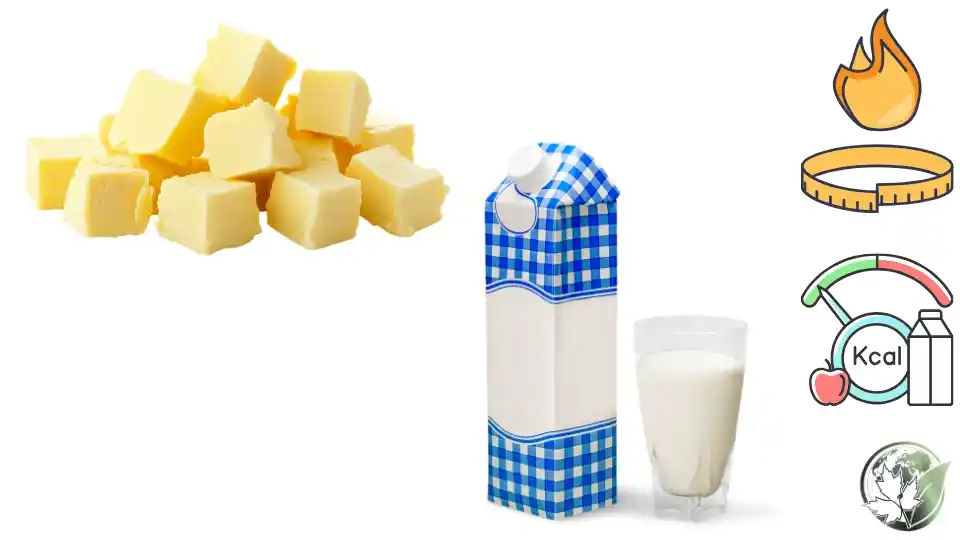
Whole milk and butter both come from dairy fat, but milk is mostly water and has only 61 calories per 100 grams
How Do Butter and Milk Fit Into Different Diets?
For weight management, milk is more filling per calorie because of protein and volume. A glass of milk before a meal may reduce total intake. Butter, being easy to overuse, is better measured. People who are active or underweight may use butter to add calories to meals, a tablespoon stirred into rice or vegetables adds 102 calories without adding much volume.
On a ketogenic or low-carbohydrate diet, butter is a staple because it has almost no carbohydrate, while whole milk is limited because of its 12 grams of lactose per cup. Lactose-intolerant people usually tolerate butter well, since it contains only trace lactose, while milk may cause symptoms. Lactose-free milk has the same calories as regular milk.
For children, whole milk is recommended between 1 and 2 years of age to support growth, and butter is a source of fat for cooking in moderation. Adults with high cholesterol are often advised to choose low-fat milk and limit butter, though individual advice varies. A doctor or dietitian can guide the right amounts.
How to Estimate Butter in Packaged Foods
Packaged foods list butter among the first ingredients, but not the amount. If butter is first on the ingredient list, it is the largest component by weight. Pastries, croissants and shortbread often contain 20 to 30 percent butter, which means a 60 gram croissant may include 12 to 18 grams of butter, or 90 to 130 calories. A glass of milk in a cafe latte (200 ml of milk) adds about 125 calories.
When you read nutrition labels, compare per 100 grams, and look at saturated fat. Foods with more than 5 grams of saturated fat per 100 grams are considered high in many labeling systems. Many baked goods using butter exceed this level.
How Many Calories Do Butter and Milk Add to Everyday Meals?
Looking at whole meals shows how the two ingredients behave in real life. The table compares typical breakfast, lunch and dinner uses.
| Meal | Butter use | Butter calories | Milk use | Milk calories |
|---|---|---|---|---|
| Breakfast toast | 2 tsp on 2 slices | 68 kcal | 1/2 cup in tea or cereal | 75 kcal |
| Scrambled eggs | 1 tbsp in the pan | 102 kcal | 2 tbsp in the eggs | 18 kcal |
| Baked potato | 1 tbsp | 102 kcal | 1/4 cup in mash | 37 kcal |
| Pasta sauce | 2 tbsp | 204 kcal | 1/2 cup béchamel | 75 kcal |
| Evening coffee | none | 0 kcal | 1/2 cup latte milk | 75 kcal |
A day that includes butter on toast, in eggs, on potatoes and in a sauce can easily add 475 calories from butter alone, which is about a quarter of a 2000 calorie day. The same day with four servings of milk adds about 205 calories and also provides about 600 mg of calcium.
How Does Whole Milk Compare With Cream and Other Dairy Fats?
Butter is one end of a spectrum that starts with milk and ends with pure fat. As cream is separated from milk, and butter from cream, the calories per 100 grams rise steadily.
| Dairy product | Fat content | Calories per 100 g | Calories per tablespoon |
|---|---|---|---|
| Skim milk | 0.1 percent | 34 kcal | 5 kcal |
| Whole milk | 3.25 percent | 61 kcal | 9 kcal |
| Half and half | 12 percent | 131 kcal | 20 kcal |
| Light cream | 20 percent | 195 kcal | 29 kcal |
| Heavy cream | 36 percent | 340 kcal | 51 kcal |
| Sour cream | 20 percent | 198 kcal | 29 kcal |
| Butter | 81 percent | 717 kcal | 102 kcal |
| Ghee | 99 percent | 876 kcal | 123 kcal |
This ladder explains why a splash of cream in coffee adds more than a splash of milk, and why a pat of butter adds far more than either. It also shows that whole milk sits near the bottom in energy density, which is part of the reason a glass is so filling for its calories.
How Do You Read a Butter or Milk Label Correctly?
Nutrition labels often list values per serving, and the serving size can mislead. Butter labels typically use 1 tablespoon (14 g), while milk labels use 1 cup (240 ml). Because these are different units, a quick look at the label may suggest milk has more calories than butter, but that is only because the cup is larger.
To compare fairly, look at the per 100 gram or per 100 milliliter column. Butter will show about 717 calories and milk about 61. For milk, note the fat percentage, as 1 percent, 2 percent and whole milk have different calories. For butter, check the fat percentage, since reduced-fat spreads may have only 40 to 60 percent fat and about half the calories.
How Should Families Choose Between Butter and Milk Products for Cooking?
For baking, butter gives flavor, tenderness and browning, and replacing it entirely may change the texture. A common compromise is to replace one quarter to one third of the butter with milk-based ingredients such as yogurt or buttermilk, which adds moisture and a slight tang while reducing fat. For sauces, use milk thickened with a little flour and finish with a teaspoon of butter for flavor.
For daily drinks, whole milk suits children and active adults, while 1 or 2 percent milk may suit those who want fewer calories. When buying in bulk for a household, check the storage space: butter freezes well, milk does not freeze as well and may separate, though it can still be used for cooking.
How Can You Tell if You Are Using Too Much Butter?
A simple habit check is to weigh your butter for one week. Most people who guess "a little" actually use 10 to 20 grams per serving, which is 72 to 143 calories, rather than the 5 grams they imagine. If you cook at home daily, a 250 gram pack that lasts less than a week for one or two people suggests heavy use. Using a kitchen scale or the tablespoon markings on the wrapper gives you a real number, and most people find they can cut a third without noticing any change in taste.
Key Takeaways: Butter vs Whole Milk Calories
Butter has about 717 calories per 100 grams and 102 per tablespoon, while whole milk has 61 per 100 grams and 149 per cup. Gram for gram, butter is about twelve times higher. Serving for serving, a cup of milk is slightly higher, but it delivers protein, calcium and vitamins that butter lacks. Measure butter, since it is easy to overuse, and enjoy milk as a nutritious drink in sensible amounts.
Frequently Asked Questions
10 questions answered
How many calories are in a tablespoon of butter?
One tablespoon of butter (14 g) has about 102 calories and 11.5 grams of fat.
How many calories are in a cup of whole milk?
One cup (244 ml) of whole milk has about 149 calories.
Does butter have more calories than whole milk?
Per 100 grams, yes: butter has about 717 calories and whole milk about 61. Per tablespoon of butter versus a cup of milk, milk has more.
How many calories are in a teaspoon of butter?
A teaspoon of butter (4.7 g) has about 34 calories.
Is whole milk healthier than butter?
Whole milk provides protein, calcium and vitamins, while butter is mostly fat. Milk is a more nutrient-dense food, though both are high in saturated fat as a share of their fat.
How many calories does butter add to a recipe?
Each tablespoon adds about 102 calories. A recipe with 1/2 cup of butter adds about 815 calories to the whole dish.
Do salted and unsalted butter have different calories?
No. They have almost the same calories, about 102 per tablespoon.
Can I replace butter with milk in cooking?
In sauces, mashed potatoes and some batters, partially, yes. Milk adds moisture but not the richness, so texture and flavor will change.
How many calories are in ghee compared with butter?
Ghee has about 123 calories per tablespoon, a little higher than butter's 102, because the water has been removed.
Which is better for weight loss, butter or whole milk?
Neither is a weight-loss food, but milk is more filling per calorie. Measuring butter and using it sparingly helps control intake.