
How Many Calories Are in Butter vs Olive Oil? The Quick Answer
A tablespoon of butter (14.2 grams) has about 102 calories, while a tablespoon of olive oil (13.5 grams) has about 119 calories. So olive oil has about 17 percent more calories per tablespoon than butter. Per 100 grams the gap is wider: olive oil has about 884 calories and butter about 717, a difference of 167 calories, or 23 percent. The reason is simple. Olive oil is 100 percent fat, while butter is only about 80 to 82 percent fat, with 16 to 18 percent water and a small amount of milk solids, which contribute almost no calories. Fat has 9 calories per gram, so the more fat in a spoonful, the more calories.
This surprises many people who think of oil as the "healthier, lighter" option. Olive oil is healthier in terms of its fat quality, with far less saturated fat, but it is not lower in calories. In cooking, though, the recipes behind the numbers matter. Because oil is purer fat, you need less of it to do the same job: a standard conversion is to use three quarters of the amount of olive oil when replacing butter. A cup of butter, 1,627 calories, is replaced by three quarters of a cup of olive oil, about 1,432 calories, saving about 195 calories in the whole recipe, or 12 percent.
This guide compares the calories and nutrition of butter and olive oil per teaspoon, tablespoon, cup and 100 grams, explains the differences in fat types, cooking behavior, smoke point, flavor and baking results, and gives practical conversion ratios and tips for using less. There are three comparison tables and an FAQ.
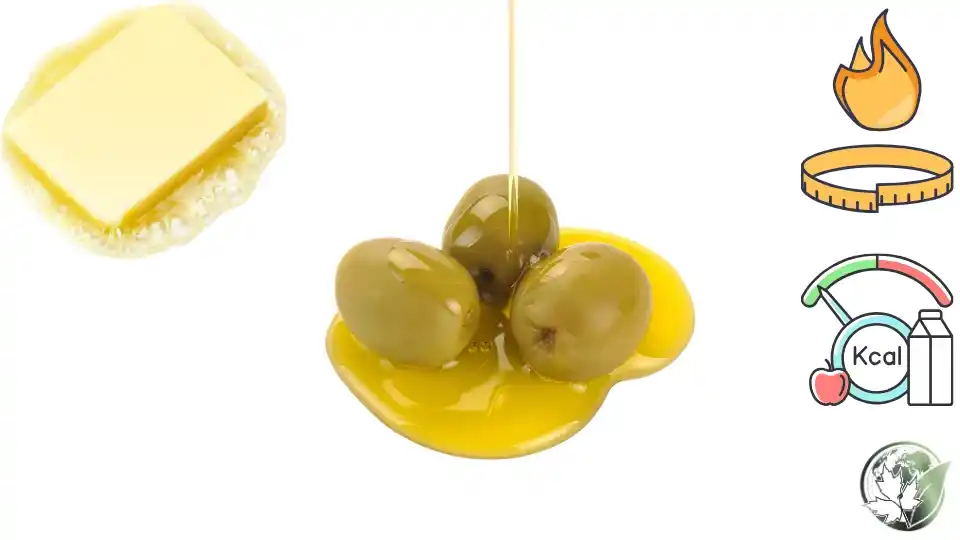
A tablespoon of olive oil has about 119 calories, and butter about 102
How Many Calories Are in Butter?
| Portion | Weight | Calories | Fat | Saturated fat |
|---|---|---|---|---|
| 1 teaspoon | 4.7 g | 34 kcal | 3.8 g | 2.4 g |
| 1 tablespoon | 14.2 g | 102 kcal | 11.5 g | 7.3 g |
| 2 tablespoons | 28.4 g | 204 kcal | 23.0 g | 14.6 g |
| 1/4 cup | 57 g | 408 kcal | 46.0 g | 29.3 g |
| 1/2 cup (1 stick) | 113 g | 810 kcal | 91.5 g | 58.3 g |
| 1 cup | 227 g | 1,627 kcal | 184 g | 117 g |
| 1 pat | 5 g | 36 kcal | 4.1 g | 2.6 g |
| 100 g | 100 g | 717 kcal | 81.1 g | 51.4 g |
How Many Calories Are in Olive Oil?
| Portion | Weight | Calories | Fat | Saturated fat |
|---|---|---|---|---|
| 1 teaspoon | 4.5 g | 40 kcal | 4.5 g | 0.6 g |
| 1 tablespoon | 13.5 g | 119 kcal | 13.5 g | 1.9 g |
| 2 tablespoons | 27 g | 238 kcal | 27 g | 3.7 g |
| 1/4 cup | 54 g | 477 kcal | 54 g | 7.4 g |
| 1/2 cup | 108 g | 955 kcal | 108 g | 14.8 g |
| 3/4 cup | 162 g | 1,432 kcal | 162 g | 22.3 g |
| 1 cup | 216 g | 1,909 kcal | 216 g | 29.2 g |
| 100 g | 100 g | 884 kcal | 100 g | 13.8 g |
| 100 ml | 91 g | 806 kcal | 91 g | 12.6 g |
| Spray, 1 second | 0.25 g | 2 kcal | 0.25 g | 0.04 g |
Butter vs Olive Oil: Calories Compared
| Amount | Butter | Olive oil | Difference |
|---|---|---|---|
| 1 teaspoon | 34 kcal | 40 kcal | Oil 6 more |
| 1 tablespoon | 102 kcal | 119 kcal | Oil 17 more |
| 2 tablespoons | 204 kcal | 238 kcal | Oil 34 more |
| 1/4 cup | 408 kcal | 477 kcal | Oil 69 more |
| 1/2 cup | 810 kcal | 955 kcal | Oil 145 more |
| 1 cup | 1,627 kcal | 1,909 kcal | Oil 282 more |
| 100 g | 717 kcal | 884 kcal | Oil 167 more |
| 100 calories | 14 g | 11.3 g | Butter 2.7 g more |
| Recipe: 1 cup butter vs 3/4 cup oil | 1,627 kcal | 1,432 kcal | Oil 195 less |
By the spoon, oil is higher, but by the recipe, using a three quarter amount makes oil slightly lower. In practice, the calorie difference between the two in cooking is small, and the choice should be based on flavor, fat quality and what the recipe needs.
Butter vs Olive Oil: Nutrition Compared
| Per tablespoon | Butter (14.2 g) | Olive oil (13.5 g) |
|---|---|---|
| Calories | 102 kcal | 119 kcal |
| Total fat | 11.5 g | 13.5 g |
| Saturated fat | 7.3 g | 1.9 g |
| Monounsaturated fat | 3.0 g | 9.9 g |
| Polyunsaturated fat | 0.4 g | 1.4 g |
| Trans fat (natural) | 0.5 g | 0 g |
| Cholesterol | 31 mg | 0 mg |
| Vitamin E | 0.3 mg | 1.9 mg |
| Vitamin K | 1.0 mcg | 8.1 mcg |
| Vitamin A | 97 mcg | 0 mcg |
| Water | 2.3 g | 0 g |
| Polyphenols | none | present (extra virgin) |
| Fat profile (percent of total fat) | Butter | Olive oil |
|---|---|---|
| Saturated | 63 percent | 14 percent |
| Monounsaturated | 26 percent | 73 percent |
| Polyunsaturated | 4 percent | 11 percent |
Olive oil has about a quarter of the saturated fat of butter per tablespoon, no cholesterol, more vitamin E and K, and monounsaturated fat that supports healthy cholesterol levels. Butter provides vitamin A and a small amount of butyrate, a short chain fatty acid, and it has a flavor and texture that oil cannot replicate.
A tablespoon of butter has 7.3 grams of saturated fat, against 1.9 grams for olive oil
Which Is Better for Heart Health: Butter or Olive Oil?
Most evidence favors olive oil. Large trials of the Mediterranean diet, particularly PREDIMED, which supplemented participants with extra virgin olive oil, found about 30 percent fewer major cardiovascular events than a low fat diet. Meta-analyses of cohort studies find that replacing 5 grams of butter a day, a little over a teaspoon, with olive oil is associated with a lower risk of death from all causes, around 6 to 8 percent lower. Replacing saturated fat with unsaturated fat lowers LDL cholesterol, which is why dietary guidelines advise limiting butter to small amounts and choosing vegetable oils in cooking. Extra virgin olive oil also contains polyphenols such as oleocanthal and hydroxytyrosol, with anti-inflammatory and antioxidant properties.
None of this means that butter must be banned. In small amounts, a teaspoon on toast or vegetables adds flavor, and total diet quality matters more than any single food. If you have high LDL cholesterol or heart disease, your doctor will likely advise using butter sparingly.
How Do You Swap Butter and Olive Oil in Cooking and Baking?
| Recipe type | Swap | Notes |
|---|---|---|
| Sautéing, roasting | Use oil, same or slightly less than butter | Higher smoke point |
| Cakes, muffins, quick breads | 3/4 cup oil for 1 cup butter | Moist, tender; choose mild oil |
| Brownies | 3/4 amount oil | Fudgy |
| Cookies | Not ideal; use half butter, half oil | Oil makes spread and flat |
| Pie crust, pastry | Not recommended | Needs solid fat |
| Frosting, buttercream | Not possible | Needs solid fat |
| Mashed potatoes | Oil, 3/4 amount | Fruity flavor |
| Pasta, risotto | Oil, same amount | Classic Italian |
| Bread dough | Oil, 3/4 amount | Soft crumb |
| Pancakes | Oil, 3/4 amount | Tender |
Choose a light or mild olive oil for baking so the peppery flavor of extra virgin does not dominate. Remember that butter contains water, so a recipe that uses butter will have slightly less liquid than one that uses oil. If you replace butter with oil in cookies, chill the dough to limit spreading.
What Are the Smoke Points of Butter and Olive Oil?
Smoke point is the temperature at which fat starts to break down and produce smoke and bitter flavors. Butter's milk solids burn at lower temperatures, around 150 to 175 degrees Celsius, so it is best used for gentle sautéing, baking and finishing. Refined olive oil smokes at about 240 degrees, and extra virgin olive oil at about 190 to 210 degrees, high enough for most home cooking including pan-frying and roasting. Clarified butter, or ghee, has a smoke point of about 250 degrees because the milk solids are removed. Contrary to popular belief, extra virgin olive oil is quite stable in heat because of its antioxidants and monounsaturated fat, and studies show it stays more stable than many seed oils during frying.
| Fat | Smoke point | Good for |
|---|---|---|
| Butter | 150 to 175 °C | Baking, low heat sautéing |
| Ghee | 250 °C | High heat frying |
| Extra virgin olive oil | 190 to 210 °C | Sautéing, roasting, dressings |
| Refined olive oil | 240 °C | Frying |
| Canola oil | 205 °C | General |
| Sunflower oil | 225 °C | Frying |
How Do Butter and Olive Oil Compare in Flavor?
Butter has a creamy, sweet, slightly nutty flavor that develops into a toasty note when browned. It is the classic fat for French sauces, baked goods, pan sauces and mashed potatoes. Olive oil has a fruity, grassy, sometimes peppery taste, which varies from mild to intense depending on the olives. It suits Mediterranean dishes, salads, dips and roasted vegetables. Because of these flavors, they are not interchangeable in some foods: butter in a chocolate chip cookie gives a classic taste, while olive oil gives a fruity, savory edge that works well in citrus cakes or dark chocolate desserts. In savory cooking, many cooks use both, starting with olive oil for the high heat and adding a small knob of butter at the end for richness.
Which Is Better for Weight Loss: Butter or Olive Oil?
Neither is a weight loss food, since both are about 100 to 120 calories per tablespoon. What matters is how much you use. Olive oil has slightly more calories per spoon, but its satisfying flavor can mean that you need less, and its fats are more beneficial. Studies of Mediterranean diets with olive oil show that a diet rich in olive oil does not cause weight gain when overall calories are managed. A useful approach is to measure the fat, using a teaspoon of oil, 40 calories, in a pan instead of pouring, to use a spray for non-stick cooking and to use butter only where its flavor is essential. The 195 calorie saving from the three-to-four swap in baking is helpful but modest.
Measure oil by the teaspoon, since each one adds 40 calories
How Many Calories Are in Foods Made With Butter and Olive Oil?
| Food | Serving | Calories | Notes |
|---|---|---|---|
| Bread with butter | 1 slice | 105 kcal | 1 tsp butter |
| Bread dipped in olive oil | 1 slice | 111 kcal | 1 tsp oil |
| Sautéed vegetables | 1 cup | 100 kcal | 1 tsp butter or oil |
| Roasted potatoes | 1 cup | 220 kcal | 1 tbsp oil |
| Mashed potatoes with butter | 1 cup | 237 kcal | Milk, butter |
| Fried egg in butter | 1 egg | 107 kcal | 1/2 tsp |
| Fried egg in olive oil | 1 egg | 110 kcal | 1/2 tsp |
| Garlic bread | 1 slice | 150 kcal | Butter |
| Pesto pasta | 1 cup | 360 kcal | Olive oil |
| Shortbread | 1 piece | 100 kcal | Butter |
| Olive oil cake | 1 slice | 330 kcal | Oil |
| Butter croissant | 1 medium | 230 kcal | Layers of butter |
How to Use Less Butter or Olive Oil Without Losing Flavor
Sauté in a nonstick pan with a spritz of oil or a splash of broth, instead of a tablespoon of fat. Roast vegetables on parchment paper with a teaspoon of oil per tray, tossing well to coat. Finish dishes with a small amount of extra virgin olive oil or a thin slice of butter rather than cooking everything in it, so the flavor is on the surface. Use a pastry brush to apply butter or oil to toast, corn or grilled fish. Add flavor with lemon juice, herbs, garlic, spices and mustard. Measure with spoons for a week, and you will learn what a teaspoon looks like.
Measure fats by the teaspoon to keep calories in check
How to Count Butter and Olive Oil Calories Accurately
Weigh fats on a scale, 7.2 calories per gram for butter and 8.8 for olive oil, or use measuring spoons at 102 and 119 calories per tablespoon. Pour oil over a spoon over the pan, not directly from the bottle, and wipe butter from the knife into the pan. When a recipe lists butter or oil, divide the total by the servings. Remember that some oil remains in the bowl or pan, so the amount you eat can be 10 to 20 percent less.
What Is Extra Virgin Olive Oil and Is It Worth the Price?
Extra virgin olive oil is the highest grade, made by mechanically pressing olives without heat or chemicals, and it must meet standards for acidity (under 0.8 percent) and flavor. It retains the olives' polyphenols, which give it a peppery bite and most of its antioxidant benefits. Regular or "pure" olive oil is a blend of refined and virgin oils, milder and cheaper, with fewer polyphenols but the same calories. Light olive oil refers to color and flavor, not calories: all olive oils have 119 calories per tablespoon. For finishing dishes, dressings and dipping, extra virgin is worth the price because you taste it. For high heat frying or baking, a cheaper refined oil works, since subtle flavor is lost.
| Olive oil grade (1 tbsp) | Calories | Flavor | Best use |
|---|---|---|---|
| Extra virgin | 119 kcal | Fruity, peppery | Dressings, finishing |
| Virgin | 119 kcal | Mild fruity | Cooking |
| Pure or classic | 119 kcal | Mild | Sautéing, frying |
| Light | 119 kcal | Neutral | Baking, frying |
| Pomace | 119 kcal | Neutral | Industrial frying |
How Much Butter or Olive Oil Is Healthy Per Day?
There is no official calorie limit for either, but guidelines for fat suggest that fats should supply 20 to 35 percent of calories, with saturated fat under 10 percent. On a 2,000 calorie diet, that means 44 to 78 grams of fat and under 22 grams of saturated fat. Two tablespoons of butter would use up 14.6 grams of saturated fat, two thirds of the limit, while two tablespoons of olive oil use 3.7 grams. The Mediterranean diet commonly includes 3 to 4 tablespoons of olive oil a day, about 360 to 480 calories, but within a diet low in processed food. For butter, a practical limit for most people is a teaspoon or two a day. As ever, individual needs differ, and people with specific health conditions should follow their doctor's advice.
Can You Mix Butter and Olive Oil in the Same Dish?
Yes, and chefs do it often. Heating a tablespoon of olive oil first raises the smoke point of the pan, and adding a teaspoon of butter near the end gives flavor and a glossy finish. Whipped together at room temperature, equal parts butter and olive oil make a spreadable blend that stays soft in the refrigerator, with about 110 calories per tablespoon, a little lower in saturated fat than butter alone. A blend of half butter and half oil in a cake or cookie recipe gives some of the flavor of butter with a softer crumb. Mixing is a good compromise for people who want to cut saturated fat without losing the taste of butter altogether.
| Blend (1 tbsp) | Calories | Saturated fat |
|---|---|---|
| 100 percent butter | 102 kcal | 7.3 g |
| 50 percent butter, 50 percent olive oil | 111 kcal | 4.6 g |
| 25 percent butter, 75 percent olive oil | 115 kcal | 3.3 g |
| 100 percent olive oil | 119 kcal | 1.9 g |
What About Ghee, Margarine and Plant Butters?
Ghee has about 112 calories per tablespoon, nearly 8 grams of saturated fat, and a high smoke point, making it a traditional cooking fat in Iranian and Indian cuisines. Margarine and plant-based butters have about 100 calories per tablespoon, with 1.5 to 4 grams of saturated fat depending on the oils, and modern versions have no trans fat, though some are highly processed. Light spreads can have 35 to 60 calories a tablespoon because of added water. Compared with olive oil, none of these is a clear winner: for cooking, olive oil is generally the better nutritional choice, and for spreading, a thin layer of any of them has similar calories. Read labels and choose products with short ingredient lists and no partially hydrogenated oils.
How Should You Store Butter and Olive Oil?
Butter absorbs odors and goes rancid with air, light and warmth. Keep it wrapped in its original foil or in a covered dish in the refrigerator for up to three months, and in the freezer for up to nine. A small portion can sit in a covered butter dish at cool room temperature for about a week, which keeps it spreadable, but in a hot kitchen it should go back in the fridge. Olive oil is damaged by light, heat and oxygen. Store it in a dark glass bottle or tin, away from the stove, with the cap tight, and use it within three to six months of opening for the best flavor. Buy sizes you can finish, check the harvest date on the bottle, and do not keep it in the fridge unless the climate is hot, as cold makes it cloudy, although this is harmless. Rancid fat smells like crayons or putty, and should be discarded. Storage does not change calories, but fresh fat tastes better, which helps you use less.
Which Should You Choose for Everyday Use?
For daily cooking, olive oil is the better all-around choice, because of its fat profile, heat stability and versatility. Use butter for baking where its flavor and structure are important, for occasional finishing of sauces and vegetables, and for the simple pleasure of a thin layer on warm bread. If your cholesterol is high, or you have heart disease, give priority to olive oil and keep butter to special occasions. If you are watching calories, remember that the difference between the two is small, and count teaspoons rather than worrying about which is lower. The bigger win comes from using 1 teaspoon instead of 1 tablespoon, which saves about 70 to 80 calories each time, whichever fat you choose.
Key Takeaways: Butter vs Olive Oil Calories
Butter has about 102 calories per tablespoon and 717 per 100 grams, and olive oil has 119 and 884, so oil is higher in calories because it is pure fat. Olive oil has about a quarter of the saturated fat and is the better choice for heart health, and using three quarters as much oil as butter in recipes saves about 12 percent of the calories. Measure either one, and use butter where flavor matters most.
Frequently Asked Questions
6 questions answered
Does butter have fewer calories than olive oil?
Yes, 102 per tablespoon against 119.
How many calories are in a teaspoon of olive oil?
About 40.
Why does olive oil have more calories than butter?
Butter contains about 16 percent water, and oil is pure fat.
Is olive oil healthier than butter?
It has less saturated fat and more unsaturated fat and polyphenols.
How much olive oil replaces butter in baking?
Three quarters of the amount, for example 3/4 cup oil for 1 cup butter.
Which has a higher smoke point?
Olive oil, about 190 to 240 degrees Celsius against about 150 to 175 for butter.




