Biscuits vs Milk Chocolate Calories at a Glance
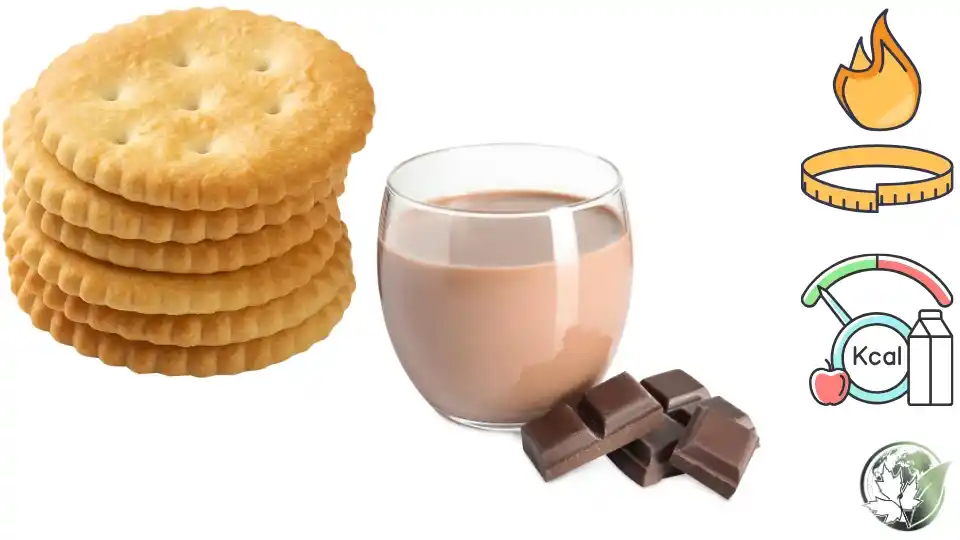
Biscuits vs milk chocolate calories is a surprisingly close contest. A plain sweet biscuit weighing about 7 grams contains roughly 32 calories, while a 10 gram square of milk chocolate contains roughly 54. Per 100 grams, biscuits provide about 450 calories and milk chocolate about 535, so chocolate is about 19 percent more calorie dense. Per piece, a chocolate square has about 70 percent more calories than a small biscuit, but a square is also heavier, so the gap shrinks once you compare equal weights.
The difference becomes smaller still when you compare how people actually eat them. Three biscuits with tea weigh about 21 grams and have about 95 calories, while two squares of chocolate weigh 20 grams and have about 107. A sleeve of ten biscuits has about 320 calories, and a standard 43 gram chocolate bar has about 230. Which one is "lighter" depends entirely on how much you eat.
This guide compares biscuits and milk chocolate per piece, per 100 grams, per serving and per 100 calories. It explains where the calories come from, how sugar, fat and sodium differ and how to enjoy either one without losing track. You will see three tables, practical swaps and an FAQ at the end.
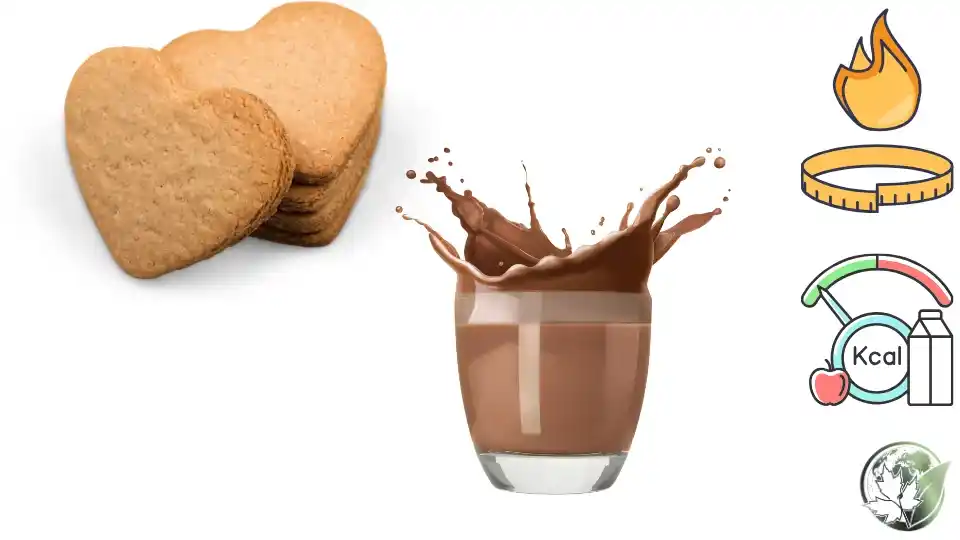
A plain sweet biscuit has about 32 calories, so three with tea come to roughly 95
How Many Calories Are in a Biscuit?
The calories in a biscuit depend on its size, ingredients and type. The common reference for plain sweet biscuits is about 450 calories per 100 grams, which comes from flour, sugar, fat and a little milk or egg.
| Biscuit type | Typical weight | Calories per piece | Calories per 100 g |
|---|---|---|---|
| Small tea biscuit | 5 g | 22 kcal | 440 kcal |
| Plain sweet biscuit | 7 g | 32 kcal | 450 kcal |
| Butter biscuit | 10 g | 47 kcal | 470 kcal |
| Digestive biscuit | 15 g | 70 kcal | 470 kcal |
| Chocolate-coated digestive | 17 g | 85 kcal | 500 kcal |
| Cream sandwich biscuit | 11 g | 53 kcal | 480 kcal |
| Rich tea biscuit | 8 g | 35 kcal | 440 kcal |
Cream filled and chocolate-coated biscuits move toward the chocolate numbers, because they contain added fat and sugar. A chocolate-coated digestive at 85 calories already costs more than a square of milk chocolate.
How Many Calories Are in Milk Chocolate?
Milk chocolate is built from cocoa butter, sugar and milk powder, with a smaller share of cocoa solids. The reference value is about 535 calories per 100 grams. It has more fat than biscuits, about 30 grams per 100 grams, and a high proportion of sugar.
| Chocolate portion | Weight | Calories | Sugar | Fat |
|---|---|---|---|---|
| 1 square | 10 g | 54 kcal | 5.2 g | 3.0 g |
| 2 squares | 20 g | 107 kcal | 10.4 g | 6.0 g |
| 4 squares | 40 g | 214 kcal | 21 g | 12 g |
| Standard bar | 43 g | 230 kcal | 22 g | 13 g |
| Large bar | 100 g | 535 kcal | 52 g | 30 g |
Because chocolate melts and is smooth, it is easy to eat quickly, while biscuits require chewing and often come with a hot drink, which slows eating. That behavior difference matters as much as the calories on the label.
Biscuits vs Milk Chocolate: Calories per Piece and per 100 g
When the two snacks are placed side by side, the numbers show a modest but consistent gap in chocolate's disfavor on energy density and a different story on nutrients.
| Per 100 g | Plain sweet biscuits | Milk chocolate |
|---|---|---|
| Calories | 450 kcal | 535 kcal |
| Fat | 17 g | 30 g |
| Saturated fat | 8 g | 18 g |
| Carbohydrate | 68 g | 59 g |
| Sugar | 22 g | 52 g |
| Fiber | 2.5 g | 3.4 g |
| Protein | 6.5 g | 7.7 g |
| Sodium | 400 mg | 79 mg |
| Per typical serving | 3 biscuits (21 g) | 2 squares (20 g) |
|---|---|---|
| Calories | 95 kcal | 107 kcal |
| Sugar | 4.6 g | 10.4 g |
| Saturated fat | 1.7 g | 3.6 g |
| Sodium | 84 mg | 16 mg |
Biscuits have fewer calories, less sugar and less saturated fat per gram, but more sodium. Chocolate has more fat and sugar, but less sodium and slightly more protein and fiber because of the cocoa and milk solids. Neither is a nutritional powerhouse.
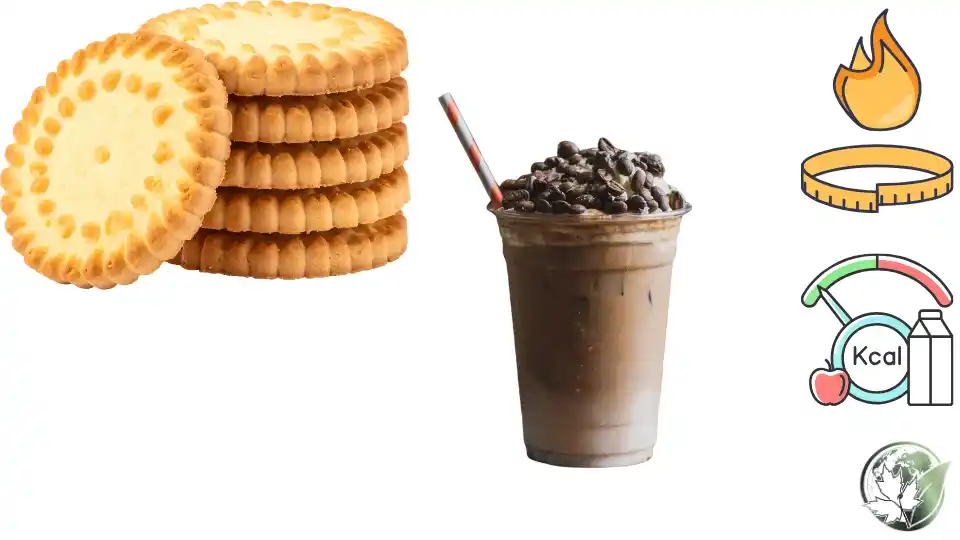
Three biscuits and two chocolate squares have nearly the same calories, about 95 to 107
How Many Biscuits Equal One Bar of Milk Chocolate?
A common question is how many biscuits it takes to match a candy bar. A standard 43 gram milk chocolate bar has about 230 calories. Plain sweet biscuits at 32 calories each would take about seven of them to match. Digestive biscuits at 70 calories each would take only a little over three.
| Item | Calories | Equivalent in plain biscuits (32 kcal) | Equivalent in digestives (70 kcal) |
|---|---|---|---|
| 1 chocolate square | 54 kcal | 1.7 biscuits | 0.8 biscuit |
| 2 chocolate squares | 107 kcal | 3.3 biscuits | 1.5 biscuits |
| Fun-size bar (17 g) | 91 kcal | 2.8 biscuits | 1.3 biscuits |
| Standard bar (43 g) | 230 kcal | 7.2 biscuits | 3.3 biscuits |
| Large bar (100 g) | 535 kcal | 16.7 biscuits | 7.6 biscuits |
This helps you decide what feels like more food. If you choose biscuits, you can have seven small ones for the cost of one bar, while a single digestive can cost more than a chocolate square. If you want volume, small plain biscuits give you more pieces per calorie. If you want one rich bite, a single square of chocolate can satisfy a craving for 54 calories.
How Do 100 Calories of Biscuits and Chocolate Compare?
Another way to compare is by asking what 100 calories looks like. About 22 grams of plain sweet biscuits provide 100 calories, which is roughly three small biscuits. About 19 grams of milk chocolate provides 100 calories, or two squares.
| 100 calorie snack | Weight | Pieces | Sugar | Saturated fat |
|---|---|---|---|---|
| Plain sweet biscuits | 22 g | 3 biscuits | 4.9 g | 1.8 g |
| Digestive biscuits | 21 g | 1.4 biscuits | 4.0 g | 2.1 g |
| Milk chocolate | 19 g | 2 squares | 9.7 g | 3.4 g |
| Dark chocolate 70 percent | 17 g | 1.7 squares | 4.5 g | 3.4 g |
| Rice cakes, plain | 26 g | 3 cakes | 0.5 g | 0.2 g |
| Apple | 190 g | 1 large | 19 g | 0 g |
At 100 calories, biscuits contain about half the sugar of milk chocolate, but both are small snacks that do not fill you for long. The apple is the clear winner in volume and fiber, which is why nutritionists suggest fruit as a default and treats as a deliberate choice.
Which Is Easier to Overeat: Biscuits or Chocolate?
Biscuits have a reputation as a "dunking" food that disappears quickly with tea or coffee. Chocolate is often portioned by the square, which makes it easier to count. In practice, both are easy to overeat because they combine sugar, fat and refined starch, a mixture that is highly palatable and does not trigger strong fullness signals.
A pack of biscuits typically holds 200 to 400 grams, or 900 to 1800 calories. A person who eats ten biscuits while watching television has consumed about 320 calories without much notice. A chocolate bar is usually 40 to 100 grams, or 215 to 535 calories, and the wrapper makes it obvious when it is finished.
The best strategy is to portion in advance. Put three biscuits on a plate or break two squares of chocolate, then close the pack and put it away. Eating with a drink and without a screen slows you down and increases satisfaction from a smaller amount.
How to Choose Healthier Biscuits
Not all biscuits are created equal. Look for the following features when comparing packs.
Whole grain or oat as a first ingredient, giving more fiber
Less than 10 grams of sugar per 100 grams for plain varieties
No partially hydrogenated oils or palm oil in large amounts
Short ingredient lists with recognizable foods
A serving size that matches reality, such as 3 biscuits instead of 1
Oat biscuits and digestives often provide 3 to 4 grams of fiber per 100 grams, higher than refined tea biscuits. Marie or rich tea biscuits are among the lighter options, with about 440 calories per 100 grams and about 20 grams of sugar. Cream filled and chocolate-coated varieties sit at the opposite end, with 480 to 520 calories and 25 to 35 grams of sugar per 100 grams.
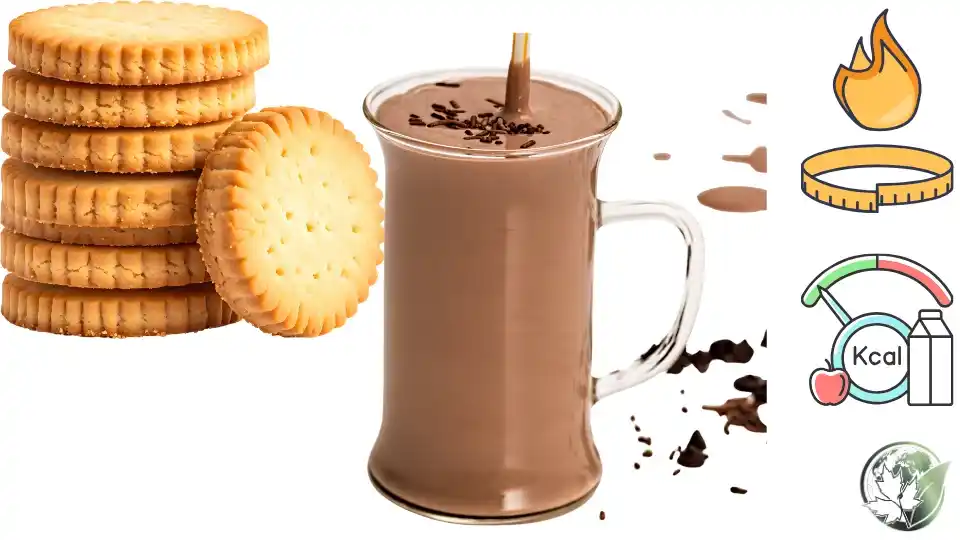
Whole grain biscuits offer more fiber for similar calories to refined tea biscuits
How to Choose Healthier Milk Chocolate
With chocolate, the cocoa content tells you a lot. Milk chocolate usually contains 25 to 40 percent cocoa solids, while dark chocolate contains 55 to 85 percent. Higher cocoa means more fiber, magnesium and polyphenols, and less sugar. Calories may stay similar or go up, but you tend to eat less because the flavor is more intense.
Read the ingredient list: cocoa butter should be the only fat, and sugar should not be the first ingredient. Chocolate made with vegetable fats other than cocoa butter is cheaper and often lower in quality. Bars with caramel, wafer or nuts add calories, so check the label for the full bar.
If you prefer milk chocolate, choose a higher cocoa milk chocolate, around 40 percent, and keep to a 20 gram portion. That is about 105 calories and 9 grams of sugar, fewer than a standard bar and easy to enjoy slowly.
How Do Biscuits and Chocolate Fit into a Balanced Diet?
Treats can fit in a balanced diet as long as they are limited. A common guideline is to keep discretionary calories, from foods that are not essential for nutrition, to about 10 percent of daily intake. For a 2000 calorie diet, that is 200 calories, or roughly six plain biscuits, two and a half digestives, or a standard chocolate bar.
Pair treats with real food. A biscuit with a piece of fruit or a few squares of chocolate with almonds slows digestion and makes the snack more filling. Avoid using sweet snacks as meal replacements, because they lack protein and fiber and leave you hungry sooner.
If you are managing weight, track treats for a week to see how often they appear. Many people discover that two or three small treats a day add up to 300 or more calories. Reducing them to one planned treat can save about 1000 calories per week.
How to Store Biscuits and Chocolate
Biscuits go stale when they absorb moisture from the air. Keep them in an airtight tin or resealable bag in a cool, dry place and use within two to three months of opening. If they soften, a few minutes in a low oven restores some crispness.
Chocolate should be stored at 15 to 18 degrees Celsius, away from strong odors, and wrapped tightly. It can last six to twelve months. If it develops a pale film, that is bloom, a harmless effect of fat or sugar rising to the surface. In warm climates, store chocolate in a cool cupboard or the refrigerator in a sealed container to prevent melting and moisture damage.
For importers and distributors, biscuits are shelf stable and easy to ship, while chocolate needs temperature control in hot regions. Packaging type and barrier film affect shelf life and are worth checking when sourcing.
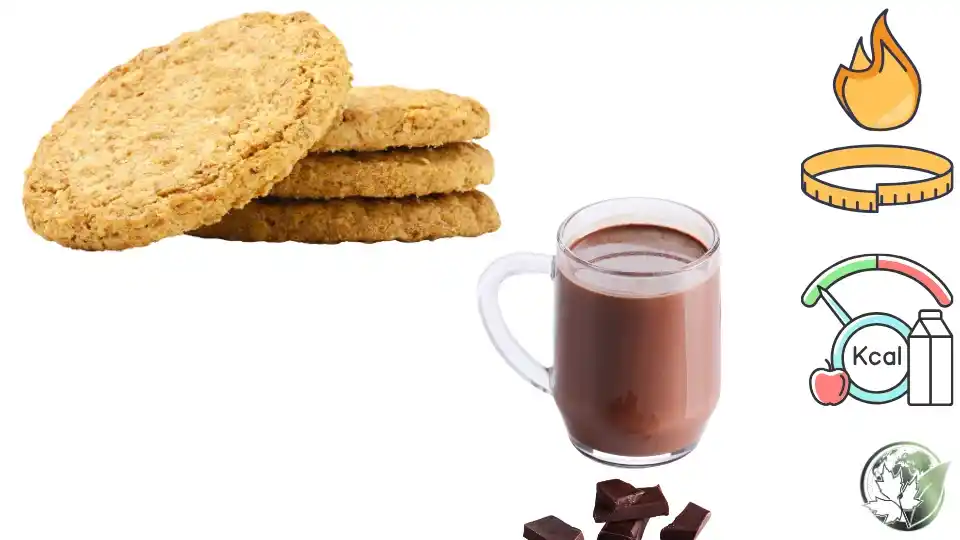
A planned plate of two squares and two biscuits keeps a treat under about 140 calories
How Do Biscuits and Chocolate Compare With Tea, Coffee and Milk?
Most biscuits are eaten with a drink, so the real calorie count is often the biscuit plus what is in the cup. A black tea or black coffee adds nothing, but a teaspoon of sugar adds about 16 calories and a splash of whole milk about 15. Three biscuits with a sweet milky tea can therefore reach 140 calories, which is more than two squares of chocolate eaten with plain water.
| Combination | Snack calories | Drink calories | Total |
|---|---|---|---|
| 3 plain biscuits + black tea | 95 kcal | 2 kcal | 97 kcal |
| 3 plain biscuits + milk tea with 1 sugar | 95 kcal | 31 kcal | 126 kcal |
| 2 chocolate squares + black coffee | 107 kcal | 5 kcal | 112 kcal |
| 2 chocolate squares + latte (250 ml) | 107 kcal | 120 kcal | 227 kcal |
| 2 digestives + hot chocolate (250 ml) | 140 kcal | 190 kcal | 330 kcal |
The lesson is that the drink is part of the snack. If you are counting calories, unsweetened tea or coffee is the easiest way to keep either treat near 100 calories.
How Many Calories Do Different Chocolate Types Have Compared With Biscuits?
Milk chocolate is only one option. White chocolate and dark chocolate differ in calories, sugar and fat, and filled chocolates move the numbers again.
| Product (per 100 g) | Calories | Sugar | Fat |
|---|---|---|---|
| Plain sweet biscuits | 450 kcal | 22 g | 17 g |
| Milk chocolate | 535 kcal | 52 g | 30 g |
| White chocolate | 540 kcal | 58 g | 32 g |
| Dark chocolate 70 percent | 598 kcal | 24 g | 43 g |
| Chocolate wafer bar | 520 kcal | 40 g | 28 g |
| Chocolate-coated biscuit | 500 kcal | 35 g | 25 g |
Dark chocolate has the highest calories per 100 grams, yet it has less than half the sugar of milk chocolate and is eaten in smaller amounts because of its stronger taste. Two squares, 20 grams, provide about 120 calories. Biscuits remain the lowest in calories per gram, but they offer little satisfaction per bite.
How Do Biscuits and Milk Chocolate Affect Blood Sugar and Fullness?
Both snacks combine refined carbohydrates and sugar, so they raise blood glucose fairly quickly. Chocolate has a moderately low glycemic index, around 40, because its fat slows absorption. Plain biscuits have a higher index, around 55 to 70, because they are made mostly from refined flour. In practical terms, a few squares of chocolate may cause a gentler rise than the same calories of biscuits, though the sugar load is higher.
Fullness is weak for both. Protein and fiber are the main drivers of satiety, and each of these snacks has only about 6 to 8 grams of protein per 100 grams. If you want to stay satisfied longer, eat the treat after a meal rather than on an empty stomach, or combine it with a source of protein such as yogurt, milk or nuts.
People with diabetes should check portion sizes and total carbohydrate. Three biscuits contain about 14 grams of carbohydrate and two squares of chocolate about 12 grams, so both are small, but the sugar-free or reduced-sugar versions are not automatically lower in calories because they often replace sugar with fat.
How Do Biscuits and Chocolate Fit Into Weight Loss?
You do not need to ban either snack to lose weight, but you do need to include it in your daily total. A deficit of 500 calories per day leads to about 0.5 kilogram of weight loss per week. A habit of eating 200 extra calories from treats each day removes 40 percent of that deficit.
Practical strategies that work:
Buy single-serve packs instead of family-size packs
Keep treats out of sight, since visibility increases eating
Plan the treat at a set time, such as after lunch
Share a bar or biscuit pack with someone
Choose the option you truly enjoy, so a small portion satisfies you
If you love chocolate, two squares of dark chocolate may satisfy more than five biscuits, even at similar calories. If you love crunch with tea, three plain biscuits may be the better fit. Choose the item that gives you the most pleasure per calorie, rather than the one that sounds more virtuous.
How Do Biscuit and Chocolate Labels Mislead You?
Packaging can hide the real numbers. Check these details before you trust the calorie count on the front.
The serving size may be one biscuit, while you eat four
Calories per 100 grams are standardized, while per-serving values are not
"No added sugar" chocolate may use sugar alcohols that still contain calories
"Made with real chocolate" biscuits may contain only a thin coating
"Whole grain" biscuits can still be high in sugar and fat
The fairest comparison is always per 100 grams, then multiplied by your own portion. For example, a biscuit pack labeled 40 calories per biscuit with a 9 gram biscuit equals 444 calories per 100 grams. If your portion is 4 biscuits, that is 160 calories.
How to Calculate Calories for Homemade Biscuits and Chocolate Treats
Homemade biscuits are calculated from ingredients. A typical recipe makes 24 biscuits from 250 grams of flour, 125 grams of butter and 100 grams of sugar. Flour provides about 910 calories, butter about 900 and sugar about 390, a total of about 2200 calories, or about 92 calories per biscuit. That is nearly three times a small commercial biscuit, because homemade biscuits are usually larger.
To estimate any treat, add up the calories of the ingredients, weigh the finished product and divide by the weight to get calories per gram. Multiply by your portion weight. This works for chocolate-dipped biscuits as well: a 10 gram biscuit with 4 grams of chocolate coating adds roughly 21 calories of chocolate to 45 calories of biscuit.
What Do Importers and Retailers Need to Know About Biscuits and Chocolate?
For buyers and distributors, calorie labeling must match regional regulations, with values per 100 grams and per serving. Biscuits and chocolate also differ in storage: biscuits tolerate temperature changes, while chocolate must stay below about 25 degrees Celsius to avoid bloom. Shelf life, packaging barrier, allergen statements for milk, wheat and nuts and consistency of portion size are key points when comparing suppliers.
Accurate calorie information supports customer trust. Consumers increasingly check labels, and products that state realistic serving sizes and clear nutrition tables tend to build more repeat purchases than those with vague claims.
Key Takeaways: Biscuits vs Milk Chocolate Calories
A plain biscuit has about 32 calories and a chocolate square about 54. Per 100 grams, biscuits have about 450 calories and milk chocolate 535, so chocolate is denser, but a small biscuit portion of three and a chocolate portion of two squares both land near 100 calories. Biscuits contain less sugar and saturated fat, while chocolate contains less sodium.
Plan the portion, pair the treat with fruit or nuts and choose whole grain biscuits or higher cocoa chocolate when you can. Either one can fit, as long as you count it.
Frequently Asked Questions
8 questions answered
How many calories are in one biscuit?
A plain sweet biscuit of about 7 grams has about 32 calories. A digestive biscuit of 15 grams has about 70.
How many calories are in a square of milk chocolate?
A 10 gram square of milk chocolate has about 54 calories.
Which has more calories, biscuits or chocolate?
Per 100 grams, milk chocolate has more: about 535 calories compared with 450 for plain biscuits. Per piece, it depends on the size of the biscuit.
How many biscuits equal a chocolate bar?
A 43 gram milk chocolate bar has about 230 calories, equal to about seven plain sweet biscuits or three digestives.
Which has less sugar, biscuits or chocolate?
Plain biscuits have about 22 grams of sugar per 100 grams, while milk chocolate has about 52 grams.
Are biscuits healthier than chocolate?
Plain biscuits have less sugar and saturated fat per gram, but more sodium. Neither is a health food, and portion size matters most.
How many biscuits can I eat in a day?
A small portion of two to four plain biscuits, about 65 to 130 calories, fits most diets as an occasional treat.
Are chocolate biscuits higher in calories?
Yes. Chocolate-coated biscuits typically contain 480 to 520 calories per 100 grams, higher than plain biscuits.