How Many Calories Are in Biscuits vs Cookies? The Quick Answer
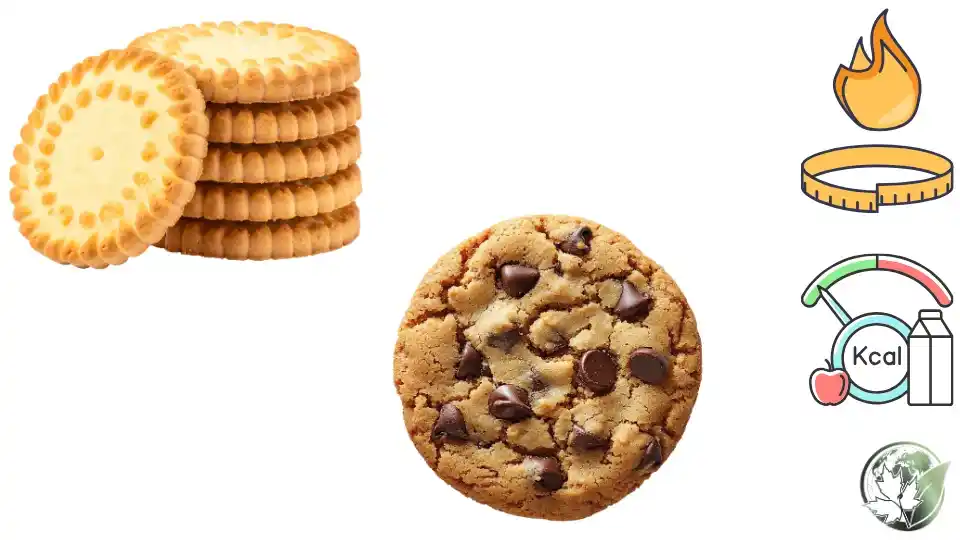
A plain sweet biscuit of about 7 grams has about 32 calories, and a packaged chocolate chip cookie of about 30 grams has about 145 calories. So per piece, a cookie has about four and a half times the calories of a plain biscuit. Per 100 grams, however, the gap is small: biscuits average about 450 calories per 100 grams and chocolate chip cookies about 488, a difference of about 8 percent. The large difference per piece comes from size, not from the recipe: a cookie is simply a much bigger thing than a tea biscuit. Compare biscuits and cookies of the same weight, and the calories are close, with cookies slightly higher because they tend to contain more butter, sugar and chocolate or nuts.
The words are used differently around the world. In the United Kingdom, Ireland, Australia, Iran and many other places, "biscuit" means a small, crisp, sweet or plain baked snack, such as a rich tea, digestive or marie biscuit. In the United States and Canada, "cookie" is the word for that kind of snack, and "biscuit" refers to a soft, savory bread roll. In this guide, a biscuit means the crisp, sweet tea-time kind, and a cookie means the larger, softer, often chewy kind with chocolate chips, oats or nuts, sold in packets or bakeries.
The guide compares the calories of biscuits and cookies per piece, per 100 grams, per serving and per sleeve or packet, as well as sugar, fat, sodium, fiber and ingredients. It explains why the label can be misleading, how to count tea-time biscuits accurately and which choices are lighter. There are three comparison tables and an FAQ.
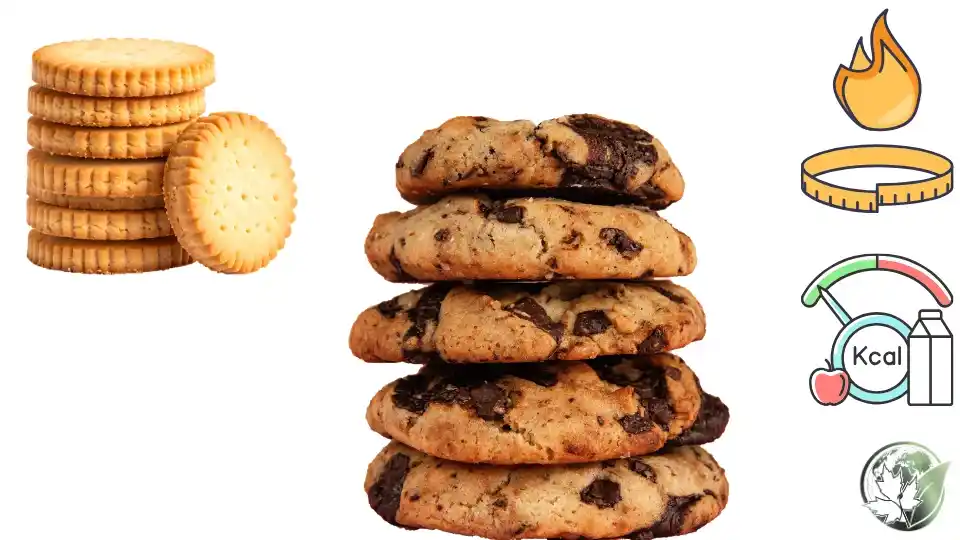
A cookie has about four times the calories of a plain biscuit, mainly because it is bigger
How Many Calories Are in a Biscuit?
| Biscuit type | Typical weight | Calories per piece | Calories per 100 g |
|---|---|---|---|
| Small tea biscuit | 5 g | 22 kcal | 440 kcal |
| Plain sweet biscuit | 7 g | 32 kcal | 450 kcal |
| Rich tea biscuit | 8 g | 35 kcal | 440 kcal |
| Butter biscuit | 10 g | 47 kcal | 470 kcal |
| Digestive biscuit | 15 g | 70 kcal | 470 kcal |
| Chocolate-coated digestive | 17 g | 85 kcal | 500 kcal |
| Cream sandwich biscuit | 11 g | 53 kcal | 480 kcal |
| Ginger biscuit | 10 g | 45 kcal | 450 kcal |
| Oat biscuit | 14 g | 62 kcal | 440 kcal |
| Shortbread biscuit | 20 g | 100 kcal | 502 kcal |
Plain biscuits are about 70 percent carbohydrate and 15 to 20 percent fat, with 6 to 10 percent protein, and most of their calories come from refined flour, sugar and fat. Fancier biscuits with chocolate coating or cream filling are higher.
How Many Calories Are in a Cookie?
| Cookie type | Typical weight | Calories per piece | Calories per 100 g |
|---|---|---|---|
| Chocolate chip, packaged | 30 g | 145 kcal | 488 kcal |
| Chocolate chip, bakery (large) | 90 g | 420 kcal | 467 kcal |
| Oatmeal raisin | 25 g | 108 kcal | 430 kcal |
| Sugar cookie | 25 g | 118 kcal | 470 kcal |
| Peanut butter cookie | 30 g | 141 kcal | 470 kcal |
| Double chocolate cookie | 30 g | 150 kcal | 500 kcal |
| White chocolate and macadamia | 35 g | 175 kcal | 500 kcal |
| Sandwich cookie (cream filled) | 11 g | 53 kcal | 470 kcal |
| Fortune cookie | 8 g | 30 kcal | 378 kcal |
| Gingersnap | 7 g | 30 kcal | 430 kcal |
| Homemade chocolate chip | 30 g | 140 kcal | 465 kcal |
Cookies are slightly higher in fat and sugar than plain biscuits, because their recipes use more butter and often chocolate, nuts or dried fruit. Bakery cookies can reach 400 calories or more each, equal to a small meal.
Biscuits vs Cookies: Calories Compared by Piece and by Weight
| Comparison | Biscuit | Cookie |
|---|---|---|
| 1 average piece | 32 kcal (7 g) | 145 kcal (30 g) |
| 100 g | 450 kcal | 488 kcal |
| 30 g | 135 kcal | 146 kcal |
| 50 g | 225 kcal | 244 kcal |
| 100 calories | 22 g, 3 biscuits | 20 g, 0.7 cookie |
| 200 calories | 44 g, 6 biscuits | 41 g, 1.4 cookies |
| 1 sleeve (10 biscuits, 70 g) | 315 kcal | n/a |
| 1 packet of 8 cookies (240 g) | n/a | 1,160 kcal |
| 3 pieces | 96 kcal | 435 kcal |
If you compare equal weights, the figures converge. A 30 gram portion has 135 calories of biscuits against 146 calories of cookies. But a normal serving of biscuits is three pieces with tea, about 21 grams and 96 calories, while a normal serving of a cookie is one, at 145 calories, so most people eat a bit more of the cookie. If you eat three cookies, you take in 435 calories, which is more than most people realize.
Biscuits vs Cookies: Nutrition Compared
| Per 100 g | Plain sweet biscuit | Chocolate chip cookie |
|---|---|---|
| Calories | 450 kcal | 488 kcal |
| Carbohydrate | 72 g | 65 g |
| Sugar | 22 g | 36 g |
| Fat | 15 g | 24 g |
| Saturated fat | 7 g | 8 g |
| Protein | 7 g | 5 g |
| Fiber | 2.5 g | 2.5 g |
| Sodium | 330 mg | 350 mg |
| Per piece | Plain sweet biscuit (7 g) | Chocolate chip cookie (30 g) |
|---|---|---|
| Calories | 32 kcal | 145 kcal |
| Sugar | 1.5 g | 10.8 g |
| Fat | 1.1 g | 7.2 g |
| Sodium | 23 mg | 105 mg |
Per 100 grams, cookies have more sugar and fat, which is why they taste richer and softer, while biscuits are drier, crisper and contain more flour. A plain biscuit has only 1.5 grams of sugar, less than half a sugar cube, while a cookie has about 11 grams, almost three cubes. For anyone watching sugar, the difference per piece is meaningful.
Check the weight of one piece on the label before comparing calories
Why Do Biscuits Seem Lower in Calories Than Cookies?
Mostly because of portion size. A tea biscuit weighs 5 to 8 grams, so the number printed on the label looks small, and the habit of eating one with a cup of tea makes it feel like a light treat. A cookie is 25 to 90 grams. The per 100 gram figure is the fairest comparison, and it shows that biscuits and cookies are both calorie dense, around 450 to 490 calories per 100 grams, about 20 times more than an apple or a cup of cooked vegetables by weight.
The second reason is texture. Biscuits are dry and crisp, so eating several in a row feels easy and does not register as much food. Because they are lighter, a sleeve of ten has 315 calories, which is surprisingly close to a bakery cookie at 420. Third, tea-time habits matter: people tend to eat biscuits throughout a long session of tea and chatting, with no clear end, so three can turn into eight. Counting the pieces before you start is the simplest solution.
Which Biscuits and Cookies Are Lower in Calories?
If you want to lower the calories, choose small and plain. A rich tea biscuit at 35 calories, a marie biscuit at 30 or a small ginger biscuit at 45 give you something sweet for little energy. Among cookies, small oatmeal raisin cookies of 25 grams at 108 calories, gingersnaps at 30 and fortune cookies at 30 are lowest per piece. Look out for large bakery cookies, filled sandwich cookies in multipacks and chocolate-coated biscuits, which can have 85 to 175 calories each.
| Lower calorie choice | Calories | Higher calorie alternative | Calories |
|---|---|---|---|
| Rich tea biscuit | 35 kcal | Chocolate digestive | 85 kcal |
| Marie biscuit | 30 kcal | Shortbread finger | 100 kcal |
| Gingersnap | 30 kcal | Double chocolate cookie | 150 kcal |
| Fortune cookie | 30 kcal | Bakery chocolate chip cookie | 420 kcal |
| Oatmeal raisin cookie | 108 kcal | White chocolate macadamia | 175 kcal |
| 3 plain biscuits | 96 kcal | 1 packaged cookie | 145 kcal |
Are Biscuits or Cookies Better for Weight Loss?
Neither is a diet food, but biscuits are easier to fit in a calorie budget because they come in small pieces that you can count. A snack of two plain biscuits with tea, at about 64 calories, is a modest treat that fits in most diets. A single packaged cookie at 145 calories is a bigger investment, and a bakery cookie at 420 may account for 20 percent of a day's energy. In either case, the products offer little protein or fiber, so they are not very filling. If you are trying to lose weight, you may feel better with a snack that combines protein and fiber, such as fruit with yogurt, but a planned portion of a biscuit or cookie can fit if it prevents bingeing later.
The strategies are the same for both: choose one portion, serve it on a plate rather than eating from the packet, pair it with tea or coffee without sugar, and do not eat it while distracted.
How Much Sugar and Fat Do Biscuits and Cookies Contain?
Most of the sugar in biscuits and cookies is added sugar. A plain biscuit has about 3 grams of sugar per 14 grams, or 22 percent by weight, while a chocolate chip cookie contains about 36 percent sugar. Public health bodies recommend limiting free sugars to under 10 percent of daily calories, which is about 50 grams for a 2,000 calorie diet, or 25 grams for extra benefit. Three cookies at 11 grams of sugar each give 33 grams, more than a full day's ideal limit. Fat content ranges from 15 to 25 grams per 100 grams, and both types of snack often contain palm oil or butter, with 7 to 8 grams of saturated fat per 100 grams. Look for products with less than 5 grams of saturated fat per 100 grams and without hydrogenated oils.
How Do Packets and Sleeves Change the Numbers?
| Pack | Weight | Pieces | Calories per pack |
|---|---|---|---|
| Small tea biscuit packet | 100 g | 20 | 450 kcal |
| Digestive biscuit packet | 400 g | 27 | 1,880 kcal |
| Rich tea packet | 300 g | 37 | 1,320 kcal |
| Cookie multipack | 240 g | 8 | 1,160 kcal |
| Bakery cookie | 90 g | 1 | 420 kcal |
| Mini cookie bag | 28 g | 6 | 130 kcal |
| Chocolate biscuit bar pack | 150 g | 6 | 750 kcal |
Most packets contain two to five servings, but they are often consumed as one. A 400 gram packet of digestives contains nearly 1,900 calories, which is about the same as a full day for many adults. Pouring a portion into a small bowl and putting the packet away is a simple way to avoid eating a lot.
Two plain biscuits with tea add about 64 calories
How to Count Biscuit and Cookie Calories Accurately
Check the label for calories per 100 grams and the weight of one piece, then multiply. If the packet lists per serving, check the serving size, which is often one or two pieces. For homemade cookies, divide the total calories in the recipe by the number of cookies you made, and weigh a cookie to check the size. For bakery cookies, estimate by weight, around 4.7 calories per gram, and ask for the weight when possible. If you dunk biscuits in tea, the calories are the same, but you may eat more because the softer texture goes down faster.
What Are the Main Ingredients and How Do They Affect Calories?
Both snacks begin with flour, sugar and fat, and the proportions determine the calories. Flour supplies about 3.6 calories per gram, sugar about 4, butter about 7.2 and chocolate chips about 5. Biscuits, especially plain ones, use a higher proportion of flour, so they are crisp and light, with 15 grams of fat per 100 grams. Cookies use more butter, sugar and add-ins such as chocolate chips, nuts and dried fruit, so they are soft, chewy and rich, with 20 to 25 grams of fat per 100 grams. Eggs and leavening agents such as baking soda affect texture but not calories much. Replacing butter with oil in a recipe does not change calories, while replacing some of the butter with applesauce or yogurt can cut calories by 10 to 20 percent. Adding oats, whole wheat flour or nuts adds fiber and protein, which gives more nutrients but not fewer calories.
| Ingredient (1 tbsp or 15 g) | Calories |
|---|---|
| White flour | 55 kcal |
| Sugar | 60 kcal |
| Butter | 108 kcal |
| Chocolate chips | 75 kcal |
| Chopped walnuts | 100 kcal |
| Raisins | 45 kcal |
| Rolled oats | 57 kcal |
| Honey | 64 kcal |
How Do Biscuits and Cookies Fit Into Different Eating Patterns?
For people managing diabetes, both biscuits and cookies are refined carbohydrate foods with a high glycemic index, about 55 to 70 depending on the type, and should be eaten in small portions with protein or fat to slow absorption. For people on a low fat diet, plain biscuits with 15 grams of fat per 100 grams are lighter than cookies with 24. Those following a gluten-free diet should look for gluten-free versions, which often have the same calories. Vegans can choose products made without butter and milk, though calories are similar. For children, a biscuit or two as an occasional snack is fine, but frequent sweet snacks affect appetite for meals and dental health. In all cases, it helps to eat them after a meal rather than in place of one.
How Can You Make Lighter Homemade Biscuits and Cookies?
Baking at home gives control. For a lighter cookie, reduce the sugar by one third, use half butter and half unsweetened applesauce, add rolled oats and a handful of chopped nuts, and make cookies smaller, about 15 grams each. A 15 gram oatmeal cookie has about 60 calories, compared with 145 for a packaged chocolate chip. For a lighter biscuit, use whole wheat flour, a little oil instead of butter, and roll thin, so each biscuit weighs 5 grams and has about 22 calories. Spices such as cinnamon, cardamom and ginger boost flavor without calories, and a pinch of salt balances sweetness. Freeze unbaked dough in small balls, so you can bake one or two at a time, which prevents eating a whole batch.
| Homemade version | Weight | Calories |
|---|---|---|
| Mini oat cookie with applesauce | 15 g | 55 kcal |
| Whole wheat ginger biscuit | 5 g | 20 kcal |
| Almond flour cookie | 20 g | 95 kcal |
| Date and oat bar cookie | 25 g | 85 kcal |
| Standard butter cookie | 20 g | 95 kcal |
What Is a Sensible Tea-Time Portion?
A typical tea-time portion is two or three biscuits, about 64 to 96 calories, or one small cookie of about 100 calories. That amount satisfies a craving for something sweet and fits into most daily budgets, which are around 1,800 to 2,200 calories. If you have tea several times a day, treat the biscuits as part of your total sweets for the day, not as free extras. Beverages matter too: a milky tea with two sugar cubes adds 32 calories on its own, and a latte with syrup adds 150 or more. A good habit is to have your biscuits with plain tea or black coffee, so that the calories come from one source. If you want a larger treat, choose one cookie and skip the biscuits that day.
How Do Biscuits and Cookies Compare for Sodium and Additives?
Sodium is rarely a concern with sweet snacks, but it is worth a look. A plain biscuit has about 330 milligrams of sodium per 100 grams, so a 7 gram biscuit has only about 23 milligrams, while a packaged cookie has about 105 milligrams per piece. Salted or savory biscuits, such as crackers, have far more. Additives in packaged biscuits and cookies include emulsifiers, preservatives, artificial flavorings and colors, and in some products palm oil and glucose syrup. These are generally permitted and considered safe in the amounts used, but products with short ingredient lists, such as flour, butter, sugar, eggs and vanilla, are closer to home baking. Check for hydrogenated or partially hydrogenated oils, which are sources of trans fat, now banned or restricted in many countries, and avoid products that list them.
Which Is Better for Children's Lunchboxes: Biscuits or Cookies?
For lunchboxes, plain biscuits are usually the better choice, since they are lower in sugar per piece and easier to portion. Two small biscuits at about 64 calories and 3 grams of sugar make a modest treat, while a large cookie of 145 to 420 calories and 11 to 30 grams of sugar is a considerable part of a child's daily sugar allowance, which for children aged 4 to 6 is about 19 grams of free sugars. Pair a small biscuit with fruit and cheese, so that the meal has protein and fiber. If your child likes cookies, choose a small oatmeal cookie or bake mini cookies at home. Avoid giving sweet snacks to very young children whenever possible, and teach habits such as eating at the table and brushing teeth afterward.
What Are Common Mistakes When Comparing Biscuits and Cookies?
The first mistake is comparing per piece without checking the weight, which makes a small biscuit look like a far better choice than it is. The second is believing that "digestive" or "oat" biscuits are health foods; their calories are as high as those of plain biscuits, about 440 to 470 per 100 grams, with a little more fiber. The third is overlooking the sleeve effect, where biscuits are eaten one after another. The fourth is trusting "light" or "reduced sugar" labels without checking calories, as fat may remain high. The fifth is forgetting what you drink with them: sweetened tea or coffee can double the calories of the snack. A better approach is to look at calories per 100 grams for comparison, calories per piece for portion, and your own pattern of eating.
Key Takeaways: Biscuits vs Cookies Calories
A plain biscuit has about 32 calories and a packaged cookie about 145, but per 100 grams they are close, 450 against 488 calories. Cookies contain more sugar and fat, and are usually much bigger. Count pieces, check the weight on the label, pour a portion rather than eating from the packet, and choose small, plain options when you want the fewest calories.
Frequently Asked Questions
6 questions answered
Do biscuits have fewer calories than cookies?
Per piece yes, about 32 against 145, but per 100 grams they are similar.
How many calories are in one plain biscuit?
About 32 for a 7 gram biscuit.
How many calories are in a chocolate chip cookie?
About 145 for a 30 gram packaged cookie and about 420 for a large bakery one.
Which has more sugar, a biscuit or a cookie?
A cookie, about 11 grams against 1.5 grams per piece.
Are digestive biscuits healthier than cookies?
Slightly lower in sugar, but still a calorie dense treat.
How many biscuits equal one cookie?
About four to five plain biscuits.