
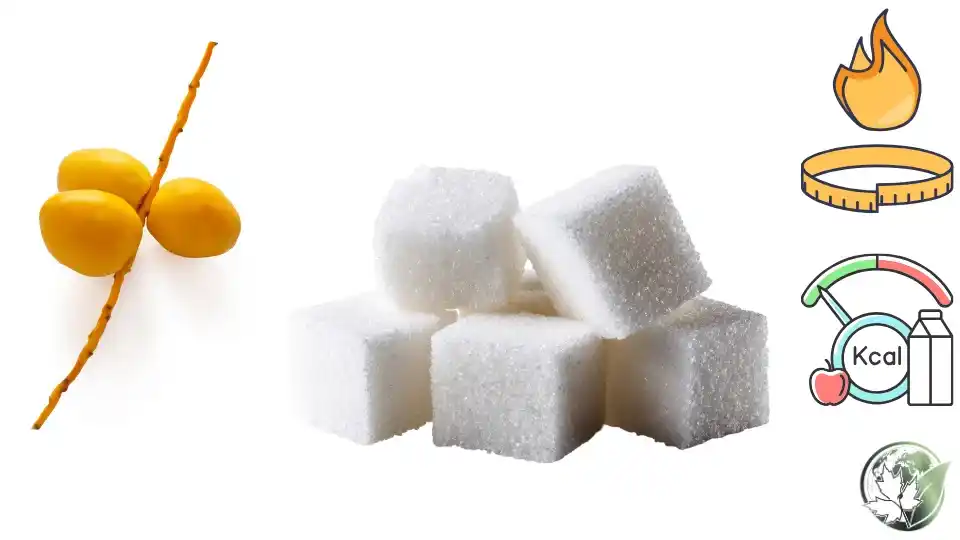
Barhi Dates Calories at a Glance
Barhi dates calories depend on the stage of ripeness at which you eat the fruit. A ripe, soft, brown Barhi date weighs about 10 to 12 grams without the pit and contains roughly 30 calories. Five ripe Barhi dates therefore have about 150 calories, and 100 grams contain about 275 calories. Fresh Barhi dates, eaten at the yellow, crunchy khalal stage, hold much more water and have far fewer calories per 100 grams, usually around 150 to 180.
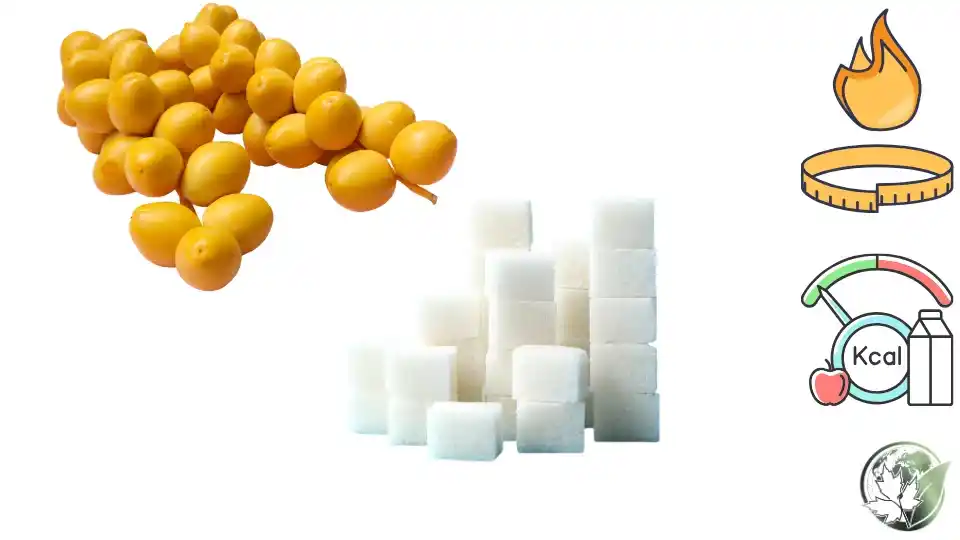
A sugar cube weighs 4 grams and has 16 calories. That makes one ripe Barhi date roughly equal to two sugar cubes in energy and in sugar content. The comparison is useful because dates are often described as a natural alternative to sugar, and they do taste sweet enough to replace it in many recipes. The calories, however, are in the same league.
This guide explains the calories in one, three and five Barhi dates, compares fresh and ripe fruit, converts dates into sugar cubes and describes the nutrients that make dates more than a sugar substitute. You will see three comparison tables, practical serving advice, and an FAQ with short answers.
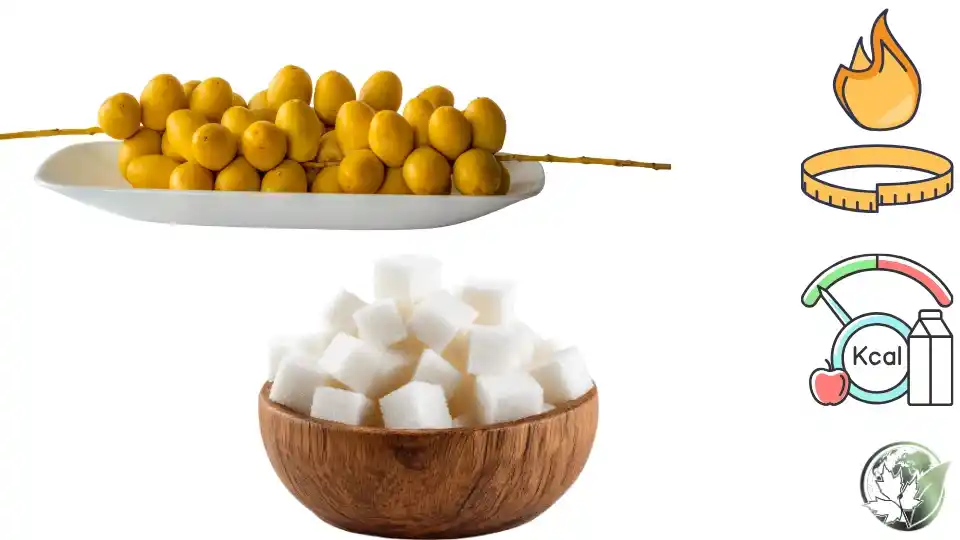
Barhi dates are eaten fresh at the yellow stage or ripe and soft at the brown stage
How Many Calories Are in 1 Barhi Date?
A single ripe Barhi date with the pit removed contains about 30 calories. The calculation relies on a typical weight of 11 grams and a reference value of about 275 calories per 100 grams for soft, ripe dates. Fresh yellow Barhi dates are juicier and weigh 12 to 20 grams each, but have around 150 to 180 calories per 100 grams, giving 20 to 30 calories per fruit.
Barhi dates are known for being rounder and shorter than many other varieties, and for a sweet, honeyed flavor when ripe. Because they are often sold in clusters or in tubs with pits inside, weigh the fruit after pitting when you want accurate numbers. The pit accounts for about 10 to 15 percent of the whole date weight and adds no edible calories.
If you buy Barhi by the kilogram, expect about 85 to 90 grams of edible flesh per 100 grams of whole fruit. A kilo of dates with pits yields about 870 grams of flesh, or roughly 2400 calories at the ripe stage.
How Many Calories Are in 3, 5 and 10 Barhi Dates?
Dates are easy to overeat because they are small, sweet and soft. The table below shows common counts based on 11 grams per ripe date.
| Number of ripe dates | Weight | Calories | Sugar | Sugar cubes of sugar |
|---|---|---|---|---|
| 1 | 11 g | 30 kcal | 7.3 g | 1.8 |
| 2 | 22 g | 60 kcal | 14.5 g | 3.6 |
| 3 | 33 g | 91 kcal | 21.8 g | 5.4 |
| 5 | 55 g | 151 kcal | 36.3 g | 9.1 |
| 7 | 77 g | 212 kcal | 50.8 g | 12.7 |
| 10 | 110 g | 303 kcal | 72.6 g | 18.2 |
Three ripe dates give about 91 calories, which many people find a satisfying snack. Seven dates reach more than 200 calories and equal the free sugar limit recommended for a whole day if you count the fruit as sugar, although fiber and other nutrients make date sugar different from table sugar in practice.
Barhi Dates vs a Sugar Cube: Calories and Sugar
The most direct comparison puts one date next to one cube. A ripe Barhi date contains about 30 calories and 7 grams of sugar, while a sugar cube has 16 calories and 4 grams of sugar.
| Item | Weight | Calories | Sugar | Fiber |
|---|---|---|---|---|
| 1 sugar cube | 4 g | 16 kcal | 4 g | 0 g |
| 1 ripe Barhi date | 11 g | 30 kcal | 7.3 g | 0.7 g |
| 2 sugar cubes | 8 g | 31 kcal | 8 g | 0 g |
| 1 fresh yellow Barhi date | 15 g | 25 kcal | 5 g | 0.5 g |
| 4 sugar cubes | 16 g | 62 kcal | 16 g | 0 g |
Two sugar cubes equal about one ripe date in calories. The date, however, also supplies fiber, potassium and polyphenols, while sugar supplies nothing else. That does not make dates low in calories, but it does make each calorie a little more nutritious.
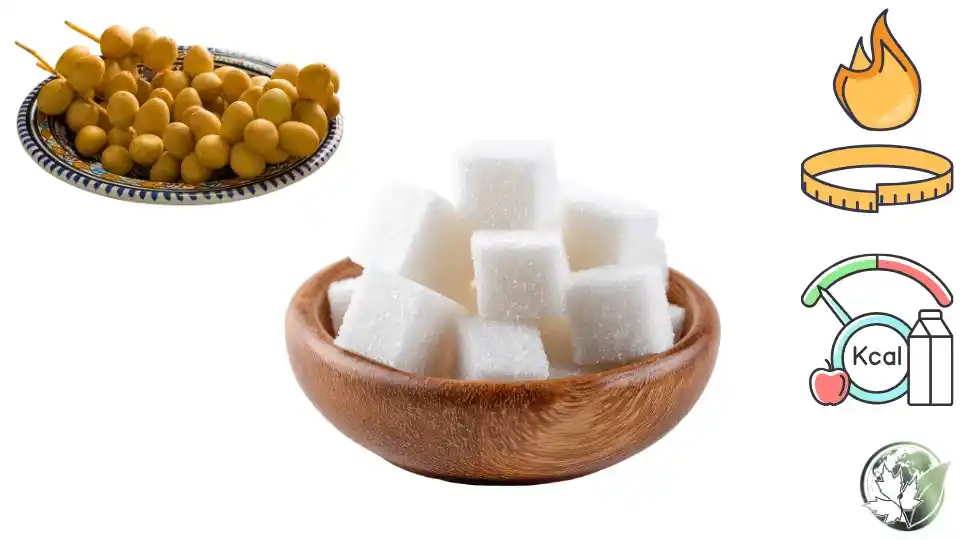
One ripe Barhi date has about the same calories as two sugar cubes
How Do Fresh Yellow Barhi Dates Compare with Ripe Brown Ones?
Barhi dates are unusual because they can be eaten at the khalal stage, when the fruit is yellow, firm and crunchy, as well as at the rutab or tamar stage, when it turns brown and soft. The stages differ sharply in water and sugar.
| Per 100 g | Fresh yellow (khalal) | Soft brown (rutab) | Fully ripe (tamar) |
|---|---|---|---|
| Calories | 150 to 180 kcal | 220 to 250 kcal | 270 to 285 kcal |
| Water | 55 to 65 g | 30 to 40 g | 15 to 22 g |
| Sugar | 30 to 38 g | 50 to 60 g | 63 to 68 g |
| Fiber | 3 to 4 g | 6 to 7 g | 7 to 8 g |
| Texture | Crunchy, astringent | Soft, syrupy | Chewy, sticky |
Fresh yellow Barhi are the lowest in calories by weight, and many people enjoy them as a crisp, apple-like snack. Because they contain tannins, they can be slightly astringent when not perfectly ripe. As the fruit softens and browns, water evaporates and sugar concentrates. These figures are approximate, since moisture varies with the crop and with storage.
How Many Sugar Cubes Are in Barhi Dates?
Converting dates into sugar cubes is a useful picture. Divide the grams of sugar by four. One ripe Barhi date, with about 7.3 grams of sugar, holds about 1.8 cubes. Five dates hold nine cubes. A fresh yellow date has about 1.2 cubes.
For perspective, the World Health Organization recommends keeping free sugars below 50 grams per day, or about 12 cubes, for a 2000 calorie diet. The guideline refers to added sugars and those in honey, syrups and juices, not to sugars naturally contained in whole fruit. Dates are whole fruit, so they are not counted as free sugar. Even so, the energy still counts, and someone watching blood sugar should treat three dates like a serving of carbohydrate, about 22 grams.
If you replace two sugar cubes in a drink with one date, you are replacing 31 calories with 30, which does not save energy. What you gain is fiber, minerals and the satisfaction of a whole food.
What Nutrients Do Barhi Dates Provide?
Dates are valued for their nutrient density. Per 100 grams of ripe fruit, a typical date provides roughly 7 grams of fiber, 650 milligrams of potassium, 55 milligrams of magnesium, 0.3 milligram of vitamin B6 and 0.4 milligram of copper. A serving of three dates delivers about 7 percent of daily potassium and 8 percent of daily fiber.
| Per 100 g ripe date | Amount | Per 3 dates (33 g) |
|---|---|---|
| Calories | 275 kcal | 91 kcal |
| Carbohydrate | 75 g | 25 g |
| Fiber | 7 g | 2.3 g |
| Protein | 2.0 g | 0.7 g |
| Fat | 0.2 g | 0.1 g |
| Potassium | 650 mg | 215 mg |
| Magnesium | 55 mg | 18 mg |
Dates also contain polyphenols such as flavonoids, carotenoids and phenolic acids, which act as antioxidants. They are naturally free of fat and cholesterol and contain no added sugar, though dried versions sometimes have a glaze or preservatives.
How Do Dates Affect Blood Sugar Compared with Sugar?
Dates have a moderate glycemic index. Studies report values between about 40 and 55 depending on variety and ripeness, lower than table sugar at around 65. Fiber, tannins and the mix of fructose and glucose slow the rise in blood glucose.
For people with diabetes, a small serving of one or two dates with protein, such as nuts or cheese, is generally better tolerated than the same sugar from a cube or syrup. Larger portions will still raise blood sugar significantly. A common recommendation is to count about 15 grams of carbohydrate for every 20 grams of ripe dates, which is roughly two dates.
Eating dates alongside food, rather than alone, helps further. A date stuffed with almond or walnut offers fat and protein that slow digestion, making the snack more filling and the glucose response gentler.
Pairing dates with nuts adds protein and fat that slow sugar absorption
How to Use Barhi Dates as a Sugar Substitute
Dates can replace sugar in many recipes because they are naturally sweet and moist. Blend pitted dates with warm water into a paste, which is easy to stir into oatmeal, smoothies and batters. A typical swap is to use 1 cup of date paste, about 250 grams and 690 calories, for 1 cup of sugar at 774 calories. Reduce other liquids by about a quarter cup.
For hot drinks, chop a date finely and let it steep in the tea for a few minutes. One date provides sweetness equal to about two cubes. For baking, date paste works well in brownies, muffins and energy balls. You will notice a deeper, caramel flavor and a softer texture.
Keep in mind that date paste still adds calories. A batch of 12 muffins sweetened with a cup of date paste has about 57 calories from the paste per muffin, compared with 65 calories per muffin from the same amount of sugar. The saving is minor, so the main benefit is the fiber and nutrients, not fewer calories.
How to Fit Barhi Dates into a Calorie Budget
A sensible serving of dates is two to three pieces, which provide 60 to 90 calories. They work well as a pre-workout snack, as a sweet finish after a meal or as an energy boost during a long day. If you are watching calories, plan dates in place of other sweets, not in addition to them.
A few practical ideas help:
Replace a candy bar, about 230 calories, with three dates and a handful of almonds, about 200 calories and more fiber
Replace two sugar cubes in tea with one date, saving nothing but adding nutrients
Use one chopped date in oatmeal instead of a tablespoon of syrup, saving about 20 calories
Stuff a date with a teaspoon of tahini or nut butter for a 70 calorie dessert
Skip dates in large handfuls from the box, and instead portion them into small containers
Eating dates mindfully, one at a time, makes a small amount feel satisfying. Pitted dates are easy to overeat, so keep the portion visible and put the box away.
How to Choose and Store Barhi Dates
For fresh yellow Barhi, look for firm, plump, glossy fruit with smooth skin and no brown bruises. They should feel crisp and taste mildly sweet. Eat them within a week and store them in the refrigerator in a ventilated bag. Fresh Barhi can also be frozen, which keeps them crisp when thawed gently.
For ripe brown Barhi, choose fruit that is soft, shiny and uniform in color. A sticky, syrupy interior is normal. Avoid dates with white crystals that feel hard, which indicate old stock, and avoid any with a sour smell or visible mold.
Store ripe dates in an airtight container in a cool place for two to three months, or in the refrigerator for up to a year. For long term storage, freezing keeps them soft and prevents insects. Always check for tiny moths in packs that have been open for a while.
How Do Barhi Dates Compare with Other Date Varieties?
Barhi is one of several popular varieties. Calories per 100 grams are close, but water content and size shift the per-piece values.
| Variety | Calories per 100 g | Typical weight per date | Calories per date |
|---|---|---|---|
| Barhi (ripe) | 275 kcal | 11 g | 30 kcal |
| Medjool | 277 kcal | 24 g | 66 kcal |
| Deglet Noor | 282 kcal | 8 g | 23 kcal |
| Mazafati | 270 kcal | 12 g | 32 kcal |
| Kabkab | 280 kcal | 14 g | 39 kcal |
| Zahedi | 290 kcal | 9 g | 26 kcal |
Because the numbers are so close, picking by taste and texture is reasonable. Barhi is prized for its honey-like sweetness and soft, juicy flesh. Medjool is larger and heavier, so a single fruit costs more calories. When comparing recipes, always weigh the dates instead of counting them.
All date varieties have similar calories per 100 grams, but their sizes differ
How Many Calories Are in a Cup, Tablespoon and Spoonful of Barhi Date Paste?
Recipes often call for chopped dates or date paste, so volume measures matter. One cup of whole pitted ripe Barhi dates weighs about 150 grams, which is roughly 14 dates, and contains about 410 calories. A cup of chopped dates packs a little tighter and weighs about 170 grams, with about 470 calories. Date paste is denser: a tablespoon weighs about 20 grams and contains around 55 calories, while a cup weighs 250 grams and has about 690 calories.
| Measure | Weight | Calories | Sugar cubes of sugar |
|---|---|---|---|
| 1 tablespoon date paste | 20 g | 55 kcal | 3.3 |
| 1 tablespoon chopped dates | 11 g | 30 kcal | 1.8 |
| 1 cup whole pitted dates | 150 g | 410 kcal | 24.8 |
| 1 cup chopped dates | 170 g | 470 kcal | 28.1 |
| 1 cup date paste | 250 g | 690 kcal | 41.3 |
Because a tablespoon of date paste has about as many calories as a tablespoon of table sugar, using paste does not reduce energy. What it changes is the nutrient package and the texture, and you may find that you need less because the flavor is stronger.
How Should You Eat Barhi Dates During Fasting or After Exercise?
Dates have a long tradition as the food used to break a fast, and their nutrition explains why. Three ripe dates give about 25 grams of carbohydrate, enough to restore blood sugar quickly, plus potassium and magnesium that help rehydration. The fiber slows absorption just enough to avoid a harsh spike, especially if you drink water with them.
After an evening fast, a common pattern is two or three dates and a glass of water, followed by a normal meal 15 to 20 minutes later. That keeps the first intake to about 60 to 90 calories and lets your stomach adjust. Eating a large plate of dates immediately on an empty stomach can cause bloating in some people because of their fiber and fructose.
For exercise, two to four dates one hour before a workout provide quick fuel, and two dates with a handful of nuts afterward help replace glycogen. Endurance athletes sometimes eat dates during long efforts, with about 20 grams of carbohydrate per three dates, much like a gel but with real food.
How to Read Date Labels and Avoid Hidden Added Sugar
Plain dates should list one ingredient: dates. Some packs add glucose syrup, sugar or preservatives such as sulfites to keep the fruit soft and bright. These additions raise calories and sugar slightly, and sulfites can trouble people with asthma. Pitted dates may be coated with a thin layer of vegetable oil to prevent sticking, which adds a few calories per 100 grams.
Check the serving size, because it varies. One brand may define a serving as three dates and another as 40 grams. Convert the label to calories per 100 grams to compare. A label that shows 290 to 300 calories per 100 grams suggests added sugar or oil, while 270 to 285 matches normal ripe dates. Stuffed or chocolate-coated dates will be much higher, often 350 to 450 calories per 100 grams.
How to Make a Barhi Date Snack Under 150 Calories
Dates are most satisfying when they are part of a small combination, not eaten alone. The ideas below keep the total at or below 150 calories while adding protein, fat or fiber.
Two ripe dates, 60 calories, with 10 almonds, about 70 calories, for 130 calories in total
Two dates stuffed with a teaspoon of peanut or almond butter each, about 140 calories
Two chopped dates stirred into 100 grams of plain yogurt, about 125 calories
One date with a slice of cheese and four walnut halves, about 190 calories
Three fresh yellow Barhi dates with a cup of green tea, about 75 calories
Each combination includes a source of protein or fat, which slows digestion and helps you stay full. If you are treating dates as dessert, serve them on a small plate with tea, and stop at the planned amount.
How to Compare Barhi Dates with Other Sweet Snacks per 100 Calories
Seeing what 100 calories looks like shows why dates feel satisfying. Three and a third ripe Barhi dates weigh about 37 grams and provide 100 calories. The same energy comes from about 6 sugar cubes, 19 grams of milk chocolate, or 12 grams of honey. The date wins on fiber, potassium and the physical volume of the snack, while sugar and chocolate pack the energy into very small portions that are easy to overeat. If you are choosing something sweet between meals, a couple of dates give you texture, chewing time and a modest calorie cost.
Key Takeaways: Barhi Dates vs a Sugar Cube
A ripe Barhi date has about 30 calories and 7 grams of sugar, equal to roughly two sugar cubes. Five dates have about 150 calories and 9 cubes of sugar, and 100 grams have about 275 calories. Fresh yellow Barhi dates are much lighter at 150 to 180 calories per 100 grams because of their water content.
Dates give you fiber, potassium and antioxidants that sugar does not, but they are not low in calories. Count them as a carbohydrate serving, eat two or three at a time and pair them with nuts for the best balance.
Frequently Asked Questions
8 questions answered
How many calories are in one Barhi date?
One ripe Barhi date without the pit has about 30 calories, while a fresh yellow Barhi date has about 20 to 30 calories.
How many calories are in 5 Barhi dates?
Five ripe Barhi dates weigh about 55 grams and provide about 150 calories and 36 grams of sugar.
How many sugar cubes are in one date?
One ripe Barhi date has about 7 grams of sugar, which equals roughly 1.8 sugar cubes of 4 grams each.
Is a Barhi date healthier than a sugar cube?
A date provides fiber, potassium and antioxidants along with its sugar, so it is more nutritious, but it has more calories than a single cube.
Are fresh Barhi dates lower in calories than dried ones?
Yes. Fresh yellow Barhi dates have about 150 to 180 calories per 100 grams, while fully ripe dates have around 275.
How many Barhi dates can I eat in a day?
Two to five dates is a common range, depending on your calorie needs and blood sugar. Count them as a carbohydrate serving.
Can dates replace sugar in recipes?
Yes, as date paste or chopped fruit, but they add similar calories to sugar, so the benefit is fiber and nutrients rather than fewer calories.
How should I store Barhi dates?
Keep fresh ones in the refrigerator for up to a week and ripe ones in an airtight container for several months, or freeze them for longer storage.




