Astragalus Honey Calories at a Glance
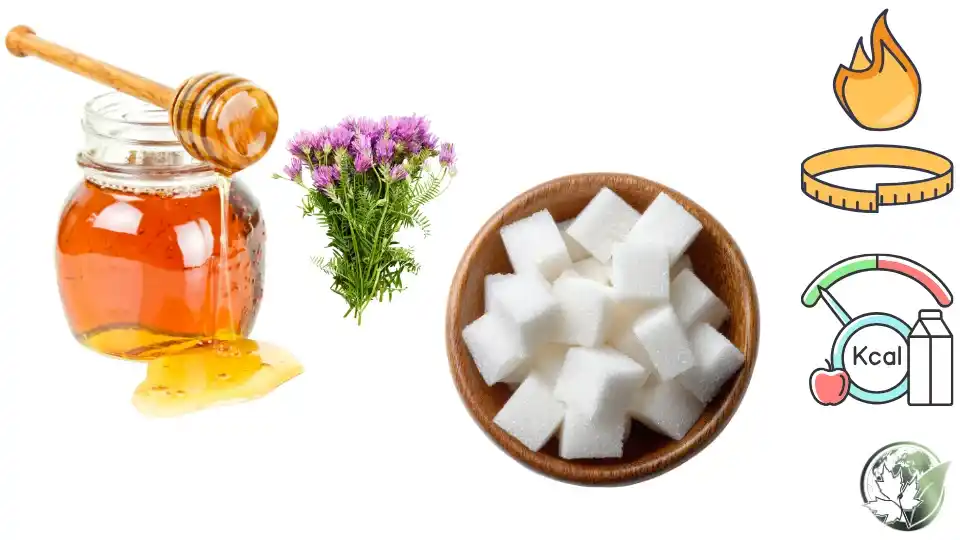
Astragalus honey calories are close to those of any other pure honey: about 300 to 320 calories per 100 grams. A level teaspoon of about 7 grams holds roughly 21 calories, and a tablespoon of about 21 grams holds roughly 64. A sugar cube weighs about 4 grams and has 16 calories, so one teaspoon of honey equals about 1.3 sugar cubes in calories.
Astragalus honey, often sold under the name gavan or gavan honey in Iran and neighboring regions, is made from the nectar of Astragalus plants that grow on mountain slopes. It is usually light in color, thick and mild, with a delicate, slightly floral taste. These traits affect flavor and price, but not the calorie count in a meaningful way, because honey is mainly sugar and water in every case.
The interesting comparison is not simply calories. A teaspoon of honey has more calories than a sugar cube because it weighs more, yet gram for gram honey has fewer calories than sugar, since it contains about 17 percent water. This guide breaks down the numbers per spoon, per cube and per 100 grams, then explains how astragalus honey differs from white sugar in sweetness, nutrients and blood sugar response. You will find three tables, practical swap ideas and an FAQ.
Astragalus honey is typically light, thick and mild, with about 64 calories per tablespoon
How Many Calories Are in Astragalus Honey per Teaspoon and Tablespoon?
Honey is dense, so its weight per spoon is higher than that of water. A level teaspoon holds about 7 grams and a level tablespoon about 21 grams. Using a reference value of 304 calories per 100 grams, the numbers work out as follows.
| Spoon measure | Weight | Calories | Sugar |
|---|---|---|---|
| 1 teaspoon | 7 g | 21 kcal | 5.7 g |
| 1 heaped teaspoon | 10 g | 30 kcal | 8.2 g |
| 1 dessert spoon | 14 g | 43 kcal | 11.5 g |
| 1 tablespoon | 21 g | 64 kcal | 17.2 g |
| 1 heaped tablespoon | 30 g | 91 kcal | 24.6 g |
| 1 cup | 339 g | 1031 kcal | 278 g |
| 100 g | 100 g | 304 kcal | 82 g |
Astragalus honey measured from the jar may be slightly different from these figures because of its thick texture. Very thick honey tends to heap on the spoon, so a "teaspoon" can easily reach 10 grams or more. Dipping a spoon and letting it drip adds even more. If you are counting calories, level the spoon with a knife or weigh the portion.
Astragalus Honey vs a Sugar Cube: Calories and Sugar
A standard sugar cube weighs 4 grams and consists of nearly 100 percent sucrose. That makes its calories easy to calculate: 4 grams times 3.87 calories per gram equals about 16 calories. Honey, in contrast, is roughly 82 percent sugars and 17 percent water, so each gram carries about 3.04 calories.
| Item | Weight | Calories | Sugar | Water |
|---|---|---|---|---|
| 1 sugar cube | 4 g | 16 kcal | 4 g | 0 g |
| 1 teaspoon astragalus honey | 7 g | 21 kcal | 5.7 g | 1.2 g |
| 2 sugar cubes | 8 g | 31 kcal | 8 g | 0 g |
| 1 tablespoon astragalus honey | 21 g | 64 kcal | 17.2 g | 3.6 g |
| 4 sugar cubes | 16 g | 62 kcal | 16 g | 0 g |
The table shows that one tablespoon of honey has about the same calories and sugar as four sugar cubes. A teaspoon is equal to about 1.4 cubes of sugar by sugar content and 1.3 by calories. If a recipe or tea needs sweetness, swapping honey for sugar by calories gives you almost the same energy, not a big saving.
How Sweet Is Astragalus Honey Compared with Sugar?
The reason people think honey is "lighter" is that it tastes sweeter per gram than sugar. Honey contains a high proportion of fructose, which is perceived as sweeter than sucrose. Depending on the honey, relative sweetness is around 1.1 to 1.3 times that of table sugar. Astragalus honey tends to be mild but still noticeably sweet.
That means you may need less honey than sugar for the same sweetness. If you normally put two sugar cubes, 8 grams and 31 calories, in a glass of tea, you might be satisfied with one teaspoon of honey, 7 grams and 21 calories, saving about 10 calories. Over a day with three cups, that adds up to 30 calories.
The saving is real but small. It is far more effective to reduce the total amount of sweetener over time than to rely on honey being slightly sweeter.
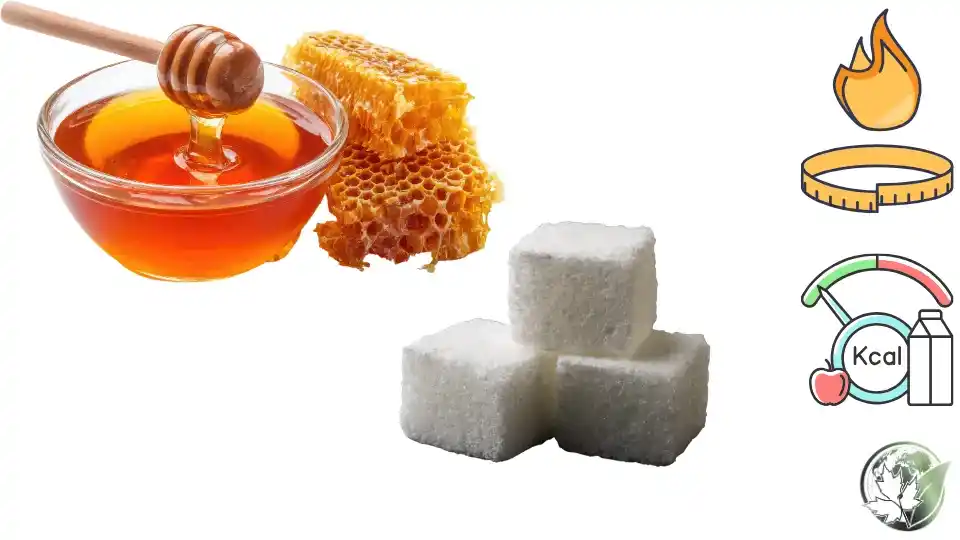
One teaspoon of honey has about 21 calories, while two sugar cubes have about 31
How Does Astragalus Honey Compare with Other Sweeteners per 100 g?
Looking at equal weights is useful for recipes and for understanding concentration. Honey is lower in calories than sugar because of its water content, but it is not a low calorie food.
| Sweetener | Calories per 100 g | Sugar per 100 g | Calories per tablespoon |
|---|---|---|---|
| Astragalus honey | 304 kcal | 82 g | 64 kcal |
| White sugar | 387 kcal | 100 g | 48 kcal |
| Brown sugar | 380 kcal | 97 g | 47 kcal |
| Maple syrup | 260 kcal | 60 g | 52 kcal |
| Date syrup | 310 kcal | 70 g | 65 kcal |
| Molasses | 290 kcal | 75 g | 58 kcal |
| Agave syrup | 310 kcal | 76 g | 62 kcal |
Notice that a tablespoon of honey has more calories than a tablespoon of sugar, because honey is denser by volume. If you replace sugar with honey spoon-for-spoon in a recipe, calories go up by about a third. If you replace by weight, calories go down by about 20 percent.
Does Astragalus Honey Have a Lower Glycemic Impact Than Sugar?
Honey is often described as having a lower glycemic index than sugar. Sucrose has a glycemic index of around 65, while many honeys range from 35 to 70 depending on their fructose to glucose ratio. Honeys with more fructose generally have a lower index because fructose raises blood glucose less quickly than glucose.
Astragalus honey is often reported to be higher in fructose, which is one reason it stays liquid for a long time and crystallizes slowly. That can translate to a modestly lower glycemic response, but it is not a license to eat more. A tablespoon still delivers 17 grams of sugar. People with diabetes should count honey as carbohydrate and monitor their own response.
Remember that glycemic index describes a standard 50 gram carbohydrate portion, not a teaspoon. In everyday amounts, differences between honey and sugar are small compared with portion size and the foods eaten alongside.
What Nutrients Does Astragalus Honey Contain Besides Sugar?
Honey contains tiny amounts of vitamins and minerals, plus enzymes and plant compounds. A tablespoon provides about 0.1 milligram of vitamin C, 11 milligrams of potassium and traces of calcium, iron and magnesium. These amounts are not enough to meet nutritional needs, so honey should not be considered a source of vitamins or minerals.
The more interesting components are phenolic compounds and flavonoids, which give honey antioxidant activity. Darker honeys usually contain more of them than light honeys. Astragalus honey is light colored, so its antioxidant content is generally modest compared with dark mountain or forest honeys.
Honey has also been studied for soothing coughs. Evidence suggests a teaspoon at night may reduce cough in children over one year old, but there is no reason to choose one honey type over another for that purpose. Honey must never be given to infants under 12 months because of the risk of botulism.
How Many Sugar Cubes Are in a Spoon of Astragalus Honey?
Translating honey into cubes is a handy mental model. Because a spoon of honey is mostly sugar, its sugar content is easy to convert. One teaspoon of honey contains about 5.7 grams of sugar, or 1.4 cubes. A tablespoon contains about 17.2 grams, or 4.3 cubes.
If you add two teaspoons to tea, that is 2.9 cubes of sugar. If you drizzle a tablespoon over yogurt, that is 4.3 cubes. A heaped tablespoon, which many people use without noticing, reaches 6 cubes. Compared with the recommended limit of about 25 grams of free sugars per day for ideal health, a single tablespoon of honey uses two thirds of the allowance.
This is why honey is best treated as a flavoring, not a free ingredient. A small amount goes a long way if you pick strong flavors such as cinnamon or lemon to carry the sweetness.
Leveling the spoon keeps honey portions accurate at about 21 calories per teaspoon
How to Use Astragalus Honey to Sweeten Foods with Fewer Calories
Honey is useful when you want sweetness and flavor in small amounts. A few strategies keep the calories low.
Add honey after cooling hot drinks, so the aroma stays strong and you need less
Measure with a teaspoon instead of pouring from the jar
Choose strong pairings such as lemon, ginger or cinnamon that make small amounts taste sweeter
Spread honey thinly on toast with nut butter instead of layering jam and honey
Use a drizzle on plain yogurt and fresh fruit instead of flavored yogurt
A typical flavored yogurt cup of 150 grams contains about 20 grams of sugar and 140 calories. Plain yogurt with a teaspoon of honey has about 100 calories and 11 grams of sugar. That is a saving of 40 calories and 9 grams of sugar, which is more than two sugar cubes.
How to Compare Honey Types by Calories
All pure honeys are close in calories because they are mostly sugar and water, but small differences exist. Water content ranges from about 14 to 20 percent, which changes calories per 100 grams by around 5 percent.
| Honey type | Calories per 100 g | Typical color | Typical texture |
|---|---|---|---|
| Astragalus (gavan) | 300 to 320 kcal | Light amber | Thick, slow to crystallize |
| Thyme honey | 300 to 320 kcal | Amber | Medium, aromatic |
| Mountain honey | 295 to 315 kcal | Dark amber | Medium to thick |
| Sidr honey | 295 to 315 kcal | Dark | Thick, rich |
| Acacia honey | 300 to 320 kcal | Very light | Fluid, stays liquid |
| Clover honey | 300 to 310 kcal | Light | Medium, creamy when set |
For most people the choice is about taste and budget. Pure, unprocessed honey from reputable producers tends to have a distinctive flavor and a variable water level. Adulterated products, where syrups are added, can show a higher calorie density and a flatter taste.
How to Spot Real Astragalus Honey
Authentic astragalus honey has a light golden color, a smooth, thick texture and a mild floral aroma. It should not smell like caramel or taste harsh. Because of its fructose content, it stays liquid for months, then crystallizes finely rather than forming big grains.
Simple tests are not foolproof, but some signs help. Real honey usually forms a thick ribbon when dripped and folds on itself. It dissolves slowly in cold water instead of dispersing instantly. A product that is extremely cheap, unusually clear and perfectly runny at low temperatures may have been diluted or mixed with syrup. Laboratory tests, including moisture, HMF, diastase activity and sugar profile, are the reliable way to verify authenticity.
For wholesale buyers and exporters, requesting a certificate of analysis for moisture, HMF and sugar profile is standard practice. Moisture below 20 percent protects the honey from fermentation and gives a reliable calorie reference.
How to Store Astragalus Honey
Honey lasts almost indefinitely when stored properly, thanks to its low water activity and natural acidity. Keep it in a tightly closed glass or food-grade container, at room temperature, away from direct sunlight and moisture. Avoid the refrigerator because cold speeds crystallization.
If honey crystallizes, place the jar in warm water at about 40 degrees Celsius until it liquefies. Overheating above 60 degrees destroys enzymes and aromas and increases HMF, a marker of heat damage. Never add water to the jar, because extra moisture can cause fermentation.
A foam on top or a sour smell means the honey has fermented because it absorbed water. Honey with a higher moisture content, above 20 percent, is more prone to this. Use clean, dry spoons every time.
How Much Honey Is a Reasonable Daily Amount?
For most healthy adults, a teaspoon or two per day fits easily into a balanced diet. That is 21 to 42 calories and 6 to 12 grams of sugar. Compared with the 50 grams of free sugars that make up 10 percent of a 2000 calorie diet, this is a modest share.
Children should eat less, about one teaspoon at most, and infants should never have honey. People with diabetes, prediabetes or high triglycerides should count honey as a carbohydrate and ask their healthcare provider how much fits. Anyone with allergies to bee products or pollen should be cautious, as raw honey can contain traces of pollen.
If you are athletic, honey can be a convenient fuel. A tablespoon before or during long exercise provides about 17 grams of fast carbohydrate, which is close to what many sports gels offer per serving.
A small drizzle of honey adds flavor with about 21 calories per teaspoon
How Many Calories Does Honey Add to Tea, Milk and Lemon Water?
Honey is most often used in drinks, where small spoonfuls repeat several times a day. The table below shows how common drink habits compare when you sweeten with astragalus honey or with sugar cubes.
| Drink | Sweetener | Calories added | Sugar added |
|---|---|---|---|
| Cup of tea | 1 teaspoon honey | 21 kcal | 5.7 g |
| Cup of tea | 2 sugar cubes | 31 kcal | 8 g |
| Warm milk, 200 ml | 1 tablespoon honey | 64 kcal | 17 g |
| Lemon water, 250 ml | 1 teaspoon honey | 21 kcal | 5.7 g |
| Ginger tea, 250 ml | 2 teaspoons honey | 43 kcal | 11.5 g |
| Coffee | 3 sugar cubes | 47 kcal | 12 g |
Three cups of tea sweetened with two cubes each add 93 calories a day, or about 650 calories a week. Switching to one teaspoon of honey per cup lowers that to 63 calories a day. A further step to half a teaspoon, which many people find enough with a strong honey flavor, brings the total to about 32 calories a day.
How to Replace Sugar with Honey in Baking and Cooking
Honey can replace sugar in cakes, sauces and marinades, but the swap needs adjustments. Because honey is about 17 percent water and sweeter than sugar, use about three quarters of a cup of honey for each cup of sugar. Reduce other liquids by about a quarter cup per cup of honey, and add a quarter teaspoon of baking soda to balance the acidity. Lower the oven temperature by about 10 degrees Celsius, because honey browns faster.
In calorie terms, a cup of sugar weighs 200 grams and has about 774 calories. Three quarters of a cup of honey weighs about 254 grams and has about 772 calories, so the totals are almost identical. The benefit of using honey is flavor and moisture, not a lower calorie count. For savory dishes, a teaspoon of honey in a salad dressing or glaze adds balance for just 21 calories per serving.
If you are trying to reduce calories, the better approach is to cut the total sweetener by 20 to 25 percent, regardless of type. Most cakes and cookies taste nearly the same with a quarter less sugar or honey.
What Is the Difference Between Raw Honey and Processed Honey in Calories?
Raw honey is strained but not heavily heated or filtered, while processed honey is often pasteurized and filtered to delay crystallization. In terms of calories, the two are the same, because processing does not change the sugar content. The differences lie in pollen content, enzymes and aroma.
Heating honey above 60 degrees Celsius reduces enzyme activity and can darken the color. Some producers also add water to ease filtering, then remove it again by evaporation. Honey that is overheated or poorly dried can have a higher moisture content or a cooked flavor. If you care about flavor, choose honey labeled raw or minimally processed from a trusted source, and treat the calories as identical.
How to Measure Honey Accurately in Grams, Spoons and Cups
Honey sticks to measuring tools, which makes volume measures unreliable. The most accurate method is to place the jar or a small bowl on a kitchen scale, zero it and spoon honey until you reach the target weight. For 10 grams, you get about 30 calories. If you only have spoons, lightly oil or warm the spoon so the honey slides off and level the top with a knife. A cup measure coated with a little neutral oil will release honey cleanly and give you a more truthful number. Writing down your own spoon weight once, for example 9 grams for a typical teaspoon from your kitchen, saves guesswork for the rest of the year.
Key Takeaways: Astragalus Honey vs a Sugar Cube
Astragalus honey has about 304 calories per 100 grams, 21 calories per teaspoon and 64 calories per tablespoon. A sugar cube has 16 calories and 4 grams of sugar. One teaspoon of honey equals about 1.3 cubes in calories and 1.4 cubes in sugar, and a tablespoon equals about four.
Honey tastes sweeter, so you may use a little less, and it contains traces of antioxidants, but it remains a concentrated sugar. Level your spoons, count your cubes and treat honey as a flavoring that supports a balanced diet.
Frequently Asked Questions
8 questions answered
How many calories are in a teaspoon of astragalus honey?
A level teaspoon of about 7 grams has about 21 calories and about 5.7 grams of sugar.
How many calories are in a tablespoon of astragalus honey?
A level tablespoon of about 21 grams has around 64 calories and about 17 grams of sugar.
How many calories are in one sugar cube?
A standard 4 gram sugar cube has about 16 calories and 4 grams of sugar.
Is honey lower in calories than sugar?
By weight, yes: honey has about 304 calories per 100 grams compared with 387 for sugar. By spoon, honey has more calories than sugar because it is denser.
Is astragalus honey healthier than sugar?
It contains small amounts of antioxidants and may have a slightly lower glycemic impact, but it is still a concentrated sugar and should be eaten in small amounts.
How many sugar cubes equal a tablespoon of honey?
A tablespoon of honey has about 17 grams of sugar, which equals roughly four sugar cubes.
Can people with diabetes eat astragalus honey?
In small amounts and counted as carbohydrate, some can, but they should follow their healthcare provider's advice and monitor their blood sugar.
Why does astragalus honey stay liquid longer than other honeys?
It tends to contain more fructose relative to glucose, and fructose crystallizes more slowly, so the honey stays fluid for months.