How Many Calories Are in Ahmad Aghaei Pistachios vs Almonds? The Quick Answer
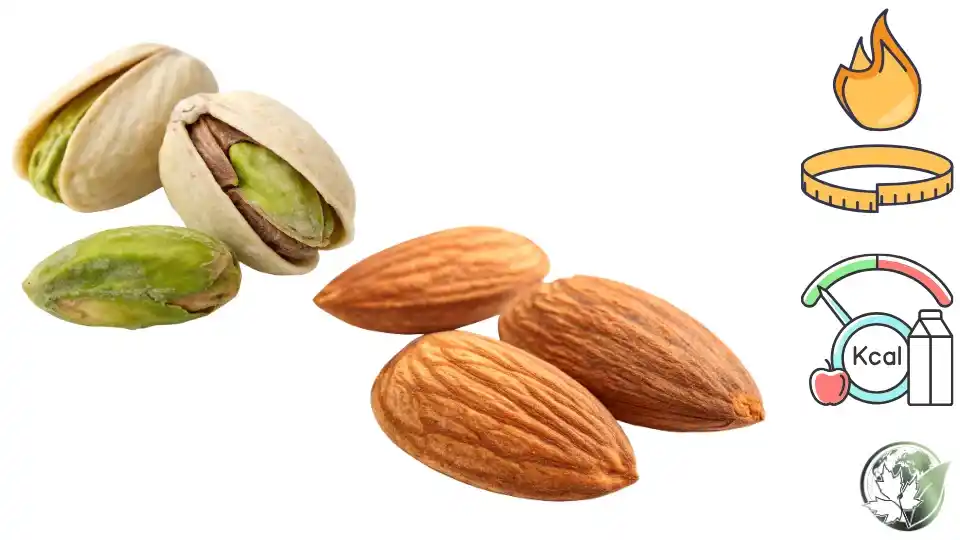
Ahmad Aghaei pistachio kernels have about 562 calories per 100 grams, about 159 calories per ounce (28 grams, roughly 49 kernels) and about 3.2 to 3.5 calories per kernel. Almonds have about 579 calories per 100 grams, about 164 calories per ounce (about 23 almonds) and about 7 calories per almond. So per 100 grams, pistachios have about 3 percent fewer calories than almonds, and per ounce about 5 calories fewer. The biggest practical difference is the count: for 100 calories you can eat about 30 pistachio kernels, but only 14 almonds, so a pistachio snack looks about twice as big.
These two nuts are among the most popular in the world, and both are well regarded for heart health. They are very close in calories because they are both about 45 to 50 percent fat. The differences lie in the fat balance, the amount of fiber and protein, vitamin E, calcium, potassium and other nutrients, and in how people eat them. Almonds are usually eaten with the brown skin on, or blanched, and pistachios in the shell, which affects portion control.
This guide compares Ahmad Aghaei pistachios and almonds across calories, protein, fat, fiber, vitamins and minerals, counts and servings, and shows how each performs in snacks, desserts, butters and weight management. There are three comparison tables and an FAQ. The Ahmad Aghaei variety is the long, slim pistachio grown in Rafsanjan, Kerman province, and its calories are in line with other pistachios.
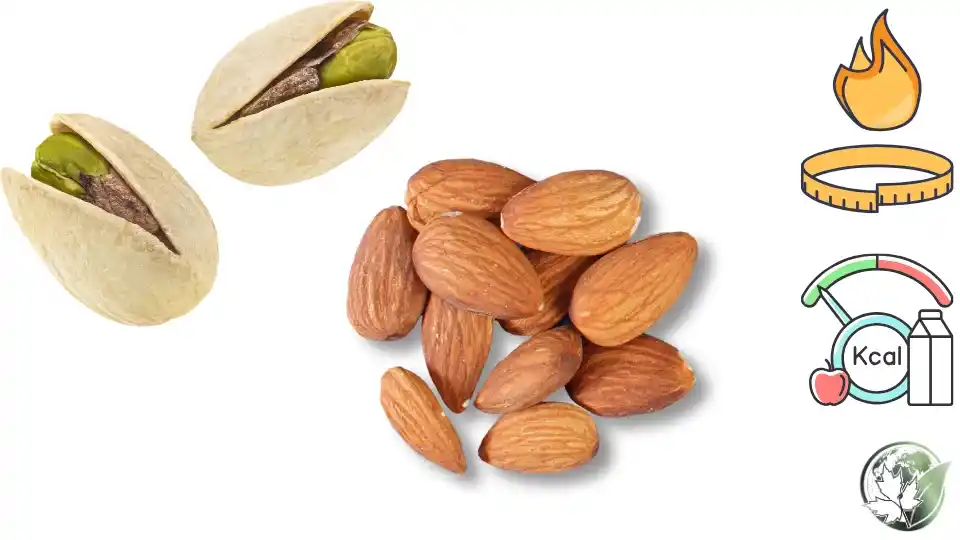
One ounce has about 49 pistachio kernels or 23 almonds
How Many Calories Are in Ahmad Aghaei Pistachios by Nut and Serving?
| Portion | Weight (kernels) | Calories | Protein | Fat | Fiber |
|---|---|---|---|---|---|
| 1 kernel | 0.6 g | 3.4 kcal | 0.1 g | 0.3 g | 0.1 g |
| 10 kernels | 6 g | 34 kcal | 1.2 g | 2.7 g | 0.6 g |
| 20 kernels | 12 g | 67 kcal | 2.4 g | 5.4 g | 1.3 g |
| 30 kernels | 18 g | 100 kcal | 3.6 g | 8.2 g | 1.9 g |
| 49 kernels (1 oz) | 28 g | 159 kcal | 5.7 g | 12.9 g | 3.0 g |
| 1/4 cup | 31 g | 174 kcal | 6.3 g | 14.0 g | 3.3 g |
| 1/2 cup | 62 g | 348 kcal | 12.5 g | 28.1 g | 6.6 g |
| 100 g | 100 g | 562 kcal | 20.2 g | 45.3 g | 10.6 g |
| 100 g in shell (edible 52 g) | 100 g | 292 kcal | 10.5 g | 23.6 g | 5.5 g |
How Many Calories Are in Almonds by Nut and Serving?
| Portion | Weight | Calories | Protein | Fat | Fiber |
|---|---|---|---|---|---|
| 1 almond | 1.2 g | 7 kcal | 0.3 g | 0.6 g | 0.1 g |
| 10 almonds | 12 g | 70 kcal | 2.5 g | 6.0 g | 1.5 g |
| 14 almonds | 17 g | 100 kcal | 3.6 g | 8.5 g | 2.1 g |
| 23 almonds (1 oz) | 28 g | 164 kcal | 6.0 g | 14.2 g | 3.5 g |
| 1/4 cup, whole | 36 g | 207 kcal | 7.6 g | 17.9 g | 4.5 g |
| 1/2 cup, whole | 72 g | 414 kcal | 15.2 g | 35.8 g | 9.0 g |
| 1 cup, whole | 143 g | 828 kcal | 30.4 g | 71.6 g | 17.9 g |
| 100 g | 100 g | 579 kcal | 21.2 g | 49.9 g | 12.5 g |
| 1 tbsp almond butter | 16 g | 98 kcal | 3.4 g | 8.9 g | 1.6 g |
| 1 cup almond flour | 96 g | 560 kcal | 21 g | 48 g | 11 g |
| 1 cup almond milk, unsweetened | 240 ml | 30 kcal | 1.0 g | 2.5 g | 0.5 g |
Ahmad Aghaei Pistachios vs Almonds: Calories Compared
| Amount | Pistachios | Almonds | Difference |
|---|---|---|---|
| 28 g (1 oz) | 159 kcal, 49 nuts | 164 kcal, 23 nuts | Pistachios 5 kcal lower |
| 30 g (handful) | 169 kcal, 52 nuts | 174 kcal, 25 nuts | Pistachios 5 kcal lower |
| 50 g | 281 kcal | 290 kcal | Pistachios 9 kcal lower |
| 100 g | 562 kcal | 579 kcal | Pistachios 17 kcal lower |
| 100 calories | 18 g, 30 nuts | 17 g, 14 nuts | Pistachios twice as many |
| 200 calories | 36 g, 60 nuts | 35 g, 29 nuts | Pistachios twice as many |
| 250 g bag | 1,405 kcal | 1,448 kcal | 43 kcal lower |
| 1 kg | 5,620 kcal | 5,790 kcal | 170 kcal lower |
The difference in calories is small. If you eat 20 nuts of each, the pistachios give 67 calories and the almonds 140 calories. In terms of volume per calorie, pistachios clearly win, and this is part of why they are often recommended for snacking.
Ahmad Aghaei Pistachios vs Almonds: Nutrition Compared
| Per 100 g | Pistachios | Almonds |
|---|---|---|
| Calories | 562 kcal | 579 kcal |
| Protein | 20.2 g | 21.2 g |
| Fat | 45.3 g | 49.9 g |
| Saturated fat | 5.9 g | 3.8 g |
| Monounsaturated fat | 23.8 g | 31.6 g |
| Polyunsaturated fat | 13.8 g | 12.3 g |
| Carbohydrate | 27.2 g | 21.6 g |
| Fiber | 10.6 g | 12.5 g |
| Sugar | 7.7 g | 4.4 g |
| Vitamin E | 2.9 mg | 25.6 mg |
| Vitamin B6 | 1.7 mg | 0.14 mg |
| Calcium | 105 mg | 269 mg |
| Magnesium | 121 mg | 270 mg |
| Potassium | 1,025 mg | 733 mg |
| Iron | 3.9 mg | 3.7 mg |
| Phosphorus | 490 mg | 481 mg |
| Lutein and zeaxanthin | 1,205 mcg | 1 mcg |
| Per 100 calories | Pistachios | Almonds |
|---|---|---|
| Weight | 17.8 g | 17.3 g |
| Protein | 3.6 g | 3.7 g |
| Fiber | 1.9 g | 2.2 g |
| Vitamin E | 0.5 mg | 4.4 mg |
| Potassium | 182 mg | 127 mg |
| Calcium | 19 mg | 46 mg |
| Number of nuts | 30 | 14 |
Almonds are a standout source of vitamin E, calcium and magnesium, while pistachios stand out for potassium, vitamin B6 and lutein. Both give around 6 grams of protein and 3 grams of fiber per ounce. Pistachios have a larger share of carbohydrate and sugar, and almonds more fat and fiber.
Which Has Better Fats: Pistachios or Almonds?
Both nuts are rich in unsaturated fat, which supports heart health when it replaces saturated fat in the diet. Almonds have more monounsaturated fat, about 31.6 grams per 100 grams, the type found in olive oil, and less saturated fat at 3.8 grams. Pistachios have a bit more saturated fat at 5.9 grams per 100 grams, but still about 85 percent of their fat is unsaturated, and they supply more polyunsaturated fat than most nuts. Pistachios also contain phytosterols, plant compounds that can help to lower LDL cholesterol, at about 280 milligrams per 100 grams, more than any other common nut. In trials, both pistachios and almonds have lowered LDL cholesterol by a few percent in people who eat them daily instead of refined snacks.
Which Is Better for Weight Loss: Pistachios or Almonds?
The calories are so close that other factors decide. In favor of pistachios: you get about twice as many nuts per 100 calories, in-shell nuts slow you down and leave visual cues, and the slightly lower calories per gram. In favor of almonds: they contain more fiber and protein per gram, with one study showing that the body does not absorb all of the fat in whole almonds, so the effective calories of 28 grams of whole almonds may be about 129 instead of the 164 on the label, about 20 percent less. A similar effect has been found for pistachios, with about 5 to 6 percent less energy absorbed than the label suggests. Both effects are modest and work in favor of nut eaters.
Whichever nut you choose, portion size is the main issue. A handful of 30 grams is about 170 calories, and a mindless bag of 150 grams has more than 800.
Do Pistachios and Almonds Raise Blood Sugar?
Both have a very low glycemic index, around 15 for pistachios and 0 to 15 for almonds, since they contain little digestible carbohydrate and a lot of fat, protein and fiber. An ounce of either has a glycemic load of about 1 to 2. Studies show that eating nuts with carbohydrate foods, such as bread or rice, lowers the glycemic response of the meal. This makes both nuts a smart snack for people with diabetes or insulin resistance, in controlled portions. The honey and sugar coatings on some roasted versions change this, so check labels.
How Many Calories Are in Pistachio and Almond Treats?
| Treat | Serving | Calories | Notes |
|---|---|---|---|
| Ahmad Aghaei pistachios, raw | 1 oz | 159 kcal | 49 kernels |
| Almonds, raw | 1 oz | 164 kcal | 23 almonds |
| Almonds, dry roasted, salted | 1 oz | 170 kcal | Salt |
| Almonds, sugar-coated | 1 oz | 140 kcal | Sugar shell |
| Pistachio nougat (gaz) | 1 piece (20 g) | 85 kcal | Sugar, egg white |
| Persian almond cookies (nan-e badami) | 1 cookie | 70 kcal | Sugar, almond flour |
| Baklava, pistachio | 1 piece | 230 kcal | Syrup, butter |
| Marzipan | 1 oz | 130 kcal | Almond paste, sugar |
| Pistachio ice cream | 1/2 cup | 210 kcal | Cream |
| Almond milk, sweetened | 1 cup | 90 kcal | Sugar |
How Do You Choose and Store Pistachios and Almonds?
Choose nuts that smell sweet and nutty, never musty or like paint. In-shell pistachios should have partly open shells, and the kernels inside should be bright green to yellow-green. Almonds should look plump, with a smooth brown skin. Both keep best in airtight containers in a cool, dark place for up to six months, in the refrigerator for a year, and in the freezer for up to two years. Roasting nuts at home at 150 degrees Celsius for 10 to 12 minutes brings out flavor without added oil, with no change in calories. Soaking almonds overnight makes them softer and easier to digest for some, with the same calories.
How to Count Pistachio and Almond Calories Accurately
For pistachios, weigh the kernels and use 5.6 calories per gram, or count 3.4 per kernel. In shell, weigh the nuts and multiply by 0.52 before applying 5.6. For almonds, weigh and use 5.8 calories per gram, or count 7 per almond. Count nut butters at about 95 to 98 calories per tablespoon. Roasted, salted, honey-coated and chocolate-covered nuts differ, so use the label values.
Are Pistachios or Almonds Better for Heart Health?
Both nuts are part of heart-healthy eating patterns such as the Mediterranean diet. The large PREDIMED trial found that people who ate a daily handful of mixed nuts, including almonds, walnuts and hazelnuts, alongside olive oil, had fewer cardiovascular events than those on a low fat diet. Pistachio-specific trials show that eating about 1.5 ounces a day can reduce LDL cholesterol, blood pressure and inflammation markers, and improve the way blood vessels dilate. Almond trials show similar reductions in LDL cholesterol, of about 5 to 7 percent, along with higher HDL when almonds replace refined carbohydrate. The mechanisms overlap: unsaturated fat, fiber, plant sterols and antioxidants. In practice, the best choice is the nut you will eat regularly, in place of less healthy snacks.
| Heart-related nutrient (per ounce) | Pistachios | Almonds |
|---|---|---|
| Unsaturated fat | 11.0 g | 12.0 g |
| Fiber | 3.0 g | 3.5 g |
| Plant sterols | 61 mg | 39 mg |
| Magnesium | 34 mg | 76 mg |
| Potassium | 290 mg | 208 mg |
| Vitamin E | 0.8 mg | 7.3 mg |
| L-arginine | 0.5 g | 0.7 g |
Which Is Better for Skin, Eyes and Brain?
Almonds provide the most vitamin E among common nuts, about 7.3 milligrams per ounce, roughly half of the daily need, and this fat soluble antioxidant protects skin and cell membranes. Pistachios have much less vitamin E but are one of the few nuts containing lutein and zeaxanthin, which accumulate in the retina and are associated with a lower risk of age-related macular degeneration. Pistachios also supply vitamin B6, important for brain chemistry and red blood cells, at about 0.5 milligram per ounce, around a third of the daily need. Neither nut provides much omega-3, so for brain health combine them with walnuts, flaxseed or fish. Using both in a varied diet covers the nutrients each lacks.
How Do Pistachios and Almonds Compare for Cooking and Baking?
Pistachios have a delicate green color and a slightly sweet, resinous flavor that stands out in Persian desserts, ice cream, nougat, halva and rice dishes. Almonds are more neutral and versatile, used whole, blanched, sliced, ground into flour or pressed into milk and butter. Almond flour is a staple of gluten-free and low carbohydrate baking, with about 560 calories per cup, while ground pistachios can be used for crusts, cakes and spreads, though the color and flavor are stronger. When baking, the nuts' calories add up quickly: a half cup of ground almonds in a cake adds about 280 calories to the whole recipe, or 35 per slice for 8 slices. To reduce calories, use nuts as a topping instead of an ingredient, toast them to boost flavor and use a smaller amount.
| Use | Pistachios | Almonds |
|---|---|---|
| Garnish, 1 tbsp chopped | 27 kcal | 26 kcal |
| Crust for 4 fish fillets, 1/2 cup | 280 kcal total | 290 kcal total |
| Ground in a cake, 1/2 cup | 275 kcal total | 280 kcal total |
| Nut butter, 1 tbsp | 95 kcal | 98 kcal |
| Milk, 1 cup unsweetened | Not common | 30 kcal |
What Are the Differences in Price and Availability?
Iranian pistachios, especially long varieties such as Ahmad Aghaei, are generally more expensive than almonds in many markets because of harvesting costs, labor for shelling and the effect of drought and weather on yields. Almonds, grown on a very large scale in California and the Mediterranean, tend to be cheaper per kilogram, although prices fluctuate with the harvest. In-shell pistachios cost less per kilogram than shelled but give only about half the edible nut, so compare the price per 100 grams of kernels. If cost matters, a small quantity of premium pistachios used as a garnish gives a lot of flavor, while almonds work well as the everyday snack.
Are There Allergy or Digestive Concerns With Pistachios and Almonds?
Tree nut allergy is one of the most common food allergies, and both pistachios and almonds are tree nuts. Pistachio is closely related to cashew, so people allergic to cashews often react to pistachios, while almond allergy is a separate sensitization, although cross-reactivity between tree nuts is common. Anyone with a diagnosed nut allergy must avoid both and carry prescribed medication. For the general population, large amounts of nuts can cause bloating, because of fiber and fat, and pistachios are relatively high in fermentable carbohydrates known as FODMAPs, such as fructans and galacto-oligosaccharides, so people with irritable bowel syndrome may tolerate only about 15 grams of pistachios, while almonds are tolerated up to about 10 nuts. Raw almonds contain small amounts of cyanogenic compounds only in bitter varieties, which are not sold for eating, and sweet almonds are safe.
How Should You Portion Nuts for Different Goals?
A single serving of an ounce, 160 to 165 calories, suits most people. People trying to lose weight can use 15 to 20 grams, about 85 to 115 calories, as a topping rather than a snack by itself. Those who want to gain weight or have high energy needs can eat 40 to 60 grams a day, 225 to 340 calories, and use nut butters in smoothies and on toast. Athletes may eat nuts with fruit around training, for a combination of fast and slow energy. In all cases, weigh the nuts at first to calibrate your eye: a standard tablespoon holds about 10 to 12 grams of whole nuts and a quarter cup about 30 to 35 grams.
| Goal | Portion | Calories | Idea |
|---|---|---|---|
| Weight loss | 15 to 20 g | 85 to 115 kcal | Sprinkle on yogurt |
| Maintenance | 28 to 30 g | 160 to 170 kcal | One handful as snack |
| Muscle gain | 40 to 60 g | 225 to 340 kcal | Nut butter smoothie |
| Heart health | 30 to 40 g | 170 to 225 kcal | Replace chips or sweets |
What Do the Skins and Roasting Do to the Calories?
Almond skins contain polyphenols and some fiber, and they do not change calories in any meaningful way. Blanched almonds, with the skins removed, have about the same 579 calories per 100 grams, but slightly less fiber and fewer antioxidants. Roasting reduces the water content a little, so dry roasted nuts have about 3 to 5 percent more calories per gram than raw, for example 598 calories per 100 grams for dry roasted almonds, and 572 for dry roasted pistachios without shells. Oil roasting adds a little more, perhaps 10 to 20 calories per ounce. The brown skin of pistachio kernels, called the pellicle, is rich in antioxidants and can be eaten, and for Ahmad Aghaei kernels, a light purple to green skin is normal.
| Form (per ounce) | Pistachios | Almonds |
|---|---|---|
| Raw | 159 kcal | 164 kcal |
| Dry roasted | 161 kcal | 169 kcal |
| Oil roasted, salted | 165 kcal | 172 kcal |
| Honey roasted | 150 kcal | 155 kcal |
| Chocolate covered | 150 kcal | 155 kcal |
How Do You Make a Balanced Nut Mix With Pistachios and Almonds?
A balanced mix uses different nuts for different nutrients. For a 30 gram portion of about 170 calories, combine 10 grams of pistachios, 10 grams of almonds and 10 grams of walnuts, for a blend that gives fiber, vitamin E, potassium, magnesium and omega-3. Add a few unsweetened dried cranberries or a date if you want sweetness, and about 20 calories per teaspoon of dried fruit. Store the mix in small jars so you do not eat from a large bag. Avoid pre-made mixes with candy, yogurt coatings or large amounts of salted peanuts, which can have 190 calories per ounce and sodium above 200 milligrams.
Which Nut Should You Choose Today?
If you want the biggest-looking snack for the calories, choose pistachios in the shell, since you get about 30 kernels for 100 calories and the shells slow you down. If you want the most vitamin E, calcium and magnesium, or a versatile ingredient for flour, milk and butter, choose almonds. If you care about eye health, the lutein in pistachios is hard to find elsewhere. If you want the lowest saturated fat, almonds are slightly ahead. For most people, a rotation of both, with a few walnuts for omega-3, gives the broadest nutrition, and the calories remain close to 160 to 170 per ounce whichever you pick. Because the difference between the two is only about 5 calories per ounce, let taste, price, allergies and convenience guide the decision, and keep the portion to a handful.
Key Takeaways: Ahmad Aghaei Pistachio vs Almonds Calories
Ahmad Aghaei pistachios have about 562 calories per 100 grams, slightly less than almonds at 579, and an ounce gives 49 pistachios against 23 almonds. Almonds lead in vitamin E, calcium and magnesium, and pistachios in potassium, B6 and lutein. Choose either for snacks in 30 gram portions, and alternate them for variety.
Frequently Asked Questions
6 questions answered
Do pistachios have fewer calories than almonds?
Slightly, 562 per 100 grams against 579.
How many calories are in one Ahmad Aghaei pistachio?
About 3.4.
How many calories are in one almond?
About 7.
Which nut has more protein?
Almonds by a small margin, 21.2 against 20.2 grams per 100 grams.
Which is better for weight loss?
Both fit, and pistachios in the shell help with portion control.
Can I eat both in the same day?
Yes, as long as the total stays near one ounce.