How Many Calories Are in Tuna in Olive Oil vs Chicken Breast? The Quick Answer
Drained tuna packed in olive oil has about 198 calories per 100 grams. Cooked, skinless, boneless chicken breast has about 165 calories per 100 grams. Chicken breast is therefore about 17 percent lighter by weight, with more protein per calorie: about 18.8 grams of protein for every 100 calories, against about 14.7 grams for tuna in oil. In servings, a 3-ounce (85-gram) portion has about 168 calories of oil-packed tuna and 140 of chicken breast. A whole small can of tuna (113 grams drained) has about 224 calories, while a whole cooked chicken breast (172 grams) has about 284.
The gap is not large, and tuna in olive oil brings its own advantages: it is ready to eat, shelf stable, flavorful and contains some omega-3 fatty acids and olive oil. Chicken breast is a classic lean protein, but takes time to cook and is easy to overcook. This guide compares tuna in olive oil and chicken breast by 100 grams, by serving, by can and by whole breast, and looks at protein, fat, sodium, cholesterol, drained and undrained oil, and meal ideas. It includes three comparison tables and an FAQ.
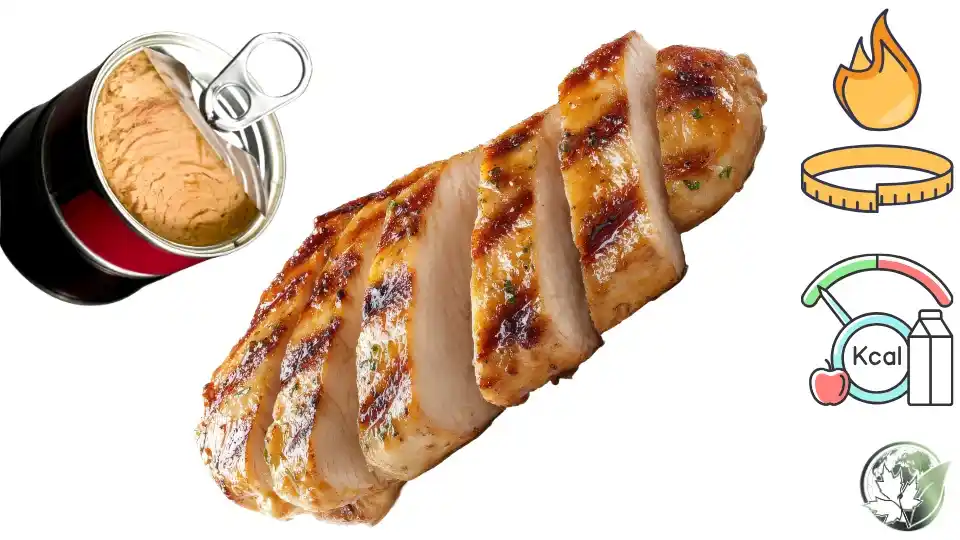
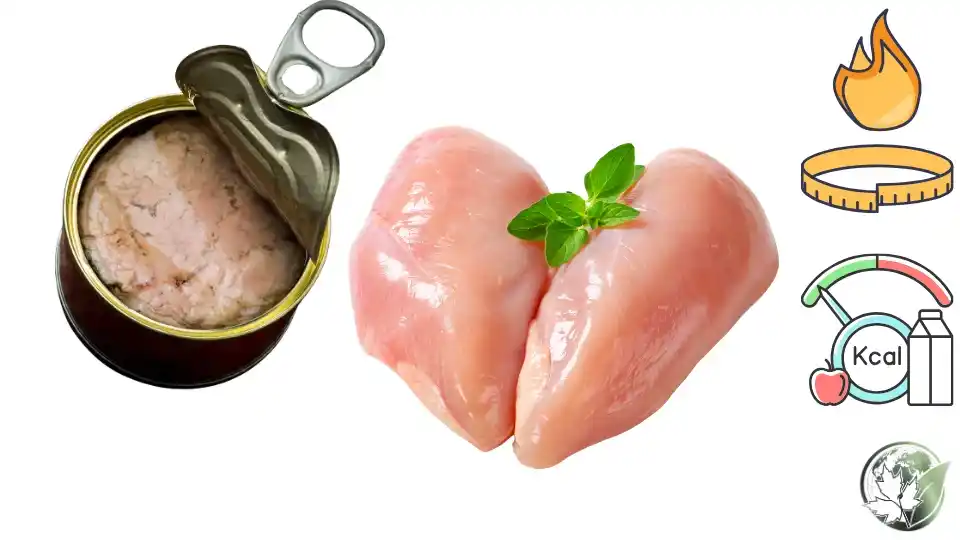
A 3-ounce serving has about 168 calories of tuna in olive oil and about 140 of chicken breast
How Many Calories Are in Tuna in Olive Oil?
Canned tuna in olive oil is packed in oil that is partly absorbed into the fish. The calories you eat depend on whether you drain the oil and how thoroughly. Drained tuna in oil has around 198 calories per 100 grams, while undrained tuna with all the oil can reach 230 or more. Premium jarred tuna (such as belly cut) in olive oil is richer, at 200 to 260 calories per 100 grams drained.
| Tuna in olive oil | Weight | Calories | Protein | Fat |
|---|---|---|---|---|
| 3 oz, drained | 85 g | 168 kcal | 24.8 g | 7 g |
| 100 g, drained | 100 g | 198 kcal | 29.1 g | 8.2 g |
| 1 small can, drained | 113 g | 224 kcal | 32.9 g | 9.3 g |
| 1 small can, with oil | 142 g | 270 kcal | 32.9 g | 15 g |
| 1 large can, drained (170 g) | 170 g | 337 kcal | 49.5 g | 14 g |
| 2 tablespoons oil from the can | 27 g | 239 kcal | 0 g | 27 g |
| Premium jarred belly, drained | 100 g | 230 kcal | 26 g | 14 g |
| 1/2 cup flaked, drained | 70 g | 139 kcal | 20 g | 5.7 g |
How Many Calories Are in Chicken Breast?
Chicken breast is one of the leanest meats. Skinless, boneless breast contains mostly protein and water with just 3 grams of fat per 100 grams cooked. Calories vary with cooking method, whether skin is included and how much oil is used. Raw chicken breast has 120 calories per 100 grams, and cooking makes it more concentrated as water evaporates.
| Chicken breast | Weight | Calories | Protein | Fat |
|---|---|---|---|---|
| 3 oz cooked, skinless | 85 g | 140 kcal | 26.4 g | 3 g |
| 100 g cooked, skinless | 100 g | 165 kcal | 31 g | 3.6 g |
| 1 small breast, cooked | 120 g | 198 kcal | 37 g | 4.3 g |
| 1 medium breast, cooked | 172 g | 284 kcal | 53 g | 6.2 g |
| 1 large breast, cooked | 220 g | 363 kcal | 68 g | 7.9 g |
| 100 g raw, skinless | 100 g | 120 kcal | 22.5 g | 2.6 g |
| 100 g cooked, with skin | 100 g | 197 kcal | 30 g | 8 g |
| 100 g breaded and fried | 100 g | 246 kcal | 22 g | 12 g |
Tuna in Olive Oil vs Chicken Breast: Calories Compared
| Amount | Tuna in olive oil (drained) | Chicken breast (cooked) | Difference |
|---|---|---|---|
| 100 g | 198 kcal | 165 kcal | Chicken -33 |
| 85 g (3 oz) | 168 kcal | 140 kcal | Chicken -28 |
| 113 g (1 can) vs 172 g (1 breast) | 224 kcal | 284 kcal | Tuna -60 |
| 150 g | 297 kcal | 248 kcal | Chicken -49 |
| 200 g | 396 kcal | 330 kcal | Chicken -66 |
| Protein per 100 kcal | 14.7 g | 18.8 g | Chicken higher |
| Weight for 300 kcal | 152 g | 182 g | Chicken 30 g more |
| Fat per 100 g | 8.2 g | 3.6 g | Chicken less than half |
By weight, chicken is lighter. By typical unit, a can of tuna has fewer calories than a whole chicken breast because a can contains less food. Choose a unit that matches how much you actually eat.
Why Is Tuna in Olive Oil Higher in Calories?
The oil is the reason. Canned tuna in water is a lean fish with about 116 calories per 100 grams, but oil packing adds 80 or more calories per 100 grams, as the olive oil is absorbed into the flesh. Oil contains 119 calories per tablespoon, so even a little extra matters. Tuna in olive oil has a richer texture and flavor, which many people prefer, and olive oil adds healthy monounsaturated fat. Chicken breast stays low because it has almost no fat of its own.
| Item | Calories per 100 g | Fat per 100 g | Source of extra calories |
|---|---|---|---|
| Canned tuna in water, drained | 116 | 0.8 g | None |
| Canned tuna in olive oil, drained | 198 | 8.2 g | Absorbed oil (+82 kcal) |
| Canned tuna in oil, not drained | 230 | 12 g | Free oil |
| Chicken breast, skinless, cooked | 165 | 3.6 g | Natural |
| Chicken thigh, skinless, cooked | 209 | 10.9 g | Natural fat |
| Chicken breast with skin | 197 | 8 g | Skin fat |
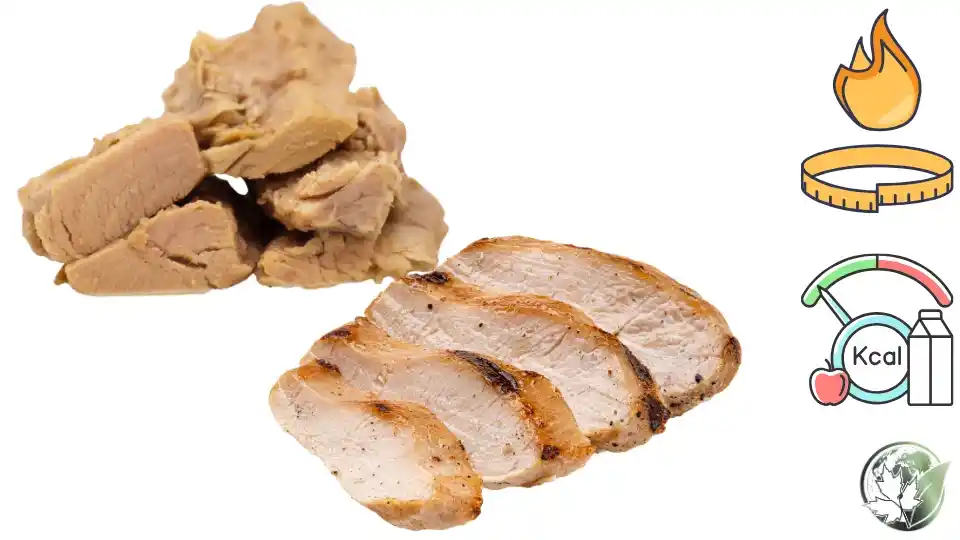
Draining the oil from a can of tuna removes some of the added calories
Tuna in Olive Oil vs Chicken Breast: Nutrition Compared
| Per 100 g | Tuna in olive oil, drained | Tuna in water, drained | Chicken breast, cooked |
|---|---|---|---|
| Calories | 198 kcal | 116 kcal | 165 kcal |
| Protein | 29.1 g | 25.5 g | 31 g |
| Fat | 8.2 g | 0.8 g | 3.6 g |
| Saturated fat | 1.3 g | 0.2 g | 1 g |
| Monounsaturated fat | 5.4 g | 0.1 g | 1.2 g |
| Omega-3 (EPA + DHA) | 0.2 g | 0.27 g | 0.03 g |
| Cholesterol | 55 mg | 42 mg | 85 mg |
| Sodium | 354 mg | 247 mg | 74 mg |
| Selenium | 77 mcg | 80 mcg | 28 mcg |
| Vitamin B12 | 2.9 mcg | 2.5 mcg | 0.3 mcg |
| Niacin (B3) | 14 mg | 12 mg | 14.8 mg |
| Vitamin D | 5.2 mcg | 4 mcg | 0.1 mcg |
Tuna provides vitamin D, vitamin B12, selenium and omega-3 fats, which chicken lacks. Chicken breast has less sodium, more protein per calorie and almost no mercury. Tuna carries a mercury consideration, especially for pregnant women and young children, who should follow local guidance.
Which Has More Calories: Tuna in Olive Oil or Chicken Breast?
Tuna in olive oil has more calories per 100 grams: 198 against 165, a difference of 33 calories, which is 20 percent. If you drain the oil well, the difference is modest. If you eat the oil, the gap grows quickly. A can's oil adds 40 to 90 calories if you pour it onto a salad or bread. Per can compared with per breast, tuna can look lighter simply because the can is small. So the best way to compare is by protein: you need about 100 grams of chicken (165 calories) to get 31 grams of protein, but 107 grams of drained tuna in oil (212 calories) for the same amount.
| Goal | Calories needed with chicken | Calories needed with tuna in oil |
|---|---|---|
| 20 g protein | 106 | 136 |
| 30 g protein | 160 | 204 |
| 40 g protein | 213 | 272 |
| 50 g protein | 266 | 340 |
| 60 g protein | 319 | 408 |
For a high-protein, lower-calorie plan, chicken breast is the more efficient choice. For convenience, flavor and healthy fats, tuna in olive oil is attractive in moderation.
Is Tuna in Olive Oil Healthier Than Chicken Breast?
They are different and complementary. The olive oil in tuna adds monounsaturated fat that supports heart health, and tuna contains vitamin D, B12, selenium and omega-3. However, tuna is higher in sodium, may contain mercury, and has more calories than tuna in water. Chicken breast is lower in sodium and calories and supplies more protein but no omega-3. Both are nutritious when prepared simply. A balanced week includes fish two or three times and poultry, legumes, eggs and dairy on other days.
| Factor | Tuna in olive oil | Chicken breast |
|---|---|---|
| Protein per 100 g | 29 g | 31 g |
| Calories per 100 g | 198 | 165 |
| Heart-healthy fats | Yes (olive oil, omega-3) | Low |
| Sodium | Higher | Lower |
| Mercury | Low to moderate | None |
| Vitamin D | Good source | Almost none |
| Convenience | Ready to eat | Needs cooking |
| Cost | Medium | Low to medium |
| Weekly guidance | 1-3 servings | Daily possible |
How Do You Cut Calories From Tuna in Olive Oil?
If you like the taste of oil-packed tuna but want fewer calories, drain it thoroughly and press the fish with a fork against the lid. Rinsing under cold water removes more oil but also some flavor. Mix with lemon juice, mustard, herbs, onions or tomatoes instead of mayonnaise. Use the can's oil sparingly, or discard it. Pair with beans, salad, whole grain bread or potatoes to build a meal with fiber. Sardines or mackerel in olive oil follow similar principles.
| Technique | Calories removed from a small can |
|---|---|
| Drain thoroughly, keep nothing | 45 (from oil retained in can) |
| Press and drain well | 50-60 |
| Rinse under water | 70-85 |
| Choose tuna in water instead | 90-100 |
| Skip mayonnaise | 94 per tablespoon |
| Use lemon and herbs | Adds 5 calories, saves 90 |
| Meal | Calories |
|---|---|
| 1 can tuna in olive oil, drained, with lemon and cucumber | 240 |
| Same with 1 tbsp mayonnaise | 334 |
| Same with the can oil poured over (2 tbsp) | 480 |
| Tuna and white bean salad | 400 |
| Tuna on 2 slices whole wheat bread | 370 |
| Tuna stuffed tomato | 250 |
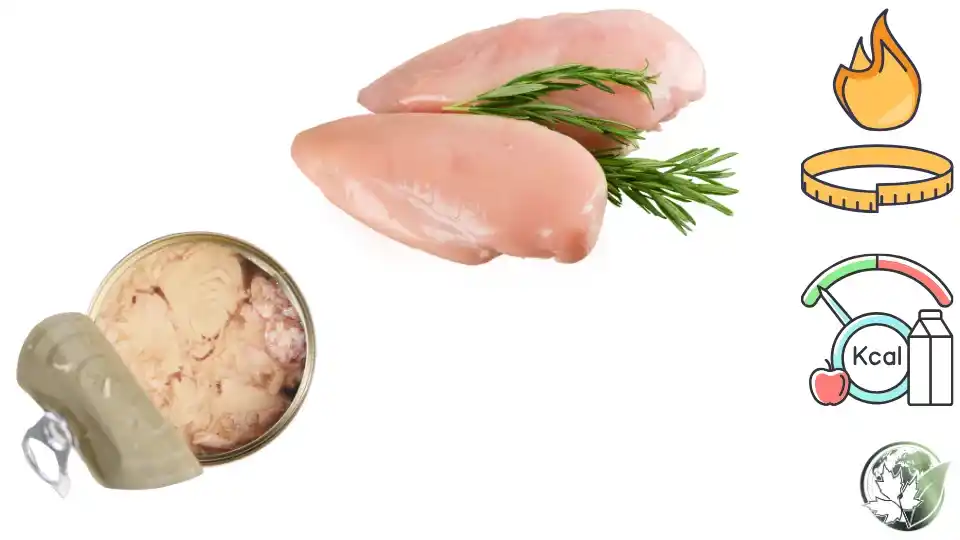
Grilled chicken breast with vegetables is a lean, high-protein plate with about 140 calories per 3 ounces
How Do Cooking Methods Change Chicken Breast Calories?
Chicken breast is lean, so the method strongly affects the calories. Poaching, steaming and grilling add almost nothing. Pan-frying with a teaspoon of oil adds 40. Breading and frying can add 80 or more per 100 grams. Marinades with oil and sauces such as barbecue or cream-based sauces change the numbers too. Cooking chicken with the skin adds fat, though removing the skin after cooking removes most of it.
| Method (100 g cooked) | Calories | Protein | Fat |
|---|---|---|---|
| Poached or boiled | 151 | 30 g | 3.2 g |
| Grilled | 165 | 31 g | 3.6 g |
| Roasted, skinless | 165 | 31 g | 3.6 g |
| Pan-fried in 1 tsp oil | 190 | 31 g | 7 g |
| Rotisserie, breast, no skin | 150 | 29 g | 3 g |
| Breaded and baked | 200 | 25 g | 8 g |
| Breaded and fried | 246 | 22 g | 12 g |
| With skin, roasted | 197 | 30 g | 8 g |
| In cream sauce | 230 | 24 g | 13 g |
Overcooking dries chicken breast and tempts people to add heavy sauce. Cooking to an internal temperature of 74 degrees Celsius (165 degrees Fahrenheit) and resting a few minutes keeps it juicy.
Tuna and Chicken Breast in Persian Meals
Chicken breast appears in Iran as joojeh kabab (saffron chicken skewers), zereshk polo ba morgh and chicken salad (salad olivieh). Tuna is used in tonfish sandwiches, salads and rice dishes, mostly from cans. A joojeh kabab skewer made with chicken breast, saffron, lemon and a little oil has around 180 calories per 100 grams. Olivieh salad, made with potatoes, eggs, pickles, peas and mayonnaise, has about 260 per 100 grams. Tuna in olive oil is used in cold dishes and in Mediterranean-style salads.
| Dish | Serving | Calories |
|---|---|---|
| Joojeh kabab (chicken breast) | 1 skewer (150 g) | 270 |
| Plain grilled chicken breast | 100 g | 165 |
| Zereshk polo ba morgh | 1 plate | 650 |
| Salad olivieh | 1 serving (150 g) | 390 |
| Tuna salad with lemon | 1 bowl | 240 |
| Tuna sandwich with mayonnaise | 1 sandwich | 380 |
| Tuna pasta | 1 plate | 420 |
| Chicken soup with vegetables | 1 bowl | 160 |
Which Is Better for Weight Loss and Muscle Building?
Both foods are strong protein sources. For people who want to lose weight, protein helps preserve muscle and promotes fullness, so either is a good choice. Chicken breast is the better pick when calories are tight, because it offers more protein per calorie. Tuna in olive oil suits those who need a quick, flavorful meal and can afford the extra calories, or who want healthy fats. For muscle building, either supports growth, and tuna's extra calories may even help during a calorie surplus. Variation is wise: rotating chicken, fish, eggs, dairy and legumes improves nutrient range.
| Goal | Better choice | Reason |
|---|---|---|
| Lowest calories per gram of protein | Chicken breast | 5.3 kcal per gram of protein |
| Convenience and portability | Tuna in oil | No cooking, shelf stable |
| Heart-healthy fats | Tuna in olive oil | Monounsaturated fat, omega-3 |
| Lowest sodium | Chicken breast | 74 mg vs 354 mg per 100 g |
| Vitamin D and B12 | Tuna | Fish is a good source |
| Cutting calories strictly | Chicken or tuna in water | Fewer calories |
| Bulking, easy calories | Tuna in oil | Extra energy from oil |
| Pregnancy | Chicken (cooked through) | No mercury concern |
| Calories per gram of protein | Value |
|---|---|
| Chicken breast, cooked | 5.3 |
| Tuna in water | 4.5 |
| Tuna in olive oil | 6.8 |
| Egg whites | 4.8 |
| Whole eggs | 11.6 |
| Greek yogurt, nonfat | 5.0 |
| Salmon, cooked | 9.1 |
| Lean beef (95%), cooked | 7.7 |
Tuna in water is actually the most efficient of these on the calories-per-protein measure. Tuna in oil is less efficient than chicken, but still better than many other animal proteins.
How Do Tuna in Olive Oil and Chicken Breast Fit Into Meal Prep?
Both foods work well in prepared meals. Cook several chicken breasts on Sunday, slice them and use them in salads, wraps and bowls through the week. Keep a few cans of tuna in the pantry for quick lunches and snacks. Combining them with vegetables, grains and legumes creates meals of 350 to 550 calories with 30 to 40 grams of protein. Store cooked chicken in the refrigerator for up to four days. Once opened, canned tuna should be transferred to a covered container and eaten within two days.
| Meal prep bowl | Components | Calories | Protein |
|---|---|---|---|
| Chicken rice bowl | 120 g chicken, 3/4 cup rice, vegetables, 1 tsp oil | 450 | 42 g |
| Chicken salad wrap | 100 g chicken, 1 lavash, salad, yogurt dressing | 400 | 36 g |
| Tuna and bean salad | 1 can tuna in oil (drained), 1/2 cup beans, vegetables | 400 | 45 g |
| Tuna pasta | 1 can tuna, 1 cup pasta, tomatoes, olives | 510 | 45 g |
| Chicken and quinoa | 120 g chicken, 3/4 cup quinoa, vegetables | 430 | 42 g |
| Tuna stuffed potato | 1 baked potato, 1 can tuna, yogurt | 440 | 42 g |
| Chicken and lentil soup | 100 g chicken, lentils, vegetables | 360 | 38 g |
Are There Safety Concerns With Canned Tuna and Chicken?
Both foods need basic food safety care. Chicken must be cooked through to 74 degrees Celsius to kill salmonella and campylobacter, and raw chicken should be handled separately from ready-to-eat foods. Canned tuna is sterile when the can is intact, but dented, bulging or leaking cans should be discarded. Tuna's mercury content is the other issue: light tuna is generally lower than albacore, and health agencies set weekly limits for sensitive groups. Oil-packed tuna that has been opened should be refrigerated and eaten within two days.
| Food | Main safety point | Practical tip |
|---|---|---|
| Raw chicken | Salmonella, campylobacter | Cook to 74 °C, avoid washing |
| Cooked chicken | Bacterial growth | Refrigerate within 2 hours |
| Canned tuna | Mercury, damaged cans | Choose light, check cans |
| Opened tuna | Spoilage | Cover, refrigerate, eat in 2 days |
| Tuna in oil | Oil can go rancid | Store unopened cans cool and dark |
| Marinated chicken | Cross-contamination | Discard used marinade |
What Else Can You Compare With Tuna and Chicken?
If you want to broaden your protein options, it helps to see where these two sit among other common foods. Eggs, shrimp, white fish, turkey breast, beans and tofu are all lean choices. Salmon and sardines are fattier but bring more omega-3. Red meat provides iron and zinc but is higher in saturated fat. Comparing per 100 calories gives the clearest picture.
| Food (cooked, 100 kcal portion) | Weight | Protein | Fat |
|---|---|---|---|
| Chicken breast, skinless | 61 g | 18.8 g | 2.2 g |
| Turkey breast, skinless | 74 g | 21 g | 0.8 g |
| Tuna in water, drained | 86 g | 22 g | 0.7 g |
| Tuna in olive oil, drained | 51 g | 14.7 g | 4.1 g |
| Shrimp | 101 g | 24 g | 0.3 g |
| White fish (cod) | 95 g | 21 g | 0.8 g |
| Salmon | 48 g | 10.4 g | 5.8 g |
| Egg (whole) | 70 g | 8.8 g | 7 g |
| Lentils, cooked | 86 g | 7.8 g | 0.3 g |
| Tofu, firm | 125 g | 12 g | 7 g |
Chicken breast, turkey, shrimp and tuna in water are the leanest sources. Tuna in olive oil sits closer to salmon in energy density but offers a convenience few others can match.
The most practical approach is not to pick a single winner, but to match the food to the moment. Keep chicken breast for planned meals where you want maximum protein for minimum calories. Keep tuna in olive oil for the days when time is short and you want a satisfying, flavorful meal from the pantry. In both cases, the vegetables, grains and sauces you add around the protein will move the total calories more than the choice between the two proteins themselves, so plan the whole plate rather than a single ingredient. A simple check is to estimate the calories of the protein, the starch, the vegetables and the added fat separately, then add them up, which usually shows that the added fat is the easiest piece to adjust.
Key Takeaways: Tuna in Olive Oil vs Chicken Breast Calories
Drained tuna in olive oil has about 198 calories per 100 grams, and cooked chicken breast about 165. A drained small can has around 224 calories and a whole cooked breast around 284. Chicken gives more protein per calorie, less sodium and no mercury. Tuna gives vitamin D, B12, omega-3 and olive oil fats. Drain the oil well, avoid mayonnaise, and pair either with vegetables and whole grains.
Frequently Asked Questions
6 questions answered
How many calories are in a can of tuna in olive oil?
About 224 drained, and up to 270 with the oil.
How many calories are in a chicken breast?
About 284 for a medium cooked, skinless breast.
Which is lower in calories per 100 g?
Chicken breast, 165 against 198.
Which has more protein?
Chicken, 31 g against 29 g per 100 g.
Should I drain the oil from tuna?
Yes, to cut calories; the oil adds about 120 per tablespoon.
Is tuna in olive oil healthy?
Yes in moderation, but watch sodium and mercury.