How Many Calories Are in Gummy Candy vs a Sugar Cube? The Quick Answer
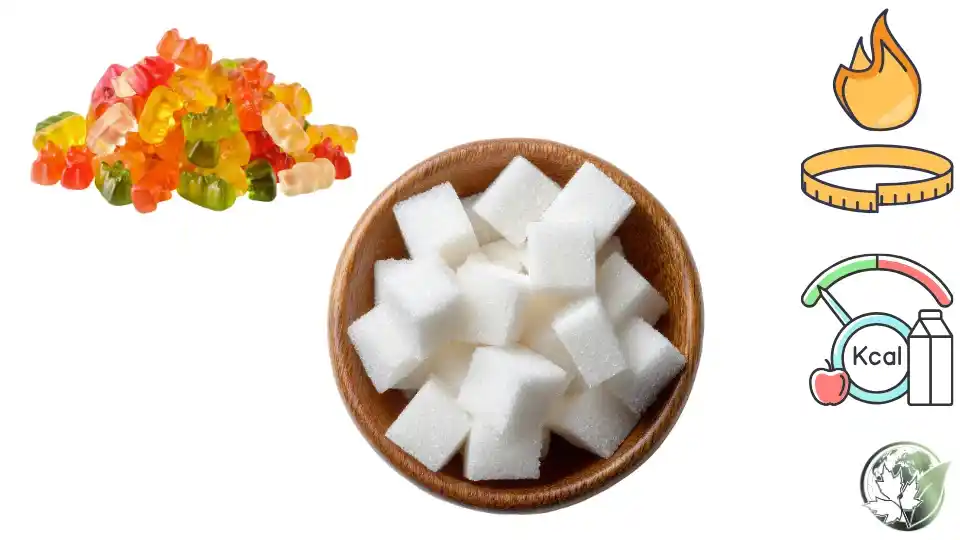
A gummy bear weighs about 2.2 grams and has about 7 calories and 1 gram of sugar. A standard sugar cube weighs 4 grams and has 16 calories and 4 grams of sugar. One cube therefore has more than two gummy bears, and you would need about 2.3 gummy bears to match its calories. By weight, gummy candy has 335 calories per 100 grams while table sugar has 387, so gummies are about 13 percent lower, because they contain water and gelatin. A 30 gram serving (13 or 14 bears) has about 100 calories and 14 grams of sugar, equal to 3.5 sugar cubes.
A gummy is not pure sugar: sugar makes up about 47 percent and glucose syrup about 30 percent, which add up to 77 grams of carbohydrate per 100 grams. The rest is water, gelatin or pectin, acids and flavoring. This guide compares gummy candy and sugar cubes per piece, per 100 grams and per bag, looks at sour, vitamin and sugar-free gummies, and offers tips on portions, with three comparison tables and an FAQ.
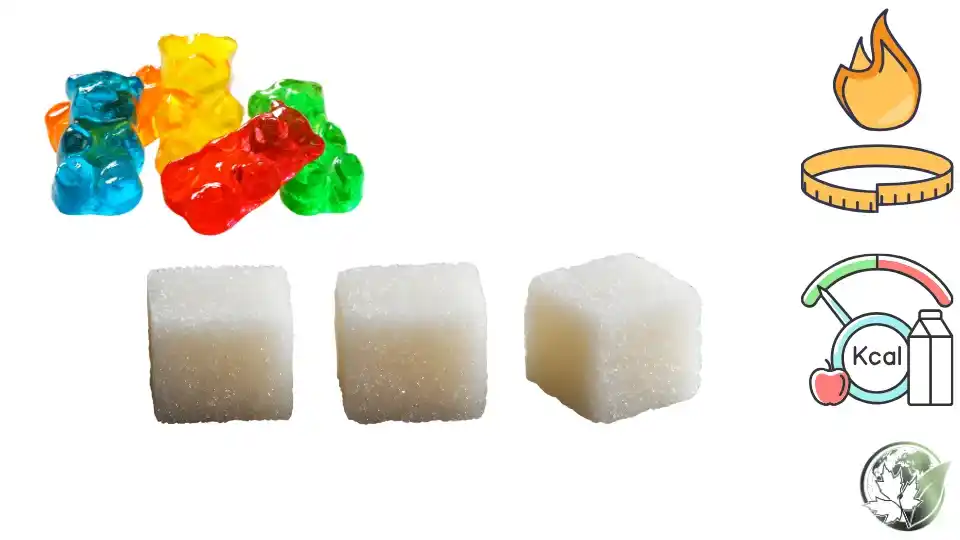
Fourteen gummy bears contain roughly the sugar of three and a half sugar cubes
How Many Calories Are in Gummy Candy?
| Gummy candy | Weight | Calories | Sugar | Sugar cubes |
|---|---|---|---|---|
| 1 gummy bear | 2.2 g | 7 kcal | 1 g | 0.25 |
| 5 gummy bears | 11 g | 37 kcal | 5.2 g | 1.3 |
| 13-14 gummy bears | 30 g | 100 kcal | 14 g | 3.5 |
| Gummy worm (large) | 11 g | 37 kcal | 5.6 g | 1.4 |
| Gummy ring | 5 g | 17 kcal | 2.4 g | 0.6 |
| Fruit gummies (pectin) | 40 g | 130 kcal | 18 g | 4.5 |
| Sour gummies | 30 g | 105 kcal | 15 g | 3.8 |
| Mini bag | 55 g | 184 kcal | 26 g | 6.5 |
| Standard bag | 150 g | 500 kcal | 70 g | 17.5 |
| Per 100 g | 100 g | 335 kcal | 47 g | 11.8 |
How Many Calories Are in a Sugar Cube?
| Sugar | Weight | Calories | Sugar |
|---|---|---|---|
| 1 sugar cube (standard) | 4 g | 16 kcal | 4 g |
| 1 sugar cube (small) | 3 g | 12 kcal | 3 g |
| 1 sugar cube (large) | 5 g | 19 kcal | 5 g |
| 2 cubes | 8 g | 31 kcal | 8 g |
| 4 cubes | 16 g | 62 kcal | 16 g |
| 10 cubes | 40 g | 155 kcal | 40 g |
| 17.5 cubes | 70 g | 271 kcal | 70 g |
| 100 g | 100 g | 387 kcal | 100 g |
Gummy Candy vs Sugar Cube: Calories Compared
| Amount | Gummy candy | Sugar cube |
|---|---|---|
| 1 piece | 7 kcal (bear) | 16 kcal (cube) |
| 10 g | 34 kcal | 39 kcal |
| 30 g | 100 kcal | 116 kcal |
| 50 g | 168 kcal | 194 kcal |
| 100 g | 335 kcal | 387 kcal |
| 100 calories | 30 g | 26 g |
| Sugar in 100 kcal | 14 g | 26 g |
| Pieces to equal 1 cube | 2.3 bears | 1 cube |
By weight, a sugar cube has about 15 percent more calories than the same weight of gummy candy. For 100 calories, though, gummies deliver only 14 grams of sugar against 26 in sugar cubes, because gummies are partly glucose syrup, starch and gelatin.
Gummy Candy vs Sugar Cube: Nutrition Compared
| Per 100 g | Gummy candy (gelatin) | Gummy candy (pectin) | White sugar |
|---|---|---|---|
| Calories | 335 kcal | 330 kcal | 387 kcal |
| Carbohydrate | 77 g | 82 g | 100 g |
| Sugar | 47 g | 50 g | 100 g |
| Protein | 6.9 g | 0 g | 0 g |
| Fat | 0 g | 0 g | 0 g |
| Fiber | 0 g | 0.5 g | 0 g |
| Sodium | 25 mg | 20 mg | 1 mg |
| Glycemic index | 78 | 75 | 65 |
| Added color | Yes | Sometimes | No |
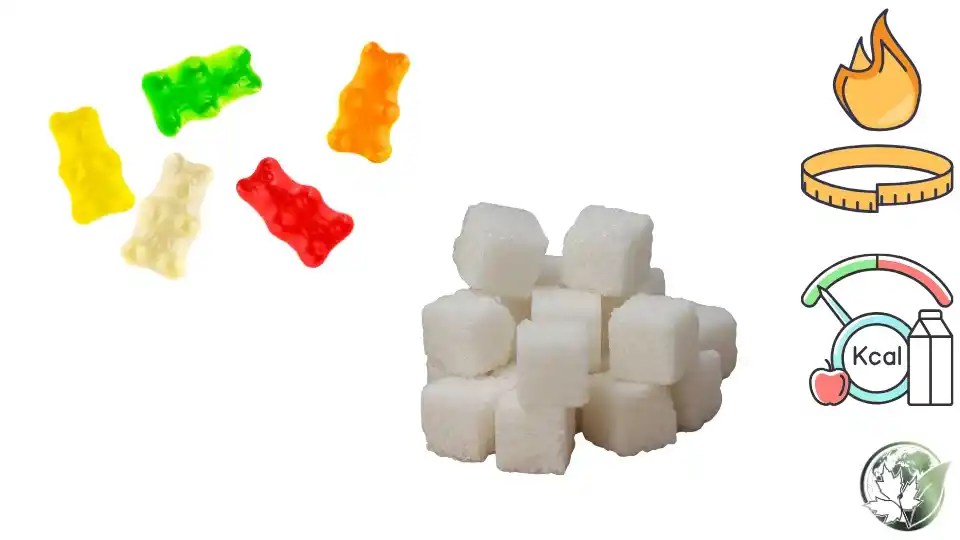
Gummy candy is about 47 percent sugar and 30 percent glucose syrup
Which Has More Calories: Gummy Candy or a Sugar Cube?
Per piece, a sugar cube has more calories than a gummy bear (16 against 7). Per gram, the cube has a little more than gummies (387 against 335). But because gummies are eaten by the handful, a serving contains more calories than the few cubes most people add to tea. The main difference is that gummies are a processed candy product with colors and flavors, whereas the cube is plain sugar.
| Comparison | Result |
|---|---|
| 1 gummy bear vs 1 cube | 7 vs 16 kcal, bear lower |
| 14 gummy bears vs 1 cube | 100 vs 16 kcal |
| Sugar in 14 bears | 14 g, 3.5 cubes |
| Sugar in a 150 g bag | 70 g, 17.5 cubes |
| Per 100 g | 335 vs 387 kcal, gummies lower |
Is Gummy Candy Just Sugar?
Mostly, yes. A gummy is roughly 47 percent sugar, 30 percent glucose syrup, 8 percent gelatin and 15 percent water, plus citric acid, flavors, colors and a coating of wax. The glucose syrup and starch count as carbohydrates but not "sugar" on some labels, so the carbohydrate line (77 grams) is a better guide than the sugar line (47). Because gummies contain no fat, fiber or meaningful protein, they do little to fill you up, and it is easy to eat more than you intended.
| Ingredient | Share of weight | Calories contributed (per 100 g) |
|---|---|---|
| Sugar (sucrose) | 47% | 182 kcal |
| Glucose syrup | 30% | 115 kcal |
| Gelatin | 8% | 32 kcal |
| Water | 14% | 0 kcal |
| Acids, flavors, colors | 1% | 6 kcal |
How Many Gummies Equal One Sugar Cube?
By calories, 2.3 gummy bears equal one cube. By sugar, four gummy bears equal one cube, because each bear contains 1 gram of sugar. A handful of 14 bears equals 3.5 cubes of sugar and 6 cubes of calories. If you tend to eat from a bag, count the pieces instead of guessing, and place a single serving in a bowl.
| Gummies eaten | Calories | Sugar | Sugar cubes |
|---|---|---|---|
| 4 bears | 28 kcal | 4 g | 1 |
| 8 bears | 56 kcal | 8 g | 2 |
| 14 bears | 100 kcal | 14 g | 3.5 |
| 28 bears | 200 kcal | 28 g | 7 |
| 70 bears (150 g) | 500 kcal | 70 g | 17.5 |
Are Sour Gummies Different?
Sour gummies are coated with sugar and citric or malic acid, which adds about 2 to 5 grams of sugar per serving and a little more calories, around 105 per 30 grams. They are more acidic, with a pH as low as 2, which can wear down enamel. The taste makes you drink water and chew slowly, but the calorie difference is small. Sour gummies also carry the same colors and flavors as regular ones.
| Type | Calories per 30 g | Sugar | Acidity |
|---|---|---|---|
| Regular gummy bears | 100 kcal | 14 g | pH 3.5 |
| Sour gummies | 105 kcal | 15 g | pH 2.5 |
| Sour belts | 110 kcal | 16 g | pH 2.5 |
| Fruit gummies (pectin) | 98 kcal | 15 g | pH 3.3 |
| Sugar-free gummies | 70 kcal | 0 g | pH 3.8 |
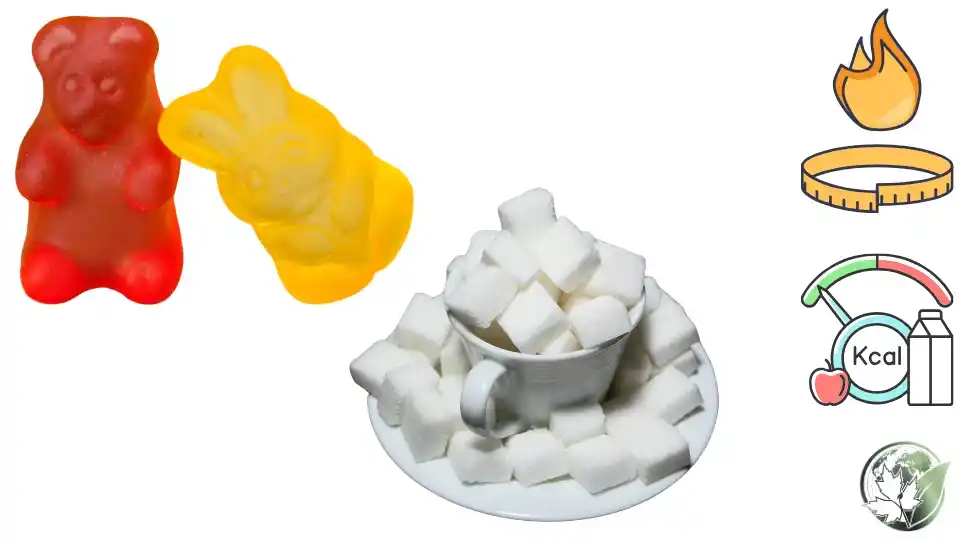
Vitamin gummies have about 10 calories each and 1.5 grams of sugar, so a serving of two or three adds up
What About Vitamin Gummies and Sugar-Free Gummies?
Vitamin gummies are sold as supplements but contain sugar, glucose syrup and gelatin or pectin. A serving of two or three gummies usually has 15 to 30 calories and 2 to 4 grams of sugar, about one cube, and the vitamin content can differ between batches. Sugar-free gummies use sugar alcohols such as maltitol or sorbitol and have around 70 calories per 30 grams, but large amounts cause bloating and laxative effects. Neither is a free pass, and a standard multivitamin tablet gives the vitamins without sugar.
| Product | Serving | Calories | Sugar | Notes |
|---|---|---|---|---|
| Vitamin gummy | 2 pieces (6 g) | 20 kcal | 3 g | Supplement |
| Kids' vitamin gummy | 3 pieces (9 g) | 30 kcal | 4 g | Tempting, keep away from kids |
| Sugar-free gummy bears | 30 g | 70 kcal | 0 g | Sugar alcohols, laxative |
| Protein gummies | 30 g | 90 kcal | 4 g | Gelatin protein |
| Regular gummy bears | 30 g | 100 kcal | 14 g | Standard |
Is Gummy Candy Worse Than Sugar?
A cube of sugar added to tea is a known, small amount, whereas gummies make it easy to consume a large amount of sugar in a short time, along with artificial colors. Gram for gram, they are similar. The glycemic index of gummies is higher at 78 versus 65 for sugar, as the glucose syrup is absorbed rapidly. For teeth, gummies are worse than a dissolved cube because they stick. Neither is harmful in small amounts; the issue is quantity and frequency.
| Factor | Gummy candy | Sugar cube |
|---|---|---|
| Calories per 100 g | 335 kcal | 387 kcal |
| Glycemic index | 78 | 65 |
| Stickiness | High | Low (dissolves) |
| Colors and flavors | Yes | No |
| Portion control | Hard | Easy |
How Can You Cut Back on Gummy Candy?
Use a small bowl for 10 gummy bears (70 calories) instead of eating from the bag. Choose gummy candy made with fruit juice and no artificial colors if you can, though the sugar is similar. Replace a daily candy with frozen grapes, a few dates or fresh fruit. Brush teeth after eating sweets and avoid eating them just before bed. Planning a sweet treat once or twice a week helps you enjoy it more and avoid cravings.
| Replacement | Calories | Sugar |
|---|---|---|
| 30 g gummy bears | 100 kcal | 14 g |
| 1 cup grapes | 104 kcal | 23 g |
| 1 Medjool date | 66 kcal | 16 g |
| 1 cup strawberries | 49 kcal | 7 g |
| 1 square dark chocolate (10 g) | 60 kcal | 3 g |
How Does Gummy Candy Affect Blood Sugar and Energy?
Gummy candy has a high glycemic index of about 78 because its glucose syrup and sucrose are absorbed quickly, with no fiber, fat or protein to slow them. A 30 gram serving contains 22 grams of carbohydrate and a glycemic load of about 17, which is high. The blood sugar spike is followed by a drop in some people, leading to cravings and tiredness. A sugar cube dissolved in tea has a similar effect, but a single cube delivers only 4 grams, so the load is small. Eating gummies after a meal, rather than on an empty stomach, softens the effect.
| Food | Carbohydrate | Glycemic index | Glycemic load |
|---|---|---|---|
| 30 g gummy candy | 22 g | 78 | 17 |
| 1 sugar cube | 4 g | 65 | 2.6 |
| 5 sugar cubes | 20 g | 65 | 13 |
| 30 g chocolate (milk) | 18 g | 43 | 8 |
| 30 g gummies after a meal | 22 g | 60 | 13 |
| 1 apple | 25 g | 38 | 9.5 |
How Do Gummies Affect Teeth?
Gummies stick to the grooves of teeth, giving bacteria a long supply of sugar, and sour varieties add acid. Dentists generally rank sticky candy as more harmful than sweets that dissolve quickly, because of how long the sugar remains in the mouth. A sugar cube in tea is swallowed with the drink, but it still exposes teeth to sugar if you sip slowly. After eating gummies, drink water, chew sugar-free gum, and brush after about 30 minutes. Limiting sweets to mealtimes reduces the number of acid attacks in a day.
| Habit | Risk level | Tip |
|---|---|---|
| Gummies throughout the day | Very high | Limit to one sitting |
| Gummies with a meal | Moderate | Rinse with water |
| Sour gummies | High | Brush after 30 minutes |
| Sugar cube in tea, sipped slowly | Moderate | Drink faster |
| Sugar-free gummies | Lower | Still sticky |
How Do Gummy Candy Calories Compare With Other Sweets?
Gummies are lower in calories than chocolate or biscuits per gram because they contain no fat, but they are also less filling. A 30 gram serving of gummy bears has 100 calories, similar to a small square of milk chocolate or half a cookie. Hard candies are lower per piece, at about 20 calories, but are easy to eat in sequence. Marshmallows have 90 calories per 30 grams, and licorice 100. The best sweet to choose is the one that you enjoy in a small portion.
| Sweet (30 g) | Calories | Sugar | Fat |
|---|---|---|---|
| Gummy bears | 100 kcal | 14 g | 0 g |
| Milk chocolate | 160 kcal | 17 g | 9 g |
| Dark chocolate (70%) | 170 kcal | 7 g | 12 g |
| Hard candy | 115 kcal | 22 g | 0 g |
| Marshmallows | 90 kcal | 16 g | 0 g |
| Licorice | 100 kcal | 14 g | 0.5 g |
| Chocolate chip cookie | 140 kcal | 10 g | 7 g |
| Jelly beans | 110 kcal | 20 g | 0 g |
What Do Children and Adults Need to Know About Portions?
For children aged 4 to 8, a 30 gram serving of gummies provides 14 grams of sugar, more than half of the 25 gram daily limit for added sugars. A good habit is to offer 5 to 8 gummy bears as a treat. For adults, the guideline of 25 to 36 grams of added sugar per day can be reached with two servings of gummies. Check the pack size: many single-serve bags contain 50 to 60 grams, two servings in one. Dividing a large bag into small bags at home makes portion control easier.
| Group | Sugar limit | Gummy servings (30 g) to reach the limit |
|---|---|---|
| Child 4-8 | 25 g | 1.8 |
| Teenager | 36 g | 2.6 |
| Adult woman | 25 g | 1.8 |
| Adult man | 36 g | 2.6 |
How Can You Read a Gummy Candy Label?
Check the serving size, since it may be 30, 40 or 50 grams, and count the servings in the bag. Multiply calories and sugar by the number of servings you eat. In the ingredient list, sugar and glucose syrup should not be followed by "colors" such as Red 40 and Yellow 5 if you wish to avoid artificial dyes. Look at whether the gelling agent is gelatin or pectin if you eat vegetarian. Sugar-free gummies list maltitol, sorbitol or xylitol and carry a warning about laxative effects.
| Label item | What to check |
|---|---|
| Serving size | 30 g or 40 g? |
| Servings per pack | 2-5 |
| Sugar | Under 15 g per 30 g |
| Gelling agent | Gelatin (animal) or pectin (plant) |
| Colors | Natural or artificial |
| Sugar alcohols | Laxative warning |
How Is Gummy Candy Made and Why Does It Matter for Calories?
Manufacturers cook sugar, glucose syrup and water to a precise temperature, mix in dissolved gelatin or pectin, add acid, flavor and color, and pour the hot liquid into starch molds or silicone trays. The pieces set for 24 to 48 hours, then are oiled and sometimes sanded with sugar. The final water content is around 14 to 18 percent. Because the product is mostly sugar syrup set by a gel, the calories are predictable: roughly 3.3 per gram. Larger gummies or those with a sanding of sugar have more, while mixes with fruit puree or pectin vary slightly.
| Stage | What happens | Effect on calories |
|---|---|---|
| Cooking | Sugar and syrup concentrated | Sets the sugar level |
| Gelling | Gelatin or pectin added | Little change |
| Molding | Poured into starch trays | Starch residue adds a little |
| Curing | Dries 24-48 hours | Lowers water, raises calories per gram |
| Sanding | Sugar or acid coating | +2-5 g sugar per serving |
How Do Gelatin and Pectin Gummies Compare?
Gelatin gummies are made from animal collagen, so they are not suitable for vegetarians, vegans, or people who avoid pork or beef for religious reasons unless certified. Pectin gummies use fruit-derived pectin, are vegetarian and have a slightly softer, shorter bite. Calories are similar, 330 to 335 per 100 grams. Gelatin provides about 7 grams of protein per 100 grams, though this is incomplete protein and nutritionally minor. Some people with sensitive stomachs find pectin gentler, and pectin gummies tend to contain more fruit flavoring.
| Feature | Gelatin gummies | Pectin gummies |
|---|---|---|
| Source | Animal collagen | Fruit (apple, citrus) |
| Vegetarian | No | Yes |
| Calories per 100 g | 335 kcal | 330 kcal |
| Protein | 6.9 g | 0 g |
| Texture | Chewy, elastic | Soft, short |
| Heat stability | Melts at 35 C | More stable |
What Is a Better Sweet Habit Than Eating Gummies by the Handful?
Keep gummies for a defined time, such as after dinner, and measure the amount. Build a routine with a different treat on other days: a square of dark chocolate, a date stuffed with a nut, frozen yogurt bites or fruit. Drink a glass of water before reaching for sweets, since thirst can feel like hunger. If cravings appear in the afternoon, a snack with protein and fiber, such as yogurt with berries, can prevent them. Awareness of sugar cubes also helps: a bag of gummies is 17 cubes of sugar.
| Time | Treat | Calories |
|---|---|---|
| After dinner | 10 gummy bears | 70 kcal |
| Afternoon | Yogurt with berries | 120 kcal |
| Evening | 1 square dark chocolate | 60 kcal |
| Weekend | Small gummy portion | 100 kcal |
| Craving | Water, then fruit | 60 kcal |
Can Gummy Candy Fit in a Weight-Loss Diet?
Yes, in small amounts. A weight-loss plan is based on a calorie deficit, and 70 to 100 calories of gummies once a day does not prevent it. The problem is that gummies provide no fullness, so they rarely replace other food and tend to add on top of it. Counting a daily 100 calorie serving over a year gives 36,500 calories, equal to about 10 pounds of body fat if it is surplus. If you decide to include gummies, remove another discretionary calorie source, and keep them outside screen time or driving, when people eat the most without noticing.
| Habit | Daily calories | Yearly calories | Approximate weight effect |
|---|---|---|---|
| 1 serving gummies (30 g) | 100 kcal | 36,500 kcal | About 10 lb if surplus |
| 3 sugar cubes in drinks | 46 kcal | 16,800 kcal | About 4.8 lb |
| 1 small bag gummies (55 g) | 184 kcal | 67,100 kcal | About 19 lb |
| 10 gummy bears, 3 times a week | 30 kcal average | 10,900 kcal | About 3 lb |
How Do Sugar Cubes in Drinks Compare With Gummies in Practice?
Two cubes in each of three daily cups of tea add 94 calories and 24 grams of sugar. That is close to a 30 gram serving of gummies. People often forget to count sugar in beverages, even though a drink is usually consumed faster than candy. Reducing from two cubes to one saves 16 calories per cup, or nearly 5,800 a year at one cup a day. Gradually weaning from sweet tea may be easier than quitting gummies, and the two together make a good target for cutting added sugar.
| Daily pattern | Calories | Sugar | Sugar cubes |
|---|---|---|---|
| 3 cups tea with 2 cubes | 94 kcal | 24 g | 6 |
| 3 cups tea with 1 cube | 47 kcal | 12 g | 3 |
| 30 g gummies | 100 kcal | 14 g | 3.5 |
| Both together | 194 kcal | 38 g | 9.5 |
| Tea with 1 cube + 10 gummy bears | 117 kcal | 22 g | 5.5 |
Key Takeaways: Gummy Candy vs Sugar Cube Calories
A gummy bear has about 7 calories and a sugar cube 16, so 2.3 bears equal one cube, and a 30 gram serving of gummies has 100 calories and 3.5 cubes of sugar. Gummies are slightly lower per gram but are easy to overeat, so measure portions.
Frequently Asked Questions
6 questions answered
Do gummies have more calories than a sugar cube?
Per piece no (7 vs 16), per handful yes.
How much sugar is in gummy bears?
About 14 grams per 30 gram serving.
How many gummy bears equal one sugar cube?
About 4 by sugar, 2.3 by calories.
Are gummies worse than sugar?
They are similar, but easier to overeat.
Are sugar-free gummies lower in calories?
Yes, about 70 per 30 grams.
How many calories are in a bag of gummies?
About 500 for 150 grams.